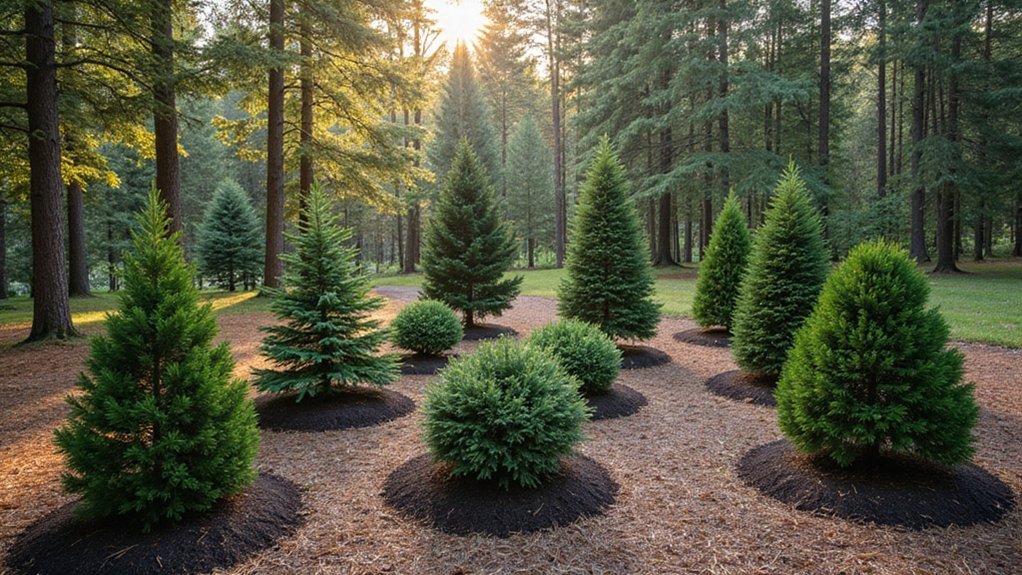
When winter arrives, you’ll need to protect your evergreen trees from harsh conditions like frost cracks, desiccation, and wind damage. Applying a 3-4 inch layer of organic mulch around the base of vulnerable species—such as boxwood, arborvitae, and spruce—insulates soil, maintains moisture, and stabilizes temperature swings. However, not all evergreens require the same protection strategy, and improper mulching can actually harm your trees. Understanding which trees need mulch and how to apply it correctly is essential.
Eastern Red Cedar: Preventing Winter Desiccation
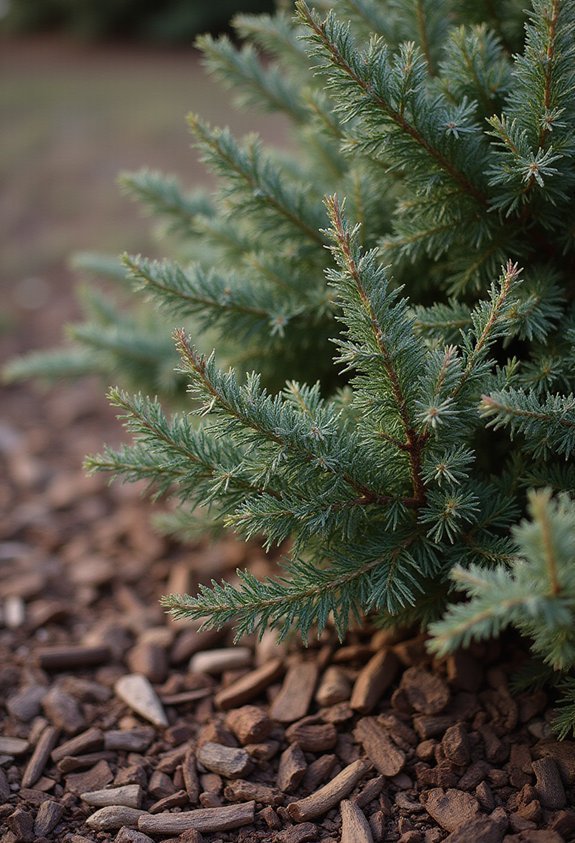
Because eastern red cedars face unique challenges during winter months, understanding how to protect them from desiccation—the process where plants lose excessive moisture—becomes essential for maintaining their health and appearance. During cold seasons, frozen soil prevents roots from absorbing water, while harsh winds and dry air strip moisture from foliage, causing browning and damage. You’ll want to apply a 2-3 inch layer of mulch around the tree’s base before temperatures drop, which insulates roots and helps retain soil moisture. Additionally, you should wrap young or exposed cedars with burlap to shield them from drying winds. Water your trees thoroughly in late fall before the ground freezes, ensuring they enter winter with adequate hydration. These preventative steps substantially reduce winter injury and keep your eastern red cedars thriving.
Boxwood: Shielding Shallow Roots From Winter Desiccation
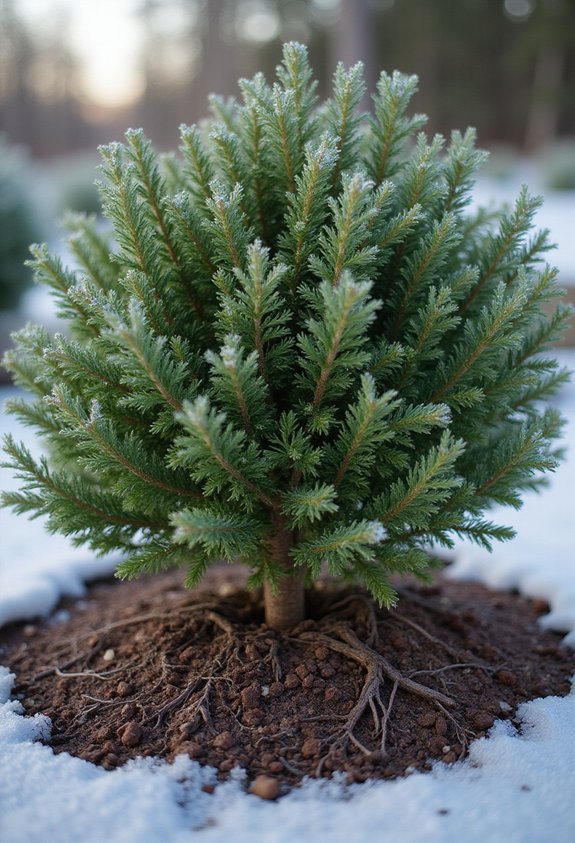
While boxwoods don’t face quite the same wind exposure challenges as eastern red cedars, their shallow root systems make them particularly vulnerable to winter desiccation in ways that require distinct protective strategies. You’ll want to apply a thick layer of organic mulch around the base of your boxwoods, extending several inches outward from the trunk, which insulates soil and maintains consistent moisture levels throughout freezing temperatures. This protective barrier prevents the soil from repeatedly thawing and refreezing, a cycle that damages shallow roots and causes severe water loss through the foliage. Additionally, you should water your boxwoods thoroughly before the ground freezes, ensuring adequate moisture storage for winter months when roots can’t access frozen water.
Arborvitae: Preventing Wind Scald and Frost Crack
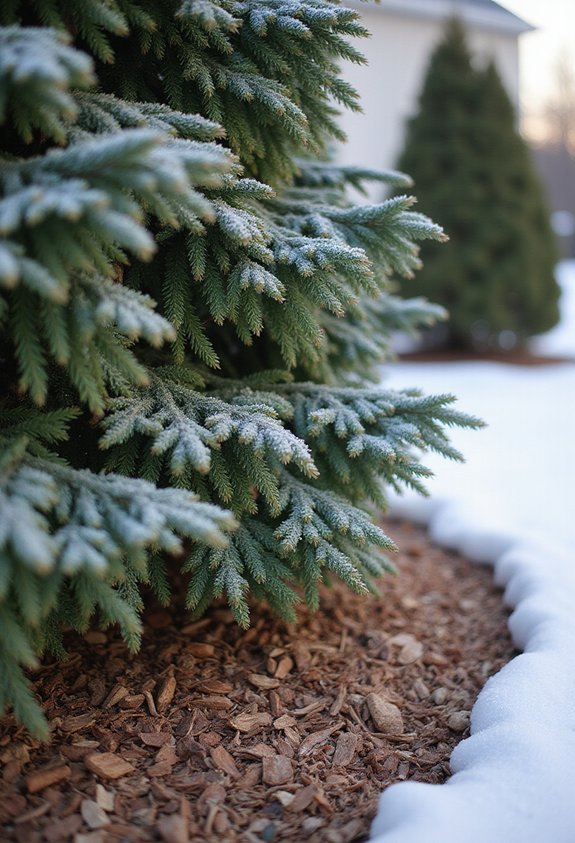
Unlike boxwoods, which primarily struggle with moisture loss through their foliage, arborvitaes face distinct winter damage from wind scald and frost crack—two destructive conditions you’ll want to prevent through strategic mulching and protective wrapping. Wind scald occurs when harsh winter winds dry out the bark on the sun-exposed side of your arborvitae, while frost crack happens when temperature fluctuations cause the wood to expand and contract, splitting the trunk. You can protect your arborvitaes by applying a thick layer of organic mulch around the base to insulate the root system and stabilize soil temperature. Additionally, you’ll want to wrap the trunk and lower branches with burlap or tree wrap, which shields the bark from wind exposure and reduces temperature stress during freeze-thaw cycles.
Spruce Trees: Insulating Against Temperature Fluctuations and Ice Damage
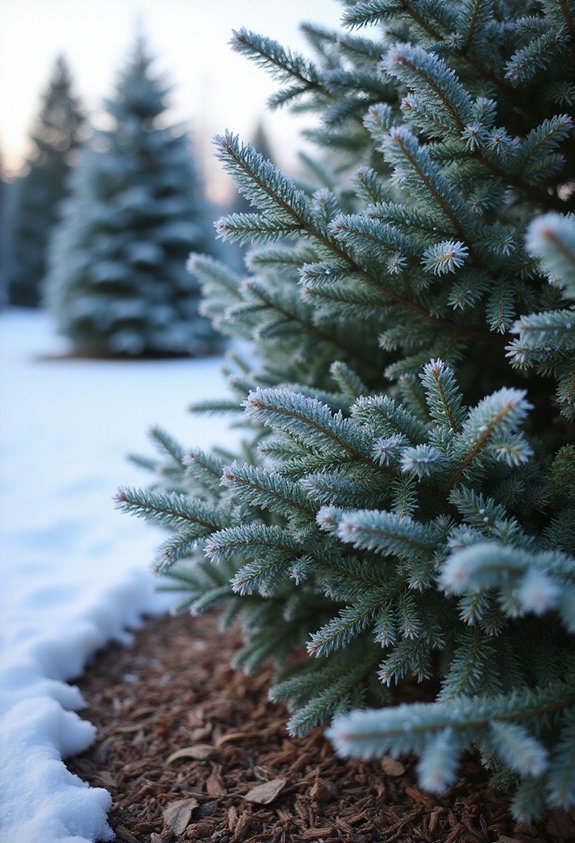
Spruce trees face particular vulnerability during winter months when rapid temperature changes and heavy ice accumulation can damage their branches and overall structure, making proper insulation and protection essential for their survival. You’ll want to apply mulch around the base of your spruce trees, extending it about three to four feet outward, which helps regulate soil temperature and prevents frost heave that can expose roots. Additionally, you should wrap young or exposed spruce trees with burlap to shield them from harsh winds and ice damage. This protective covering prevents ice from accumulating on branches while allowing adequate air circulation. You’ll also benefit from avoiding pruning in late fall, as fresh cuts make trees more susceptible to winter injury. These protective measures combined create ideal conditions for your spruce trees to survive winter successfully.
Holly: Guarding Against Winter Burn and Salt Damage
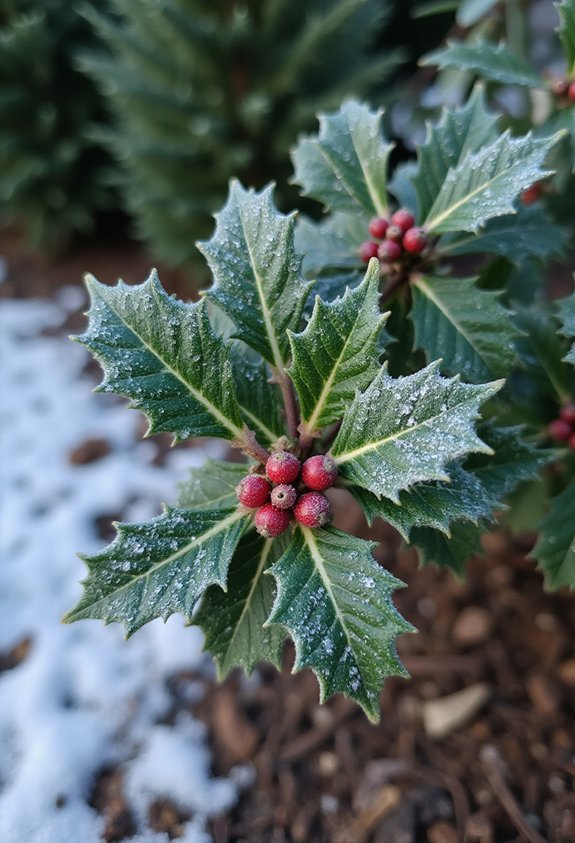
Because holly trees have broad, evergreen leaves that remain exposed throughout winter, they’re particularly susceptible to winter burn, a condition where cold, dry winds and intense sunlight cause leaves to lose moisture faster than the frozen root system can replenish it, resulting in browning and damage that can weaken the entire plant. You’ll want to apply a thick mulch layer around the base of your holly trees to insulate the root system and maintain consistent soil temperature. Additionally, you should consider using burlap wrapping around the foliage to shield leaves from harsh wind and salt spray, which causes additional damage by drawing moisture from leaf tissues. Road salt and de-icing chemicals pose particular threats, so you’ll benefit from positioning hollies away from salted pathways when possible.
Yew: Protecting Foliage From Winter Burn and Salt Damage
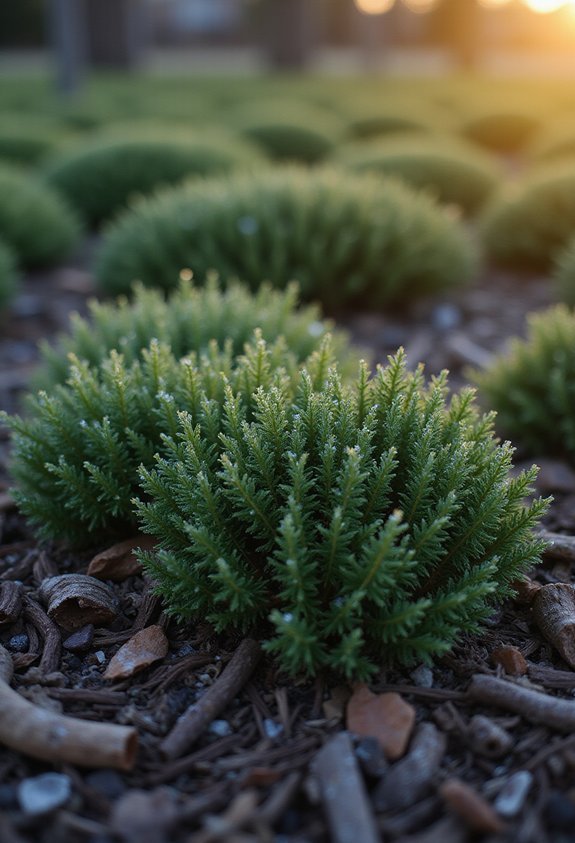
While holly trees require wrapping and strategic positioning to combat winter damage, yews present their own set of challenges that you’ll need to address through different protective strategies. Yews are susceptible to winter burn, which occurs when harsh, drying winds and intense sun exposure damage their foliage, causing browning and needle loss. You should apply a winter mulch layer around the base of yew trees to insulate their root systems and reduce stress. Additionally, you’ll want to use anti-desiccant spray on the foliage before winter arrives, creating a protective coating that minimizes moisture loss. Since yews also struggle with salt damage from road treatments and de-icing applications, you should position them away from salted areas when possible. These combined protective measures guarantee your yews survive winter healthy and vibrant.
Pine Trees: Preventing Root Heave in Winter
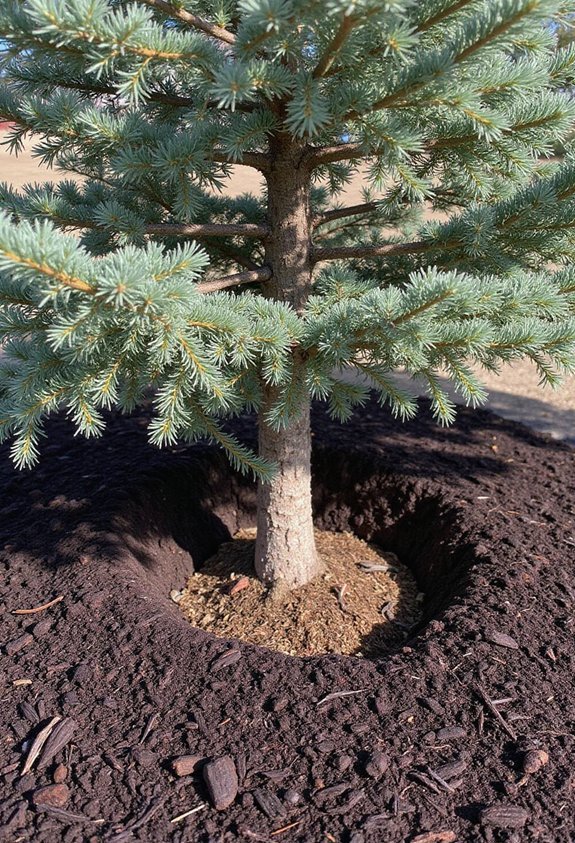
Pine trees face a particular winter challenge called root heave, which occurs when repeated freezing and thawing cycles cause the soil around their roots to expand and contract, ultimately pushing the tree upward out of the ground. You can prevent this damaging process by applying a thick layer of mulch around your pine’s base before winter arrives. This protective barrier insulates the soil, stabilizing ground temperatures and reducing those harmful freeze-thaw cycles. You’ll want to spread mulch three to four inches deep, extending it out to the tree’s drip line, which is where branches extend furthest. Make sure you’re not piling mulch directly against the trunk, as this creates moisture problems. By taking these preventive steps, you’re helping your pine trees maintain stable roots throughout the challenging winter months.
Juniper: Stopping Root Heave in Cold Snaps
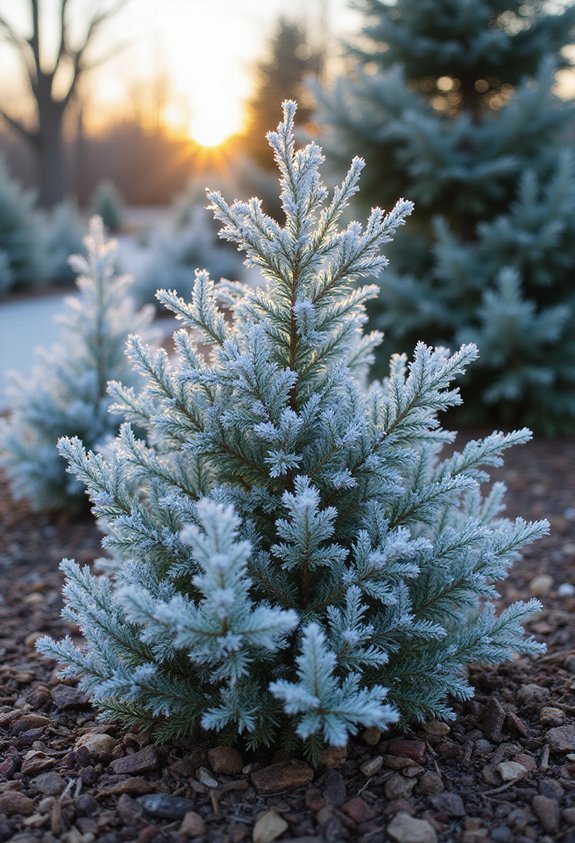
Just like pine trees, junipers are vulnerable to root heave during winter months when the ground repeatedly freezes and thaws, causing the soil to shift and lift the tree upward from its planting hole. You can prevent this damaging process by applying a four- to six-inch layer of organic mulch around your junipers before the first hard freeze arrives. This protective layer insulates the soil, regulating temperature fluctuations that trigger root heave. You should extend the mulch outward to the tree’s drip line, the outer edge of its branches, while keeping it several inches away from the trunk to prevent moisture-related diseases. By maintaining this mulch barrier throughout winter, you’re stabilizing soil temperatures and protecting your junipers’ root systems from the stress of repeated freezing cycles.
Fir Trees: Protecting Tall Leaders From Winter Wind
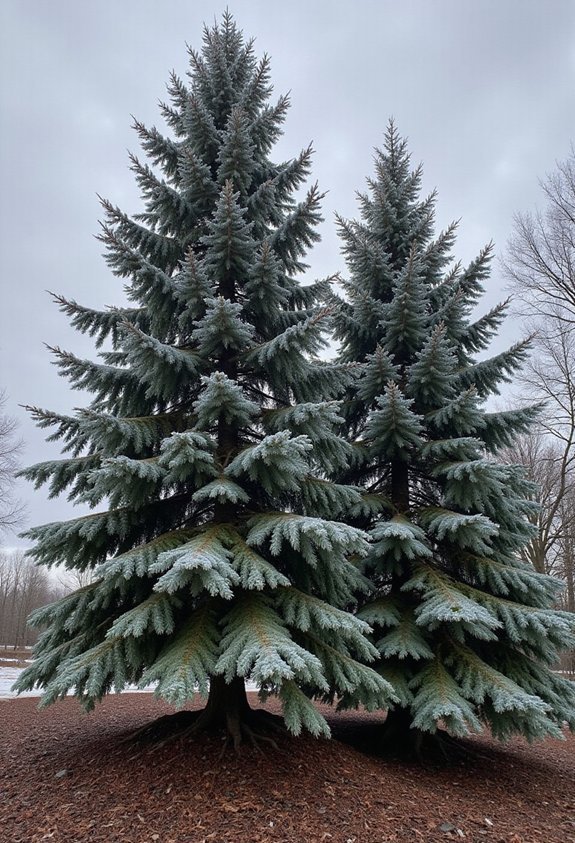
Fir trees face a different winter challenge than the root heave problems that affect junipers and pines, since their tall, upright central stems, called leaders, are particularly susceptible to damage from heavy snow loads and strong winter winds. You’ll want to protect these vulnerable leaders by wrapping them loosely with burlap or sturdy twine before winter arrives. This wrapping prevents snow and ice from accumulating on the branches and weighing down the delicate top portion of your tree. Additionally, you should apply a thick layer of mulch around the base of your fir to insulate the root system and stabilize the soil. These protective measures work together to keep your fir tree healthy and structurally sound throughout the harsh winter months.
How to Apply Winter Mulch to Evergreens
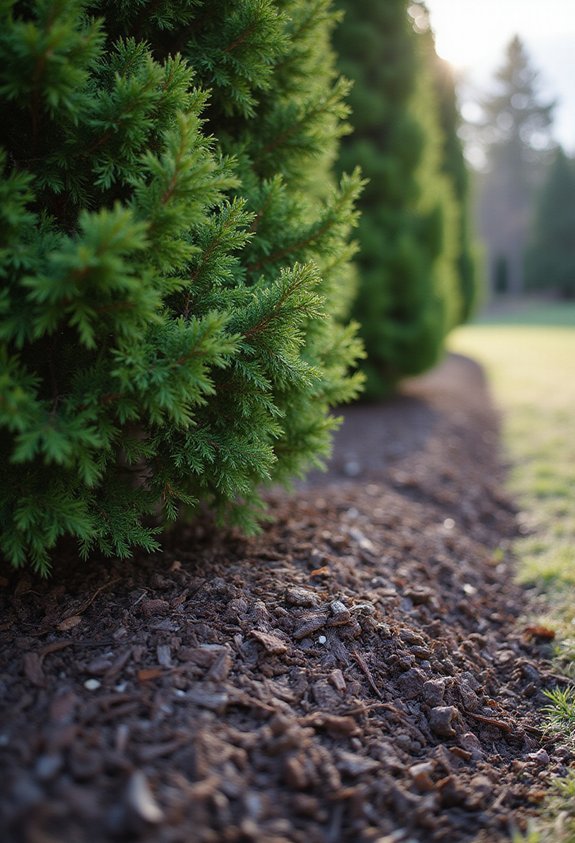
Since you’ve already wrapped your fir’s leader and prepared your evergreens for winter’s arrival, it’s time to apply mulch properly to maximize its protective benefits. Begin by clearing away debris and dead leaves from around each tree’s base, creating a clean work area. Spread mulch in a three to four-inch layer, extending it outward to the tree’s drip line where water naturally falls from branches. Keep the mulch several inches away from the trunk itself, preventing moisture accumulation that encourages rot and pest damage. Use organic materials like shredded bark or wood chips, which break down gradually and improve soil composition. Apply mulch in late autumn before ground freezing occurs, ensuring roots receive insulation when temperatures drop considerably throughout winter months.
Conclusion
You’ve now learned that applying 3-4 inches of organic mulch protects your evergreens through winter’s harshest conditions, and studies show that properly mulched trees experience up to 30% less winter damage than unprotected ones. By implementing these mulching strategies for Eastern red cedar, boxwood, arborvitae, spruce, holly, pine, juniper, and fir trees, you’re investing in their longevity and structural strength during vulnerable months.