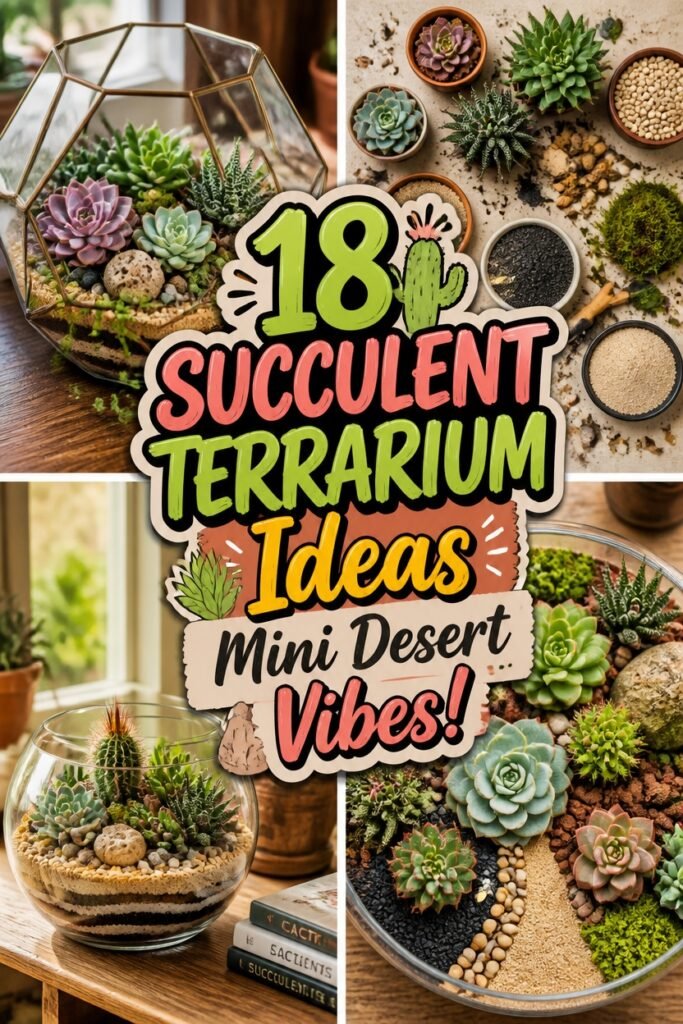
Succulent terrariums bring quiet charm to small corners. These self-contained gardens let you cultivate drought-loving plants without demanding much space or constant attention.
Their shapes and sizes are wonderfully varied. Geometric glass vessels catch the light. Whimsical fairy gardens invite a slower pace. Hanging designs float near windows. Even simple dollar store containers can become something special with the right arrangement.
Each style asks something slightly different of you. Watering schedules shift. Light needs change. Knowing these small details matters more than choosing the prettiest container.
Start with the basics, and your terrarium will reward you with steady, unfussy growth.
Geometric Glass Terrariums: Modern Minimalist Magic
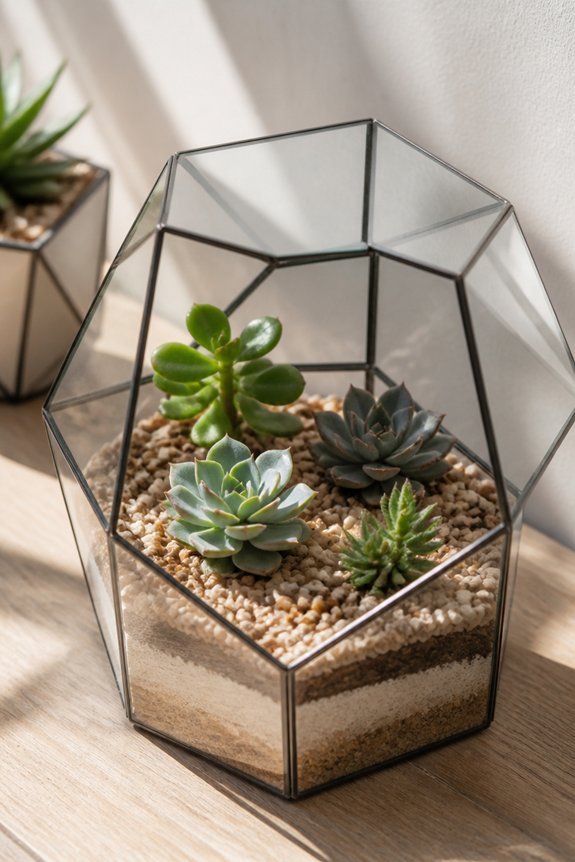
Geometric glass terrariums bring clean lines to your plant collection. They turn simple succulents into living sculpture.
These containers come in striking shapes. Think pyramids, cubes, and twelve-sided dodecahedrons. Each angle catches light differently throughout the day.
The clear glass serves a practical purpose too. You can see soil moisture and root health at a glance. No guesswork needed.
Brass frames add warmth to modern spaces. Open tops let air move freely around your plants. Both features keep succulents happier longer.
Echeveria and jade plants do especially well here. Sedum spreads nicely along the base. Good drainage and airflow suit their needs perfectly.
Placement matters with glass. Keep them away from harsh afternoon sun. The interior can overheat quickly and stress your plants.
Morning light works best. East-facing windowsills are ideal spots. Your terrarium stays bright without turning into a greenhouse.
Also read: 16 SUCCULENT GARDEN DESIGN Ideas That Feel Modern!
Fairy Garden Terrariums: Whimsical Tiny Worlds
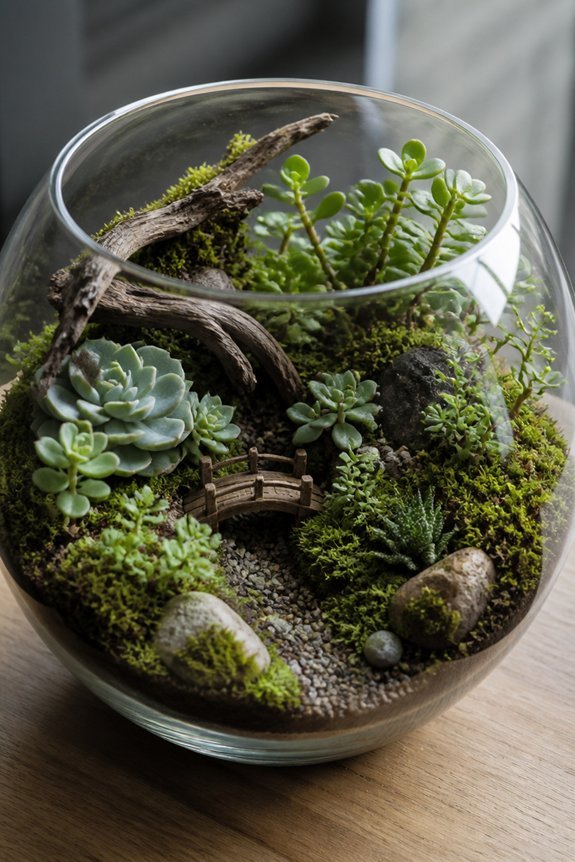
What Makes These Tiny Worlds So Captivating?
Fairy garden terrariums feel like secrets waiting to be discovered. Succulents nestle beside miniature bridges and tiny tables. Small figurines peek from behind echeveria and jade plants. The glass walls hold in just enough moisture to keep everything thriving. Your eye catches a new detail every time you look.
Building Your Own Miniature Landscape
Start with a shallow container. Drill drainage holes if needed. Layer your soil, then place your succulents first. Tuck structures and stones around them while the soil is fresh. Painted pebbles work beautifully for winding paths. A dot of moss adds instant age and charm. Try battery-powered fairy lights for evening magic.
Keep your terrarium near a bright window. Water sparingly. The glass does most of the work. Rotate your display with the seasons. Swap in tiny pumpkins for fall or miniature snowmen for winter. This keeps plants healthy and your small world feeling alive.
Air Plant Terrariums: No Soil Required
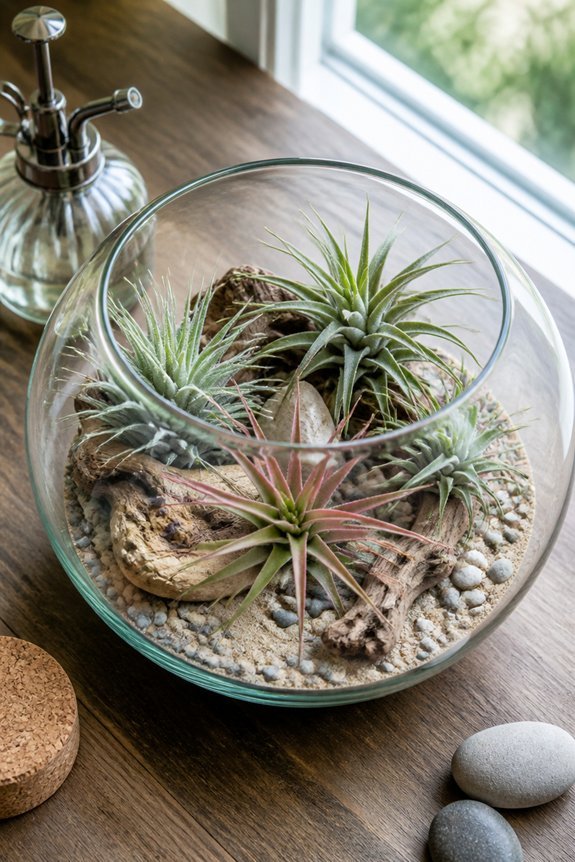
Air plants make terrarium gardening refreshingly simple. No soil needed. Just give them air to breathe and a little moisture now and then.
These clever plants drink through their leaves. They pull in water and nutrients right from the air around them. That makes them perfect for glass globes, hanging orbs, or any container you fancy.
Popular choices to try:
- Tillandsia ionantha stays compact and blushes red when blooming
- Tillandsia xerographica has striking silver curls and handles drier spots
- Tillandsia cyanea sports a showy pink flower spike
Match your plant to your home’s conditions. Some like more humidity. Others prefer brighter light. Pick wisely and your plant will thank you.
Keeping them happy is straightforward. Bright, indirect light works best. A spot near east or north-facing windows usually does the trick.
Water weekly by misting or soaking for 20-30 minutes. Always let them dry completely upside down. Wet bases rot quickly. Shake off excess water and good airflow prevents trouble.
Skip enclosed containers. Open glass vessels or wire mounts work better. They let moisture escape.
For styling, keep it simple. Tuck plants between smooth river stones. Nestle them on driftwood pieces. Or layer colored sand for a clean, modern look. The plants become the focal point without clutter.
Succulent Wedding Favors: Living Gifts Your Guests Keep
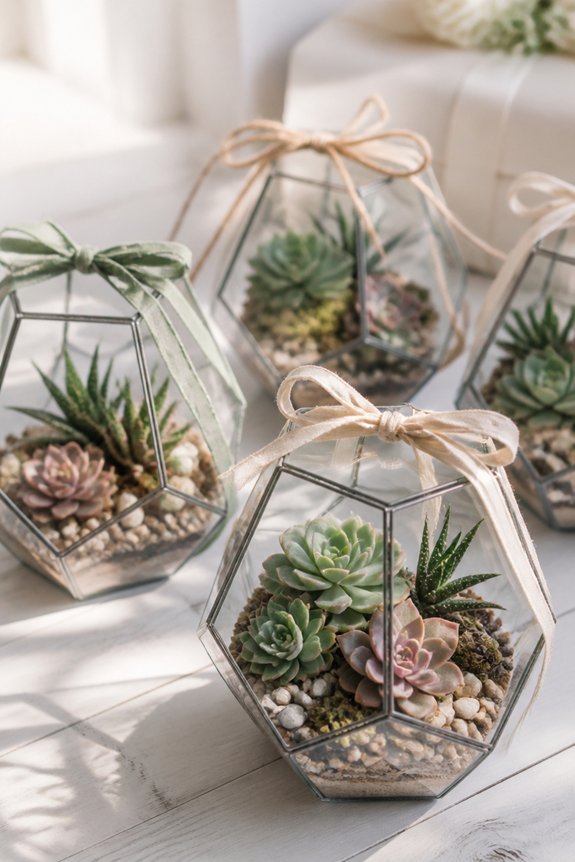
Succulents make wedding favors your guests actually want to keep. They’re small living plants that last for years. No one tosses these in a hotel trash bin on the way home.
Jade plants, echeveria, and aloe are perfect starter choices. They stay compact and look great in tiny pots. Your guests can place them on a windowsill or desk without any fuss.
Presentation matters more than you think. Try ceramic pots with your wedding date stamped on the side. Or wrap pots in kraft paper with simple twine. Burlap adds a rustic touch if that fits your style. Custom labels cost little extra but make each favor feel personal.
Here’s a practical tip: Order in bulk from local nurseries. You’ll save money and often get help with custom arrangements. Some nurseries even pre-pot them for you.
Transportation worries? Don’t. Succulents forgive rough handling. They don’t mind dry air or delayed watering. Your guests can forget about them for weeks and they’ll still thrive.
Compare this to candles or candies that disappear fast. Succulents become houseplants, desk companions, conversation starters. Years later, guests might still point to that chubby little echeveria and remember your day.
Hanging Succulents: Vertical Garden Solutions
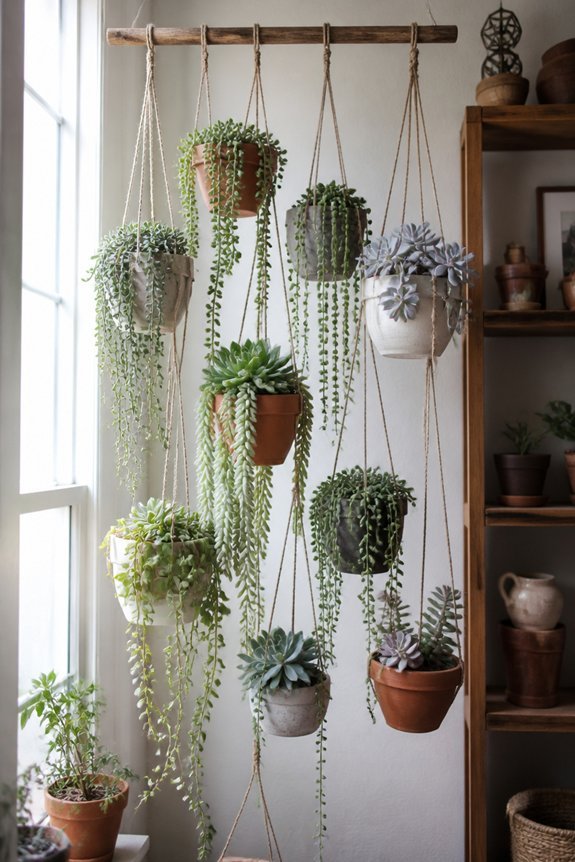
Running out of room? Go vertical. Hanging succulents turn empty walls into living art. They free up precious floor space while adding green life to tight spots.
Apartments, small bedrooms, and balconies all benefit. You simply need a wall and a plan.
Choose trailing varieties for the best effect. String of pearls drapes like green beads. Burro’s tail cascades in chunky segments. Sedum spills over edges with cheerful clustering.
Mounting options vary. Try ceramic wall planters for a clean look. Macramé holders add boho texture. Wire baskets keep things simple and modern.
Light matters most. Bright, indirect sun keeps these plants happy. Skip the dark corners. Avoid blasting them with direct afternoon heat too.
Water sparingly. These succulents store moisture in their leaves. Check dryness with your finger first. Once every week or two usually suffices.
Installation tips: Use proper anchors for your wall type. Test weight capacity before adding plants. Group varieties with similar water needs together.
Look up and imagine the possibilities. Your unused vertical space awaits.
Desert Landscape Terrariums: Multi-Level Rock Formations
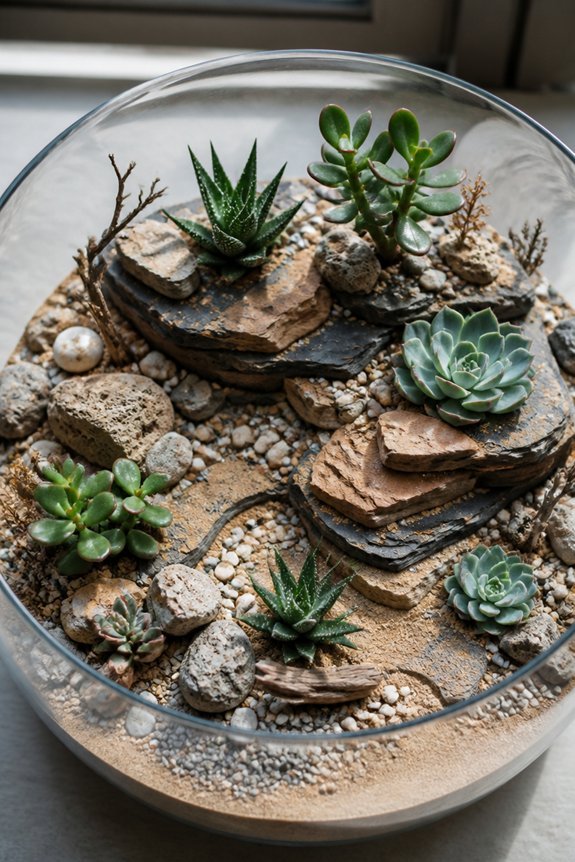
Layered terrain makes a simple terrarium feel like a real desert. Multi-level rock formations add visual interest. They also create separate growing zones for different succulents.
Stack stones, slate pieces, or store-bought terrarium rocks to build elevation. Water naturally drains downward. This keeps moisture-sensitive roots healthy and dry.
Place shallow-rooted sedums up high. Put deeper-rooted echeveria below. Fill gaps with sand and small pebbles. This mimics real desert ground.
Elevated rocks cast shadows. These shaded spots protect tender plants from harsh light. You get beauty and function together. One container can host many succulent types.
Bohemian Terrarium Designs: Eclectic & Colorful
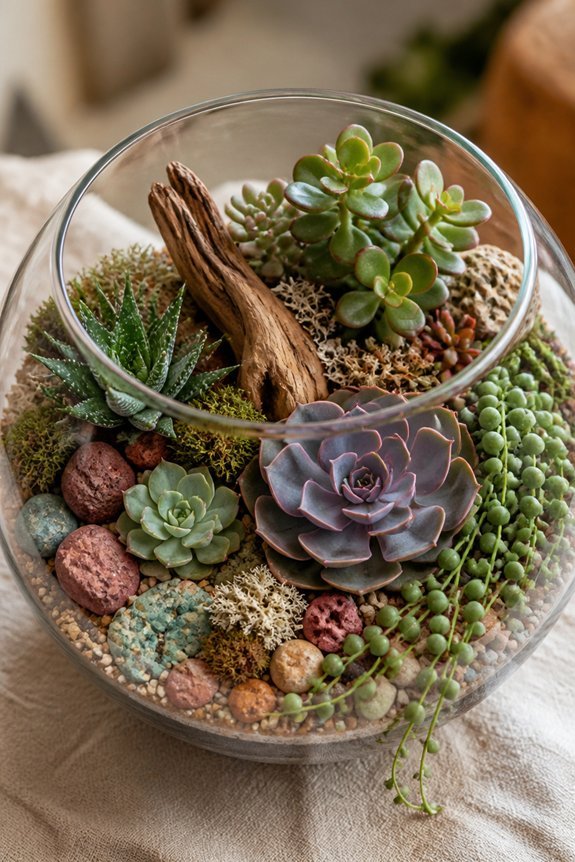
Many gardeners love bohemian terrariums. Rules don’t apply here. Mix whatever colors and textures speak to you.
Layer your soil differently in each project. Try decorative stones on top in one corner. Add driftwood pieces for height. Swirl colorful sand into patterns that feel right. Each terrarium becomes unique.
Succulents form the base. Jade plants add structure. Echeveria brings rosette shapes. String of pearls trails over edges. Tuck in brass figurines or vintage glass finds. Beaded accents catch light beautifully.
Containers can be anything. Geometric glass boxes work well. So do mason jars from your kitchen. Wooden vessels add warmth. Choose what matches your space.
Let plants grow naturally. Trailers can cascade wherever they want. Upright varieties stand tall nearby. Perfect symmetry isn’t the goal. Visual surprise is.
Remember the basics even while creating freely. Drainage holes matter. Bright indirect light keeps plants happy. Water sparingly. These small habits keep your art alive.
Your terrarium becomes personal expression that actually grows.
Succulent Lightbulb Terrariums: Big Impact in Tiny Spaces
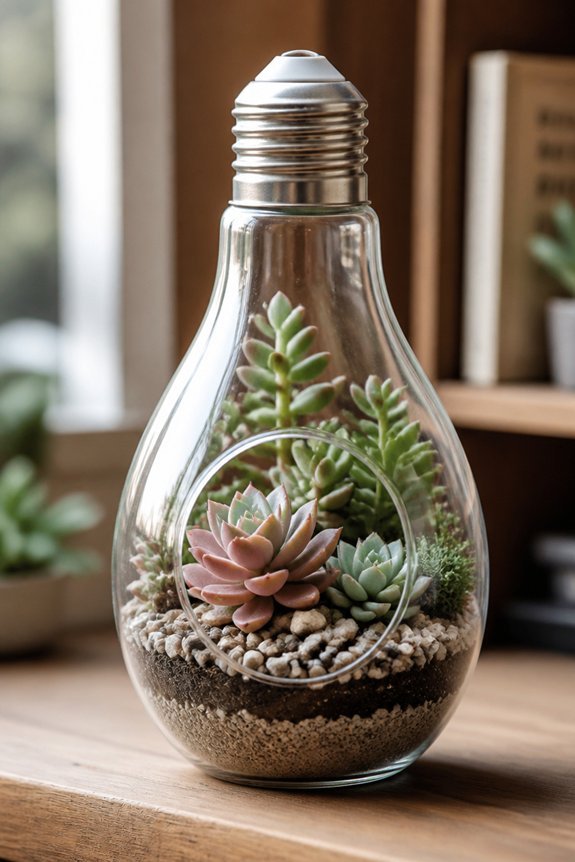
Small spaces call for small solutions.
Lightbulb terrariums work beautifully for compact succulents like echeveria, jade plants, and sempervivum. The narrow opening takes patience. Use a funnel or rolled paper to layer soil and pebbles without mess.
These tiny glass worlds trap humidity inside. You will water less often than with open pots. Still, drainage matters. Add gravel or coarse sand at the bottom to keep roots healthy and rot-free.
Place one on your desk, a shelf, or a sunny windowsill. The clear glass lets you watch roots grow and spot when soil dries out. A quick mist now and then keeps things thriving. Perfect if you want greenery without the fuss.
Woodland Mixed Terrariums: Succulents Meet Moss
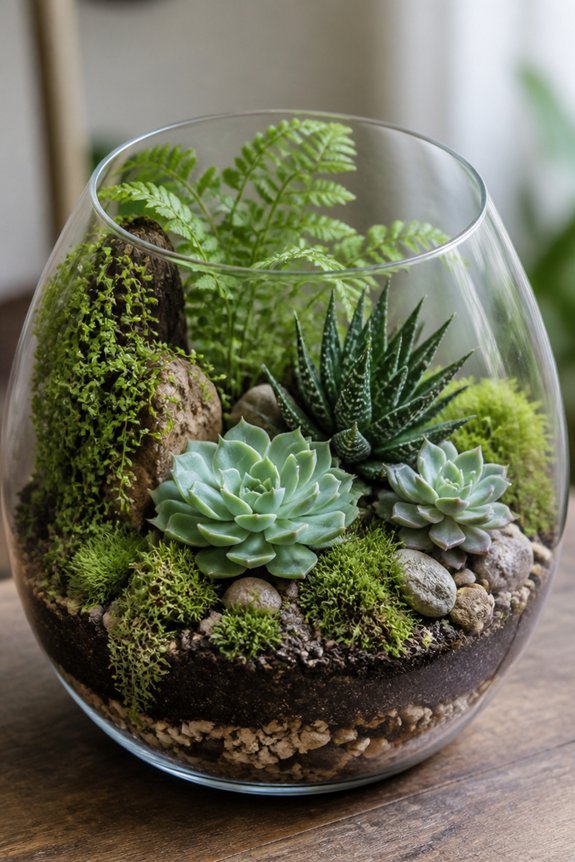
Succulents and moss might seem like an odd couple. One loves dry conditions. The other thrives in damp corners. But in a woodland terrarium, they actually balance each other beautifully.
Think of a forest floor. Patchy sunlight filters through. Some spots stay moist and shady. Others dry out quickly. Your terrarium mimics this perfectly. The moss settles in the cooler, wetter zones near the base. Succulents claim the drier upper areas with better air flow. Glass walls let you watch this little ecosystem in action. You will see roots spreading, moss creeping, soil layers settling.
Start with echeveria tucked against sheet moss. Try jade plants with fluffy sphagnum. Sempervivum pairs naturally with dense cushion moss. Keep moss to about 40 percent coverage. Scatter it between rocks and low areas where water pools.
Six to eight hours of soft, indirect light keeps everyone happy. Water every two to three weeks. Less than a typical terrarium. Let the moss guide you. Dry and crispy means thirsty. Plump and green means wait. This setup practically manages itself once you get the rhythm.
Cactus-Focused Terrariums: Spiky Statement Pieces
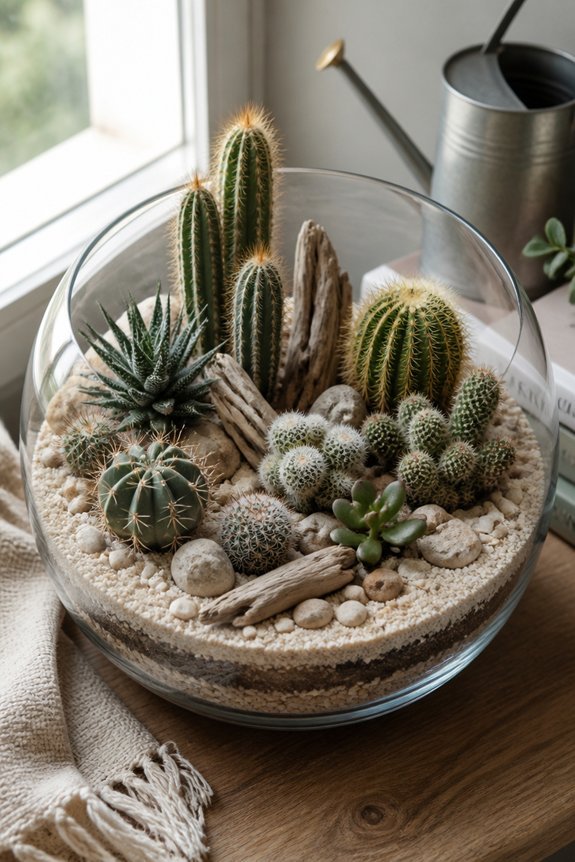
You want something completely different from soft, mossy scenes. Cactus terrariums deliver that. They run on minimal water. They forgive busy schedules.
The base layer matters here. Start with sand. Add gravel. Top with fast-draining, porous soil. Your plants will thank you.
Small varieties work best. Mammillaria stays neat and round. Rebutia adds bright pops of color. Echinocereus brings interesting ridges and textures. Mix heights to keep the eye moving. Give each plant breathing room.
Setting yours up for success:
Place your container where it catches bright, indirect light for six to eight hours. Shallow pots with drainage holes prevent rot. Resist the urge to cluster tightly. Water only once monthly when plants are actively growing.
Rocks and stones finish the look naturally. They anchor the desert vibe. The result? A striking, nearly self-sufficient piece that fits anywhere. Shelves. Desks. Sunny windowsills. Little effort. Big personality.
Aquarium-Style Terrariums: Glass Tank Gardens
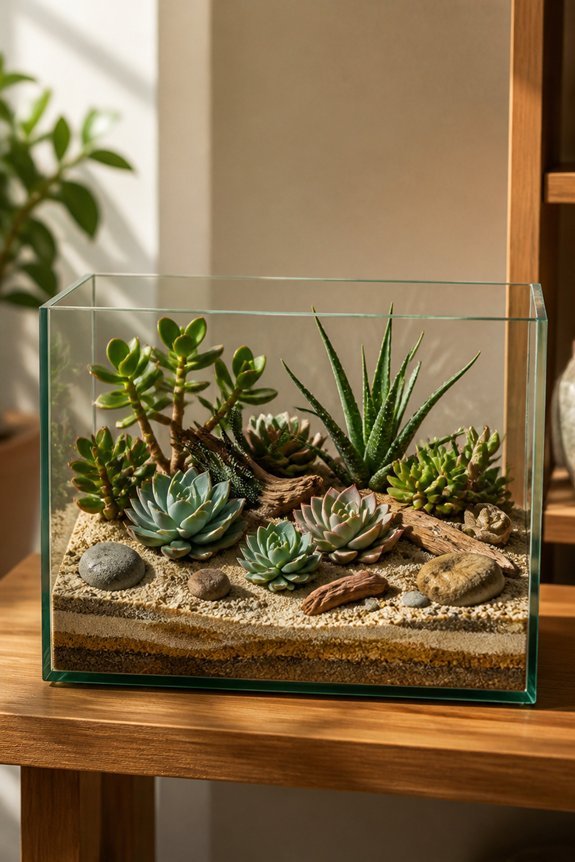
Glass aquarium tanks work beautifully for enclosed gardens. They trap humidity. They keep moisture levels steady. This makes them quite different from desert-style setups.
These tanks suit tropical plants perfectly. Think jade plants, aloe vera, and echeveria. They love the damp, stable environment.
Four sides of glass give you a complete view. You can watch roots grow. You can check soil health easily. Most aquarists start with 10 to 20 gallon sizes. Larger 40 or 55 gallon options work great for multi-level designs.
Practical tips to keep in mind:
Poke or drill drainage holes if you can. No holes? Layer gravel and charcoal beneath your soil. This stops roots from rotting.
LED lights run cool and cheap. Pick low-wattage options. Your plants get energy without overheating the tank.
Leave small gaps in the lid. Fungi hate fresh air circulation. Your plants will thank you.
Check condensation daily. Wipe excess drops. Add water only when the top soil feels dry.
These terrariums fit anywhere. Offices stay quiet and controlled. Bedrooms offer soft night lighting. Living rooms become instant conversation pieces. They reward attention without demanding constant care.
Low-Profile Centerpiece Arrangements for Tables & Shelves
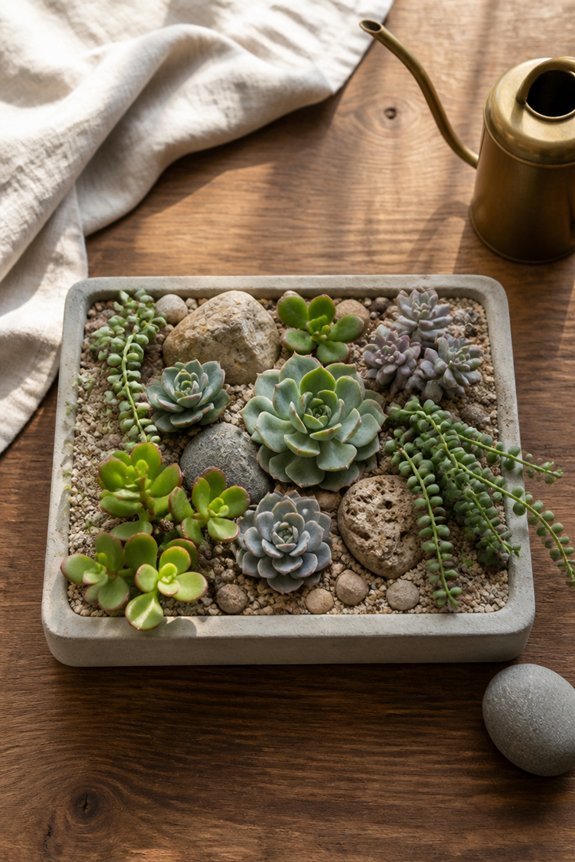
Low-profile centerpieces fit perfectly on tables and shelves where you want impact without height.
Try echeveria, sempervivum, or jade plants. They stay compact naturally. Pair gray-green rosettes with burgundy types for contrast. Mix fuzzy leaves against smooth ones for texture. Shallow ceramic bowls and wooden boxes work well here. Top everything with sand or gravel. It finishes the look and helps drainage too.
Water every two or three weeks. These arrangements give you greenery that stays out of the way.
Monochromatic Succulent Terrariums: The Calm Power of One Tone
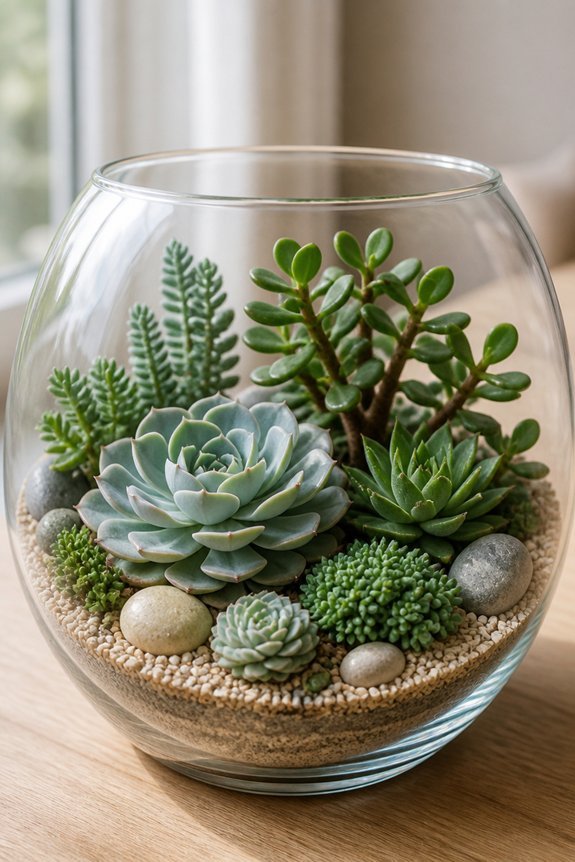
One color. That’s all you need.
Monochromatic terrariums strip away visual noise. Your eye rests. Your mind follows.
Green-only setups stay classic. Jade plants anchor the base. Echeveria adds rosette shapes. String of pearls drapes over edges. Each plays with light differently.
Purple brings unexpected drama. Try purple echeveria alongside graptopetalum. Texture becomes your contrast. Smooth leaves against fuzzy ones. Round forms against trailing stems.
Silver and gray work subtler magic. Dusty rose succulents catch morning light. Senecio creates soft clouds. Aloe brings sharp architectural lines.
Pick plants that want the same care. Desert lovers together. shade-tolerant companions grouped. Your terrarium thrives when watering stays simple.
Place these where you need calm most. A desk corner. A bedside shelf. The unified tone lets furniture and wall colors breathe.
Without color competition, shapes take center stage. A plump leaf becomes sculpture. A twisted stem draws your eye. You notice details you’d otherwise miss.
Succulent Terrarium Collection: Grow Over Time
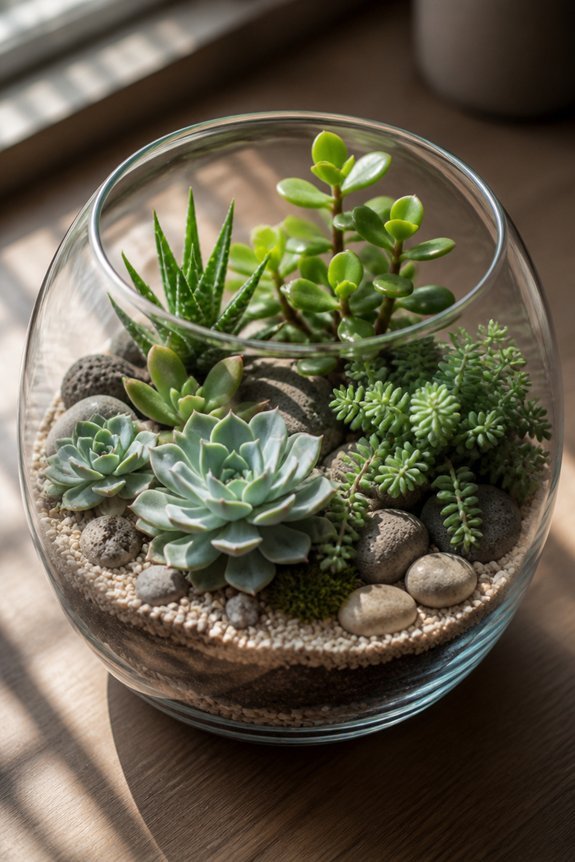
Start small. A single glass box on your desk works perfectly for beginners.
You will want different containers for different spots. Small boxes fit tight spaces. Larger cases make statement pieces. Hanging terrariums save counter space. Shallow bowls suit spreading succulents like echeveria.
Pick three locations first. Try a desktop terrarium for your workspace. Add a windowsill arrangement for bright light. Hang one near a window for vertical interest.
Rotate your displays each season. Move plants around when you water them. This keeps your collection fresh and helps you spot problems early.
Buy slowly. One new container per month gives you time to learn each plant’s needs. Keep a simple notebook. Note which succulents thrive where. Track watering schedules and growth spurts.
Your preferences will emerge naturally. Some collectors love jade plants. Others gravitate toward aloe varieties. Let your space and habits guide your choices.
Budget-Friendly Terrarium Ideas: Dollar Store Hacks
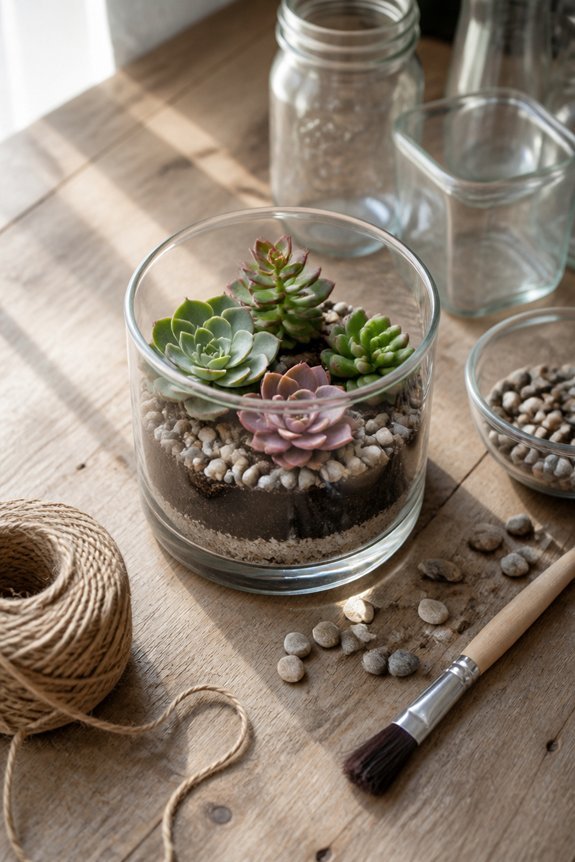
Many collectors think terrariums need pricey specialty gear. That is not true. Your local dollar store has everything you need.
Glass vases and mason jars work perfectly as containers. So do clear plastic food containers with lids. Just clean them well first. Small decorative stones make great drainage layers. Grab a bag of craft sand while you are there. Mix it with regular potting soil for a cheap substrate.
Look for miniature figurines in the toy aisle. Small rocks and driftwood pieces add natural charm. A paintbrush from the art section cleans delicate leaves gently. Small spoons handle planting duties. Tweezers help position tiny plants exactly where you want them.
Skip the specialty misters. A basic spray bottle works just fine. Pick up clear plastic wrap and masking tape too. They secure your container during car rides home.
Building something beautiful does not require deep pockets. It just takes creativity and a quick trip down the discount aisle.
Seasonal Succulent Terrariums: Holiday-Themed Displays
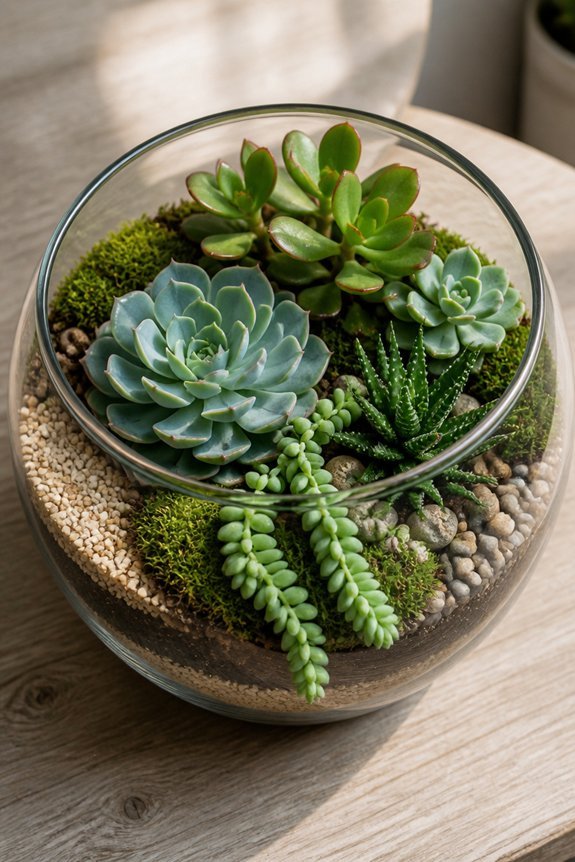
Holidays give you a perfect excuse to refresh your terrarium. No need to start over. Just add a few seasonal touches.
Swap in small ornaments, colored sand, or tiny picks. Your plants stay put. Only the decorations change.
Christmas calls for red and green. Tuck in echeveria and jade plants. Add a miniature wreath or two. Instant holiday spirit.
Valentine’s Day goes pink. Sedum rubrotinctum works beautifully here. Drop in small heart decorations. Done.
Halloween means orange sand and tiny pumpkins. Dark aeonium arboreum sets the mood perfectly.
Your plants never notice the seasonal switch. Same water. Same light. No stress for them.
Glass containers show off everything. Viewers see the full picture. Plants and decorations together.
Change things monthly if you want. Keep it fresh. Keep it fun.
Need a gift? These work great. Affordable. Easy care. The recipient just follows normal succulent routines.
Low-Light Succulents: Growing in Dim Spaces
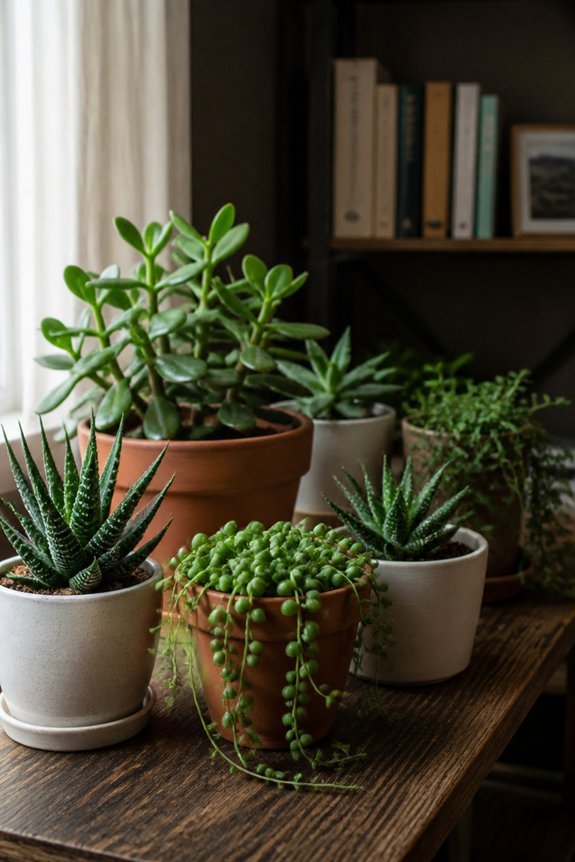
Not every corner of your home gets flooded with sunshine. That’s okay. Your terrarium can still flourish.
Haworthia fits beautifully here. Its slender leaves stay compact even when light is scarce. Gasteria feels right at home in shadier spots too. Try Peperomia or softer Echeveria types for gentle, indirect corners.
Water less often in dim spaces. Plants simply drink slower without strong light. Root rot sneaks up fast when soil stays wet. Check those drainage holes regularly. Keep them clear.
Place your terrarium near any window with filtered light. Direct sun isn’t required. Darker rooms? A small grow light works wonders. Watch your plants closely. Stretching stems mean they’re reaching for more brightness.
Keep Them Alive: Watering, Light & Drainage Basics
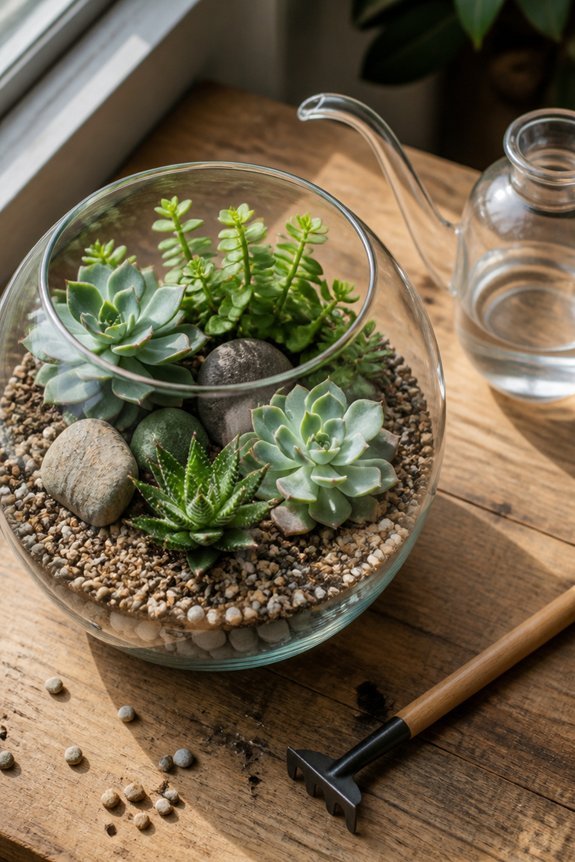
Three things make or break your succulent terrarium. Water, light, and drainage. Get these right, and your plants thrive. Get them wrong, and you’ll be starting over.
Water sparingly. Succulents hoard water in their leaves and stems, so soggy soil spells disaster. Let the soil dry out completely. Then wait a day more. Now water deeply. Repeat every two to three weeks. Cut back in winter when growth slows.
Find bright, indirect light. Your terrarium wants four to six hours daily. A south-facing window works beautifully. No sunny window? A grow light six inches above does the trick.
Drainage matters most. Mix equal parts cactus soil, perlite, and coarse sand. Skip the regular potting mix. It holds too much water. Always use containers with drainage holes. Wet feet kill succulents fast. You can add a layer of pebbles at the bottom for extra insurance.
Watch your plants closely. Soft, yellow leaves mean too much water. Stretched, pale growth signals not enough light. Small adjustments keep your terrarium happy for years.
Frequently Asked Questions
How Often Should I Water My Succulent Terrarium to Prevent Root Rot?
One should water succulent terrariums sparingly, approximately every two to three weeks. The soil must dry completely between waterings. Overwatering remains the primary cause of root rot in succulents, so owners should err on the side of underwatering rather than excessive moisture.
Can I Use Regular Potting Soil or Do Succulents Need Special Soil?
Succulents would absolutely wilt into oblivion in regular potting soil. They require well-draining cactus or succulent-specific soil mixed with perlite or sand. This specialized blend prevents moisture retention, which causes root rot and plant death.
What’s the Ideal Temperature Range for Keeping Succulents Healthy Indoors?
Succulents thrive indoors between 50-80°F, with ideal growth occurring at 60-75°F. They tolerate temperature fluctuations well but prefer avoiding frost and extreme heat. Most varieties suffer when exposed to temperatures below 40°F for extended periods.
How Long Do Succulents Typically Live in a Terrarium Ecosystem?
Succulents sustain surprisingly stellar staying power in terrarium settings, typically thriving for five to ten years when properly maintained. Their longevity depends largely on light exposure, watering schedules, and soil drainage conditions within the enclosed ecosystem.
Should I Fertilize My Terrarium Succulents, and if So, How Often?
Terrarium succulents require minimal fertilization due to their low nutritional demands. One should apply diluted, balanced fertilizer sparingly—approximately once every three to four months during the growing season. Over-fertilizing risks root damage and algae growth.
Conclusion
Succulent terrariums offer practical solutions for plant enthusiasts of all budgets and skill levels. Whether choosing geometric glass designs, fairy gardens, or hanging arrangements, proper drainage and appropriate lighting remain essential for plant survival. As the adage goes, “an ounce of prevention is worth a pound of cure”—establishing correct watering schedules and soil composition prevents common failures. Dollar store containers, seasonal decorations, and low-light varieties expand accessibility and customization options for any living space.