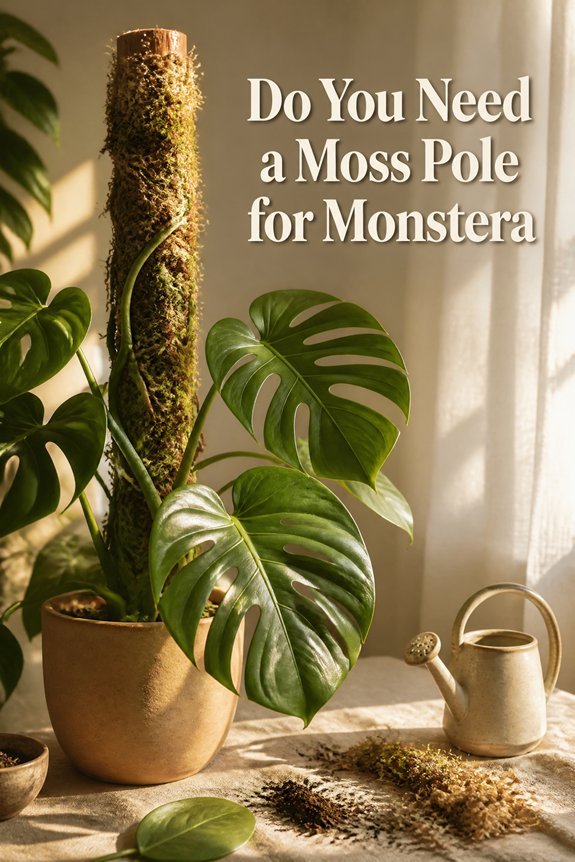
Many Monstera owners wonder whether their plant truly needs a moss pole. In truth, these tropical beauties can manage perfectly fine on their own. They’ll sprawl across a surface or climb nearby furniture if given the chance. Their natural adaptability means they’ll make do with whatever space and support they find.
Growth habits change dramatically with a proper climbing structure, though. Leaves tend to grow larger and develop more pronounced fenestrations when the plant can anchor itself vertically. The stem strengthens as aerial roots attach and pull upward, creating that coveted mature look most houseplant enthusiasts chase after.
Space constraints often dictate the decision. Small apartments might force a more contained, vertical growing style. Larger rooms could welcome the wild, wandering vines of an unsupported specimen.
Light sources matter too, since Monsteras naturally lean toward brightness and will bend dramatically without guidance toward a window.
Consider your priorities before deciding. A moss pole offers a laboratory for watching tropical plant behavior up close. Going without celebrates the plant’s inherent resilience and slightly chaotic charm. Both approaches yield gorgeous results, just different personalities emerging from the same species.
Do Monsteras Actually Need a Moss Pole to Survive?
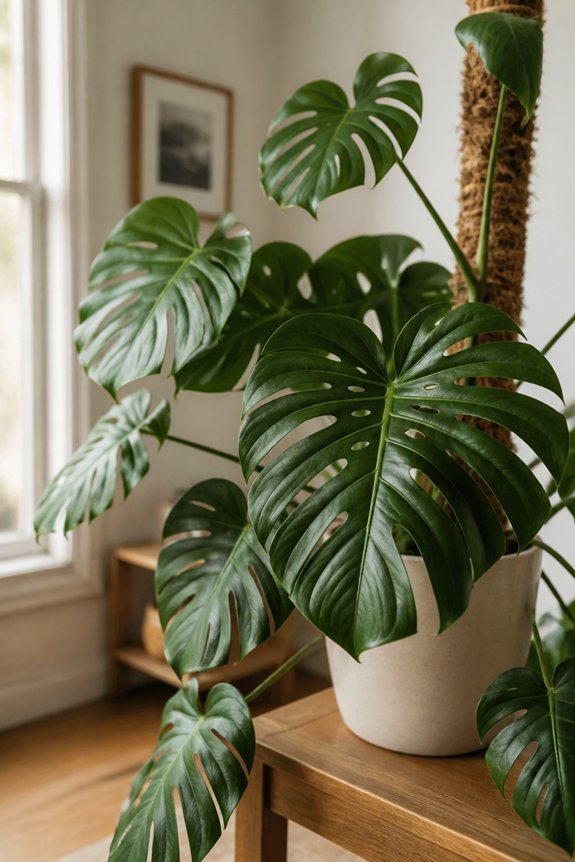
Moss poles are popular, but your monstera will be just fine without one. These plants grow well as trailing vines or compact bushes. It really depends on your setup.
In the wild, monsteras climb trees for support. But at home? They adapt easily. No pole means no problem for basic survival.
Your plant will still photosynthesize, drink up water, and push out new leaves. It might spread horizontally instead of reaching up. Some people actually love this look for shelves or hanging baskets.
Moss poles are optional. They help with certain aesthetics or space constraints. The plant itself does not care either way.
Also read: Why Is My Peace Lily Not Growing
What Happens When You Add a Moss Pole
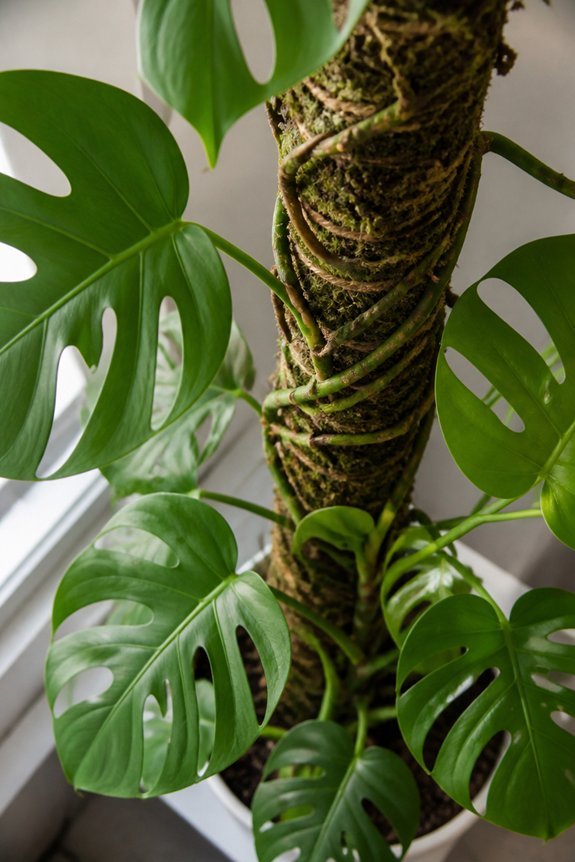
Adding a moss pole changes everything about how your monstera grows. The plant starts climbing upward instead of sprawling across your floor. This mirrors exactly what monsteras do in the wild, reaching up jungle trees for light.
Your plant’s aerial roots will latch onto the damp moss quickly. They love that moist surface. As the roots grip tighter, the stem grows stronger and taller. You’ll notice new leaves popping out bigger than before. Those signature Swiss cheese holes show up more dramatically too.
The whole plant stays neater and more vertical. It takes up less room sideways while drawing your eye upward. Leaves catch more light higher up, so photosynthesis gets a boost. Just remember to mist the pole regularly. Dry moss won’t encourage those roots to attach.
Tending your monstera gets easier with this setup. Everything stays in one tidy column. No more chasing vines across your bookshelf or untangling stems from chair legs. Pruning becomes a quick snip rather than a major project.
When Your Monstera Needs a Moss Pole
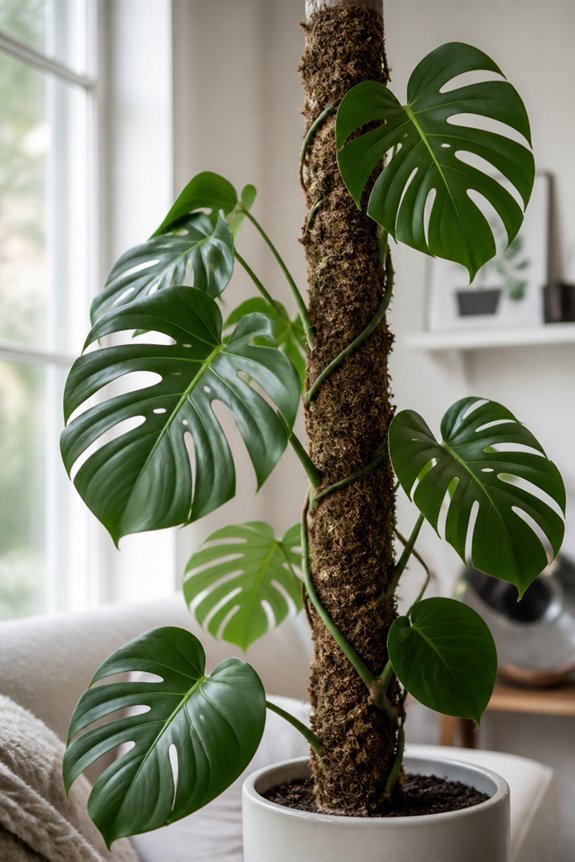
Your monstera will tell you when it’s ready for a moss pole. You don’t need to rush this decision.
Young plants with stubby stems and few aerial roots do just fine on their own. Give them time to grow. But once your monstera hits 2-3 feet tall, things change. You’ll notice aerial roots popping out everywhere. The stems might start flopping sideways instead of growing up. That’s your cue.
Watch how your plant grows. Monsteras naturally want to climb. When you see vining tendencies, your plant is basically asking for something to grab onto. Low light makes this even more important. These plants stretch upward searching for brighter spots, and a pole gives them that path.
Space matters too. Got a tiny apartment? You might skip the pole or pick a shorter one. Older monsteras respond best to support. Their growth habits are set, and a pole can transform their shape dramatically. Check your plant’s size, speed of growth, and your room layout. Then decide if it’s time to add that vertical structure.
Other Ways to Support Your Monstera
You have plenty of options beyond the classic moss pole. Wooden stakes give solid, reliable support for taller stems. Bamboo poles work great if you prefer something lighter and easier to move around.
Trellises suit monsteras that like to spread out sideways rather than climb straight up. You can also use soft ties or climbing strings attached to walls. These guide stems upward without any bulky structure in the way.
Some growers prefer ladder-style supports or frames built just for vining plants. Your choice comes down to three things: how much space you have, what shape you want your plant to take, and what looks good in your home. Every option lets your monstera climb naturally and gives those aerial roots something to grab onto.
How to Set Up and Care for a Moss Pole
Setting up a moss pole is straightforward. Start by pushing the pole deep into the potting soil. Wiggle it a bit to make sure it feels sturdy. A wobbly pole won’t support much growth.
Next, soak your sphagnum moss until it’s damp. Wrap it around the pole in even layers. Use twine or fishing line to hold it in place. Space your ties from bottom to top so nothing slips.
Now comes the fun part. Gently guide your monstera’s stems toward the pole. Soft plant ties or small clips work great. Don’t pull too tight. Stems need room to grow thicker over time.
Mist that moss every few days. Aerial roots love humidity. Check your ties once a month and loosen any that feel snug. Swap out dried moss yearly to keep things fresh. Your plant will reward you with stronger climbing growth.
Moss Pole Mistakes That Kill Growth
Even with good intentions, gardeners often make common mistakes when setting up and maintaining moss poles. These errors can seriously stunt your monstera’s growth.
Not keeping the moss moist is a big one. Aerial roots need that moisture to attach and thrive. Let the moss dry out, and your plant will struggle to connect.
Loose poles are another problem. Your monstera needs solid support to grow upright. Wobbly poles lead to leaning and toppling.
Poor-quality moss falls apart fast. You’ll replace it constantly, and your plant’s roots will suffer from all that disruption.
Light matters too. Stick a moss pole in a dim corner, and your monstera won’t have the energy to climb. These plants need brightness to reach upward.
Make sure you anchor the pole firmly in the pot. Any shifting damages delicate new roots before they can establish themselves.
Don’t forget to guide your vines. Left alone, they’ll spread sideways instead of climbing your carefully placed support. Gently tuck new growth toward the pole, and you’ll see much better results.
When to Skip the Moss Pole?
Not every monstera needs a moss pole. Smaller varieties like compact Monstera deliciosa often do just fine on their own. Young plants with short stems grow slowly too. They stay neat on shelves without any extra help.
Dim rooms change things as well. Low light means slower growth, so vertical support feels less urgent. Some people actually love the trailing look. A hanging basket or high shelf lets the plant cascade naturally.
Your budget and style matter here. If you prefer a relaxed, sprawling shape, skip the pole entirely. Regular pruning and smart placement keep the plant happy either way.
Frequently Asked Questions
Can I Use Alternatives Like Bamboo Stakes or Trellises Instead of Moss Poles?
Yes, alternatives work effectively. Bamboo stakes, trellises, and other supports provide adequate structure for Monstera growth. However, moss poles offer superior moisture retention and aerial root development compared to these alternatives, making them ideal but not essential.
How Often Should I Mist or Water the Moss Pole Itself?
The moss pole requires misting two to three times weekly to maintain moisture levels. Confirm the moss stays consistently damp but not waterlogged, as this encourages aerial root attachment and healthy upward growth.
Will My Monstera’s Leaves Grow Larger With a Moss Pole?
Like a vine reaching toward sunlight through a forest canopy, the monstera’s leaves unfurl larger when climbing a moss pole. The aerial roots anchor firmly, channeling nutrients that trigger more substantial foliage development and fenestration patterns.
Can I Add a Moss Pole to an Already Mature Monstera?
Yes, a moss pole can be added to a mature Monstera. The plant will gradually climb and attach to it over time. Aerial roots will develop and cling to the moss, supporting upward growth and potentially larger leaf development.
What Type of Moss Works Best for DIY Moss Pole Construction?
Hitting the ground running, sphagnum moss proves most effective for DIY moss poles because it retains moisture exceptionally well, promoting aerial root development. Alternatively, coconut coir offers a budget-friendly substitute that performs comparably for Monstera support structures.
Conclusion
A moss pole functions as an optional scaffold, not a lifeline, for Monstera plants. These vines adapt to spaces with or without support, growing either upward or trailing downward. The decision hinges on available space, desired appearance, and growth patterns observed. Choosing a moss pole enhances leaf development and aerial root attachment; skipping one maintains a trailing aesthetic. Either path sustains plant health successfully.