
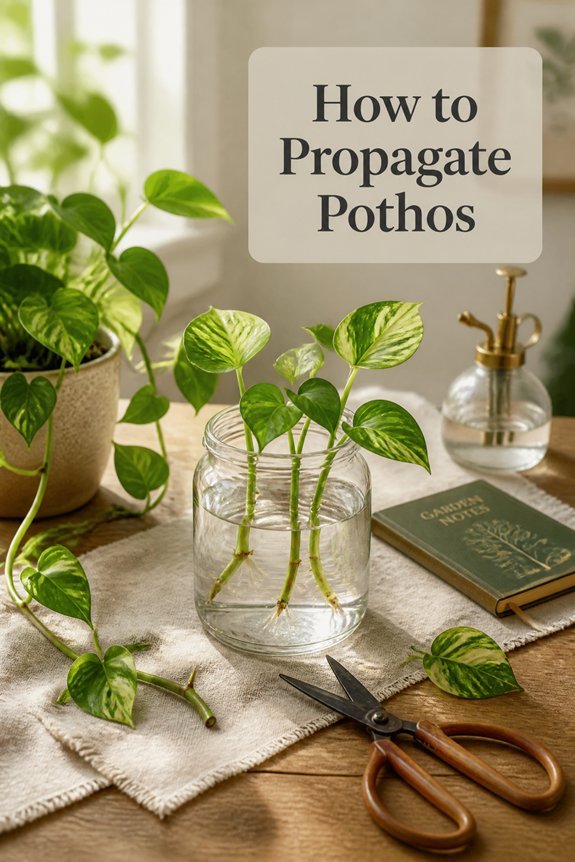
Propagating pothos is simpler than many houseplant enthusiasts expect. The process begins with identifying healthy, trailing stems on a mature plant. Look for sections with several leaves and distinctive nodes—the small bumps where roots will eventually emerge.
Once you’ve selected your cutting, make a clean snip just below a node using sharp scissors or pruning shears. The cutting itself should include at least 2-3 leaves to ensure it can photosynthesize while developing roots. Some gardeners prefer to remove the bottom leaf to expose more node surface area for root growth.
The choice between water and soil propagation depends largely on personal preference and timing. Water propagation offers the satisfaction of watching roots develop in real time through a glass jar or vase, though it requires filtered or distilled water changed every few days.
Soil propagation skips the transplanting step entirely, with cuttings placed directly into potting mix that stays consistently moist until new growth appears.
Both methods demand patience and attention to environmental factors. Bright, indirect light and warm temperatures encourage faster root development regardless of which technique you choose.
Most cuttings will show signs of root formation within two to four weeks, at which point water-propagated specimens can transition to soil.
Choose Your Propagation Method: Water or Soil?
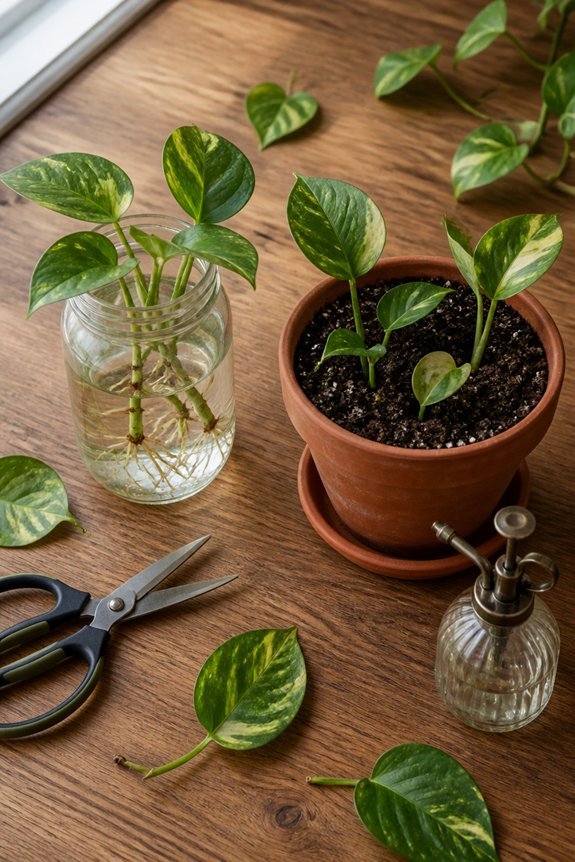
Pothos plants root easily in water or soil—pick what fits your style.
Water propagation wins fans for its transparency. Drop cuttings in a clear jar and watch roots snake out over 7 to 14 days. No guessing games here. You see exactly when they’re ready. The catch? Those water-grown roots sometimes sulk when you shift them to dirt.
Soil propagation skips that drama. Roots grow accustomed to their permanent home from day one. You will need to keep the mix evenly moist though—not soggy, not dry. Miss the window and your cutting struggles.
Both approaches need the same starting material: vigorous stems about 4 to 6 inches long with at least two nodes. Healthy parent plants make healthy babies.
Beginners often prefer water for its forgiving nature. Patient growers might lean soil for stronger transitions. Your plant, your call.
Also read: Why Is My Peace Lily Not Growing
Gather Your Supplies for Pothos Propagation
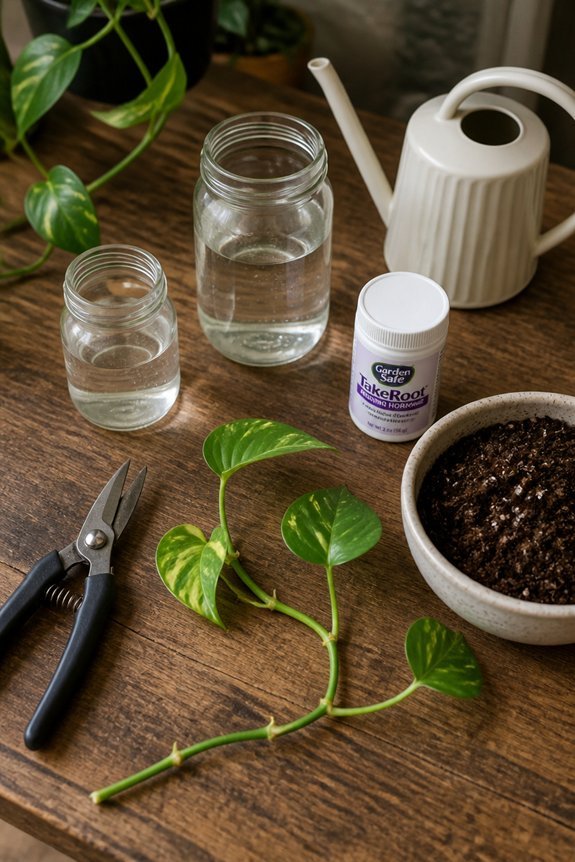
Start by grabbing a sharp knife or pruning shears. Clean cuts matter here. Dull tools crush stems and invite problems, so take a moment to sterilize with rubbing alcohol before you begin.
For water propagation, any clear glass jar or vase works well. Filtered water helps roots thrive, but standard tap water gets the job done too. Prefer soil? You’ll need potting mix, small pots with drainage holes, and a spray bottle to keep things moist.
Rooting hormone speeds things up but isn’t required. Stash some paper towels nearby to boost humidity around your cuttings. Then find a bright spot out of direct sun where your new plants can settle in and grow.
Take Healthy Cuttings From Your Pothos
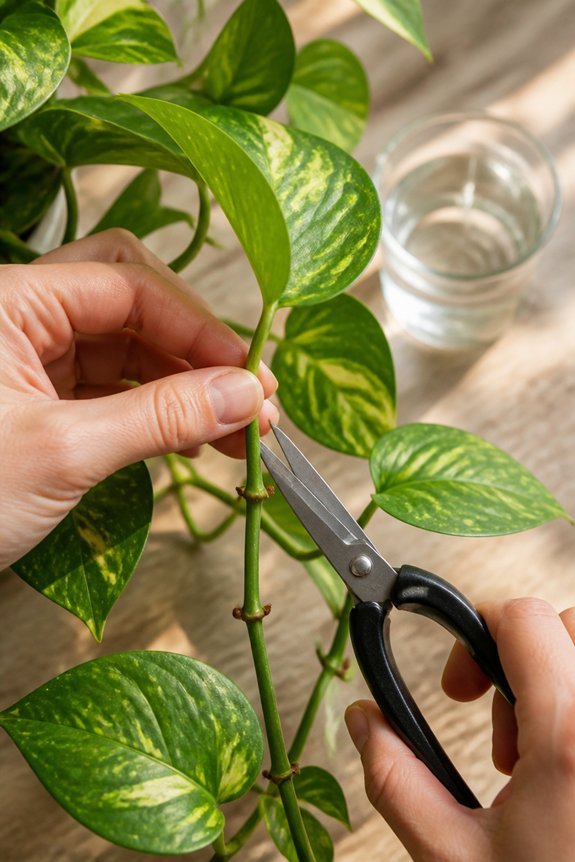
Pick healthy stems with two to three nodes. These little bumps are where leaves sprout from the vine. They hold special cells that help roots grow.
Skip any weak or diseased-looking sections. Use clean, sharp scissors. Cut stems four to six inches long, making your cut just below a node. Roots pop out easiest from these spots.
Strip off the lower leaves. Keep the top two or three in place. This cuts down on water loss and stops rot from setting in during propagation.
Give each cutting a quick once-over. Look for damage or weird coloring. Tuck your prepared cuttings somewhere cool until you’re ready for the next step.
Root Your Cuttings in Water
Water rooting gives you a front-row seat to watch new roots form. Grab a clear glass or jar so you can check progress without disturbing your cuttings.
Filtered or distilled water works better than tap water here. Fewer chemicals mean less chance of stalling root growth. Keep the water level steady so those lower nodes stay submerged. That’s where the magic happens.
Most cuttings root in one to three weeks. Warmer spots with bright, indirect light speed things up. Swap out the water every few days to keep oxygen flowing and bacteria away.
Once roots hit about an inch long, your cuttings are ready for soil.
Transition Water Cuttings to Soil
You will know your cuttings are ready when their roots hit about an inch long. That length means they have enough structure for soil.
Grab a small pot with drainage holes. Fill it with well-draining potting mix and give the soil a light moistening. Wet soil can rot roots, so keep it slightly damp instead of soggy. Push each cutting about an inch deep and stand it upright. Water gently to help the medium settle around those new roots.
Set your potted cuttings in bright, indirect light. Direct sun is too harsh at this stage. Keep the soil consistently moist for the first two weeks, but let the surface dry a bit between waterings. Roots will keep developing as your cuttings adjust to their new home. Once you spot fresh growth, ease up on the watering. That new growth tells you they have settled in successfully.
Pot Your Rooted Cuttings
Your rooted cuttings are ready for a new home once you spot several inches of fresh growth. Look for pots with drainage holes, about 4 to 6 inches wide. This keeps water from pooling and causing root rot.
Grab a well-draining potting mix with peat moss, perlite, and compost. These ingredients give pothos roots the balance they need. Set your cutting at the same depth it had in water. Press the soil gently around the base so it feels snug but not packed tight.
Water thoroughly until you see excess drain from the bottom. Find a spot with bright, indirect light. Direct sun will stress the plant at this stage.
Watch for new growth over the next two to three weeks. That is your sign the cutting has settled in. From there, you can shift to your normal pothos care routine.
Troubleshoot Common Pothos Propagation Problems
Water quality matters more than you’d think. Tap water with chemicals or minerals can stunt root growth or cause rot. Filtered water works best, and refreshing it every few days keeps things fresh for your cuttings.
Light and warmth keep the process moving. Find a spot with bright, indirect light—not dark corners, not harsh sun. Keep temperatures steady above 65°F. Cold drafts or sudden shifts will slow everything down.
Once you move cuttings to soil, ease up on watering. Soggy conditions invite fungus and decay. Let the top layer dry a bit between drinks. Clean your tools and containers too, since hidden bacteria can wipe out delicate new roots.
Watch your leaves for clues. Yellow often means too much water or missing nutrients. Small, slow growth? Check your light and give roots more room. Droopy leaves with damp soil usually signal rot below the surface. Catch these signs early, and your propagation success jumps way up.
Frequently Asked Questions
How Long Does Pothos Propagation Typically Take From Cutting to Mature Plant?
Pothos propagation typically takes 1-2 weeks for roots to develop in water or soil. A mature, established plant suitable for potting usually requires 3-6 months of growth, depending on environmental conditions and care quality.
Can You Propagate Pothos From a Single Leaf Instead of a Stem Cutting?
Research shows pothos leaf propagation has only a 20% success rate compared to 90% for stem cuttings. Single leaves cannot develop roots or shoots because they lack a node—the critical growth point necessary for new plant development.
What Is the Best Time of Year to Propagate Pothos Plants?
Spring and early summer provide ideal conditions for pothos propagation. During these seasons, plants experience vigorous growth, increasing the likelihood of successful root development. Warmer temperatures and longer daylight hours accelerate propagation rates considerably.
How Often Should You Change the Water When Rooting Pothos in Water?
Like a river requiring fresh currents to sustain life, water-rooting pothos cuttings demand changes every three to five days. This practice prevents bacterial growth and guarantees adequate oxygen, promoting healthy root development and successful propagation.
Can Propagated Pothos Be Grown Permanently in Water Without Soil?
Yes, pothos can grow permanently in water. The plant adapts well to hydroponic conditions when provided with adequate nutrients, light, and regular water changes. However, soil growing typically produces stronger, more vigorous growth over time.
Conclusion
Pothos propagation succeeds through water or soil methods, each with distinct advantages. Water propagation offers visibility of root development, yet requires regular water changes; soil propagation demands less maintenance, though progress remains hidden. Both approaches yield rooted cuttings within weeks. Success depends on selecting healthy stems, maintaining appropriate moisture, and moving water cuttings to soil once roots reach one inch. Either method produces viable new plants reliably.