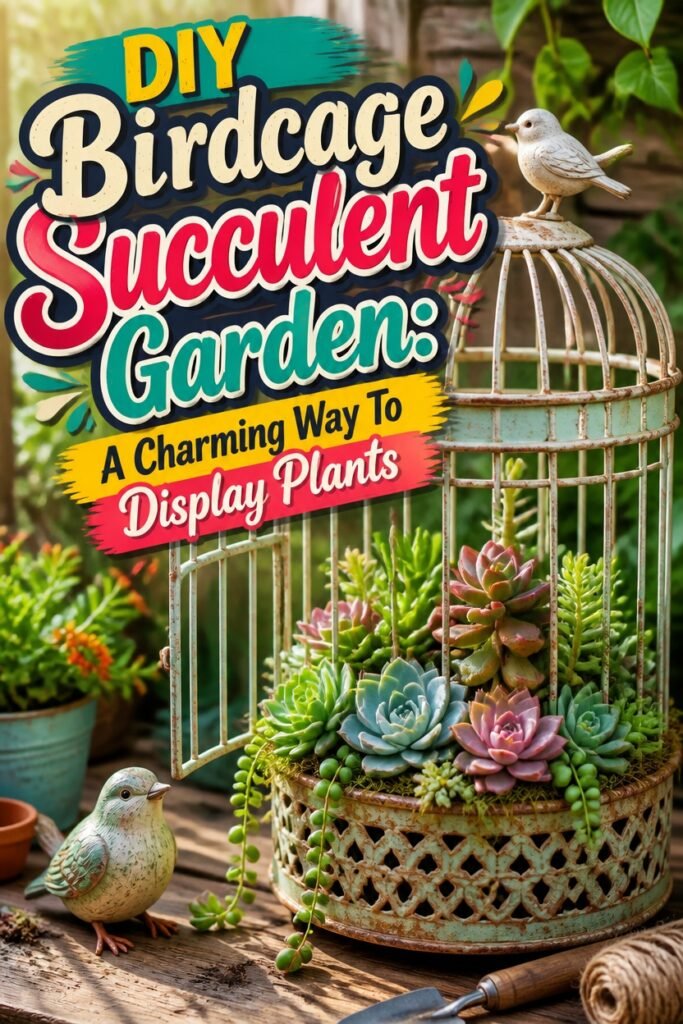
Transforming an ordinary birdcage into a living succulent garden brings together rustic charm and effortless greenery. These repurposed containers offer a unique vertical display that works beautifully on tabletops, hanging near windows, or perched on a sunny porch.
The combination of weathered metal framework and plump, colorful succulents creates visual interest that draws the eye without demanding constant attention.
Several key materials make this project straightforward. Start with a birdcage that has adequate depth for root growth, then gather cactus potting mix, an assortment of small succulents such as haworthia, sedum, or sempervivum, and something to line the bottom for drainage like gravel or broken pottery pieces.
Many enthusiasts also add decorative elements such as preserved moss or small stones to hide the soil surface and complete the aesthetic.
Success with this type of arrangement depends on thoughtful plant selection and placement. Mix varieties with different heights, textures, and colors: trailing succulents like string of pearls can cascade through the bars, while rosette-forming types anchor the center.
Group plants with similar light and water needs together, and position the tallest specimens toward the back or middle for balance.
Ongoing maintenance remains refreshingly minimal. Most succulent birdcages thrive with bright indirect light and watering only when the soil has dried completely.
The metal structure actually helps by allowing air circulation around the plants, reducing the risk of rot that can plague enclosed containers. With these simple considerations, your birdcage garden will reward you with year-round living beauty.
Materials and Tools You’ll Need to Get Started
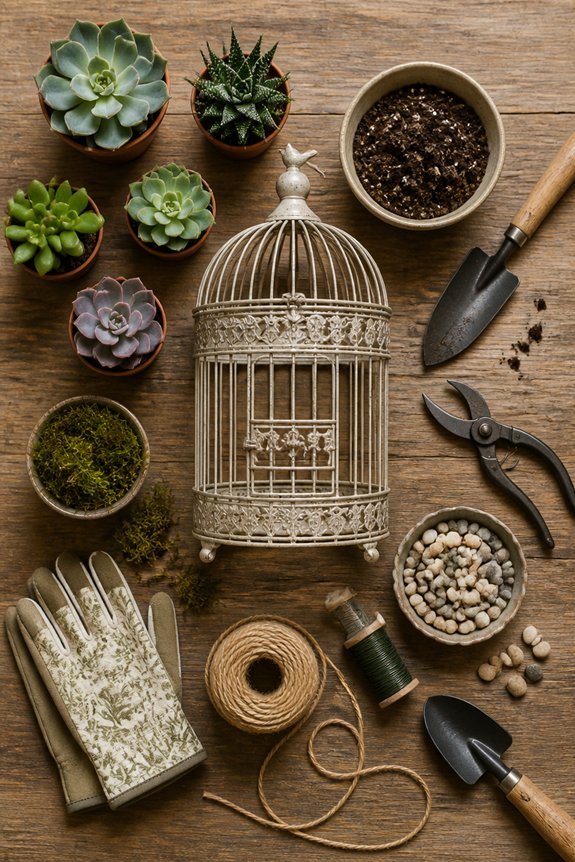
Creating a birdcage succulent garden requires several basic materials and tools before assembly can begin. A decorative birdcage serves as the main container, while small succulents like echeveria, jade, and sempervivum provide the plants. Potting soil formulated for succulents guarantees proper drainage, preventing root rot.
A small watering can with a narrow spout allows precise hydration without oversaturating the soil. Basic tools include pruning shears for trimming plant roots and removing dead leaves, along with gardening gloves for hand protection. Newspaper or a work surface prevents mess during assembly. Pebbles or gravel add drainage layers and aesthetic appeal inside the cage.
Optional items include moss for lining and small decorative elements like miniature figurines that complement the garden’s appearance without obstructing plant growth.
Choosing the Right Succulents for Your Birdcage
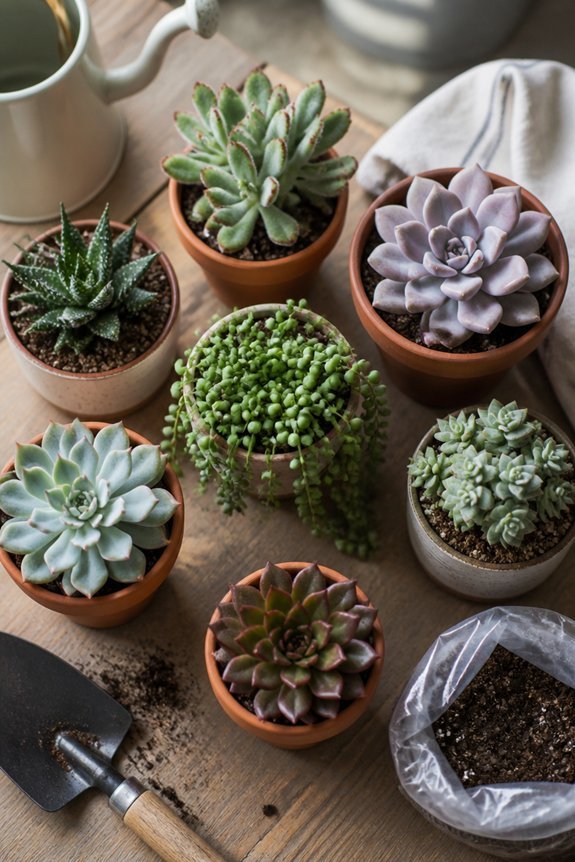
Since birdcages offer limited space and specific growing conditions, selecting appropriate succulents requires careful consideration of size, light needs, and water requirements. Smaller varieties work best in confined spaces, making echeveria, jade plants, and sempervivum practical choices. These species tolerate the indirect light typical of indoor birdcages and require minimal watering.
Consider growth patterns when selecting plants. Some succulents spread horizontally, while others grow upward, affecting the overall arrangement. Aloe vera and haworthia remain compact and manageable. Avoid large specimens like agave, which quickly outgrow birdcage dimensions.
Light exposure matters notably. Succulents needing bright, direct sunlight may struggle indoors. Selecting shade-tolerant varieties guarantees healthier growth. Drought-resistant characteristics make succulents ideal, as birdcage drainage can be inconsistent, reducing overwatering risks.
Preparing Your Succulent Birdcage: Drainage and Soil
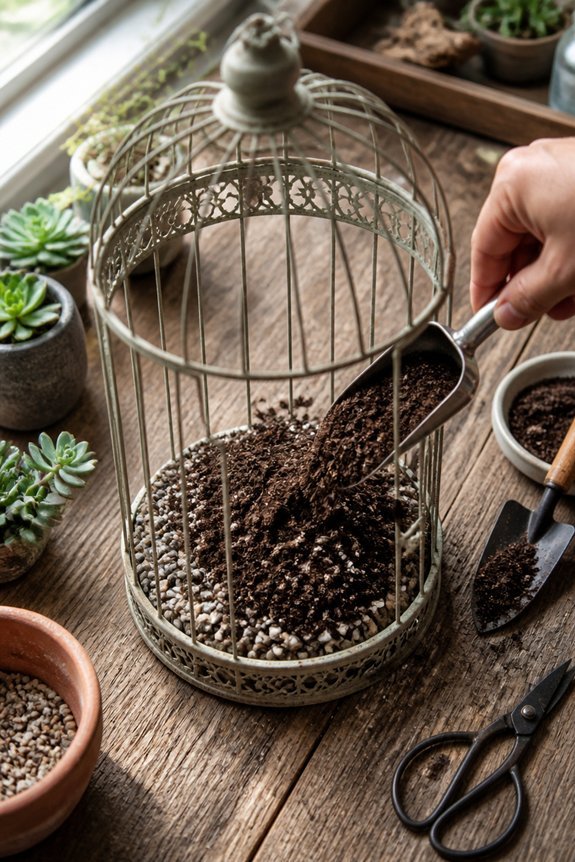
Proper drainage and soil composition form the foundation for healthy succulents in a birdcage environment. Birdcages lack drainage holes, requiring a deliberate preparation strategy.
Line the bottom with a layer of pebbles or broken terracotta pieces, creating space for water to collect away from roots. This prevents root rot, the primary cause of succulent failure in containers.
Use cactus or succulent-specific soil mix, which contains perlite and coarse sand. Standard potting soil retains excessive moisture and causes problems. Mix regular soil with perlite in a 2:1 ratio if specialized mixes are unavailable.
The soil depth should accommodate root systems adequately. Most succulents require 2-3 inches of soil minimum. Confirm the birdcage interior is completely dry before adding soil and plants, preventing fungal growth from moisture accumulation.
How to Plant Your Succulents: A Step-by-Step Guide
With the birdcage properly prepared, the planting process begins by selecting appropriate succulents and arranging them within the container. Choose varieties with different heights, textures, and colors, such as echeveria, jade plants, and sedum. Place taller specimens toward the back or center, while trailing types like string of pearls work well at edges.
Fill the birdcage halfway with prepared soil, then position each succulent, ensuring roots make contact with the soil. Add more soil around the plants, pressing gently to secure them. Leave approximately one inch of space from the soil surface to the rim. Avoid planting too densely, as succulents require adequate air circulation.
Water lightly after planting, allowing the soil to settle and roots to establish contact with the growing medium.
Design Principles: Creating Height, Color, and Focal Points
Arranging succulents by height, color, and visual interest transforms a birdcage from a simple container into a balanced composition. Tall varieties like jade plants provide vertical structure, while trailing types such as string of pearls create flowing lines.
Positioning the tallest plant slightly off-center, rather than dead center, establishes visual balance and draws the eye naturally through the arrangement. Color coordination enhances the overall design. Combining deep purples with soft greens and dusty blues creates cohesion. A single bright accent, such as orange echeveria, serves as a focal point that anchors the viewer’s attention.
Spacing plants with adequate gaps prevents overcrowding and allows each specimen to develop properly. This approach creates depth, preventing the arrangement from appearing flat or monotonous.
Caring for Your Succulent Birdcage: Watering and Light
Once the visual design reaches completion, the birdcage garden requires consistent care to maintain plant health and appearance. Succulents need bright, indirect light for six to eight hours daily, making east or west-facing windows ideal locations. Direct afternoon sun can scorch leaves, while insufficient light causes stretching and weak growth.
Watering demands restraint, as overwatering represents the primary cause of succulent death. The soil should dry completely between waterings, typically every two to three weeks depending on season and humidity. During winter months, reduce watering frequency considerably. Check soil moisture by inserting a finger one inch deep; water only when completely dry.
Verify the birdcage has drainage holes to prevent water accumulation. Species like jade and echeveria tolerate these conditions well.
Where to Display Your Birdcage Garden
The location chosen for a succulent birdcage garden greatly affects plant health and overall appearance. Indoor windowsills receive consistent light, making them ideal for most succulent varieties. South-facing windows provide the brightest conditions, while east or west-facing options work adequately for less demanding species.
Outdoor placement requires consideration of climate and sun exposure. Sheltered patios, balconies, and garden tables offer protection from excessive wind and rain. Full sun areas suit hardy succulents like echeveria and sedum well.
Avoid high-traffic zones where the birdcage might be knocked over or damaged. Confirm selected locations have stable surfaces that prevent tipping. Temperature stability matters greatly, so positions away from heating vents, air conditioning units, and cold drafts support better growth. Display height around eye level enhances aesthetic enjoyment and simplifies care tasks.
Frequently Asked Questions
Can I Use a Birdcage Without a Bottom, or Does It Need to Be Sealed?
A birdcage without a bottom can work, though it requires modification. One should line the interior with landscape fabric or mesh to contain soil and prevent drainage issues. Alternatively, sealing the bottom with wood or metal provides better structure and water retention for succulent growth.
How Long Do Succulents Typically Live in a Birdcage Arrangement Before Needing Replacement?
A gardener’s echeveria thrived for three years before requiring revitalization. Most succulents typically last two to five years in birdcage displays, depending on care quality, light exposure, and watering practices.
What’s the Best Way to Prevent Pests From Infesting a Succulent Birdcage Garden?
One should guarantee proper air circulation around the arrangement, inspect plants before placement, and avoid overwatering since moisture attracts pests. Regular monitoring and occasional misting with neem oil spray effectively deter common insects.
Can I Move My Birdcage Succulent Garden Outdoors During Warmer Months Safely?
Yes, one may relocate the birdcage garden outside during warm months. Sunlight filters through delicate leaves as the garden shifts. Gradual acclimation prevents sunburn. Guarantee adequate drainage, protection from excessive rain, and stable temperatures above fifty-five degrees Fahrenheit for peak health.
How Do I Propagate Succulents From My Birdcage Garden for New Arrangements?
One can propagate succulents by removing healthy leaves or stems, allowing them to dry for several days, then placing them on well-draining soil. Water sparingly until roots develop, typically within weeks, creating new plants for fresh arrangements.
Conclusion
A birdcage succulent garden transforms an ordinary decorative object into a living display. The arrangement of echeveria, jade, and other hardy plants creates layers of green and texture within the metal framework. Positioned near a bright window, the garden requires minimal maintenance while offering visual interest. This project combines practical plant care with functional decor, producing a durable arrangement that sustains itself through proper watering, adequate light, and occasional attention to soil conditions.