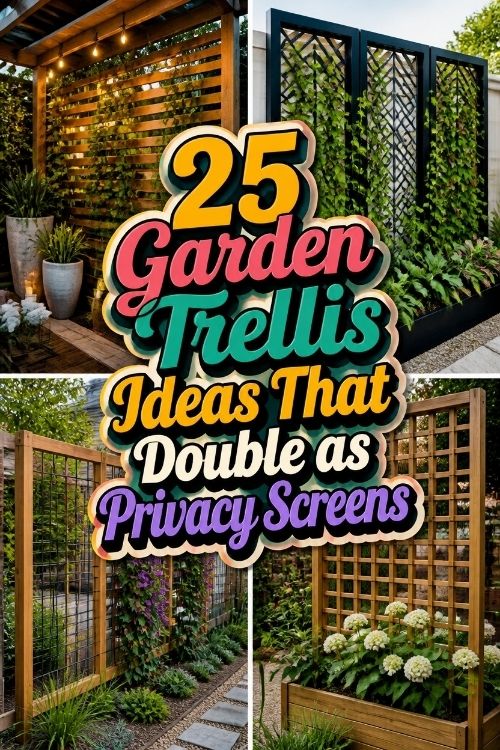
A garden trellis can do far more than guide climbing vines toward the sun. When positioned thoughtfully, these structures become living privacy screens that shield outdoor seating from neighbors or busy streets. They add vertical interest to flat landscapes while defining boundaries without the heaviness of a solid wall.
Material options range from classic cedar lattice and weathered bamboo to sleek powder-coated metal. Some designs incorporate built-in planters at the base, letting flowering greenery climb naturally upward. Others attach seamlessly to existing deck railings or pool enclosures, blending security with soft texture.
Selecting the right style means balancing how much coverage you need with the overall mood of your space. A tightly woven screen blocks sightlines completely, while an open frame filters light and casts shifting shadows across a patio. Every detail shapes both the practical result and the garden’s visual rhythm.
These versatile structures invite creativity in even the smallest yards. Whether you want a quiet corner for morning coffee or a secluded backdrop for evening gatherings, the right trellis delivers privacy with purpose.
The ideas ahead explore how to turn ordinary boundaries into deliberate design statements.
Coverage Speed Depends on the Plant, Not the Panel
A trellis screens almost nothing on day one unless the panel itself is dense. Morning glory and Boston ivy fill in within a single season, while climbing roses and wisteria take two to three years to deliver full coverage. Evergreen options like English ivy and star jasmine hold their leaves through winter, whereas grape vines and Boston ivy leave you exposed until spring. Decide how long you can wait before choosing anything below.
Lattice Panel Trellis Walls for Instant Backyard Privacy
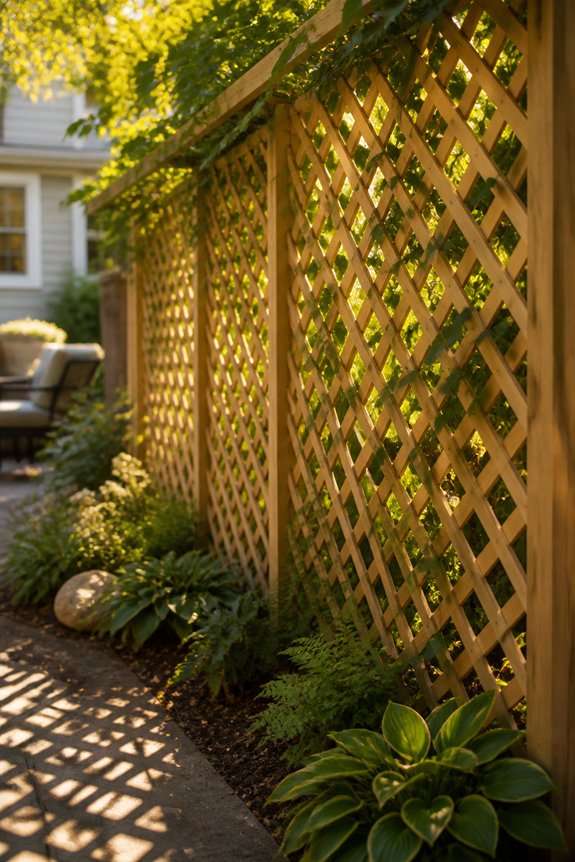
How quickly can a bare backyard fence become a private retreat? Lattice panel trellis walls answer that question in a single afternoon, transforming an open yard into a screened space. These panels attach directly to existing fence posts, or stand alone using pressure-treated 4×4 posts set in concrete footings.
Wood lattice, vinyl lattice, and metal grid panels each offer different levels of durability, cost, and visual weight. Wood provides a traditional look but requires periodic staining, while vinyl resists rot and needs little upkeep.
Climbing plants, such as clematis, jasmine, or climbing roses, fill in gaps over time, adding density and color. Panel height, typically ranging from four to eight feet, determines how much privacy the structure ultimately provides.
Also read: 19 Small Garden Ideas on a Budget
Tall Cedar Trellis Screens That Block Neighbor Sightlines
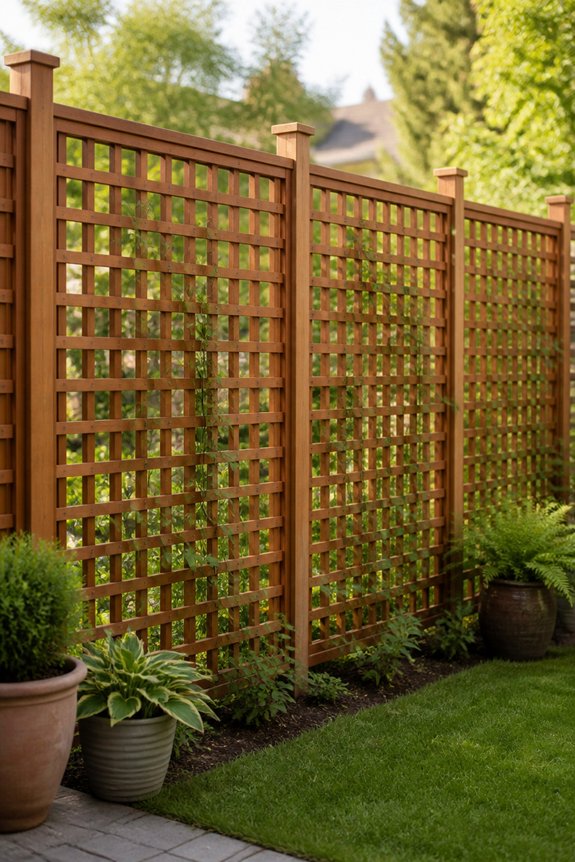
Because sightlines from second-story windows often exceed the reach of standard fencing, cedar trellis screens built to heights of eight to ten feet address the problem directly. Local building codes often cap fence height at six feet, but trellis structures, when classified as garden features rather than fences, can sometimes extend higher with proper permits.
Cedar remains a common choice due to its natural resistance to rot and insects, along with its weathered gray patina over time. These screens typically use a post-and-panel system, anchored with concrete footings for stability against wind load.
Climbing plants, such as clematis or trumpet vine, fill in gaps between slats, adding density. Placement near upper-story sightlines, rather than along the entire property line, targets the specific privacy concern more efficiently.
Bamboo Privacy Trellis for a Natural Tropical Feel
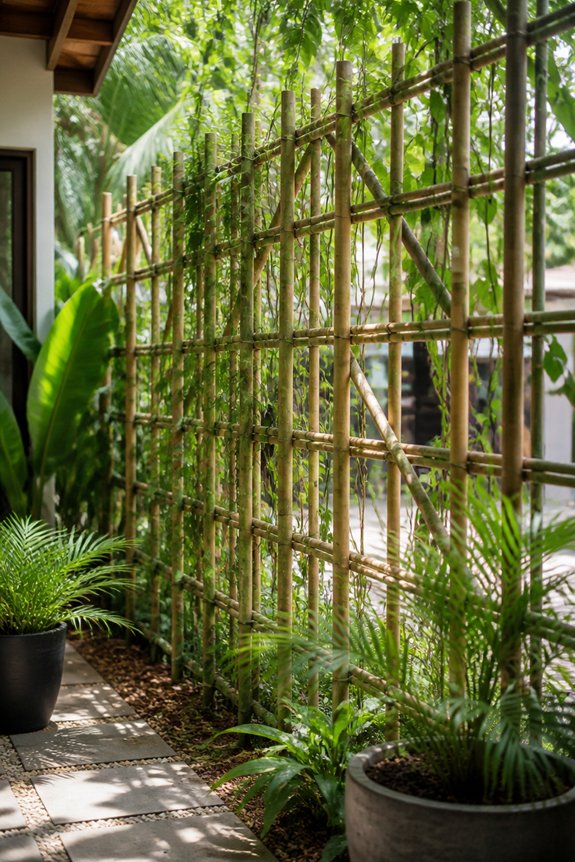
Where cedar screens rely on solid wood construction, bamboo trellis panels offer a lighter, faster-growing alternative suited to tropical or coastal garden themes. Split bamboo poles, woven or stacked horizontally, create dense coverage while allowing airflow between gaps, reducing wind resistance compared to solid fencing.
Rolled bamboo fencing, often sold in panels, attaches easily to existing posts or frames, making installation manageable for homeowners without carpentry experience. Live bamboo, planted in containers or contained beds, adds height and movement, though clumping varieties like Bambusa multiplex are preferred over running types to prevent uncontrolled spread.
Pairing bamboo with tropical plants, such as banana trees or hibiscus, reinforces the intended aesthetic. Bamboo also weathers to a silvery gray over time, requiring occasional sealing to maintain its original color and structural durability.
Metal Trellis Panels With a Modern Minimalist Look

Steel and aluminum trellis panels bring a clean, geometric alternative to wood or bamboo, fitting well into contemporary garden designs. These panels often feature grid, diamond, or linear patterns, offering structure without heaviness. Powder-coated finishes in black, white, or bronze resist rust and hold up well in outdoor conditions, requiring little upkeep over time.
Metal panels pair effectively with climbing vines such as clematis or star jasmine, allowing greenery to soften their rigid lines while maintaining privacy. Their lightweight construction makes installation simpler than heavier wood structures, and many designs attach directly to fences or posts. For minimalist landscapes, matte black frames or slim aluminum slats create a sleek boundary that blends function with a restrained, architectural aesthetic.
Black Steel Trellis Screens for Modern Patios
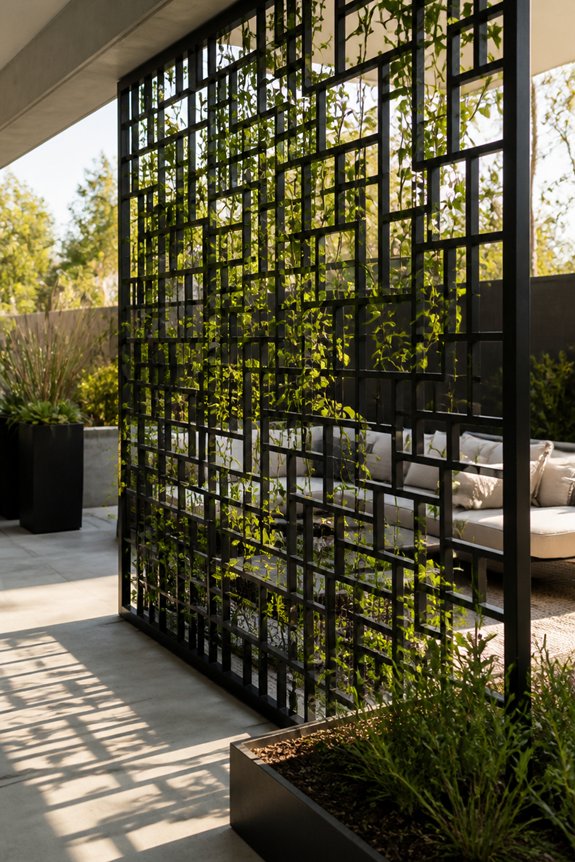
A dozen thin black bars, arranged in tall vertical lines, can transform an ordinary patio into a defined outdoor room. Black steel trellis screens suit modern patios because the dark finish contrasts with greenery, brick, or concrete, giving the space a sharp, architectural edge.
Powder-coated steel resists rust and holds its color longer than painted wood, making it a practical choice for outdoor use. Homeowners often pair these screens with climbing vines like jasmine or clematis, allowing plants to soften the geometric lines over time.
Panels can stand alone as room dividers or attach to pergolas for added height. Standard widths range from two to four feet, letting owners customize coverage. Matte black finishes tend to blend better with contemporary furniture than glossy alternatives.
Wrought Iron Trellis Designs for a Timeless Garden Look
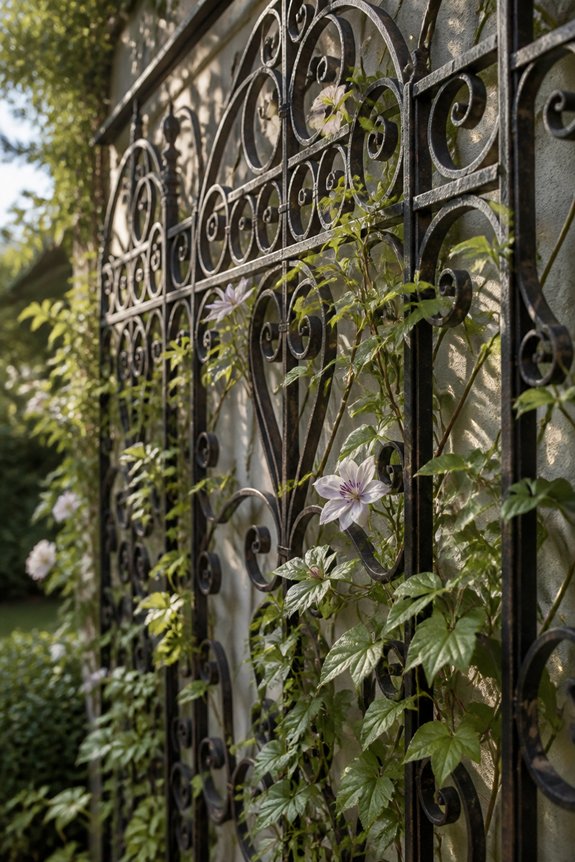
Modern black steel screens appeal to owners seeking clean lines, but wrought iron trellises offer a different appeal rooted in tradition and craftsmanship. These designs often feature scrollwork, curved arches, and decorative finials, giving gardens a sense of history and permanence. Wrought iron holds up well outdoors, resisting warping and cracking better than wood, though it requires occasional rust treatment to maintain its finish.
Homeowners often pair wrought iron trellises with climbing roses, clematis, or ivy, allowing the plants to soften the metal’s structured appearance over time. Arched designs work well as garden entry points, while flat panel styles serve effectively as privacy dividers along patios or fences.
Many manufacturers offer powder-coated finishes in black, bronze, or verdigris, allowing homeowners to match existing outdoor fixtures while preserving the classic aesthetic wrought iron provides.
Trellis Fence Combos That Double Your Screening Power
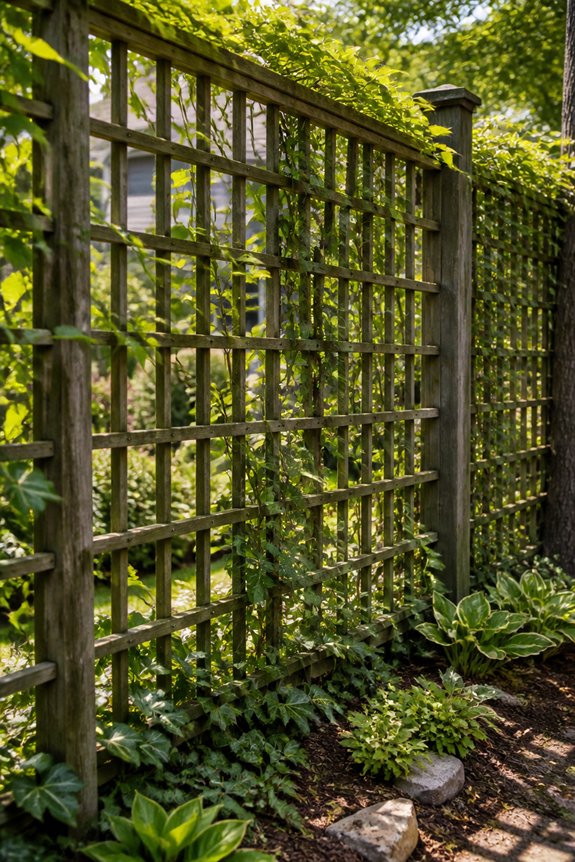
Several homeowners combine trellis panels with existing fence lines to increase both privacy and visual interest without building an entirely new structure. Attaching a lattice or wood trellis to the top of a standard fence adds height, blocking sightlines from neighboring windows or upper-story views. Vinyl fences paired with climbing vines, such as clematis or morning glory, create a layered look that softens harsh lines while maintaining structure.
Metal fence sections combined with modular trellis inserts allow for adjustable screening, depending on seasonal privacy needs. Some designs alternate solid fence panels with open trellis sections, balancing airflow and light with coverage. This combination approach works well for property boundaries, side yards, or areas requiring extra screening without the cost of full fence replacement.
Freestanding Trellis Panels You Can Move Anywhere
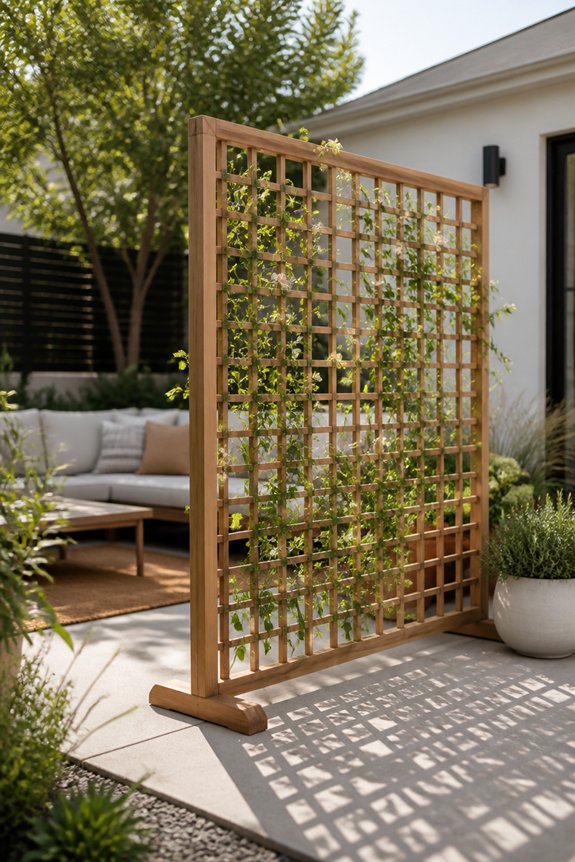
Many gardeners prefer freestanding trellis panels because they offer flexibility that permanent structures cannot match, allowing placement changes as plants grow or seasons shift. These panels typically rest on weighted bases, stakes, or feet, letting owners reposition them without digging new post holes. Materials range from lightweight bamboo and willow to sturdier metal grids, each suited to different plant weights and wind conditions.
Common uses include blocking a neighbor’s view during outdoor gatherings, screening a hot tub temporarily, or shifting privacy coverage as the sun’s angle changes with seasons. Some designs fold flat for storage during winter months, while others feature wheels for easier movement across patios or decks.
Homeowners renting properties often choose these panels since they avoid permanent alterations, satisfying lease restrictions while still creating usable screening wherever needed.
Corner Trellis Nooks for Private Reading or Lounge Spots
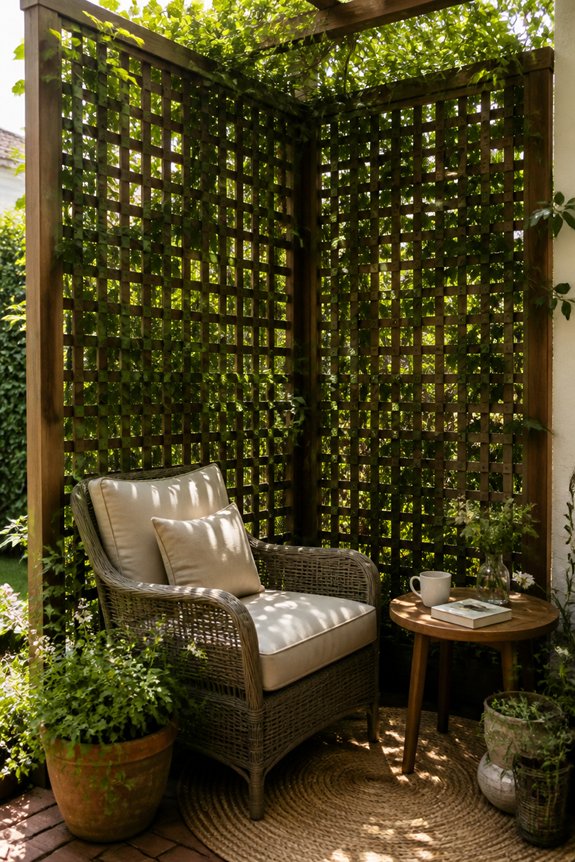
A yard’s unused corner, often overlooked, can become a quiet retreat when framed by two intersecting trellis panels set at right angles. The panels form two walls, leaving the third side open for access, and climbing plants such as clematis or star jasmine fill in the gaps over time.
A small bench, a single chair, or a low stool fits within the space, giving it purpose as a reading spot or lounge area. Gravel, pavers, or a simple mulch base can define the floor, separating it from surrounding lawn. Adding a small side table allows for a drink or book, while overhead lattice or a shade cloth can be attached for additional cover during sunny afternoons.
Trellis Pergolas That Shade and Shield Your Patio
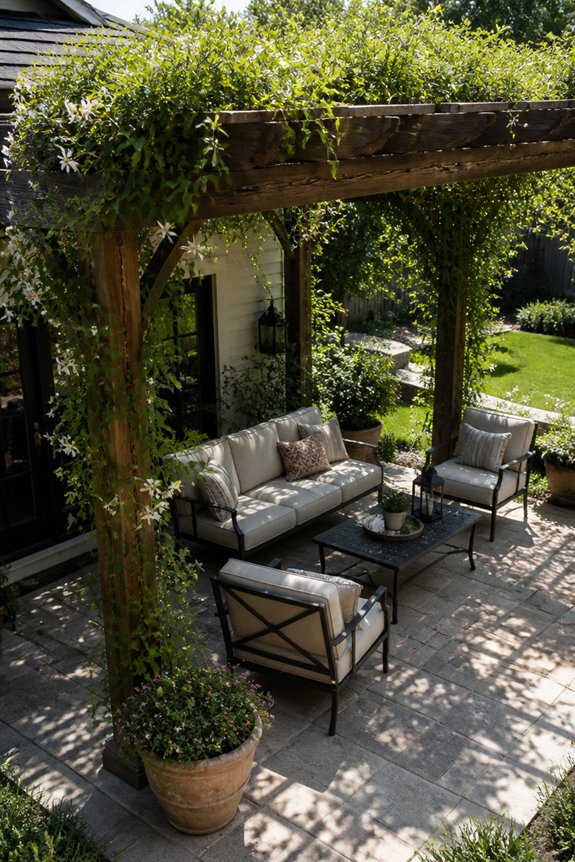
Beyond small corner nooks, larger trellis structures can extend overhead to cover an entire patio, combining shade and privacy in one design. Trellis pergolas use a slatted roof frame, often paired with climbing plants like wisteria, grapevine, or trumpet vine, to filter sunlight while blocking overhead views from nearby windows or balconies.
Wooden beams, metal frames, or vinyl posts can support the structure, depending on budget and style preference. Side panels made of lattice add vertical privacy, closing off views from neighboring yards without fully enclosing the space. Retractable canopy inserts can supplement the plant coverage during early growth stages.
Positioning the pergola near the house connects indoor and outdoor living areas, creating a shaded, screened extension of the patio for dining, seating, or relaxing outdoors.
Trellis Room Dividers for Outdoor Entertaining Areas
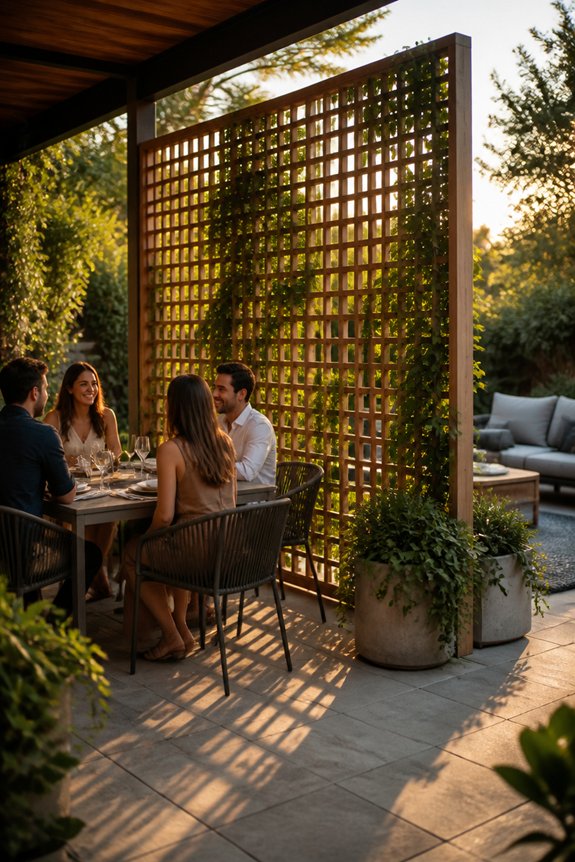
When outdoor entertaining spaces serve multiple functions, trellis dividers can separate a dining area from a lounge or cooking zone without closing off the yard entirely. Freestanding trellis panels, mounted on posts or weighted bases, allow homeowners to define zones while keeping sightlines open through the lattice pattern. Climbing plants such as clematis, jasmine, or trumpet vine add texture and softness to these dividers over time, though bare panels also work as an immediate solution.
Height matters when planning dividers, since a six-foot panel blocks views while sitting, while a four-foot version defines space without full separation. Placement near seating clusters, bar carts, or grill stations helps organize traffic flow and keeps activities visually distinct during gatherings.
Vertical Garden Trellis Walls for Living Privacy
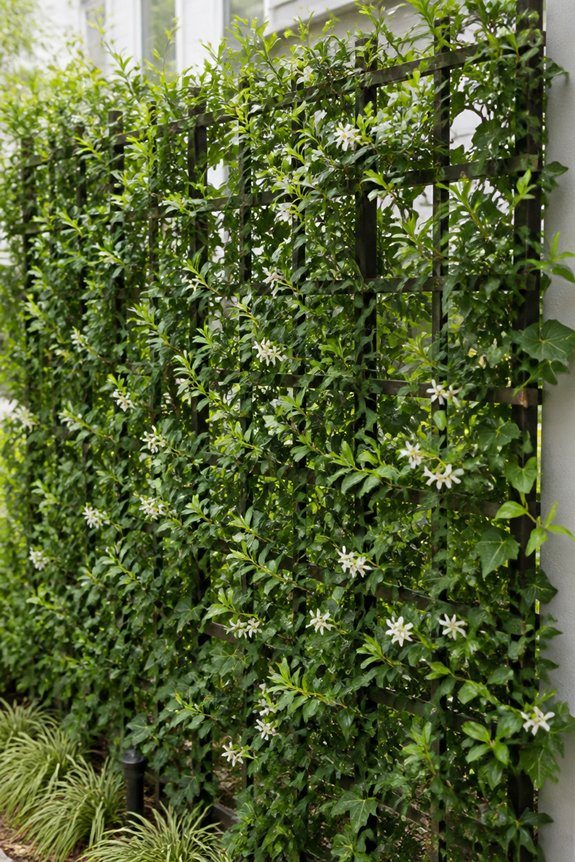
Since privacy needs often extend beyond a single divider, densely planted trellis walls offer a fuller, living screen for patios, pool areas, or property lines. These walls are built from multiple trellis panels joined side by side, forming a continuous vertical surface for climbing plants to cover.
Fast-growing vines, such as clematis, climbing hydrangea, or Boston ivy, fill in gaps quickly, creating dense foliage within one or two growing seasons. Evergreen options, including star jasmine or certain climbing roses, maintain coverage year-round in mild climates.
Support structures should be anchored securely, since mature vines add significant weight over time. Spacing panels evenly and choosing plants suited to sun exposure guarantees even growth, preventing thin patches that reduce privacy along the wall’s length.
Wisteria-Covered Trellis Arches for Dreamy Overhead Coverage
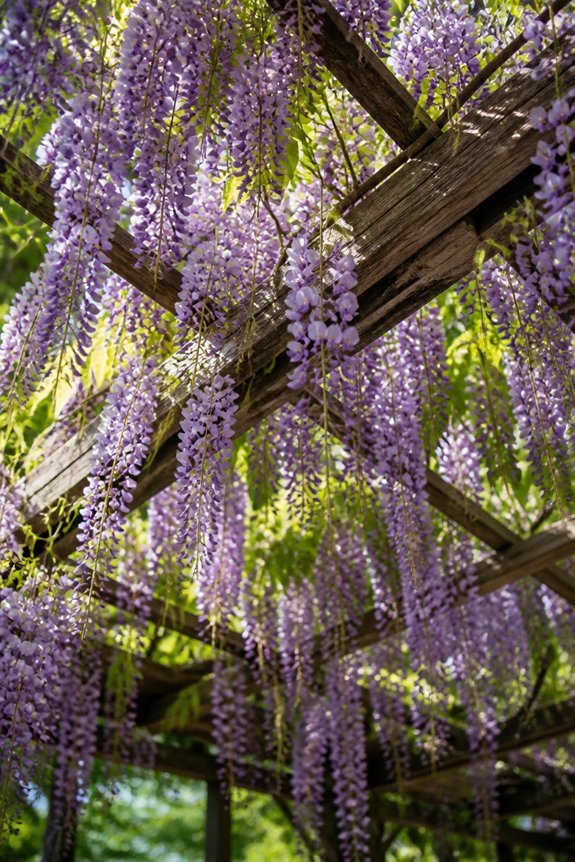
Few flowering vines create the dramatic effect that wisteria achieves when trained over a sturdy arch trellis. The cascading purple or white blooms hang downward, creating a canopy that filters sunlight while adding fragrance to outdoor spaces. Gardeners often position these arches over walkways, patio entrances, or seating areas to combine overhead coverage with visual screening from upper-story windows or neighboring properties.
Wisteria requires substantial support due to its woody, twisting stems, so trellises must use pressure-treated wood, metal, or reinforced cedar posts anchored deeply into the ground. Chinese and Japanese wisteria varieties grow aggressively, demanding annual pruning to control size and encourage blooming rather than excessive foliage.
American wisteria offers a less invasive alternative for gardeners seeking similar overhead effects without extensive maintenance obligations. Regular pruning keeps growth manageable and blooming consistent.
Climbing Rose Trellis Screens That Smell as Good as They Look
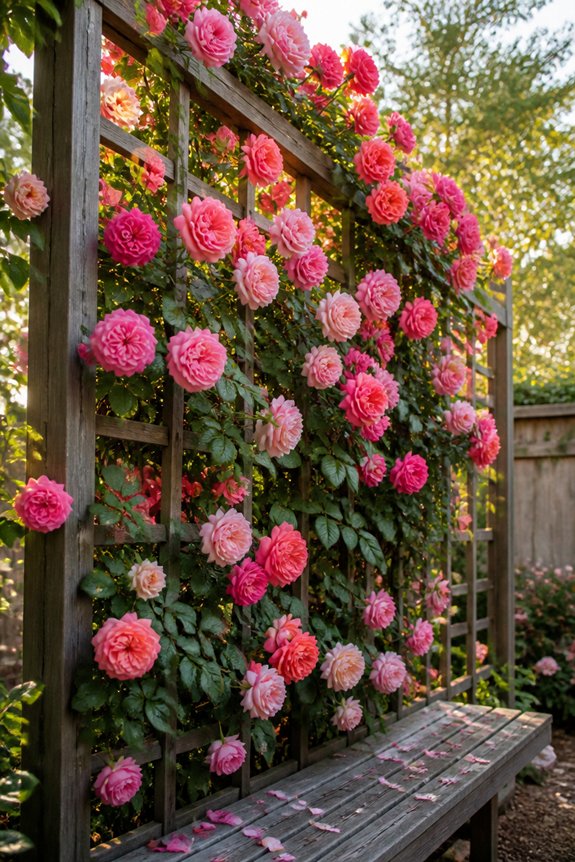
Climbing roses trained onto trellis screens combine privacy with fragrance, making them popular choices for property borders and patio enclosures. Varieties such as New Dawn, Zephirine Drouhin, and Climbing Iceberg produce dense foliage and repeated blooms, creating coverage that thickens over several growing seasons.
Trellis panels made from wood, metal, or vinyl provide structure, with lattice patterns allowing canes to weave through openings as they mature. Fragrant varieties, particularly old garden roses and English roses, release stronger scent than modern hybrids bred mainly for color and shape. Placement near seating areas, walkways, or windows maximizes scent exposure.
Pruning canes back each dormant season encourages fuller growth and better flower production, while ties or clips secure new canes to the trellis frame as plants expand.
Clematis-Covered Trellis Panels for Colorful Privacy
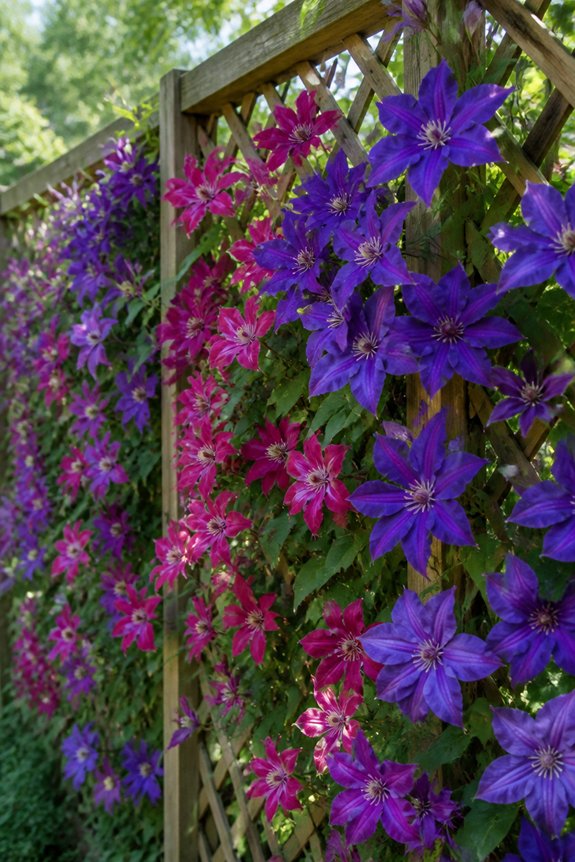
Because clematis produces vivid blooms in a wide range of colors, it remains a common choice for gardeners wanting privacy without sacrificing visual interest. Varieties such as Jackmanii, Nelly Moser, and Henryi offer purple, pink, and white flowers that cover trellis panels from late spring through fall.
Clematis vines climb by wrapping their leaf stems around supports, so a lattice or grid-style trellis works better than a solid panel. Placing plants near a fence or wall gives roots the cool, shaded soil clematis prefers, while allowing foliage to reach sunlight above.
Pairing clematis with a wooden or metal frame creates layered color and texture, forming a screen that blocks views while adding seasonal interest to patios, decks, or garden borders.
Ivy Trellis Walls for Year-Round Green Coverage
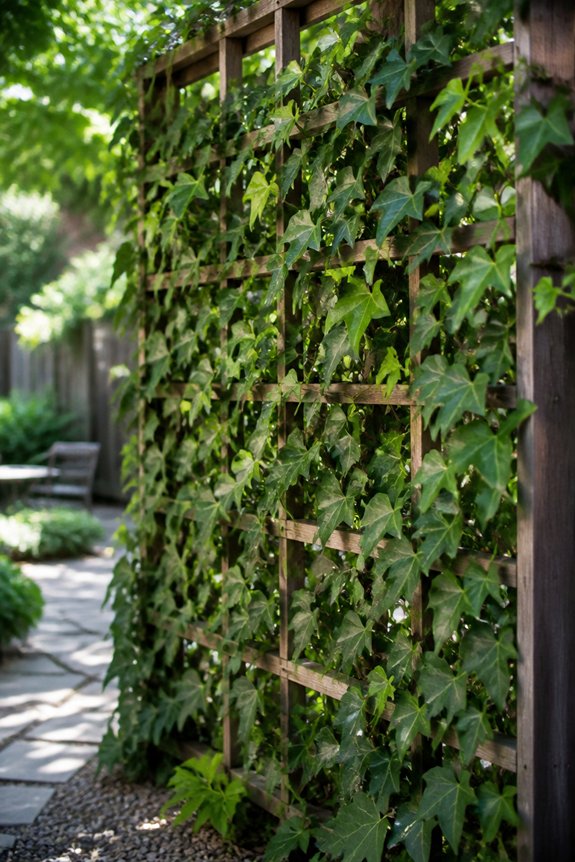
Many gardeners rely on ivy varieties, such as English ivy or Boston ivy, to keep a trellis green throughout every season, even in winter. English ivy holds its leaves year-round, offering constant coverage, while Boston ivy sheds in autumn but regrows quickly each spring, providing dense summer privacy.
A sturdy trellis, made from wood or metal, supports the weight of mature ivy, which can grow heavy over time as vines thicken. Regular trimming keeps growth controlled, preventing damage to fences, siding, or nearby structures.
Gardeners often place ivy trellis walls along property lines, patios, or fences to block sightlines from neighbors. Spacing plants correctly at installation encourages even coverage, reducing gaps where privacy might otherwise be compromised during the plant’s early growth stages.
Grape Vine Trellis Structures That Double as Privacy Screens
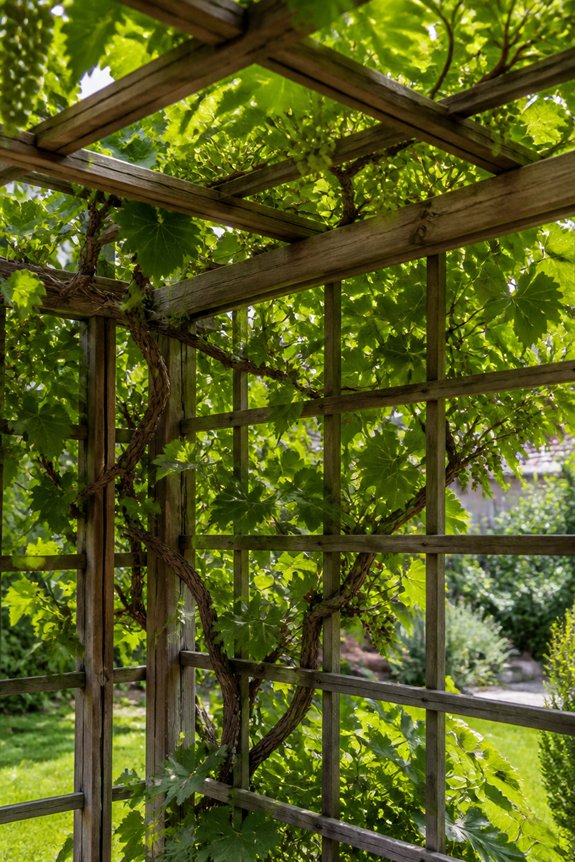
While ivy offers year-round coverage, grape vines provide a dual-purpose option, combining privacy screening with a harvestable crop each season. Sturdy structures, such as wooden arbors or metal pergolas, support the weight of mature vines and their fruit clusters. Concord and Muscadine varieties grow dense foliage during summer months, creating substantial screening between properties or outdoor living spaces.
Vines require solid anchoring, since fully grown plants can weigh several hundred pounds when combined with the supporting framework. Placement along fence lines or property borders allows the vines to serve as living walls while producing usable grapes.
Pruning during dormant winter months keeps growth manageable and encourages better fruit production the following year, though coverage decreases somewhat until spring growth resumes.
Trellis Privacy Screens Built Into Raised Garden Beds

Raised beds combined with attached trellis panels offer a space-saving option for gardeners who need both privacy screening and growing space in limited yards. Builders typically attach vertical posts to the corners or back edge of the bed frame, then secure panels of lattice, cattle panel, or wood slats between them.
This design supports climbing plants like beans, peas, or cucumbers while creating a visual barrier along a property line or patio edge. Cedar and pressure-treated lumber resist moisture damage from soil contact, extending the structure’s lifespan.
Gardeners often position taller beds along fences to reinforce screening, using the trellis to block sightlines from neighboring yards. Adding a support beam across the top increases stability during windy conditions. This method works well for small urban plots.
Rustic Wood Trellis Fences for Cottage-Style Backyards
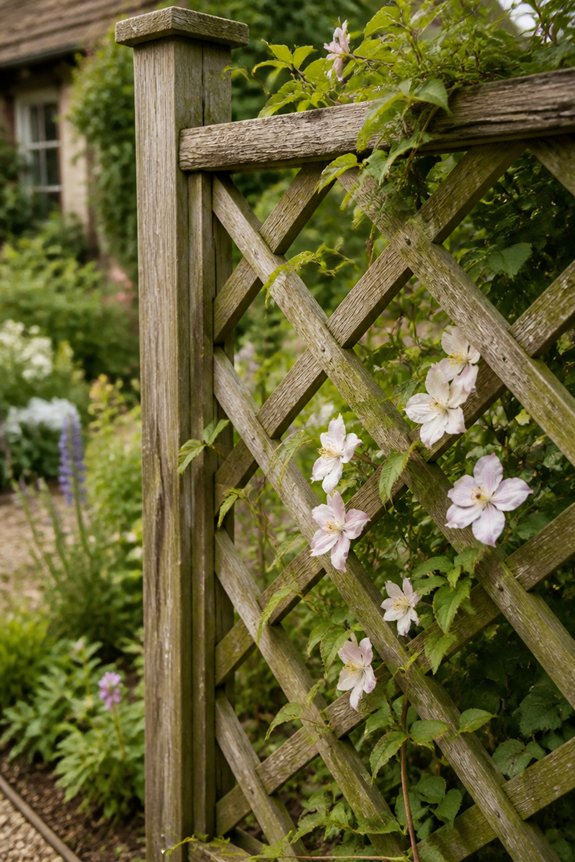
Because cottage gardens favor a relaxed, handmade appearance, rustic wood trellis fences use unmilled branches, weathered boards, or reclaimed timber to fit the aesthetic. Builders often arrange crossed saplings into diamond lattice patterns, or space vertical pickets unevenly to suggest a handmade, imperfect look.
Cedar, willow, and hazel branches remain popular for their bendable qualities, allowing curved arches or scalloped tops that soften a straight fence line. Climbing roses, sweet peas, and clematis pair well with this style, filling gaps between slats while softening the wood’s texture.
Some homeowners leave the wood unfinished, letting it gray naturally over time, while others apply a light stain to slow decay. Salvaged fence boards, old ladders, or discarded window frames also work as trellis material, adding character without added cost.
Trellis Screens for Trash Cans and Utilities

Since trash cans, recycling bins, and utility meters rarely enhance a yard’s appearance, many homeowners use trellis screens to hide them from view. A three-sided trellis structure, built from cedar or pressure-treated pine, can enclose these items while allowing airflow to reduce odor buildup. Climbing vines, such as clematis or honeysuckle, soften the appearance of the screen once established, though slower-growing plants may require a season or two to provide full coverage.
Some designs include a hinged or removable panel, giving easy access for trash collection or meter readings. Lattice panels attached to a simple wood frame offer a budget-friendly option, while taller screens work well for larger utility boxes. Paint or stain can match the screen to existing fencing or siding for a cohesive look.
Trellis Panels for Small Patios and Tight Side Yards
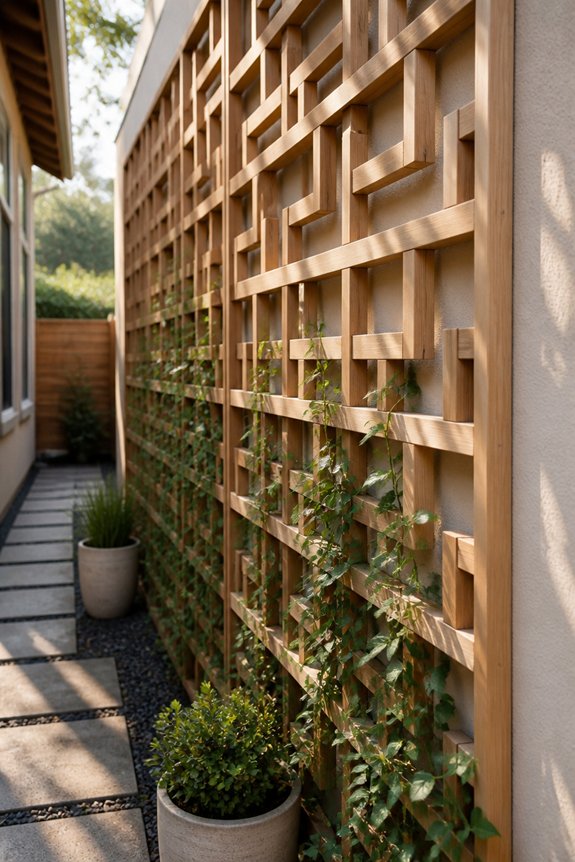
Many small patios and narrow side yards lack the square footage for bulky garden structures, making slim trellis panels a practical solution for adding greenery without sacrificing space. Flat, wall-mounted panels, often measuring just a few inches deep, attach directly to fences or exterior walls, leaving floor space untouched. Narrow freestanding models, sometimes under two feet wide, fit neatly between a house and a property line, supporting climbers like star jasmine or clematis.
Folding or accordion-style trellises offer flexibility, expanding for use and collapsing for storage during colder months. Vertical designs, taller than they are wide, draw the eye upward, creating a sense of height in confined areas. Materials such as lightweight aluminum or thin cedar slats keep panels unobtrusive while still providing structural support for climbing plants.
Trellis Planters That Combine Storage and Privacy
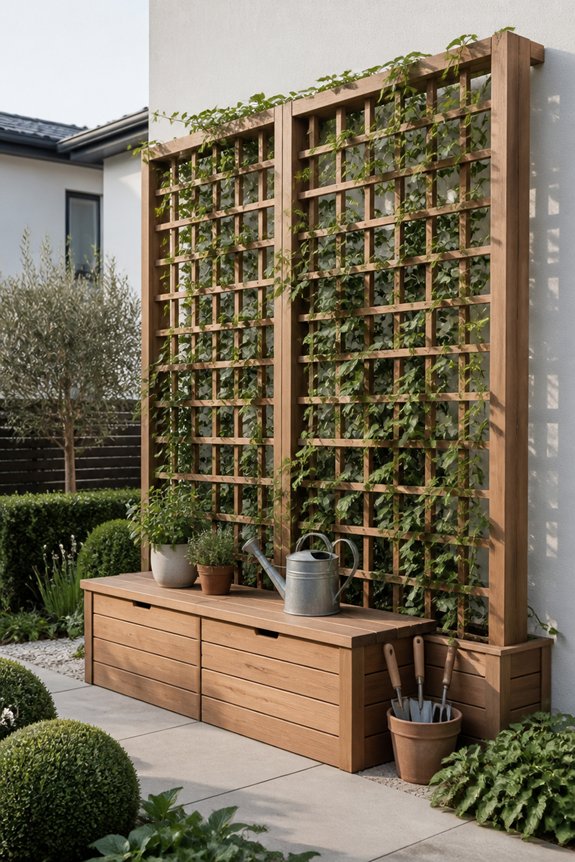
Beyond simple space-saving panels, some trellis designs add built-in storage, turning a support structure into a multi-purpose garden feature. Planter boxes with attached trellis frames allow vines or climbing vegetables to grow upward while the base holds soil for herbs, flowers, or small shrubs. Many models include shelves or bins underneath for tools, pots, or gardening supplies, reducing clutter elsewhere on a patio or balcony.
These combined units work well along fence lines, deck edges, or entryways, where both greenery and storage are needed in a limited footprint. Cedar and teak versions resist moisture damage, making them suitable for outdoor use in varying climates.
Placing taller plants toward the back keeps the trellis structure functional while maintaining a clear view of stored items below.
Trellis Fencing for Pool Areas That Still Feels Open
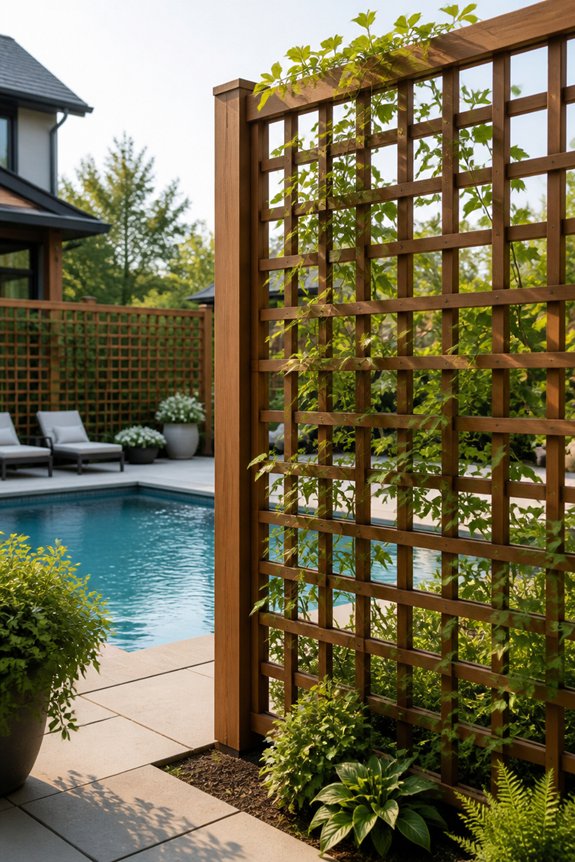
How can a pool area stay secure without feeling boxed in? Trellis fencing offers a solution, combining safety requirements with an airy look that solid walls cannot match. Pool codes often require a barrier of a certain height, and trellis panels can meet these standards while allowing light and airflow to pass through.
Materials like powder-coated aluminum or vinyl resist moisture and chlorine exposure better than untreated wood. Lattice patterns with wider gaps keep sightlines open, letting supervising adults see the water clearly from a distance. Climbing plants such as jasmine or bougainvillea add color without blocking visibility completely.
Placing trellis fencing along one side, rather than surrounding the pool entirely, keeps the space feeling open while still marking clear boundaries.
Weekend DIY Trellis Projects for Beginners
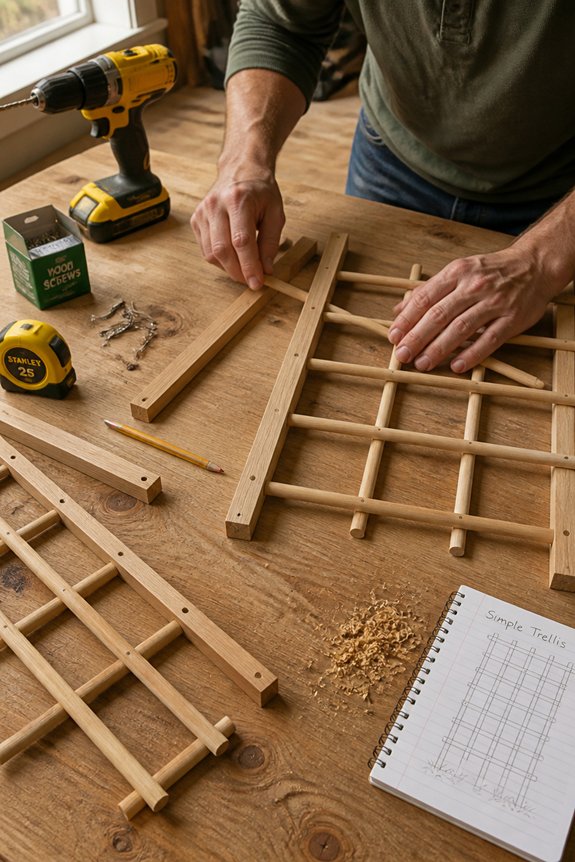
Building a simple trellis takes only a few hours and requires minimal carpentry experience, making it an accessible project for first-time builders. A basic ladder-style frame, built from cedar boards or pressure-treated lumber, requires only a saw, drill, screws, and a measuring tape.
Pre-cut lattice panels, sold at most hardware stores, can be attached to a wooden frame without custom cutting, saving time and reducing errors.
Other beginner options include:
A-frame trellises, held together with hinges, requiring no permanent post installation. Bamboo pole trellises, tied with twine in a simple grid pattern. Repurposed pallet trellises, sanded and mounted vertically against a fence or wall.
Materials for these projects typically cost less than fifty dollars, and most can be completed within a single weekend.
Trellis Panels That Highlight Outdoor Lighting
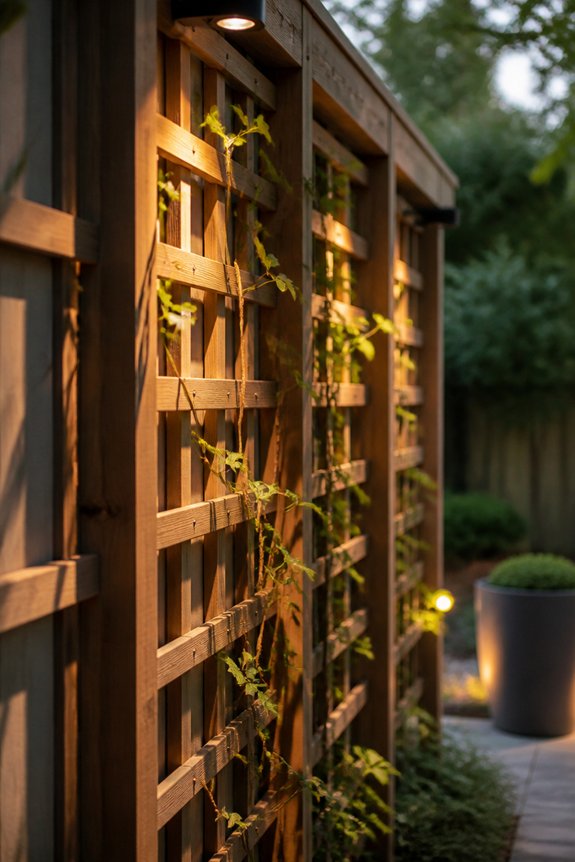
A trellis panel positioned near outdoor lighting can create shadows and silhouettes that add depth to a garden at night. Placing a light fixture behind or beneath a lattice panel casts geometric patterns across nearby walls, patios, or walkways, adding visual interest without extra decoration. String lights woven through trellis slats provide a soft glow while outlining the structure’s shape after sunset.
Uplighting placed at the base of a trellis highlights climbing plants, such as clematis or jasmine, drawing attention to their texture and growth pattern. Solar-powered fixtures offer a low-maintenance option for illuminating trellis panels along fences or garden borders. Choosing lighting placement carefully guarantees the trellis remains functional for privacy while also serving as a decorative nighttime feature.
Frequently Asked Questions
How Long Do Climbing Plants Take to Fully Cover a Trellis?
Typically one to three growing seasons are required, depending on species. Fast growers like Boston ivy or morning glory may cover a trellis within a single year, while wisteria or climbing roses often need two to three years for full coverage.
What’s the Best Trellis Material for Humid or Coastal Climates?
Vinyl resists rot; wood invites it. In humid, coastal climates, aluminum and vinyl trellises outperform untreated timber, shrugging off salt air and moisture while cedar or redwood, though attractive, eventually succumb to rust, warping, or decay.
How Much Does a Professional Trellis Installation Typically Cost?
Professional installation typically costs $15 to $40 per square foot, depending on materials and complexity. A standard privacy trellis section often ranges from $300 to $1,500 total, with vinyl and metal options generally costing more than basic wood installations.
Do Trellis Privacy Screens Require a Building Permit?
Verily, most municipalities require no permit for standard trellis screens under six feet, though taller structures or those attached to property lines often necessitate local zoning approval. Homeowners should consult their county planning office beforehand.
How Do I Keep Trellis Panels From Blowing Over in Wind?
Stability comes from securing posts at least 18–24 inches into concrete footings, bracing panels with diagonal supports, and choosing wind-permeable lattice designs rather than solid panels, which reduces surface resistance during storms.
Conclusion
Garden trellises offer practical solutions for privacy, style, and function, from cedar screens to metal panels and bamboo designs. According to industry surveys, outdoor living spaces, including privacy features like trellises, can increase home value by up to 10 percent. This makes trellis installations not only useful for creating secluded retreats but also a sound investment. Homeowners considering these 25 ideas can improve both the usability and market appeal of their outdoor spaces.