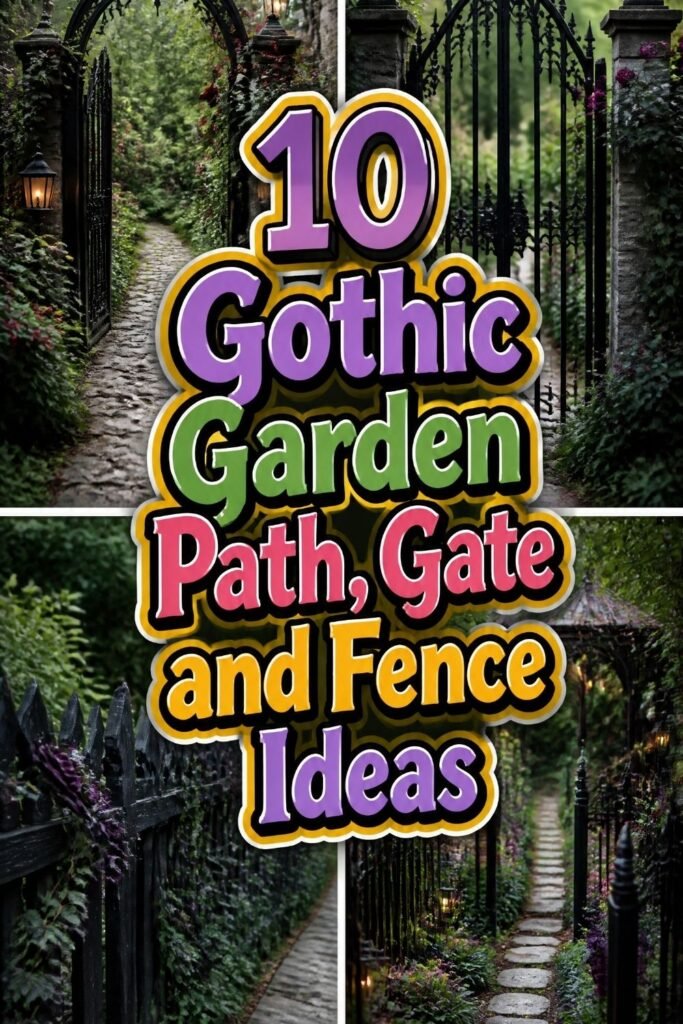
Gothic gardens draw their power from contrast and shadow. Wrought iron gates stand as the natural threshold, their intricate scrollwork catching moonlight while black metal fencing stretches between stone pillars to enclose the space. These elements work together to create that unmistakable atmosphere of elegant melancholy.
Stone pathways anchor the design with permanence. Slate and granite offer distinct personalities—slate absorbs light into its dark surface, while granite provides subtle texture underfoot.
Both materials demand consideration for drainage, particularly in regions with heavy rainfall where standing water can compromise the foundation.
Plant selection completes the architectural framework. Boxwood and yew hedges carve out formal shapes that hold their structure through winter months, their deep green foliage reading nearly black in low light.
Ornamental finials and spiked toppers punctuate fence lines with vertical emphasis, drawing the eye upward toward overhanging branches.
Budget shapes every project differently. Reclaimed materials and DIY installations open possibilities for modest investments, while custom fabrication and aged stone deliver uncompromising authenticity.
Each path carries its own trade-offs between immediate accessibility and long-term character.
Gothic Wrought Iron Gates: Ornate Designs That Command Attention
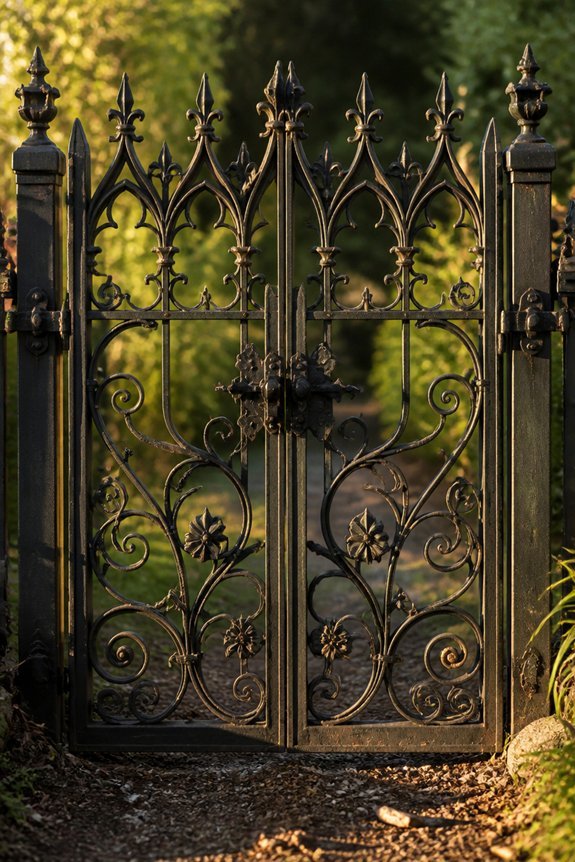
Wrought iron gates serve as the primary entrance feature for gothic garden spaces, combining functionality with decorative metalwork. These gates typically feature pointed arches, scrollwork, and intricate patterns inspired by medieval architecture.
Common designs include spear-topped pickets, ornamental hinges, and blacksmith-crafted details. Dark finishes enhance the gothic aesthetic. Proper installation requires sturdy posts and professional mounting to guarantee durability and security for garden entrances.
Gothic Black Metal Fencing: Defining Your Perimeter
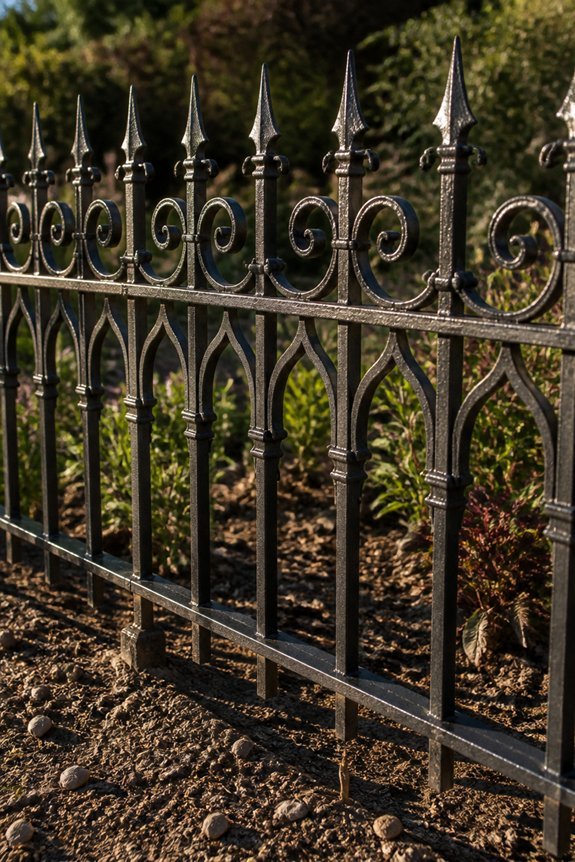
Black metal fencing forms the structural boundary of gothic garden spaces, providing both security and visual continuity around property perimeters. Wrought iron panels, featuring ornamental pickets and spear tops, create elegant barriers. Steel fencing offers durability and lower maintenance requirements.
Decorative finials, scrollwork, and geometric patterns enhance visual interest. Black powder-coating protects metal surfaces from rust and weathering. Fence heights typically range from four to six feet.
Stone Pathways: Material Choices and Drainage Solutions
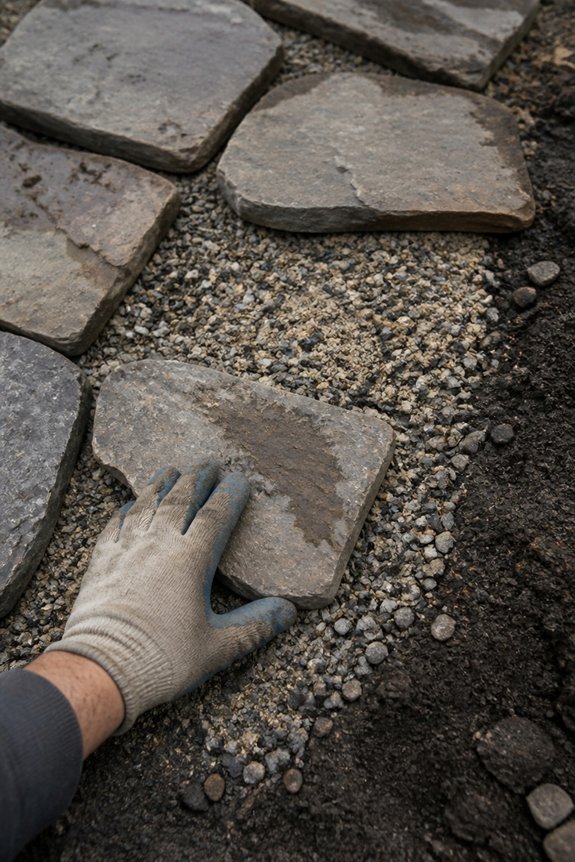
Stone pathways form the primary walking surfaces throughout gothic garden designs, connecting various garden zones while establishing visual flow across the landscape. Slate, granite, and limestone offer durable options suitable for gothic aesthetics.
Proper drainage prevents water accumulation and extends pathway longevity. Installing pathways with slight slopes, incorporating permeable bases, and adding gravel or sand beneath stones facilitates water movement away from garden areas.
Gothic Hedge Mazes and Dark Borders
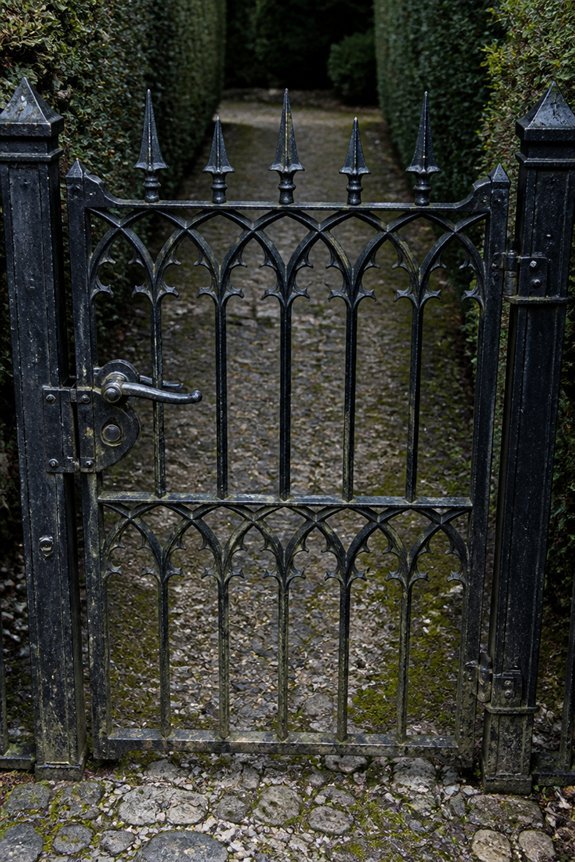
Hedge mazes and dark borders create defined spaces within gothic gardens, establishing mystery and visual structure through carefully selected plants and layouts. Boxwood, yew, and privet hedges serve as primary choices for maze construction.
Dark borders utilize black hollies, dark-leafed heuchera, and burgundy Japanese maples. These elements enhance pathway definition, guide visitor movement, and reinforce the garden’s shadowed aesthetic consistently.
Victorian Iron Gates: Ornamental Patterns and Period-Correct Profiles
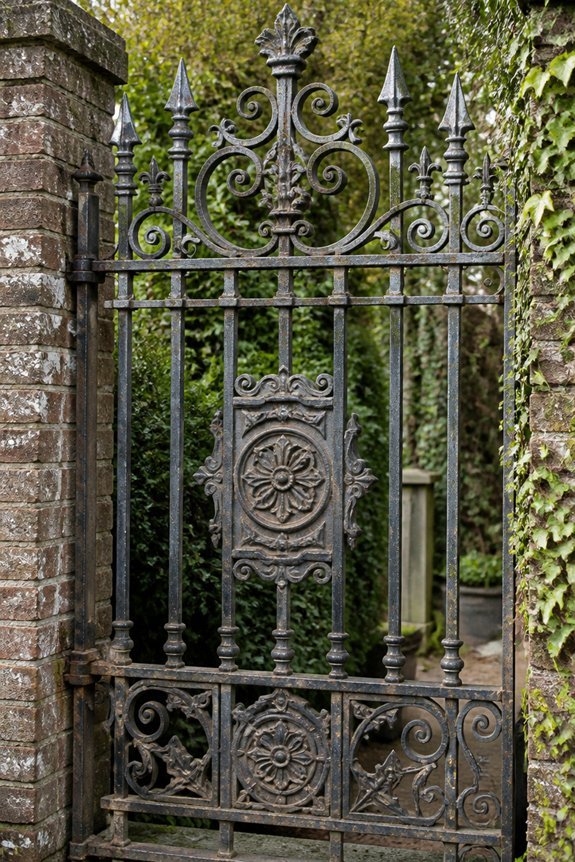
Victorian iron gates function as both practical entry points and decorative focal points, completing the structured gothic garden established by hedges and dark borders. Ornamental patterns include scrollwork, spear finials, and geometric designs reflecting authentic nineteenth-century styles.
Period-correct profiles feature tapered posts, hinged panels, and oxidized finishes. Black or dark bronze patinas enhance gothic aesthetics. Quality iron gates withstand weather while maintaining visual impact for decades.
Narrow Cobblestone Paths Through Dark Plantings
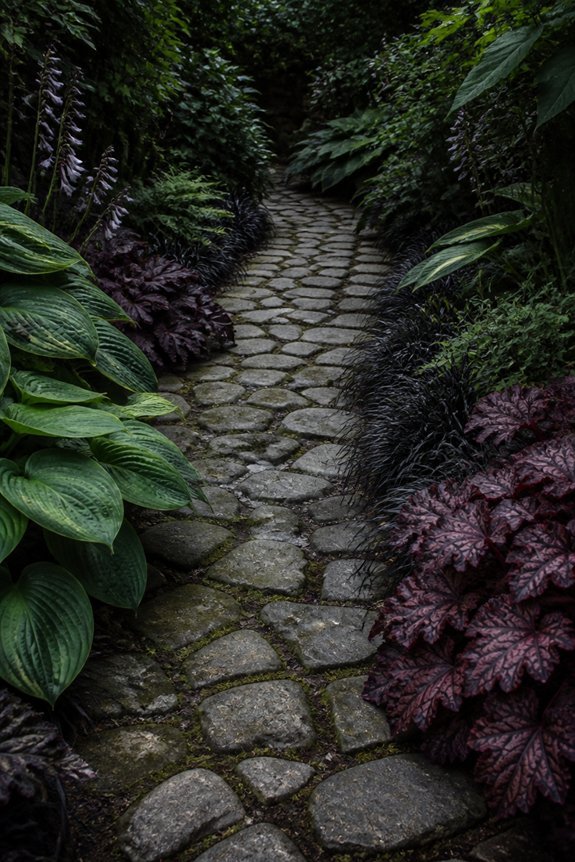
Pathways constructed from cobblestone create defined routes through gothic garden spaces, guiding visitors while establishing visual structure. Dark plantings, including yew, boxwood, and purple-leafed Japanese maples, frame narrow passages effectively.
Cobblestone surfaces provide traction and drainage, while their irregular texture complements shadowy surroundings. Spacing stones closely together prevents weed growth between joints, maintaining pathway appearance with minimal upkeep over time.
Spiked and Ornamental Fence Toppers
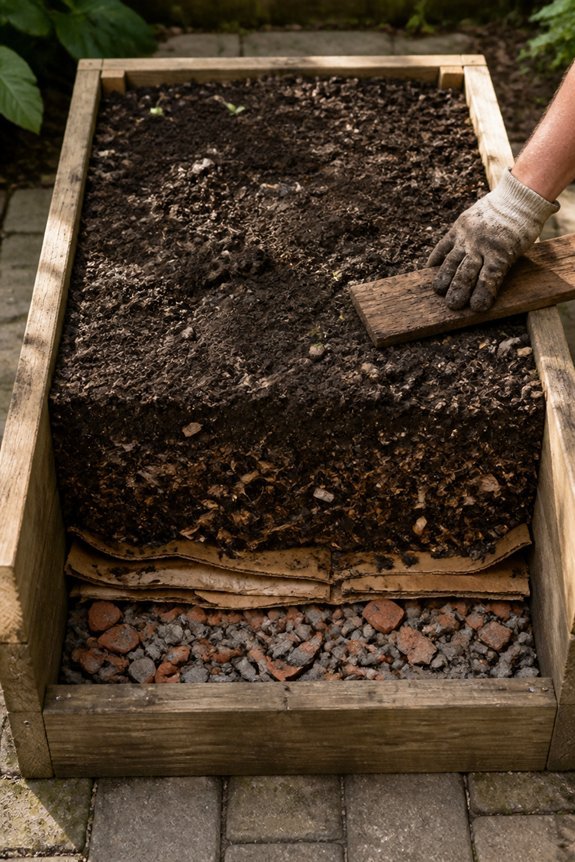
When defining the upper edge of a gothic garden fence, spikes and ornamental toppers serve both aesthetic and functional purposes. Wrought iron finials, pointed spears, and decorative crowns add visual interest while discouraging climbing. Cast aluminum options provide lighter-weight alternatives.
Fleur-de-lis designs, ball-topped posts, and twisted metal elements suit various gothic styles. Installation requires secure mounting and proper spacing to guarantee stability and maintain the fence’s intended appearance.
Gothic Wrought Iron Arbors as Entryways
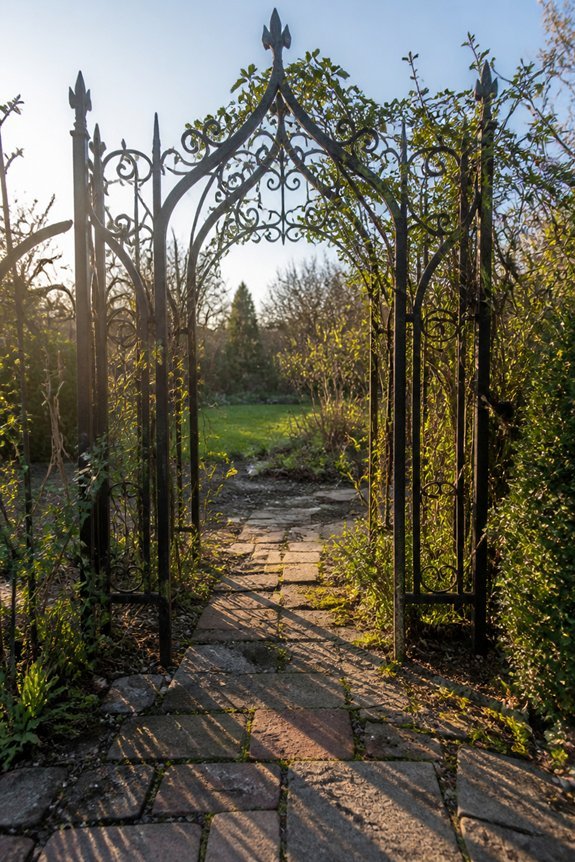
Gothic wrought iron arbors function as striking entryways that frame garden pathways and mark shifts between outdoor spaces. These structures feature pointed arches, decorative scrollwork, and dark finishes typical of gothic design. Common materials include wrought iron and steel.
Arbors measuring 7 to 10 feet tall work well for standard garden entries. They support climbing vines, roses, and clematis while creating defined shifts between garden zones.
Pathway Lighting in Gothic Gardens
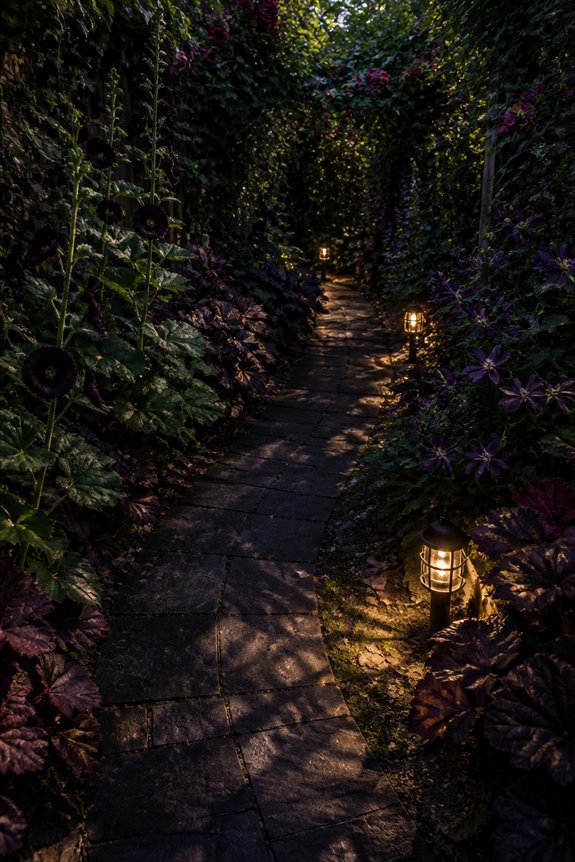
Effective lighting transforms garden pathways into functional and visually cohesive spaces within gothic landscapes. Wrought iron lanterns, mounted on posts or hanging from chains, provide authentic period illumination. Solar-powered uplights beneath plants create dramatic shadows.
Black metal fixtures complement gothic aesthetics while LED bulbs offer energy efficiency. Strategic placement along curved pathways guarantees safe navigation and emphasizes architectural elements like gates and fences.
Affordable Gothic Fencing: Budget Options That Still Impress
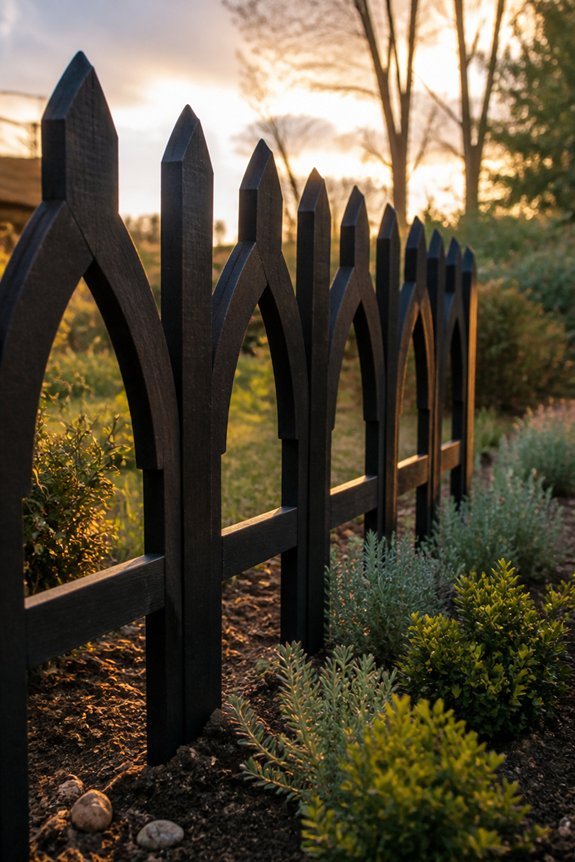
Creating an impressive gothic fence does not require expensive materials or extensive budgets. Wrought iron-style steel panels, vinyl picket fences with pointed tops, and black-painted wood designs offer affordable alternatives.
Reclaimed materials, such as old iron gates and salvaged wood, reduce costs considerably. Metal chain-link fencing, when painted black and decorated with gothic accents, provides budget-friendly options that maintain aesthetic appeal. Chain link fencing costs approximately $8-12 per linear foot installed, making it one of the most economical choices for achieving a gothic aesthetic on a budget.
Frequently Asked Questions
How Do I Maintain Gothic Garden Features During Harsh Winter Weather Conditions?
One should apply protective sealant to wrought iron gates and fencing to prevent rust. Regular snow removal protects structures from damage. Ornamental plants require mulching around bases. Metal elements benefit from occasional inspection and maintenance oil applications throughout the season.
What Permits or HOA Restrictions Might Affect Installing Gothic Gates and Fencing?
Homeowners should check local building codes, obtain necessary permits, and review HOA guidelines before installing gothic gates and fencing. Restrictions often govern height, materials, setbacks, and architectural style to maintain neighborhood consistency and property line compliance.
How Can I Incorporate Gothic Pathways Into an Existing Modern Landscape Design?
One can dramatically transform mundane modern landscapes by weaving ornate gothic pathways through minimalist designs. Stone archways, iron detailing, and dark pavers create stunning contrasts against contemporary elements, establishing an enchanting juxtaposition that captivates visitors while maintaining architectural balance throughout the property.
What Security Features Should I Consider When Choosing Gothic Garden Gates?
When selecting gothic garden gates, one should prioritize heavy-duty locks, sturdy wrought iron construction, and proper hinges. Additionally, consider height, visibility limitations for privacy, and integration with fence systems for thorough perimeter security.
How Long Do Gothic Wrought Iron Structures Typically Last With Proper Maintenance?
Gothic wrought iron structures typically endure for centuries when properly maintained, much like a smartphone from the Victorian era. With regular cleaning, rust prevention, and periodic repainting, these gates and fences can remain structurally sound for over 100 years.
Conclusion
A Gothic garden transforms ordinary outdoor spaces into dramatically shadowed sanctuaries, where wrought iron gates tower impossibly tall, black fencing stretches endlessly, and stone pathways wind through impenetrably dark hedge mazes. Ornamental finials, elaborate arbors, and atmospheric lighting combine to create remarkably atmospheric environments. These design elements, ranging from expensive Victorian gates to budget-friendly alternatives, establish perimeters while establishing undeniably theatrical aesthetics throughout residential gardens.