
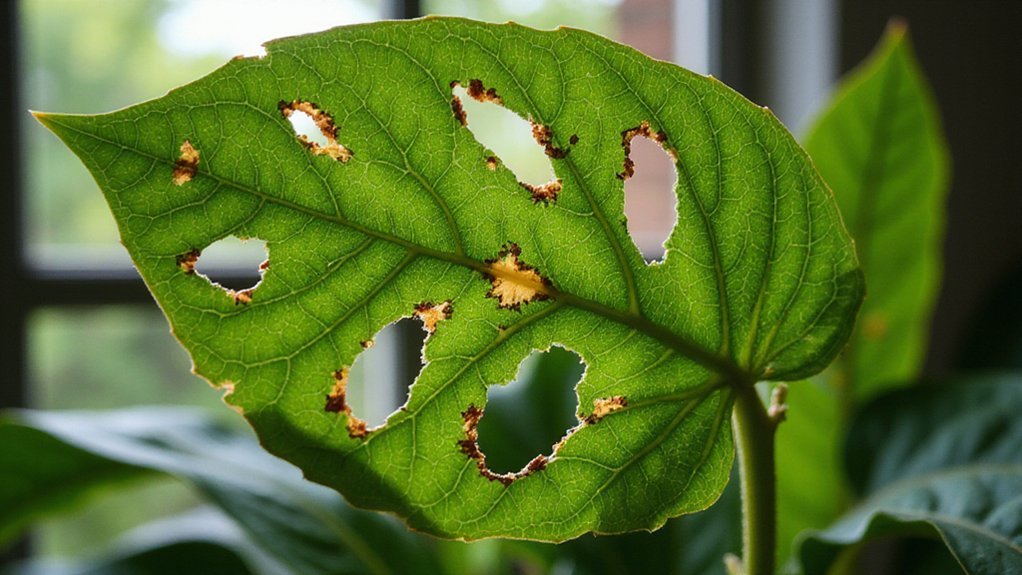
Some houseplants naturally develop holes in their leaves as part of their normal growth process, yet many holes you discover are actually warning signs of serious problems. When you notice holes appearing on your indoor plants, you’ll need to identify whether they’re caused by pests feeding on the tissue, fungal or bacterial infections spreading through the plant, environmental stress from improper care, or simple physical damage—and each requires a different solution.
What Causes Holes in Houseplant Leaves
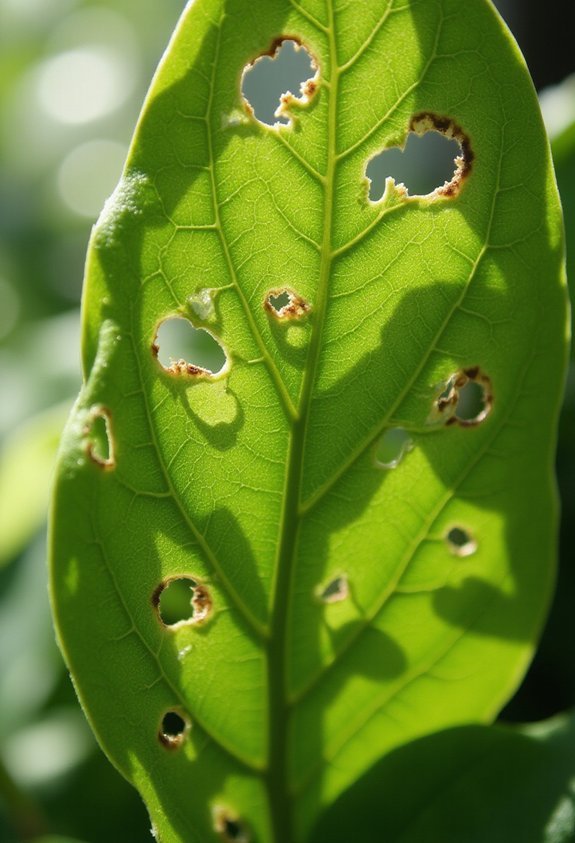
You’ll frequently notice holes appearing in your houseplant leaves, and understanding what creates them is the first step toward keeping your plants healthy and looking their best. Pests like spider mites, aphids, and mealybugs feed directly on leaf tissue, creating visible damage as they extract plant juices. Fungal and bacterial infections also produce holes, often surrounded by yellow or brown discoloration indicating disease progression. Environmental stress from improper watering, low humidity, or inadequate light weakens plants, making them susceptible to pest infestations and infections. Physical damage from handling or accidents can tear leaves, creating jagged openings. Additionally, some plants naturally develop fenestrations, which are purposeful holes serving biological functions like reducing wind resistance and improving light penetration to lower leaves.
Also read: 7 Indoor Plants That Thrive In Low Light
Diagnose Your Plant: A Quick Inspection Guide
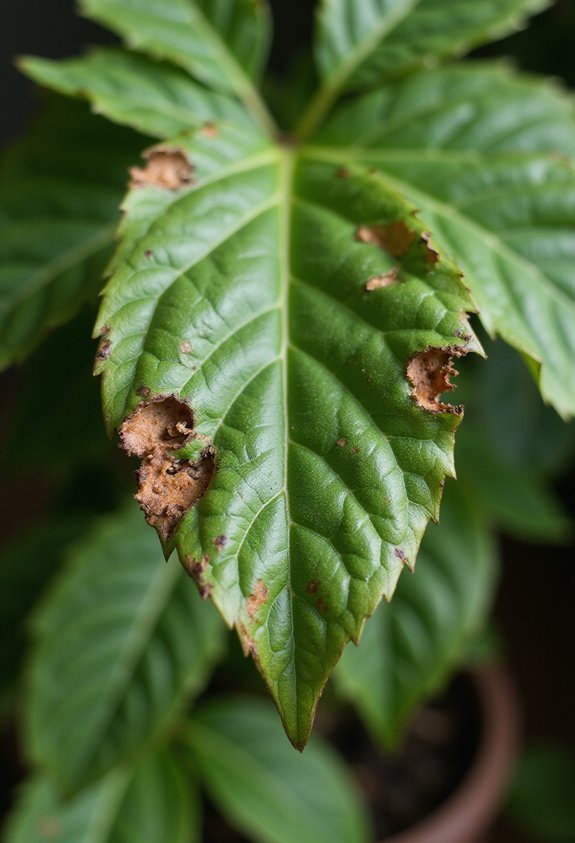
To pinpoint what’s causing holes in your houseplant’s leaves, you’ll need to examine your plant systematically by checking both the upper and lower leaf surfaces, inspecting the soil and stems, and observing the overall plant condition. Start by using a magnifying glass to look for tiny insects, sticky residue, or webbing on affected leaves. Next, examine the soil moisture level and drainage, since overwatering often contributes to fungal issues that create holes. Inspect nearby healthy leaves for early damage signs. Check the stem for soft spots or discoloration indicating disease. Finally, note your plant’s location, lighting conditions, and recent changes in care routines, as environmental stress weakens plants’ ability to resist pests and diseases.
Pest Damage: Identifying Common Culprits
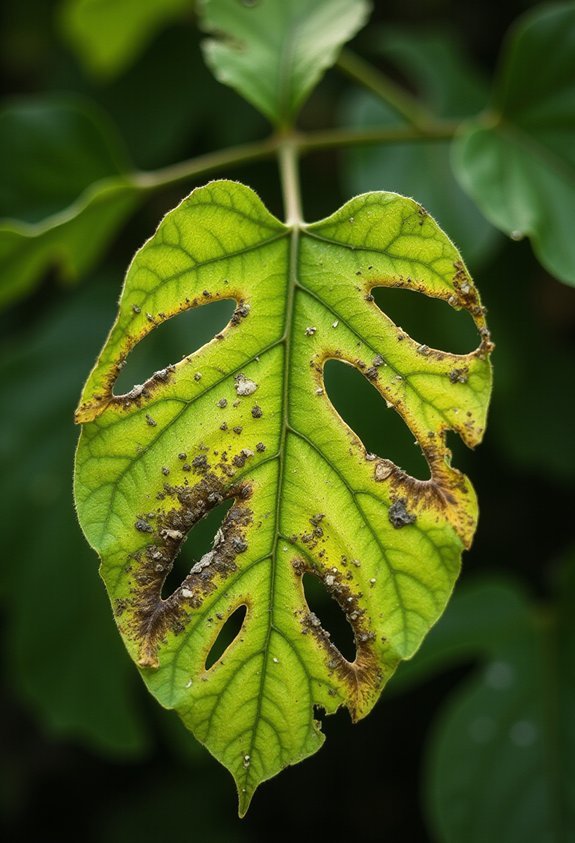
Many common houseplant pests create holes by chewing through leaves, sucking out plant fluids, or tunneling beneath the leaf surface, and identifying which pest you’re dealing with is essential for choosing the right treatment method. Spider mites leave tiny yellow spots that eventually become holes, while mealybugs create small punctures as they feed. Caterpillars produce irregular, large holes with clean edges because they’re chewing insects. Thrips cause silvery streaks and speckled damage on leaves. Scale insects attach to stems and leaves, creating yellowing areas that develop into holes. To identify your pest accurately, you’ll need to examine both the leaf damage pattern and the undersides of leaves carefully, where many pests hide during the day and leave telltale signs of their presence.
Disease-Related Holes: Fungal and Bacterial Signs
While pests create holes through physical damage, diseases caused by fungi and bacteria work differently, often producing holes as part of a larger pattern of leaf decay and deterioration. You’ll notice that fungal infections typically create circular or irregular holes surrounded by yellowing or brownish rings, indicating dead tissue. Bacterial leaf spots, meanwhile, produce water-soaked lesions that eventually rupture, leaving behind ragged holes with yellow halos. These disease-related holes often appear alongside other symptoms like wilting, discoloration, or a musty odor. Unlike pest damage, which shows clean entry points, disease-related holes develop gradually as the infection spreads through leaf tissue. You should examine affected leaves closely and remove them promptly to prevent the disease from spreading to healthy foliage.
Physical Damage From Handling and Environment
How often do you notice holes appearing on your houseplant leaves after you’ve watered, moved, or brushed against them? Physical damage occurs when you handle plants roughly or expose them to harsh environmental conditions. Accidental tearing happens during repotting, pruning, or repositioning near windows and air vents. Strong drafts, temperature fluctuations, and low humidity stress leaf tissue, making it brittle and prone to splitting. Additionally, water droplets left on leaves under direct sunlight can magnify light intensity, causing brown spots and holes. To prevent this damage, you should handle plants gently, avoid placing them in high-traffic areas, maintain consistent temperature and humidity levels, and water at the soil level rather than overhead. These precautions protect your plants’ foliage from unnecessary harm.
Natural Holes: Plants That Develop Them Normally
Certain houseplants naturally develop holes in their leaves as part of their normal growth pattern, which means you shouldn’t automatically assume that every hole indicates damage or disease. Some popular varieties, including Monsteras and Philodendrons, intentionally create distinctive fenestrations, or natural leaf openings, as they mature. Scientists believe these holes serve practical purposes by allowing air and light to reach lower leaf sections and reducing wind resistance. You’ll notice that younger leaves typically don’t display these holes, but they’ll gradually appear as the plant ages and develops. Understanding which plants naturally develop fenestrations prevents unnecessary worry and helps you recognize what constitutes normal, healthy growth versus actual problems requiring intervention.
Treat Pest Infestations on Indoor Plants
Several common indoor plant pests—including spider mites, mealybugs, scale insects, and aphids—create holes, yellowing, and wilting in houseplant leaves, so you’ll need to identify which pest you’re dealing with before you can treat the problem effectively. You can inspect your plants by examining both the upper and lower leaf surfaces with a magnifying glass, looking for tiny insects, webbing, or sticky residue. Once you’ve identified the pest, you’ll want to isolate the affected plant immediately to prevent spread to other houseplants. Next, you can spray the leaves with insecticidal soap or neem oil, which are organic treatments that disrupt pests’ life cycles. You’ll need to repeat applications every seven to ten days until the infestation disappears completely.
Fix Disease-Related Leaf Damage
Beyond pest problems, fungal, bacterial, and viral diseases can also cause holes, spots, and discoloration on your houseplant leaves, and you’ll need to diagnose the specific disease before you can treat it effectively. Start by examining affected leaves closely, noting the pattern, color, and texture of the damage. Fungal diseases often create circular spots with defined edges, while bacterial infections typically produce water-soaked lesions. Viral diseases usually cause mottling or irregular patterns. Once you’ve identified the disease, remove all affected leaves immediately to prevent spread. Improve air circulation around your plant by spacing it away from others, and reduce watering frequency to avoid moisture buildup. Apply appropriate fungicide or bactericide according to package directions, and isolate the plant from your other houseplants temporarily.
Prevent Holes From Appearing Again
Once you’ve successfully treated your houseplant’s leaf damage, you’ll want to establish a consistent care routine that stops holes from forming in the first place, since prevention is always easier than dealing with damage after it happens. You should inspect your plants weekly for early signs of pests or disease, catching problems before they spread. Maintain proper watering schedules, avoiding both overwatering and underwatering, since stressed plants are more susceptible to damage. Guarantee your plants receive adequate light and humidity appropriate for their species. Keep the area around your plants clean, removing fallen leaves and debris where pests hide. Isolate new plants for two weeks before introducing them to your collection, preventing pest infestations from spreading to your existing houseplants.
Conclusion
You’ve now discovered that houseplant leaf holes stem from pests, diseases, environmental stress, physical damage, or natural fenestrations, and coincidentally, the solution often involves the same inspection method for all causes. By regularly examining your plants‘ leaves, stems, and soil conditions, you’ll identify problems early, apply targeted treatments whether pesticides or adjustments to watering and humidity, and ultimately maintain healthier, hole-free foliage throughout your home.