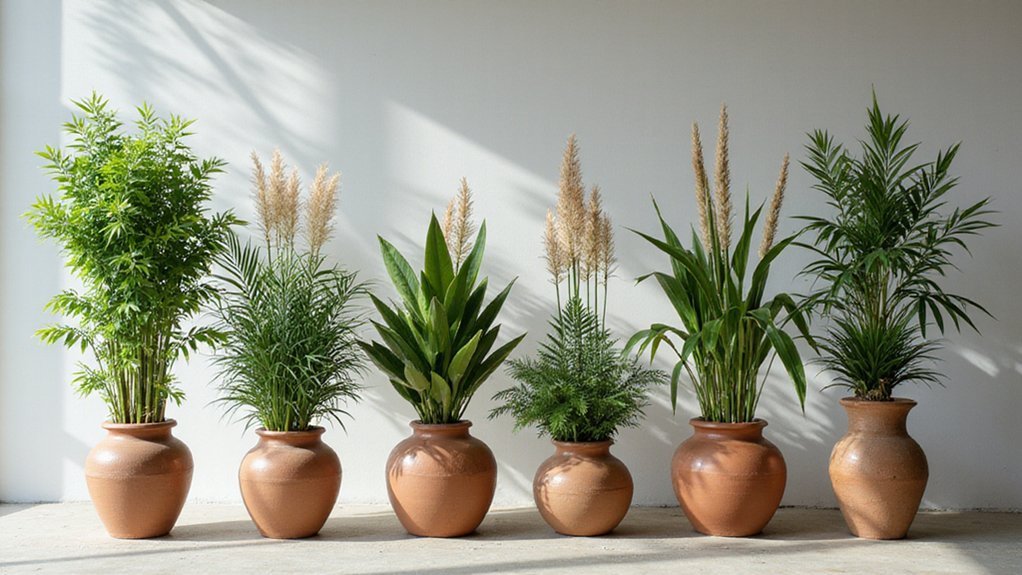
You might think tall plants require sprawling garden space, but containers actually let you grow striking vertical specimens in patios, balconies, and tight indoor areas. When you select the right tall plants—like bamboo palms, dracaenas, and feather reed grass—you’ll discover how they transform your space with dramatic height and texture while staying manageable. The key involves understanding which varieties thrive in your specific light conditions and how to maintain them properly, which we’ll explore next.
Bamboo Palm in Containers: Tropical Height Without the Jungle Footprint
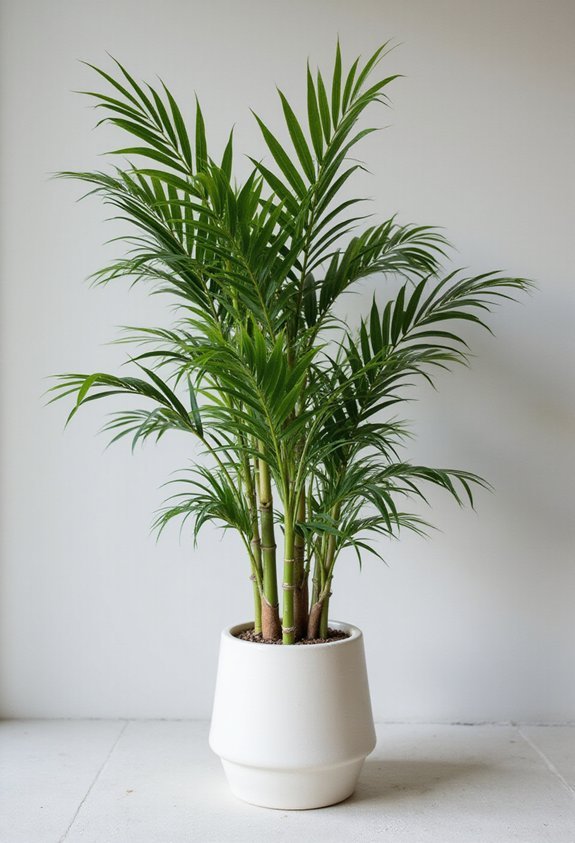
A solution for those seeking impressive vertical greenery without dedicating extensive garden space, the bamboo palm delivers striking height within the confines of a container, making it an ideal choice for patios, balconies, and indoor spaces where you’d otherwise struggle to grow tall plants. You’ll appreciate how these palms can reach 12 feet tall while remaining manageable in pots. They’re adaptable to various light conditions, though they’ll thrive best in bright, indirect sunlight. When caring for your bamboo palm, you’ll need to water consistently, keeping the soil moist but not waterlogged, and feed it monthly during growing seasons. Guarantee proper drainage in your container to prevent root rot, and you’ll enjoy years of tropical elegance.
Also read: Best Dwarf Fruit Trees for Small Spaces
Dracaena Marginata: Dramatic Foliage on a Slender Frame
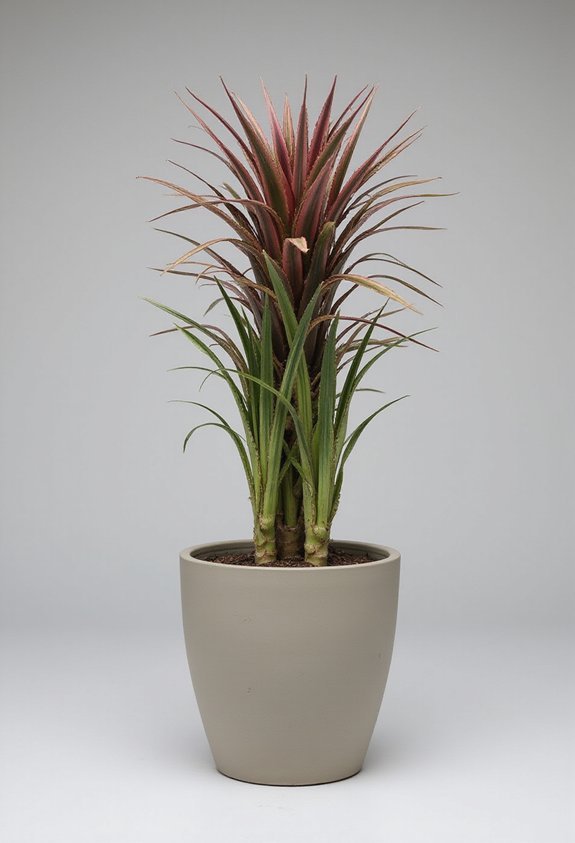
If you’re looking to build vertical interest in your container garden without taking up much floor space, the dracaena marginata stands out as an excellent choice because it’ll grow tall and narrow, reaching heights of 6 to 10 feet while maintaining a relatively slim profile that fits naturally into tight corners and small patios. You’ll appreciate its distinctive thin, arching leaves that display deep green coloring with striking red or burgundy margins, creating visual drama through color contrast. The plant thrives in bright, indirect light and prefers well-draining potting soil that you consistently keep moist but not waterlogged. You should rotate your dracaena marginata regularly to guarantee even growth, and you can prune lower leaves as the plant matures, revealing its elegant cane-like trunk structure beneath.
Ficus Benjamina: Elegant Branches for Shaded Corners
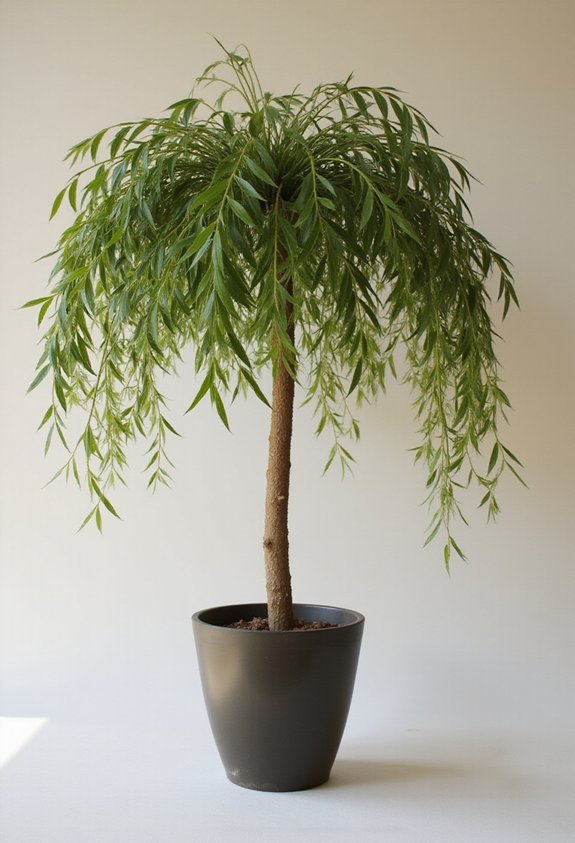
While the dracaena marginata thrives in bright light and commands attention through its narrow, upright form, the ficus benjamina offers you a different strategy for vertical gardening by flourishing in shadier locations where many tall container plants struggle. You’ll find that this elegant plant develops gracefully arching branches that create a softer, more flowing silhouette compared to rigid, columnar varieties. The ficus benjamina grows to impressive heights in containers while adapting well to indirect light conditions, making it ideal for corners and interior spaces lacking direct sunlight. You should maintain consistent moisture levels and provide humidity through regular misting to prevent leaf drop. The plant’s delicate foliage and natural branching pattern make it particularly valuable when you’re designing layered, visually interesting container arrangements in low-light environments.
Feather Reed Grass: Airy Texture and Movement Without Weight
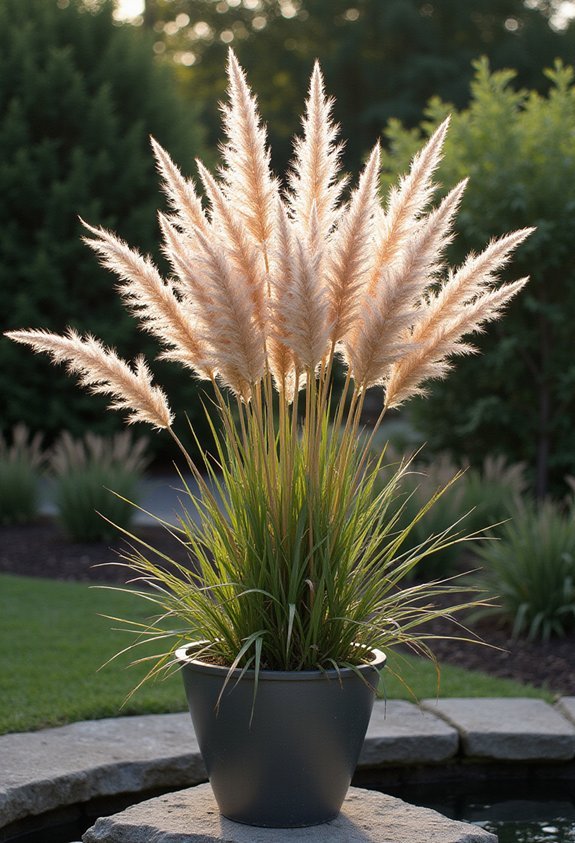
Unlike the ficus benjamina’s dense foliage that fills spaces with solid greenery, feather reed grass brings a completely different quality to tall container gardening by offering you an airy, delicate texture that moves gracefully in even gentle breezes. You’ll appreciate how this ornamental grass reaches heights of four to six feet without creating a heavy, bulky appearance in your space. The feathery plumes that emerge in late summer provide visual interest while remaining lightweight, making the grass suitable for patios and balconies where weight restrictions matter. You can plant feather reed grass in large containers with well-draining soil, positioning it where it receives full sun for ideal growth and movement. Its architectural form creates dynamic visual appeal throughout the seasons without overwhelming your container garden’s design.
Cordyline Fruticosa: Spiky Color Year-Round
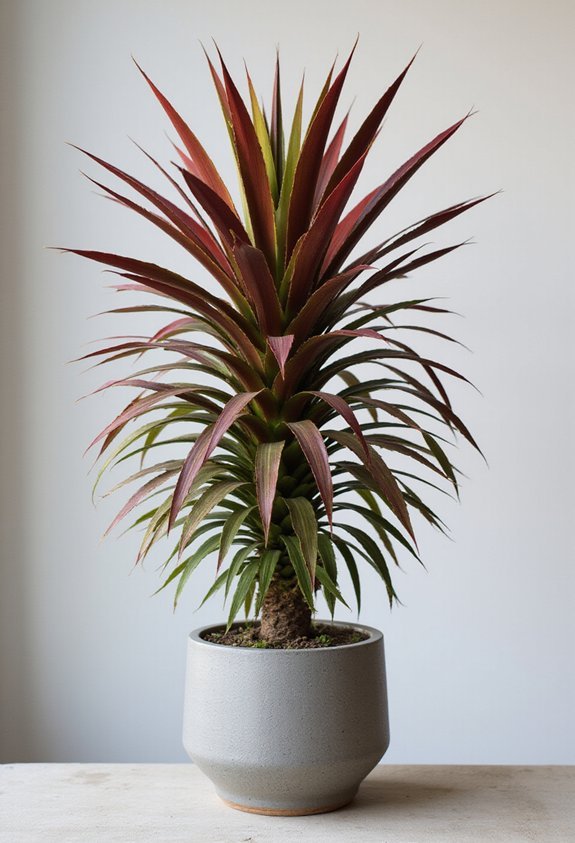
Where feather reed grass offers movement through delicate textures, cordyline fruticosa delivers bold, dramatic color through its distinctive spiky foliage that remains vibrant throughout every season. You’ll appreciate how its long, narrow leaves display striking hues ranging from deep burgundy to bright orange and yellow, depending on the variety you choose. This tropical plant thrives in containers when you provide bright, indirect light and well-draining soil. You should water regularly during growing seasons while allowing the soil to dry slightly between waterings. The cordyline’s upright growth habit creates a strong vertical element in your container gardens, reaching heights of four to six feet. Its year-round color persistence makes it invaluable for maintaining visual interest when other seasonal plants fade away.
Clumping Bamboo: Privacy Screens That Stay in Bounds
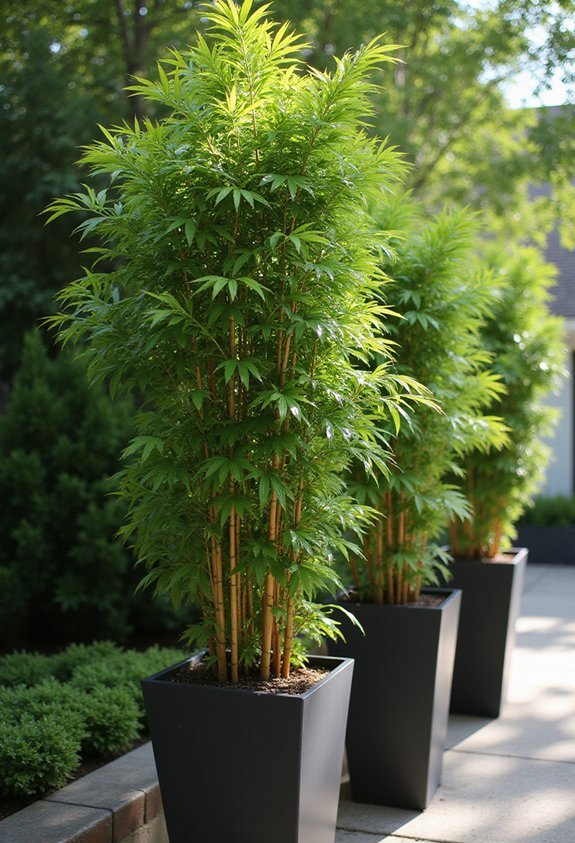
If you’re seeking a tall container plant that’ll establish a natural privacy barrier without spreading uncontrollably, clumping bamboo offers an excellent solution because it grows in compact clusters rather than sending out invasive runners like running bamboo varieties do. You’ll find that clumping bamboo reaches heights of 8 to 15 feet, depending on the species you select, making it ideal for screening purposes on patios and decks. When you plant clumping bamboo in containers with drainage holes and quality potting soil, you’ll need to water regularly during growing seasons and provide partial shade in hot climates. You should fertilize monthly during spring and summer months to encourage vigorous growth, and you’ll want to prune selectively to maintain your desired shape and height for suitable privacy screening results.
Yucca in Containers: Architectural Drama for Low-Maintenance Gardens
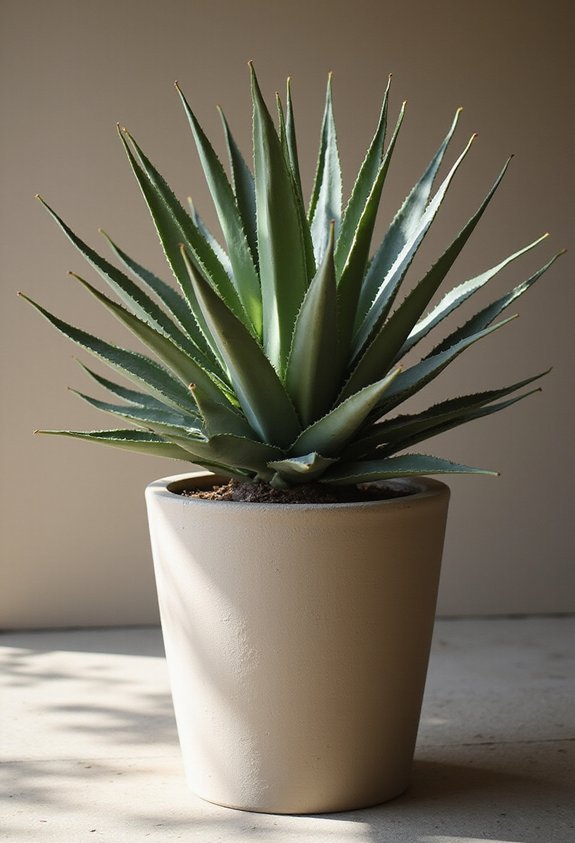
Yucca plants bring a completely different aesthetic to container gardening compared to the soft, feathery appearance of clumping bamboo, offering you bold, sculptural foliage that’ll transform your outdoor spaces with dramatic visual impact. You’ll appreciate yuccas’ low-maintenance nature, as they’re drought-tolerant and don’t require frequent watering once established. Plant them in well-draining soil and containers with drainage holes to prevent root rot. Position your yucca in full sunlight, where it’ll thrive and develop stronger growth patterns. These plants need minimal fertilizing, making them ideal for gardeners seeking simplicity. Their architectural form works beautifully as focal points in contemporary landscapes, creating visual interest year-round without demanding constant attention or specialized care routines.
Match Your Plant to Light, Space, and Maintenance Levels
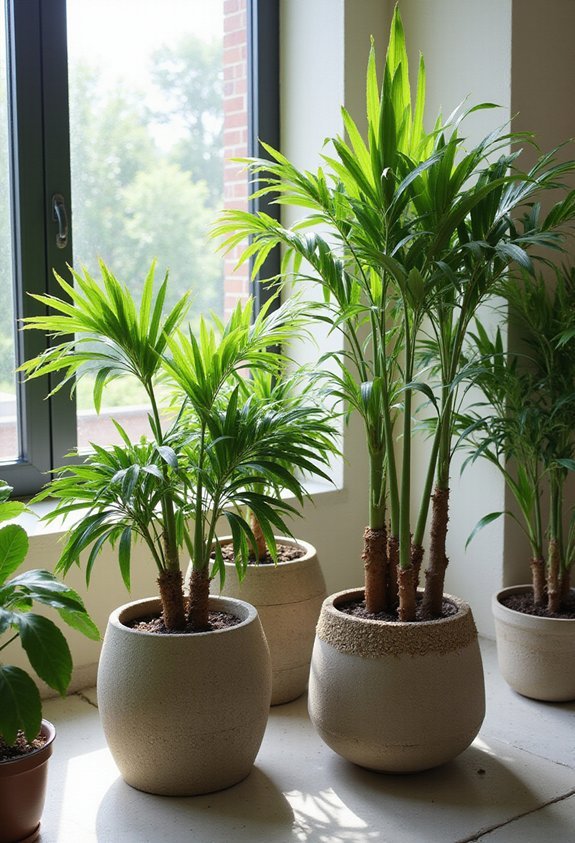
Selecting the right tall plant for your container garden requires you to evaluate three critical factors: the amount of light your growing location receives, the physical space you’ve got available, and how much time you’re willing to invest in plant care. If your spot gets full sun, you’ll want sun-loving plants like ornamental grasses or bamboo. Partial shade areas work well with hostas or ferns. Consider your available space carefully—taller plants need sturdy containers and adequate room for root development. Finally, assess your maintenance commitment. Some tall plants demand regular watering and pruning, while others thrive with minimal attention. Guaranteeing these three elements guarantees you’ll select a plant that’ll flourish in your specific conditions rather than struggle or require constant intervention.
Conclusion
You’ll find that container gardening with tall plants has grown by over 40% in the last five years, proving its popularity among homeowners. By selecting plants that match your available light, space, and willingness to maintain them, you’re setting yourself up for success. Each plant you’ve learned about offers distinct advantages, so consider your specific conditions carefully before making your final choice for maximum growth and visual impact.