
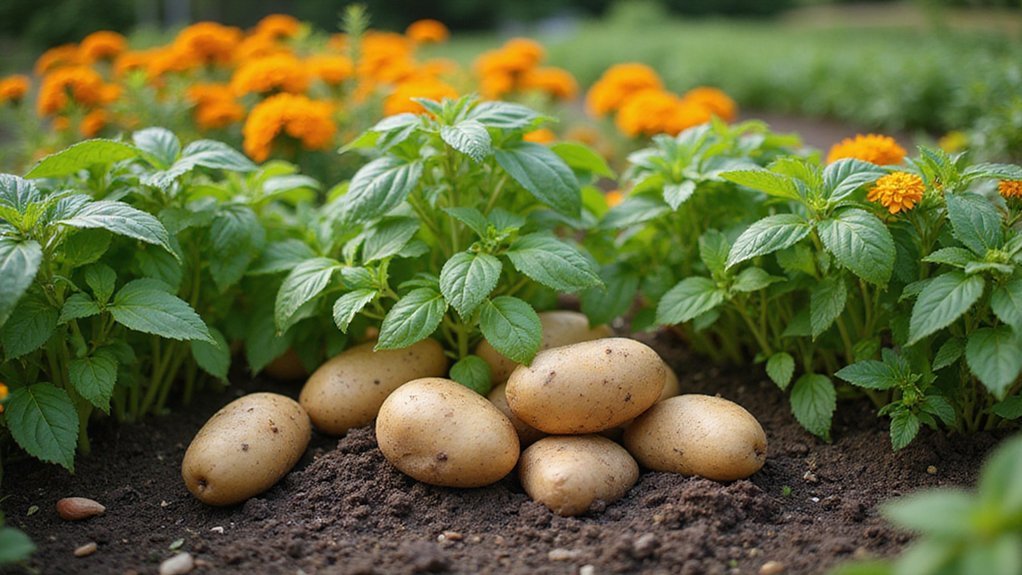
When you’re planning your potato garden, you’ll want to ponder which plants can help your crop thrive by improving soil quality, deterring pests, and maximizing your available space. Certain companion plants offer specific benefits—some fix nitrogen naturally, while others repel harmful insects or provide physical support. Understanding these relationships helps you create a more productive garden without relying on chemical treatments. But which plants work best together, and which ones should you shun?
Beans: Nitrogen-Fixing Allies for Potatoes
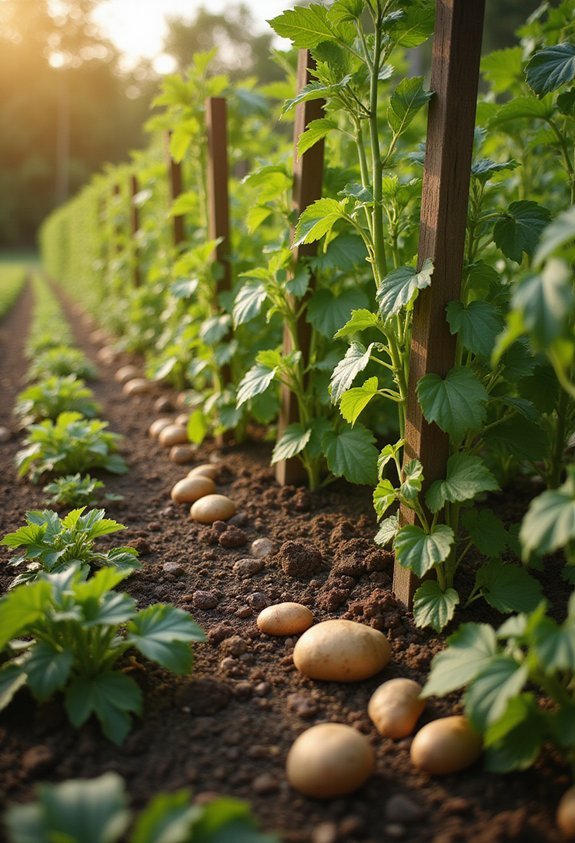
When you’re planning your potato garden, beans make an excellent companion plant because they’ve got a special ability that’ll benefit your potatoes considerably. Beans contain bacteria in their root nodules that convert nitrogen from the air into a form that plants can absorb, a process called nitrogen fixation. Since potatoes require substantial nitrogen to develop healthy foliage and tubers, planting beans nearby creates a natural fertilization system. As beans grow and eventually decompose in your soil, they’ll release nitrogen that your potato plants can readily use. You should plant beans around the edges of your potato beds or in alternate rows, ensuring they don’t shade your potatoes excessively. This companion planting strategy reduces your need for commercial fertilizers while improving soil health and potato yields simultaneously.
Also read: 10 Best Plants to Grow Hydroponically
Corn: Creating Natural Support Structure
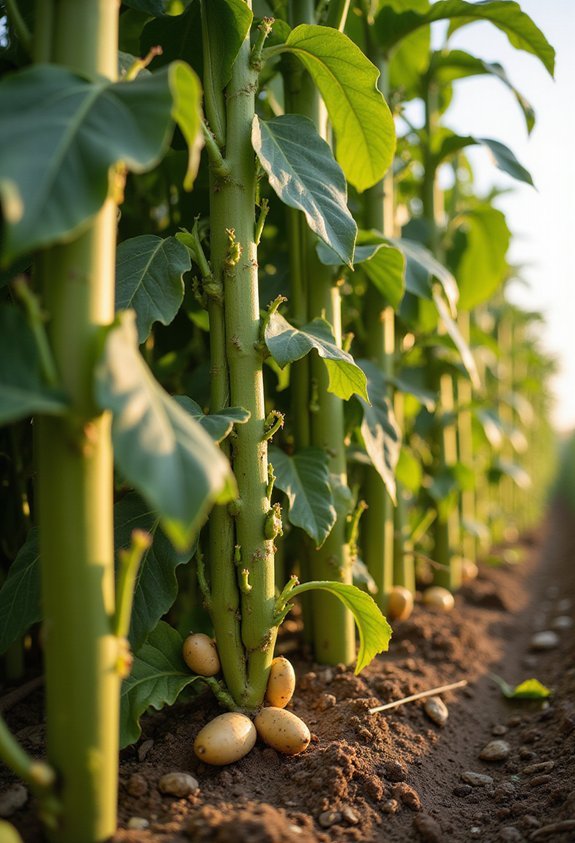
Corn stalks provide an excellent natural support structure that’ll help your potato plants thrive in a shared garden space, and this traditional companion planting method has been used successfully for centuries. You’ll benefit from planting corn around your potato beds since the tall stalks create shade that keeps soil cooler and moister during hot growing seasons. The corn roots penetrate deeper into the soil than potato roots, so they won’t compete for nutrients and water in the upper layers where your potatoes develop. Additionally, you can plant climbing beans on the corn stalks, creating a three-crop system that maximizes your garden space efficiently. This arrangement lets you harvest corn, potatoes, and beans from the same area, making your gardening efforts dramatically more productive and organized.
Peas: Boosting Soil Fertility Without Extra Fertilizer
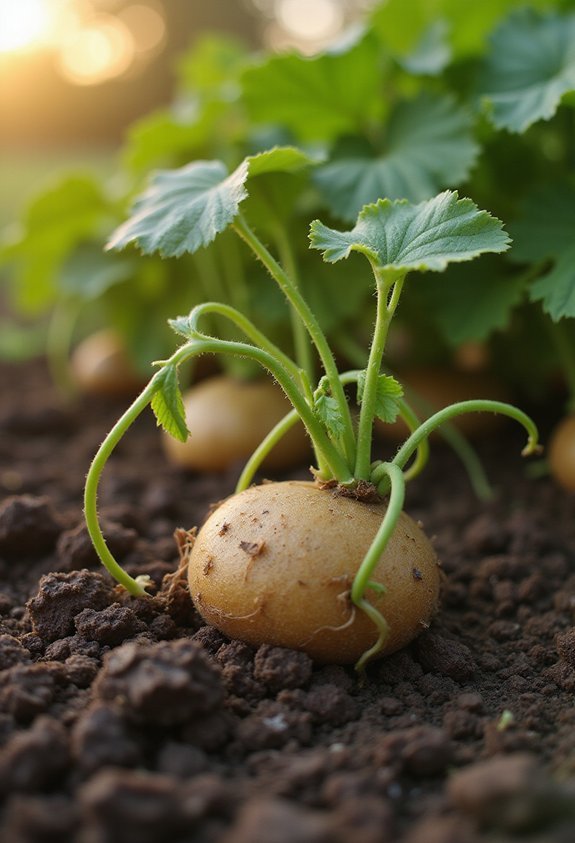
Unlike many vegetables that’ll deplete your soil’s nitrogen content, peas actually work to restore it through a natural biological process that’ll benefit your potato plants greatly. Peas contain beneficial bacteria in their root nodules that capture nitrogen from the air and convert it into a form your soil can use, enriching it naturally without requiring commercial fertilizers. When you plant peas alongside potatoes, you’re fundamentally creating a self-sustaining nutrient cycle that reduces your fertilizing needs markedly. After your pea plants finish growing, their decaying roots continue releasing nitrogen into the soil, providing long-term fertility benefits for future potato crops. This companion planting strategy proves particularly effective in gardens where nitrogen levels run low, making peas an economical and environmentally responsible choice.
Marigolds: Natural Pest Deterrents for Colorado Beetles
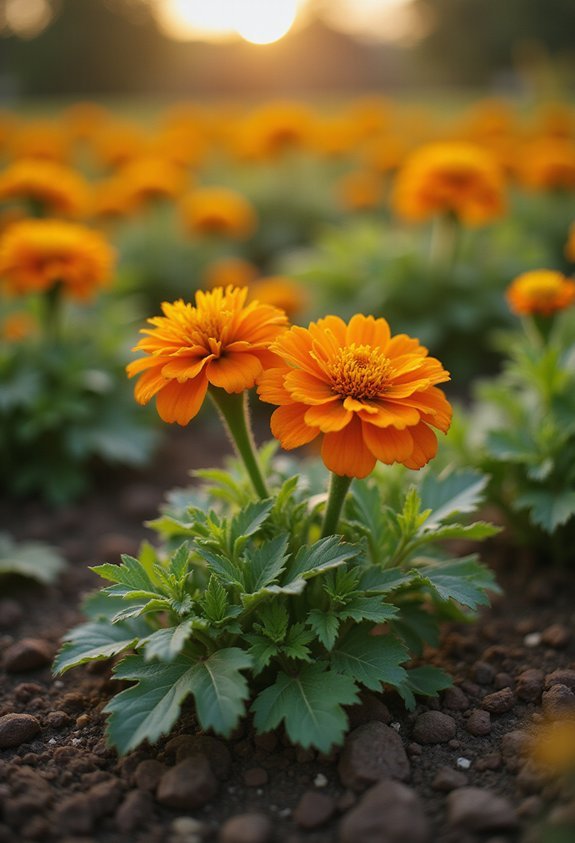
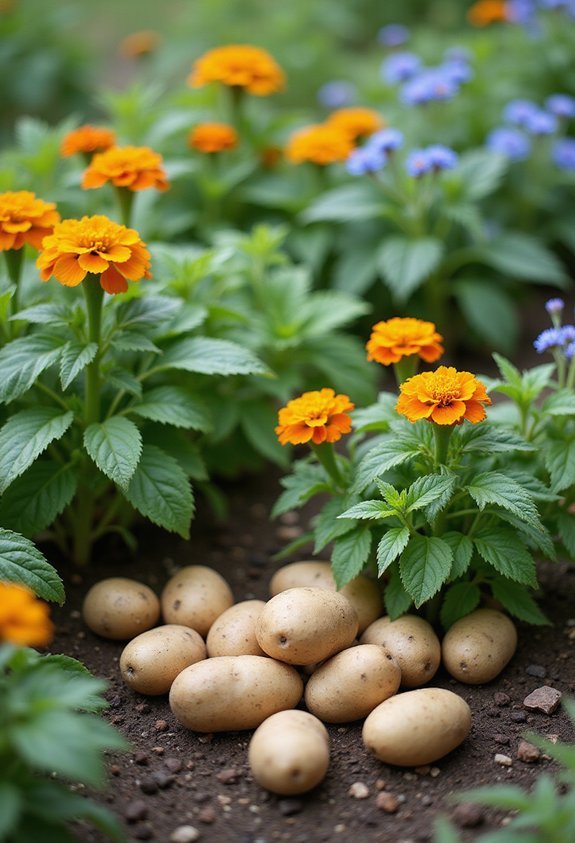
Since Colorado potato beetles can devastate your potato plants by feeding on their leaves and laying eggs that’ll hatch into destructive larvae, you’ll want to employ natural defense strategies that don’t rely on chemical pesticides. Marigolds offer an excellent solution by producing compounds that repel these harmful insects from your potato beds. When you plant marigolds around your potato plants, the strong scent naturally deters Colorado beetles from laying eggs nearby, protecting your crop throughout the growing season. Additionally, marigolds attract beneficial insects that prey on potato pests, creating a balanced ecosystem in your garden. You’ll want to space marigolds every few feet among your potatoes, ensuring adequate coverage. This simple companion planting technique combines pest prevention with aesthetic appeal, making it a practical and effective approach to safeguarding your potato harvest.
Nasturtiums: Trap Crops for Potato Protection
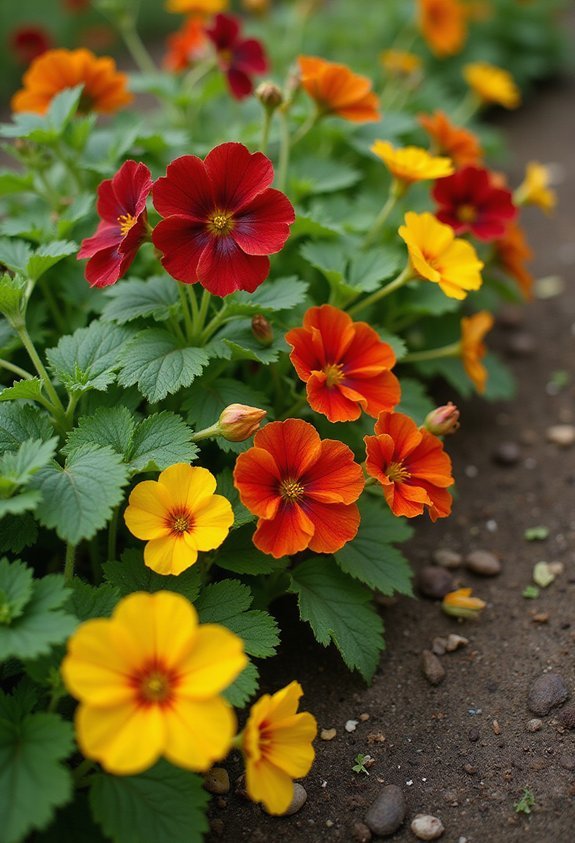
While nasturtiums won’t repel potato pests like marigolds do, they’ll actually attract harmful insects away from your potato plants by serving as a sacrificial trap crop. You can plant nasturtiums around your potato garden’s perimeter, and aphids, whiteflies, and cucumber beetles will preferentially feed on these flowers instead of your potatoes. This strategic placement protects your main crop by diverting pest pressure elsewhere. The nasturtiums become expendable barriers that shield your vegetables from damage. You’ll notice insects congregating on the nasturtiums within days, leaving your potatoes relatively unharmed. This method works particularly well in companion planting systems where multiple protective strategies combine for optimal results. Monitor your nasturtiums regularly to guarantee they’re successfully drawing pests away from your potato plants.
Garlic: Keeping Aphids Off Your Potatoes
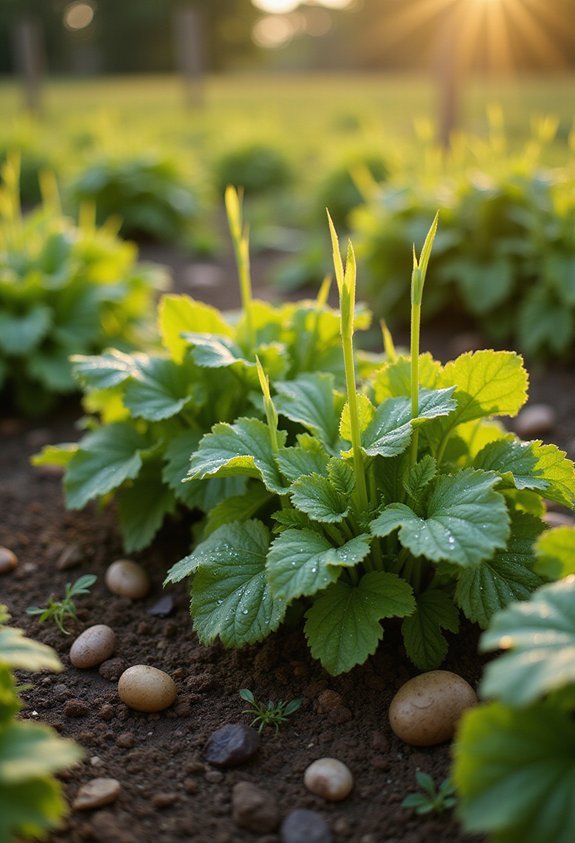
Garlic plants naturally produce sulfur compounds that’ll deter aphids and other soft-bodied insects from settling on your potato crop, making them an excellent companion for your vegetable garden. You can plant garlic cloves around the perimeter of your potato bed or intersperse them throughout the rows, spacing them about six inches apart. The sulfur compounds become more potent as the garlic develops, providing increasing protection as your potatoes grow. You’ll want to plant garlic in fall for spring harvesting, ensuring mature plants are present during peak potato growing season. Additionally, garlic’s shallow root system won’t compete noticeably with potatoes’ deeper roots, allowing both plants to thrive harmoniously. This dual-purpose pairing gives you both pest protection and an extra harvest.
Onions: Three-Way Pest Protection
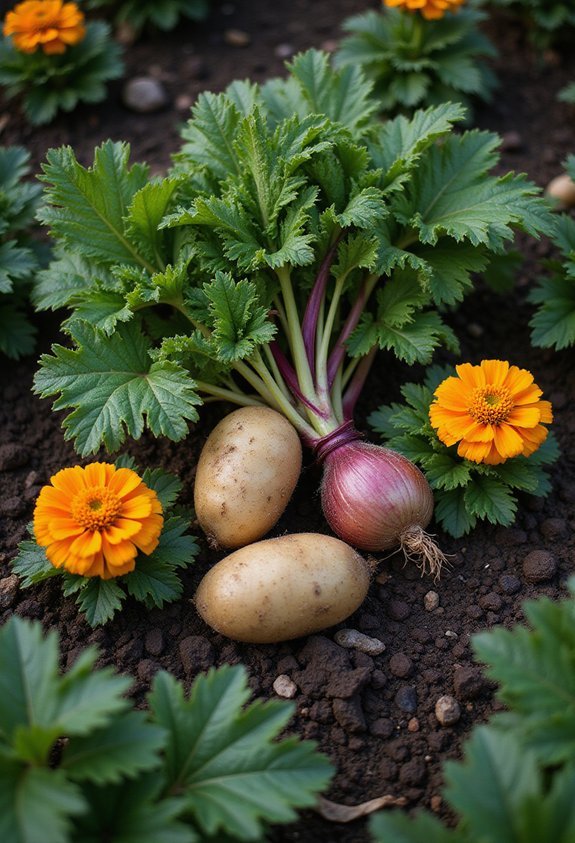
Much like garlic, onions produce sulfur compounds that repel multiple types of pests, but they’ll also protect your potato plants in two additional ways that make them an even more versatile companion. First, onions improve your soil’s overall health by adding organic matter as they decompose, which strengthens your potatoes’ root systems and nutrient absorption. Second, onions naturally suppress certain soil-borne diseases that commonly affect potato crops, reducing your need for chemical treatments. You’ll want to plant onions around your potato bed’s perimeter or intersperse them throughout your rows for maximum effectiveness. This three-way protection system—pest repulsion, soil improvement, and disease suppression—makes onions one of the most effective companion plants you can choose for your potato garden.
Basil: Flavor and Pest Control
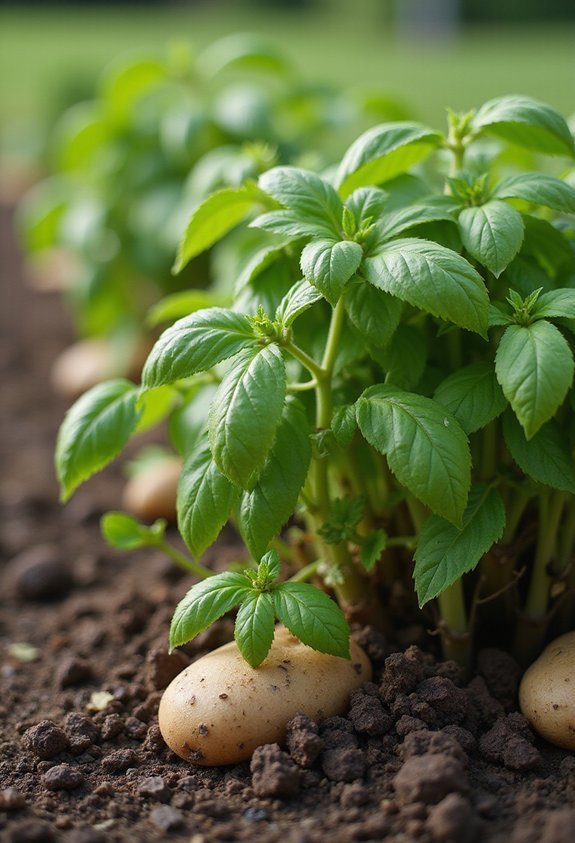
Because basil’s aromatic oils repel several common potato pests, including spider mites and aphids, you’ll find that planting basil near your potato beds provides reliable pest management without relying on chemical sprays. Beyond its protective qualities, basil offers a practical culinary benefit, allowing you to harvest fresh herbs while tending your garden. You should space basil plants approximately 6 to 12 inches apart around your potato rows, ensuring adequate air circulation for both crops. Basil thrives in warm, sunny locations with well-draining soil, conditions that align well with potato growing requirements. The herb’s shallow root system won’t compete extensively with potatoes’ deeper root networks, making it an efficient companion choice. By incorporating basil into your potato garden, you’re simultaneously enhancing pest control and creating convenient access to fresh seasoning herbs.
Chives: Aphid Control Without Extra Work
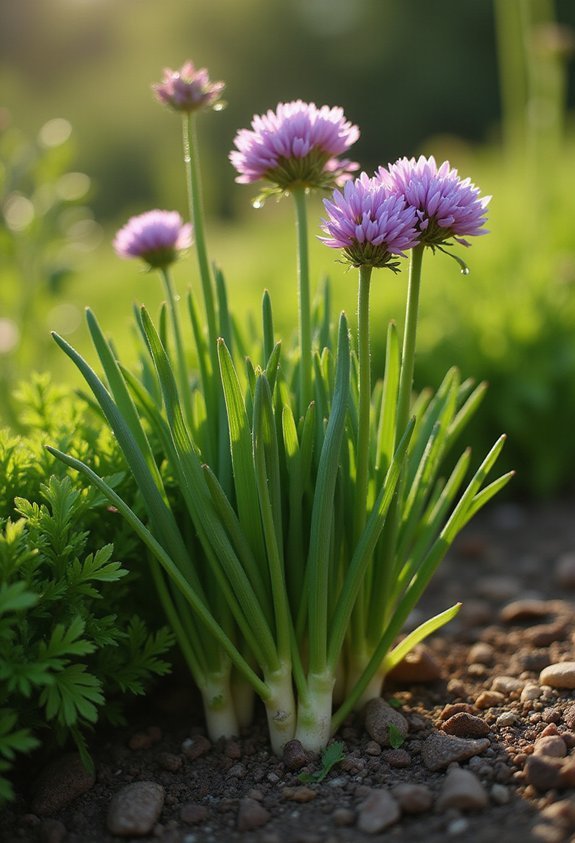
While chives don’t require the specialized care that many gardeners associate with companion planting, they’re remarkably effective at deterring aphids, one of the most persistent potato pests. You can plant chives directly around your potato beds, where their strong sulfur compounds naturally repel aphids without demanding extra attention or maintenance. Unlike some companion plants that need specific growing conditions, chives thrive in most soil types and require minimal watering once established. When you plant chives near potatoes, the pungent odor confuses aphids and discourages them from settling on your potato plants. Additionally, chives attract beneficial insects like ladybugs and lacewings, which actively hunt and consume aphids. This dual-action approach makes chives an exceptionally practical choice for gardeners seeking straightforward, low-maintenance pest management solutions.
Horseradish: Your Defense Against Soil Diseases
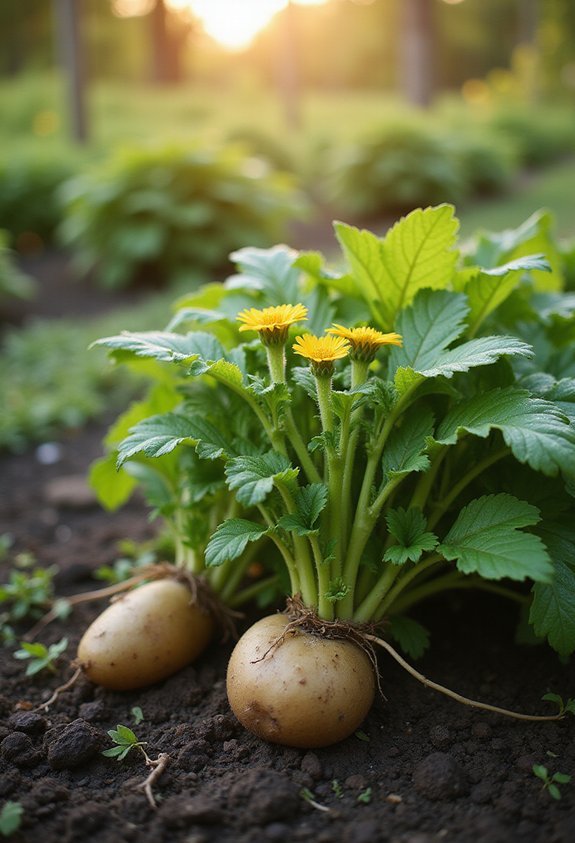
When you’re battling soil-borne diseases that threaten your potato crop, horseradish offers a powerful natural defense that works right in the ground beneath your plants. This hardy root vegetable produces compounds called glucosinolates, which break down into substances that actively suppress fungal and bacterial pathogens in your soil. You’ll plant horseradish near your potatoes to create a protective zone that reduces diseases like late blight and verticillium wilt. The plant’s deep root system also improves soil structure and drainage, which further minimizes disease risk by preventing waterlogging where pathogens thrive. You can harvest horseradish after one growing season while your potatoes benefit continuously from its disease-fighting properties throughout the season.
Plant Enemies: Crops to Keep Away From Potatoes
Just as certain plants like horseradish protect your potatoes from disease, other crops can actually harm your potato plants by competing for nutrients, attracting shared pests, or creating unfavorable growing conditions in your garden bed. You’ll want to keep tomatoes, peppers, and eggplants away from your potatoes since they’re susceptible to the same diseases, particularly late blight, which can devastate both crops simultaneously. Brassicas like cabbage and broccoli compete aggressively for soil nutrients that your potatoes need for healthy development. Fennel inhibits potato growth through chemical substances it releases into the soil. Onions and garlic also drain essential nutrients, weakening your potato plants. By strategically planning your garden layout and separating these incompatible crops, you’ll protect your potato yield and maintain healthier garden beds overall.
Conclusion
By planting these companion plants around your potatoes, you’re building a fortress of natural protection and soil enrichment that’ll transform your garden into a thriving ecosystem. You’ll reduce your reliance on chemical fertilizers and pesticides while maximizing your garden’s productivity, ensuring healthier crops and better harvests through strategic plant partnerships.