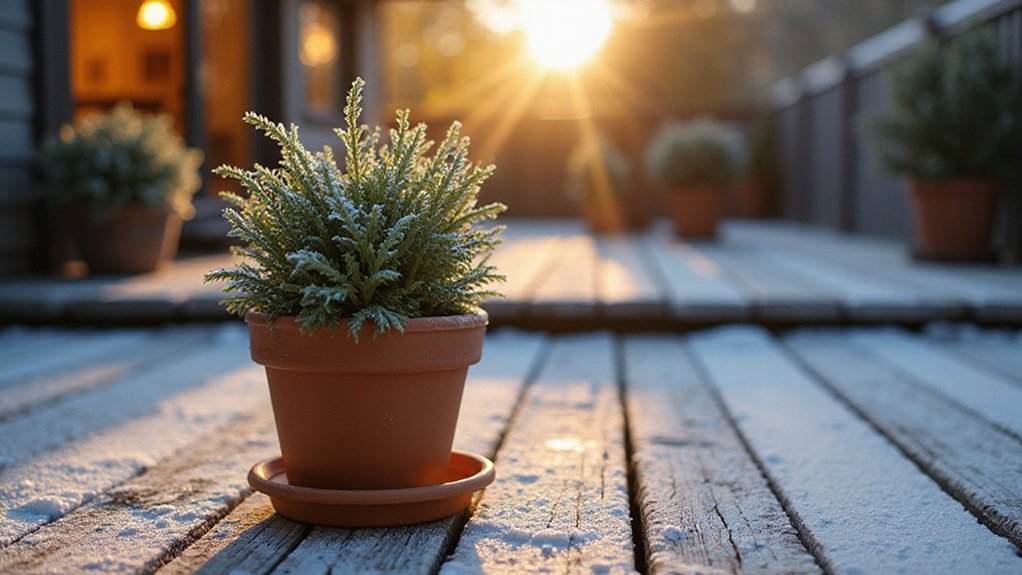
When winter approaches, you’ll face an important decision: which potted plants require indoor protection and which can withstand outdoor cold. Your plant’s survival depends on understanding its hardiness level, your local climate zone, and the timing of your first frost. Some plants thrive in winter conditions, while others won’t survive freezing temperatures. To make the right choice for your garden, you need to know specific details about your plants and climate.
Identify Which Potted Plants Must Come Indoors
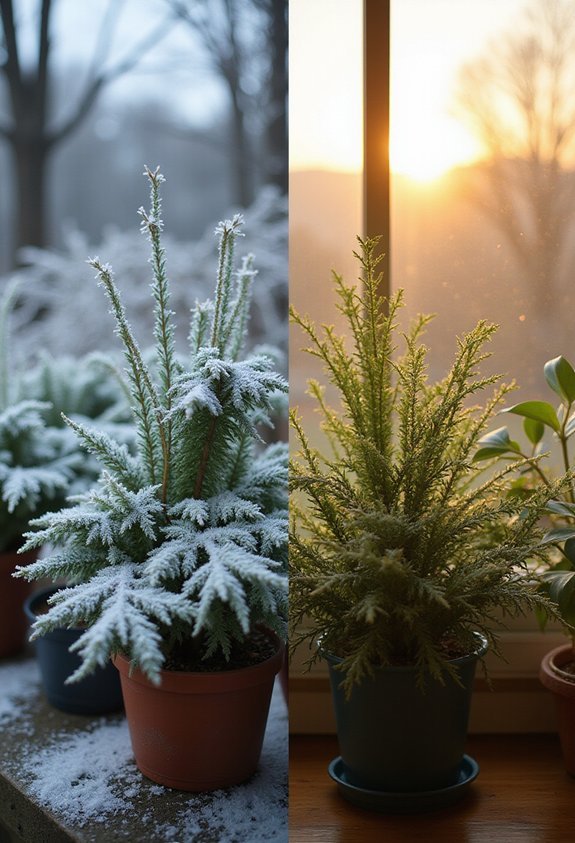
Before you bring your potted plants inside for winter, you’ll need to determine which ones actually require indoor protection, since not all container plants face the same cold-weather risks. Tender perennials and tropical plants, including begonias, impatiens, and hibiscus, can’t survive freezing temperatures and must come indoors. Similarly, herbs like basil and tender succulents won’t tolerate frost. However, hardy evergreens, ornamental grasses, and cold-tolerant shrubs can remain outside throughout winter. Check your plant’s hardiness zone rating, which you’ll find on the plant tag or in your local gardening guide. If your zone’s minimum winter temperature drops below your plant’s tolerance level, bring it inside. Understanding these distinctions prevents unnecessary plant loss and safeguards you’re focusing your indoor space on plants that genuinely need protection.
Also read: 5 Winter Things Killing Your Houseplants
Know Which Plants Can Survive Winter Outdoors
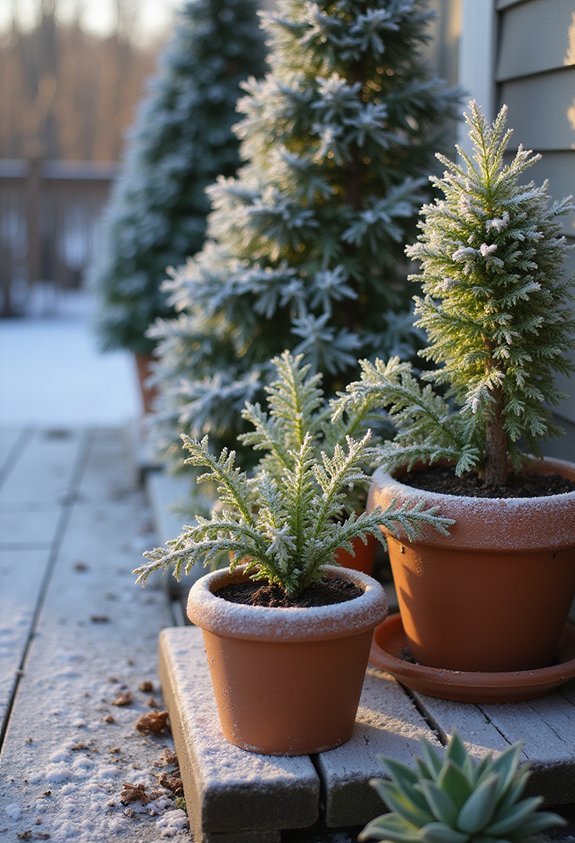
While many potted plants need indoor protection, plenty of hardy varieties‘ll thrive outside even when temperatures drop below freezing. You can leave cold-tolerant plants outdoors throughout winter without worry, as they’ve adapted to survive harsh conditions. Evergreens like boxwood, holly, and arborvitae maintain their foliage and strength during cold months. Ornamental grasses and sedums withstand freezing temperatures without damage. Winter-blooming plants such as hellebores and winter heather actually flourish in cold weather. Before deciding to leave plants outside, you should check your USDA hardiness zone and verify that your specific varieties match that zone’s temperature ranges. This guarantees your potted plants’ll survive winter conditions in your area without requiring indoor relocation.
Determine Your Climate Zone and First Frost Date
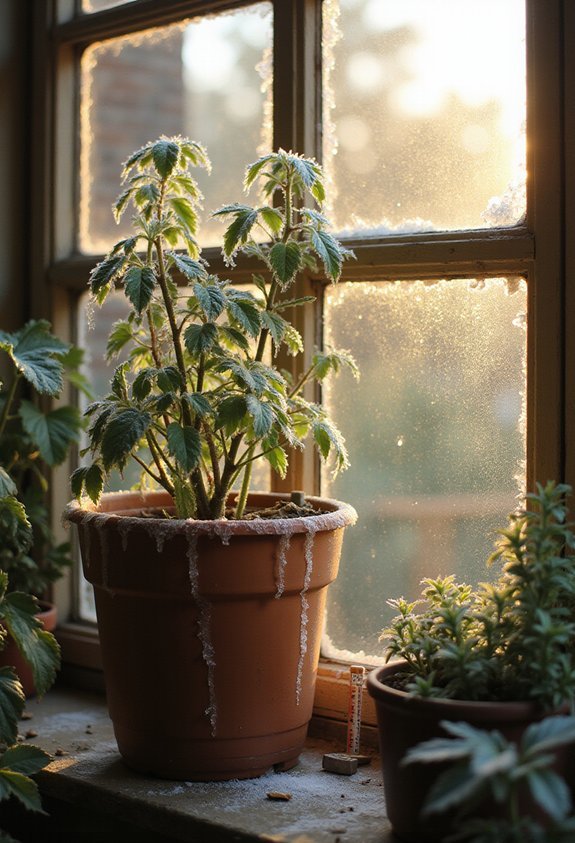
To protect your potted plants effectively, you’ll need to identify your USDA hardiness zone and discover when your area’s first frost typically arrives. You can find your hardiness zone by visiting the USDA website and entering your zip code, which will show you the average minimum winter temperatures in your region. Next, research your local first frost date, which is the average date when temperatures drop to 32°F or below in your area. You can obtain this information from your local cooperative extension office, gardening websites, or weather services. Understanding these two critical factors helps you determine whether your plants can tolerate outdoor conditions or require indoor protection before winter arrives.
Prepare Winter Potted Plants Before the Move
Getting your potted plants ready for the indoor migration requires several important steps that’ll help them adapt to their new environment and thrive throughout winter. First, inspect each plant thoroughly for pests and diseases, removing any affected leaves or stems before bringing them inside. Next, prune back overgrown branches and dead foliage to reduce stress during the relocation. Water your plants well a few days before moving them, ensuring the soil is evenly moist but not waterlogged. Gently clean the leaves with a soft cloth to remove dust and debris, which improves their ability to absorb light indoors. Finally, repot any plants with roots circling the soil surface, using fresh potting mix to provide nutrients for winter growth.
Set Up Your Indoor Space for Winter Plants
Now that you’ve prepared your plants for their move inside, you’ll need to create an environment where they can flourish during the colder months. Find a location that receives adequate sunlight, ideally near a south-facing window where your plants will capture maximum light throughout the day. Guarantee the area maintains consistent temperatures between sixty and seventy degrees Fahrenheit, avoiding drafts from heating vents or doors that open frequently. Position your plants away from radiators and cold windowpanes, as extreme temperature fluctuations can stress them. Arrange pots on waterproof trays to protect your floors and allow for proper drainage. Consider grouping plants together to increase humidity around their foliage, which helps them adjust to the dry indoor air created by heating systems.
Harden Off Plants for Spring
As spring approaches and outdoor temperatures begin to warm, your indoor plants will need gradual exposure to outdoor conditions before you can permanently move them outside, a process called hardening off that typically takes one to two weeks. You’ll start by placing your plants in a sheltered, shaded spot outdoors for just a few hours, then gradually increase their outdoor time each day. After several days, you can move them to areas receiving dappled sunlight, progressing to brighter locations as they adjust. Monitor soil moisture closely, since outdoor air and wind dry plants faster than indoor environments. By the final week, your plants should tolerate full sun and outdoor conditions, preparing them for permanent outdoor placement.
Avoid Common Overwintering Mistakes
While you’re preparing your plants for their eventual return outdoors, it’s equally important to protect them during the months they’re sheltered inside, since common overwintering mistakes can undo all your careful work and leave your plants weakened or damaged when spring finally arrives. Overwatering stands as the primary mistake, as indoor plants require considerably less moisture during dormancy than active growing seasons. You’ll also want to avoid placing plants near heating vents or cold drafts, which create stressful temperature fluctuations. Additionally, don’t forget to provide adequate light, even if it means using grow lights, since insufficient lighting causes leggy, weak growth. Finally, resist the urge to fertilize during winter dormancy, as plants aren’t actively growing and can’t utilize excess nutrients effectively.
Conclusion
You’ve now learned that bringing potted plants indoors for winter depends entirely on your hardiness zone and plant type, with studies showing that approximately 80% of gardeners who move tender plants indoors successfully preserve them through cold months. By identifying your plants’ cold tolerance, knowing your first frost date, and properly preparing your indoor space, you’ll protect your investment and enjoy thriving plants when spring arrives.