
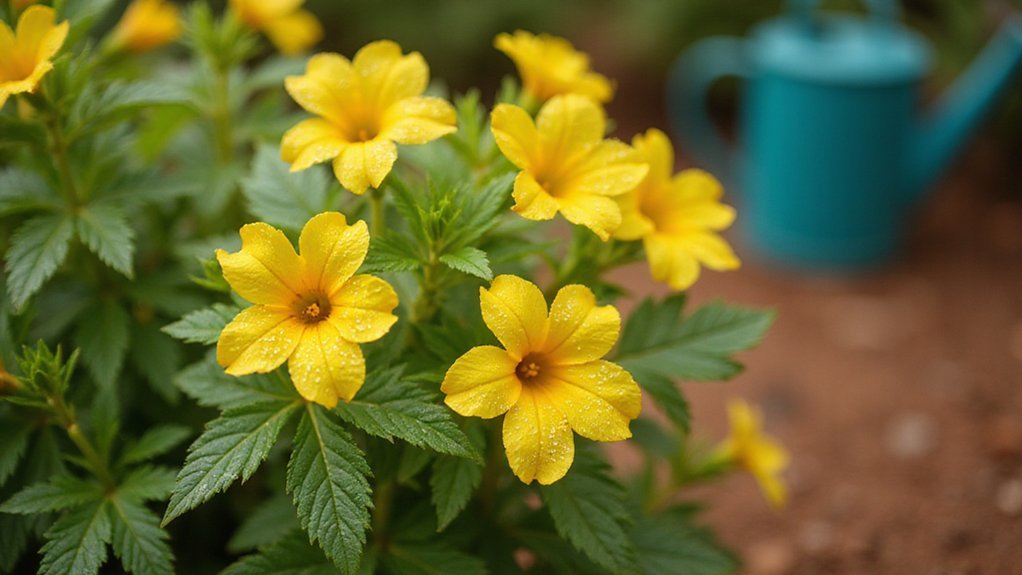
While many houseplants demand complicated care routines, Duranta plants actually thrive with straightforward attention to their core needs. You’ll need to master the balance between light, water, and nutrients to keep your plant flourishing, but understanding these fundamentals isn’t as difficult as it might seem. By following specific care guidelines, you can transform your Duranta into a vibrant, healthy specimen—but what exactly makes the difference between a struggling plant and one that truly excels?
Light and Temperature: Creating Ideal Conditions for Duranta
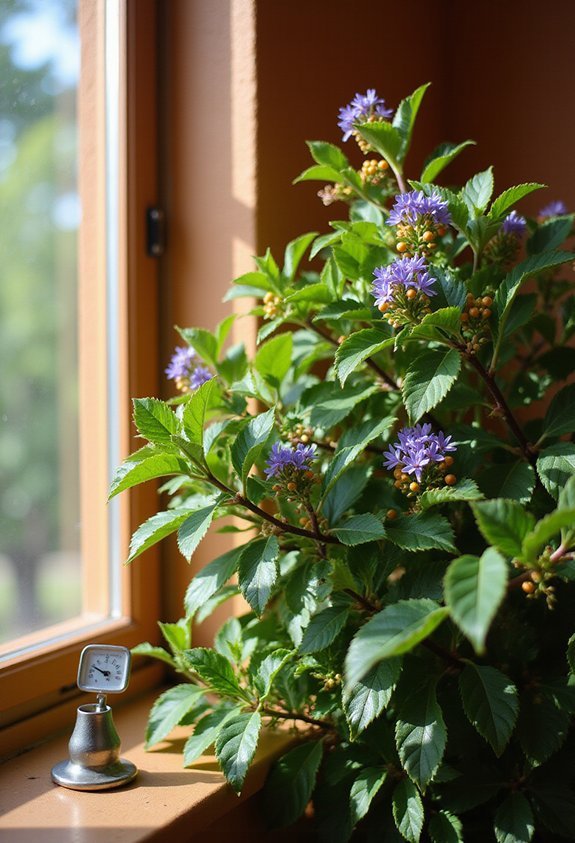
Since Duranta plants thrive in bright, warm environments, you’ll want to position yours where it’ll receive plenty of sunlight throughout the day. Aim for at least six to eight hours of direct sunlight daily, as insufficient light causes weak growth and fewer flowers. You can place your plant on a south-facing windowsill or in a bright outdoor location during warm months. Temperature-wise, keep your Duranta between 60 and 75 degrees Fahrenheit for ideal growth. Protect it from temperatures below 50 degrees, which’ll stress the plant and slow development. If you’re growing it indoors during winter, move it away from cold drafts near windows or doors. During warmer seasons, you can move your plant outdoors, where natural conditions’ll support vigorous, healthy growth and abundant flowering.
Also read: 5 Winter Things Killing Your Houseplants
Duranta Watering and Soil Composition Essentials
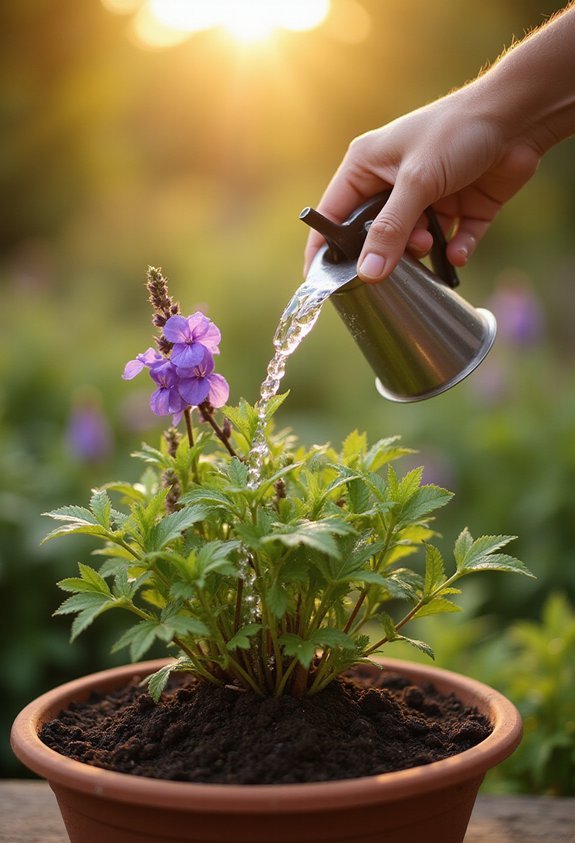
How often should you water your Duranta plant? You’ll want to keep the soil consistently moist during the growing season, typically watering when the top inch of soil feels dry to your touch. During winter months, you can reduce watering frequency since the plant’s growth slows considerably. Always use room-temperature water and guarantee your pot has drainage holes to prevent root rot, which occurs when soil stays waterlogged.
For soil composition, you’ll need a well-draining potting mix that combines peat moss, perlite, and compost in equal parts. This mixture allows water to flow through while retaining adequate moisture for root absorption. Adding sand improves drainage further, particularly if you’re in a humid climate. Duranta thrives in slightly acidic to neutral soil with a pH between 6.0 and 7.0.
Nurturing Growth: Feeding and Pruning Your Duranta
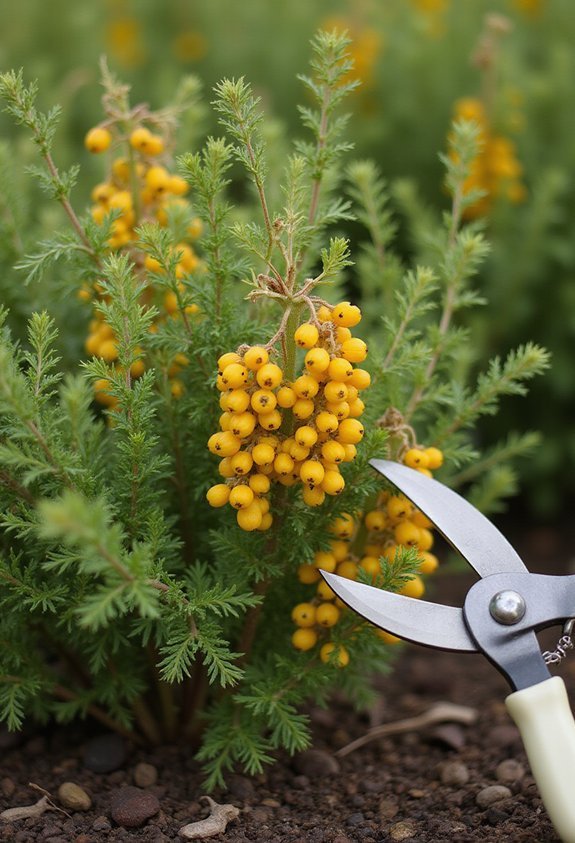
To keep your Duranta plant healthy and vibrant, you’ll need to provide regular feeding during its active growing season, which typically runs from spring through early fall. Apply a balanced, water-soluble fertilizer every two weeks to support steady growth and flowering. You should also prune your Duranta regularly to maintain its shape and encourage bushier development. Remove dead or diseased branches first, then trim back longer stems by about one-third their length. Pruning also improves air circulation within the plant’s canopy, reducing disease risk. Perform major pruning in early spring before new growth emerges, and conduct light trimming throughout the growing season as needed. This combination of proper feeding and strategic pruning guarantees your Duranta remains full, vigorous, and productive.
Common Problems: Pests, Diseases, and Nutrient Deficiencies in Duranta
Even with proper feeding and pruning, your Duranta plant can still fall victim to various pests, diseases, and nutritional issues that’ll compromise its health and appearance if you don’t address them promptly. Spider mites, whiteflies, and mealybugs commonly infest Duranta plants, causing yellowing leaves and stunted growth, which you can treat with insecticidal soap or neem oil. Fungal diseases like powdery mildew and leaf spot develop in humid conditions, so you’ll need to improve air circulation and reduce watering frequency. Nutrient deficiencies, particularly nitrogen and iron, cause pale or yellowed foliage, requiring balanced fertilizer applications. You should inspect your plant regularly for early signs of trouble, remove affected leaves promptly, and adjust environmental conditions accordingly to maintain ideal plant health.
Propagation and Seasonal Care for Duranta Success
Once you’ve mastered the basics of Duranta plant care, you’ll want to expand your collection by propagating new plants and adjusting your maintenance routine to match seasonal changes, both of which are essential skills for long-term success with this flowering shrub. You can propagate Duranta through semi-hardwood cuttings during spring and summer, guaranteeing each cutting has at least two leaf nodes and placing them in moist soil under indirect light. During winter, reduce watering considerably since your plant’s growth slows substantially, and provide cooler temperatures between fifty and sixty degrees Fahrenheit. In spring and summer, increase watering frequency, apply balanced fertilizer monthly, and guarantee your plant receives six to eight hours of sunlight daily to encourage robust flowering and healthy foliage development throughout the growing season.
Conclusion
You’ll find that Duranta plants can produce up to 500 delicate flowers per season when you provide proper care, which includes six to eight hours of daily sunlight, consistent watering with well-draining soil, and regular pruning. By following these essential guidelines—maintaining balanced fertilization every two weeks, managing pests promptly, and adjusting your care routine seasonally—you’ll successfully cultivate a thriving Duranta that rewards your efforts with abundant blooms and vibrant foliage.