
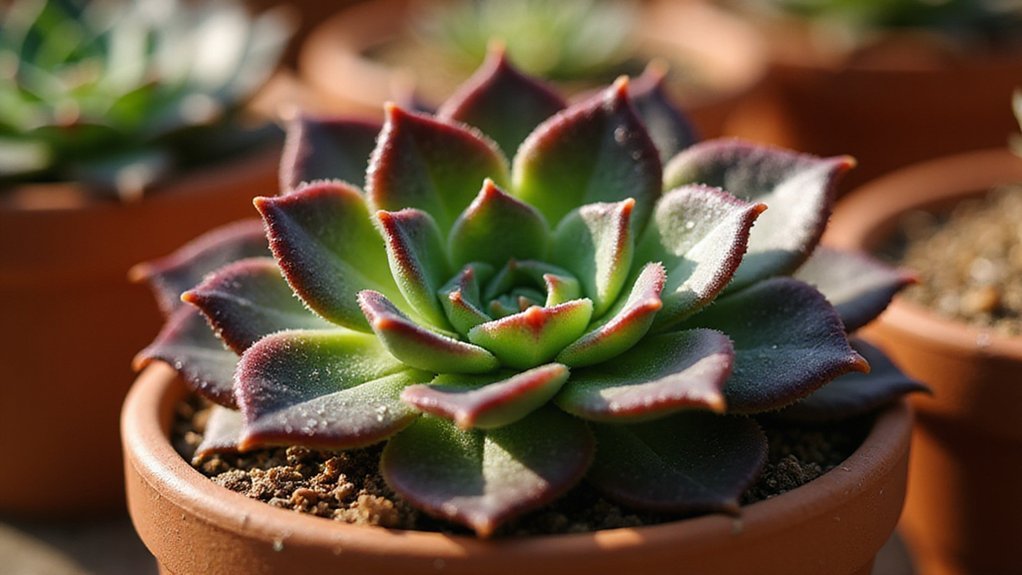
You can successfully grow thriving Aeonium plants by understanding their specific needs for light, water, soil, and seasonal adjustments. These striking succulents require careful attention to environmental conditions, proper watering techniques, and strategic propagation methods to flourish. However, keeping your Aeoniums healthy also means knowing how to identify and prevent the common problems that threaten their survival.
Light and Temperature Requirements
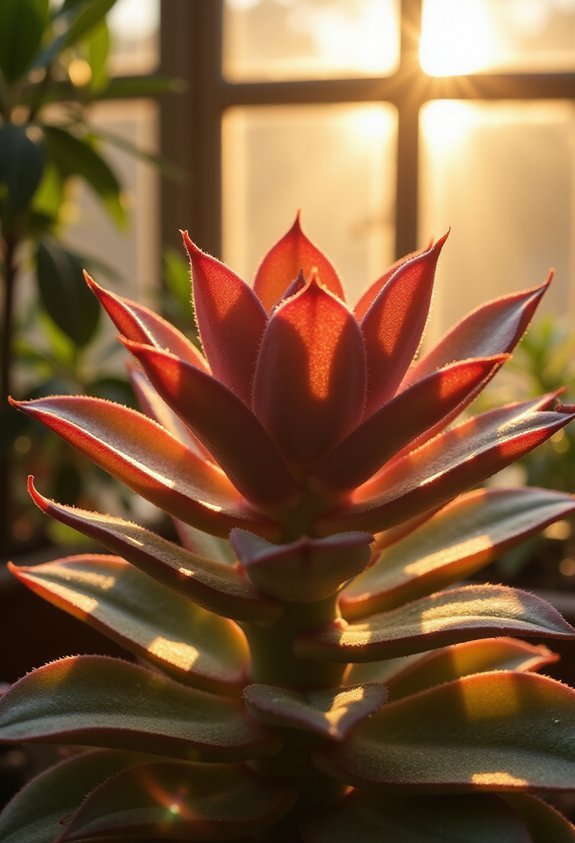
Since aeonium plants thrive in bright conditions, you’ll want to place them in a location where they’re exposed to plenty of sunlight throughout the day. Direct sunlight for at least six hours daily will keep your plants healthy and encourage vibrant growth. When it comes to temperature, aeoniums prefer warm environments ranging between 65 and 75 degrees Fahrenheit during growing seasons. You’ll need to protect them from frost and freezing temperatures, as they’re sensitive to cold conditions below 50 degrees. If you’re growing aeoniums indoors, position them near south-facing windows where they’ll receive maximum light. During winter months, you can reduce light exposure slightly, though bright indirect light remains important for maintaining plant vigor and preventing etiolation.
Water Aeoniums: Frequency and Techniques
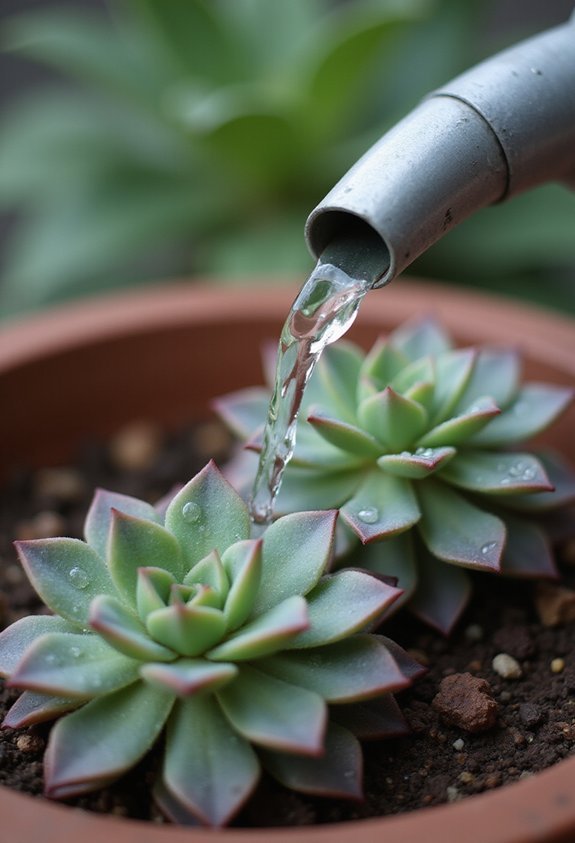
Proper watering is one of the most critical aspects of aeonium care, and you’ll need to adjust your watering schedule based on the season and your plant’s current growth stage. During the growing season in spring and fall, you should water your aeonium when the top inch of soil feels dry to the touch, typically every one to two weeks. In summer, reduce watering frequency since heat increases evaporation and your plant enters dormancy. Winter requires minimal water, so you’ll only water sparingly, perhaps once monthly. Always use the “soak and dry” method: water thoroughly until it drains from the bottom, then let the soil dry completely before watering again. This technique prevents root rot, a common problem when aeoniums sit in wet soil.
Mix and Drain: The Right Soil for Aeoniums
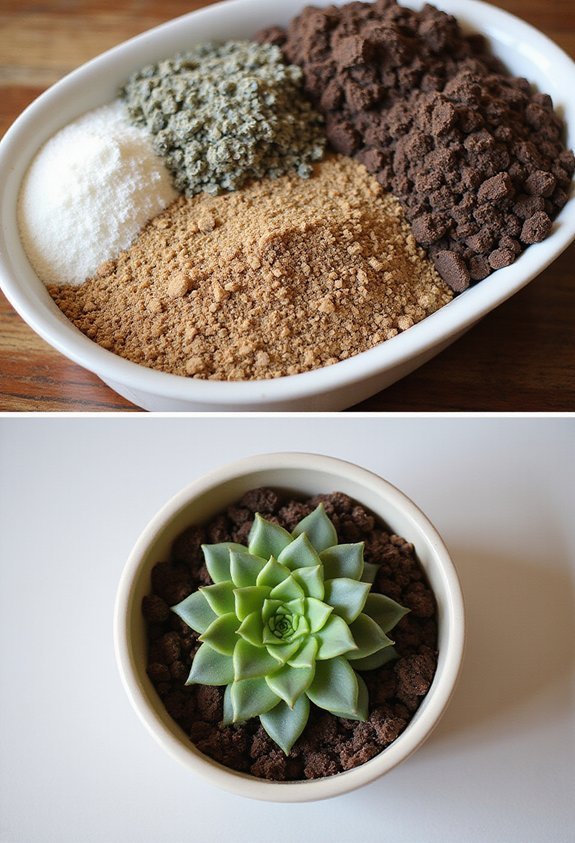
While watering frequency matters profoundly for aeonium health, the soil composition you’re using is equally important because it directly determines how well water drains and how effectively your plant’s roots can access nutrients without becoming waterlogged. You’ll want to use a well-draining cactus or succulent soil mix, which you can purchase pre-made or create yourself by combining regular potting soil with perlite or coarse sand at a ratio of two parts soil to one part drainage material. This mixture prevents water from pooling around the roots, which causes rot and fungal diseases. Additionally, you should guarantee your pot has drainage holes on the bottom, allowing excess water to escape freely. This combination of proper soil composition and drainage infrastructure creates the ideal growing environment for your aeoniums.
Adjust Care by Season
Because aeoniums aren’t uniformly active year-round, you’ll need to adjust your care routine to match their natural growth cycles and dormancy periods. During spring and fall, when temperatures are moderate, your aeoniums experience peak growth, so you’ll water more frequently and fertilize monthly with diluted succulent fertilizer. In summer, when heat intensifies, you’ll reduce watering considerably since the plants enter semi-dormancy to conserve moisture. Winter demands the least water; you’ll water sparingly, sometimes only once monthly, as growth nearly stops. Monitor your plant’s appearance closely, adjusting frequency based on soil moisture and leaf firmness. This seasonal flexibility guarantees your aeoniums receive exactly what they need when they need it, preventing both drought stress and dangerous overwatering problems.
Propagate Aeoniums From Cuttings
You can expand your aeonium collection by taking cuttings from mature plants, a straightforward propagation method that’ll give you new plants within a few weeks. Using a clean, sharp knife, cut 2-3 inch sections from healthy stems, then let them dry in a shaded spot for three to five days until calluses form on the cut ends. This pivotal drying period prevents rot when you plant them. Fill a pot with well-draining cactus soil, insert the callused cutting about one inch deep, and water lightly. Place the pot in bright, indirect light and maintain slightly moist soil for two to three weeks while roots develop. Once you notice new growth appearing, you can move the young plant to standard aeonium care conditions.
Prevent Common Pests, Diseases, and Root Rot
Aeoniums can fall prey to several problems that’ll compromise their health if left unchecked, though most issues stem from two main culprits: overwatering and pest infestations. You’ll prevent root rot by ensuring your soil drains well and you’re watering only when the soil’s completely dry, since aeoniums store water in their leaves and need minimal moisture. Watch for mealybugs and spider mites, which appear as cottony clusters or fine webbing on your plants; you can remove these pests by spraying affected areas with insecticidal soap or neem oil. For fungal diseases like powdery mildew, improve air circulation around your plants and avoid wetting the foliage when watering. If you notice yellowing leaves or mushy stems, reduce watering immediately and repot your aeonium in fresh, dry soil to save it from rot.
Conclusion
You’ve now learned the essential techniques for successfully growing aeoniums in your home. By providing bright light, proper watering schedules, well-draining soil, and seasonal adjustments, you’ll create ideal growing conditions. For example, if you place a 3-inch cutting in moist soil under bright indirect light for three weeks, it’ll develop roots and establish itself as a healthy plant. Guaranteeing these methodical steps safeguards your aeoniums to thrive consistently.