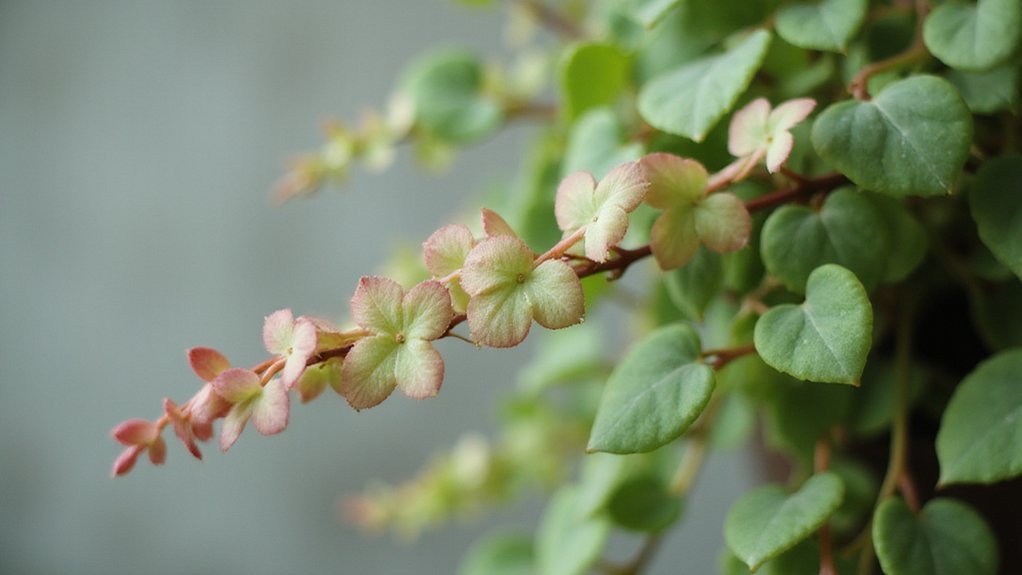
String of Hearts plants are delicate vines that cascade like living waterfalls from elevated spaces. You’ll discover these trailing succulents are surprisingly manageable when you understand their specific needs for light, water, and support. However, many plant enthusiasts struggle with common problems like yellowing leaves and sparse growth, which often stem from incorrect care practices. The following sections reveal exactly what you need to know to keep your collection thriving.
Light Requirements: Finding the Right Spot for Vibrant Growth
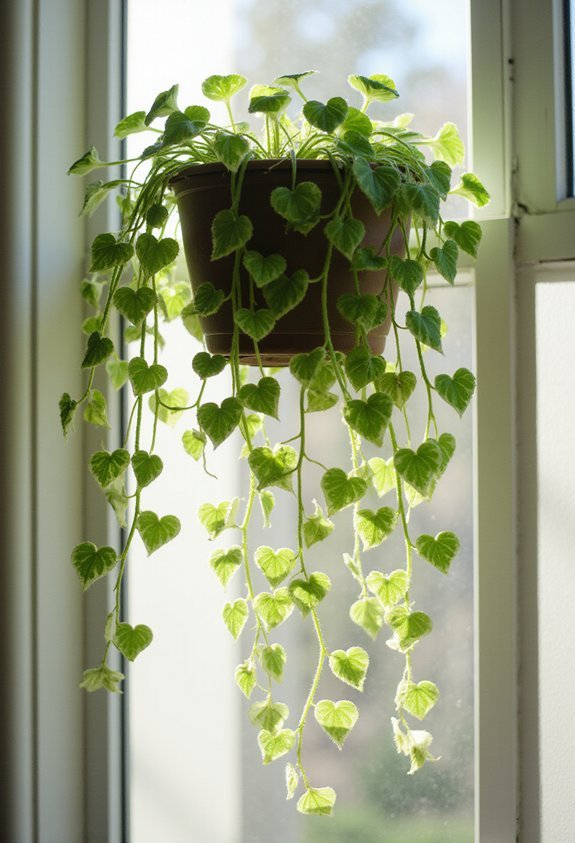
String of Hearts plants thrive in bright, indirect light, which means you’ll want to place them in a location where sunlight filters through a sheer curtain or reaches them after bouncing off another surface, rather than hitting them in direct rays. You should position your plant near an east or west-facing window, as these locations provide gentle morning or afternoon light without the intense midday sun that can scorch their delicate leaves. If you notice your String of Hearts developing pale coloring or growing slowly, you’re likely not providing enough light, so consider moving it closer to a window or adding a grow light. Conversely, if leaves appear bleached or faded, you’ve probably given it too much direct sun, requiring you to shift it slightly away from the window.
Also read: 5 Signs Your Live Christmas Tree Is Dying
Watering Without Killing Your Plant: The Moisture Sweet Spot
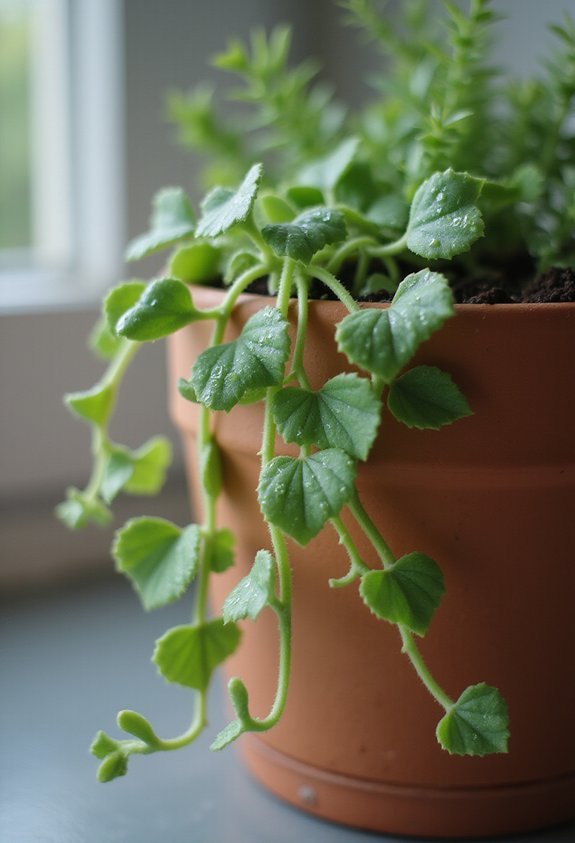
Because these plants’re native to tropical regions where they grow on trees rather than in soil, they’ve adapted to prefer drier conditions than most houseplants, which means you’ll need to water them less frequently than you might expect. Water your String of Hearts thoroughly, but only when the soil’s top inch feels completely dry to the touch, typically every two to three weeks depending on your home’s temperature and humidity levels. During winter months, reduce watering frequency since the plant’s growth slows considerably. Always use a pot with drainage holes to prevent water from pooling at the roots, which causes rot. Between waterings, allow excess moisture to drain completely, ensuring the soil never remains soggy or waterlogged for extended periods.
Why Your String of Hearts Is Yellowing, Leggy, or Sparse (And How to Fix It)
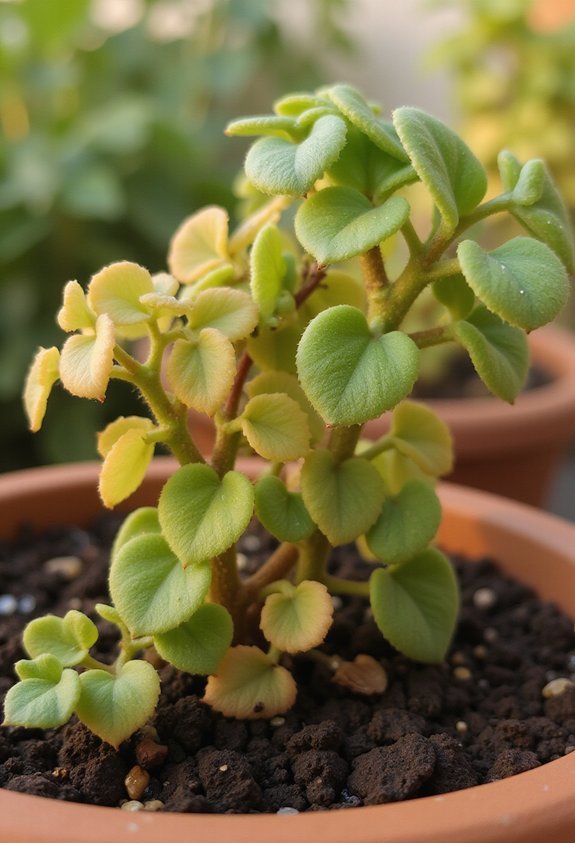
Even when you’re watering your String of Hearts correctly, the plant can still develop problems that signal something’s amiss with its overall care routine or environment. Yellowing leaves typically indicate overwatering, poor drainage, or nutrient deficiencies, requiring you to adjust your watering schedule and guarantee soil drains properly. Leggy growth, characterized by long stems with sparse foliage, results from insufficient light exposure, prompting you to relocate your plant closer to a bright window or provide supplemental grow lights. Sparse foliage also stems from low humidity or inadequate fertilization during growing seasons. Address these issues by increasing light exposure, improving drainage, reducing watering frequency, and applying diluted fertilizer monthly during spring and summer months to restore your plant’s vibrant appearance and full, healthy growth pattern.
Propagation and Potting: Multiplying Your Collection
Once you’ve mastered the basics of String of Hearts care, you’ll likely want to expand your collection by propagating new plants from your existing ones, which is a straightforward process that requires minimal materials and effort. You can propagate from stem cuttings by snipping 4-6 inch sections below a node, then placing them in water or moist soil until roots develop, which typically takes 2-3 weeks. Once roots appear, transfer the cuttings into small pots filled with well-draining potting mix. Water lightly and maintain indirect light. For potting mature plants, use shallow containers with drainage holes and a cactus or succulent soil blend. Repot every 12-18 months when the plant becomes root-bound, rejuvenating the soil to encourage continued healthy growth.
Displaying String of Hearts: Hanging Baskets, Shelves, and Moss Poles
With your propagated cuttings now rooted and your mature plants thriving in their containers, you’re ready to showcase them in ways that’ll highlight their cascading vines and heart-shaped leaves. Hanging baskets work exceptionally well because they allow the trailing stems to drape downward freely, creating an elegant waterfall effect. You can also display String of Hearts on elevated shelves, where the vines’ll spill over the edges naturally. For a more structured look, moss poles provide support while the plant winds around them, creating a living column. Regardless of your chosen display method, guarantee adequate light reaches all parts of the plant and maintain consistent watering schedules. Proper positioning not only enhances your space aesthetically but also promotes healthier growth throughout your plant collection.
Conclusion
You’ve now explored the essential practices for nurturing your String of Hearts through its journey of growth and development. By honoring its preference for gentle light, respecting its modest water requirements, and addressing any challenges that may arise, you’re establishing a foundation for lasting vigor. Your thoughtful approach to propagation and display transforms individual plants into flourishing collections, allowing you to experience the rewarding cycle of cultivation and expansion.