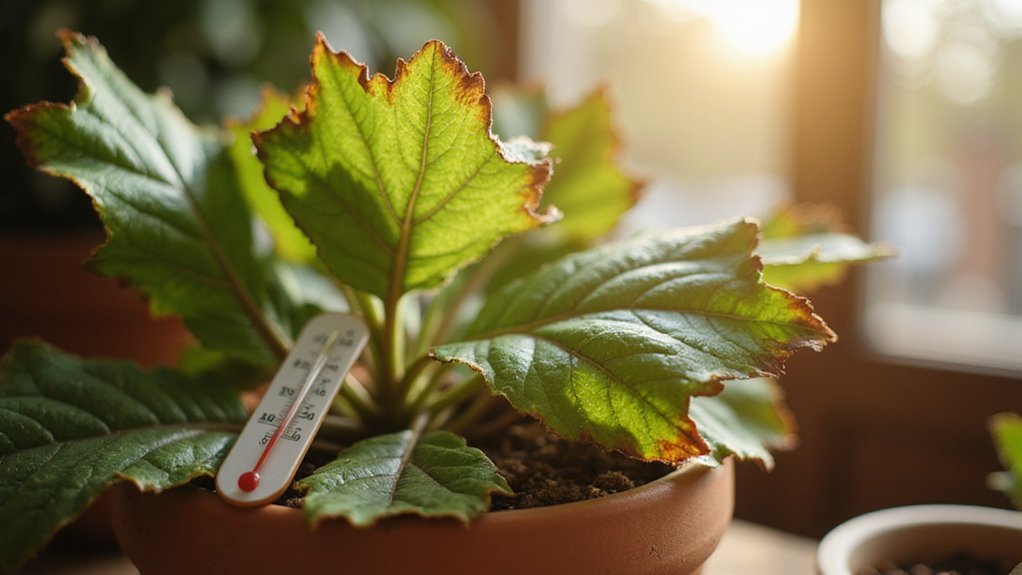
You’ve likely wondered whether your houseplants can handle the heat during summer months, especially if you’ve noticed wilting leaves or stunted growth. Most houseplants thrive between 65-75°F during the day, but temperatures exceeding this range create stress that damages foliage and weakens overall plant health. Understanding your plant’s specific temperature needs and recognizing early warning signs of heat damage are essential steps toward maintaining a healthy indoor garden. What strategies can you implement to protect your plants when temperatures rise?
What Temperature Range Do Houseplants Actually Need?
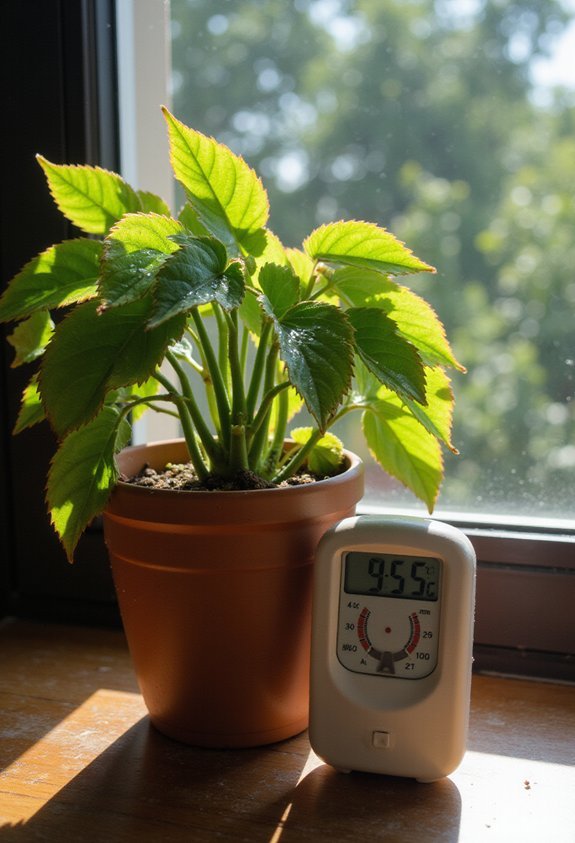
Since most houseplants come from tropical and subtropical regions, they’ve adapted to thrive in warm, consistent conditions that differ markedly from outdoor environments in temperate climates. You’ll find that the ideal temperature range for most houseplants falls between 65 and 75 degrees Fahrenheit during the day, with nighttime temperatures dropping to about 55 to 65 degrees. This temperature differential mimics natural conditions, promoting healthy growth and metabolic processes. You should maintain these ranges as consistently as possible, since fluctuations stress plants and hinder their development. While some plants tolerate cooler environments, most tropical varieties you’ll keep indoors require warmth to thrive. You’ll want to avoid placing plants near drafty windows, heating vents, or air conditioning units that create temperature swings.
Why Humidity and Air Circulation Prevent Heat Stress
When temperatures climb above your houseplants’ ideal range, humidity and air circulation become critical factors in preventing heat stress and protecting your plants’ health. Higher humidity levels reduce water loss through your plant’s leaves, which decreases the strain that excessive heat places on them. You can increase humidity by misting your plants regularly, grouping them together, or placing them on trays filled with pebbles and water. Air circulation is equally important because it prevents hot, stagnant air from accumulating around your plants’ foliage. You’ll want to use fans on low settings to create gentle air movement throughout your space. Together, these two factors work to cool your plants naturally while maintaining the moisture balance they need to survive during hot periods.
Signs Your Plants Are Suffering From Heat Damage
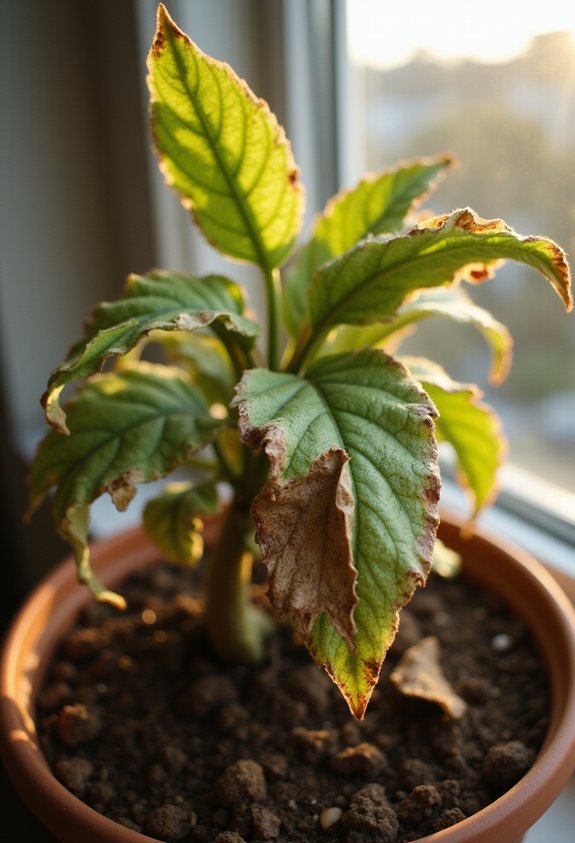
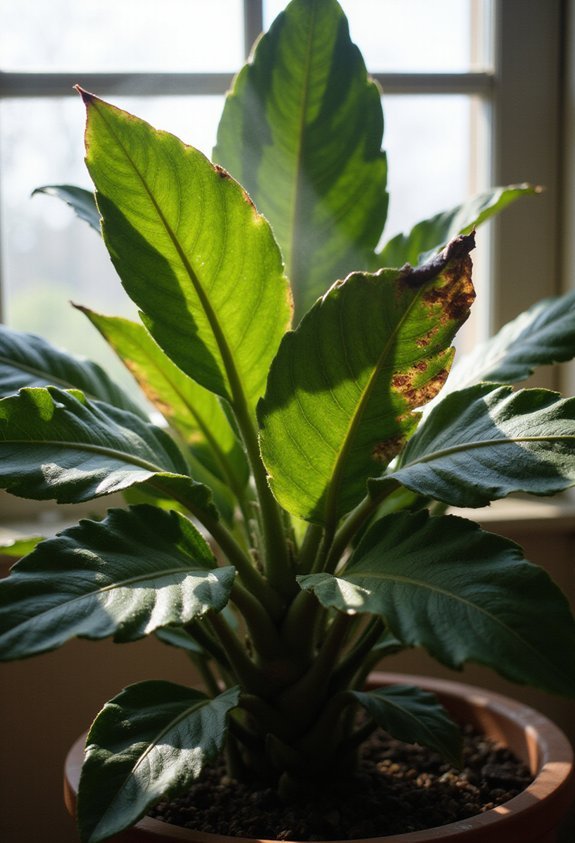
Even with proper humidity and air circulation in place, you’ll still need to recognize the warning signs that your plants are experiencing heat damage, as some heat stress can occur despite your best preventive efforts. Look for wilting leaves that don’t recover after watering, since excessive heat causes plants to lose water faster than their roots can absorb it. You may notice leaf edges turning brown or papery, indicating cellular damage from extreme temperatures. Leaves might also develop bleached or faded patches where the plant tissue has been scorched. Additionally, watch for premature leaf drop, stunted growth, or flowers that fall before opening. These symptoms suggest your plant’s internal systems are struggling under heat stress and require immediate intervention.
Heat-Tolerant vs. Heat-Sensitive Houseplants
Not all houseplants respond to heat in the same way, which means you’ll want to understand which varieties can handle high temperatures and which ones’ll struggle when conditions get too warm. Heat-tolerant plants, such as succulents, cacti, and snake plants, thrive in warm environments because they’ve adapted to store water and survive intense conditions. Conversely, heat-sensitive plants like ferns, orchids, and African violets prefer cooler temperatures and’ll deteriorate quickly in excessive heat. You should research your specific plants’ temperature preferences before purchasing them, as this knowledge helps you provide appropriate care. Grouping similar plants together based on their heat tolerance allows you to create ideal growing zones in your home, ensuring each plant receives conditions that match its natural habitat and biological needs.
5 Ways to Cool Your Plants in Hot Weather
Several practical strategies can help you protect your houseplants from excessive heat and maintain ideal growing conditions throughout warm seasons. You can relocate your plants to shadier spots away from direct sunlight, which reduces heat exposure substantially. Increase humidity by misting leaves regularly or placing plants on trays filled with pebbles and water, allowing evaporation to cool the surrounding air. Guarantee proper ventilation by opening windows during cooler morning and evening hours, which circulates fresh air around your plants. Water your plants more frequently during hot periods, keeping soil consistently moist but not waterlogged, since adequate moisture helps plants regulate their internal temperature. Additionally, you can use sheer curtains to filter intense afternoon sunlight, or move potted plants to cooler rooms temporarily during peak heat hours for relief.
Reviving Plants After Heat Damage
When your houseplants show signs of heat damage—such as wilted leaves, brown leaf edges, or stunted growth—you’ll want to act quickly to help them recover and regain their health. First, move your plant to a cooler location away from direct sunlight, which’ll prevent further stress. Next, trim away any severely damaged leaves and stems using clean scissors, as these won’t recover and’ll only drain your plant’s energy. Water your plant thoroughly but carefully, ensuring the soil’s moist without becoming waterlogged, which can cause root rot during recovery. Increase humidity around your plant by misting its leaves or placing it on a pebble tray with water. Finally, wait several weeks before fertilizing, allowing your plant time to stabilize before encouraging new growth.
Conclusion
You’ve now revealed the secrets to keeping your plants cool as cucumbers during scorching weather. By monitoring temperatures, adjusting humidity, and improving air circulation, you’ll prevent heat stress before it damages your green friends. Remember that different plants have different tolerance levels, so tailor your cooling strategies accordingly. With these practical techniques in your gardening toolkit, you’re equipped to maintain a thriving indoor garden year-round, regardless of external heat conditions.