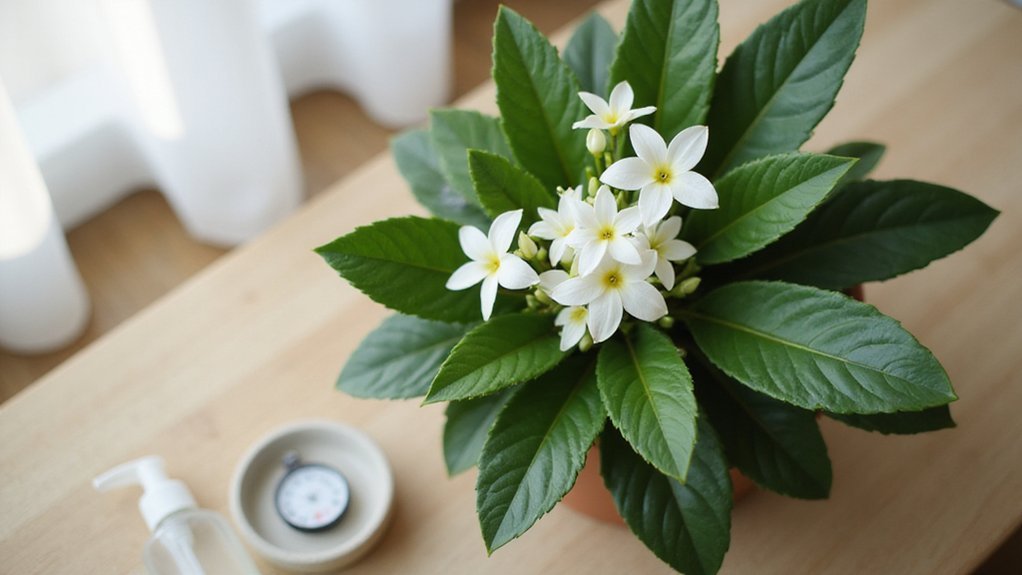
Stephanotis flowers produce delicate, star-shaped blooms that release a sweet fragrance, making them highly prized as indoor houseplants despite their reputation for being finicky. Growing these tropical vines successfully requires you to understand and manage several interconnected factors—light conditions, moisture levels, temperature ranges, and nutrient availability—each playing an essential role in determining whether your plant thrives or struggles. But what’s the secret to forcing abundant flowers instead of watching buds mysteriously disappear?
Creating the Ideal Light Environment for Stephanotis
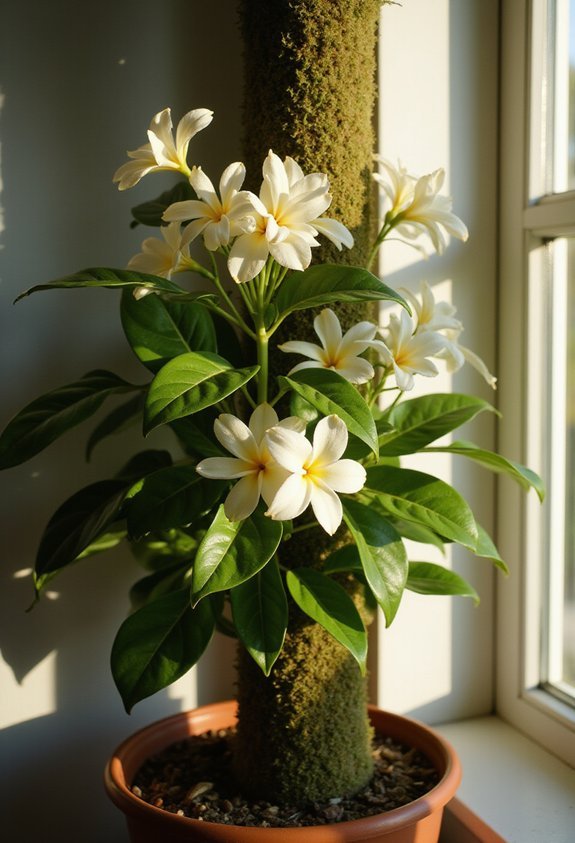
Since stephanotis flowers thrive in bright, indirect light, you’ll need to position your plant in a location where it receives plenty of illumination without being exposed to harsh direct sunlight for extended periods. A north-facing or east-facing window works best, as these areas provide consistent, gentle light throughout the day. If you notice your stephanotis developing pale leaves or sparse growth, it’s likely receiving insufficient light, so consider moving it closer to a window. During winter months, when natural light decreases, you can supplement with fluorescent grow lights positioned six to twelve inches above the plant. Rotate your stephanotis every two weeks to guarantee all sides receive equal light exposure, promoting balanced, symmetrical growth and preventing the plant from becoming leggy or misshapen.
Also read: 5 Signs Your Live Christmas Tree Is Dying
Watering and Humidity for Stephanotis Growth
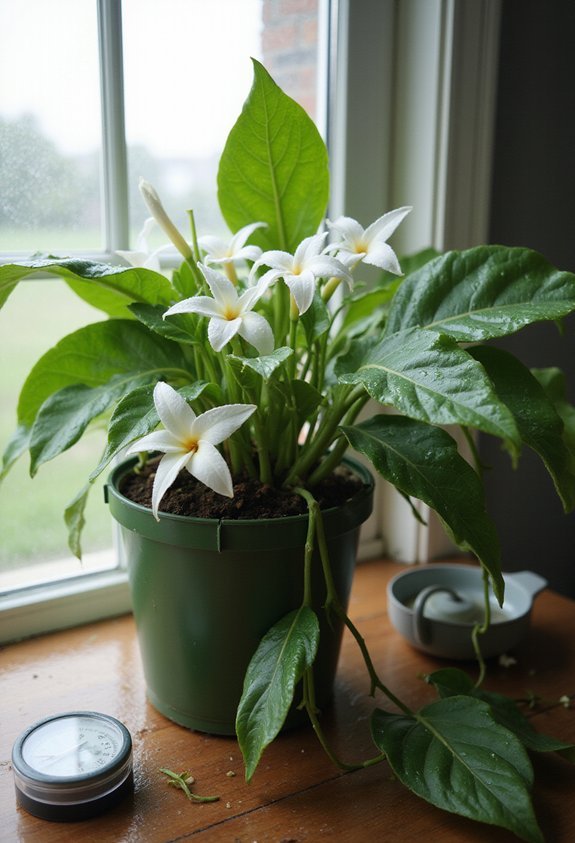
As you establish a proper watering routine, you’ll want to keep the soil consistently moist but not waterlogged, since stephanotis flowers are sensitive to both drought and excessive moisture that can lead to root rot. Water your plant when the top inch of soil feels dry to the touch, typically every seven to ten days depending on your home’s temperature and humidity levels. You’ll also need to maintain high humidity around your stephanotis, as this tropical plant thrives in moisture-rich environments. Mist the leaves regularly with distilled water, place the pot on a humidity tray filled with pebbles and water, or use a humidifier nearby to create the warm, humid conditions your stephanotis needs to flourish and produce its fragrant flowers.
Temperature and Seasonal Care for Stephanotis
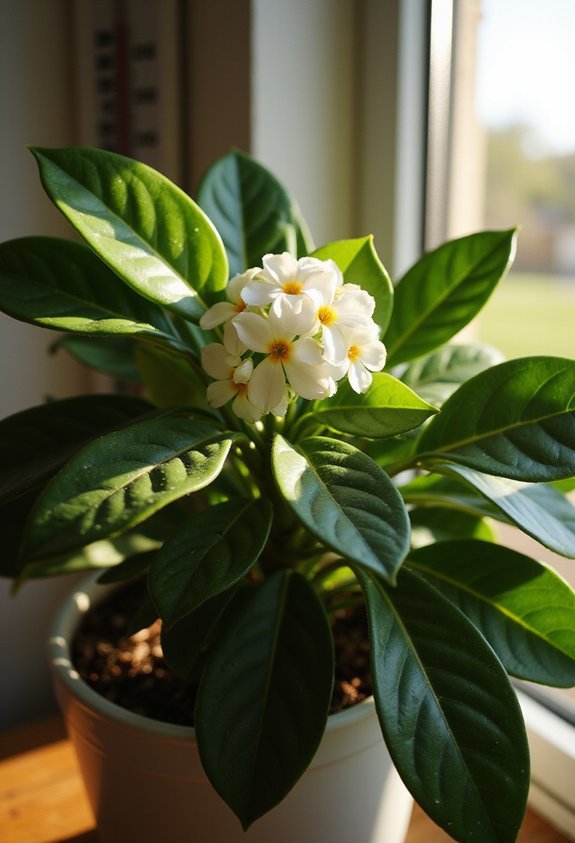
To keep your stephanotis healthy and flowering consistently, you’ll need to maintain specific temperature ranges and adjust your care routine as seasons change throughout the year. During growing season, spring through fall, your stephanotis thrives in temperatures between 65 and 75 degrees Fahrenheit. In winter, you’ll want to lower temperatures to approximately 55 to 60 degrees Fahrenheit, which encourages blooming by mimicking natural seasonal changes. Avoid placing your plant near drafts, heating vents, or air conditioning units, as sudden temperature fluctuations will stress your stephanotis and cause leaf drop. You’ll also notice your plant requires less water and fertilizer during winter months when growth slows considerably. Maintaining these temperature variations throughout the year supports robust flowering and overall plant vigor.
Why Blooms Drop and How to Force Flowering
When your stephanotis stops producing flowers or sheds its buds prematurely, you’re likely dealing with one of several common environmental or care issues that disrupt the plant’s blooming cycle. Inconsistent watering, low humidity, inadequate light, or temperature fluctuations commonly trigger bud drop. You’ll need to maintain steady moisture levels without waterlogging, guarantee humidity stays between fifty and seventy percent, and provide bright, indirect light for at least six hours daily. To force flowering, reduce watering slightly during winter months, then increase it as spring approaches while maintaining temperatures between sixty-five and seventy-five degrees Fahrenheit. This temperature variation mimics natural seasonal changes that encourage blooming, prompting your stephanotis to produce abundant flowers when conditions align properly.
Fertilizing Schedule and Nutrient Ratios for Blooming
Why does your stephanotis need consistent fertilizing if you want it to produce those gorgeous, fragrant flowers you’re after? Nutrients directly fuel blooming cycles, and without them, your plant won’t develop the energy reserves necessary for flower production. During the growing season from spring through summer, you should fertilize every two weeks using a balanced, water-soluble fertilizer with a ratio of 10-10-10 or 5-10-5, emphasizing phosphorus and potassium for flowering. In fall and winter, reduce fertilizing to once monthly since your plant enters dormancy and requires fewer nutrients. Always dilute fertilizer to half strength to prevent root burn, and apply it only to moist soil, never to dry roots, which can damage the delicate root system and inhibit nutrient absorption.
Pruning Your Stephanotis Vine for Bushier Growth
How can you encourage your stephanotis to develop a fuller, more compact shape instead of growing tall and leggy? Pruning is your answer. You’ll want to pinch back new growth regularly during the growing season, which typically runs from spring through early fall. By removing the top inch or two of stems, you’re triggering your plant to branch out sideways rather than upward. Make your cuts just above a leaf node, where new shoots will emerge. You should prune after flowering ends to avoid removing flower buds. Use clean, sharp scissors to prevent damage and disease transmission. Don’t remove more than one-third of the plant’s foliage at once, as this can stress your stephanotis considerably and reduce blooming potential.
When to Repot Your Stephanotis and How
Every year or two, you’ll notice that your stephanotis has outgrown its container, signaling that it’s time to repot the plant to give its roots more space to develop. You can identify this need when roots emerge from drainage holes or growth slows considerably. Select a new pot that’s one to two inches larger in diameter than the current one, ensuring it has drainage holes to prevent water accumulation. Use a well-draining potting mix formulated for tropical plants, combining equal parts peat moss, perlite, and bark. Gently remove your stephanotis from its old container, carefully loosening the root ball with your fingers. Place the plant in its new pot at the same depth it previously occupied, fill surrounding spaces with fresh soil, and water thoroughly until moisture drains from the bottom.
Identify and Treat Stephanotis Pests and Diseases
Despite your best efforts to provide proper care, your stephanotis plant can still fall victim to common indoor pests and diseases that’ll compromise its health and flowering ability. Mealybugs, spider mites, and scale insects frequently infest stephanotis, causing yellowing leaves and stunted growth. You’ll notice sticky residue or webbing on affected plants, indicating pest presence. Treat infestations by spraying the plant with insecticidal soap or neem oil, ensuring you coat all leaf surfaces thoroughly. For fungal diseases like powdery mildew, improve air circulation around your plant and reduce humidity levels. Remove any infected leaves immediately to prevent spread. You should inspect your stephanotis regularly, checking both sides of leaves and stems, catching problems early before they become severe and difficult to manage.
Conclusion
You’ve now built the complete foundation for growing stephanotis indoors, much like constructing a house where each element supports the whole structure. By maintaining bright, indirect light, consistent moisture, high humidity, and proper temperatures, you’re creating conditions where your vine’ll thrive and bloom reliably. Regular fertilizing, strategic pruning, and pest management guarantee your stephanotis remains healthy and produces the fragrant flowers you desire year after year.