
You’ve decorated your tree, you’ve hung your lights, you’ve placed your ornaments—but you haven’t accounted for your cat. If you’re struggling to keep your feline friend from turning your Christmas tree into a climbing gym, you’ll need a thorough approach that combines physical barriers, strategic deterrents, and environmental adjustments. The good news? You can protect both your tree and your cat with the right techniques.
Secure Your Tree So Cats Can’t Climb or Tip It
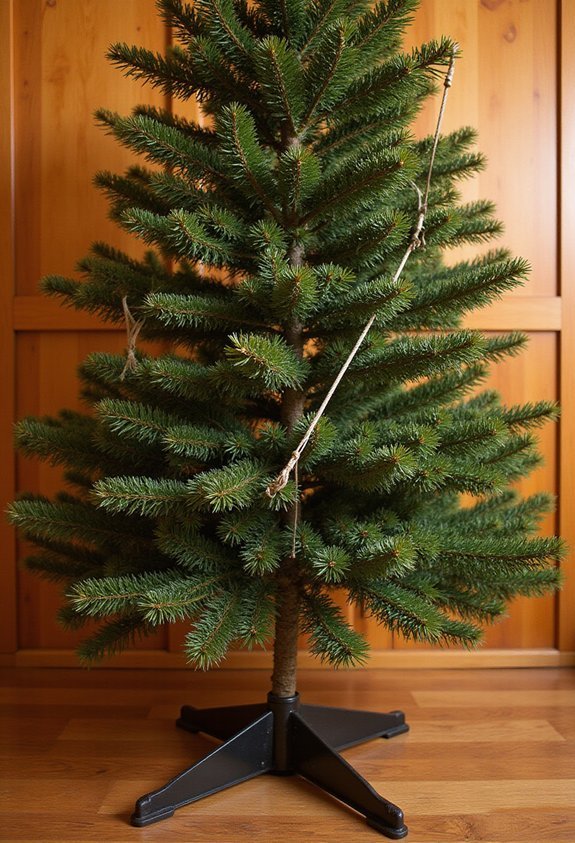
Because cats are natural climbers with sharp claws and curious personalities, you’ll need to take deliberate steps to prevent your tree from becoming an irresistible playground. Start by anchoring your tree securely to a wall or ceiling using sturdy brackets and heavy-duty fishing line, which’ll distribute the weight evenly and prevent tipping if your cat attempts to climb. Choose a tree with dense, sturdy branches that won’t bend easily under your cat’s weight. Position your tree in a corner away from furniture that could serve as a launching pad for climbing. Use a weighted, non-tip tree stand designed specifically for households with pets. Additionally, secure any loose branches that might tempt your cat to bat at ornaments or climb higher into the tree structure.
Also read: 10 Velvet Bow Christmas Tree Ideas to Elevate Your Holiday Decor
Choose Cat-Safe Decorations and Remove Hazards First

Once you’ve secured your tree’s structure, you’ll want to carefully select decorations that won’t harm your cat if ingested or knocked down. Remove tinsel, string lights, and small ornaments that your cat could swallow, causing serious intestinal blockages. Instead, use larger, heavier ornaments made from wood or plastic that won’t break easily. Avoid decorations with toxic substances like lead-based paint or certain adhesives. Check your lights for damaged wiring that could cause electrical hazards if your cat chews them. Replace any frayed cords immediately. Additionally, remove decorative plants like poinsettias, mistletoe, and lilies, as these’re poisonous to cats. Position any remaining plants on high shelves away from your cat’s reach. By eliminating these hazards first, you’ll create a safer holiday environment for your pet.
Deploy Citrus Scents and Rough Textures Around the Base

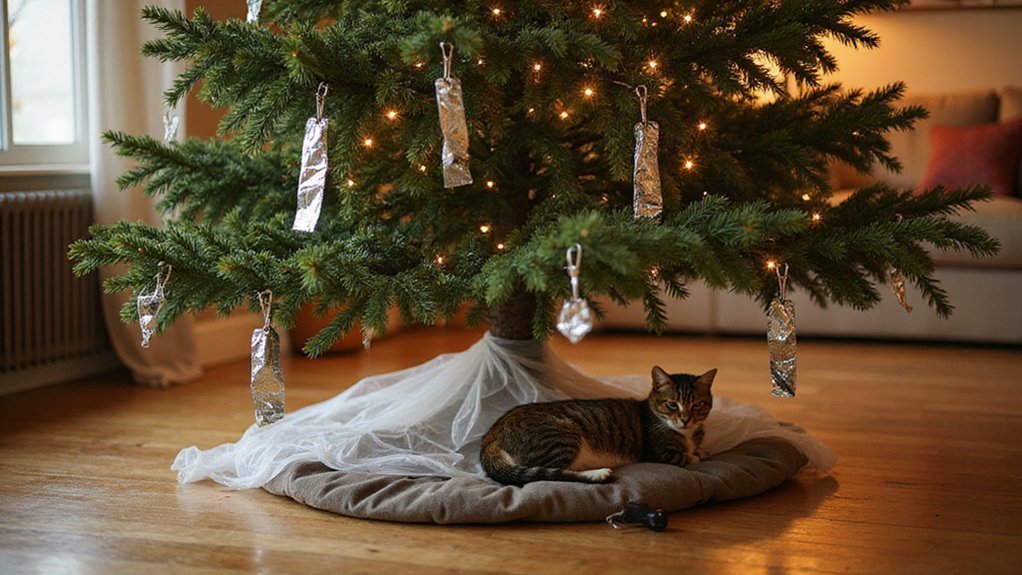
Cats naturally dislike certain smells and textures, which you can use to your advantage by creating an unwelcoming barrier around your tree’s base. Place citrus peels, such as lemon or orange rinds, directly on the soil or around the tree’s perimeter, since cats find these scents strongly repellent. You can also use citrus-scented sprays designed for pet deterrence, applying them to the base area weekly or after watering your tree. Simultaneously, lay down rough materials like aluminum foil, double-sided tape, or plastic netting around the base, as cats dislike the uncomfortable sensation beneath their paws. These textures create an unpleasant experience that discourages climbing and exploration. Combining both citrus scents and textured barriers substantially increases their effectiveness, making your tree’s base a space your cat will naturally avoid.
Set Up a Competing Attraction to Redirect Your Cat’s Interest
Rather than simply discouraging your cat from the Christmas tree, you’ll find greater success by offering an appealing alternative that captures their attention and redirects their natural climbing and playing instincts toward a different target. Consider setting up a tall cat tree or climbing structure in a prominent location near the decorated tree, making it more attractive than your holiday centerpiece. Stock this competing attraction with toys, scratching posts, and perches that encourage active engagement. You might also place a cardboard box filled with crinkled paper nearby, as many cats find this irresistible. Position these alternatives in visible spots where your cat naturally gravitates, ensuring they’re easily accessible and rewarding to explore. This strategic placement diverts your cat’s energy away from your Christmas tree entirely.
Try Motion-Activated Sprays and Sound Deterrents
While redirecting your cat’s attention works well for many pet owners, adding sensory deterrents creates an additional layer of protection that makes your Christmas tree far less appealing as a climbing destination. Motion-activated sprays release a harmless burst of air when your cat approaches the tree, startling them and discouraging repeated attempts. These devices are effective because cats dislike unexpected sensations. Similarly, motion-activated sound deterrents emit loud noises that cats find unpleasant, causing them to avoid the area entirely. You can position these deterrents around the tree’s base and lower branches where your cat typically attempts to climb. Both options work automatically without requiring your constant supervision, making them practical solutions for protecting your holiday decorations while you’re away or sleeping.
Train Your Cat to Respect Boundaries With Positive Reinforcement
Although motion-activated deterrents work effectively at discouraging unwanted behavior, teaching your cat to respect boundaries through positive reinforcement creates a more lasting solution that addresses the root of the problem. You’ll reward your cat with treats and praise whenever it stays away from the tree, reinforcing good behavior consistently. When your cat approaches the tree, redirect its attention to an approved toy or scratching post, then immediately reward compliance. This method teaches your cat what you want it to do rather than just punishing what you don’t want. Practice these training sessions daily in short intervals, remaining patient throughout the process. Over time, your cat learns that respecting the tree’s boundary results in positive outcomes, making the desired behavior a natural habit rather than something forced through fear or discomfort.
Conclusion
You’ll find that protecting your Christmas tree from cats doesn’t require choosing between holiday decorations and pet safety. By combining physical barriers, strategic deterrents, and alternative attractions, you’re creating an environment where your cat naturally avoids the tree. The coincidence of using methods that appeal to your cat’s instincts—like providing a competing cat tree—means you’re not fighting against their nature, but redirecting it toward safer choices.