
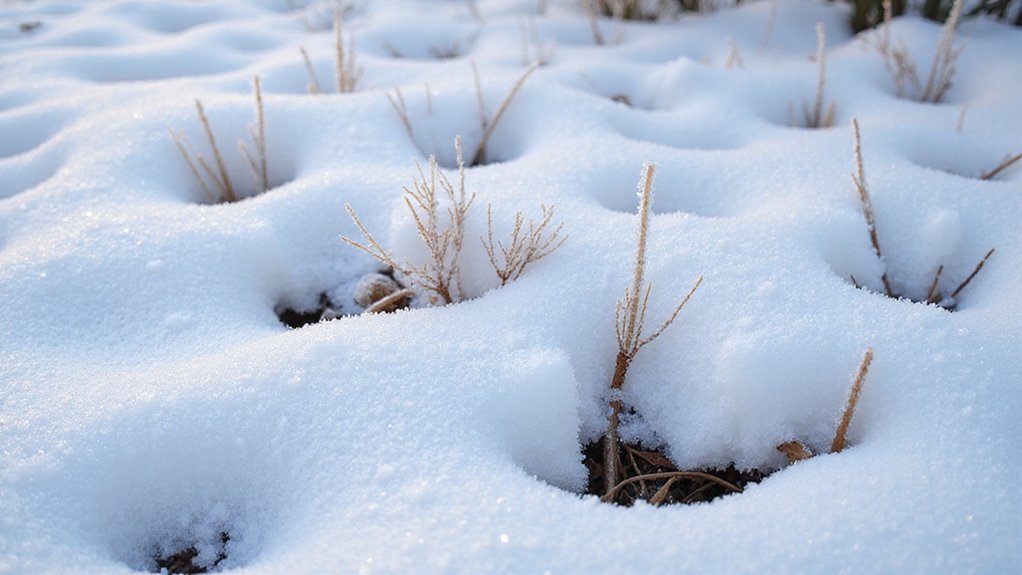
When winter arrives, you’ll face a decision that directly affects your garden’s health: should you remove the snow blanketing your beds? The answer isn’t straightforward. While snow provides valuable insulation in cold climates, excessive accumulation can damage plants and suffocate roots. Understanding your specific conditions determines whether you should intervene—and how.
How Your USDA Zone Determines Your Snow Strategy
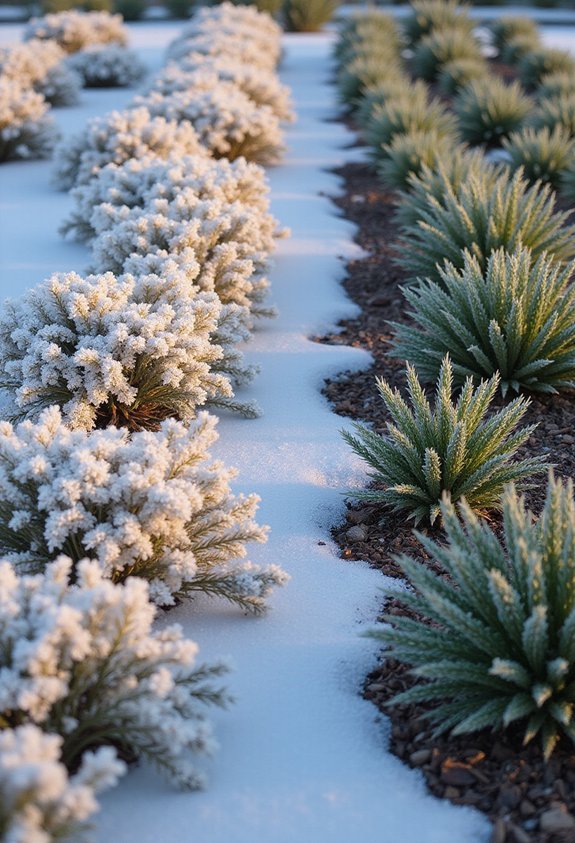
Your USDA hardiness zone—which divides North America into regions based on average annual minimum temperatures—plays a crucial role in determining how you should manage snow in your garden beds because different zones experience vastly different winter conditions that affect both plant survival and soil health. If you’re in a cold zone (1-4), you’ll want to keep snow as insulation protecting your plants from harsh freezes. In moderate zones (5-7), you can remove some snow to prevent moisture damage and disease. Warmer zones (8-11) rarely need snow management since freezing temperatures aren’t typical. Before deciding whether to remove or retain snow, check your USDA zone online using your zip code, then consider your specific plants’ cold-hardiness ratings to make the best choice.
Also read: Maintaining Long Grass Through Winter Lawn Care: A Step-by-Step Guide
Why Snow Actually Protects Your Garden
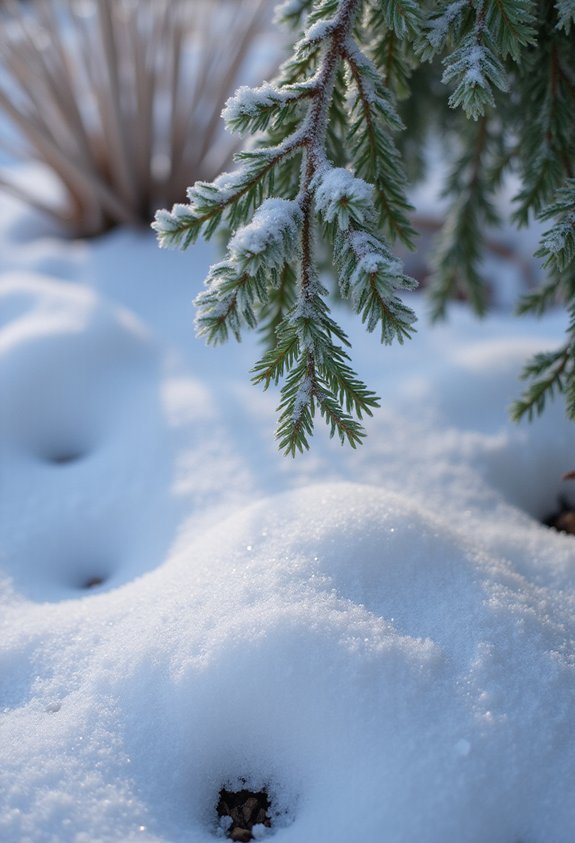
Snow acts as a natural blanket over your garden beds, and understanding how it protects your plants is just as important as knowing your USDA zone when you’re deciding whether to remove it. Snow insulates soil by trapping air pockets that slow heat loss, keeping ground temperatures more stable during winter fluctuations. This protection prevents frost heaving, a damaging process where repeated freezing and thawing cycles push plants partially out of the soil, exposing roots to harsh conditions. Additionally, snow shields delicate perennials and shrubs from drying winter winds and extreme cold snaps that’d otherwise injure or kill exposed plant tissue. The gradual spring melt also provides moisture to awakening plants, reducing your watering needs.
When Does Heavy Snow Become a Threat to Plants?
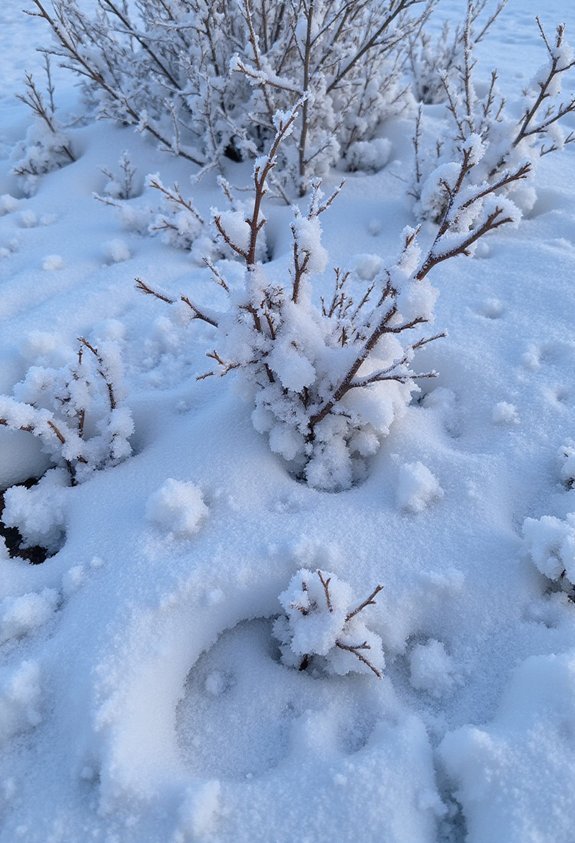
While moderate snow cover provides excellent winter protection, excessive accumulation can shift from beneficial to damaging, especially when the weight becomes too great for your plants to bear. You’ll want to monitor snow depth closely, as anything exceeding twelve inches can compress branches and damage structural integrity. Heavy, wet snow poses particular risks because it’s denser and weighs more than light, fluffy snow, putting additional strain on woody plants and evergreens. Additionally, you should watch for ice layers forming beneath the snow, which can suffocate plant roots and prevent water absorption during thaw cycles. Pay attention to weather patterns in your region, since rapid temperature fluctuations create conditions where snow melts and refreezes, becoming increasingly hazardous to plant health.
Is Your Garden at Risk? Warning Signs to Watch For
Because identifying potential damage early allows you to take protective action before plants suffer irreversible harm, you’ll want to recognize the specific warning signs that indicate your garden’s vulnerability to heavy snow. Watch for plants that’re already weakened by disease, pests, or poor growing conditions, as these specimens can’t withstand additional stress. Evergreens and shrubs with dense, spreading branches accumulate more snow weight and face greater breakage risk. Young trees and newly planted specimens lack the structural strength of established plants. Additionally, you should inspect areas where snow drifts naturally, such as spots near fences or structures, because accumulated snow depths there’ll be considerably higher. Finally, observe plants with shallow root systems, which can’t anchor heavy snow loads effectively.
Clear Snow the Right Way: Without Hurting Sleeping Plants
Once you’ve identified which plants in your garden face the greatest risk from snow accumulation, you’ll need to remove that heavy snow carefully to prevent damage to branches, buds, and the dormant plants beneath. Use a soft brush or broom to gently sweep snow away from vulnerable evergreens and shrubs, working from the bottom upward to avoid pushing snow onto lower branches. Never use a shovel, as it can break delicate twigs and injure bark. For ice-encased plants, allow it to melt naturally rather than chipping it away forcefully. Remove snow during the warmest part of the day when it’s slightly wet and easier to brush off. Check plants frequently after heavy snowfall, addressing accumulation promptly before it becomes compacted and harder to remove safely.
Best Removal Practices for Shrubs, Evergreens, and Perennials
Different plants require different snow removal techniques based on their structure, growth habits, and tolerance for stress. For shrubs and evergreens, you’ll want to gently brush snow downward using your hand or a soft broom, working from bottom to top to avoid damaging branches. Never shake or bend branches forcefully, as this can cause permanent breakage. For perennials that’ve died back for winter, you can leave snow as protective insulation, since the plant won’t suffer damage. However, if heavy, wet snow accumulates and threatens to crush remaining stems, carefully remove it by lifting rather than brushing. Pay special attention to upright evergreens, which are particularly vulnerable to snow weight that can splay their branches permanently. Always work during warmer afternoons when snow’s slightly wet and releases more easily.
How to Help Your Plants Recover After Snow Removal
Even though you’ve carefully removed snow from your garden beds, your plants still need attention and care to fully recover from the stress of winter weather and the removal process itself. Begin by inspecting stems and branches for damage, removing any broken or torn portions with clean cuts. Water your plants thoroughly once the ground thaws, since winter conditions often leave soil dry despite snow cover. Apply a fresh layer of mulch around the base of shrubs and perennials to regulate soil temperature and retain moisture. Monitor your plants closely over the following weeks, watching for signs of stress like wilting or discoloration. Avoid fertilizing immediately, as stressed plants can’t absorb nutrients effectively. Allow your garden beds time to stabilize naturally before introducing new growth stimulation.
Conclusion
You’ll find that balancing snow protection and removal depends on your zone and monitoring your plants carefully. Since snow insulates roots and prevents frost heave in zones 1-7, you shouldn’t remove moderate amounts, but studies show that snow exceeding 12 inches can damage plant structure substantially. By observing warning signs and using proper removal techniques with soft brushes during warm days, you’re protecting your garden’s long-term health and ensuring spring growth.