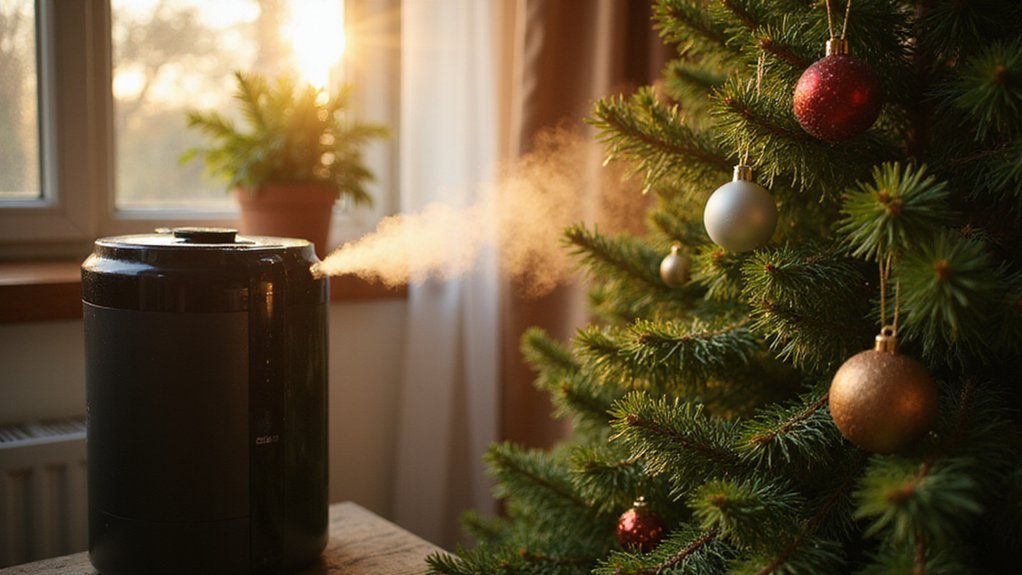
While a humidifier can help preserve your Christmas tree during dry winter months, it can also create conditions that damage it if you’re not careful. You’ll want to understand how moisture affects both fresh and artificial trees, since the risks of mold growth and needle drop depend on proper placement and monitoring. Discovering the right humidity balance requires knowing the signs of excessive moisture and how to adjust your setup accordingly.
How Humidity Affects Fresh and Artificial Christmas Trees?
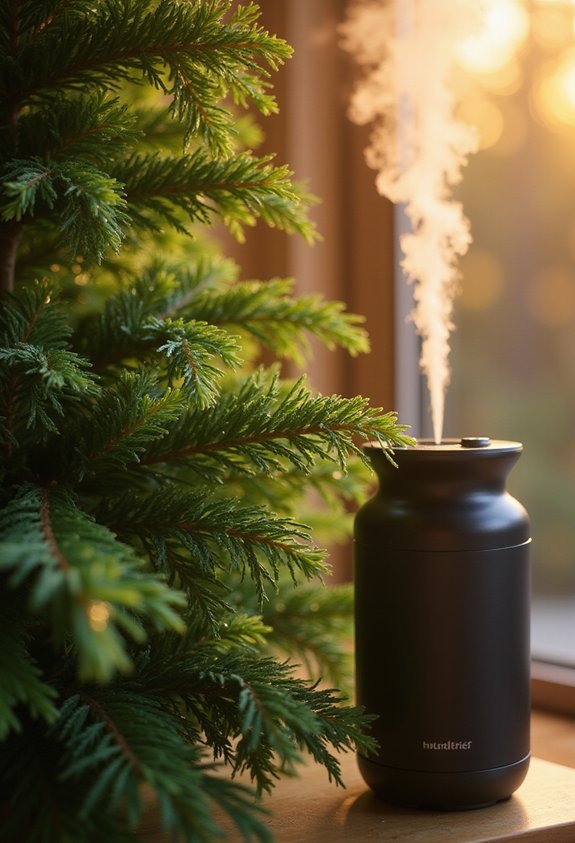
Did you know that humidity levels in your home can substantially impact how well your Christmas tree holds up throughout the season? Fresh trees require adequate moisture to prevent needles from drying out and dropping prematurely. When your home’s humidity drops below 30 percent, fresh trees lose water rapidly, causing needle shed and brittle branches. Conversely, artificial trees don’t absorb moisture, so they’re unaffected by low humidity levels. However, excessive humidity above 60 percent can damage artificial trees by promoting mold growth and degrading materials. You’ll want to maintain humidity between 30 and 50 percent for ideal conditions. Fresh trees thrive in this range, while artificial trees remain protected from moisture-related deterioration and damage.
Also read: 10 Pro Tips for Keeping Your Christmas Trees Fresh All Season Long
Mold and Needle Drop: Humidifier Risks Explained
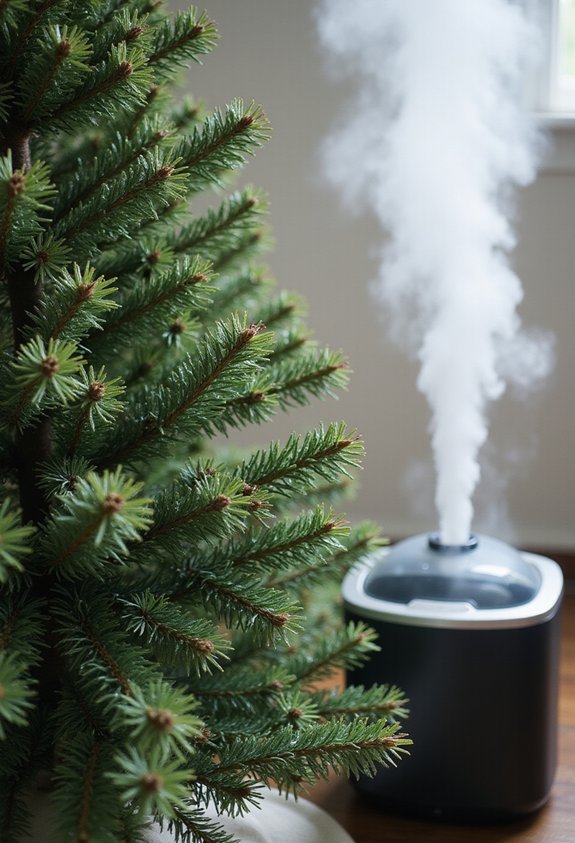
While a humidifier can help maintain the ideal 30 to 50 percent humidity range for your Christmas tree, it’s important to understand that running one too close to your tree or setting it too high can create problems you’re trying to prevent. Excessive moisture promotes mold growth on needles and branches, which damages your tree’s appearance and releases harmful spores into your home. Additionally, overly high humidity causes needle drop, where your tree sheds needles prematurely because the environment becomes too wet. You should position your humidifier at least six feet away from your tree and monitor humidity levels regularly using a hygrometer. This approach allows you to gain moisture benefits while protecting your tree from mold and premature needle loss.
When Is Your Tree Suffering From Too Much Moisture?
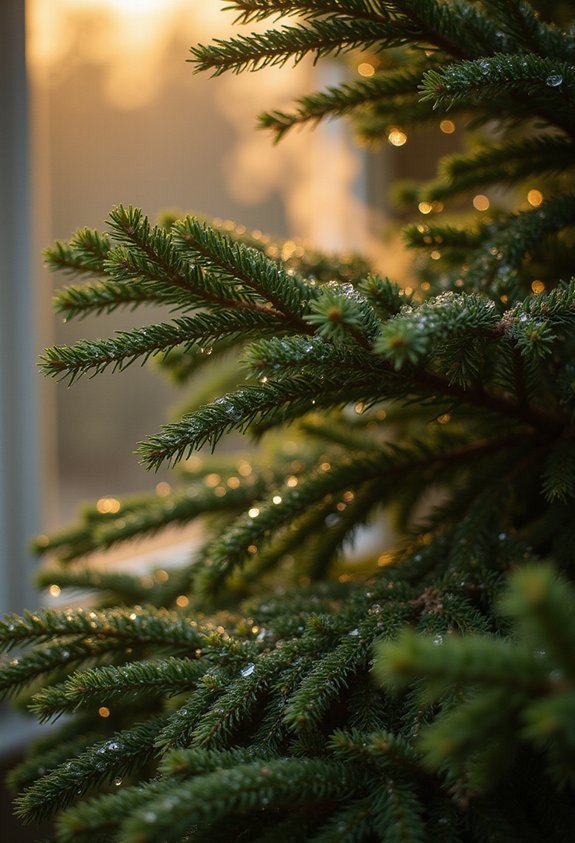
Because excessive humidity can damage your Christmas tree in ways that aren’t always immediately obvious, you’ll want to recognize the warning signs that your tree’s environment has become too wet. Watch for needles that feel sticky or damp to the touch, which indicates the tree’s absorbing more moisture than it can handle. You’ll also notice increased needle drop, where branches shed needles more rapidly than normal, signaling the tree’s stressed condition. Check the tree’s base and surrounding floor for visible mold or fungal growth, which thrives in overly moist environments. Additionally, if you detect musty or earthy odors near your tree, this suggests microbial growth is occurring. These indicators mean you should reduce your humidifier’s output immediately to prevent further damage to your tree’s health.
Optimal Humidity Levels and Placement Strategies for Your Humidifier
How can you strike the right balance between keeping your tree healthy and maintaining a comfortable environment in your home? You’ll want to maintain humidity levels between 30 and 50 percent, which protects both your tree and your home’s furnishings. Position your humidifier at least three feet away from your Christmas tree to prevent excessive moisture from damaging needles and branches. Place it in a central location where air circulates freely, allowing humidity to distribute evenly throughout the room. Avoid positioning the humidifier directly beneath or beside your tree, as concentrated moisture can cause rot and mold growth. Monitor humidity levels with a hygrometer, adjusting your humidifier’s output as needed to maintain ideal conditions that support tree preservation without creating dampness problems elsewhere in your home.
Daily Maintenance: Keeping Your Tree Hydrated and Healthy
Once you’ve established proper humidity levels in your home, you’ll need to focus on the tree’s most critical daily need: water. You should check your tree’s water reservoir every single day, topping it off with fresh water to keep the soil consistently moist but not waterlogged. A well-hydrated tree absorbs water through its cut trunk, which helps maintain needle flexibility and prevents premature dropping. You’ll want to refill the reservoir before the water level drops too low, as air pockets can form in the trunk if it dries out completely. Monitor water consumption rates daily, as they’ll increase during warmer days or when your humidifier’s running. This simple routine directly impacts your tree’s longevity and appearance throughout the holiday season.
Conclusion
You’ll maintain your Christmas tree’s health by positioning your humidifier at least six feet away, monitoring humidity between 30-50%, and watching for sticky needles or mold growth that signal excessive moisture. By balancing hydration with proper placement, you’ll prevent premature needle drop while protecting your tree from moisture-related damage. Regular maintenance and attentive observation guarantee your tree stays vibrant throughout the holiday season.