When winter arrives, you’ll face a critical decision about where your garden tools spend the coldest months. Storing them outside exposes metal components to rust and wooden handles to cracking, yet many gardeners lack indoor space. Understanding which storage method works best for your situation—and what protective steps you can take—requires examining your specific climate, available resources, and tool types. The stakes are higher than you might think.
Does Your Winter Climate Allow Outdoor Storage?
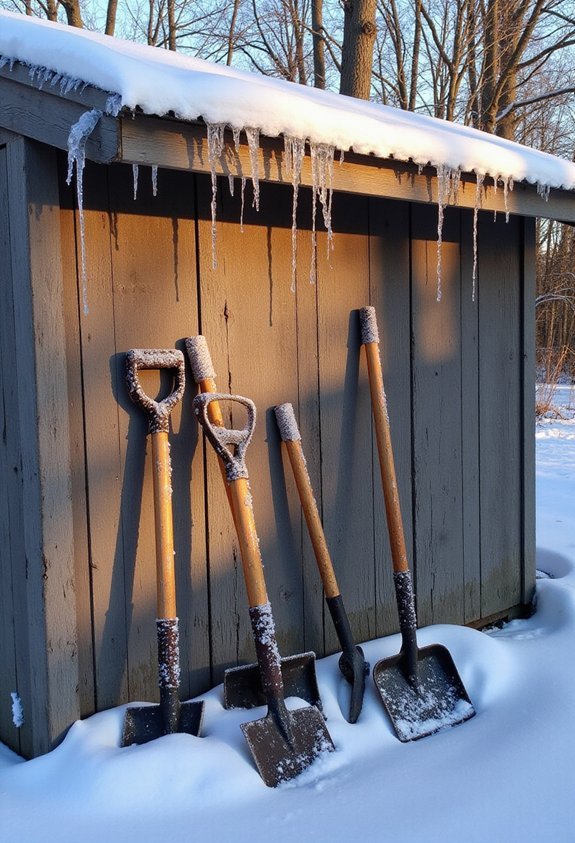
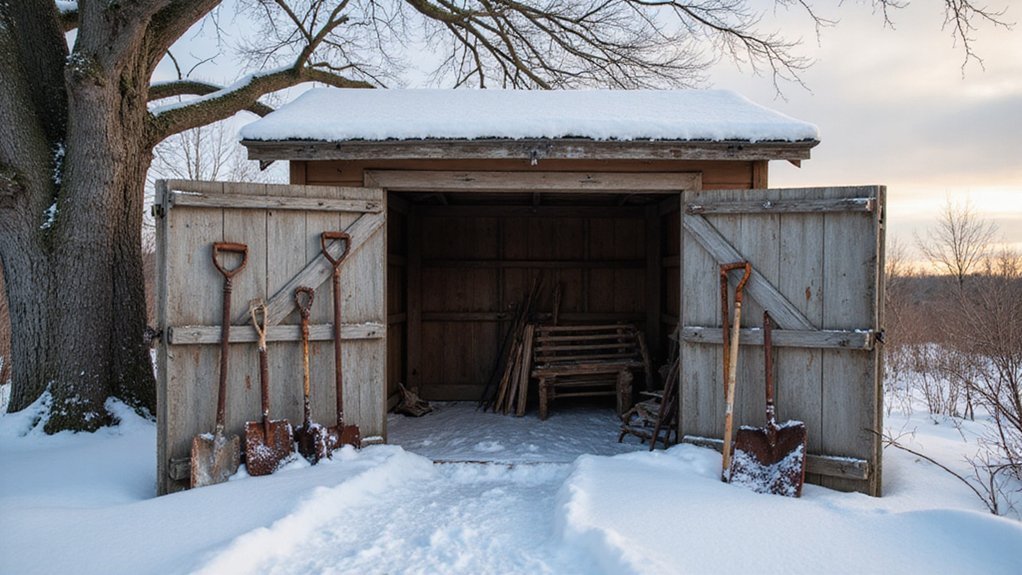
Before you decide where to store your garden tools for the winter months, you’ll need to evaluate your local climate conditions and determine whether outdoor storage is a viable option for your situation. If you live in a region with mild winters, moderate humidity levels, and minimal temperature fluctuations, you might successfully store tools outside in a shed or garage. However, if your area experiences harsh winters with heavy snow, ice, extreme cold, or high moisture, outdoor storage isn’t ideal because these conditions damage metal components through rust and corrosion. Additionally, prolonged freezing temperatures can crack wooden handles and degrade plastic parts. You’ll want to honestly assess your specific climate before committing to any storage method.
Also read: 10 Pro Tips for Keeping Your Christmas Trees Fresh All Season Long
How Freezing Temperatures and Moisture Destroy Tools
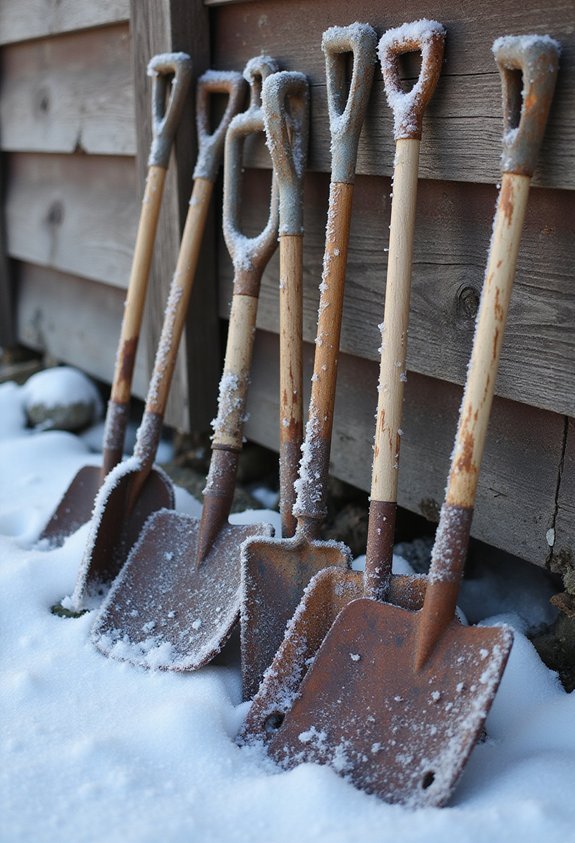
Once winter arrives, the combination of freezing temperatures and moisture begins wearing down your garden tools through several destructive processes that you’ll want to understand before choosing a storage location. Water naturally expands when it freezes, and if moisture has seeped into metal components or wooden handles, this expansion creates stress that leads to cracks and breaks. Rust develops rapidly when metal stays wet during cold months, particularly on exposed iron and steel surfaces where protective coatings get compromised. Wooden handles absorb moisture in damp conditions, causing them to swell, warp, and eventually rot. Additionally, freezing cycles—where temperatures fluctuate above and below freezing—accelerate deterioration by repeatedly expanding and contracting metal parts. Understanding these destructive mechanisms helps you recognize why proper winter storage protects your tools and extends their usable lifespan considerably.
Indoor Storage Solutions for Every Space Constraint
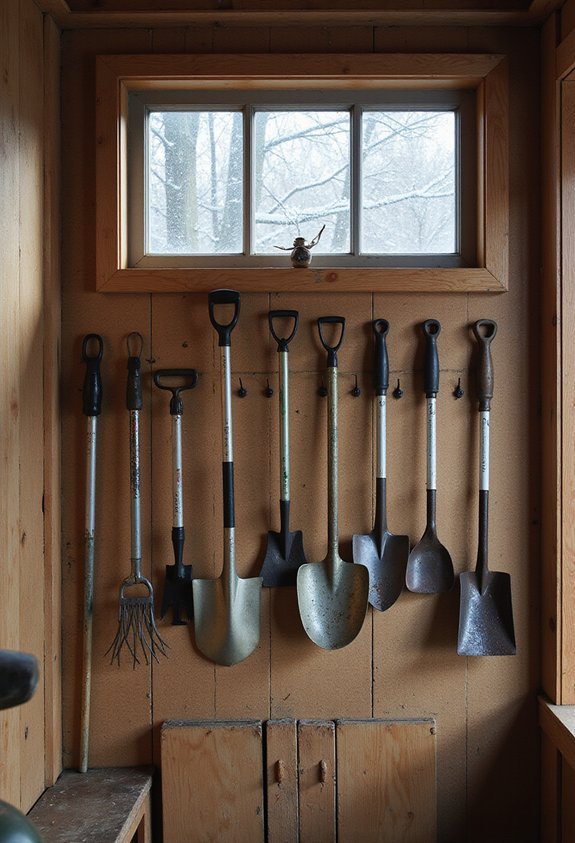
Since you’re now aware of how freezing temperatures and moisture damage your tools, finding the right indoor storage location becomes your next priority. You’ve got several options that work within different space constraints. A basement or garage offers ideal conditions because these spaces stay dry and maintain relatively stable temperatures throughout winter. If you don’t have either, consider a climate-controlled shed or even a closet in your home. Wall-mounted pegboards and magnetic strips maximize vertical space efficiently, keeping tools organized and accessible. For limited floor space, hanging racks and overhead storage systems work exceptionally well. Make sure your chosen location allows air circulation to prevent rust development. Whatever space you select, guarantee tools stay completely dry before storage and remain separated from moisture sources like water heaters or humidifiers.
Weatherproof Outdoor Storage: What Actually Works
Sometimes you’ll need to store your garden tools outside, and when that’s the case, you’ve got to invest in proper weatherproof protection that’ll actually shield your equipment from winter’s harshest conditions. Metal storage sheds with rust-resistant coatings work exceptionally well, keeping moisture and snow away from your tools. You should also consider lockable plastic storage boxes, which are affordable and lightweight while offering decent protection against water damage. Line the interior with foam or cardboard to absorb excess moisture. For additional defense, apply a thin coat of oil to metal tools before storage, creating a protective barrier against rust and corrosion. Guarantee adequate ventilation inside any outdoor container to prevent condensation buildup, which accelerates tool deterioration during cold months.
Protective Treatments for Tools Stored Outside
Beyond selecting the right storage container, you’ll want to apply specific protective treatments directly to your tools before winter storage, since these preventative measures enormously extend their lifespan and maintain their functionality for next season. Start by cleaning all metal surfaces thoroughly, removing dirt and debris that trap moisture. Next, apply a thin coat of oil—such as linseed or machine oil—to metal blades, handles, and joints, which creates a protective barrier against rust and corrosion. For wooden handles, use a wood conditioner to prevent cracking and splintering from temperature fluctuations. Don’t forget to sharpen blades before storage, as this maintains cutting efficiency and reduces strain on the metal. Finally, inspect handles for splinters and sand rough spots smooth, ensuring your tools remain in best possible condition throughout winter.
Affordable DIY Storage Alternatives
While proper protective treatments keep your tools in good shape, you don’t necessarily need to purchase expensive storage systems to keep them safe during winter months. You can create effective storage solutions using materials you likely already have at home. PVC pipes work well for organizing long-handled tools like rakes and shovels, while old wooden pallets can be converted into sturdy wall-mounted racks that save floor space. Large plastic bins with tight-fitting lids protect smaller tools from moisture and freezing temperatures. You might also repurpose metal filing cabinets or wooden crates to organize and shield your equipment. Line any container with newspaper or cardboard to absorb excess moisture, creating an additional protective barrier against rust and corrosion throughout the winter season.
Pre-Winter Maintenance to Reduce Damage Risk
How can you prevent expensive tool damage before winter arrives? Start by cleaning all metal surfaces thoroughly to remove dirt and moisture that cause rust. Dry each tool completely using a cloth, then apply a thin coat of oil or rust preventative to metal parts. Next, sharpen blades on shovels and hoes, since dull tools deteriorate faster during storage and are harder on equipment. Check wooden handles for cracks or splinters, sanding rough areas smooth and applying linseed oil for protection. Inspect hoses for leaks and drain them completely, as frozen water expands and damages rubber. Finally, drain fuel from gas-powered equipment to prevent varnish buildup that clogs engines. These maintenance steps considerably extend your tools’ lifespan and reduce replacement costs substantially.
Metal Tools vs. Wooden Handles: Which Need Protection Most?
Because metal and wood respond differently to cold temperatures and moisture, you’ll need to protect each material with distinct strategies during winter storage. Metal tools are particularly vulnerable to rust, which forms when moisture combines with iron or steel, so you should apply a thin coat of oil or wax to all metal surfaces before storing them. Wooden handles, conversely, face different threats: extreme cold and dry indoor heat can cause them to crack or splinter, so you’ll want to keep them in moderate conditions away from temperature fluctuations. You should also inspect wooden handles for existing damage, since winter’s harsh conditions will exacerbate any cracks. By addressing each material’s specific needs, you’ll considerably extend your tools’ lifespan and maintain their functionality for next season’s gardening.
When Outdoor Storage Is the Only Option
Many gardeners don’t have access to sheds, garages, or basements, which means you’ll need to store your tools outside where they’re exposed to rain, snow, freezing temperatures, and fluctuating weather conditions. To protect your equipment, invest in a waterproof storage box or container that’ll keep moisture away from metal surfaces and wooden handles. Position your storage unit on a raised platform or concrete pad to prevent water from pooling underneath, which causes rust and decay. Guarantee proper drainage around the container so melting snow won’t accumulate. Apply a protective coating to exposed metal parts before winter arrives, and wrap wooden handles with weatherproof tape. Check your tools periodically throughout winter, removing any ice buildup and reapplying protective treatments as needed to extend their lifespan.
Build a Tool Protection Habit Before Winter Hits
Before the first frost arrives, you’ll want to establish a regular maintenance routine that keeps your garden tools in excellent condition throughout the cold months. Start by cleaning all tools thoroughly after each use, removing soil and moisture that can cause rust and deterioration. Inspect handles for cracks or splinters, sanding them smooth if needed, and apply linseed oil to wooden handles to prevent drying and splitting. Sharpen blades on shovels and pruners so they’re ready for spring work. Oil metal parts with a rust-preventative product, and check that all fasteners are tight. Store your tools in a designated, organized location where you can monitor their condition regularly, making minor adjustments as winter progresses.
Conclusion
You’ll find that protecting your garden tools during winter is like building a shield against nature’s harsh elements, and you’ve got two clear paths forward. If you can store tools indoors in a garage or basement, you’re making the smartest choice for long-term durability. However, if outdoor storage is unavoidable, you’ll need to apply protective oil coatings and weatherproof coverings to minimize rust and corrosion damage effectively.