
You’ll want to know the essential strategies that transform how you care for your Christmas tree, because the difference between a vibrant, needle-filled display and a disappointing dried-out one comes down to specific, actionable steps. Your tree’s longevity depends on understanding water absorption, proper placement, and humidity control—techniques that work together in ways you might not expect.
Water Your Tree Daily to Keep It Fresh
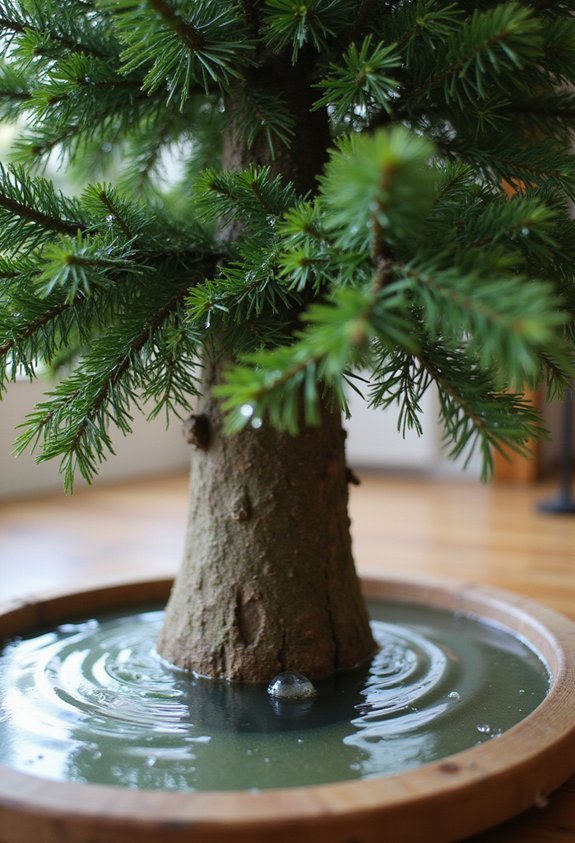
Because a freshly cut Christmas tree can absorb up to a quart of water per day, you’ll want to check your tree’s water level every morning and refill it as needed to prevent the cut from drying out and sealing over. Use room-temperature water in your tree stand, ensuring the reservoir stays filled to maintain consistent hydration. If you notice the water level dropping quickly, your tree’s needles may be drying out faster than expected, which means you’re not providing enough water. Place your tree away from heat sources like fireplaces and vents that accelerate moisture loss. Monitor the water daily without fail, as even one day without water can cause the cut surface to seal, making it impossible for your tree to absorb moisture afterward.
Also read: 5 Winter Things Killing Your Houseplants
Cut the Trunk Base Before Placing It in Water
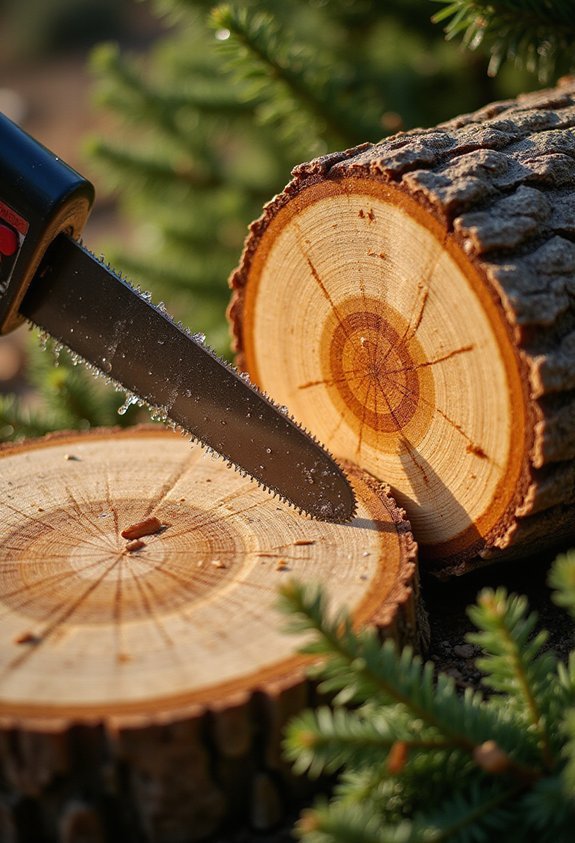
When you’re ready to place your freshly cut tree in its stand, you’ll want to make a fresh cut across the trunk base before submerging it in water. Trees develop a resinous seal on their cut surface within hours of cutting, which blocks water absorption. Using a sharp saw, cut about one-half to one inch from the bottom of the trunk, creating a clean, flat surface perpendicular to the trunk’s length. This fresh cut removes the sealed layer and exposes new wood that can readily absorb water. Make your cut as close as possible to when you’ll place the tree in water, since a new seal will form quickly. A freshly cut trunk base considerably improves your tree’s water uptake capacity and extends its freshness throughout the holiday season.
Choose a Stand With a Large Water Reservoir
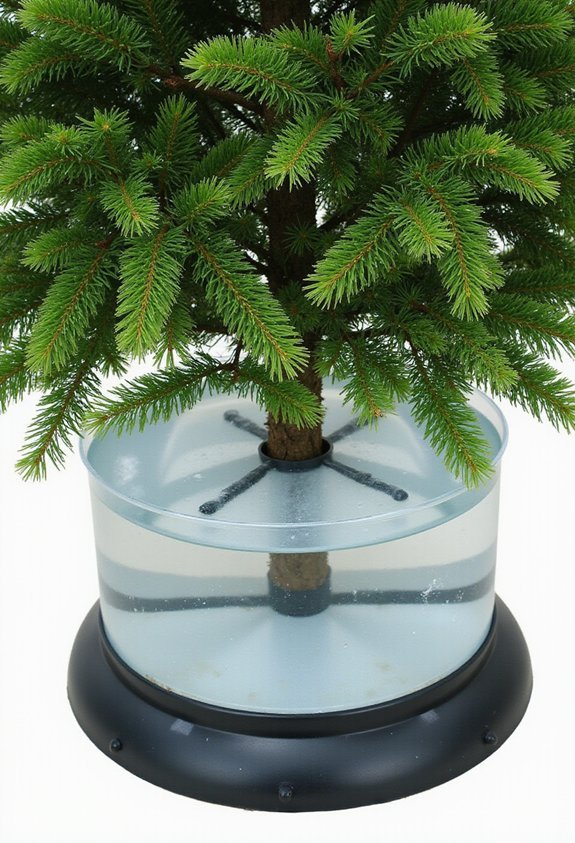
Now that you’ve prepared your tree’s trunk for ideal water absorption, selecting the right stand becomes your next important step in maintaining freshness. You’ll want to choose a stand with a large water reservoir, since Christmas trees absorb significant amounts of water daily. A stand holding at least one gallon of water allows your tree to drink continuously without requiring constant refilling. Larger reservoirs prevent the water level from dropping below the trunk’s base, which would seal the cut and stop water uptake entirely. When you select your stand, measure your tree’s diameter at the base to guarantee the stand’s clamp securely grips it. Check that your stand sits stable and level on your floor, preventing any tilting that might stress the trunk or cause spilling.
Keep Your Tree Away From Heaters and Fireplaces
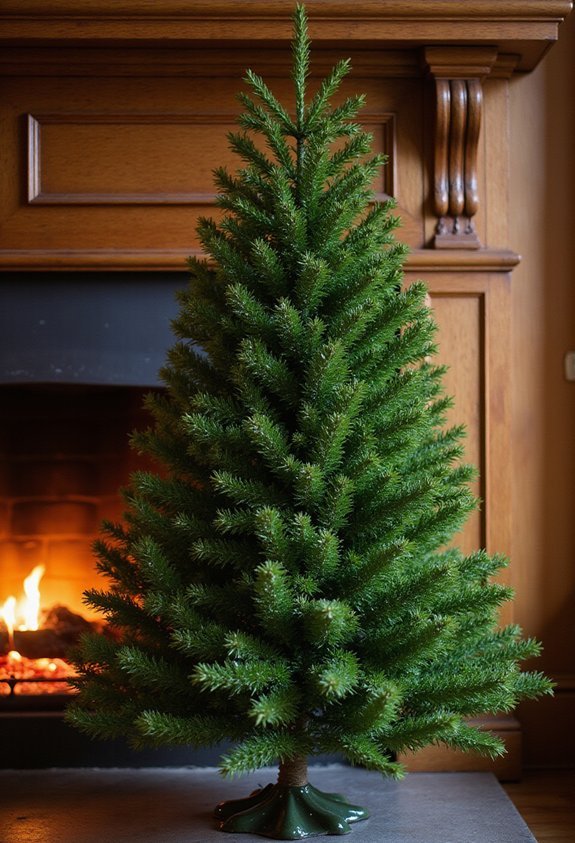
Heat sources like fireplaces, radiators, and space heaters’ll markedly speed up your tree’s moisture loss, causing needles to dry out and drop prematurely. You should position your Christmas tree at least six feet away from any heat source in your home, since warm air pulls moisture from the needles much faster than cool air does. If your living room layout makes distance difficult, you can create a barrier using a decorative screen or furniture arrangement to shield your tree from direct heat exposure. Additionally, you’ll want to keep your tree away from heating vents and air conditioning units, as both warm and cold air currents accelerate dehydration. By maintaining proper distance from heat sources, you’ll greatly extend your tree’s freshness throughout the entire holiday season.
Maintain Humidity and Avoid Direct Sunlight
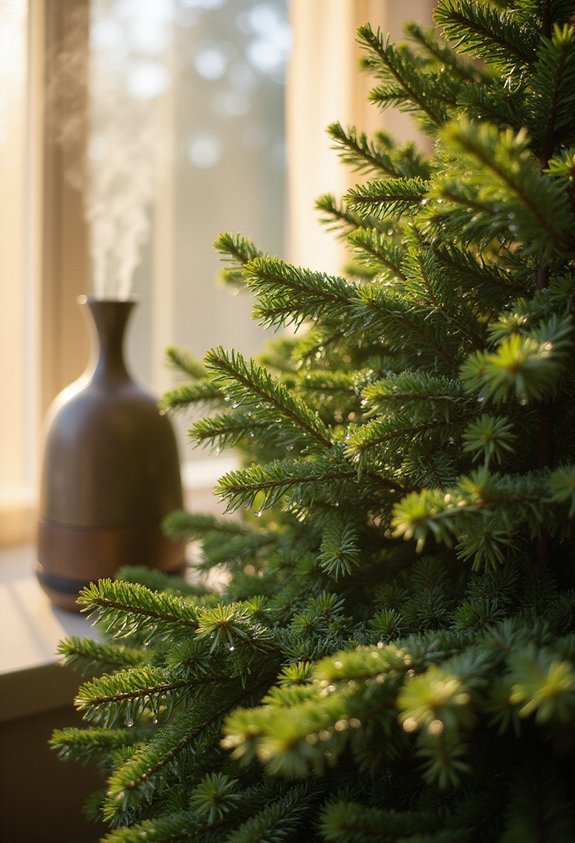
While keeping your tree away from heat sources protects it from rapid moisture loss, you’ll also need to control the humidity levels in the room where your tree’s displayed, since dry indoor air can be just as damaging as direct heat exposure. You can increase humidity by placing a humidifier near your tree or by setting water-filled containers around the base. Additionally, you should position your tree away from direct sunlight, which causes the needles to dry out and fade in color. Place your tree in a corner or against an interior wall where it receives indirect light instead. By maintaining adequate humidity and minimizing sun exposure, you’ll markedly extend your tree’s freshness and keep it vibrant throughout the holiday season.
Feed Your Tree With Preservative Solution
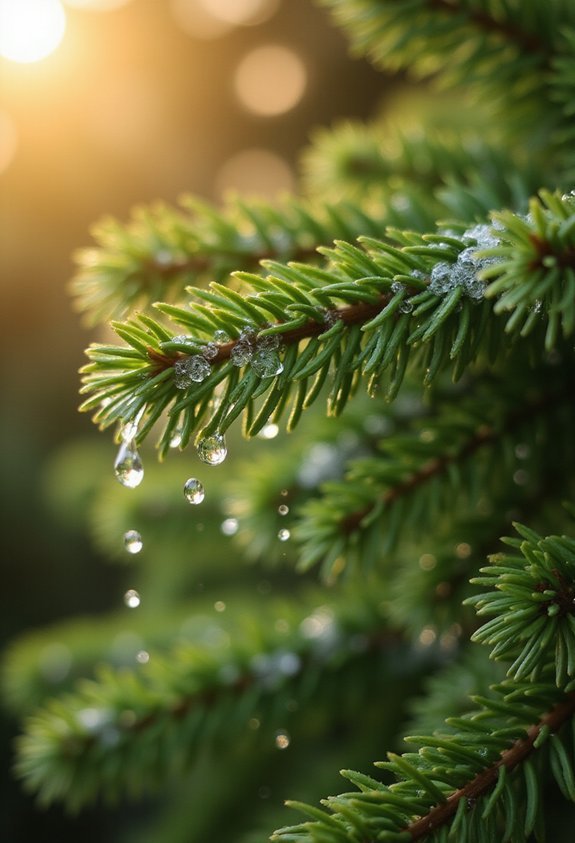
Just as you’ve maintained humidity and protected your tree from sunlight, you’ll want to provide it with a preservative solution that’ll help it stay fresh and hydrated throughout the season. You can purchase commercial tree preservatives at garden centers, or you’ll make a homemade mixture using one quart of water, two tablespoons of sugar, one tablespoon of bleach, and one tablespoon of floral preservative. The sugar feeds your tree, the bleach prevents bacterial growth, and the floral preservative extends freshness. You’ll change the water every two to three days, refilling the tree stand with fresh solution. This consistent feeding process slows needle drop and maintains the tree’s vibrant color and appearance throughout your holiday celebrations.
Increase Humidity With Daily Misting
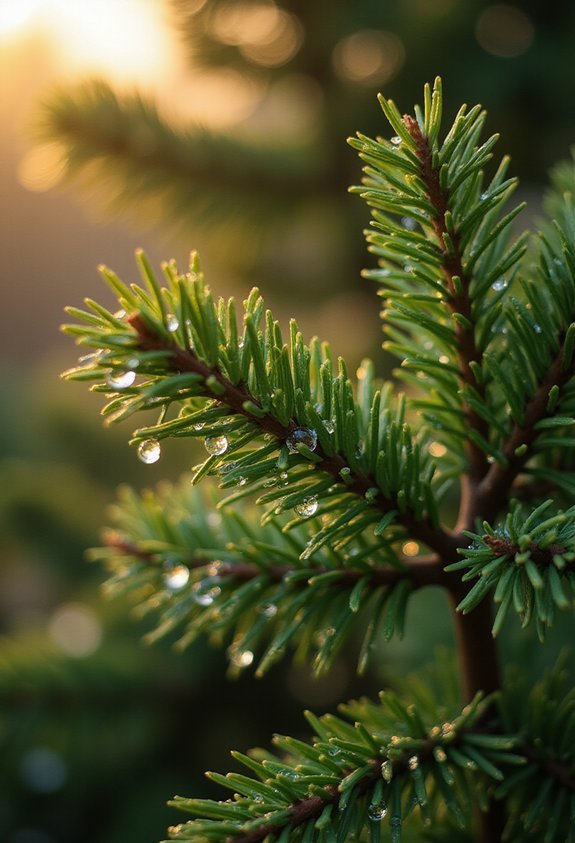
Because Christmas trees naturally lose moisture through their needles, you’ll want to increase the humidity around your tree by misting it daily with water from a spray bottle. Fill a spray bottle with room-temperature water, then lightly coat the branches and needles from top to bottom, ensuring even coverage throughout the tree. You should mist your tree once daily, preferably in the morning, allowing the moisture to gradually absorb into the needles. This process mimics the natural moisture that trees receive in forests, slowing down needle drop and maintaining the tree’s vibrant appearance. Avoid oversaturating the tree, as excessive water can damage ornaments and decorations. Place a protective mat or towel underneath to catch any dripping water and protect your floor from potential water damage.
Refill Water Every Morning Without Fail
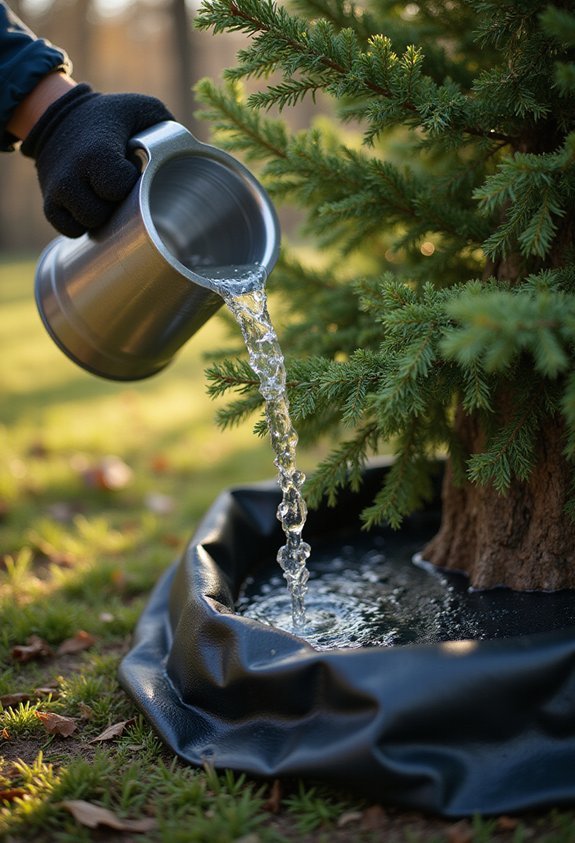
The water reservoir at the base of your Christmas tree is the lifeline that keeps your tree hydrated and fresh throughout the holiday season, so you’ll need to refill it every single morning without exception. A tree can absorb up to one quart of water daily, depending on its size and room temperature. Check the water level before you add more, ensuring you’re not overfilling the reservoir. Use room-temperature water rather than cold water, as this allows your tree to absorb it more efficiently. If you notice the water level dropping rapidly between refills, your tree is thriving and consuming nutrients properly. Establish a consistent morning routine by setting a specific time each day for refilling, making this essential task part of your holiday schedule.
Avoid Decorating Until Your Tree Is Fully Hydrated
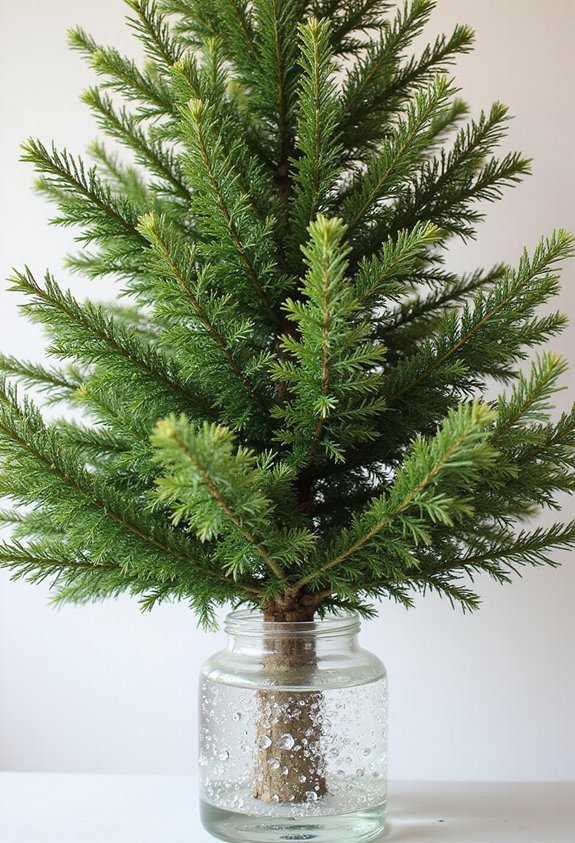
Before you hang a single ornament or string of lights on your tree, you’ll want to wait until it’s had adequate time to absorb water and become fully hydrated, which typically takes about six to twelve hours after the initial placement in its stand. This waiting period is essential because a dehydrated tree won’t hold decorations as well, and its branches won’t be as sturdy or flexible. When you rush into decorating before hydration is complete, you’re risking branch breakage and an overall less attractive appearance. By allowing your tree sufficient time to drink water and regain its natural moisture, you’re ensuring that branches remain strong and resilient enough to support your ornaments throughout the entire holiday season.
Remove Lower Branches to Boost Water Absorption
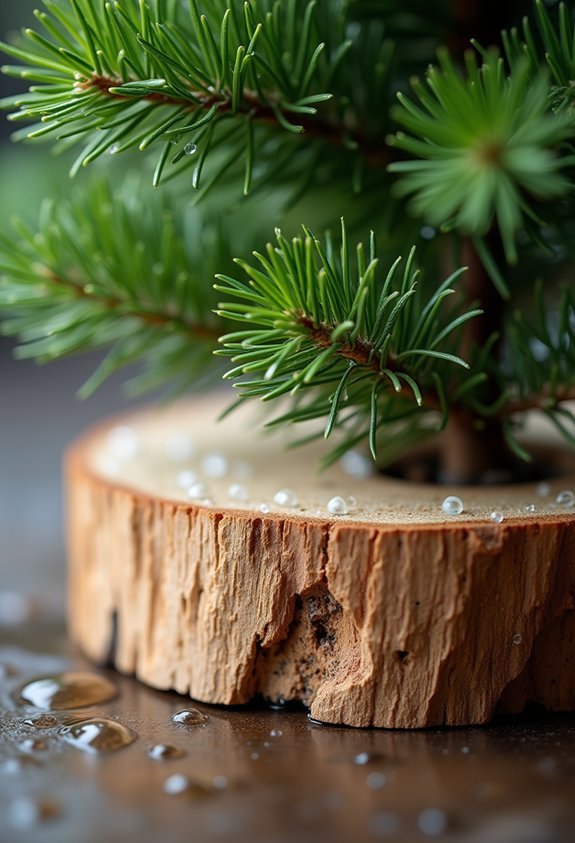
Once your tree’s been in its stand for a few hours, you’ll want to trim away the lower branches that sit close to or touch the water line, as these submerged branches can’t absorb moisture and instead create a barrier that prevents water from reaching the trunk’s exposed wood. Use sharp pruning shears to remove these branches at their base, cutting as close to the main trunk as possible without damaging the bark. This process, called limbing, improves water uptake considerably by exposing more of the trunk’s surface directly to the water reservoir. Additionally, removing lower branches increases air circulation around the base, reducing the risk of mold and mildew development, which can further compromise your tree’s ability to drink water and stay fresh throughout the holiday season.
Conclusion
You’ve learned that while neglecting your tree causes rapid needle drop and browning, consistent daily watering keeps it vibrant throughout the season. By implementing these strategies—positioning your tree away from heat sources, maintaining humidity through misting, and removing lower branches for better water absorption—you’ll transform a potentially short-lived decoration into a long-lasting centerpiece. Your dedication to proper care directly determines whether your tree thrives or deteriorates, making these maintenance steps essential investments in holiday success.