
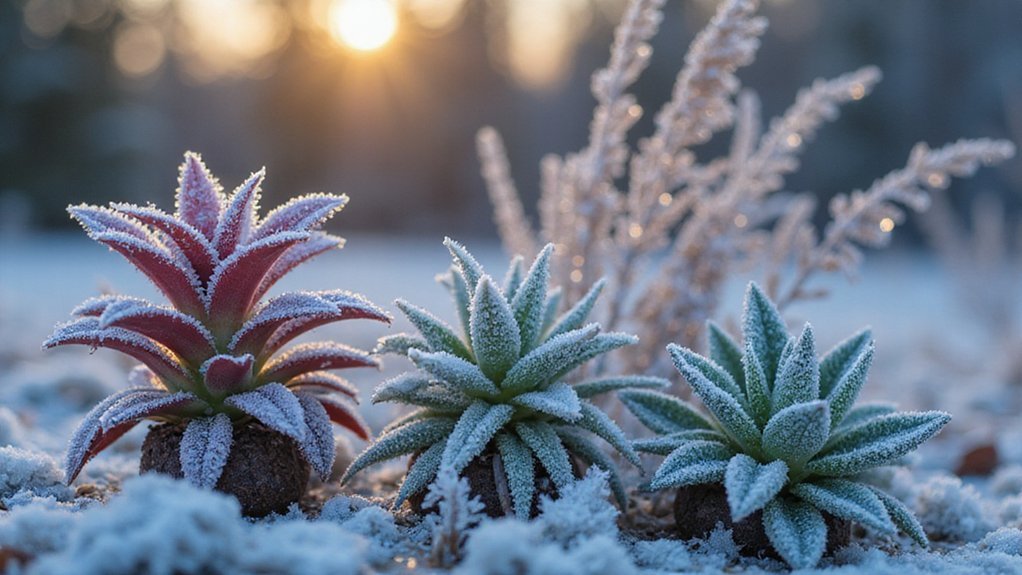
You might assume that plants with thick leaves and sturdy appearances can easily survive winter’s cold, but you’d be mistaken. Citrus trees, olive trees, and Japanese maples evolved in warm climates where freezing temperatures never occur, leaving their cellular structures vulnerable to frost damage. When ice crystals form inside their cells, they rupture indispensable tissues, causing branch death or complete tree loss. Understanding why these seemingly hardy plants need protection is essential to keeping them alive.
Citrus Trees: Why They Look Hardy but Die in Frost
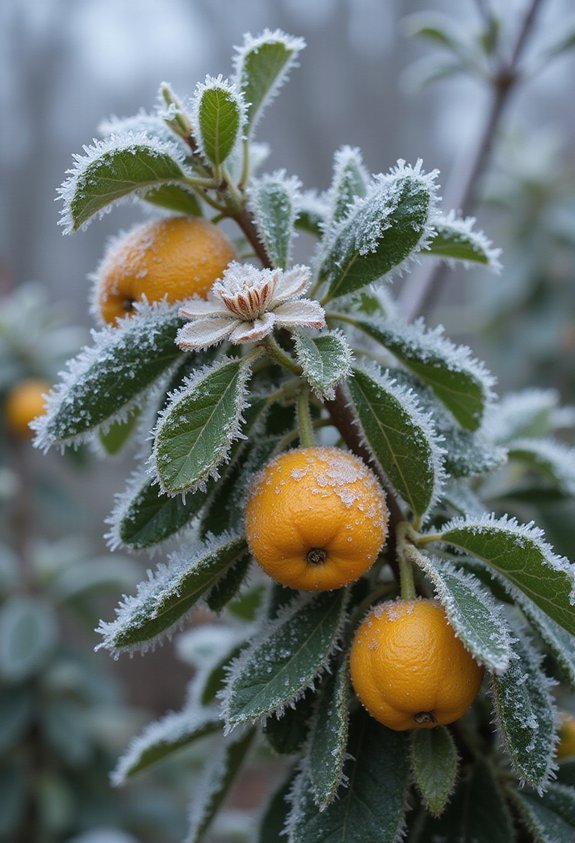
Although citrus trees often display thick, glossy leaves and sturdy-looking branches that might suggest they’d withstand cold temperatures, they’re actually quite vulnerable to freezing conditions that most other trees can survive. You need to understand that citrus trees evolved in warm climates, and their cellular structure isn’t equipped to handle frost. When temperatures drop below freezing, ice crystals form inside the tree’s cells, rupturing their walls and destroying critical tissues. This damage kills branches and can eventually kill the entire tree. You should protect your citrus trees by wrapping them with blankets, moving potted trees indoors, or installing frost cloth coverings when freezing weather approaches. Acting quickly before the cold arrives dramatically increases your citrus tree’s chances of survival.
Also read: Best Dwarf Fruit Trees for Small Spaces
Olive Trees: Why They Freeze Below 28°F
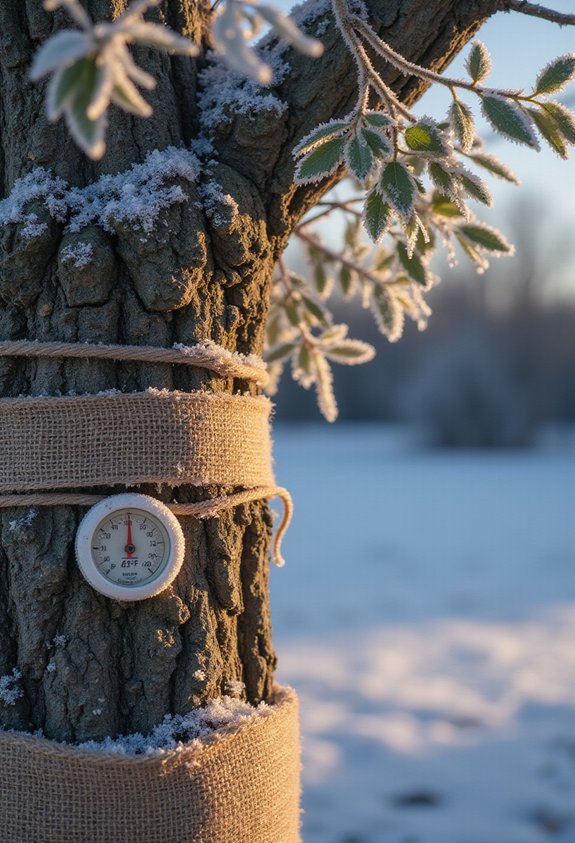
Why do olive trees, which seem so sturdy and well-adapted to harsh conditions, suddenly succumb to frost when temperatures dip below 28°F? The answer lies in their Mediterranean origin, where they’ve evolved to thrive in mild winters rather than freezing climates. When you expose olive trees to temperatures below 28°F, ice crystals form within their cells, damaging the tree’s vascular system and tissue structure. This cellular damage prevents water and nutrients from moving through the tree effectively. You’ll notice leaves turning brown, branches becoming brittle, and in severe cases, the entire tree dying back. To protect your olives, you should cover them with frost cloth, move potted trees indoors, or plant them in sheltered microclimates where cold air doesn’t accumulate.
Japanese Maples: The Deceivingly Fragile Ornamental
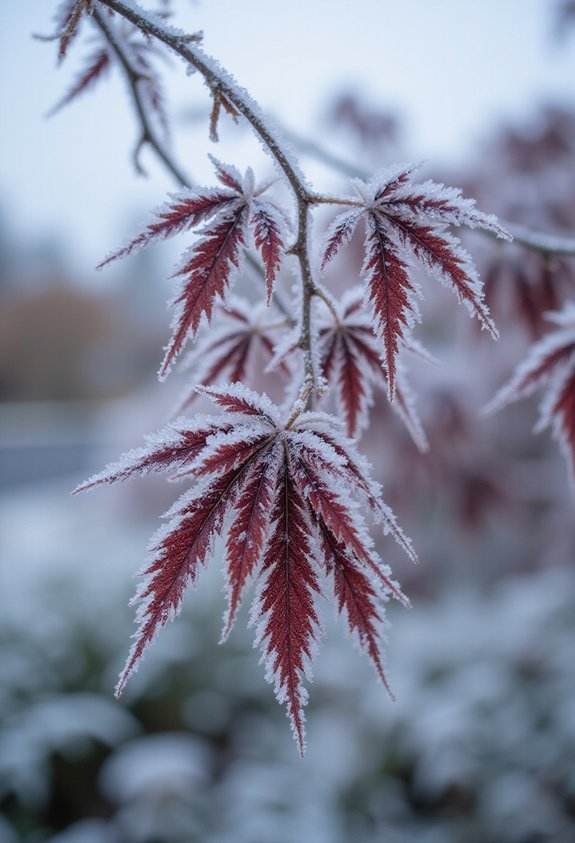
Japanese maples might look sturdy with their thick trunks and ornamental branches, yet they’re actually quite vulnerable to winter freeze damage despite their reputation for being decorative landscape plants. You’ll find that temperatures below 15°F can severely harm or kill these trees, particularly younger specimens with tender growth. Their delicate leaf structure and shallow root systems make them susceptible to frost damage, desiccation, and winter burn. To protect your Japanese maples, you should wrap them with burlap before harsh weather arrives, ensuring adequate insulation around the trunk and primary branches. Additionally, you can apply anti-desiccant sprays to reduce moisture loss during freezing periods. Positioning them in sheltered locations away from harsh winds and providing mulch around the base offers extra protection during winter months.
Conclusion
You’ve now learned that citrus, olive, and Japanese maple trees aren’t as tough as they appear, and protecting them during winter freeze isn’t optional—it’s critical. You can’t put all your eggs in one basket by relying solely on one protection method; instead, you’ll want to combine blankets, frost cloth, and indoor relocation strategies. By taking these preventive steps now, you’ll guarantee these delicate plants survive the coldest months and thrive for years ahead.