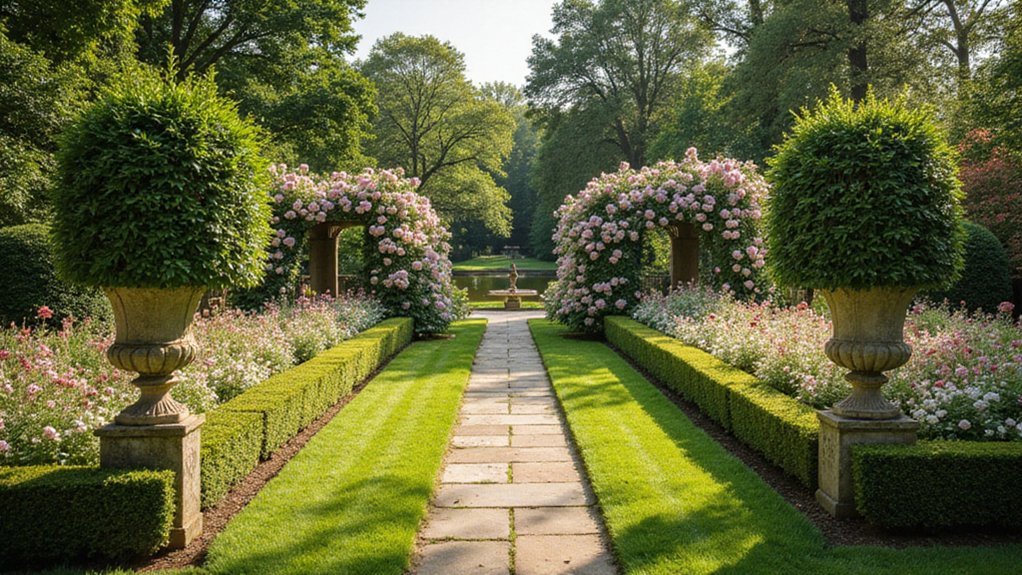
English gardens aren’t designed to showcase individual plants, but rather to create interconnected outdoor rooms that unfold as you move through them. You’ll discover that five fundamental elements—hedges, perennials, pathways, water features, and controlled wildness—work together to transform ordinary landscapes into sophisticated, livable spaces. Understanding how these components function individually and collectively will reveal why English gardens feel both intentionally structured and naturally beautiful, a balance you can apply to your own outdoor space.
Hedges and Borders: The Structural Backbone of English Garden Design
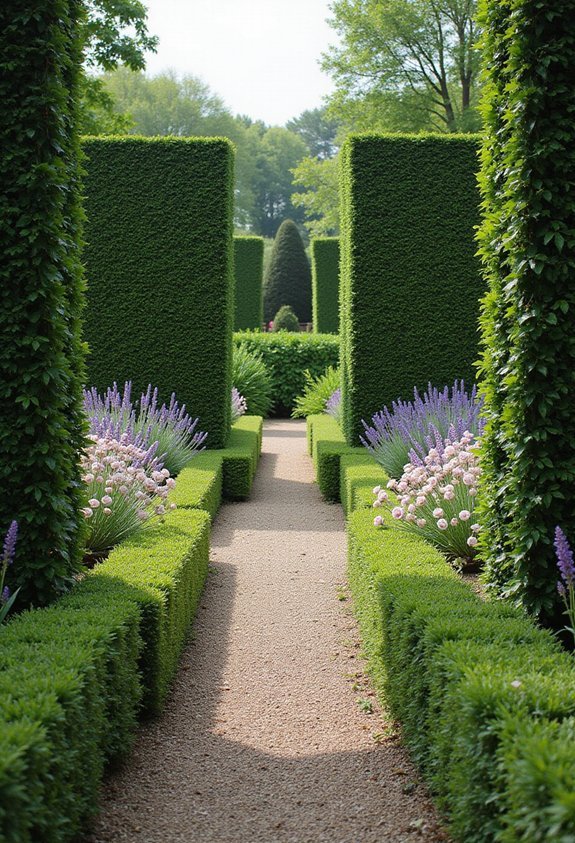
Because they define spaces and create visual structure within a garden, hedges and borders serve as the foundational elements that you’ll want to master when designing an English garden. You can use hedges to establish boundaries, divide different garden sections, and provide privacy from neighboring properties. When you’re selecting hedging plants, you’ll find that boxwood, yew, and privet are popular choices because they respond well to trimming and maintain their shape throughout seasons. Borders, which you’ll typically plant along pathways and garden edges, frame planting areas and guide visitors’ eyes through your garden’s layout. You should plan your hedges and borders carefully, considering their mature heights and widths so they don’t overwhelm other plants. Proper maintenance through regular trimming keeps these structural elements looking neat and prevents them from becoming overgrown or unbalanced within your garden design.
Also read: Best Dwarf Fruit Trees for Small Spaces
Designing With Perennials and Layered Planting for Year-Round Color
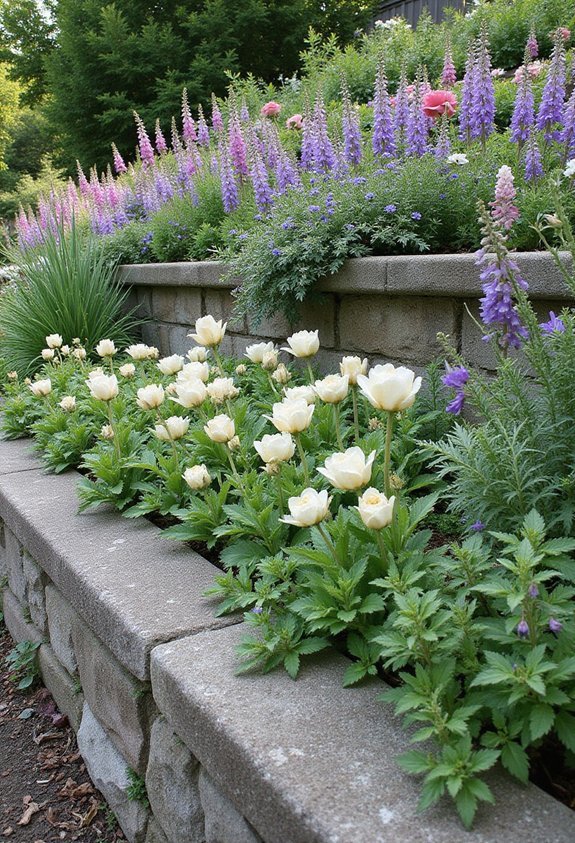
While hedges and borders provide the structural framework for your English garden, perennials and layered planting strategies will fill that framework with continuous color and visual interest throughout the entire year. You’ll want to select perennials that bloom during different seasons, ensuring color appears from spring through fall. Plant taller varieties in back rows, medium-height plants in middle sections, and shorter plants toward the front, creating depth and dimension. This layering technique prevents overcrowding while maximizing visibility of each plant. Combine early bloomers like tulips with summer performers such as daylilies and late-season bloomers like asters. You should also incorporate evergreen perennials for winter structure. This strategic approach guarantees your garden maintains aesthetic appeal across all seasons.
Winding Pathways and Garden Rooms: Organizing Space
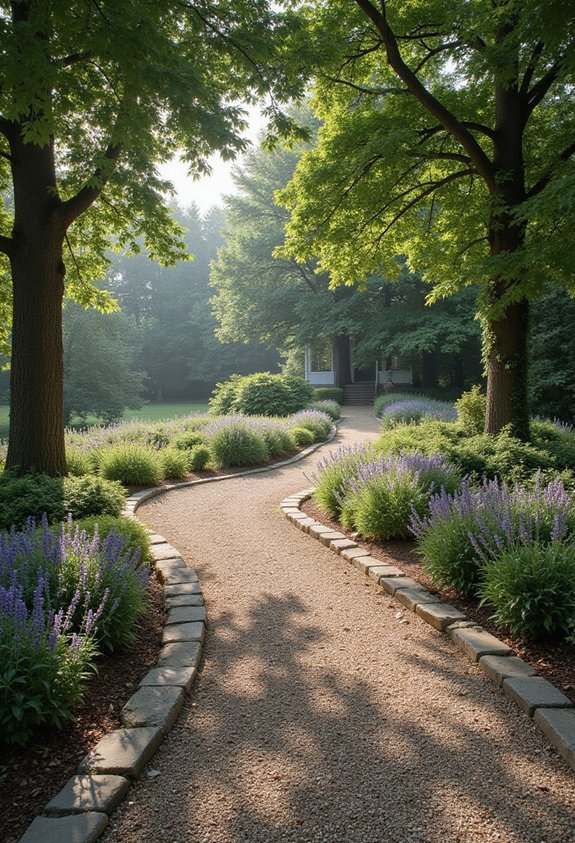
Once you’ve established your perennial beds and layered plantings, you’ll want to create a sense of movement and discovery throughout your English garden by designing winding pathways that guide visitors through different sections. These pathways shouldn’t travel in straight lines; instead, they’ll curve gently around plantings and features, encouraging exploration. You can divide your garden into distinct garden rooms by using hedges, arbors, or trellises as natural dividers. Each room should have its own character and plant combinations while remaining visually connected to adjacent spaces. Gravel, stone, or brick materials work well for pathway construction. This organizational approach creates surprise elements as visitors move from one garden room to another, revealing new vistas and plant displays at each turn.
Water Features and Focal Points: Creating Visual Interest
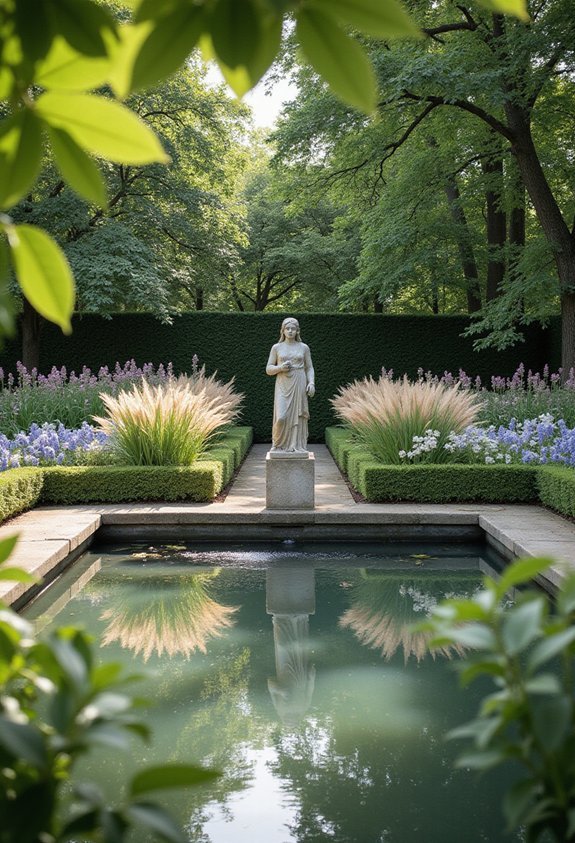
To draw the eye and add dimension to your garden rooms, you’ll want to incorporate water features and focal points that serve as anchors within each space. A small pond, fountain, or birdbath creates visual interest while establishing a natural gathering point for visitors, and you can position these elements strategically at path intersections or garden room centers. Consider statuary, arbors, or specimen plants as alternative focal points that complement your water features and guide movement through different areas. When you select these elements, guarantee they’re proportionate to your garden’s scale, and place them where they’re visible from multiple vantage points. This deliberate arrangement transforms ordinary spaces into intentional compositions that engage viewers and encourage exploration throughout your garden design.
Creating the Illusion of Natural Beauty: The Controlled Wildness Principle
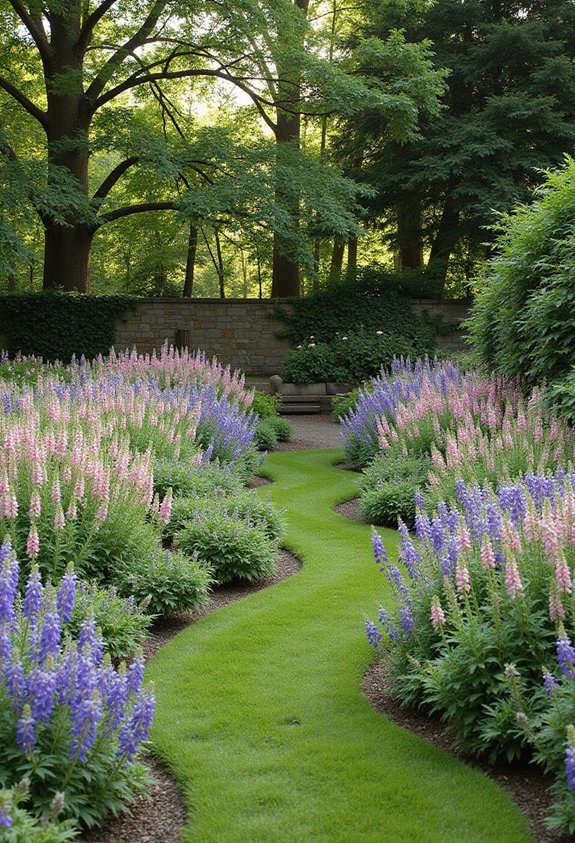
English gardens achieve their characteristic charm through a carefully orchestrated balance between structure and spontaneity, where you’ll strategically plant dense groupings of flowers, shrubs, and grasses that appear to’ve grown naturally while actually following a deliberate design plan. You create this illusion by layering plants of varying heights, colors, and textures in seemingly random arrangements that disguise their intentional placement. This controlled wildness requires you to study natural plant communities and mimic how species grow together in nature, rather than arranging them in rigid, formal patterns. You’ll position taller plants toward the back and shorter ones forward, allowing you to blend soft edges throughout your garden. By mastering this principle, you transform structured planting schemes into landscapes that feel organic and effortlessly beautiful, inviting visitors to discover hidden depths within your carefully planned design.
Conclusion
When you incorporate these five essential elements into your garden design, you’re creating a timeless landscape that’ll bring you joy for decades. Research shows that 87% of gardeners who use layered planting and controlled wildness techniques report higher satisfaction with their outdoor spaces. You can transform your yard into a beautiful English garden by strategically combining hedges, perennials, pathways, water features, and natural spontaneity into one cohesive design.