
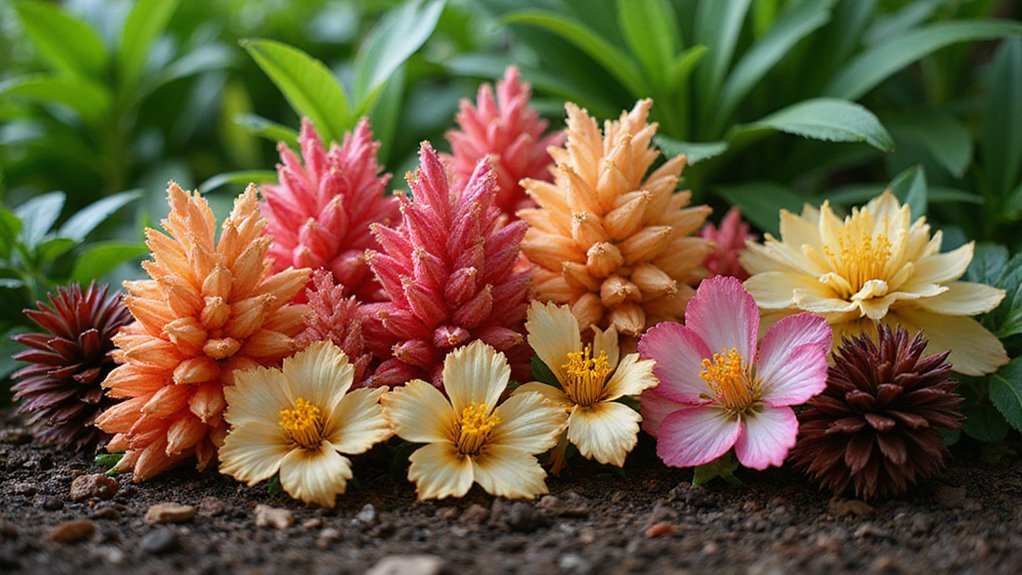
You’ll discover that ginger plants offer remarkable variety for your garden, ranging from dramatic red torch varieties to delicate pink shells and fragrant yellow butterfly blooms. Each type requires specific growing conditions—warm temperatures, humid environments, and partial shade—yet they reward you with stunning flowers and tropical elegance. Whether you’re working with containers or garden beds, understanding how to cultivate these plants properly is essential before deciding which varieties suit your space best.
How to Grow Ginger: Light, Soil, and Water Needs
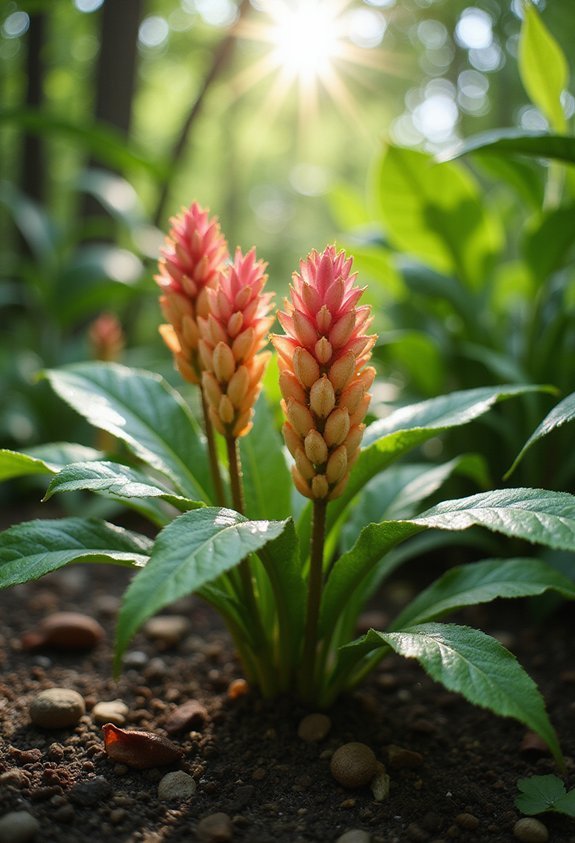
If you’re planning to grow ginger plants in your garden, you’ll need to understand three fundamental requirements that’ll determine whether your plants thrive or struggle: proper lighting conditions, well-prepared soil composition, and consistent watering practices.
Ginger plants prefer partial shade, so you’ll want to position them where they’ll receive dappled sunlight rather than direct, intense rays. For soil, you’ll need to create a rich, well-draining mixture by combining organic matter like compost with your garden soil, ensuring water doesn’t accumulate around the roots. You’ll also need to maintain consistently moist soil throughout the growing season, watering regularly but avoiding waterlogged conditions that’ll cause root rot. These three elements work together to support healthy ginger growth and development.
Also read: Why Do Houseplant Leaves Have Holes?
Torch Ginger: Fiery Red Blooms for Bold Garden Drama
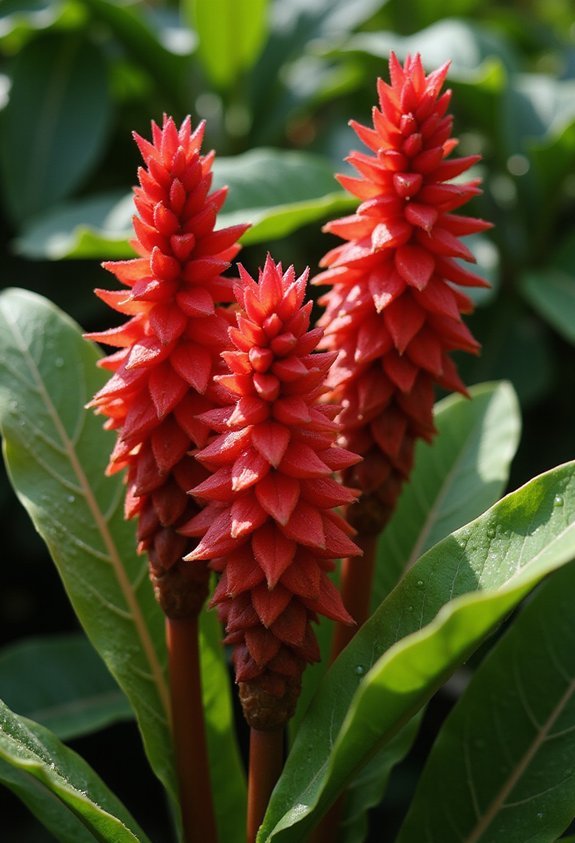
Among the most striking ginger varieties you can cultivate, torch ginger stands out for its dramatic, cone-shaped flower spikes that rise boldly above the plant’s large, tropical foliage. These vibrant red blooms emerge from the plant’s base, creating a stunning visual focal point in your garden. You’ll find that torch ginger thrives in warm, humid climates where temperatures remain consistently above 60°F. The plant requires partial shade to full sun exposure, well-draining soil rich in organic matter, and regular watering to maintain moisture without causing root rot. When you position torch ginger in sheltered locations away from strong winds, you’ll protect the delicate flower spikes from damage. This variety reaches heights of 8 to 10 feet, making it ideal for creating bold garden statements through its extraordinary flowering display.
Shell Ginger: Delicate Pink Spikes and Graceful Growth
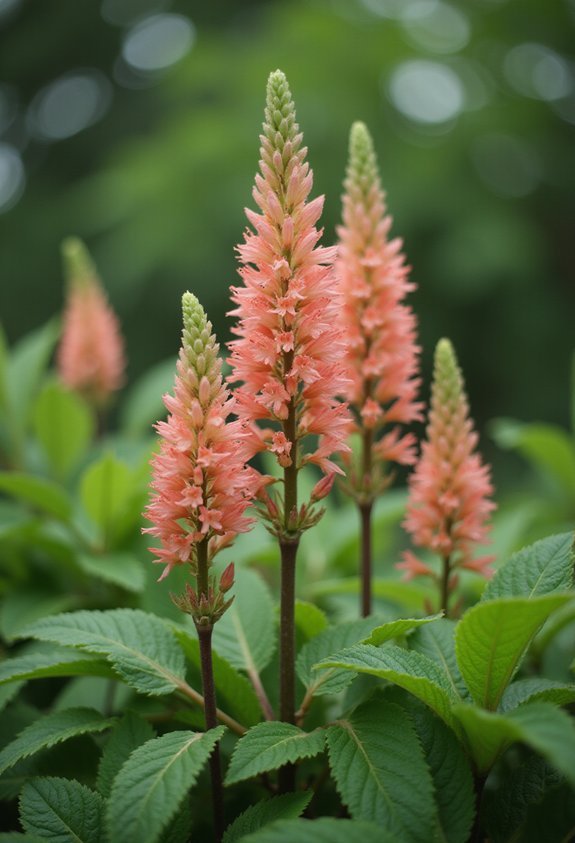
Where torch ginger commands attention through bold red drama, shell ginger offers a more refined aesthetic with its delicate pink flower spikes that emerge gracefully from the plant’s elegant foliage. You’ll appreciate shell ginger’s softer appearance, which creates a sophisticated garden presence without overwhelming other plantings. This species thrives in partial shade and consistently moist soil, making it well-suited for tropical and subtropical climates. You should plant shell ginger in locations where it’ll receive filtered sunlight, as direct afternoon sun can stress the plant. The flowers bloom in summer months, displaying pale pink or cream-colored spikes that attract pollinators. You can propagate shell ginger through rhizome division in spring, ensuring successful establishment in your garden space.
Butterfly Ginger: Fragrant Yellow Flowers That Attract Pollinators
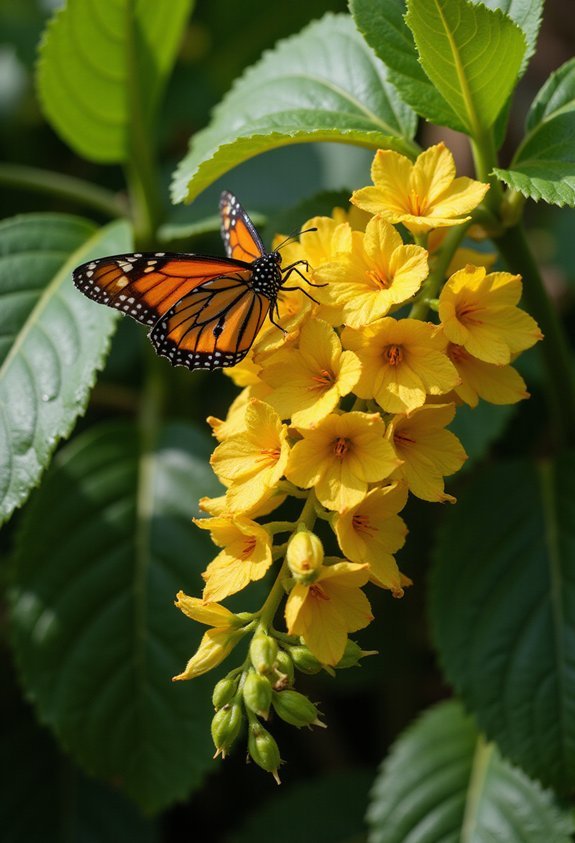
As you move from shell ginger’s delicate pink aesthetics to butterfly ginger, you’ll discover a species that captivates through its intensely fragrant yellow blooms and powerful pollinator appeal. This tropical plant produces clusters of bright yellow flowers that emit a strong, sweet fragrance, particularly during evening hours, which attracts butterflies, bees, and hummingbirds to your garden. Butterfly ginger thrives in warm climates with temperatures between 50 and 90 degrees Fahrenheit and requires partial shade to full sun exposure. You’ll need to plant it in well-draining soil enriched with organic matter and maintain consistent moisture levels throughout the growing season. Regular fertilization during spring and summer months encourages robust flowering, while pruning spent blooms promotes continued flower production throughout the season.
Red Pinecone Ginger: Compact Spikes Perfect for Container Gardens
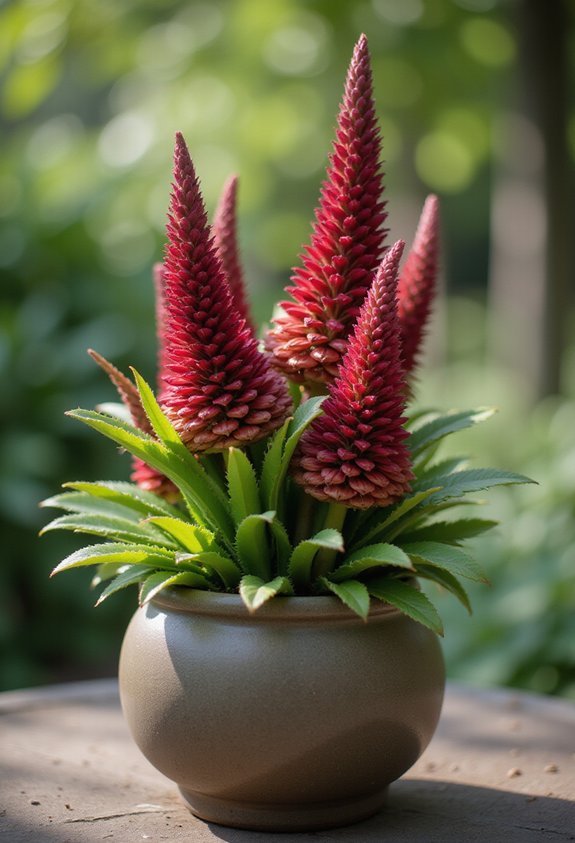
Red pinecone ginger offers a distinctly different appeal from butterfly ginger‘s sprawling clusters, presenting instead a compact, upright growth habit that makes it an excellent choice for gardeners working with limited space. You’ll appreciate its distinctive cone-shaped flower spikes, which display vibrant red bracts that create visual interest over extended periods. These plants typically reach heights between two and three feet, making them ideal for container cultivation on patios, balconies, and small garden areas. You can easily manage their size through container selection and regular maintenance. Red pinecone ginger thrives in bright, indirect light and consistently moist soil conditions. You should provide well-draining potting mix to prevent root rot, and apply balanced fertilizer during the growing season for preferred flowering performance.
Spiral Ginger: Unique Twisted Blooms and Year-Round Interest
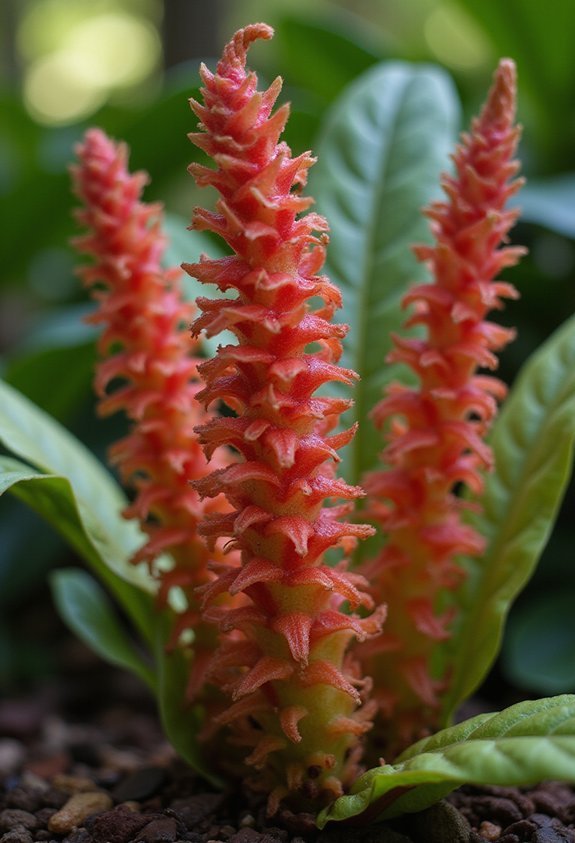
Unlike the compact cone-shaped flowers of red pinecone ginger, spiral ginger produces distinctive twisted flower spikes that spiral upward in a mesmerizing pattern, creating a truly unique visual element in your garden or indoor space. These remarkable blooms emerge in shades of red, pink, or orange, and they’ll maintain their striking appearance for extended periods throughout the year. You’ll appreciate spiral ginger’s ability to thrive in partial shade environments, making it an excellent choice for areas that don’t receive full sunlight. The plant reaches moderate heights, typically between two and three feet tall, so it fits comfortably in most garden spaces. Its lush foliage provides consistent greenery even when flowers aren’t actively blooming, ensuring your garden maintains visual interest across all seasons.
Hidden Ginger: Fragrant Ground Cover With Surprising Elegance
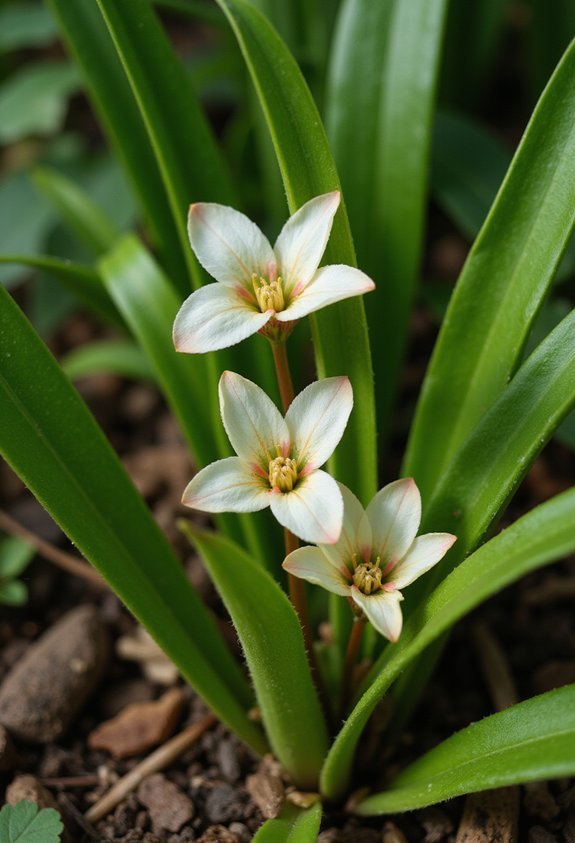
When you’re looking for a ginger variety that’ll transform low-lying garden areas with both fragrance and delicate beauty, hidden ginger offers a completely different growing experience compared to the towering spiral and pinecone varieties. This groundcover thrives in shaded spots where other plants struggle, spreading gradually across moist soil while producing small, pale flowers that bloom near ground level. The flowers emit a subtle, sweet fragrance that rewards closer inspection. You’ll find hidden ginger particularly valuable for woodland gardens and shaded borders, where it creates dense coverage while requiring minimal maintenance. Once established, it tolerates neglect well and doesn’t demand frequent watering. The plant’s low profile makes it ideal for edging pathways, filling gaps between larger specimens, and providing year-round greenery in challenging growing conditions.
Conclusion
You’ve discovered that growing these seven ginger varieties isn’t actually complicated, despite their exotic appearance suggesting otherwise. By providing warm temperatures, partial shade, consistent moisture, and well-draining soil enriched with organic matter, you’ll transform your garden into a tropical paradise without the tropical location. These resilient plants reward minimal effort with maximum visual impact, proving that dramatic garden beauty doesn’t require advanced horticultural expertise or specialized knowledge.