
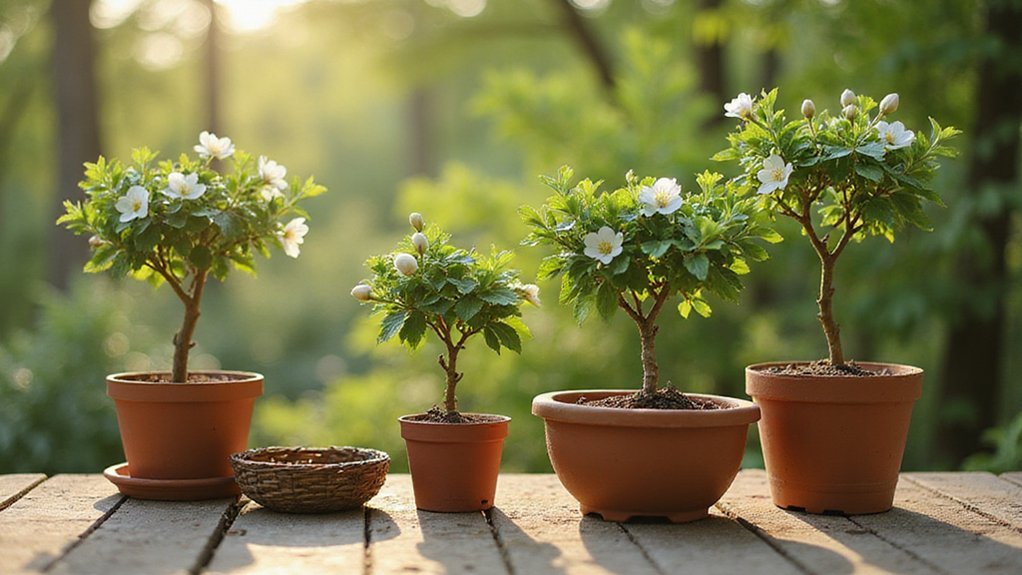
You can transform your cramped garden into a miniature orchard that bursts with fresh fruit throughout the year. Dwarf varieties of apple, pear, peach, cherry, and citrus trees produce abundant harvests while requiring minimal space, making them ideal for containers or tight garden plots. However, understanding which trees suit your climate, sunlight conditions, and pollination needs is essential for success—and that’s where specifics matter most.
Dwarf Apple Trees: Cold-Hardy Workhorses
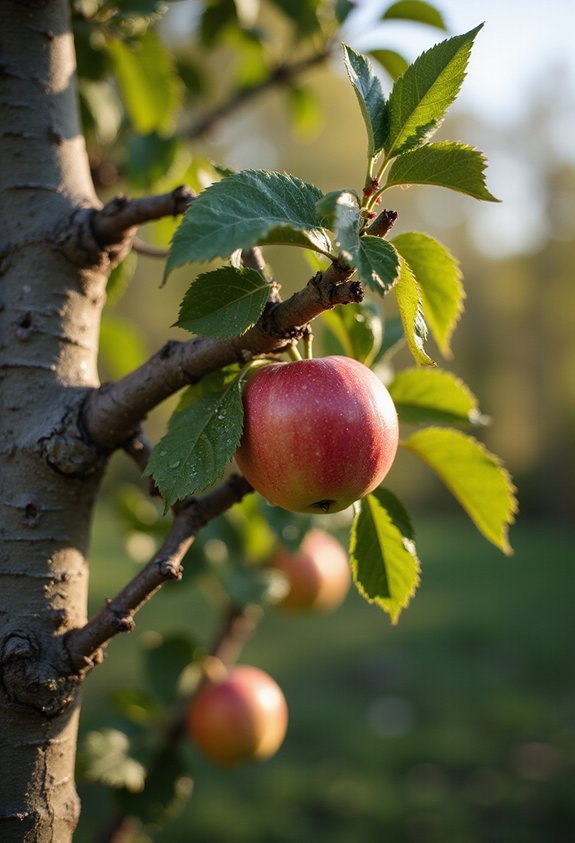
Since dwarf apple trees don’t require the vast growing space that standard varieties demand, they’ve become increasingly popular among gardeners who want fresh fruit without dedicating large portions of their yards to orchards. You’ll find that these compact trees typically reach 8 to 10 feet tall, making them ideal for small patios and gardens.
Dwarf apple trees excel in cold climates where winter temperatures drop greatly. You can grow them in zones 3 through 9, depending on the specific variety you choose. They’re reliable producers, yielding abundant fruit harvests despite their smaller stature. When you plant dwarf apple trees, guarantee they receive at least six hours of direct sunlight daily and well-draining soil. Most varieties require cross-pollination, so you’ll need to plant at least two different cultivars nearby for ideal fruit production and consistent yields.
Also read: Best Feng Shui Front Door Plants for Positive Energy
Dwarf Pear Trees: Extended Harvest, Minimal Space
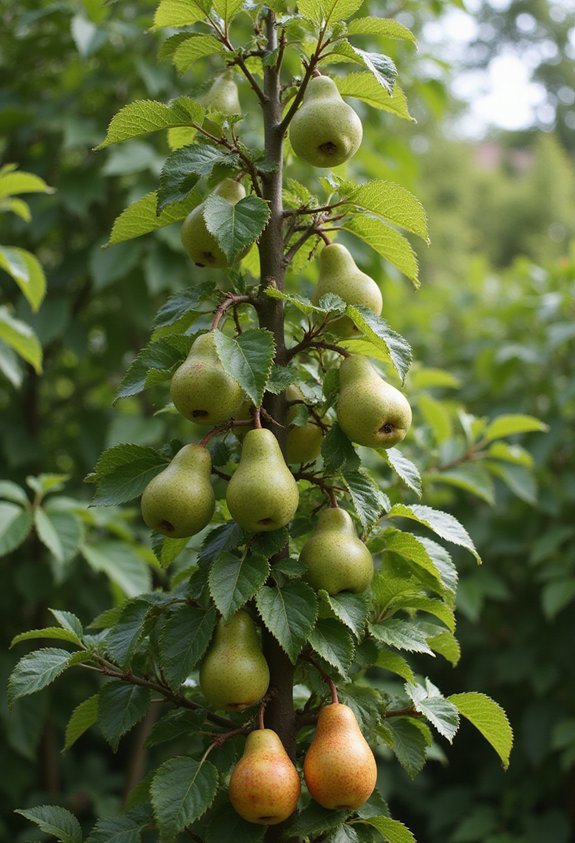
While dwarf apple trees dominate small-space orcharding, dwarf pear trees offer you a distinct advantage that makes them equally valuable for compact gardens—they’ll produce fruit over an extended season rather than all at once. You’ll harvest pears throughout late summer and fall, which means you’re not overwhelmed with ripening fruit simultaneously. Popular dwarf varieties like ‘Bartlett’ and ‘Bosc’ thrive in containers or small garden plots, requiring minimal pruning compared to standard trees. These trees demand full sunlight and well-draining soil to flourish properly. You’ll need two compatible pear varieties for cross-pollination, ensuring reliable fruit production. Most dwarf pear trees reach 8-12 feet tall, making them manageable for your limited space while delivering consistent yields season after season.
Dwarf Peach and Nectarine Trees for Warm Climates
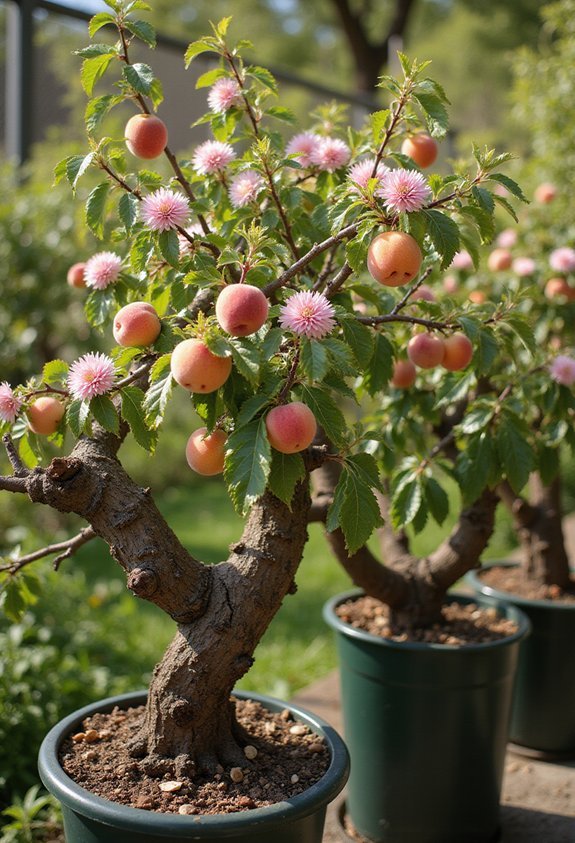
If you’re gardening in a warm climate with plenty of sunshine, dwarf peach and nectarine trees offer you an excellent opportunity to grow delicious stone fruits in limited spaces without sacrificing flavor or yield. These trees thrive in zones 5-9 and require full sun exposure, well-draining soil, and consistent watering during the growing season. You’ll need to provide regular pruning to maintain their compact shape and encourage fruit production. Dwarf varieties typically reach 8-10 feet tall, making them perfect for small yards or containers. They’re self-pollinating, so you don’t need multiple trees for fruit set. Plan for harvesting in mid to late summer when fruits develop their characteristic sweetness and color. Proper care guarantees abundant harvests year after year.
Dwarf Cherry Trees: Sweet Harvests in Small Footprints
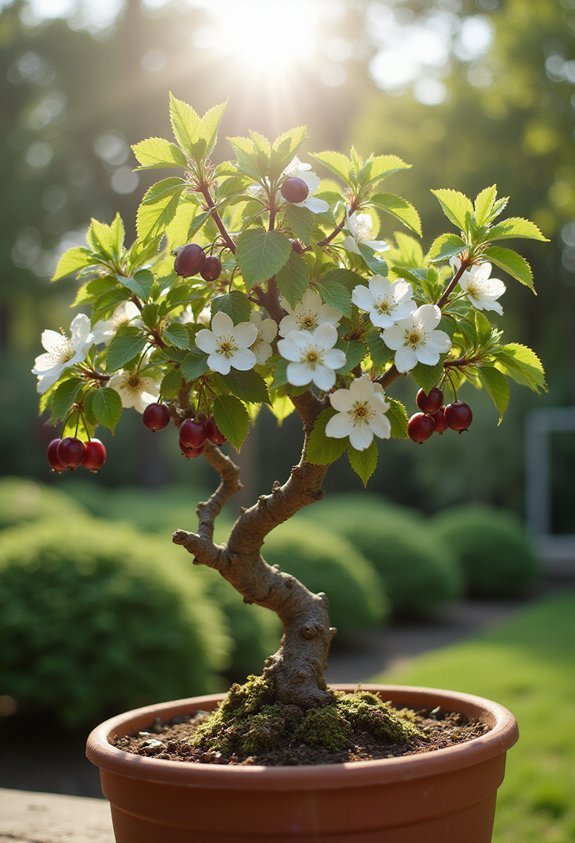
Dwarf cherry trees bring another excellent stone fruit option to small-space gardeners who want to expand beyond peaches and nectarines, offering you the chance to grow sweet or tart cherries depending on your climate zone and taste preferences. You’ll find that most dwarf varieties reach heights between eight and twelve feet, making them ideal for containers or compact garden plots. These trees require full sun exposure and well-draining soil to thrive successfully. Many cherry varieties need cross-pollination from a compatible partner tree, so you should confirm compatibility before purchasing. You can expect your first harvest within two to three years of planting. Regular pruning helps maintain their manageable size while promoting better fruit production and air circulation throughout the canopy.
Citrus Trees for Containers and Patios
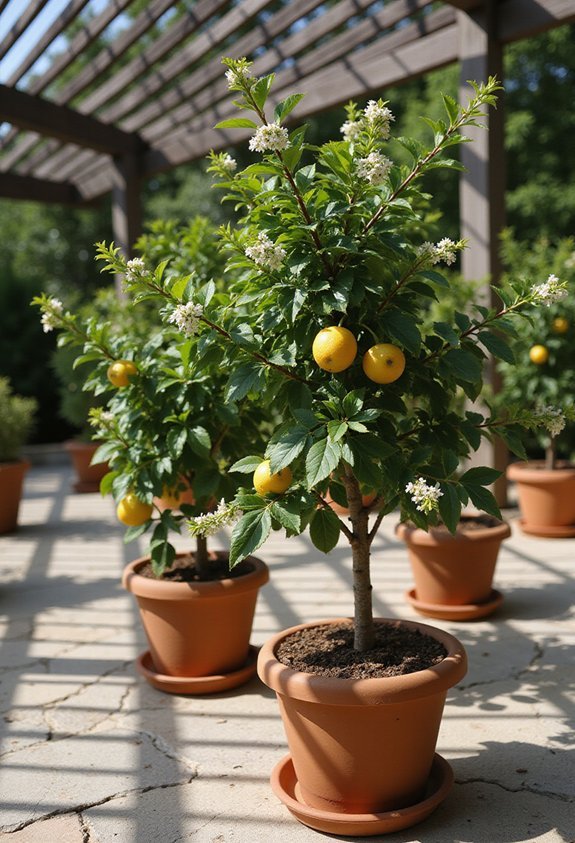
Many citrus varieties can thrive in containers on your patio or in small indoor spaces, giving you the opportunity to grow fresh lemons, limes, oranges, and grapefruits regardless of your outdoor square footage. You’ll want to select dwarf varieties like Meyer lemons or Calamondin oranges, which reach only 4 to 6 feet tall. Plant them in well-draining potting soil and place containers where they’ll receive at least 8 hours of direct sunlight daily. Water regularly, keeping soil moist but not waterlogged, since container plants dry out faster than ground plantings. Feed your trees monthly during the growing season with citrus-specific fertilizer to support fruit production. Bring containerized trees indoors during freezing temperatures if you live in colder climates, ensuring your citrus remains productive year after year.
Dwarf Plum and Fig Trees: Unique Options
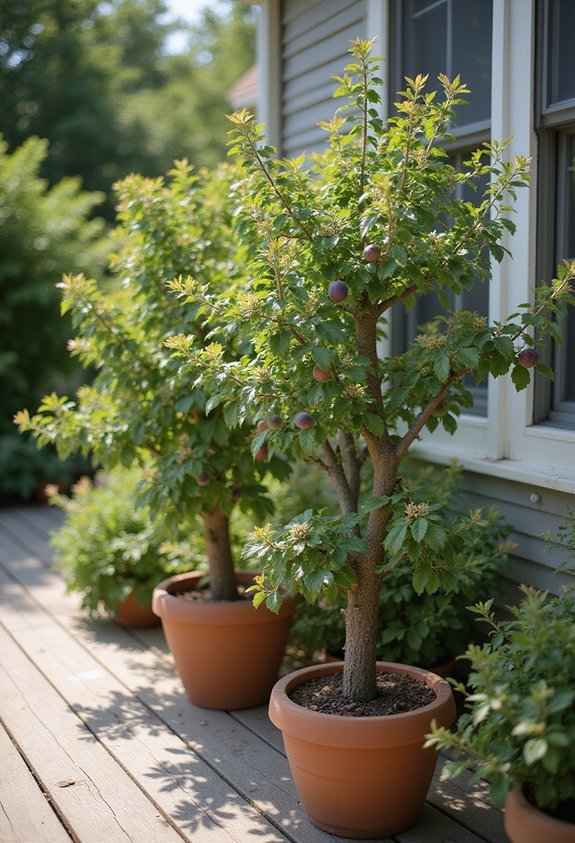
While citrus trees dominate container gardening discussions, plum and fig trees offer equally rewarding alternatives that you can successfully cultivate in small spaces, providing you with fresh stone fruits and sweet figs without requiring a sprawling orchard. Dwarf plum varieties like ‘Santa Rosa’ and ‘Methley’ thrive in containers with well-draining soil and full sunlight. You’ll need to provide adequate watering during growing seasons and guarantee proper pollination, which sometimes requires planting two compatible varieties nearby. Fig trees, particularly ‘Chicago Hardy’ and ‘Celeste,’ demonstrate remarkable cold tolerance and adapt well to container living. You can prune both trees to maintain manageable sizes while encouraging fruit production. These options deliver distinct flavors and nutritional benefits, expanding your small-space gardening possibilities beyond traditional citrus selections.
Pots and Soil: Container Setup for Dwarf Trees
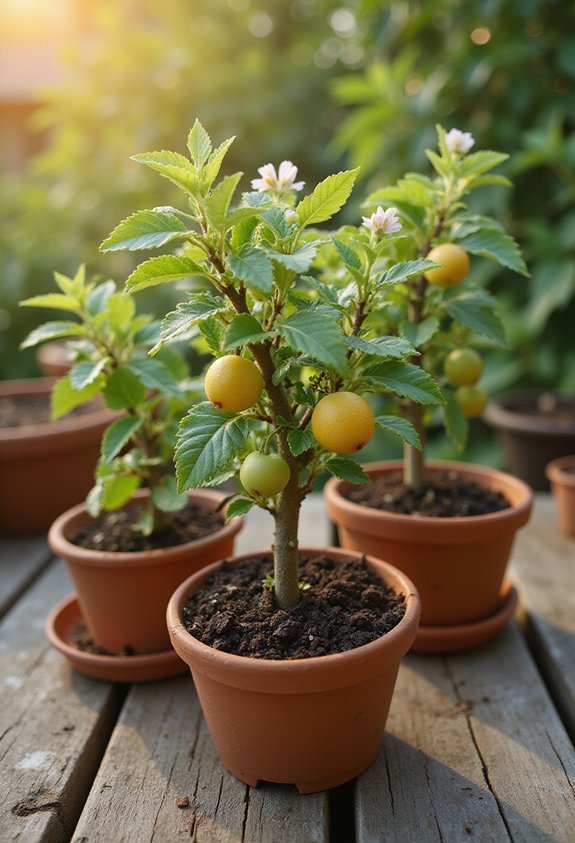
Success with your plum and fig trees depends heavily on selecting the right containers and soil mixtures, which’ll directly influence how well your trees establish roots, absorb water, and produce fruit in confined growing environments. You’ll want to choose pots with drainage holes at least 15-20 inches in diameter, allowing roots adequate space to expand and preventing waterlogging that causes rot. Fill your containers with well-draining potting soil mixed with perlite or coarse sand, creating a structure that retains moisture while preventing water from pooling around roots. This combination guarantees your dwarf trees receive consistent hydration without becoming waterlogged, which is essential for healthy growth and productive fruiting in container gardening.
Dwarf Tree Care: Sunlight and Watering
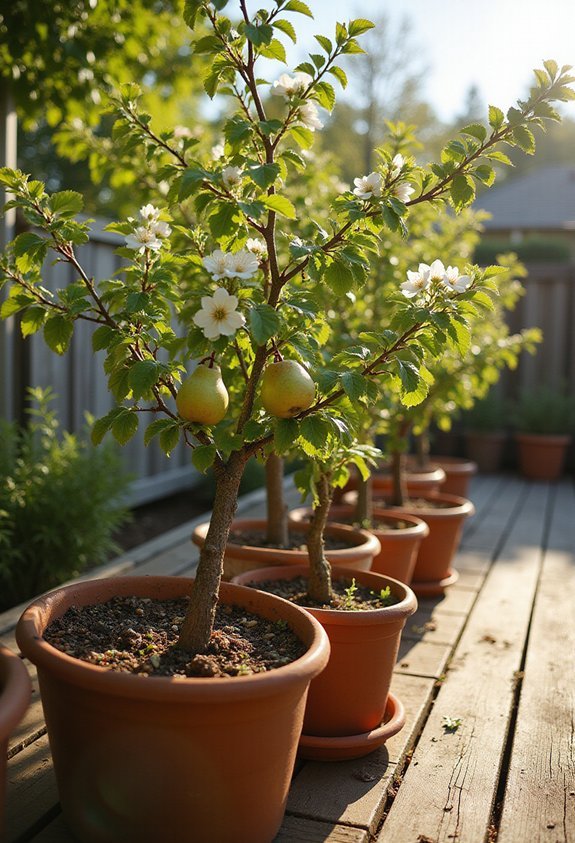
How much sunlight do your dwarf fruit trees actually need to thrive and produce abundant harvests? Most dwarf fruit trees require six to eight hours of direct sunlight daily, which you’ll need to provide consistently throughout the growing season. Position your containers in a south-facing location whenever possible, as this guarantees maximum light exposure. You should monitor sunlight patterns in your space, since buildings and structures can create shade that limits growth.
Watering demands are equally critical for container-grown trees. You’ll need to water deeply whenever the top inch of soil feels dry, which typically means watering every two to three days during warm months. Confirm your containers have drainage holes to prevent waterlogging, which causes root rot and tree decline. During cooler seasons, reduce watering frequency accordingly.
Will Your Dwarf Trees Self-Pollinate?
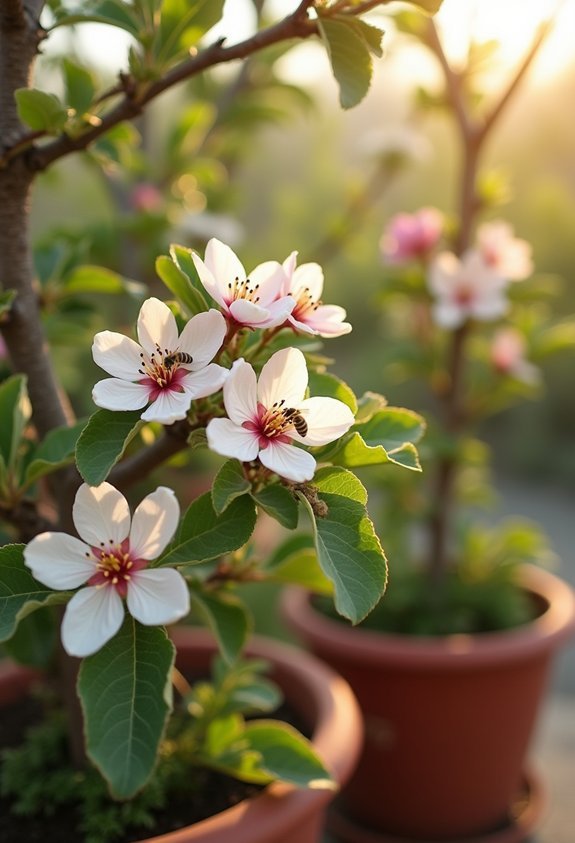
One of the most important questions you’ll face when growing dwarf fruit trees is whether your trees can pollinate themselves or if they’ll need help from another tree. Some dwarf varieties, like certain apple and peach cultivars, are self-fertile, meaning they’ll produce fruit without requiring a second tree nearby. However, many other dwarf fruit trees, including most cherry and pear varieties, are self-sterile and require cross-pollination from a compatible tree to set fruit. You’ll need to research your specific tree’s pollination requirements before planting. If your tree needs a pollinator, you’ll have to plant at least two compatible varieties close together. Guaranteeing these requirements confirms you’ll get the fruit production you’re hoping for in your small space.
Choosing and Planting Your First Tree
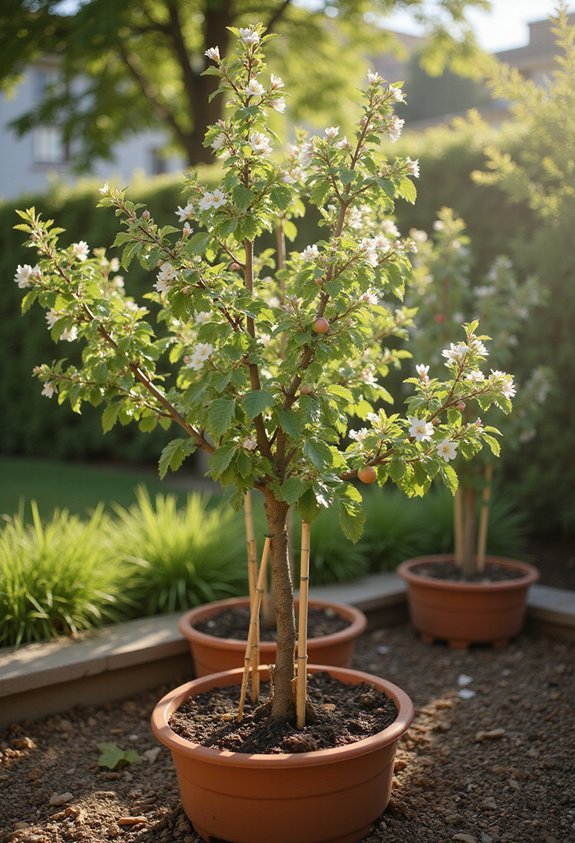
Now that you’ve determined whether your tree’ll need a pollinator, it’s time to select the right dwarf variety for your specific growing conditions and then prepare to plant it properly. Research which cultivars thrive in your climate zone, considering factors like temperature ranges, humidity levels, and seasonal rainfall patterns. Choose a location receiving six to eight hours of direct sunlight daily, as most dwarf fruit trees require adequate light for productive growth. Prepare your soil by testing its pH and drainage capabilities, amending it with compost or organic matter if necessary. Dig a hole slightly wider than your tree’s root ball, positioning the graft union above ground level. Backfill carefully, water thoroughly, and apply mulch around the base to retain moisture and regulate soil temperature effectively.
Conclusion
You’ve now learned the logical layout for locating and launching your little fruit-bearing friends. By carefully considering climate conditions, container choices, and consistent care—including adequate sunlight and strategic spacing—you’ll successfully cultivate a productive, personalized orchard. Your determined dedication to these dwarf trees delivers delicious, dependable harvests from your diminished dwelling space, transforming tiny territories into thriving, fruit-filled sanctuaries.