
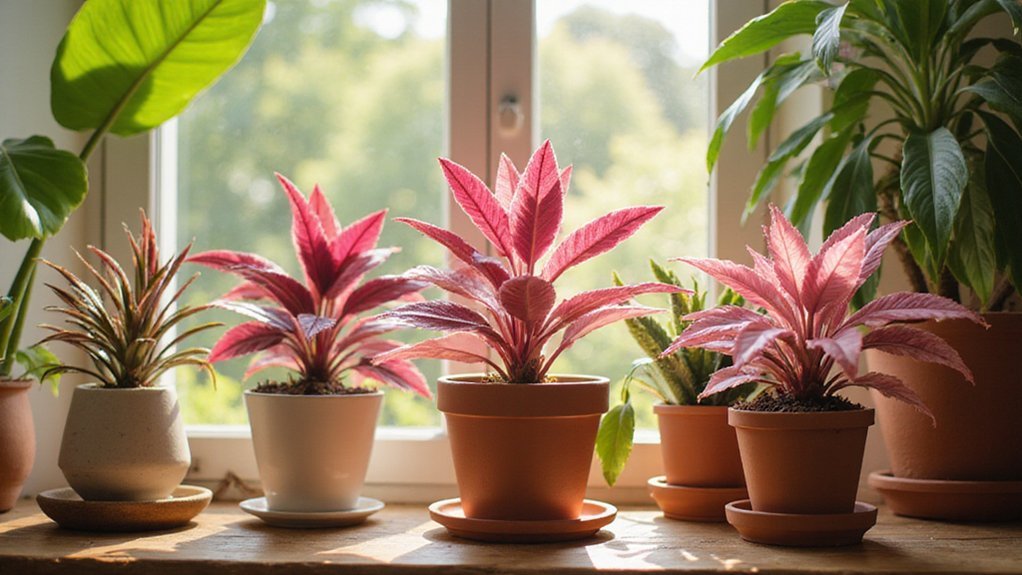
Recent surveys show that over 60% of plant enthusiasts actively seek houseplants with unusual foliage colors to enhance their living spaces. If you’re considering adding pink-leafed plants to your home, you’ll want to understand which varieties work best for your specific light conditions, space limitations, and care preferences. Each of the seven plants featured here offers distinct advantages that’ll help you make an informed choice for your botanical collection—but which one’s right for you?
Pink Princess Philodendron: The Showstopper Everyone Wants
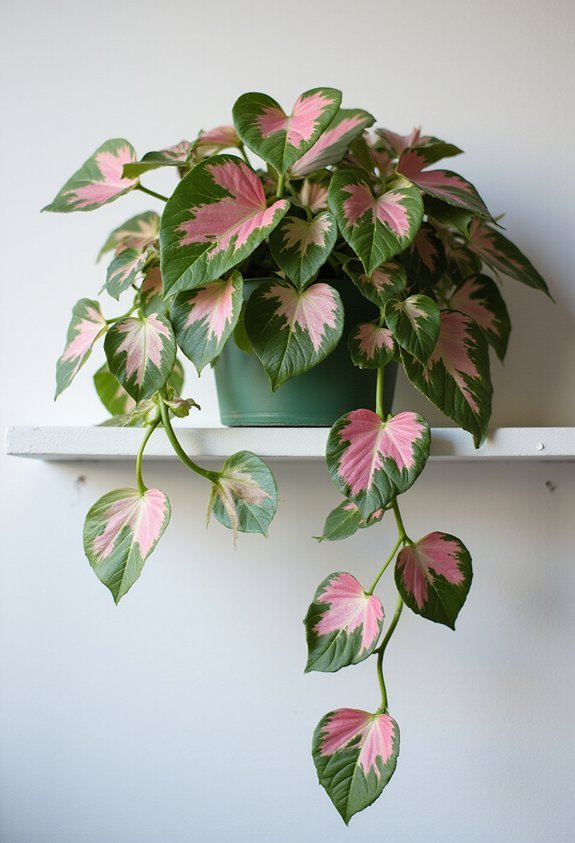
If you’re looking for a houseplant that’ll turn heads with its stunning appearance, the Pink Princess Philodendron is exactly what you need. This plant features deep green leaves with striking pink variegation, creating a bold contrast that transforms any room instantly. You’ll want to place it in bright, indirect light, as this condition intensifies the pink coloring on its foliage. The Pink Princess thrives in well-draining soil and prefers consistent moisture without waterlogging. You should water when the top inch of soil feels dry to the touch. This climbing vine grows rapidly under proper care, and you can train it along a moss pole or allow it to trail gracefully. Regular fertilizing during growing seasons guarantees vibrant pink hues and healthy leaf development, making it a worthwhile addition to your collection.
Also read: 3 Pro Tips for Protecting Plants From Frost
Syngonium Pink: A Trailing Houseplant Beauty for Tight Spaces
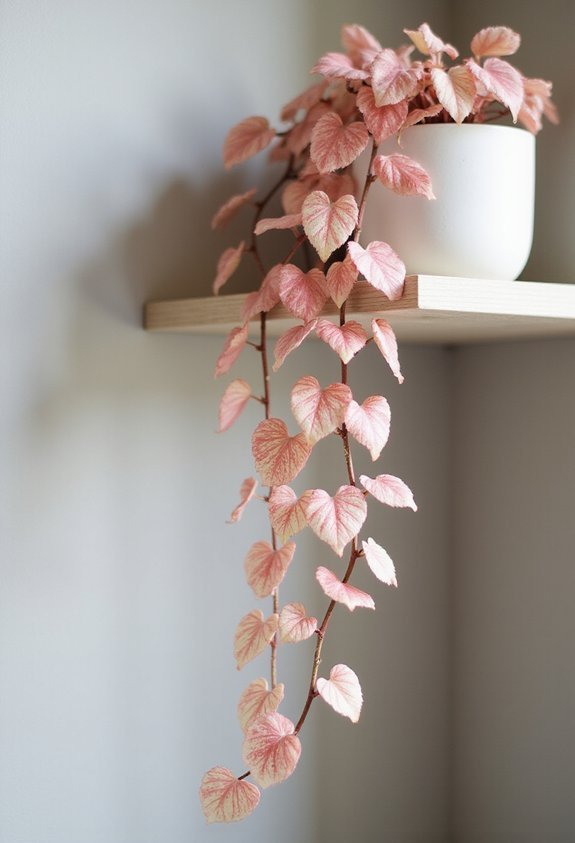
Because you’re seeking a houseplant that doesn’t demand much floor space while still delivering striking pink foliage, the Syngonium Pink offers an excellent solution for compact living areas. This trailing vine thrives in bright, indirect light and adapts well to various humidity levels, making it forgiving for beginners. You’ll notice heart-shaped leaves displaying soft pink variegation against green backgrounds, creating visual interest without overwhelming small spaces.
The Syngonium Pink grows vigorously, so you can train it along shelves, mount it on walls, or suspend it from hanging baskets. Water when the soil’s top inch feels dry, and guarantee proper drainage to prevent root rot. Regular fertilizing during growing seasons encourages fuller, more vibrant foliage. This plant’s compact nature and low-maintenance requirements make it ideal for apartments, offices, and bedrooms where space limitations exist.
Caladium: Bold Pink Foliage That Makes an Impact
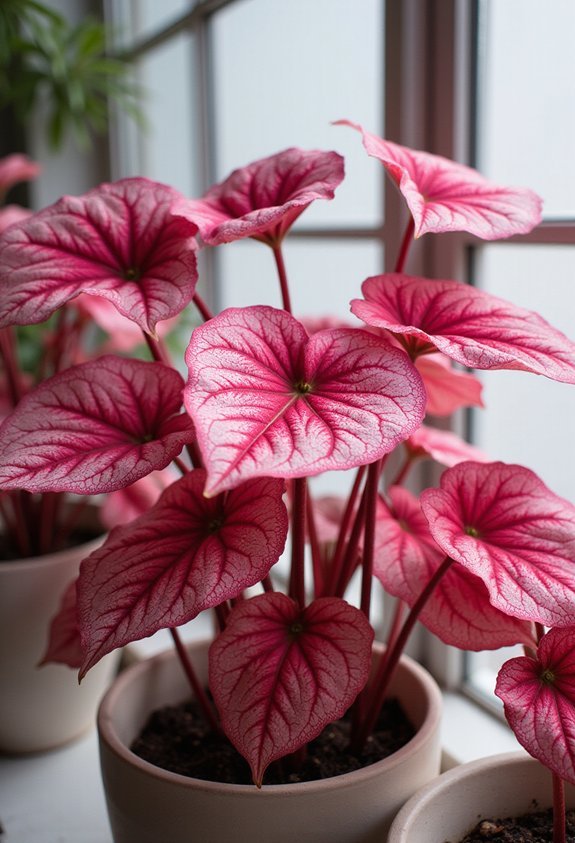
While the Syngonium Pink excels in trailing growth and compact spaces, the Caladium brings drama and visual punch to any room through its large, heart-shaped leaves that showcase bold pink coloring with intricate patterns and contrasting veins. You’ll find that Caladiums thrive in bright, indirect light, which intensifies their pink hues and maintains leaf vibrancy. These plants prefer warm temperatures between 65-75°F and consistently moist soil, so you’ll need to water regularly without allowing the soil to become waterlogged. You should place your Caladium in a humid environment, as it naturally grows in tropical conditions where moisture levels remain elevated. With proper care and attention to these specific requirements, your Caladium will develop increasingly impressive foliage that commands attention and transforms your space dramatically.
Aglaonema Pink: The Low-Light Winner That Actually Works
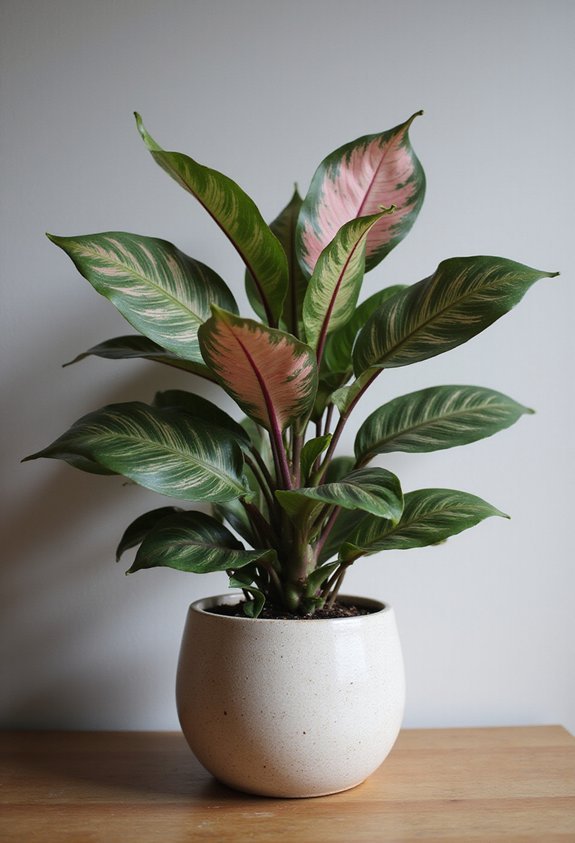
Unlike the Caladium, which demands bright, indirect light to maintain its vibrant coloring, the Aglaonema Pink thrives in low-light environments that’d challenge most other houseplants, making it an excellent choice for offices, bedrooms, or interior spaces where natural sunlight’s limited. You’ll appreciate its adaptability, as it tolerates fluorescent lighting and shaded corners without losing its distinctive pink-streaked foliage. The plant prefers consistently moist soil, though you should allow the top inch to dry between waterings to prevent root rot. You can fertilize monthly during growing seasons for ideal health. This hardy species doesn’t require the careful attention that other pink-leaved plants demand, making it particularly suitable if you’re managing multiple houseplants or have limited gardening experience.
Begonia Rex: Pink Houseplant With Dramatic Patterns
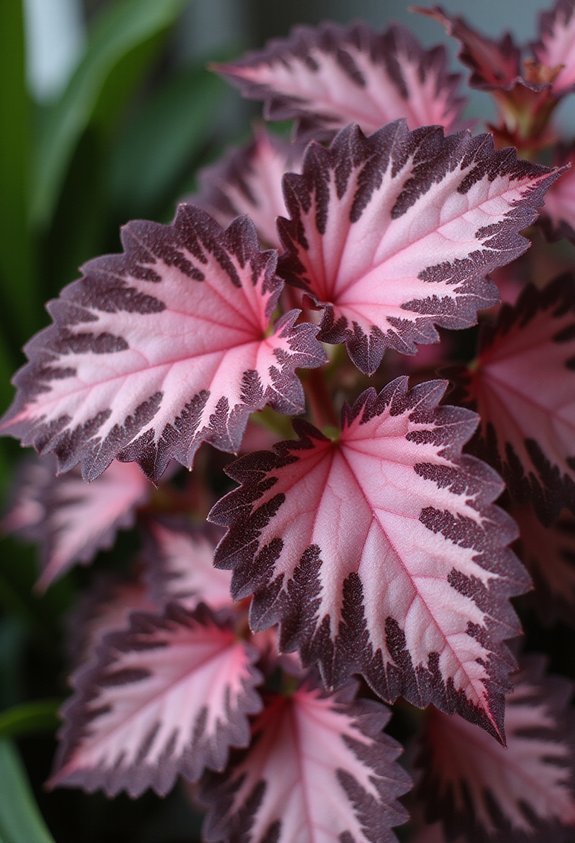
If you’re ready to move beyond low-light tolerators and want a pink houseplant that’ll truly capture your attention with its stunning visual appeal, Begonia Rex offers something entirely different from the understated elegance of Aglaonema Pink. You’ll notice immediately that Begonia Rex displays dramatic, intricate patterns across its large, velvety leaves, featuring striking combinations of pink, silver, and deep burgundy tones. These houseplants thrive in bright, indirect light and prefer consistently moist but well-draining soil, requiring more attentive care than their predecessors. You should maintain humidity levels between 50-70% to prevent leaf edges from browning, making them ideal candidates for bathrooms or terrariums. Their sophisticated foliage transforms any space into a botanical showcase, rewarding your dedicated attention with unmatched visual drama and complexity.
Hemigraphis Exotica: Pink Leaves With Stunning Purple Undersides
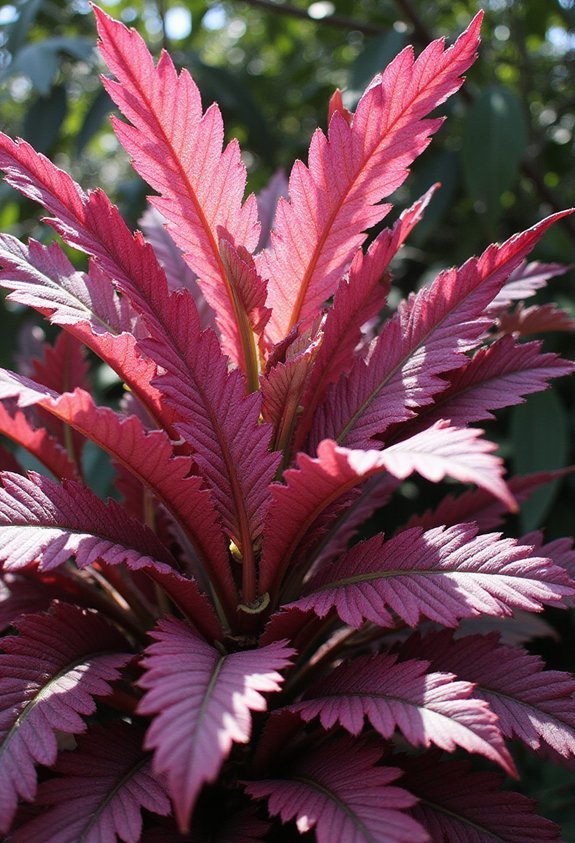
As you explore houseplants with truly distinctive foliage, you’ll find that Hemigraphis Exotica offers a unique visual experience that sets it apart from other pink-leafed varieties. This compact plant showcases soft pink upper leaves that contrast dramatically with deep purple undersides, creating a striking two-tone effect when light hits the foliage. You’ll appreciate how the color intensity changes based on lighting conditions, with brighter light enhancing the pink tones while lower light emphasizes the purple hues. Hemigraphis Exotica thrives in warm, humid environments and prefers indirect bright light to maintain its vibrant coloring. You should keep the soil consistently moist but not waterlogged, and provide regular misting to support the plant’s humidity requirements. This relatively low-maintenance plant reaches modest heights, making it ideal for shelves or tabletops.
Choosing Your Perfect Pink Plant: A Quick Matching Guide
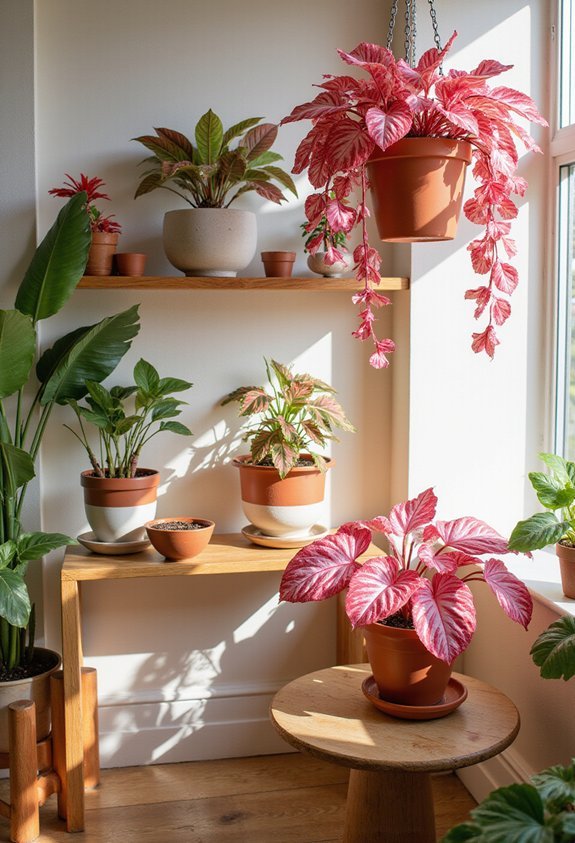
With so many pink-leafed houseplants available, you’ll need to ponder several key factors to locate the one that’ll work best in your home. First, assess your lighting conditions, since some plants like bright indirect light while others tolerate lower light environments. Next, consider your watering schedule and humidity preferences, as different species have varying moisture requirements. You’ll also want to evaluate your available space, determining whether you need a compact plant or have room for larger varieties. Finally, think about your experience level with plant care, choosing low-maintenance options if you’re beginning your houseplant journey. By systematically evaluating these factors—light, water, space, and skill level—you’ll confidently select a pink-leafed plant that thrives in your specific home conditions.
Conclusion
You’ve now explored seven pink-leafed plants, each serving as a living symbol of growth and renewal in your home. By selecting the right plant for your space—considering light conditions, humidity, and your care capacity—you’re planting seeds of botanical success. These vibrant houseplants don’t just decorate; they represent your commitment to creating a thriving ecosystem, where every leaf reminds you that nurturing life, whether plant or personal, requires thoughtful attention and deliberate choice.