
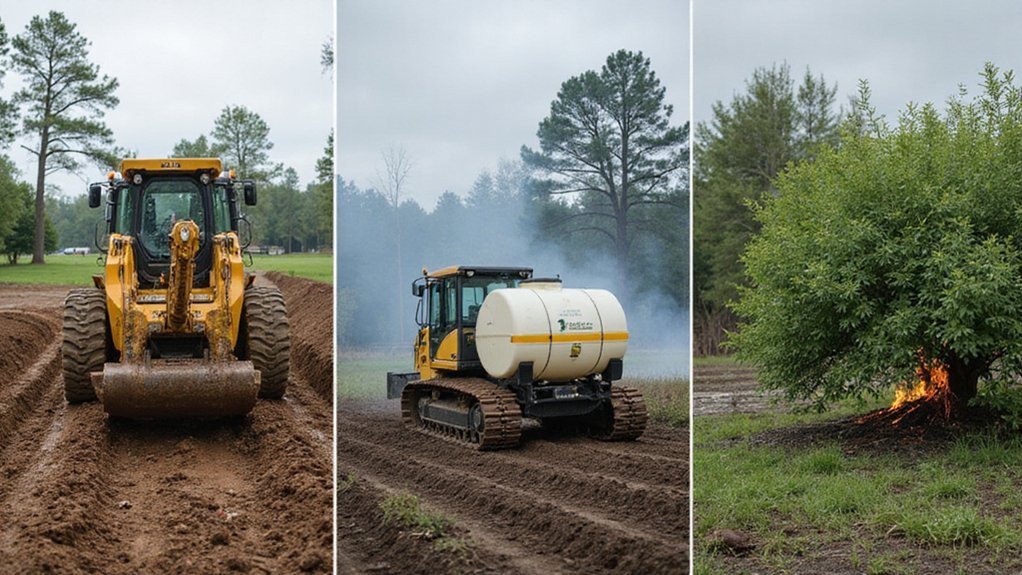
While Japanese knotweed‘s aggressive growth seems unstoppable, you can eliminate it through three proven methods that work at different stages of infestation. Chemical herbicide treatment targets the plant’s hidden rhizome system over time, mechanical removal accelerates results for severe cases, and professional excavation becomes necessary when knotweed threatens your home’s foundation. Understanding which approach suits your situation requires knowing what each method accomplishes—and what happens when you choose wrong.
Chemical Treatment: Herbicide Application for Long-Term Knotweed Control

Chemical herbicide treatment is often the most effective method you’ll find for controlling Japanese knotweed over extended periods, as it works by targeting the plant’s root system—called rhizomes—which can extend several meters underground and regrow from even tiny fragments left behind. You’ll typically apply herbicides like glyphosate directly to freshly cut stems during the growing season, when the plant actively transports nutrients downward. This process forces the chemical deeper into the root system, where it destroys the plant from within. You may need multiple applications across several years to eliminate all rhizomes completely. Professional applicators follow strict safety protocols, wearing protective equipment and applying treatments according to local regulations, ensuring you achieve maximum effectiveness while minimizing environmental risks.
Also read: 10 Best Plants to Grow Hydroponically
Mechanical Removal With Herbicides: Faster Results for Severe Infestations
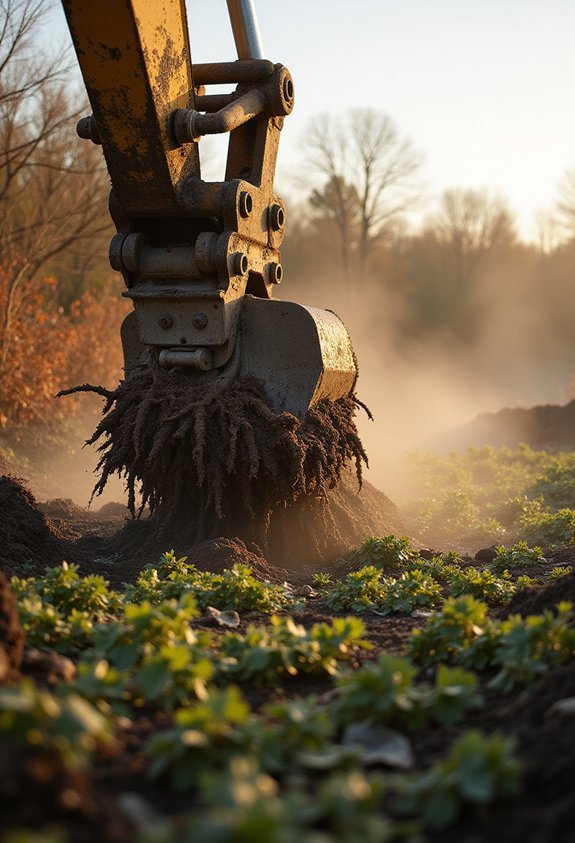
When you’re facing a particularly aggressive Japanese knotweed infestation that’s spreading rapidly across your property, combining mechanical removal with herbicide application can deliver noticeably faster results than either method alone. You’ll first cut down the visible plant stems close to ground level, then immediately apply herbicide to the freshly exposed cut surfaces, which allows the chemical to penetrate directly into the plant’s root system. This two-step approach works because the herbicide enters through the wounds you’ve created, traveling downward more effectively than it would on intact plants. You should repeat this process throughout the growing season whenever new shoots emerge, gradually depleting the root reserves. This combined strategy typically requires fewer treatment cycles than chemical application alone, making it ideal when you need rapid control over extensive infestations covering large areas.
Professional Excavation: When to Dig Out Knotweed Completely
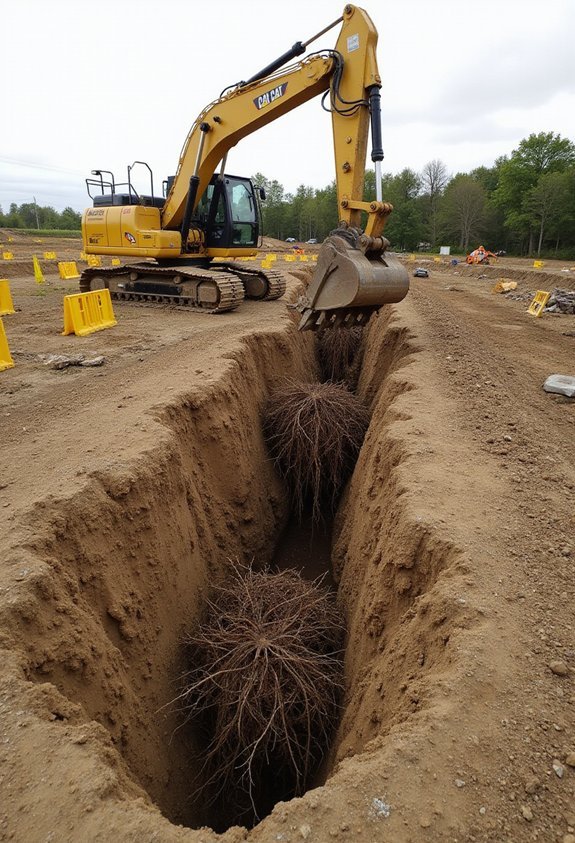
For the most severe Japanese knotweed infestations that’ve resisted repeated treatments or’ve spread across substantial areas of your property, professional excavation offers the most definitive solution by physically removing the plant and its entire root system from the soil. You’ll need excavation when knotweed’s deeply established or threatens structures like foundations and drainage systems. Professional teams use heavy machinery to dig down several feet, ensuring they extract all rhizomes, since even small root fragments can regenerate into new plants. You must properly dispose of excavated material at licensed facilities, as you can’t compost or landfill knotweed debris locally. Though excavation costs more upfront than chemical treatments, it provides permanent removal when done correctly, eliminating the need for ongoing maintenance and monitoring.
Conclusion
You’ve got three powerful tools in your arsenal against Japanese knotweed’s invasive grip. Chemical treatment requires patience, working like water wearing down stone through seasons of persistent herbicide application. Mechanical removal strikes faster, combining cutting with immediate chemical intervention for stubborn infestations. Professional excavation becomes your final option when knotweed threatens your home’s foundation, though proper disposal of contaminated soil remains critical. You’ll succeed by choosing the method matching your infestation’s severity and commitment level.