
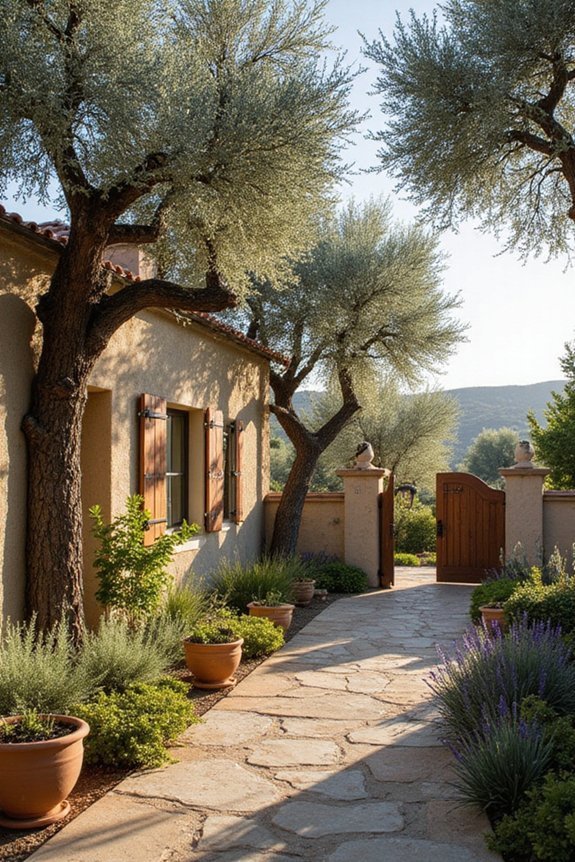
You can transform your front yard into a sophisticated Mediterranean retreat by strategically placing mature olive trees as your design’s foundation. These gnarled specimens, paired with drought-resistant plants like lavender and rosemary, create an authentic aesthetic that requires minimal maintenance. From classic Tuscan gardens to modern minimalist courtyards, the design possibilities extend far beyond what you might initially imagine—each approach offering distinct advantages.
Classic Tuscan Garden With Mature Olive Trees
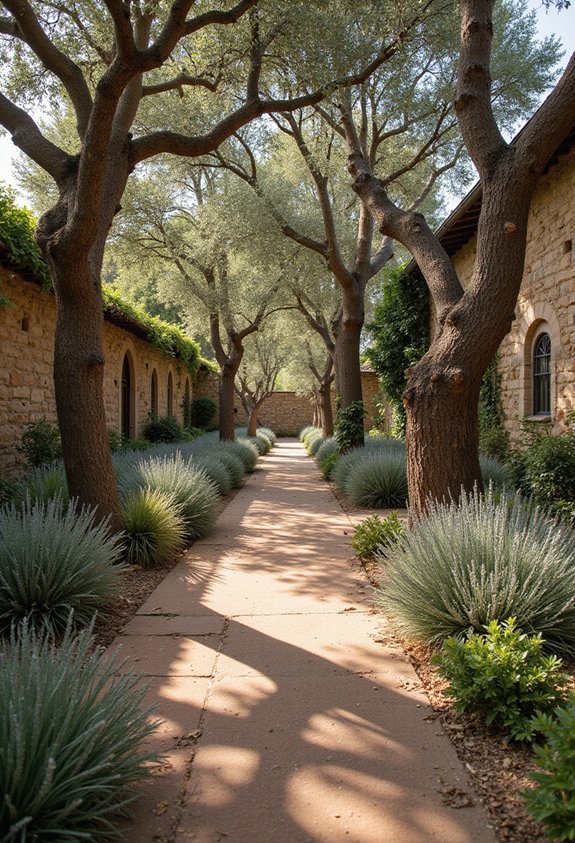
A classic Tuscan garden with mature olive trees captures the timeless aesthetic of the Italian countryside, where you’ll find gnarled, ancient trees that’ve been cultivated for centuries and serve as both functional and ornamental focal points in front yard landscapes. You can arrange these trees in informal clusters or linear patterns to create authentic Mediterranean charm. The silvery-green foliage provides year-round visual interest and natural screening from street noise. You’ll appreciate how mature olive trees develop character through their twisted trunks and spreading canopies, which establish architectural depth without requiring excessive maintenance. Pair them with complementary plantings like lavender, rosemary, and ornamental grasses to enhance the Tuscan effect. These trees thrive in well-draining soil and full sunlight, making them ideal for warm-climate front yards seeking European-inspired elegance.
Also read: 22 LANDSCAPE WITH ROCKS FRONT YARD Ideas That Look Designed!
Modern Minimalist Courtyard Featuring Olive Focal Points
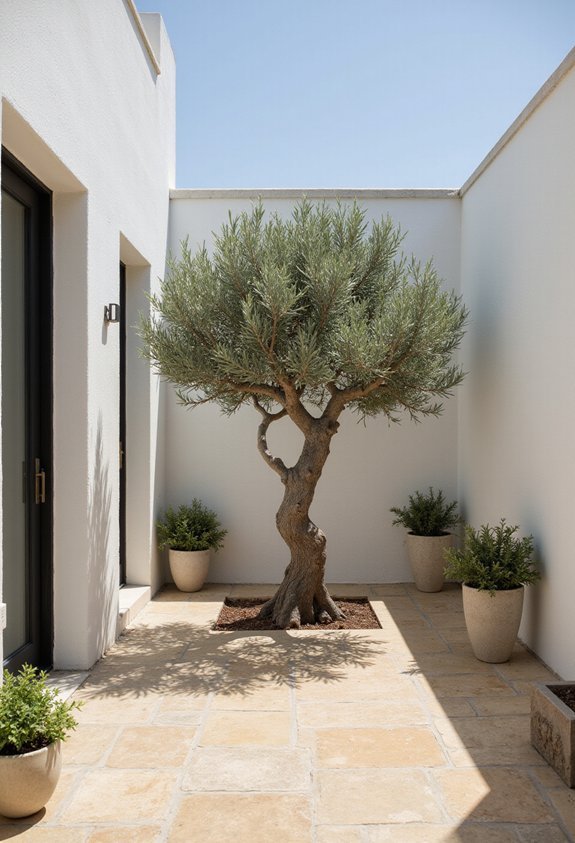
While the Tuscan garden approach emphasizes abundant plantings and historical character, modern minimalist courtyards take a different path by using olive trees as stark, sculptural statements within carefully controlled spaces. You’ll arrange your olive tree as the primary focal point, positioning it centrally in clean lines of gravel or concrete. This design philosophy strips away unnecessary elements, allowing the tree’s gnarled trunk and silvery foliage to command attention. You can pair your olive with low-maintenance groundcover and geometric hardscaping that creates visual balance. The result’s a sophisticated aesthetic that requires minimal upkeep while delivering maximum visual impact. This approach works particularly well in small courtyards where you need impact without overwhelming the space.
Drought-Resistant Mediterranean Landscape Design
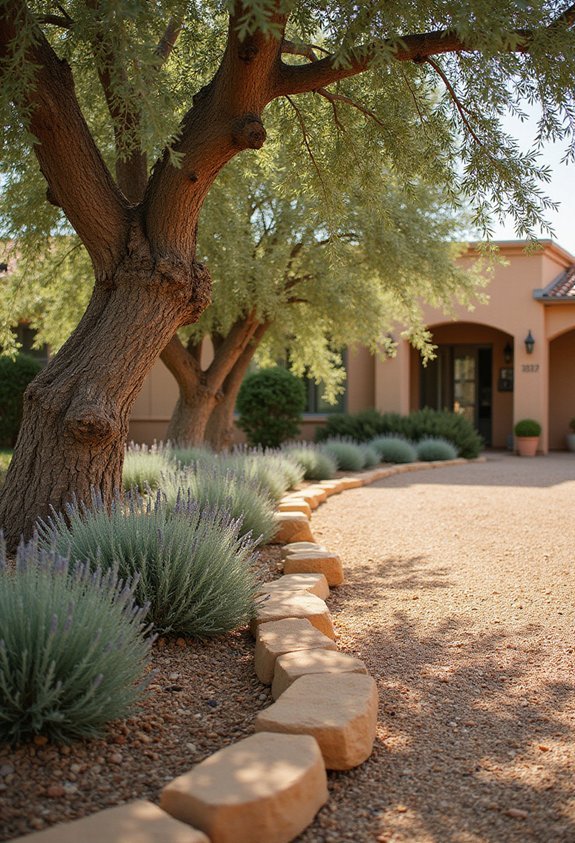
Since water conservation‘s become increasingly important in many regions, you’ll find that designing your front yard with drought-resistant Mediterranean principles allows you to create a beautiful landscape while using considerably less water than traditional gardens. You can incorporate native plants like lavender, rosemary, and olive trees, which thrive in dry conditions with minimal irrigation. Install mulch around plants to retain soil moisture and regulate temperature fluctuations. Consider adding gravel or stone pathways that reduce water needs while providing visual appeal. Use drip irrigation systems to deliver water directly to plant roots, minimizing waste. Group plants with similar water requirements together, creating efficient irrigation zones. These practical strategies combine sustainability with Mediterranean aesthetics, producing an attractive, low-maintenance front yard.
Stone Pathways as Olive Tree Entry Statements
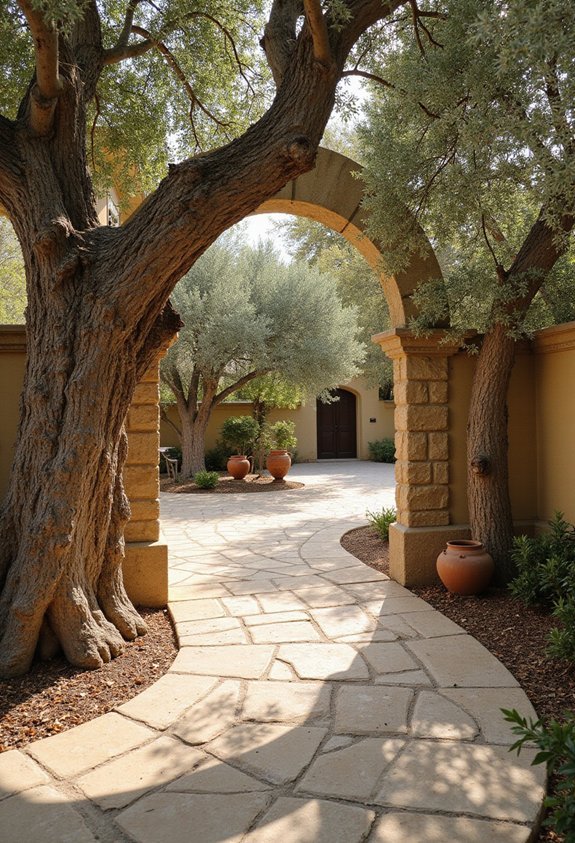
Stone pathways create a striking visual entrance to your front yard by directing attention toward your olive trees while establishing a clear route through your landscape. You can arrange curved or straight stone paths that naturally guide visitors’ eyes toward your olive tree focal points, creating intentional focal points that enhance your design’s overall structure. Select materials like flagstone, limestone, or slate that complement Mediterranean aesthetics while maintaining durability in various weather conditions. Position your pathways to frame olive trees strategically, allowing you to showcase their gnarled trunks and silvery foliage. The contrast between pale stone and the trees’ natural tones creates visual interest and depth. Properly installed pathways also improve accessibility, preventing foot traffic damage to surrounding plants while defining separate garden zones effectively.
Rustic Terracotta Planters in Your Olive Tree Design
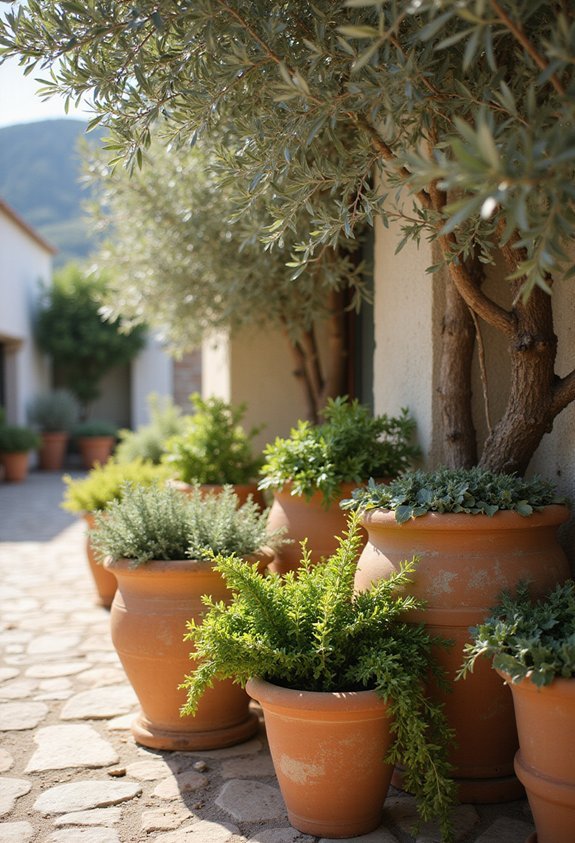
Terracotta planters offer you a timeless way to complement your olive trees while adding warmth and Mediterranean character to your front yard design. These clay containers develop a natural patina over time, which enhances their rustic appeal and authenticity. You’ll want to select planters with adequate drainage holes to prevent root rot and soil waterlogging. Arrange them strategically around your olive trees to create visual depth and layered planting zones. The earthy tones of terracotta harmonize perfectly with olive foliage, creating a cohesive aesthetic. You can fill these planters with complementary plants like lavender, rosemary, or ornamental grasses, which thrive in similar Mediterranean conditions. Position larger planters near your olive trees as anchoring pieces, while smaller ones can define pathways and junctions throughout your landscape design.
Water Features Surrounding Olive Trees
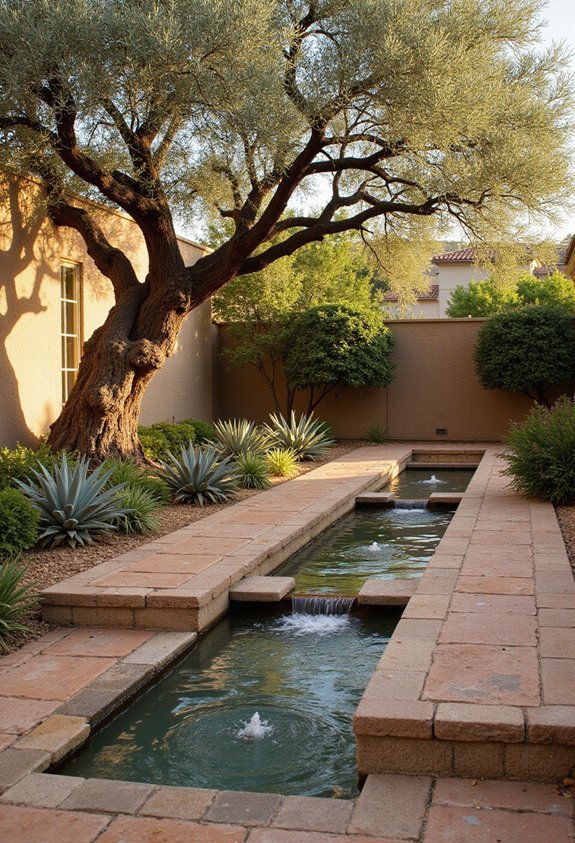
While planters and ground-level plants create the foundation of your Mediterranean landscape, incorporating water features around your olive trees‘ll introduce movement, sound, and visual interest that elevates your front yard design to a new level. You can install a small fountain near the base of your tree to create a focal point that draws the eye, or add a shallow basin that reflects sunlight and provides water for birds. A recirculating stream or pond works well alongside olive trees, as it mimics natural Mediterranean environments where water sources exist near vegetation. These features’ll require proper drainage planning to prevent soil erosion around your tree’s roots, and you’ll need to select pumps and materials that withstand outdoor weather conditions effectively.
Ground-Level Plantings Under Olive Trees: Gravel and Native Options
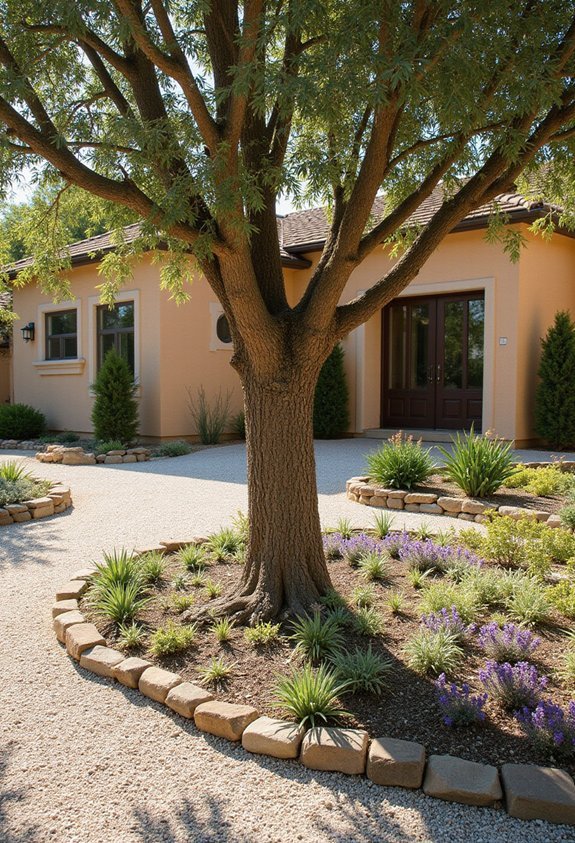
Because the area directly beneath your olive tree’s canopy receives dappled sunlight and needs proper drainage to prevent root rot, you’ll want to carefully select ground-level materials and plants that thrive in these specific conditions. Decorative gravel works excellently as a base layer, allowing water to drain freely while reducing weeds and maintaining a Mediterranean aesthetic. Over this gravel foundation, you can plant drought-tolerant native species like lavender, rosemary, and santolina, which require minimal watering once established. These plants won’t compete aggressively with your olive tree’s root system, and they’ll enhance your landscape’s visual appeal. When planting, maintain adequate spacing around the tree’s base to guarantee proper air circulation and prevent fungal issues. This combination creates both functionality and beauty.
Olive Trees With Coastal Mediterranean Styling
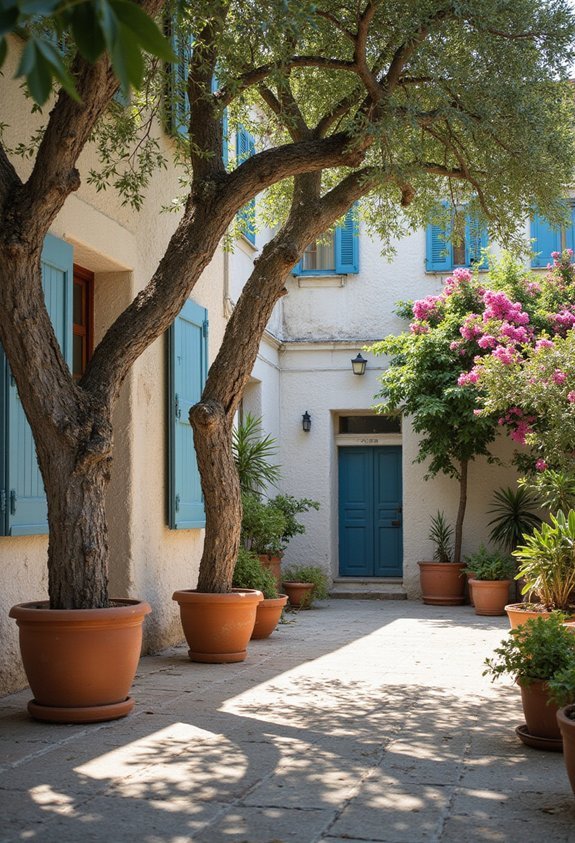
Three key elements—soft color palettes, weathered materials, and salt-tolerant plantings—combine to create an authentic coastal Mediterranean aesthetic around your olive trees. You’ll want to incorporate pale blues, warm whites, and sandy tones throughout your front yard design, which complement olive foliage naturally. Weathered stone pathways, aged terracotta pots, and rustic wooden elements add texture and authenticity to your landscape. For plantings, you should select species that tolerate coastal salt spray, such as lavender, rosemary, and santolina, which thrive alongside olives while enhancing the Mediterranean character. Position these plants in clusters near your olive trees, allowing their silvery foliage to create layered visual depth. You’ll achieve a cohesive design by repeating these color and material choices throughout your front yard, establishing a unified coastal Mediterranean environment.
Tiered Garden Beds Around Olive Trees
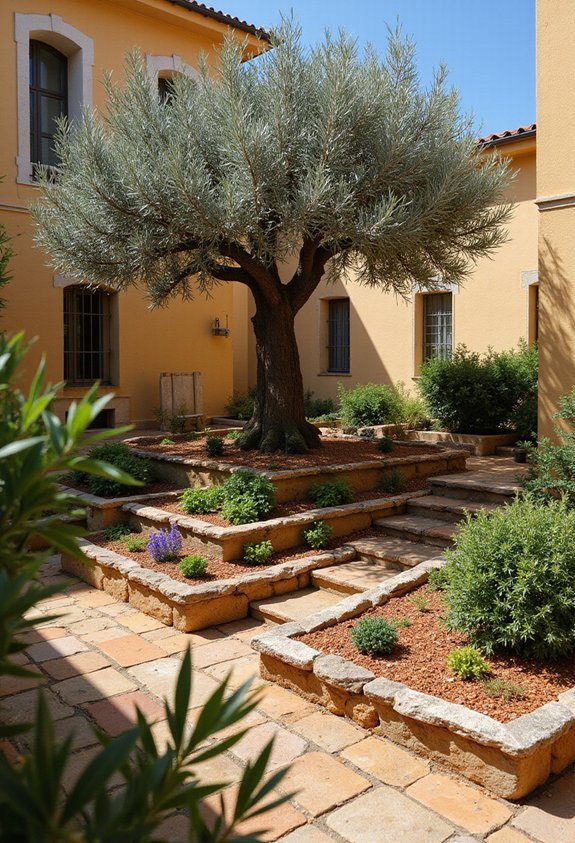
Creating tiered garden beds around your olive trees‘ll transform your front yard into a dynamic landscape that showcases your trees while improving drainage and soil health. You can build these beds using natural stone or timber, stacking them in descending heights to create visual interest and functional planting zones. Start by measuring your tree’s canopy spread, then construct the first tier at least two feet away from the trunk to prevent root damage. Fill each level with well-draining soil mixed with compost, ensuring proper water flow between tiers. Plant shade-tolerant groundcovers, herbs, or low-growing perennials in the upper beds, reserving lower sections for moisture-loving plants. This strategic arrangement maximizes your planting space while maintaining your olive tree’s health and creating an organized, professional appearance.
Creating an Olive Grove Effect for Large Front Yards
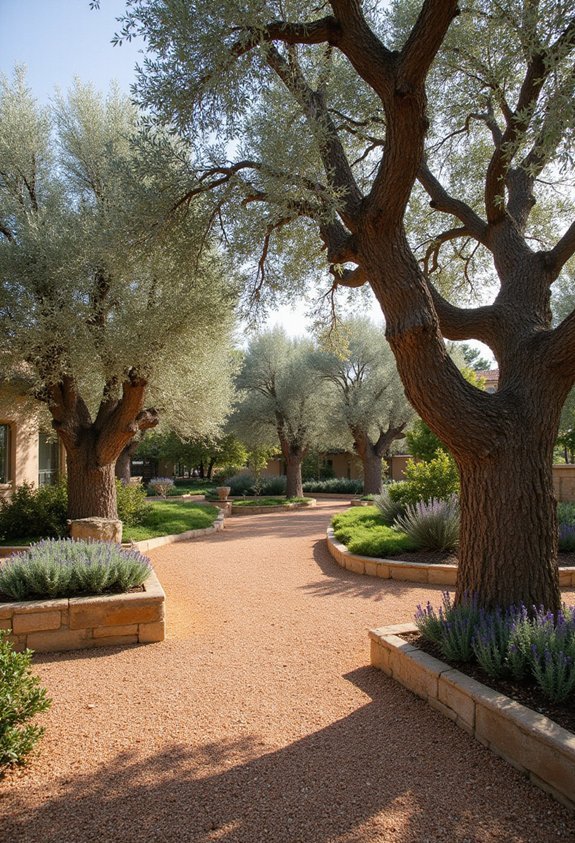
While tiered garden beds work beautifully around individual olive trees, you’ll want to ponder a different approach if you’ve got the space to plant multiple trees across your front yard. Creating an olive grove effect requires strategic spacing, typically 20 to 30 feet apart, allowing each tree room to develop its natural, spreading canopy. You should arrange your trees in staggered rows rather than straight lines, mimicking natural groves found in Mediterranean regions. Space lower plantings like lavender, rosemary, and ornamental grasses between trees to create visual cohesion while reducing maintenance. This layout establishes sight lines through your landscape, drawing viewers’ eyes deeper into your yard. The result is an authentic grove atmosphere that transforms your front yard into a Mediterranean escape.
Uplighting to Showcase Your Olive Trees After Dark
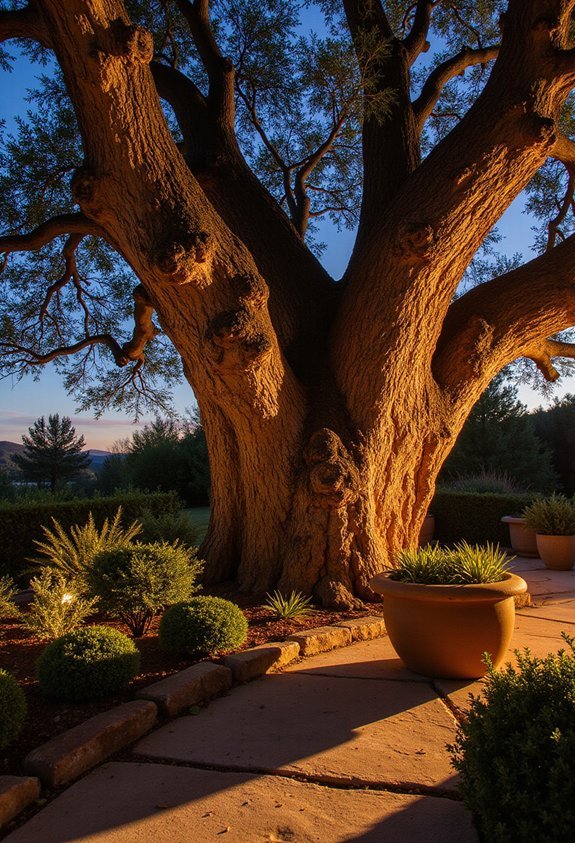
Once the sun sets, you’ve got an excellent opportunity to highlight your olive trees’ distinctive silhouettes and gnarled bark texture through strategic uplighting, which involves positioning lights at ground level to cast illumination upward across the tree’s trunk and canopy. You’ll want to select warm-toned LED lights between 2700K and 3000K, which complement the tree’s natural coloring without appearing harsh or artificial. Position your lights approximately two to three feet from the tree’s base, angling them upward at forty-five to sixty-degree angles for ideal effect. Space multiple fixtures around larger trees to eliminate dark shadows and create balanced illumination. This technique transforms your olive trees into striking focal points, enhancing your yard’s nighttime ambiance while accentuating the trees’ unique architectural qualities and Mediterranean character.
Combining Stone, Pavers, and Planting Beds for Authentic Mediterranean Balance
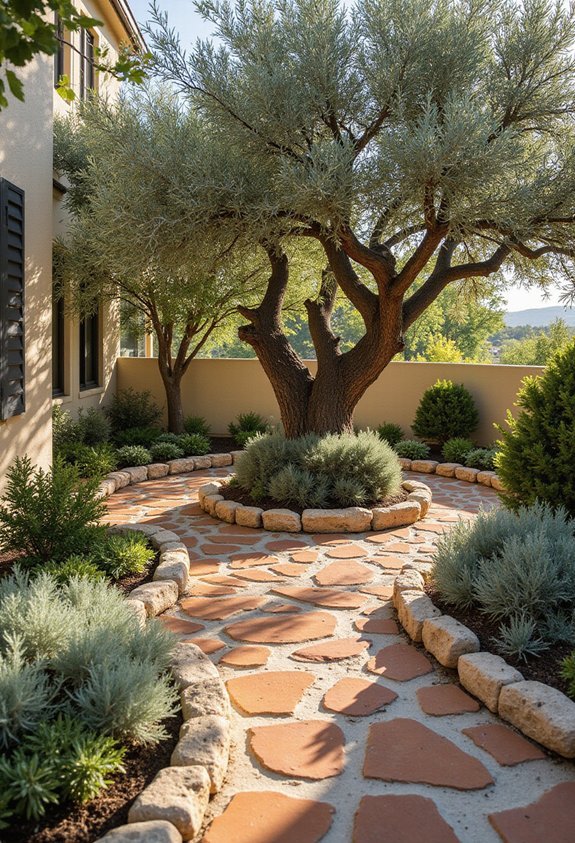
Beyond the dramatic nighttime effects that uplighting provides, you’ll want to establish the ground-level foundation that completes your Mediterranean olive tree landscape, and that foundation rests on thoughtfully combining stone, pavers, and planting beds in ways that reflect authentic regional design principles. You should arrange natural stone elements around your olive trees to create defined spaces, then integrate clay or terracotta pavers to establish pathways that guide visitors through your front yard. Position planting beds strategically between these hardscape features, allowing them to smooth shifts and anchor smaller Mediterranean plants like lavender and rosemary. This layering approach creates visual interest while maintaining the balanced, organic aesthetic characteristic of traditional Mediterranean gardens. The combination guarantees proper drainage, reduces maintenance demands, and produces an authentic, cohesive outdoor environment that enhances your olive trees’ natural beauty and architectural presence.
Seasonal Plants to Pair With Olive Trees Year-Round
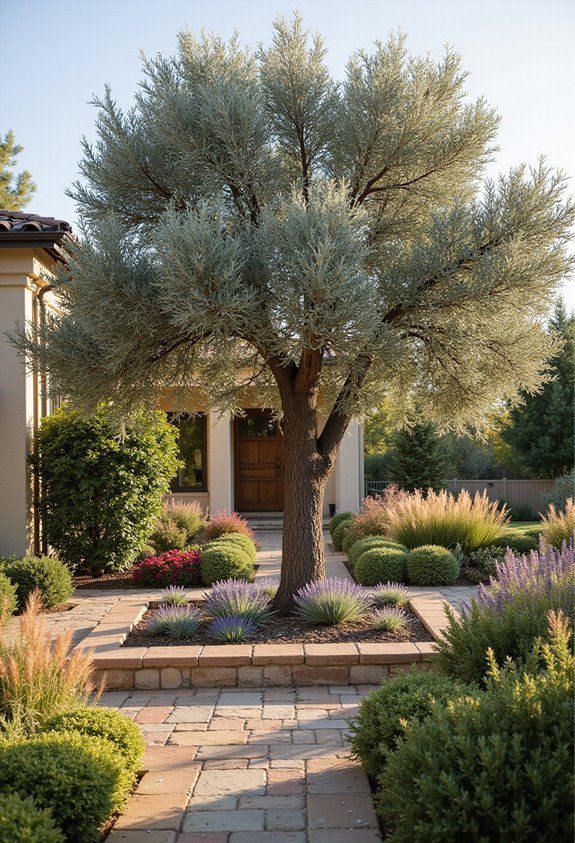
Your olive trees‘ll benefit from companion plantings that shift with the seasons, creating visual interest while supporting the Mediterranean aesthetic you’ve established with your hardscape elements. During spring, plant lavender and rosemary nearby to add color and fragrance while thriving in similar dry conditions. Summer calls for sun-loving cistus and santolina, which complement your olives without competing for water. As fall arrives, introduce ornamental grasses and salvias that provide texture and extend your garden’s visual appeal. Winter requires hardy choices like evergreen pittosporum and boxwood, which maintain structure when deciduous plants fade. You’ll want to select plants that tolerate low water, well-drained soil, and full sun exposure, matching your olive trees’ growing requirements and ensuring a cohesive, thriving Mediterranean landscape throughout the entire year.
Xeriscaping and Low-Water Olive Tree Pairings for Hot Climates
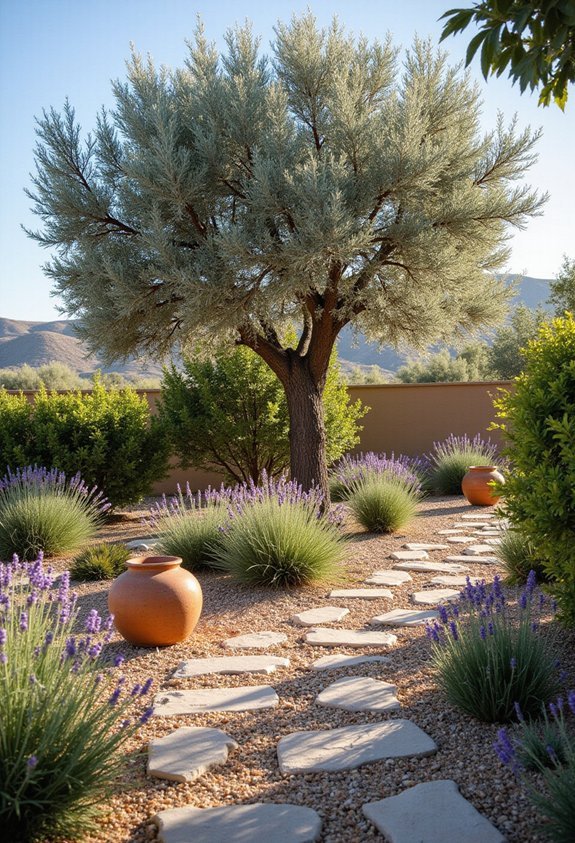
If you’re gardening in an arid or semi-arid region where water conservation is essential, xeriscaping—a landscaping method that reduces water consumption through thoughtful plant selection and soil management—offers an ideal framework for designing olive tree front yards that’ll thrive without excessive irrigation. Pair your olive trees with drought-tolerant companions like lavender, rosemary, and santolina, which require minimal water once established. These Mediterranean natives share your olive tree’s preference for well-draining soil and full sunlight. Incorporate gravel or decomposed granite mulch around plantings to retain soil moisture, regulate temperature, and reduce evaporation. Add native grasses such as blue fescue for texture and erosion control. This strategic combination creates visually appealing landscapes while considerably reducing your water usage and maintenance requirements throughout the year.
Conclusion
You’ve now explored how olive trees transform front yards into authentic Mediterranean spaces that require minimal maintenance while delivering maximum visual impact. By combining mature trees with drought-resistant plants, strategic hardscaping, and thoughtful lighting, you’ll create an outdoor environment that’s both practical and beautiful. These designs prove that you don’t need extensive watering or complicated upkeep to achieve the timeless elegance of a Tuscan landscape right in your own home’s entrance.