
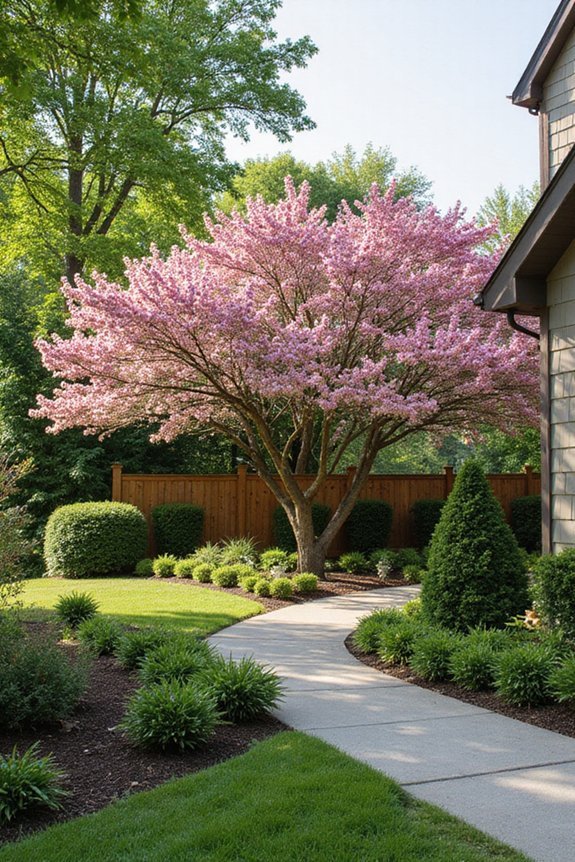
When you’re ready to enhance your home’s landscape, magnolia trees present both opportunities and considerations that require careful planning. You’ll need to understand how spacing, soil conditions, and strategic placement directly impact your trees’ health and your yard’s overall appearance. The difference between a thriving, beautiful magnolia and one that struggles comes down to where you position it—and we’re about to show you exactly how.
Distance From Structures: Safe Spacing Rules for Magnolias
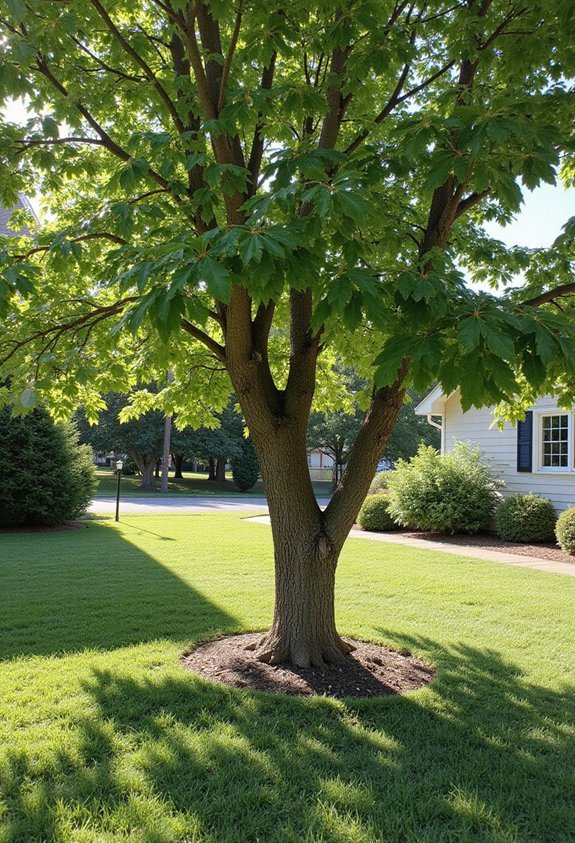
When you’re planning where to plant a magnolia tree in your front yard, you’ll want to follow several important spacing guidelines that protect both your tree and your home’s foundation, utilities, and structural integrity. Plant magnolias at least 15 to 20 feet away from your house, as their extensive root systems can damage foundations over time. You’ll need to maintain a distance of 10 feet from sidewalks, driveways, and patios since roots can crack concrete surfaces. Keep them 5 to 10 feet away from underground utility lines, including water pipes, gas lines, and electrical conduits, to prevent costly damage and safety hazards. Additionally, guarantee adequate spacing between neighboring trees to promote healthy air circulation and prevent disease, following local guidelines for your specific region.
Also read: 22 FRONT YARD CHRISTMAS LIGHTS That Look Expensive!
Soil Preparation by Placement: Amending for Your Magnolia’s Needs
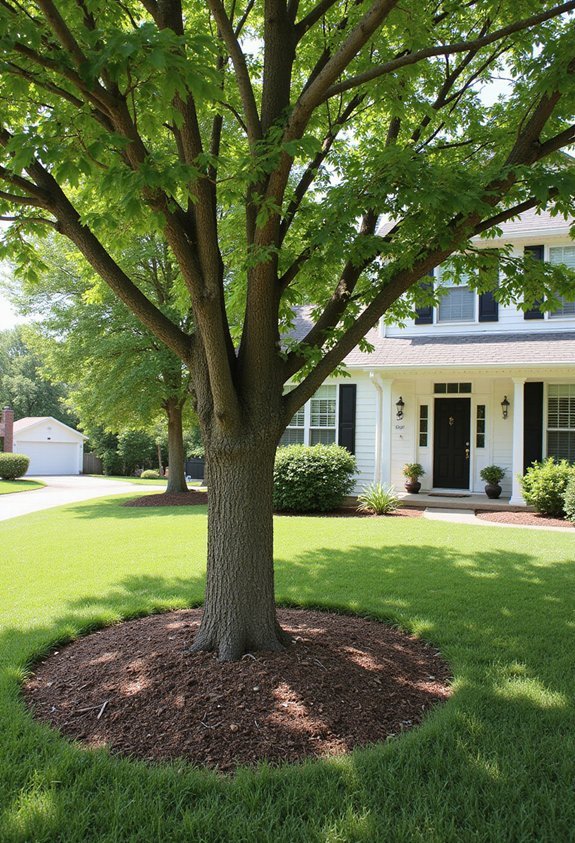
Because magnolias thrive in well-draining, slightly acidic soil, you’ll need to assess and prepare the specific planting site before placing your tree in the ground. Test your soil’s pH level, aiming for a range between 5.0 and 6.5, which you can accomplish using a home testing kit available at garden centers. If your soil’s pH is too high, you’ll add sulfur to lower it gradually over several months. For drainage improvement, incorporate organic matter like compost or peat moss into the top 12 inches of soil, enhancing water retention while preventing waterlogging. You’ll also want to guarantee adequate spacing from structures allows proper root development without interference, creating an ideal foundation for your magnolia’s long-term health and growth.
Center Stage: The Classic Magnolia Statement Tree
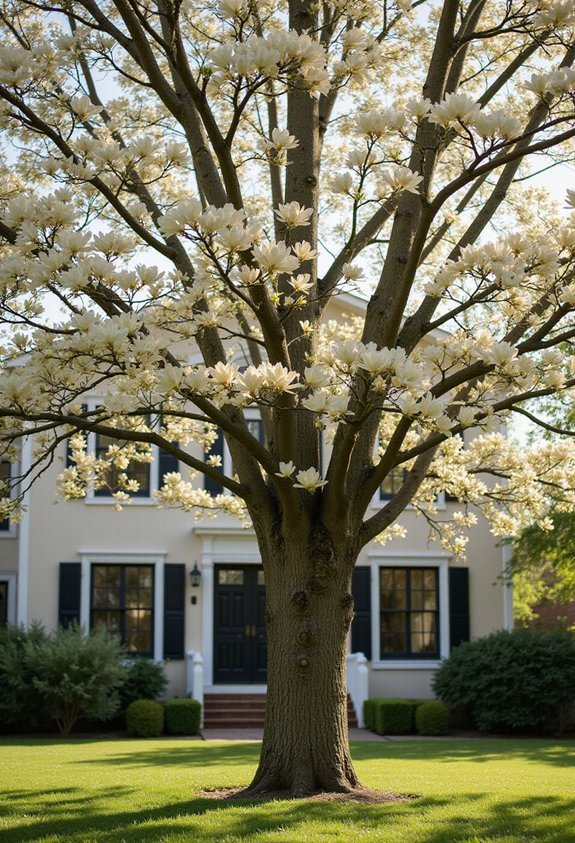
After you’ve prepared your soil and selected the ideal planting location, you’ll want to ponder placing your magnolia tree in a central position within your front yard, where it can serve as a focal point that draws the eye and anchors your landscape design. A center placement creates visual balance and emphasizes your magnolia’s stunning blooms and architectural form. Position the tree equidistant from your home’s corners and property lines when possible, ensuring it’s visible from the street and main entry points. This strategic positioning allows adequate space for mature growth in all directions, promoting healthy branch development. Consider sightlines from your home’s windows and neighboring properties, as your magnolia will become a prominent landscape feature that frames your entire front exterior.
Eastern Exposure for Magnolias: Morning Sun, Afternoon Shade
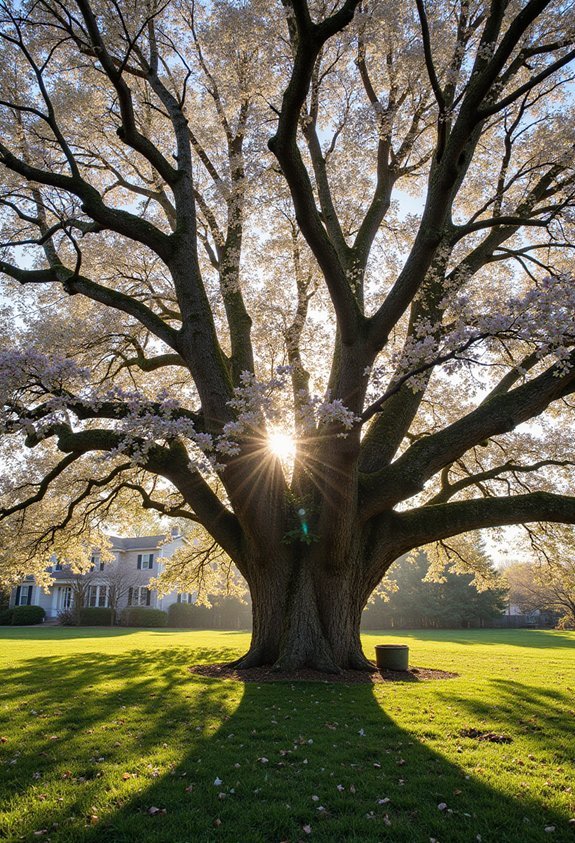
While your magnolia’s central placement establishes its role as a visual anchor, the direction it faces considerably impacts its health and blooming performance. An eastern exposure provides your magnolia with ideal growing conditions by delivering morning sunlight that dries dew from leaves and flowers, reducing fungal disease risk. The afternoon shade that follows protects delicate blossoms from harsh, scorching rays that can damage petals and reduce blooming longevity. This balanced light exposure encourages consistent flowering without the stress of intense western heat. When you position your magnolia on the east side of your yard, you’re creating a microclimate that mirrors the understory conditions magnolias naturally prefer. This strategic placement requires minimal intervention while maximizing both aesthetic appeal and plant vigor throughout the growing season.
Corner Placement: Anchoring Your Property With Magnolias
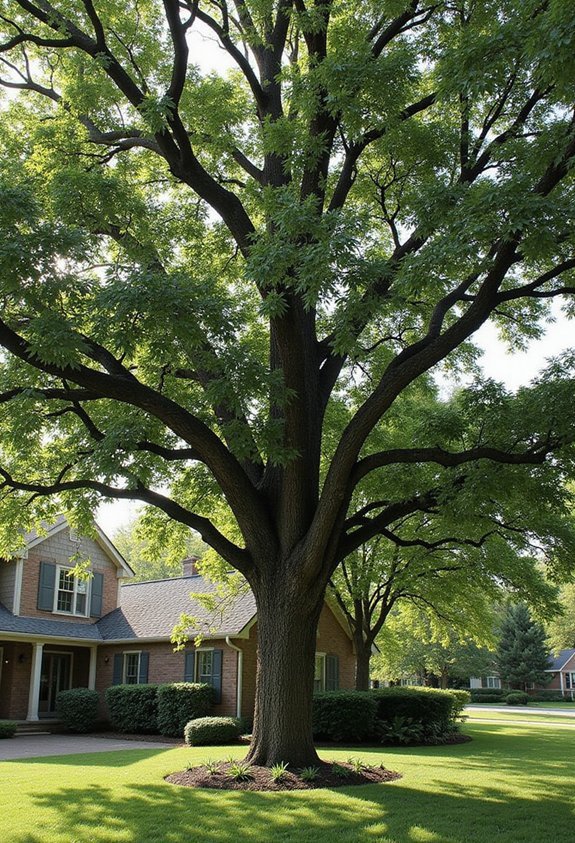
If you’re looking to create a strong visual boundary for your front yard, corner placement offers you one of the most effective strategies for positioning a magnolia tree. When you position a magnolia at your property’s corner, you’re establishing a natural focal point that draws the eye and defines your landscape’s edges. This placement works particularly well because it frames your home’s entrance while providing shade coverage for adjacent areas. You’ll want to guarantee the tree has adequate space for its mature canopy, typically requiring at least 20 feet of clearance from structures. Corner positioning also allows you to strategically block unwanted views, reduce wind exposure, and create distinctive architectural interest that enhances your property’s overall curb appeal and visual structure.
Near the Entryway: Framing Your Home’s Main Entrance With Magnolias
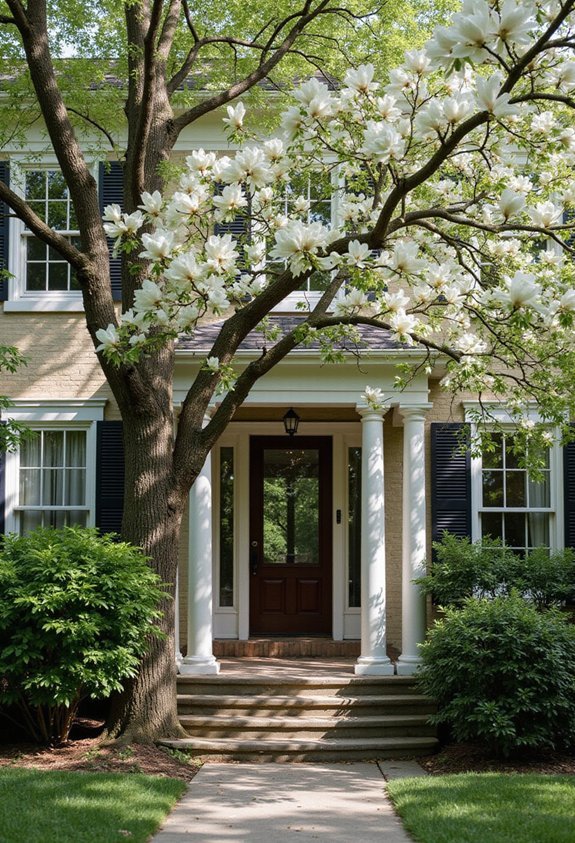
Positioning a magnolia tree near your home’s entryway creates an entirely different visual impact than corner placement, shifting focus from boundary definition to welcoming aesthetics at your property’s most prominent feature. You’ll want to plant your magnolia approximately eight to twelve feet from your front door, ensuring it doesn’t obstruct your entrance or create excessive shade over the walkway. This distance allows the tree’s graceful canopy to frame your doorway without overwhelming it, while its elegant flowers and glossy foliage become the first impression visitors receive. Plant it slightly off-center rather than directly in line with your door, which creates visual interest and balanced symmetry. This strategic placement transforms your entryway into an inviting focal point that enhances your home’s curb appeal considerably.
Beside the Driveway: Welcoming Magnolia Placement
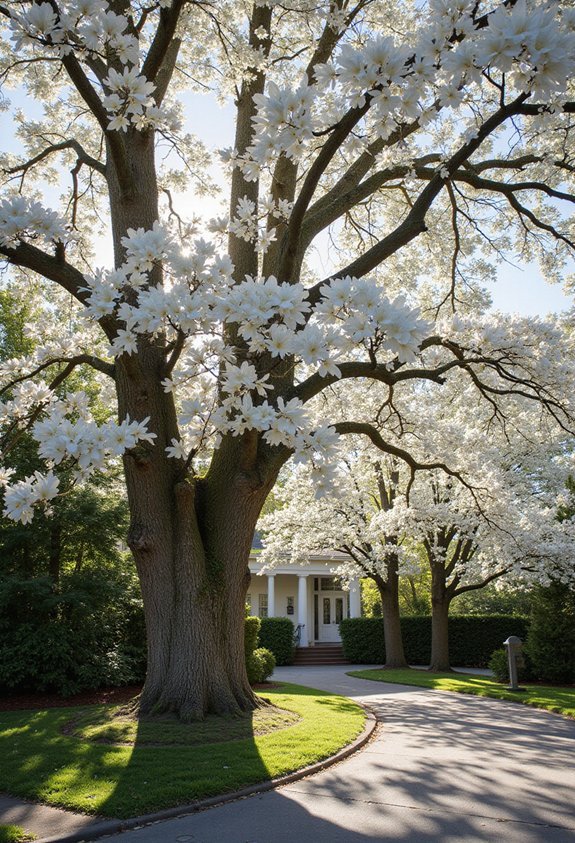
Planting a magnolia along your driveway creates a natural gateway that greets visitors as they arrive at your property, establishing an immediate sense of welcome before they’ve even stepped out of their vehicles. You’ll want to position the tree at least ten to fifteen feet from the driveway’s edge, guaranteeing safe clearance as vehicles pass. This spacing prevents branches from interfering with traffic while allowing the tree’s canopy to frame your property’s entrance beautifully. Consider the tree’s mature width, typically ranging from twenty to thirty feet, and select a location where it won’t obstruct sightlines for drivers entering or exiting. Confirm adequate soil drainage and sunlight exposure in your chosen spot, as magnolias thrive in well-draining conditions with six or more hours of direct sunlight daily.
Specimen Magnolias in Open Lawn: Maximum Visual Impact
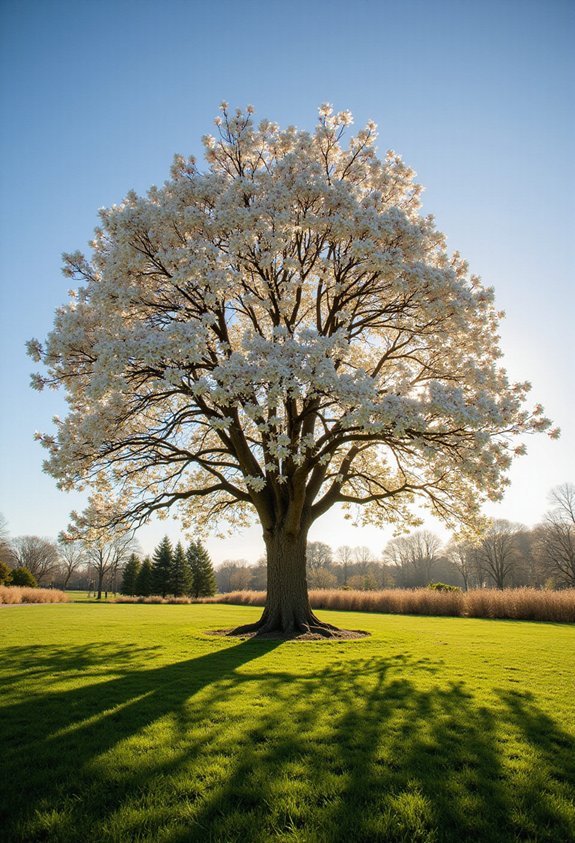
Where can you create the most dramatic focal point in your front yard? Plant a specimen magnolia in an open lawn area, where it’ll stand alone and command attention from every angle. Position your tree at least fifteen to twenty feet from your house, ensuring it’s visible from the street and sidewalk. This placement allows the magnolia’s full canopy to develop unobstructed, showcasing its beautiful branching structure and abundant blooms. You’ll want to select a location with adequate sunlight, ideally six hours daily, which maximizes flowering potential. Avoid planting near walkways or driveways where fallen petals might create maintenance issues. The open lawn setting eliminates competition from other plants, letting your magnolia become the undeniable centerpiece that transforms your entire front yard’s visual appeal.
Under Existing Trees: Layering Magnolias in Shaded Areas
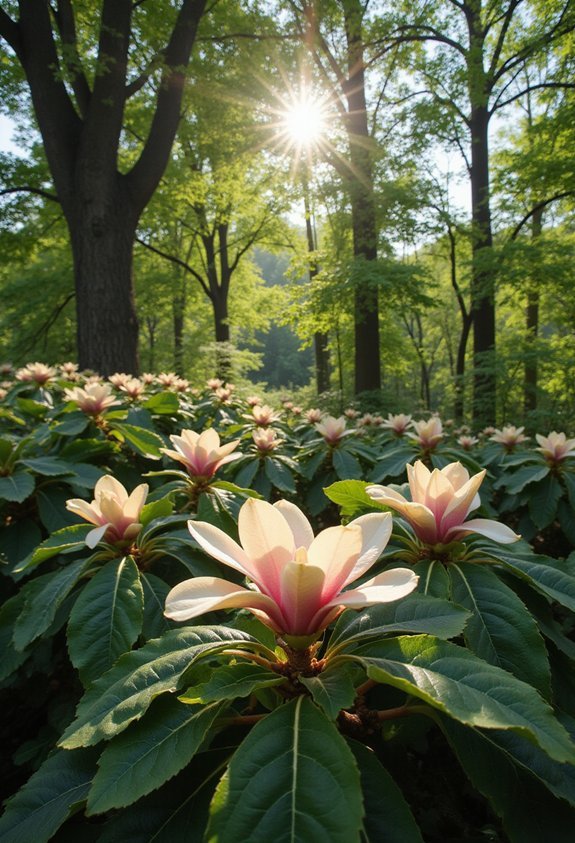
If you’ve got mature trees already dominating your front yard’s landscape, you can still incorporate magnolias by creating a layered garden effect that works with your existing shade patterns rather than against them. Shade-tolerant magnolia varieties, like the sweetbay magnolia, thrive beneath tall oaks and maples where they’ll receive dappled sunlight throughout the day. Position these understory magnolias where they’ll receive at least four hours of indirect light, ensuring they won’t compete directly with overhead branches. This layering technique adds visual depth to your landscape while maximizing your available space. Underplanting magnolias beneath existing trees also creates natural windbreaks and microclimates that protect younger plants, establishing a balanced, multi-level garden structure.
Magnolias Against the Foundation: Using Them as Living Backdrops
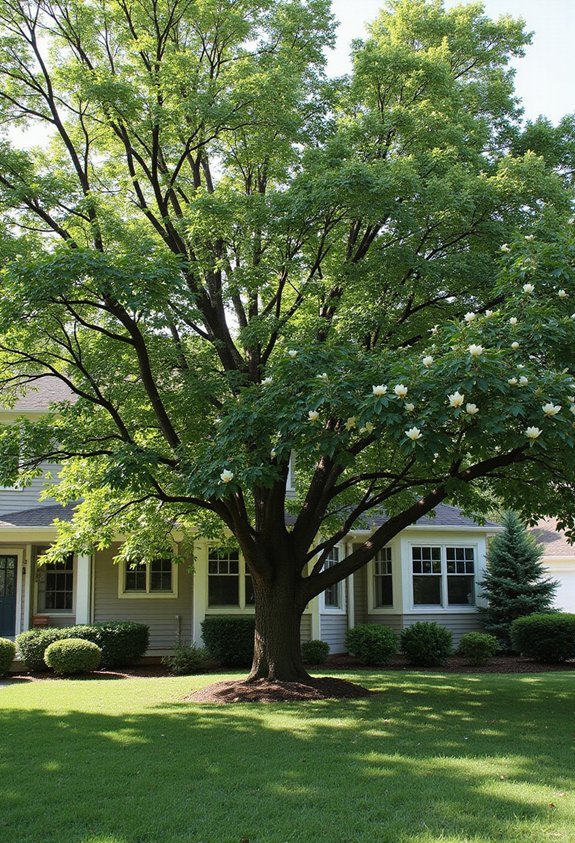
One of the most effective ways to enhance your home’s curb appeal is positioning magnolias directly against your house’s foundation, where they’ll serve as living backdrops that frame your entryway and soften the harsh lines of your structure. When you plant magnolias near your foundation, you’re creating a natural shift between your home and landscape. Space them about six to eight feet apart to allow proper growth without crowding. Guarantee they’re positioned where they’ll receive adequate sunlight, typically on south or east-facing walls. You’ll want to maintain sufficient distance from your foundation to prevent root damage, usually at least three feet away. This strategic placement adds visual depth, provides seasonal interest through blooms and foliage, and creates an inviting atmosphere that welcomes visitors to your home.
Offset Magnolia Placement: Creating Asymmetrical Visual Interest
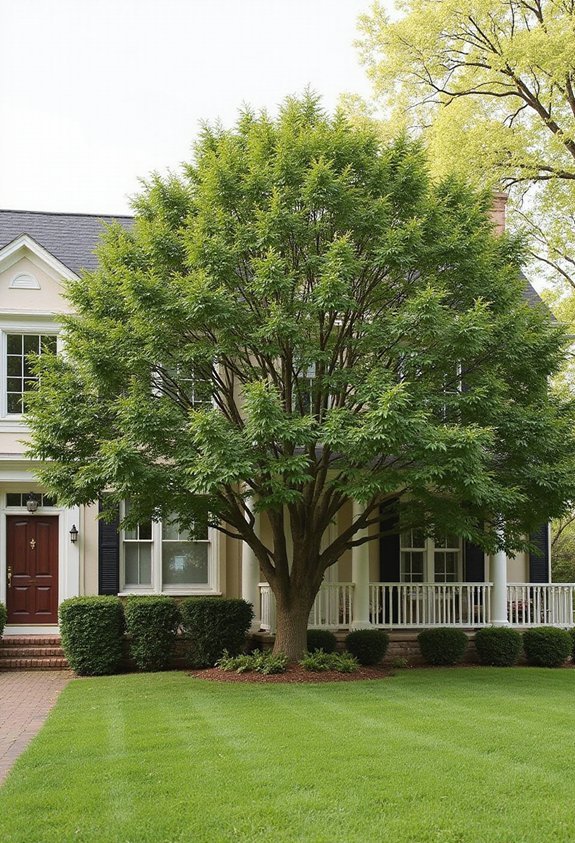
While symmetrical plantings create formal, balanced landscapes, you’ll find that offset magnolia placements offer a more dynamic and visually interesting approach to front yard design. By positioning your magnolia tree to one side of your yard rather than centering it, you create movement and intrigue that draws the eye across your landscape. This asymmetrical arrangement works particularly well when you balance the magnolia with complementary plantings, hardscaping elements, or architectural features on the opposite side of your property. You can anchor your offset magnolia with lower shrubs, perennials, or a decorative pathway that guides visitors through your front yard. This strategic placement encourages exploration and prevents your landscape from appearing static, ultimately creating depth and character that centered placements cannot achieve.
Sloped Yards: Positioning Magnolias on Grade Changes
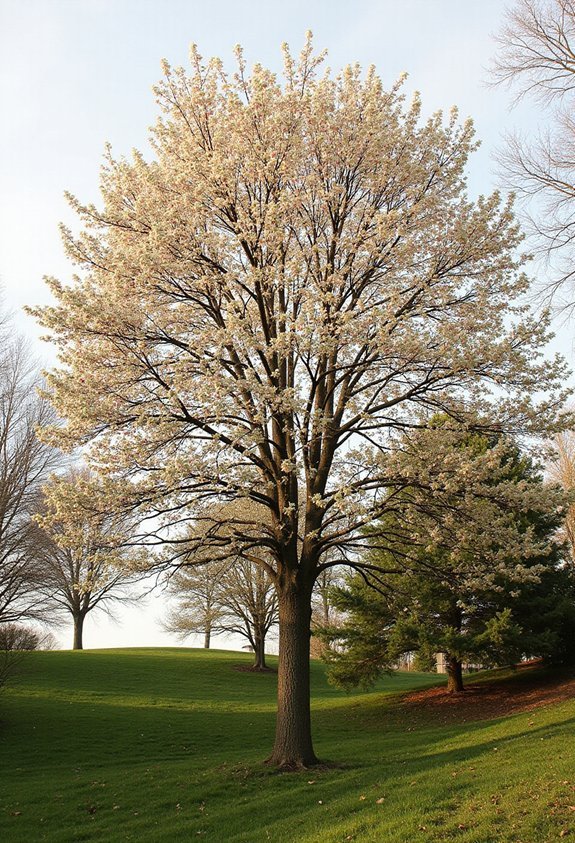
Magnolia trees planted on sloped terrain present distinct challenges and opportunities that differ noticeably from the offset placements you’d use on level ground, requiring you to carefully consider how elevation changes affect both the tree’s health and your landscape’s visual appeal. Position your magnolia on the lower slope to create a striking focal point that draws eyes upward, or place it on the upper slope to frame your home’s roofline dramatically. Guarantee proper drainage by planting on the slope’s side rather than directly in water runoff paths. You’ll want to stabilize the soil around the root system with mulch and support stakes, particularly on steeper grades. This strategic positioning maximizes visual impact while protecting your magnolia’s structural integrity against erosion and water stress.
Magnolias Near Water Features: Planting by Ponds and Fountains
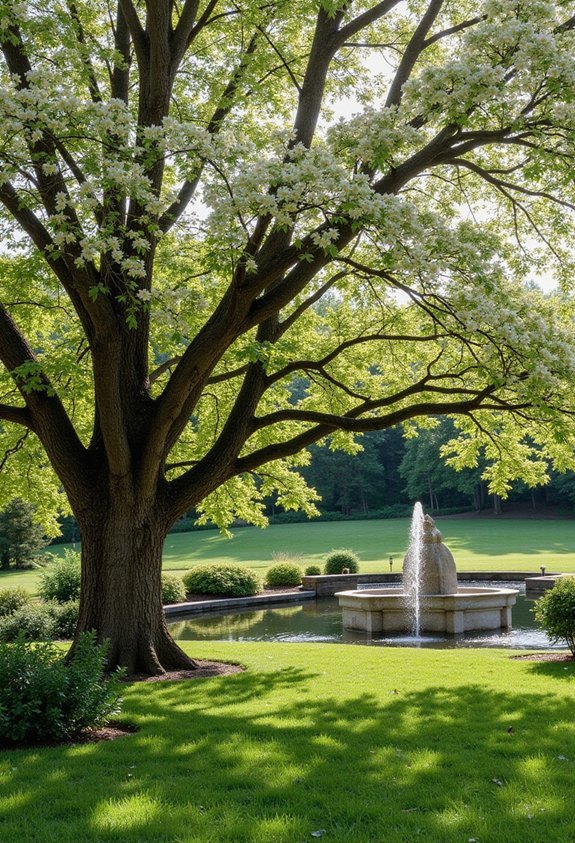
Positioning your magnolia near water features like ponds and fountains requires careful planning because these trees don’t tolerate consistently wet soil, yet they’ll thrive when you place them strategically to benefit from the moisture and visual appeal that water brings to your landscape. Plant your magnolia at least six to eight feet away from pond edges to prevent root rot and water saturation issues. Guarantee proper drainage by elevating the planting area slightly above ground level, creating a mound that directs excess water away from the root zone. The reflective quality of water enhances your magnolia’s beauty, so position the tree where its flowering branches mirror on the water’s surface, creating a striking visual focal point in your front yard design.
Magnolias in Mixed Borders: Pairing With Complementary Shrubs
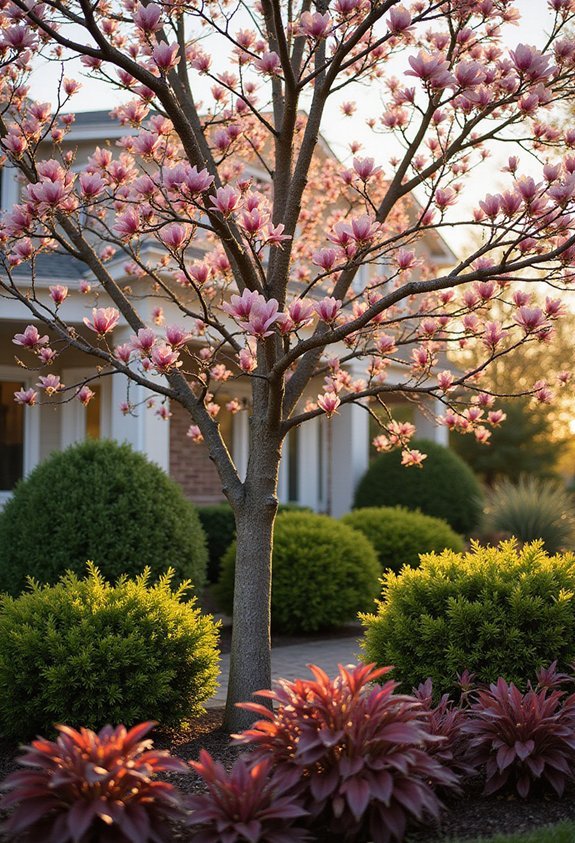
When you’re designing a mixed border in your front yard, creating layers of texture and color around your magnolia tree will enhance its visual impact and fill the space with year-round interest. You’ll want to select shrubs that complement the magnolia’s flowering season and structure, positioning smaller varieties in front and taller ones behind to create depth. Consider pairing your magnolia with evergreen shrubs like boxwood or holly, which provide consistent greenery when the magnolia’s blooms fade. Adding flowering shrubs such as azaleas or rhododendrons extends your border’s color display throughout spring and early summer. Space plants appropriately to allow air circulation, preventing disease while letting each plant’s characteristics shine. This layered approach transforms your front yard into a visually dynamic landscape that showcases your magnolia as a focal point.
Magnolias in Transitional Zones: Defining Property Boundaries
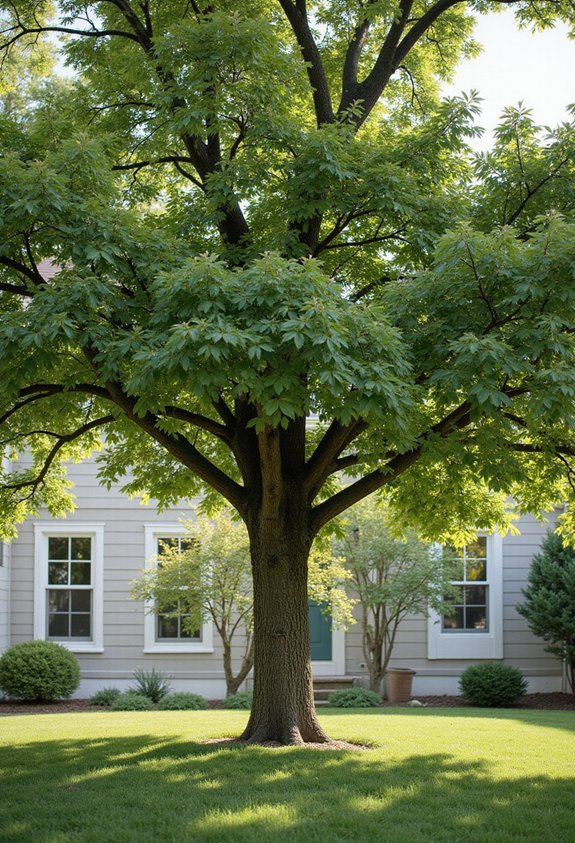
Beyond creating layered plantings within your landscape, you can strategically position magnolia trees to establish clear visual and physical boundaries between your property and neighboring areas. When you plant magnolias along your property line, their substantial canopies and sturdy trunks create natural dividers that require minimal maintenance. You’ll find that mature magnolias effectively screen unwanted views, reduce noise from adjacent properties, and define your yard’s perimeter without installing fences. Position trees approximately 15 to 20 feet apart to allow adequate growth space while maintaining a cohesive boundary line. This approach gives you privacy and aesthetic appeal simultaneously, transforming functional demarcation into an attractive landscape feature that enhances your front yard’s overall appeal and usability.
Conclusion
You’ve now built your magnolia landscape like constructing a bridge, where each placement decision—from proper spacing to soil preparation—forms a supporting beam. Your front yard becomes a living structure, with magnolias anchoring corners and framing entries as main pillars, while complementary shrubs reinforce the design. Like a well-engineered blueprint, thoughtful positioning guarantees your magnolias flourish for decades, transforming your property into a cohesive, beautiful outdoor space that stands the test of time.