
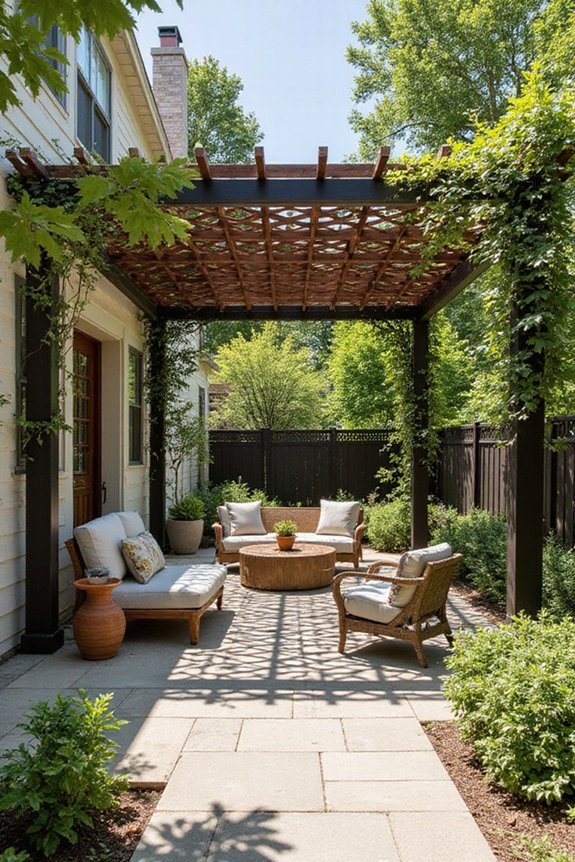
You’ve likely noticed how a well-designed pergola transforms a front yard from ordinary to impressive. Whether you’re drawn to sleek modern lines, rustic charm, or Mediterranean elegance, pergolas offer practical shade solutions that boost your home’s curb appeal. From freestanding structures to integrated water features, each style presents distinct advantages and aesthetic possibilities. The key is understanding which setup aligns with your home’s architecture and climate needs—and we’ll explore nine distinct approaches to help you decide.
Modern Minimalist Pergolas for Contemporary Homes
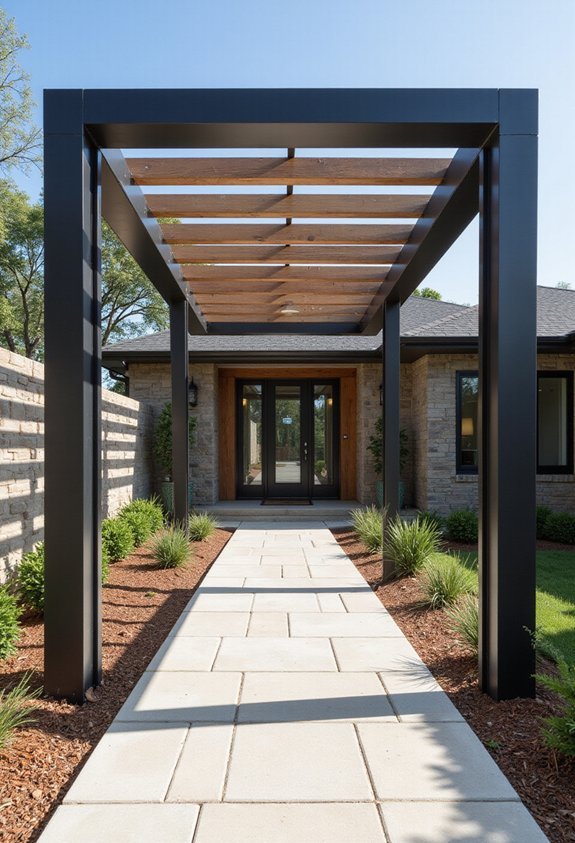
Because today’s homeowners often prefer clean lines and uncluttered outdoor spaces, modern minimalist pergolas‘ve become increasingly popular design choices for front yards. You’ll find that these structures feature straight beams, neutral color palettes, and geometric shapes that complement contemporary architecture. When you’re selecting materials, consider aluminum or treated wood that require minimal maintenance and offer durability. These pergolas work best when you keep the design simple, avoiding unnecessary decorative elements that distract from the overall aesthetic. You should position the pergola to create functional shade while maintaining sightlines to your home’s entrance. The spacing between overhead slats determines how much sunlight filters through, so you can adjust coverage based on your climate and preferences. Installing one of these structures enhances your front yard’s modern appeal while providing practical outdoor living space.
Also read: 22 FRONT YARD CHRISTMAS LIGHTS That Look Expensive!
Rustic Wood Pergolas With Classic Charm
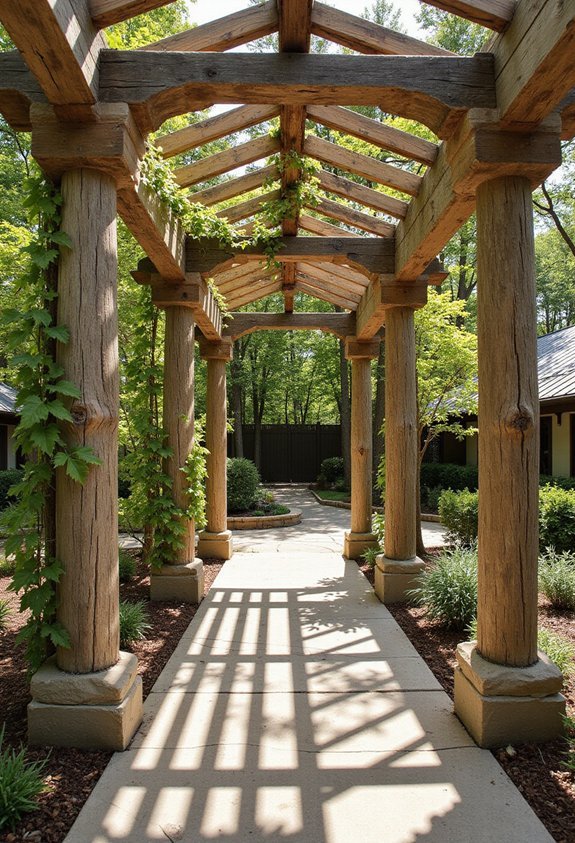
While modern minimalist designs appeal to many homeowners, rustic wood pergolas offer a timeless alternative that brings warmth and natural character to your front yard. You’ll find that weathered cedar, redwood, or reclaimed timber creates an inviting aesthetic that complements traditional and cottage-style homes perfectly. These structures develop a beautiful patina over time, enhancing their rustic appeal without requiring extensive maintenance. You can incorporate climbing vines like clematis or wisteria, which soften the wooden framework and add seasonal color and fragrance. The thick wooden beams provide substantial shade, making your front entrance more comfortable during hot months. You might also add vintage-style lighting fixtures or wrought-iron accents to enhance the classic charm. Rustic pergolas blend functionality with nostalgic elegance, creating a welcoming outdoor space that feels established and grounded.
Metal Frame Pergolas for Industrial-Style Shade
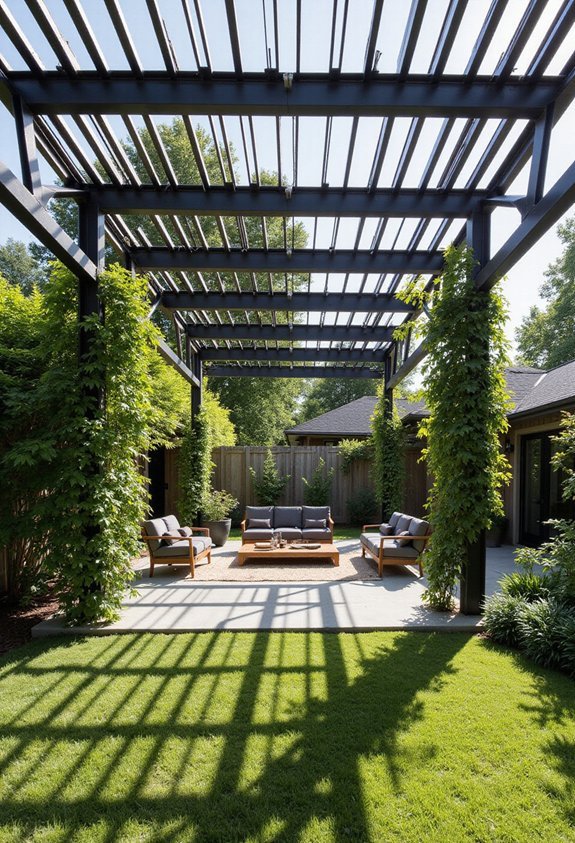
If you’re drawn to modern aesthetics with an edgy, urban appeal, metal frame pergolas offer a striking alternative that transforms your front yard into a contemporary outdoor space. These structures, typically constructed from aluminum or steel, provide exceptional durability and require minimal maintenance compared to wood options. You’ll appreciate their clean lines and geometric designs, which complement modern home architecture perfectly. Metal pergolas resist rot, pest damage, and weathering, ensuring long-term reliability in various climates. You can customize them with powder-coated finishes in multiple colors, from sleek black to brushed steel tones. The lightweight nature of aluminum makes installation more manageable, while steel variants deliver superior strength for larger spans. These industrial-style pergolas pair excellently with modern climbing vines or minimalist shade fabric, creating functional elegance that elevates your property’s contemporary character.
Mediterranean-Style Pergolas: Bringing European Elegance Home
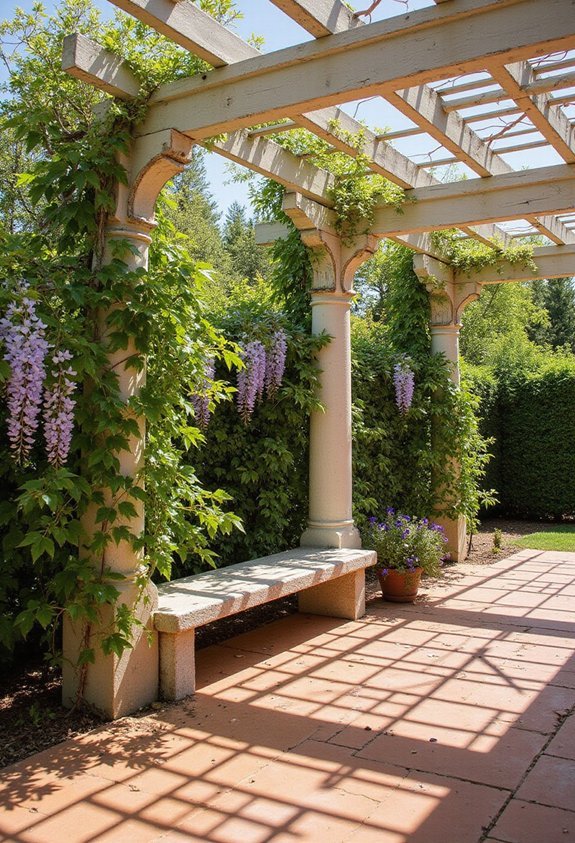
Where metal frame pergolas emphasize clean lines and industrial minimalism, Mediterranean-style pergolas celebrate warmth, tradition, and organic beauty by drawing inspiration from centuries-old European design. You’ll find that these structures feature curved archways, wooden beams, and decorative lattice work that creates dappled shade while maintaining visual interest. When you’re planning your Mediterranean pergola, consider incorporating climbing vines like grapevines or jasmine, which’ll enhance the authentic European aesthetic while providing natural cooling. Terracotta tiles, stone columns, and warm earth-tone finishes’ll help you achieve that timeless Mediterranean charm. You can also add string lights or lanterns beneath the pergola to create an inviting evening atmosphere. These pergolas work exceptionally well in front yards where you want to establish a sophisticated, elegant entrance that reflects classical European heritage.
Curved Pergolas for Elegant, Flowing Designs
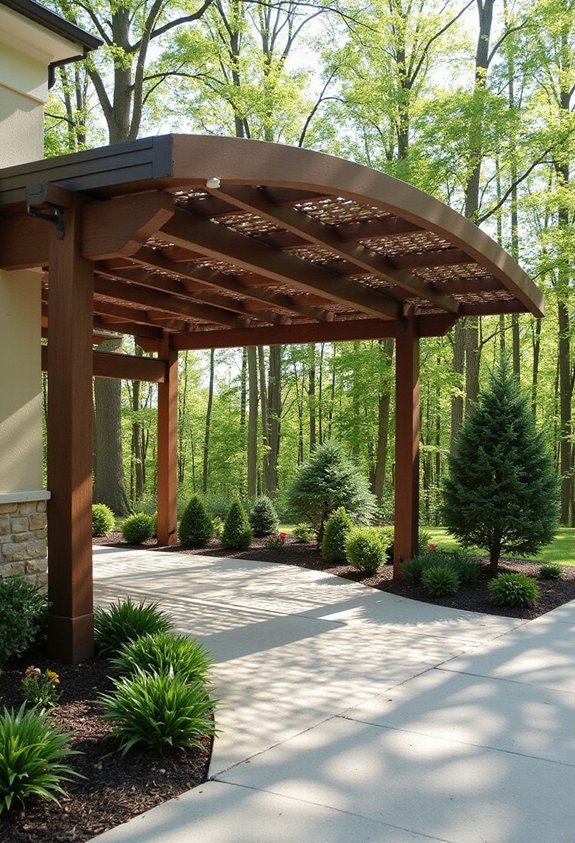
Curved pergolas offer you a distinctive design approach that contrasts sharply with the straight lines and geometric angles you’ll find in traditional pergola structures, creating visual movement and sophistication throughout your front yard. These graceful structures feature arched beams and rounded elements that guide your eye naturally across your outdoor space, establishing an elegant focal point. You’ll find that curved designs work exceptionally well with flowing landscape features, such as curved pathways or circular planting beds, creating cohesive visual harmony. The curved framework also provides superior shade distribution, as the angled surfaces deflect sunlight more effectively than flat designs. Installation requires careful planning and precise measurements to verify structural integrity. You should consult with professionals experienced in curved pergola construction to confirm proper support and stability throughout your front yard setup.
Pergolas With Shade Cloth for Full-Day Sun Coverage
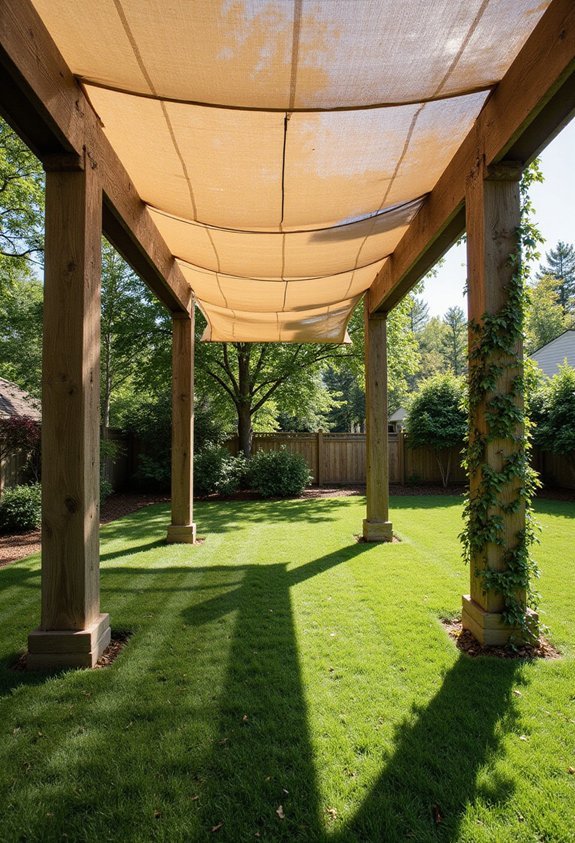
Why settle for partial shade when you can install shade cloth on your pergola to create comfortable outdoor living spaces throughout the entire day? Shade cloth comes in various densities, typically ranging from 30% to 90% light blockage, allowing you to select the coverage level that matches your needs. You’ll attach the fabric using sturdy clips, hooks, or a frame system that secures it firmly to your pergola structure. This setup effectively reduces heat absorption, lowers temperatures by up to 15 degrees, and protects your skin from harmful UV rays. The cloth remains durable through seasons when properly maintained, and you can easily remove or adjust it based on weather conditions and seasonal changes, making it a versatile solution for year-round outdoor comfort.
Vine-Covered Pergolas: Natural Beauty That Grows Over Time
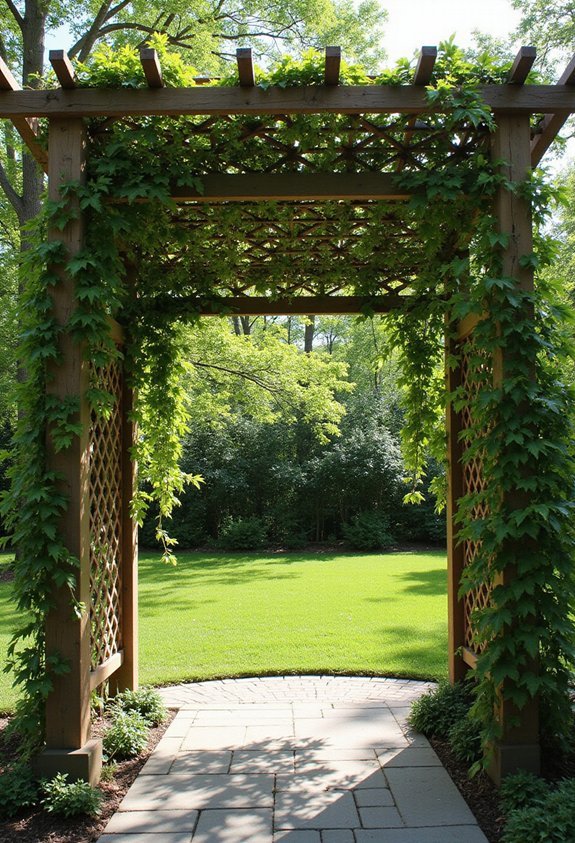
If you’re looking for a pergola solution that improves with age rather than requiring constant maintenance, vine-covered pergolas offer a living alternative to artificial shade structures by allowing climbing plants to establish themselves across your framework over several seasons. You’ll want to select fast-growing vines like clematis, jasmine, or climbing hydrangeas that’ll naturally spread across your pergola’s beams and lattice. These plants create denser shade coverage year after year, while simultaneously adding visual interest and natural aesthetics to your front yard. You should water your vines regularly during their first growing season to encourage deep root development. Once established, most climbing varieties become drought-tolerant and require minimal pruning, making them an increasingly low-maintenance option as time progresses.
Attached Pergolas: Extending Shade From Your Entrance
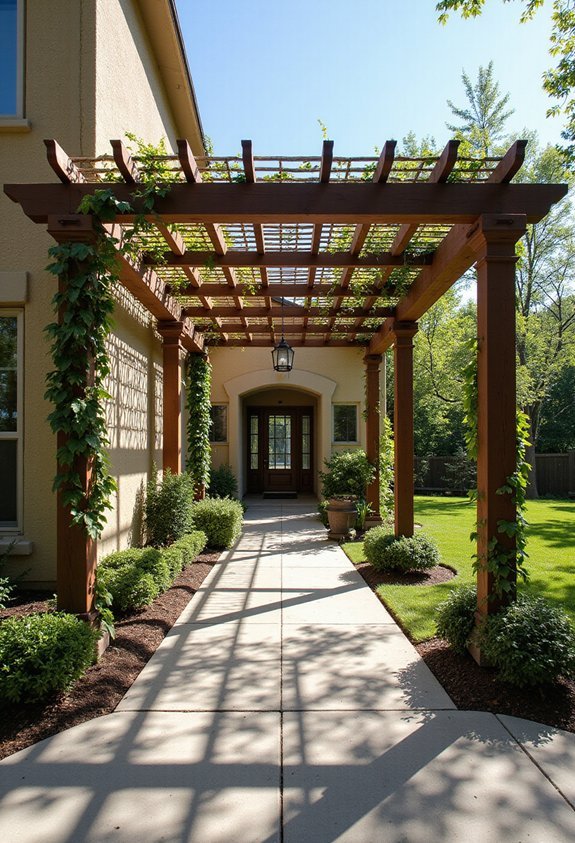
When you attach a pergola directly to your home’s exterior, you’re creating a seamless link between your indoor living space and your front yard while establishing a shaded entryway that welcomes visitors. This design choice offers practical advantages, as the structure draws support from your house, reducing the number of posts you’ll need to install. You’ll benefit from shade that extends from your door outward, protecting your entrance from harsh sunlight and rain. Attached pergolas work particularly well for covering porches, patios, or walkways leading to your front entrance. When planning your attached pergola, you’ll want to contemplate your home’s architectural style, roof overhang height, and local building codes to certify proper installation and structural integrity for years of reliable performance.
Pergolas Over Entry Pathways to Welcome Visitors With Shade
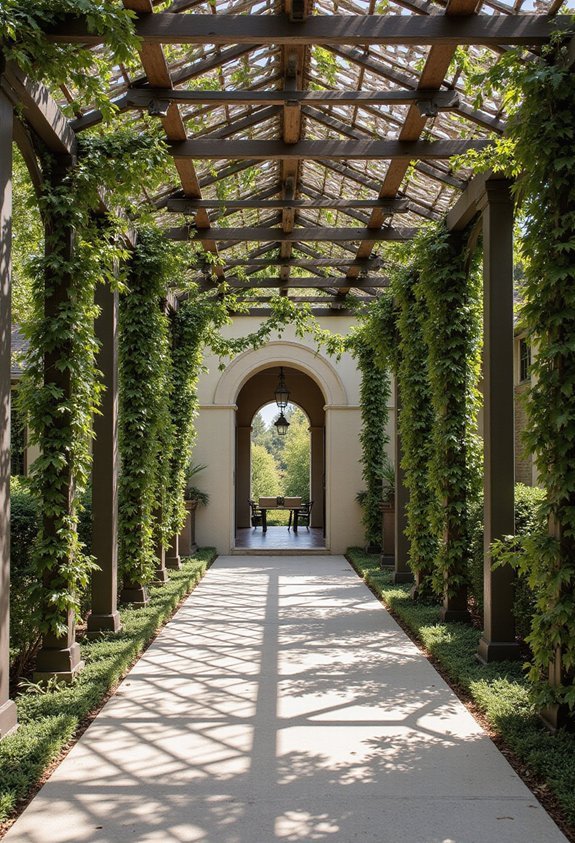
A pergola positioned over your front entry pathway creates an inviting passageway space that’ll guide visitors from the street to your home’s entrance while providing essential shade protection along the way. You can design this structure to complement your home’s architectural style by selecting materials like wood, vinyl, or metal that match your existing features. Position the pergola to cover the entire walking route, ensuring visitors remain shaded during their approach. Consider adding climbing vines such as clematis or jasmine to enhance the aesthetic appeal while increasing shade coverage. You might incorporate lighting fixtures along the pathway for evening visibility and ambiance. This setup improves curb appeal considerably while making your guests feel welcomed through thoughtful design that combines function with visual interest.
Pergolas With Lighting for Evening Ambiance & Function
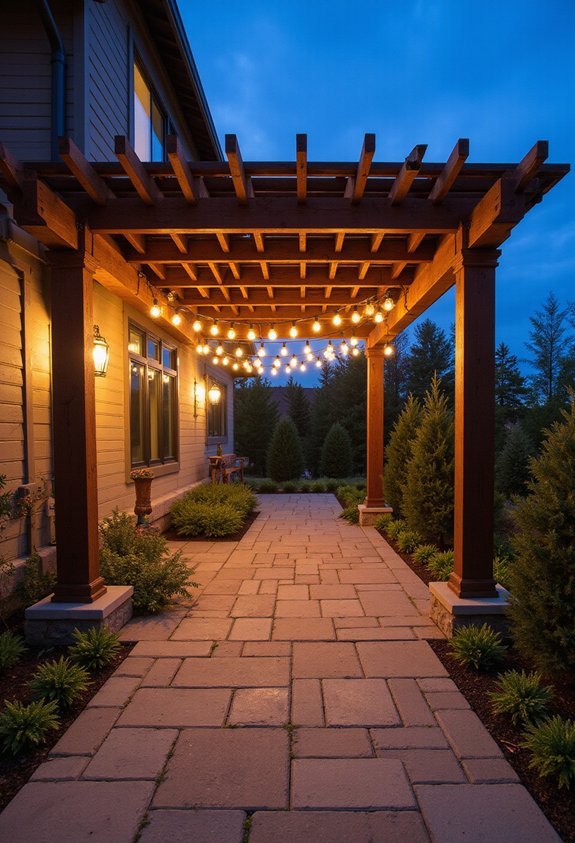
Beyond the welcoming shade that a front entry pergola provides during daylight hours, you can extend your pergola’s usefulness into the evening by incorporating strategic lighting elements that’ll transform the structure into a functional and atmospheric outdoor feature. Consider installing recessed lights along the pergola’s beams to illuminate the pathway below, ensuring safe passage for visitors arriving after dark. String lights or Edison bulbs suspended between cross-beams create a warm, inviting glow that enhances the entrance’s aesthetic appeal. Solar-powered spotlights positioned at ground level can highlight architectural details and surrounding landscaping. Wall-mounted sconces attached to adjacent structures provide additional illumination. These lighting solutions not only improve safety and visibility but also establish an elegant ambiance that welcomes guests while extending your outdoor space’s usability throughout evening hours.
Small Pergolas for Compact Front Yards
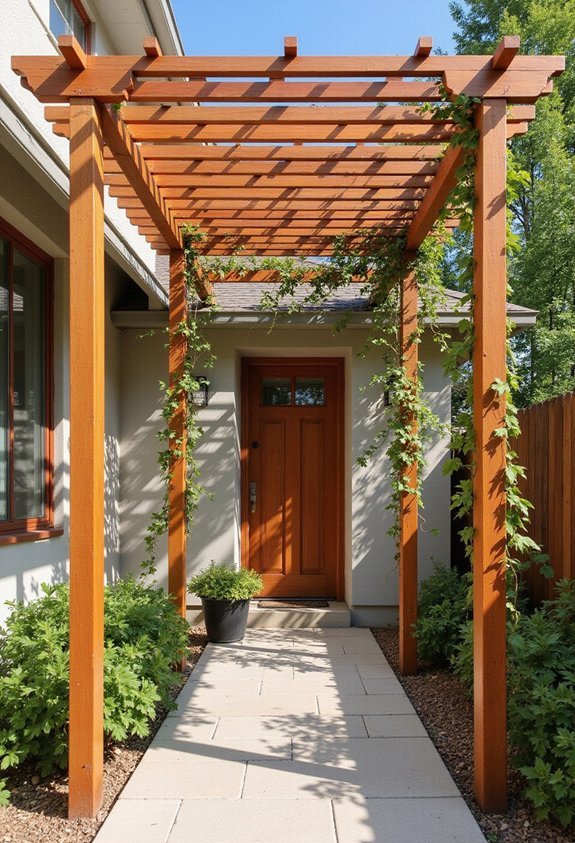
If your front yard’s limited space means you can’t accommodate a full-sized pergola structure, you’ll find that smaller pergola designs offer practical solutions that still provide shade, visual interest, and functional outdoor space without overwhelming your property. Consider installing a 8-by-10-foot pergola that fits neatly near your entryway or along a walkway, creating a defined gathering area. You can also select narrow designs that attach to your home’s exterior, maximizing vertical space while minimizing ground footprint. Compact pergolas work particularly well in townhomes and properties with minimal square footage. These smaller structures maintain aesthetic appeal through thoughtful material selection and proportional spacing, ensuring they complement rather than dominate your front yard’s appearance while delivering shade benefits and architectural character.
Corner Pergolas That Maximize Unused Yard Space
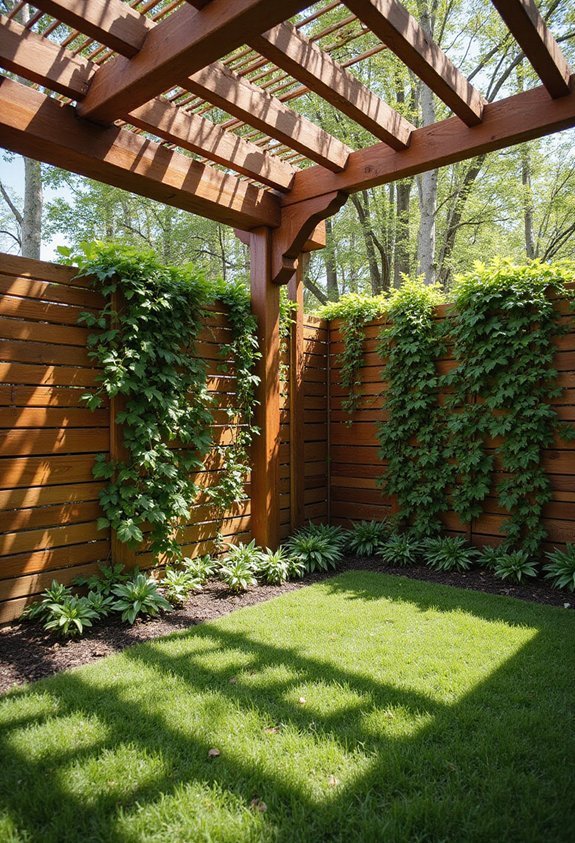
Corner spaces in your front yard often remain underutilized because they’re awkward to access or don’t naturally fit into your main landscaping design, yet these areas present excellent opportunities for strategic pergola placement that can transform overlooked sections into functional gathering zones. You’ll find that corner pergolas work especially well because they provide natural wind protection from two sides, reducing exposure to harsh elements. Install your corner pergola where two fence lines, property borders, or house walls meet to create a sheltered retreat. This positioning allows you to anchor the structure securely while maximizing shade coverage throughout the day. You can add seating, climbing vines, or lighting fixtures within the corner space, converting dead zones into valuable outdoor living areas that enhance both functionality and curb appeal.
Freestanding Pergolas as Bold Focal Point Structures
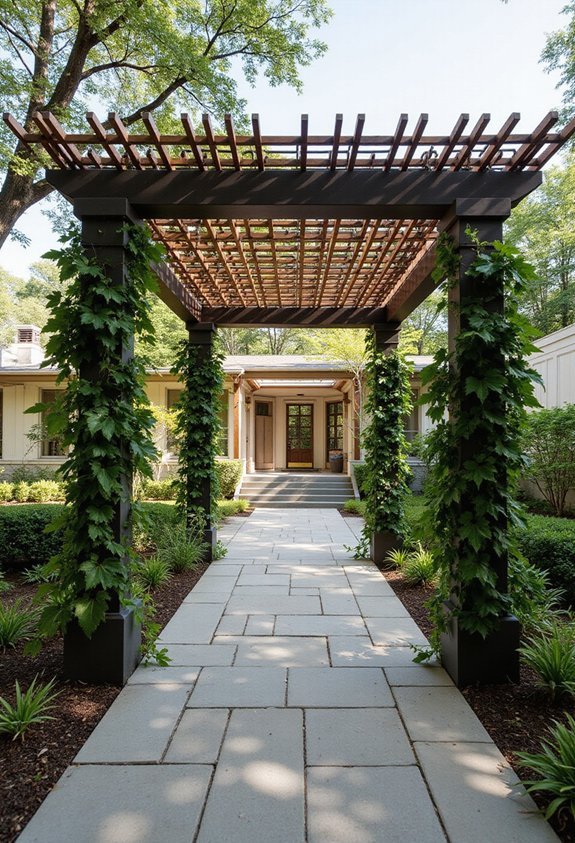
While corner pergolas nestle into existing yard layouts, freestanding pergolas stand alone in your front yard and become commanding visual elements that draw the eye and anchor your entire outdoor design scheme. You’ll position these structures in the center or prominent areas of your yard, where they’re visible from the street and from inside your home. Freestanding pergolas work best in larger front yards where you’ve got adequate space without crowding existing landscaping or pathways. They’re ideal for creating defined gathering areas, framing garden beds, or showcasing specimen plants beneath their open slats. When you select a freestanding pergola, you’re making a deliberate design statement that transforms your front yard into a sophisticated outdoor living space.
Dual-Purpose Pergolas With Built-In Seating & Planters
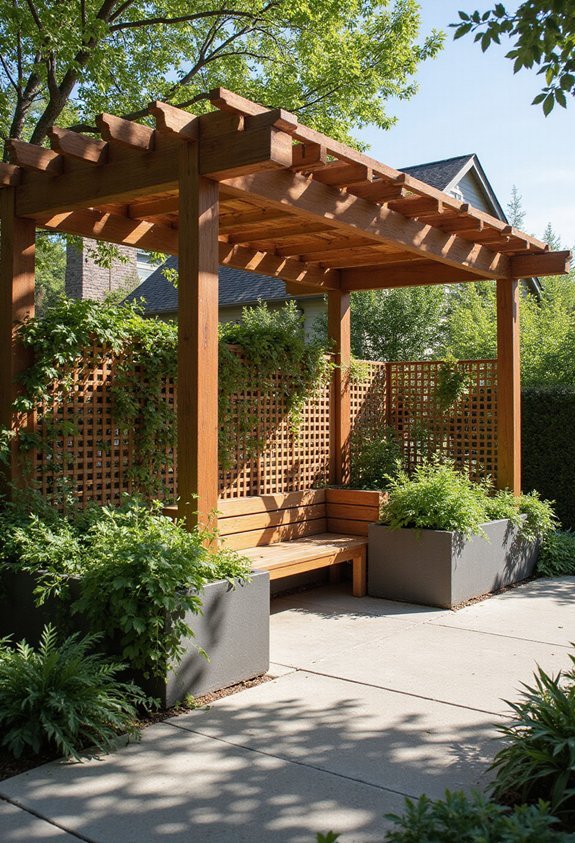
Maximize your front yard’s functionality by choosing a pergola design that combines structural shade with integrated seating and planting features, allowing you to accomplish multiple landscaping goals within a single cohesive structure. You’ll create a comfortable gathering space while incorporating vibrant flowers, climbing vines, or trailing plants that enhance your home’s curb appeal. Built-in benches along the pergola’s perimeter provide seating without requiring additional furniture purchases, while planter boxes or hanging gardens utilize vertical space efficiently. This dual-purpose approach reduces your yard’s visual clutter and minimizes maintenance by consolidating different landscape elements. When selecting materials and dimensions, guarantee the seating height accommodates standard comfort levels, typically between 16 and 18 inches, and that planter placement doesn’t obstruct sightlines or create safety hazards.
Pergolas Paired With Water Features for Sensory Appeal
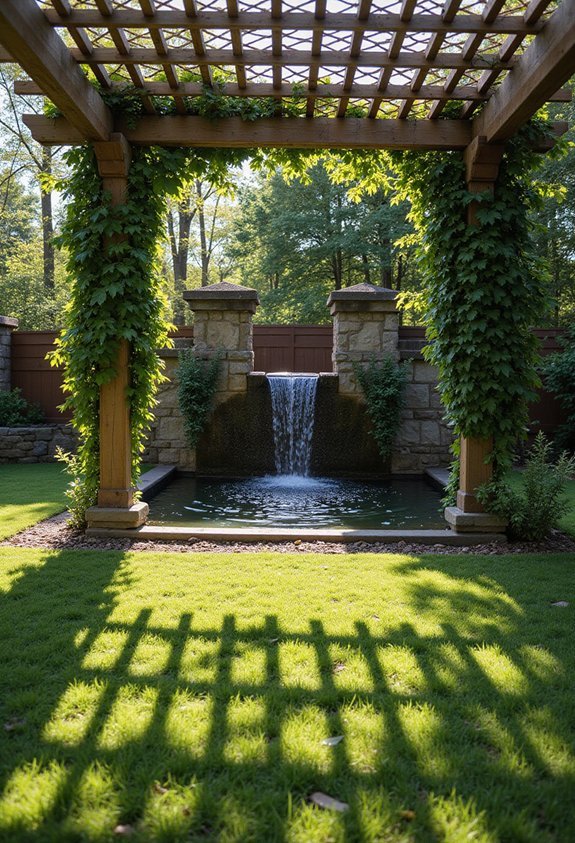
Beyond the functional benefits of seating and planters, you can elevate your front yard’s appeal by incorporating water features beneath or alongside your pergola structure, creating an environment that engages multiple senses through sight, sound, and touch. Installing a small fountain or pond underneath your pergola provides cooling effects during hot months while producing gentle sounds that mask street noise, enhancing tranquility. You might position a shallow birdbath near the pergola’s support posts, attracting wildlife and adding visual interest. Consider adding a recirculating water wall along one side, which delivers both aesthetic beauty and ambient soundscaping. These water features don’t require extensive installation and can be integrated seamlessly with your existing pergola design, transforming your front yard into a multisensory retreat that combines shade, style, and natural elements.
Budget-Friendly DIY Pergola Designs You Can Build Yourself
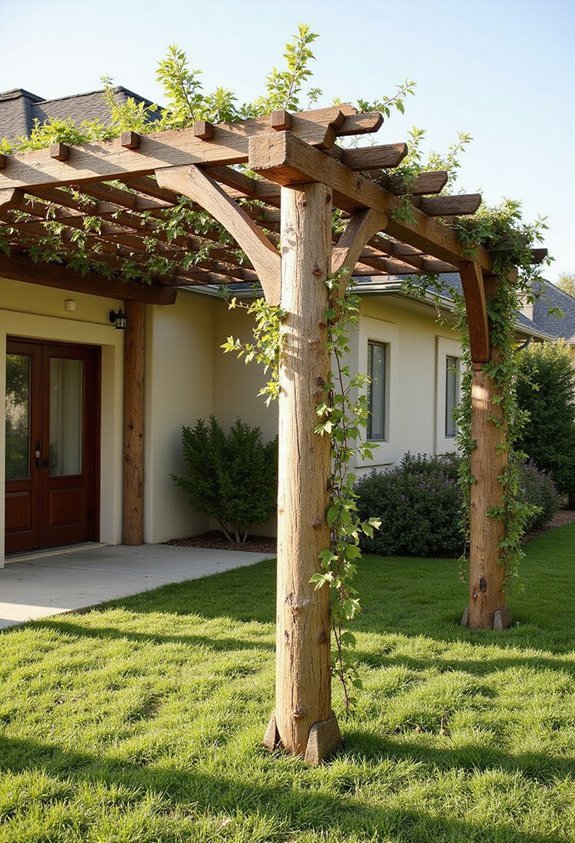
If you’re concerned about the expense of hiring professionals to install a pergola, you’ll find that building one yourself can substantially reduce costs while giving you complete control over the design and materials. You can construct a basic pergola using standard lumber like 4×4 posts and 2×6 beams, which are affordable and widely available. Start by sketching your design and determining dimensions that fit your front yard space. Gather essential tools including a drill, saw, level, and measuring tape. Set concrete footings for stability, then assemble the frame using galvanized bolts and brackets to prevent rust. Paint or stain the wood to match your home’s exterior. This methodical approach allows you to create a functional, attractive pergola while managing your budget effectively and building valuable carpentry skills.
Conclusion
You’ve explored nine distinct pergola styles that’ll transform your front yard into a functional, attractive outdoor space. Whether you’re drawn to modern minimalism, rustic charm, or Mediterranean sophistication, remember that “the best time to plant a tree was twenty years ago, but the second best time is now”—and that principle applies to installing your pergola. Select the design that matches your home’s architecture and your budget, then take action to enhance your curb appeal.