When you’re planning your front yard’s hardscape, clean lines and geometric precision transform an ordinary space into a polished, intentional landscape. You’ll discover how straight edges, symmetrical patterns, and strategic material choices—from concrete pathways to permeable pavers—create visual flow while maintaining functionality. But which layout works best for your specific needs and budget? The answer depends on understanding how these nine distinct design approaches can maximize your property’s potential.
Minimalist Concrete Pathways With Geometric Precision
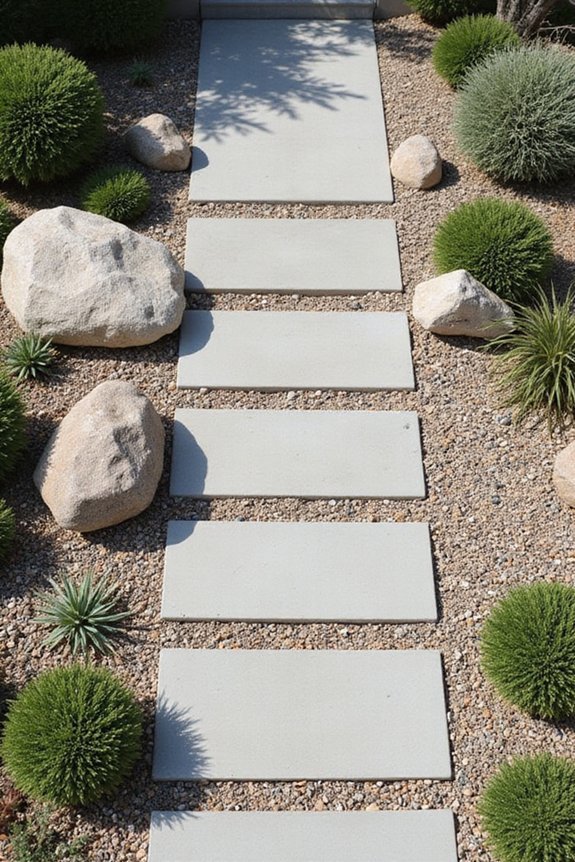
When you’re planning a front yard hardscape, minimalist concrete pathways with geometric precision offer a clean, modern aesthetic that’ll transform your outdoor space into an organized and visually appealing area. You’ll create these pathways by using straight lines, right angles, and symmetrical patterns that guide visitors through your yard efficiently. Start by measuring your space carefully, then mark your pathway routes using chalk or string to guarantee accuracy before pouring concrete. You can incorporate geometric shapes like rectangles, squares, or linear strips that complement your home’s architecture. Consider adding subtle texture or scoring lines into the concrete surface for visual interest while maintaining simplicity. This approach reduces maintenance requirements, prevents plant overgrowth, and establishes clear boundaries between different yard zones, creating a functional and sophisticated outdoor environment.
Also read: 19 MEDITERRANEAN FRONT YARD Details That Feel Like Vacation!
Contrasting Gravel and Stone Edging
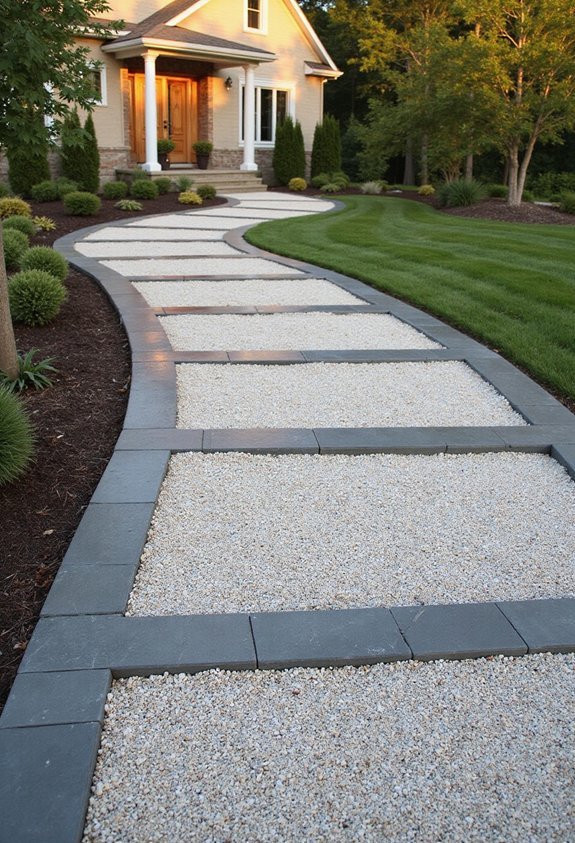
After you’ve established your concrete pathways, you’ll want to define the spaces between them using contrasting gravel and stone edging, which creates visual depth while separating different yard zones effectively. You can choose lighter gravel colors like pea gravel or crushed granite to contrast with darker stone borders, or vice versa, depending on your home’s exterior palette. Install rigid edging materials such as metal or composite strips along pathway borders to contain the gravel and prevent it from spreading into planting areas. Select stones that complement your hardscape’s geometric lines, ensuring they align with your pathways’ angles and proportions. This layered approach strengthens your yard’s organized appearance while providing practical separation between landscaping elements and defined walking areas.
Permeable Paver Layouts for Functional Zones
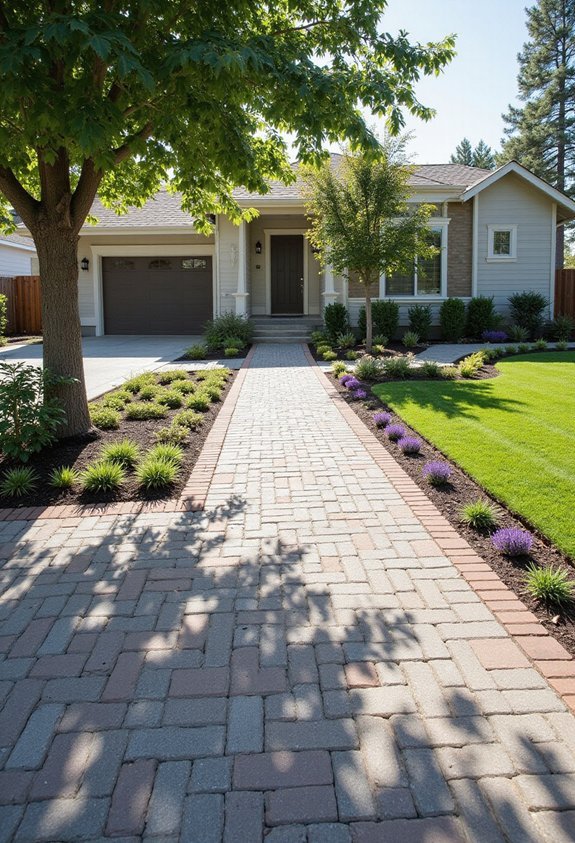
Because you’ll want your front yard to handle water drainage while maintaining distinct activity zones, permeable pavers offer an excellent solution that combines practical function with visual organization. You can designate specific areas for walking paths, parking spaces, or seating zones by arranging pavers in strategic patterns. These pavers allow water to filter through the surface into the ground below, preventing puddles and erosion. When planning your layout, consider traffic flow patterns and how people naturally move through your space. You might create a primary pathway leading to your entrance, then branch into secondary zones for different purposes. By selecting pavers in complementary colors or sizes, you’ll establish clear visual boundaries between functional areas while maintaining your hardscape’s cohesive, clean-lined aesthetic.
Mixed-Material Driveways: Concrete, Brick, and Stone
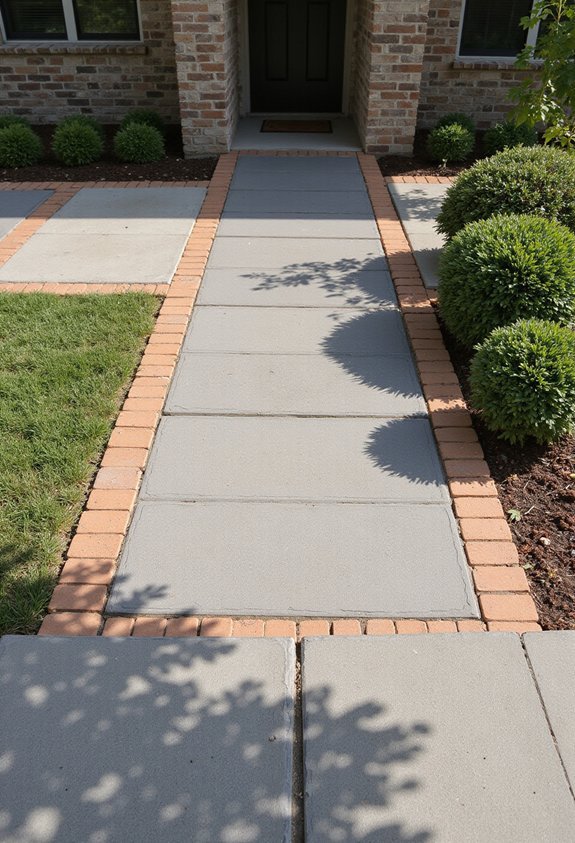
While permeable pavers excel at creating distinct zones throughout your front yard, your driveway demands a more robust approach that combines durability with visual appeal, and mixing materials allows you to achieve both goals simultaneously. You can combine concrete as your base layer for structural strength, then add brick borders or stone accents along the edges to enhance aesthetic appeal. Concrete handles heavy vehicle traffic effectively, while brick and stone contribute elegant detailing that complements your home’s exterior. This layered approach distributes weight evenly across your driveway surface, reducing cracking risks. You’ll also benefit from improved drainage when you incorporate permeable stone sections strategically between concrete areas. Select materials that coordinate with your home’s architectural style, ensuring your mixed-material driveway functions as both a practical vehicle surface and a visually cohesive design element.
Raised Planters as Structural Focal Points
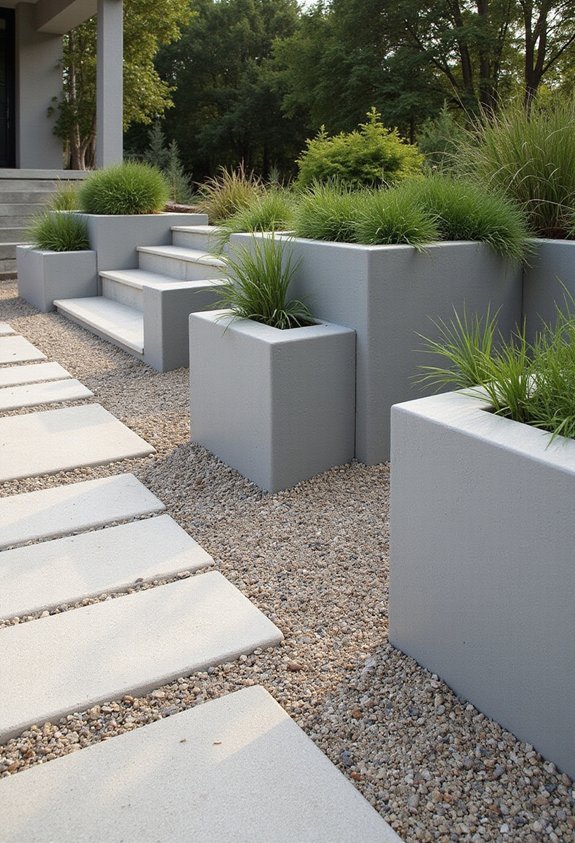
If you’re looking to add definition and visual interest to your front yard while creating practical planting spaces, raised planters serve as excellent structural elements that transform your hardscape design. You can construct them from stone, brick, or composite materials that complement your driveway and walkways. By positioning raised planters strategically along pathways or property borders, you’ll create natural visual boundaries that guide visitors through your landscape. They’ll elevate your plants to eye level, making them more prominent focal points. You should consider varying heights and widths to establish dynamic proportions, which prevents monotony. Raised planters also improve drainage and soil quality, benefiting plant health considerably. When you integrate them with clean hardscape lines, they’ll enhance your front yard’s overall cohesion and architectural appeal.
Linear Stepping Stones Through Open Space
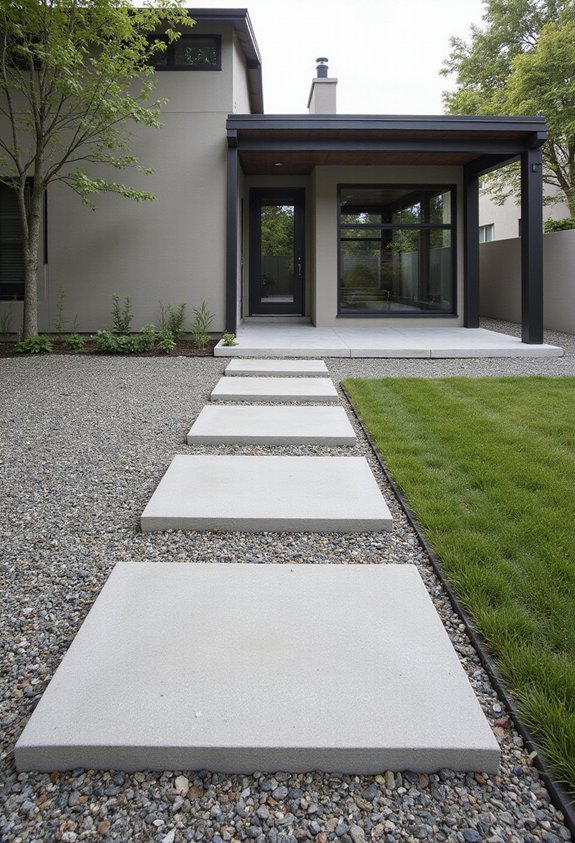
Strategic pathways connecting your raised planters and other hardscape features create natural movement through your front yard, and linear stepping stones offer an elegant solution for guiding foot traffic across open lawn areas. You can arrange flat stones in straight or gently curved lines, spacing them approximately 12 to 18 inches apart to accommodate an average stride. Materials like flagstone, slate, or concrete pavers work well because they’re durable and weather-resistant. Install stepping stones slightly below grass level to prevent tripping hazards and allow your mower to pass smoothly overhead. This design approach simultaneously serves functional and aesthetic purposes, defining traffic patterns while maintaining visual simplicity and creating clean sightlines throughout your front yard landscape.
Decorative Retaining Walls With Horizontal Lines
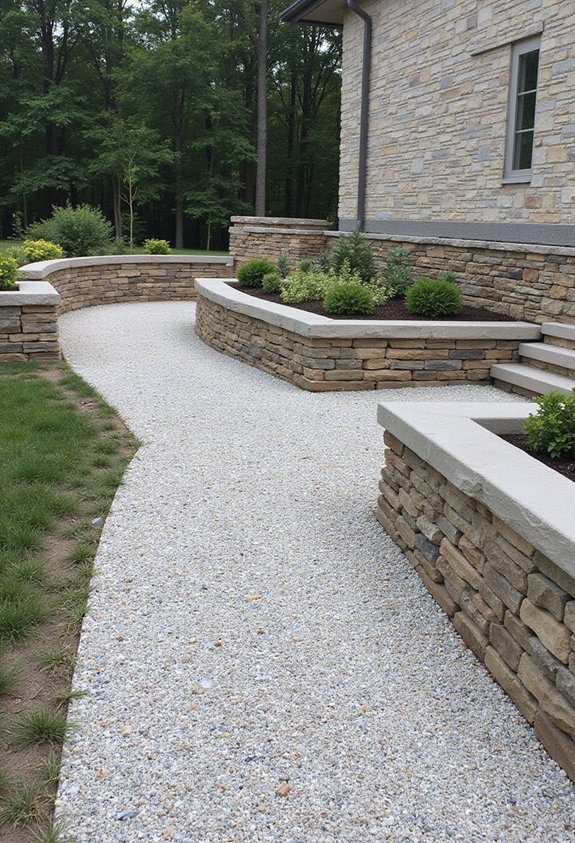
Because they’re both functional and visually striking, decorative retaining walls with horizontal lines can dramatically transform your front yard’s appearance while solving practical drainage and erosion issues. You’ll find that horizontal lines create a modern, organized aesthetic that complements contemporary home designs. When you construct these walls, you’re establishing distinct landscape levels that prevent soil movement and water runoff, protecting your property’s foundation. Materials like stone, brick, or composite blocks allow you to customize the visual impact while maintaining structural integrity. The horizontal striping naturally draws the eye across your yard, making spaces appear wider and more intentional. You can incorporate lighting along these walls to enhance nighttime visibility and create architectural interest that highlights your home’s exterior.
Circular Paver Patterns for Visual Softness
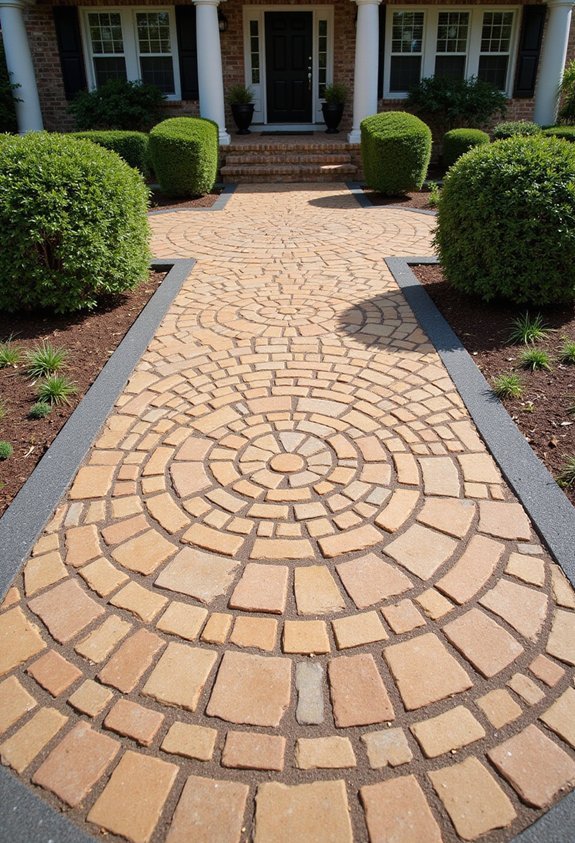
While horizontal lines in hardscape design create structured, geometric appeal, circular paver patterns offer a contrasting approach that’ll soften your front yard’s overall appearance and introduce flowing, organic movement to your landscape. You can arrange pavers in concentric circles radiating outward from a central point, creating focal points that draw the eye naturally through your yard. This technique works particularly well around trees, water features, or entryways. Consider using varying sizes and colors within your circular design to add visual interest and depth. The curved lines complement curved plantings and reduce the stark, rigid feeling that purely linear designs can create, resulting in a balanced, welcoming front yard aesthetic.
Monochromatic Stone Arrangements for Cohesion
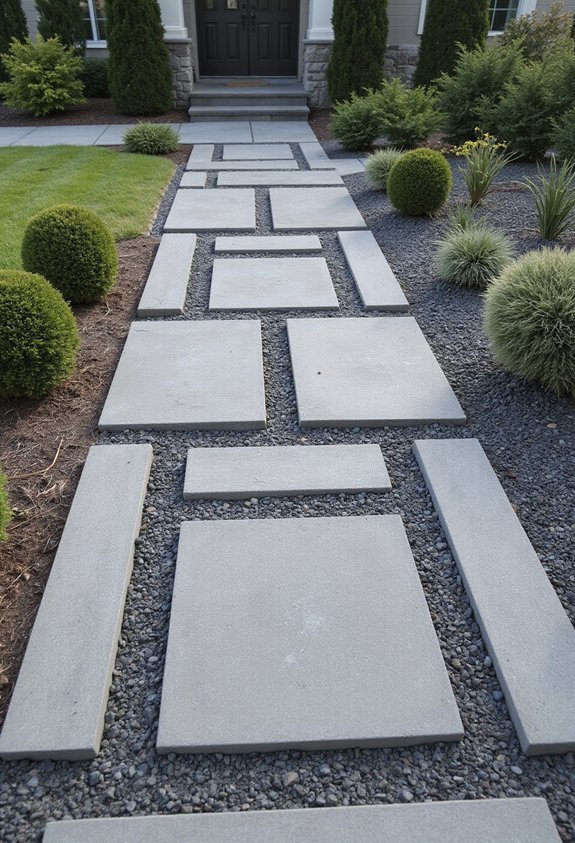
When you’re designing your front yard hardscape, using stones in a single color or closely related shades creates a unified, harmonious appearance that’ll tie your entire landscape together visually. You can select from various monochromatic options like gray, charcoal, beige, or warm tan tones, depending on your home’s exterior palette. Arranging these stones in consistent patterns—whether you choose straight lines, geometric shapes, or subtle gradations in texture—reinforces cohesion throughout your yard. This approach works particularly well with pavers, flagstone, or gravel, as it establishes visual continuity that guides the eye naturally across your space. By maintaining color consistency, you’ll create a sophisticated, intentional design that feels professionally planned and carefully executed, enhancing your home’s overall curb appeal.
Integrated Hardscape Lighting Systems
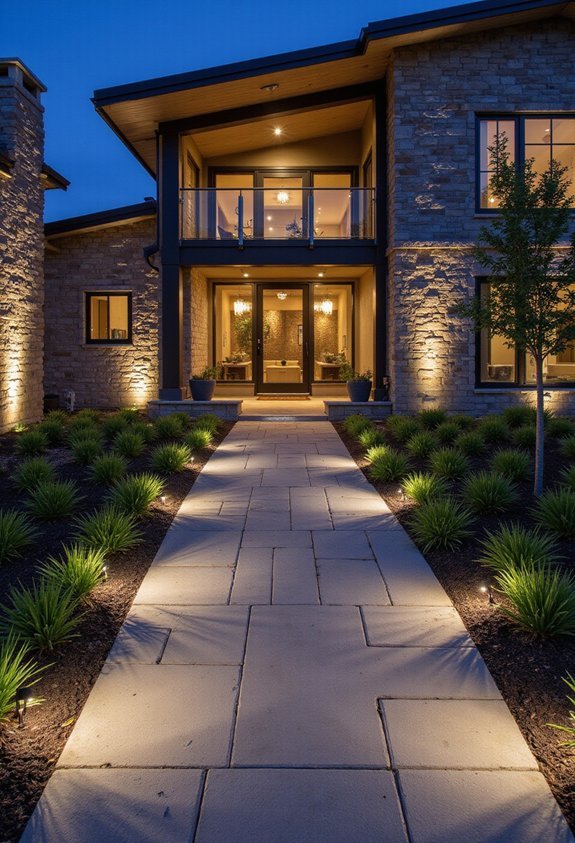
Strategic lighting placement throughout your hardscape transforms your front yard’s functionality and visual appeal, particularly during evening hours when natural daylight fades. You’ll want to install pathway lights along walkways and driveways to enhance safety and guide visitors effectively. Consider uplighting to highlight architectural features, stone textures, and landscaping elements that deserve attention. Recessed lighting within hardscape materials creates subtle, sophisticated effects that define edges and shifts between different zones. You should choose LED options because they’re energy-efficient and durable for outdoor conditions. Install lights on timers or motion sensors to optimize convenience and security while reducing unnecessary electricity consumption. Proper spacing between fixtures—typically 4 to 8 feet apart—ensures even illumination without creating harsh shadows or dark spots throughout your front yard design.
Split-Level Entry Designs for Sloped Lots

If you’re working with a sloped front yard, you’ll find that split-level entry designs offer a practical solution that transforms elevation changes into architectural advantages rather than viewing them as obstacles to overcome. You can create distinct zones by building retaining walls that separate different height levels, establishing visual interest while managing water drainage effectively. Tiered planting beds work well alongside stepped pathways, guiding visitors naturally from street level to your front door. You’ll want to incorporate sturdy handrails and non-slip surfaces on stairs for safety, especially during wet conditions. Strategic placement of hardscape materials like pavers, stone, or composite decking helps define each level clearly. This approach maximizes usable space and prevents erosion while enhancing your home’s curb appeal through intentional design.
Gravel Gardens With Defined Edging Systems
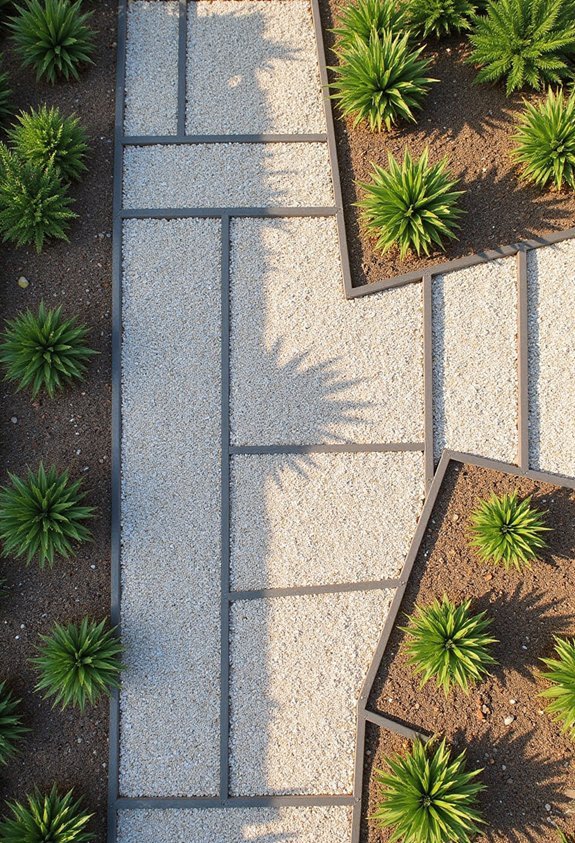
Because gravel gardens offer low-maintenance solutions for front yard landscaping, you’ll find that proper edging systems become essential for keeping your design looking organized and preventing gravel from spreading into surrounding areas. You can choose from several edging materials, including metal strips, plastic borders, wood planks, or concrete pavers, depending on your budget and aesthetic preferences. Metal edging provides durability and a modern appearance, while wood offers a natural look but requires periodic maintenance. Install your edging at least two to three inches above ground level to effectively contain gravel and create clean separation between planted beds and walkways. Properly anchored edging systems also prevent gravel migration during heavy rain and foot traffic, maintaining your front yard’s polished appearance throughout the seasons.
Asymmetrical Designs for Visual Balance
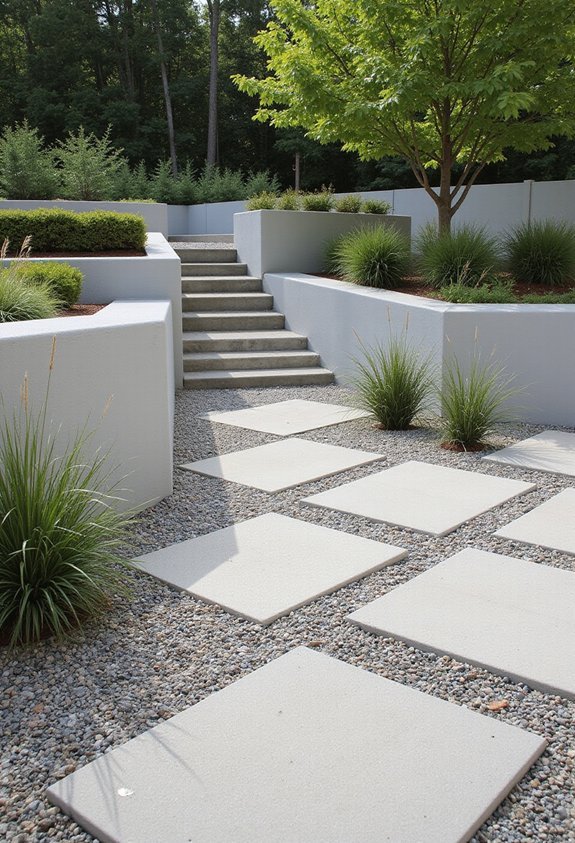
While symmetrical layouts create formal, predictable front yards, asymmetrical designs offer a more dynamic approach that can actually feel more balanced and visually interesting to the human eye. You’ll achieve this balance by distributing visual weight unevenly across your yard, using varied hardscape elements strategically placed rather than mirrored. Consider positioning a larger stone patio on one side while placing a smaller gravel seating area on the opposite side, offsetting their visual impact through different materials and textures. You can anchor asymmetrical designs with focal points like specimen plants, water features, or decorative stones positioned off-center, drawing the eye naturally across your landscape. This method creates engaging yards that feel intentional and sophisticated while maintaining equilibrium through careful element placement.
Eco-Friendly Grid Paver Systems
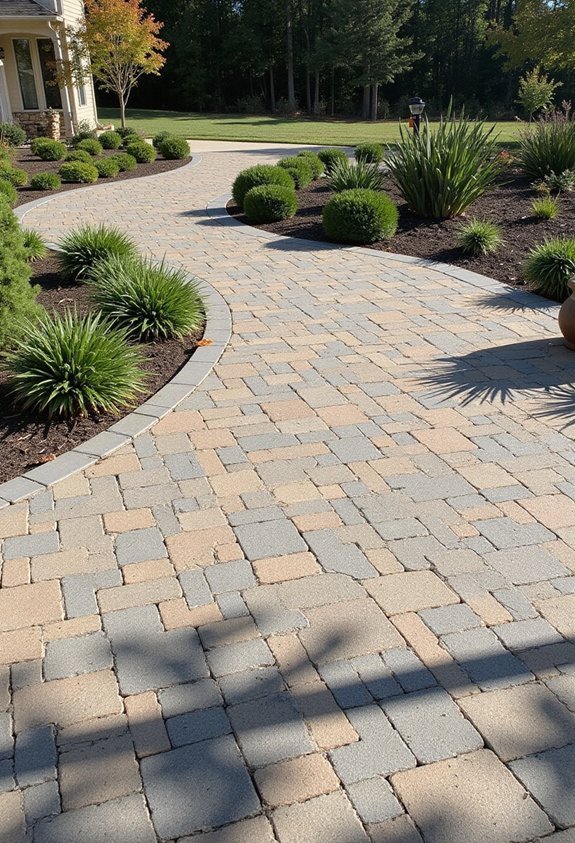
Grid paver systems represent an innovative solution for front yards that combines durability with environmental responsibility by allowing water to permeate through gaps rather than running off into storm drains. You’ll benefit from reduced flooding and erosion when you install these permeable pavers, which let rainfall infiltrate the soil beneath your driveway or walkway. The interlocking grid structure distributes weight evenly, preventing settling and cracking that typically occurs with solid concrete surfaces. You can fill the gaps with gravel, sand, or grass, creating a customizable aesthetic while maintaining functionality. This system reduces your yard’s environmental impact by decreasing stormwater runoff and replenishing groundwater supplies. Additionally, you’ll experience lower maintenance requirements compared to traditional hardscaping, making eco-friendly grid pavers a practical investment for sustainable front yard design.
Stone Veneer Accent Walls as Focal Points
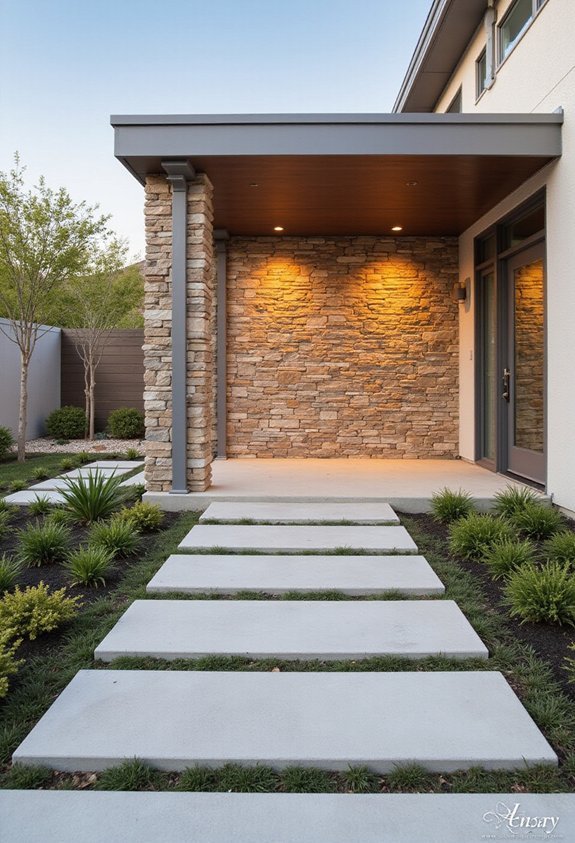
Stone veneer accent walls can transform your front yard into an eye-catching display that draws attention to your home’s entrance while adding significant visual depth and character to an otherwise plain exterior. You’ll want to select a location that’s naturally visible from the street, such as near your entry gate or alongside your driveway. Choose stone colors that complement your home’s existing palette and architectural style. Install your veneer using proper mortar and waterproofing techniques to guarantee, assure, or safeguard longevity and weather resistance. You can enhance the focal point further by incorporating uplighting, which illuminates the wall during evening hours and creates dramatic shadows. Strategic placement of plantings around the base softens the hardscape while directing visitors’ eyes toward your home’s entrance.
L-Shaped Paver Configurations for Corner Properties
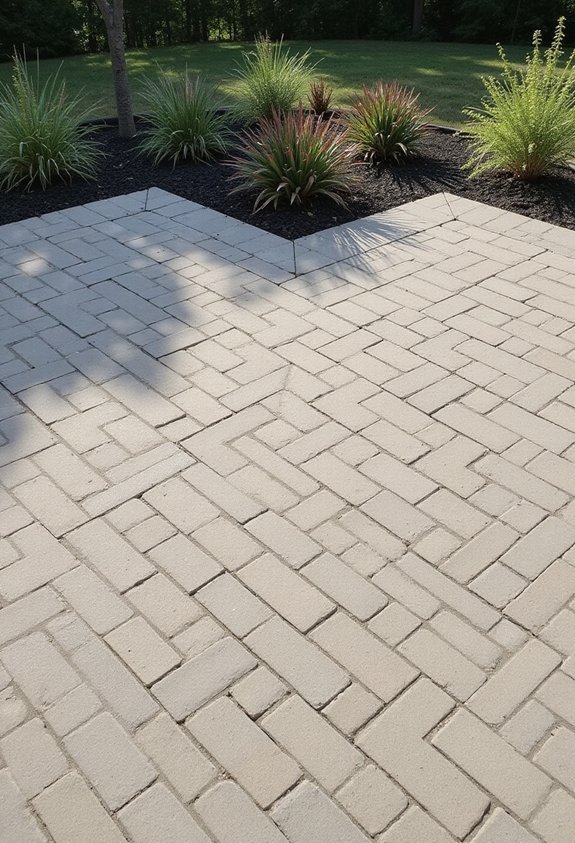
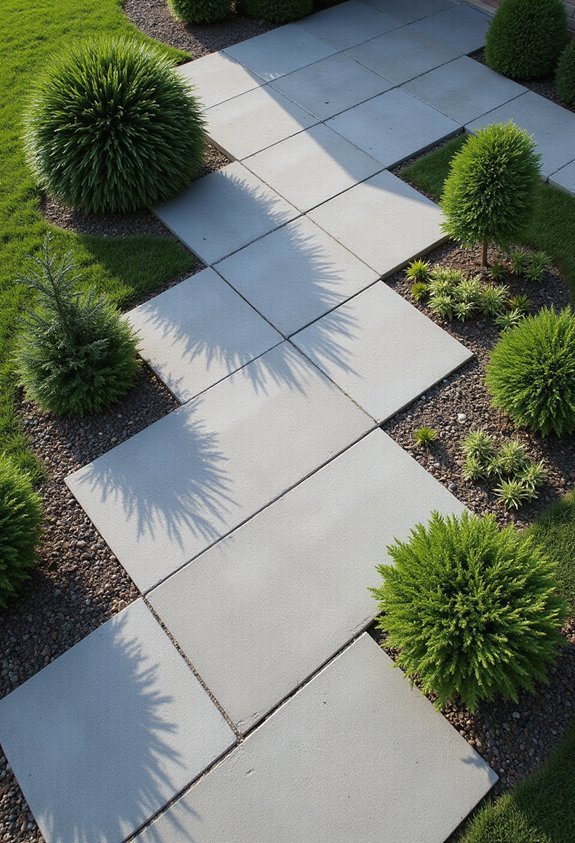
Pavers arranged in an L-shaped pattern offer a practical and visually appealing solution for corner lots, where you’ll want to maximize usable space while creating clear pathways that guide foot traffic around your property’s perimeter. You’ll benefit from this configuration because it naturally follows your property lines and accommodates driveways or sidewalks efficiently. When you’re planning your layout, measure your corner dimensions carefully and choose pavers that complement your home’s architectural style. You should consider drainage patterns to prevent water accumulation in the angle where the two sections meet. Orient your pavers in a consistent direction or alternating pattern to enhance visual continuity. This design approach guarantees your corner property becomes both functional and aesthetically cohesive while maintaining clean, organized lines throughout your front yard.
Hardscape Water Features Embedded in Pavers
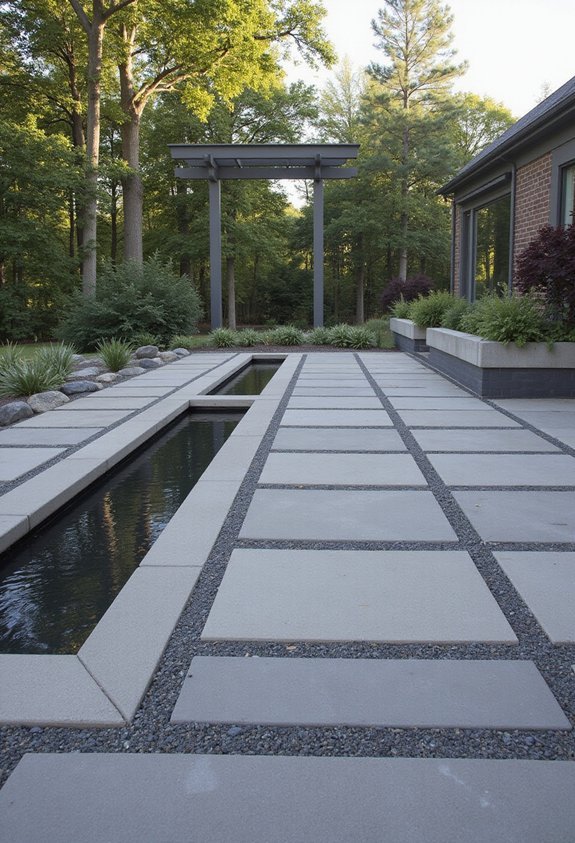
Because water features can transform your front yard into a dynamic landscape that combines functionality with visual interest, you’ll want to understand how to integrate them directly into your paver design. You can embed shallow basins, channels, or fountains between pavers to create seamless water circulation throughout your layout. When planning this integration, you’ll need to ascertain proper drainage systems sit beneath your pavers to prevent water pooling and structural damage. You should select durable materials that withstand constant moisture exposure, such as sealed natural stone or porcelain pavers. Installing a recirculating pump system allows water to flow continuously while maintaining efficiency. Position your water feature strategically along walkways or focal points where it’ll enhance visual appeal while remaining functional and accessible for maintenance throughout seasons.
Striped Paver Designs for Dynamic Movement

Visual rhythm and directional flow are essential elements you’ll want to master when creating striped paver patterns for your front yard hardscape. You can arrange pavers in diagonal, herringbone, or parallel lines to guide visitors’ eyes toward your entrance while creating visual interest. Diagonal stripes make spaces appear larger and more dynamic, while parallel lines offer a clean, organized aesthetic. You’ll achieve the best results by selecting two complementary paver colors or finishes that contrast sufficiently, allowing the striped pattern to stand out clearly against your landscape. Consider your home’s architectural style when choosing stripe direction and width, ensuring the pattern complements existing design elements. Properly installed striped patterns enhance curb appeal while directing foot traffic efficiently throughout your front yard.
Crushed Stone Layouts on a Budget
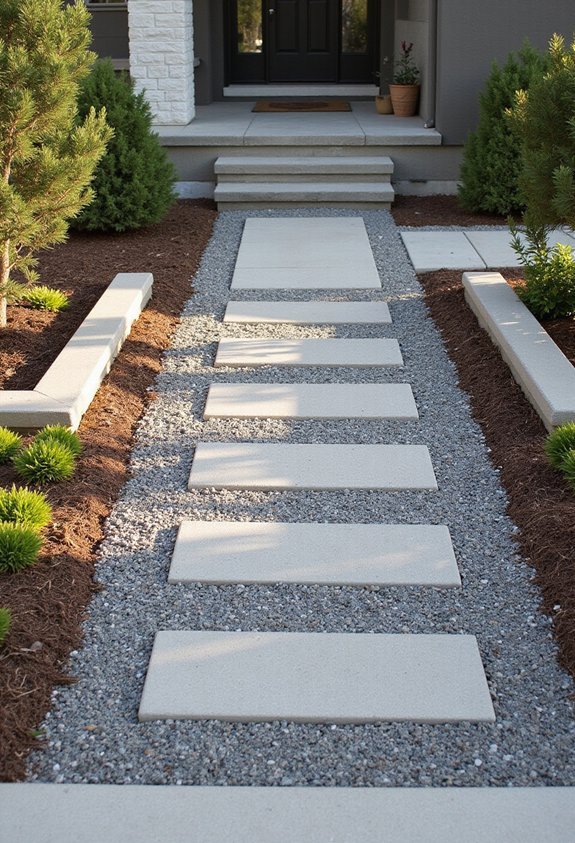
If you’re looking for an affordable alternative to traditional hardscape materials, crushed stone offers you a practical solution that doesn’t compromise on functionality or appearance. You can create clean, organized pathways and garden beds by laying landscape fabric first, which prevents weeds from growing through your stone layers. Next, you’ll spread crushed stone evenly across your designated areas, maintaining consistent depth of about two to three inches for ideal coverage and durability. You should rake the surface smooth to achieve polished, intentional lines that complement your home’s exterior. Regular maintenance involves occasional raking and adding fresh stone annually to maintain appearance and prevent settling. This budget-friendly approach provides excellent drainage, reduces maintenance demands, and creates visually defined spaces that enhance your front yard’s overall design while keeping costs minimal.
Mixed-Width Pavers for Polished Results
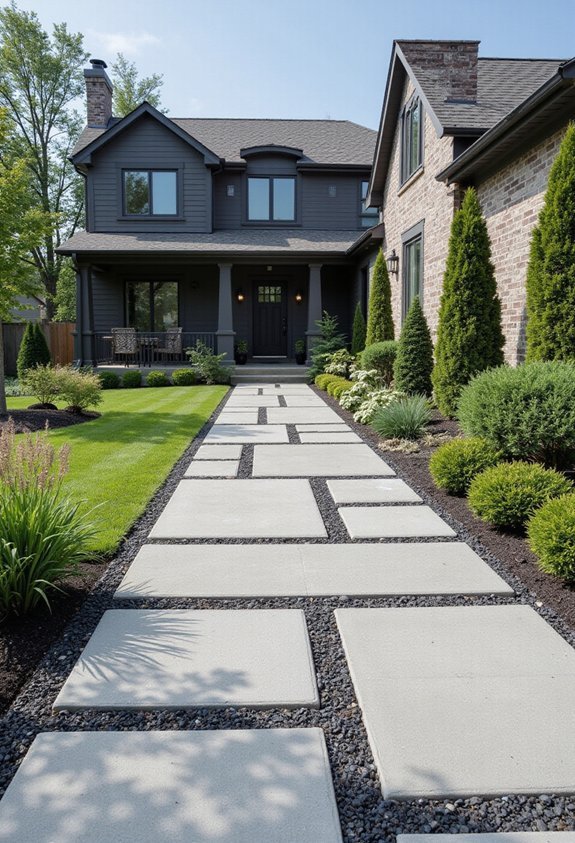
For a more refined and sophisticated hardscape aesthetic, mixed-width pavers deliver professional-quality results that’ll dramatically elevate your front yard’s appearance. You’ll arrange pavers in varying widths—typically combining narrow, medium, and wide stones—creating dynamic visual patterns that guide the eye naturally across your landscape. This technique breaks up monotony while maintaining clean lines through careful planning and precise placement. Start by sketching your design layout, ensuring width shifts flow logically and create balanced proportions. You’ll install pavers using a consistent base layer of sand and gravel, maintaining even spacing between stones for structural integrity. Mixed-width designs work particularly well along pathways and entry areas, where they create focal points. This method requires more planning than single-size layouts, but the polished, intentional appearance justifies the additional effort and investment.
DIY-Installable Hardscape Layouts
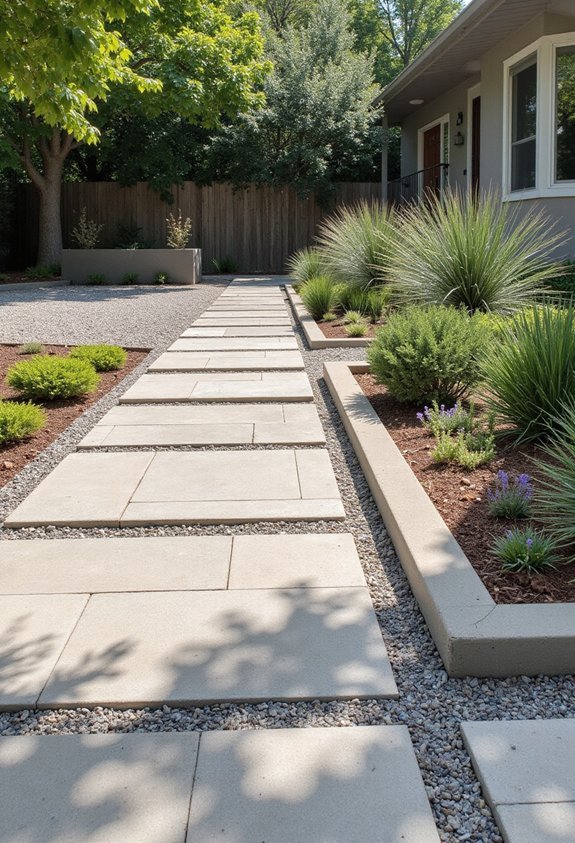
You don’t need professional experience to create a durable, attractive hardscape in your front yard when you choose designs that prioritize simplicity and straightforward installation methods. Start by selecting materials like concrete pavers or gravel that don’t require specialized tools or advanced skills. Plan your layout on paper first, measuring your space carefully and sketching where each element will go. Use string lines and stakes to mark boundaries, ensuring straight edges and proper alignment. Layer your materials systematically, compacting each section thoroughly to prevent settling. Choose permeable options when possible, as they’re easier to install and maintain. Work in manageable sections rather than attempting your entire yard at once. Follow manufacturer instructions precisely, and don’t hesitate to watch instructional videos for clarification on specific techniques.
Conclusion
You’ll discover that hardscape front yards with clean lines increase your home’s curb appeal by up to 30%, according to landscape design studies. By implementing geometric patterns, permeable pavers, and strategic lighting, you’re creating functional zones that enhance both aesthetics and drainage. These minimalist designs require thoughtful planning but reward you with low-maintenance outdoor spaces that’ll withstand years of use while maintaining their polished appearance.