
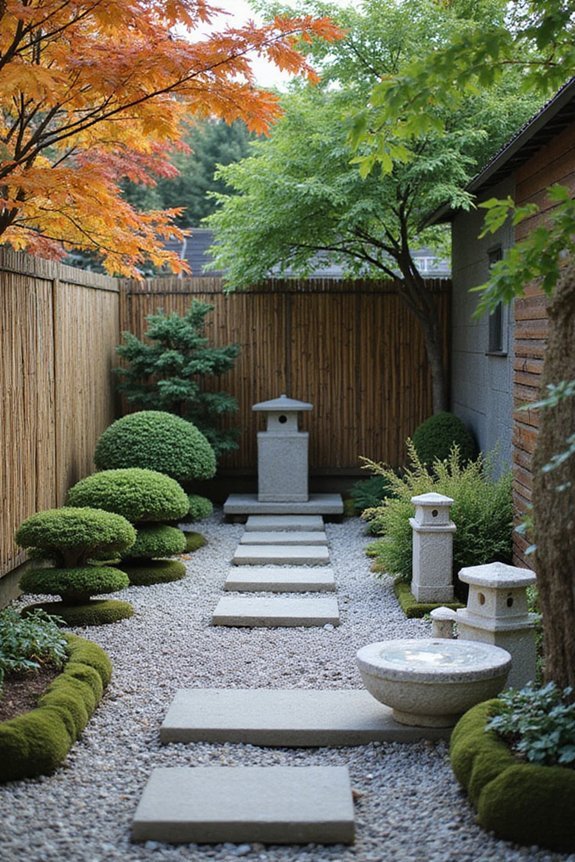
Japanese garden design intentionally uses empty space as much as planted elements to create visual calm. You can transform your front yard into a tranquil retreat by understanding the principles of asymmetry, layered plantings, and restrained color choices that make these gardens feel so peaceful. Discover how stone pathways, native plants, and thoughtful negative space work together to establish an atmosphere of harmony—without requiring extensive maintenance.
Start With Design Philosophy: Asymmetry and Balance
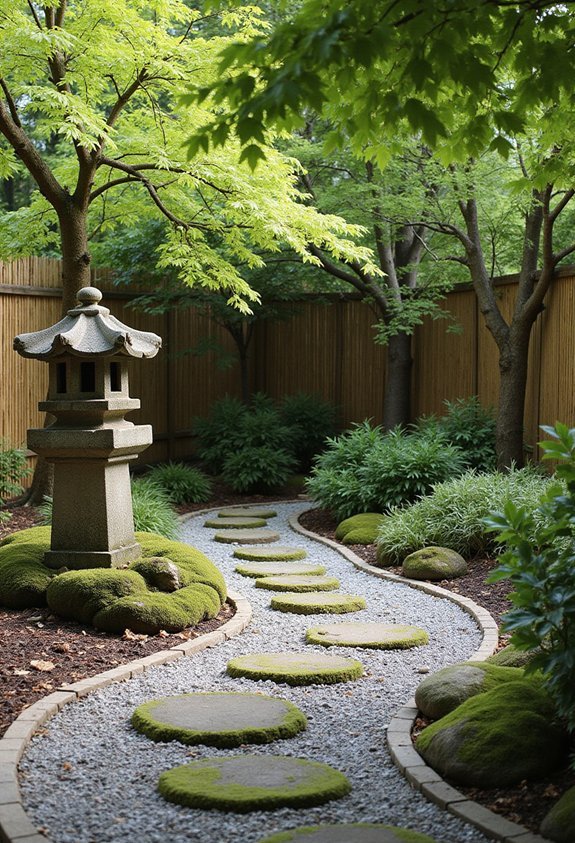
Because Japanese gardens have been perfected over centuries, they’ve developed a unique design philosophy that you’ll want to understand before planning your front yard. The foundation of this philosophy rests on asymmetry and balance, two concepts that might seem contradictory but work together harmoniously. Rather than creating symmetrical designs with matching elements on both sides, you’ll arrange plants, rocks, and water features unevenly across your space. This asymmetrical approach feels more natural and inviting than rigid symmetry. However, you must maintain overall balance by distributing visual weight throughout your yard. A large stone placement on one side requires counterbalance through carefully positioned plantings or water elements on the other side. This deliberate arrangement creates dynamic compositions that draw your eye through the landscape methodically and purposefully.
Also read: 19 MEDITERRANEAN FRONT YARD Details That Feel Like Vacation!
Create Depth Through Layered Plant Placement
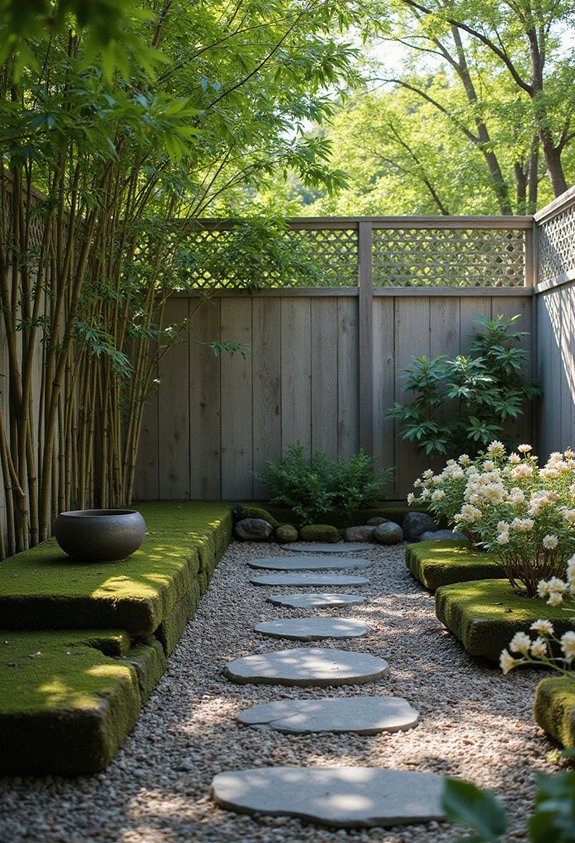
As you arrange plants throughout your front yard, you’ll want to think about how they sit at different distances from the viewer, which creates the illusion of depth and makes your space feel larger than it actually is. Position tall plants, like bamboo or Japanese maples, toward the back of your yard to establish a visual boundary. Place medium-height shrubs in the middle ground, and position low-growing groundcovers and moss near the front edges. This layered arrangement guides your eye gradually through the space, creating dimension and perspective. The varying heights work together to establish visual depth, transforming even small front yards into seemingly expansive landscapes. By strategically placing plants at different levels, you’ll develop a more sophisticated and intentional Japanese garden aesthetic.
Design Negative Space Intentionally
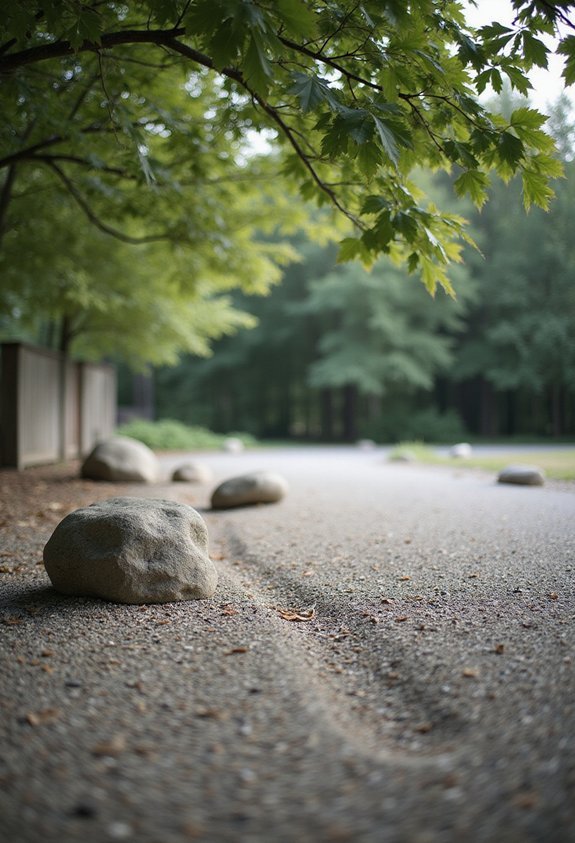
While plants and hardscape elements grab your attention, the empty spaces between them—called negative space—are equally important to creating an authentic Japanese front yard. You’ll want to resist the urge to fill every inch of your yard with decorative features, as simplicity is fundamental to Japanese design philosophy. Instead, leave intentional gaps between plantings, rocks, and pathways that allow your eye to rest and appreciate what’s actually there. These open areas create visual balance and prevent your front yard from feeling cluttered or overwhelming. Strategic negative space also helps individual design elements stand out more prominently, making each plant, stone, or water feature feel purposeful rather than arbitrary. This thoughtful restraint ultimately enhances the peaceful, meditative quality you’re aiming to achieve.
Choose a Restrained Color Palette
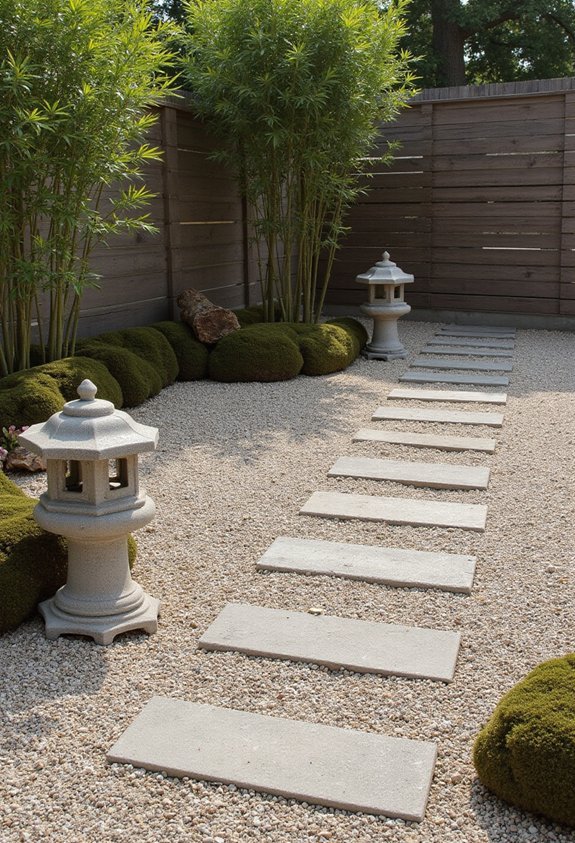
Just as you’ve intentionally used negative space to create balance, you’ll want to apply the same principle of restraint to your color choices throughout your Japanese front yard. Limit your palette to neutral tones like grays, blacks, whites, and soft browns that reflect natural materials such as stone, wood, and soil. These subdued colors create a calm, meditative atmosphere while allowing architectural elements and plants to stand out without competing visually. Incorporate muted greens from your landscaping as secondary colors, ensuring they complement rather than dominate your design. Avoid bright, saturated hues that create visual chaos. This restrained approach maintains the peaceful aesthetic fundamental to Japanese gardens, allowing visitors to focus on form, texture, and the interplay of light and shadow.
Establish Your Entryway With Stone Pathways
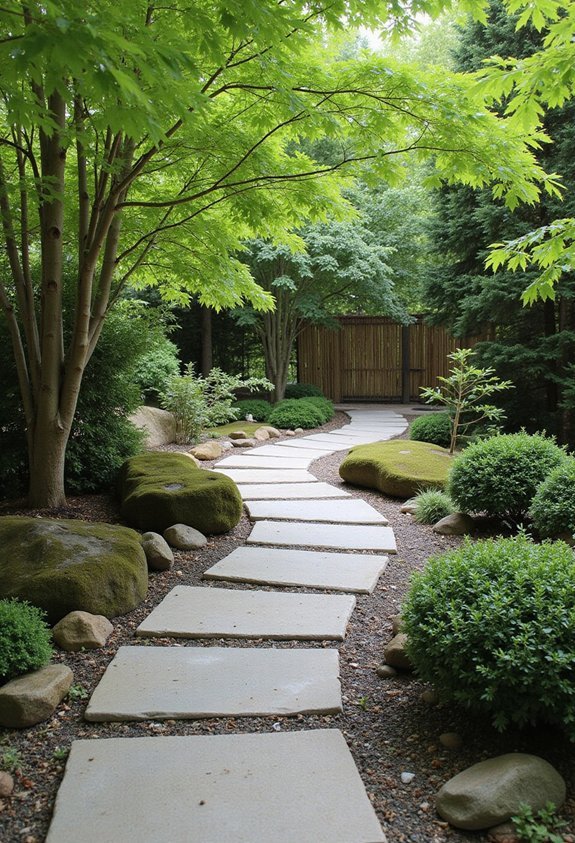
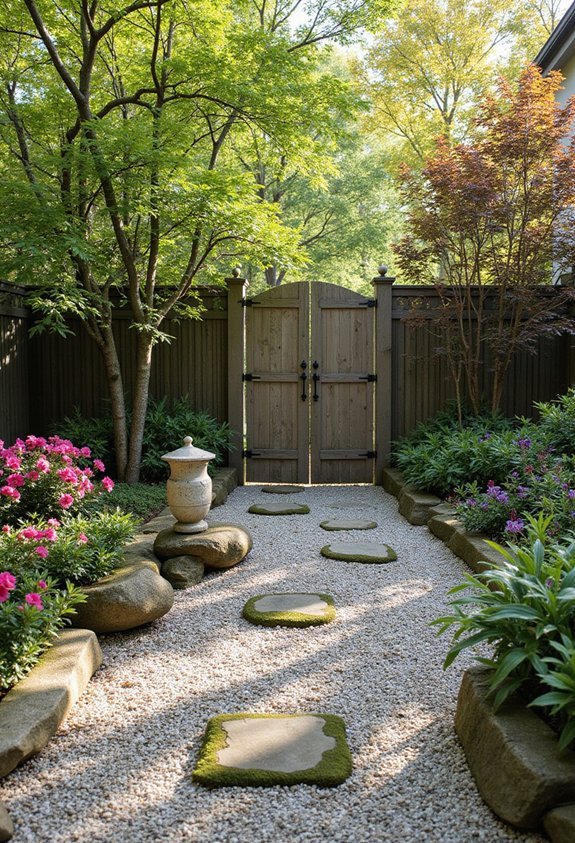
Stone pathways serve as the foundation for guiding visitors through your Japanese front yard, and they’re where you’ll put your restrained color palette and thoughtful spacing into practical use. You should select natural stones like flagstone or slate, which complement the minimalist aesthetic while blending harmoniously with your surroundings. Arrange the stones with deliberate spacing between each piece, allowing moss or low groundcover to grow naturally in the gaps, creating visual interest without cluttering the design. Position your pathway to wind gently rather than travel in straight lines, encouraging visitors to slow down and appreciate the landscape. This curved approach aligns with Japanese design principles that emphasize harmony with nature. Guarantee the stones are level and secure, preventing tripping hazards while maintaining safety throughout your entry space.
Add Texture With Gravel and Ground Cover

To complement your stone pathways and create visual depth throughout your Japanese front yard, you’ll want to incorporate gravel and ground cover that work together to enhance the overall design. Gravel serves multiple purposes: it drains water efficiently, prevents weeds, and provides a subtle visual texture that contrasts beautifully with stone elements. You can choose from various gravel types, including fine white pea gravel for a minimalist aesthetic or larger river rocks for more definition. Ground covers like moss, creeping thyme, or mondo grass soften hardscaping while requiring minimal maintenance. When you layer these materials strategically around your pathways and beneath plantings, you’ll create depth and visual interest. This combination helps establish the peaceful, balanced atmosphere characteristic of authentic Japanese landscape design.
Soften Hardscape With Moss
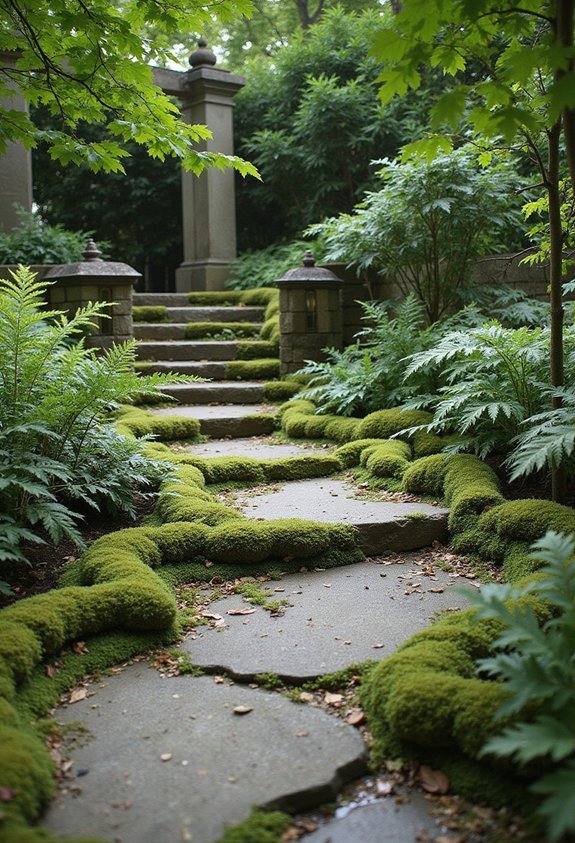
Because moss thrives in moist, shaded areas where other plants struggle, it’s an ideal choice for softening the hard edges of stone pathways, steps, and rock formations throughout your Japanese front yard. You can encourage moss growth by keeping surfaces consistently moist and reducing direct sunlight exposure. Moss doesn’t require soil, nutrients, or regular maintenance, making it a practical option for difficult spaces. You’ll want to remove debris and algae buildup periodically to maintain healthy moss coverage. As moss spreads naturally across your hardscaping elements, it creates a lush, aged appearance that enhances the serene quality of your landscape. This living softener bridges the gap between constructed features and natural elements, contributing to your yard’s overall peaceful aesthetic.
Frame Your Entrance With Bamboo Screening
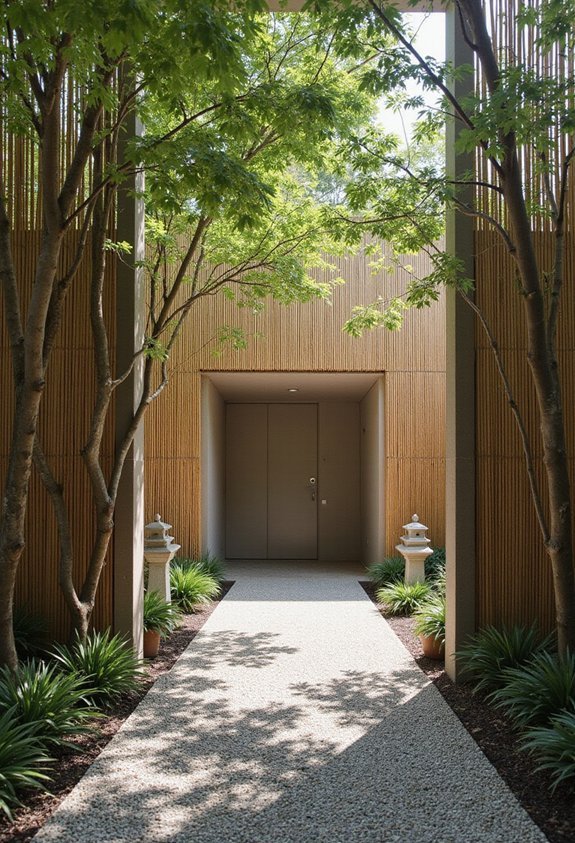
While moss softens the hardscape elements throughout your yard, bamboo screening serves a different purpose by creating defined boundaries and adding vertical interest at your property’s entrance. You can install bamboo panels along your front walkway or beside your gate to establish a clear shift between your public and private spaces. Bamboo screening also provides privacy while maintaining the natural aesthetic that Japanese gardens are known for. You’ll want to choose screening that complements your home’s architectural style and fits your climate zone. Properly installed bamboo creates height variation that draws the eye upward, making your entrance feel more intentional and sophisticated. Consider pairing your bamboo screening with stone lanterns or gravel pathways to enhance the traditional Japanese atmosphere you’re developing throughout your front yard design.
Use Bamboo Fencing for Privacy
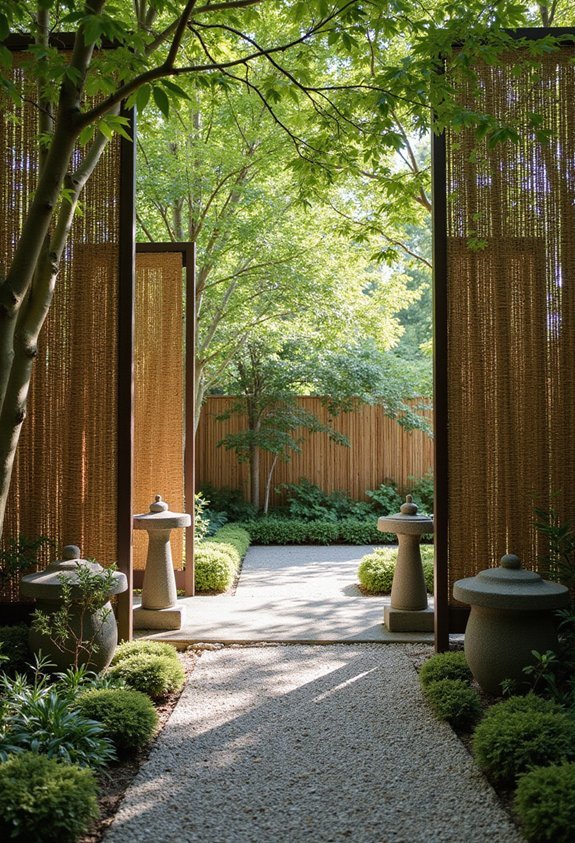
As you expand your Japanese front yard design beyond decorative screening, bamboo fencing offers you a more substantial and durable solution for creating privacy along your property’s perimeter. You’ll find that bamboo fencing comes in various styles, including traditional woven panels and modern slatted designs, allowing you to choose what complements your home’s aesthetic. The material naturally weathers beautifully, developing a silvery-gray patina over time, which enhances its visual appeal. You should install bamboo fencing on concrete footings to prevent rot and preserve longevity. Regular maintenance, including occasional cleaning and sealing, will extend your fence’s lifespan considerably. This privacy solution effectively blocks wind, reduces noise, and creates distinct outdoor zones while maintaining the serene, natural atmosphere that defines Japanese landscape design principles.
Install a Stone Lantern as Your Focal Point
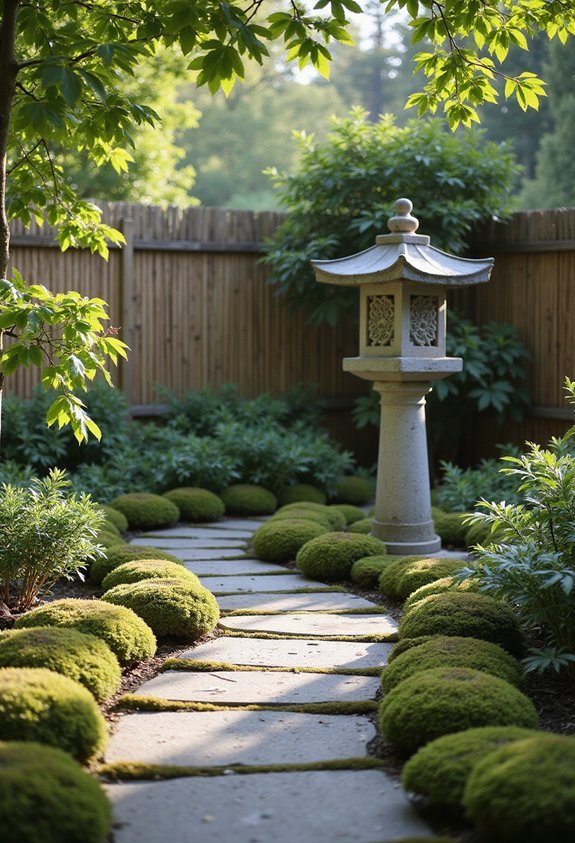
Once you’ve established privacy with your bamboo fencing, adding a stone lantern will create a natural focal point that draws the eye and anchors your Japanese front yard design. You’ll find traditional lanterns called “ishidoro” come in various styles, including the popular pagoda-shaped versions and low platform designs. Position your lantern in a prominent location, such as near the center of your yard or beside a pathway, where it’ll be clearly visible from your home’s entrance. You can place it on level ground or slightly elevated on a stone base for added visual impact. Stone lanterns serve both decorative and functional purposes, as they can hold candles or small lights that illuminate your front yard during evening hours, enhancing the peaceful ambiance you’re creating.
Add a Water Feature or Small Fountain
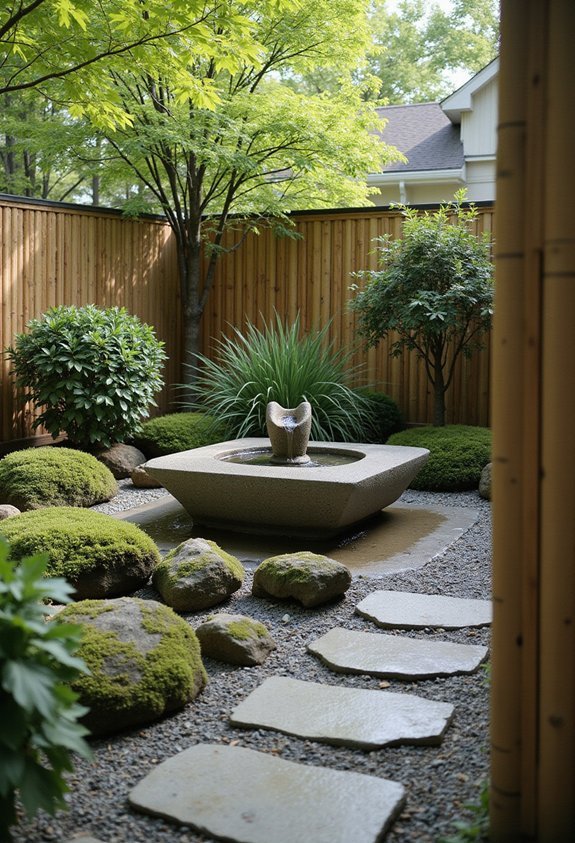
To complement your stone lantern and enhance the sensory experience of your Japanese front yard, you’ll want to incorporate a water feature or small fountain that adds movement, sound, and visual interest to your design. Water features represent purification and life in Japanese aesthetics, making them essential elements for creating an authentic atmosphere. You can install a bamboo water spout, called a shishi-odoshi, which produces gentle trickling sounds and creates a meditative quality. Alternatively, consider a small stone basin fountain positioned near your entry path, allowing visitors to experience the calming effects of flowing water. These features don’t require extensive space or complicated installation, making them practical additions to most front yards. The combination of your lantern and water feature will establish a cohesive, tranquil environment that encourages reflection and mindfulness.
Build a Wooden Bridge or Stepping Stones
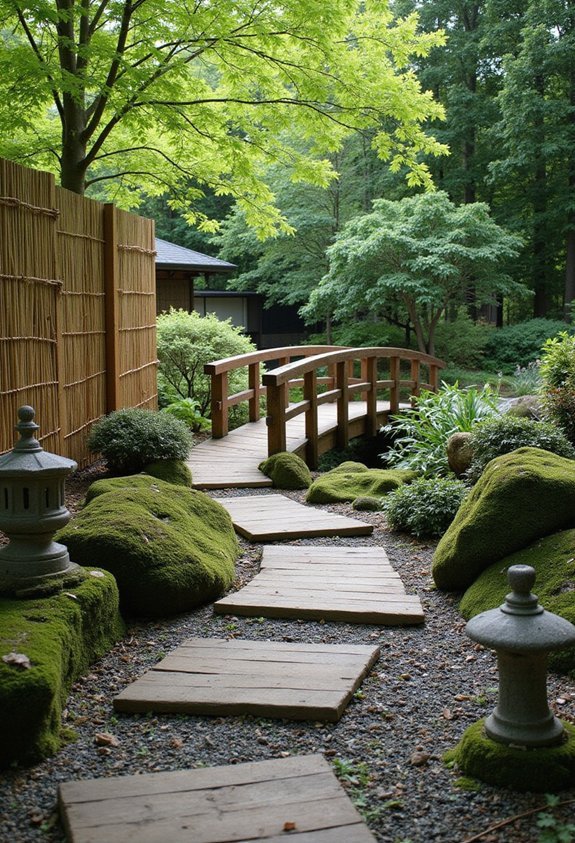
Your Japanese front yard’s visual flow and functionality will tremendously improve when you incorporate a wooden bridge or stepping stone pathway that guides visitors through your landscape while reinforcing the garden’s authentic aesthetic. You can construct simple wooden bridges using cedar or redwood, materials that weather beautifully and require minimal maintenance. Alternatively, stepping stones—whether natural stone, gravel-set pavers, or wood rounds—create an informal yet intentional pathway through your garden. These elements serve practical purposes by protecting plants from foot traffic while directing movement toward focal points like water features or seating areas. Position stepping stones at natural walking distances, approximately eighteen to twenty-four inches apart, ensuring safe, comfortable passage. This thoughtful placement maintains the garden’s serene atmosphere while enhancing accessibility and visual interest throughout your Japanese-inspired outdoor space.
Plant Cherry Trees and Flowering Shrubs
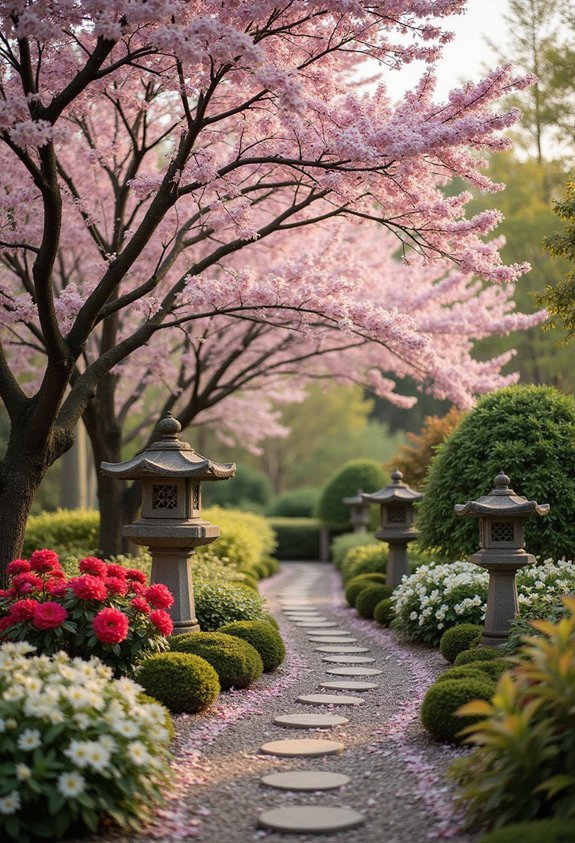
Because cherry trees and flowering shrubs form the living backbone of any authentic Japanese front yard, they’ll dramatically enhance your landscape’s seasonal beauty and cultural authenticity. You should select varieties like Japanese maples, cherry blossoms, and azaleas that’ll thrive in your climate zone. Plant these specimens strategically throughout your yard, positioning taller trees toward the back and shorter shrubs along borders to create visual depth and layered interest. You’ll want to space plants according to their mature sizes, ensuring adequate room for growth without overcrowding. Water regularly during establishment, and apply mulch around the base to retain moisture and regulate soil temperature. Prune carefully during dormant seasons to maintain shape and encourage healthy blooming cycles that’ll showcase vibrant springtime colors throughout your peaceful Japanese landscape.
Prune Plants Into Organic, Natural Shapes
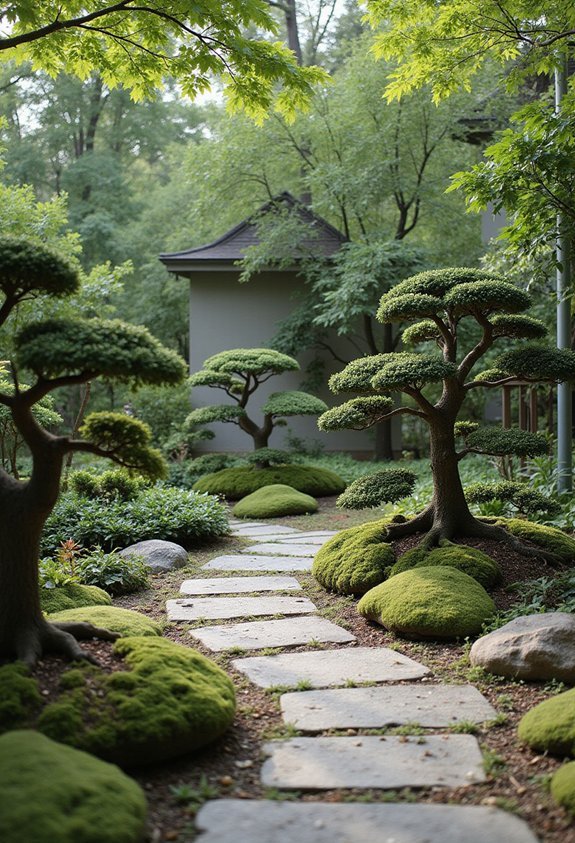
Pruning your Japanese plants calls for a different approach than conventional hedge trimming, since you’ll want to bring out their naturally elegant forms rather than forcing them into rigid geometric shapes. Study each plant’s natural growth pattern before you begin cutting, observing how branches naturally spread and develop. Remove dead or crossing branches first, then selectively thin out crowded areas to improve air circulation and light penetration. Make cuts just above leaf nodes at slight angles to encourage healthy regrowth. Work gradually, removing small amounts over time rather than making drastic cuts. This patient method allows you to enhance the plant’s inherent beauty while maintaining its health and robustness throughout the growing seasons.
Choose Native Plants and Evergreens for Year-Round Interest
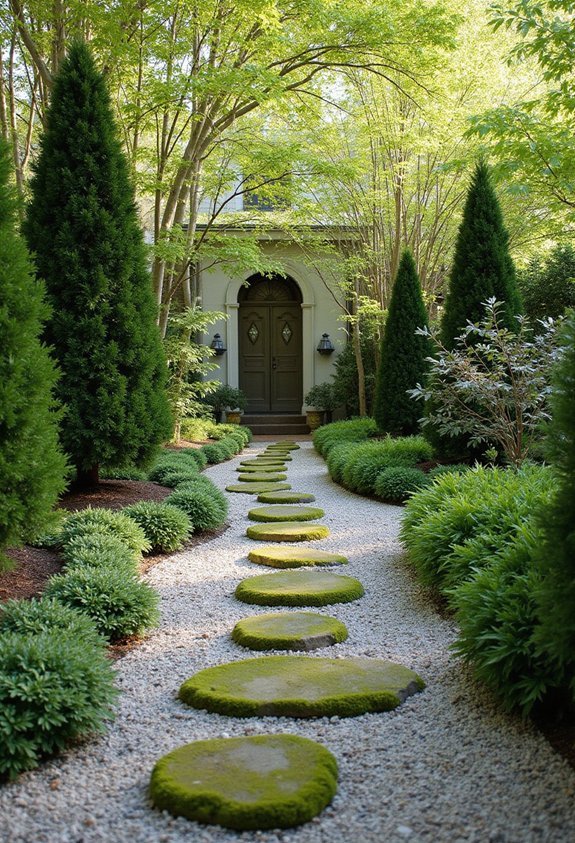
When you’re selecting plants for your Japanese front yard, incorporating native species and evergreens will guarantee your landscape consistent visual interest throughout all four seasons, since these plants are naturally adapted to your local climate and won’t require excessive maintenance or special care. Native plants thrive in your region’s specific soil, temperature, and moisture conditions, reducing the need for fertilizers and pesticides. Evergreens like Japanese boxwood, dwarf conifers, and holly varieties maintain their foliage year-round, creating structure and depth when deciduous plants lose their leaves. This combination verifies your front yard remains visually appealing during winter months when other gardens appear bare and dormant. Select species that complement your Japanese design aesthetic while providing practical longevity and seasonal beauty.
Add Subtle Lighting for Evening Ambiance
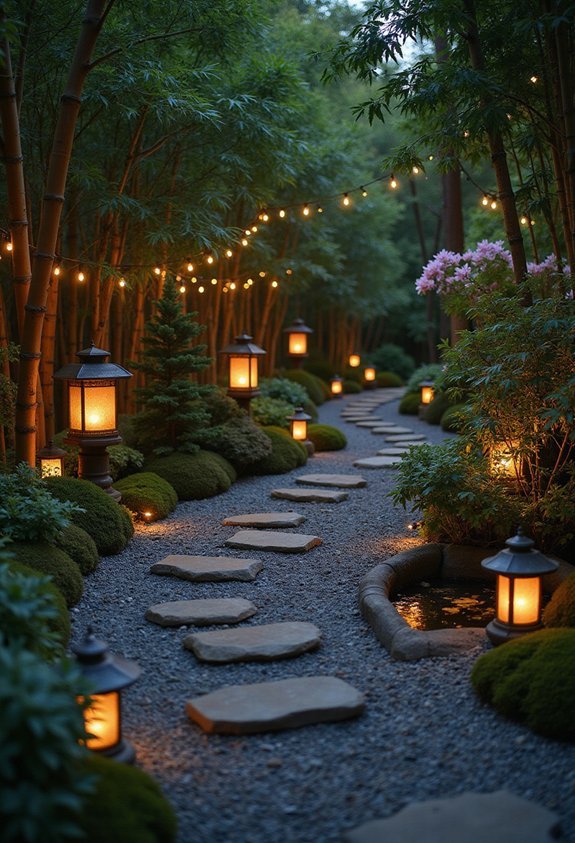
As your Japanese front yard shifts from daylight to darkness, carefully placed lighting transforms your landscape into a serene nighttime retreat while highlighting the design elements you’ve worked to develop. Install soft, low-voltage lights along pathways to guide visitors safely through your space, creating visual interest without overwhelming brightness. Position uplighting beneath trees and architectural features to cast gentle shadows that enhance depth and dimension. Consider lantern-style fixtures, which complement traditional Japanese aesthetics while providing warm, ambient illumination. Use warm-colored bulbs rather than cool white tones, as they create a more peaceful atmosphere. Layer your lighting by combining path lights, accent lights, and subtle ground-level fixtures, allowing you to adjust brightness levels based on the mood you’re seeking for different occasions.
Create a Meditation Bench or Viewing Area
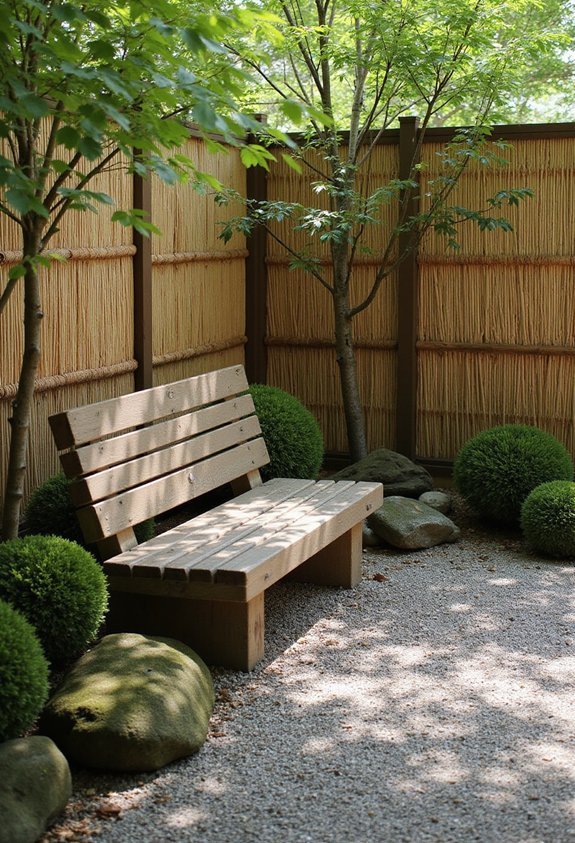
Your carefully lit landscape provides the perfect foundation for establishing a dedicated space where you can sit quietly and appreciate the beauty you’ve created, and a meditation bench or viewing area serves as the functional heart of this contemplative environment. You’ll want to position your bench to face a focal point, whether that’s a water feature, rock garden, or carefully pruned tree. Choose simple materials like wood or stone that complement your Japanese design aesthetic. Guarantee the bench sits on level ground with adequate clearance around it, allowing you to move comfortably without disturbing surrounding plants. Consider adding a small shelter or pergola overhead for protection during light rain, which enables year-round use. This dedicated viewing space transforms your front yard into a personal sanctuary where you can practice mindfulness.
Maintain Your Japanese Yard Through the Seasons
How do you keep a Japanese front yard looking its best throughout the year? You’ll need to follow seasonal maintenance routines that preserve your garden’s aesthetic and health. During spring, prune dead branches, rake away winter debris, and refresh mulch around plants and stones. Summer requires regular watering, especially for newly planted trees and shrubs, while you monitor for pests and weeds. In fall, rake fallen leaves promptly, trim overgrown vegetation, and prepare plants for cooler weather. Winter maintenance involves protecting delicate plants from frost, clearing snow carefully to avoid damaging structures, and checking stone pathways for ice buildup. By establishing these consistent seasonal tasks, you’ll maintain your Japanese yard’s tranquility and beauty year-round, ensuring every element remains functional and visually harmonious.
Conclusion
You’ve learned that Japanese front yards balance simplicity with complexity, using empty space to create fullness and restraint to inspire tranquility. By applying asymmetry rather than matching pairs, layering plants for depth, and choosing native evergreens, you’ll transform your entryway into a peaceful retreat. Stone pathways, subtle lighting, and seasonal maintenance work together systematically to maintain this meditative environment year-round, proving that careful planning creates effortless-looking beauty.