
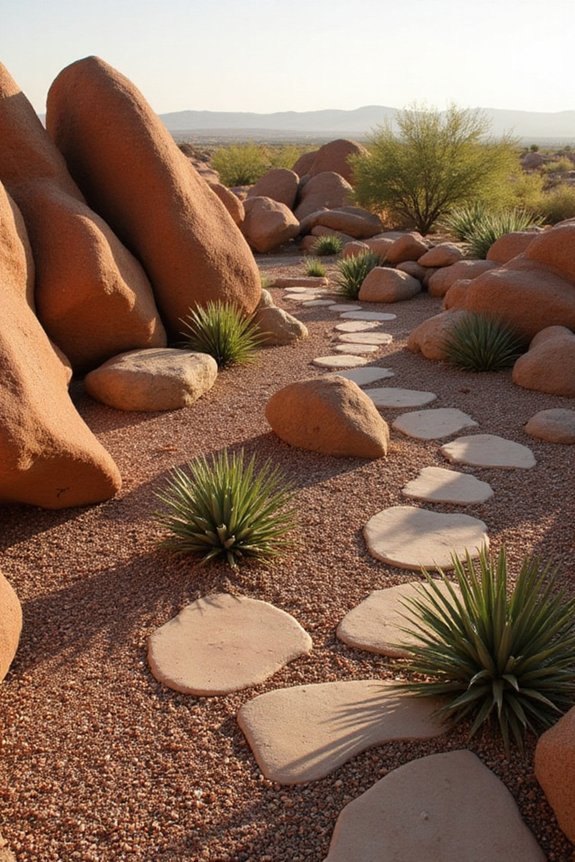
You can transform your front yard into a striking desert landscape that requires minimal maintenance while maintaining year-round visual appeal. By understanding how to strategically layer plants, select appropriate colors, and position focal points, you’ll create a sophisticated outdoor space that genuinely reflects desert beauty. The following guide outlines essential techniques you’ll need to achieve this transformation, beginning with foundational design principles.
Start With a Focal Point: One Statement Plant or Feature
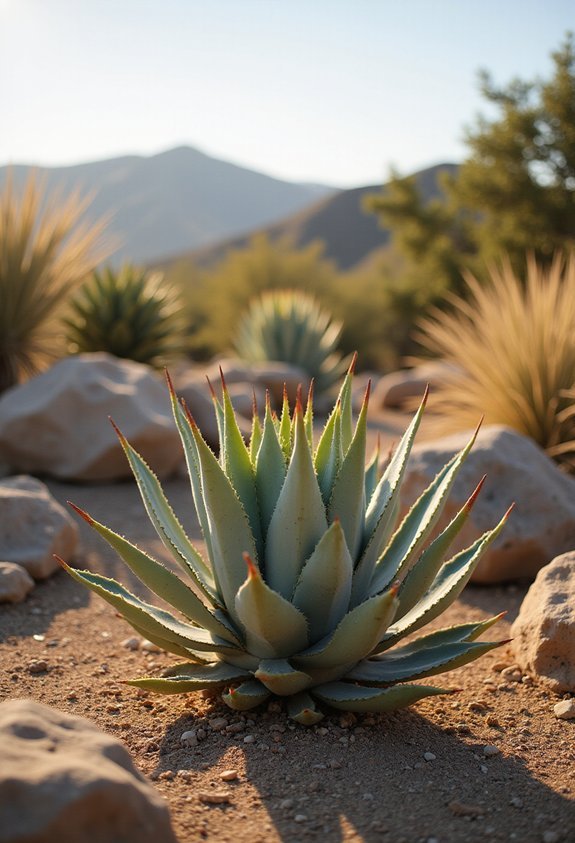
When you’re planning a desert landscape front yard, you’ll want to begin by choosing a single focal point that’ll draw the eye and anchor your entire design. This focal point could be a striking statement plant like a tall saguaro cactus, a unique agave, or an ornamental yucca that commands attention from the street. Alternatively, you might select a hardscape feature such as a decorative rock formation, a water feature, or an artistic sculpture. Your focal point should be positioned prominently, typically near your home’s entrance or in a central location where visitors naturally look first. By establishing this primary element, you’ll create a strong visual anchor around which you can organize the remaining desert plants, pathways, and decorative elements, ensuring your yard feels cohesive and intentionally designed rather than random or cluttered.
Also read: 21 HARDSCAPE FRONT YARD Layouts With Clean Lines!
Choose Desert-Friendly Colors: Warm Neutrals, Silvers, and Accents
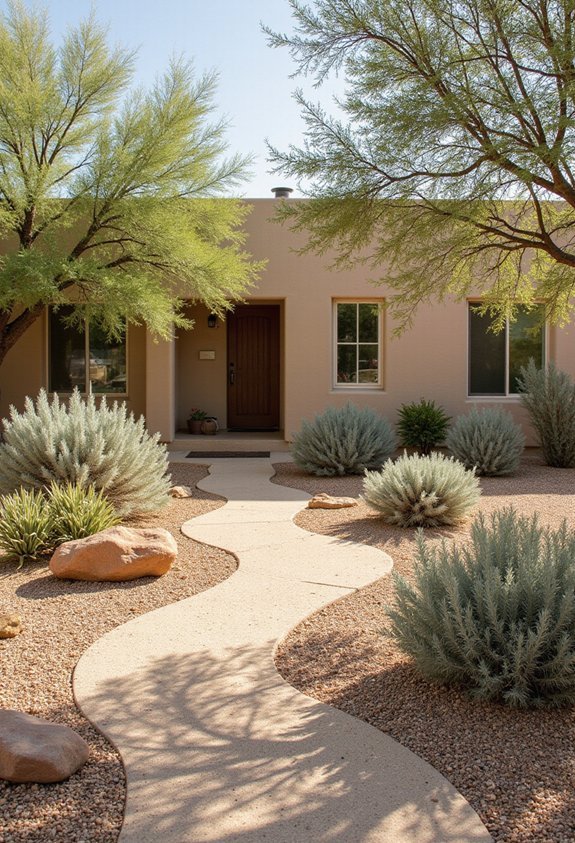
How you’ll select colors for your desert landscape depends on understanding which hues naturally complement arid environments and create visual harmony with your surroundings. Warm neutrals like beige, tan, and soft brown mirror the earth tones found in desert soils, creating cohesive designs that feel natural rather than forced. Silver and gray foliage plants, including desert sage and artemisia, provide cool-toned contrast that prevents monotony while maintaining the landscape’s authentic character. These metallic hues reflect sunlight effectively, reducing heat absorption and visual fatigue during intense sun exposure. You can introduce accent colors through flowering plants—deep purples, rusty oranges, or vibrant yellows—which pop against neutral backgrounds without overwhelming the scheme. This strategic color approach guarantees your front yard remains visually balanced, authentic to desert ecosystems, and aesthetically pleasing throughout all seasons.
Layer Plants by Height for Visual Depth
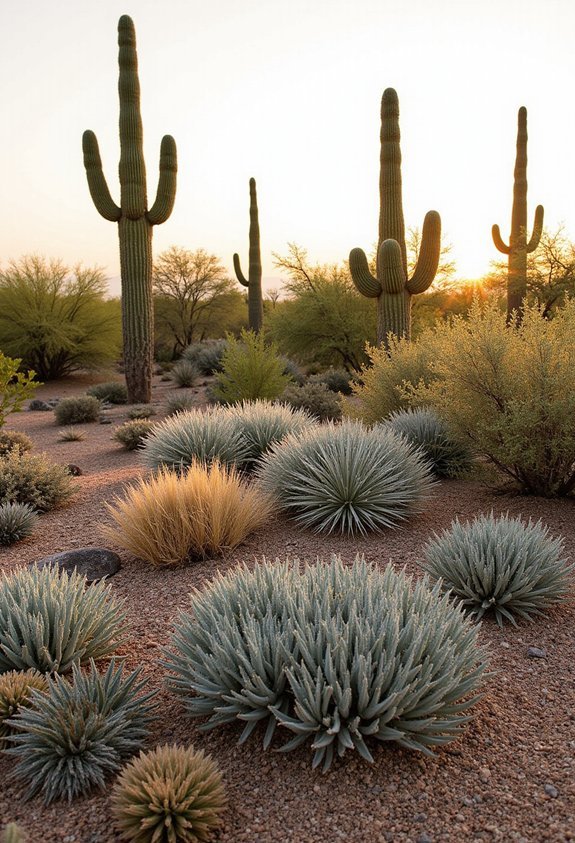
Once you’ve established your color palette, you’ll want to arrange your plants strategically by height to create layers that draw the eye through your landscape and make your front yard feel more dynamic and interesting. Place taller shrubs and small trees toward the back or center, medium-height plants in the middle sections, and low-growing ground covers toward the front edges. This tiered arrangement guides visitors’ vision deeper into your yard, creating visual depth that makes even small spaces feel larger. You’ll also improve air circulation and sunlight exposure for all your plants when you space them thoughtfully by height. This layering technique transforms a flat, one-dimensional yard into an engaging landscape with multiple focal points.
Incorporate Desert Cacti for Architectural Impact
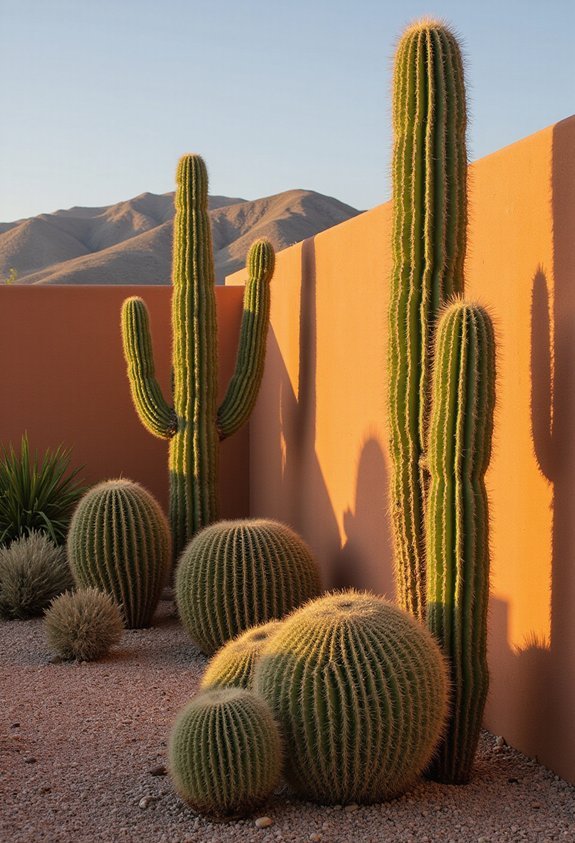
Desert cacti aren’t just plants—they’re living sculptures that’ll add striking visual interest and distinctive character to your front yard landscape. You can strategically place tall columnar cacti like saguaros or organ pipes as focal points that draw the eye upward, creating natural architectural elements that define your space. Combine these vertical specimens with rounded barrel cacti and low-growing varieties to establish layers and proportion throughout your design. Consider the mature size of each species when positioning them, ensuring they won’t overcrowd walkways or obstruct sightlines. Select cacti with varied textures, spine patterns, and bloom colors to enhance visual complexity. This thoughtful arrangement transforms your front yard into a dynamic composition where each cactus contributes meaningful structure and form to your desert landscape design.
Add Movement and Contrast With Desert Grasses
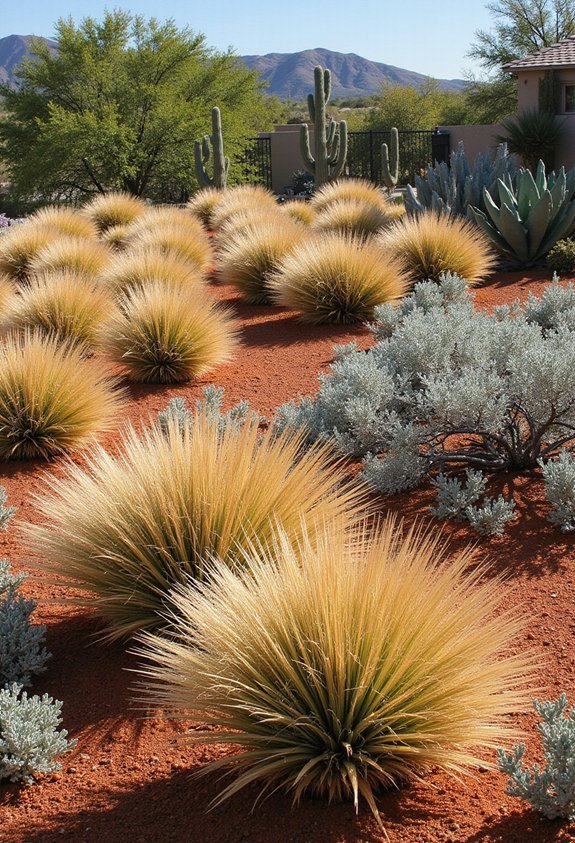
While cacti provide structural anchors and vertical interest, ornamental grasses’ll introduce flowing movement and textural contrast that soften the rigid geometry of your desert landscape design. Consider planting varieties like blue fescue, which displays silvery-blue foliage, or desert marigold grass, known for its fine, feathery texture that catches light beautifully. These grasses’ll sway gently in desert breezes, creating dynamic visual interest that static plants cannot achieve. Position them strategically between cacti and shrubs to break up dense plantings and allow sight lines through your yard. Their shallow root systems require minimal water once established, making them ideal for arid climates. The contrast between grass movement and cactus stillness creates a balanced, sophisticated landscape composition.
Use Colorful Succulents to Break Up Stone
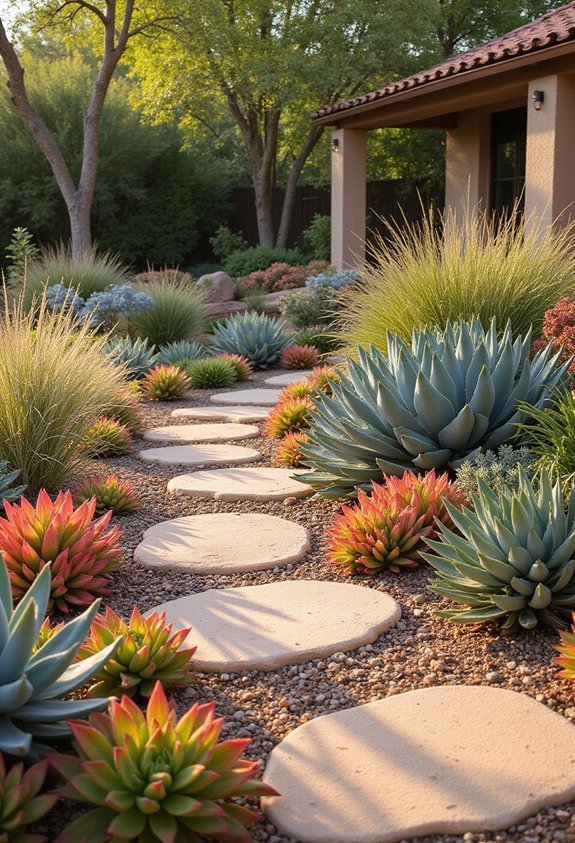
Beyond the flowing grasses that soften your landscape, you’ll find that colorful succulents offer another powerful way to add visual interest and break up expansive stone areas in your desert front yard. Consider planting varieties like echeveria, with its vibrant pink and orange rosettes, or jade plants that display deep green and burgundy hues. You can arrange these plants in clusters throughout your stone pathways and rock beds to create focal points that draw the eye. Their fleshy leaves provide texture contrast against smooth pebbles and boulders. Plant succulents in shallow holes within your stone design, ensuring they receive adequate drainage. This strategic placement transforms monotonous rock surfaces into dynamic, multi-layered garden spaces while maintaining the low-maintenance benefits of desert landscaping.
Create Hardscape Features With Gravel and Stone
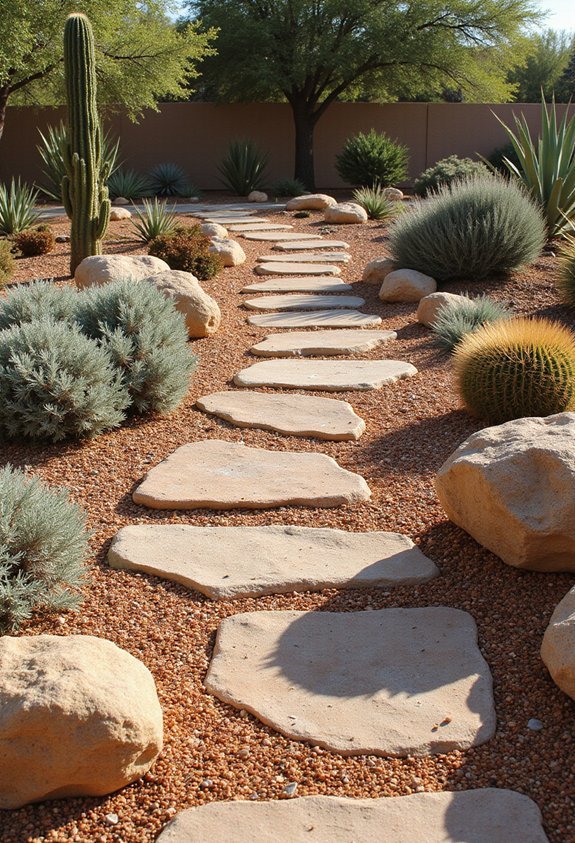
Gravel and stone aren’t just filler materials—they’re fundamental building blocks that’ll help you create structure and definition throughout your desert front yard. You can use larger stones to establish pathways, borders, and focal points that guide visitors through your landscape while minimizing water usage. Layering different stone sizes creates visual interest and prevents soil erosion in your design. Consider incorporating decorative gravel in neutral tones like tan, brown, or gray to complement your succulents and xeriscaping elements. Stone features also absorb and radiate heat, which benefits drought-resistant plants. By strategically placing rocks and gravel, you’ll develop a cohesive hardscape that requires minimal maintenance while providing essential drainage and structure that supports your desert garden’s long-term health and aesthetic appeal.
Replace Bark Mulch With Decorative Rock
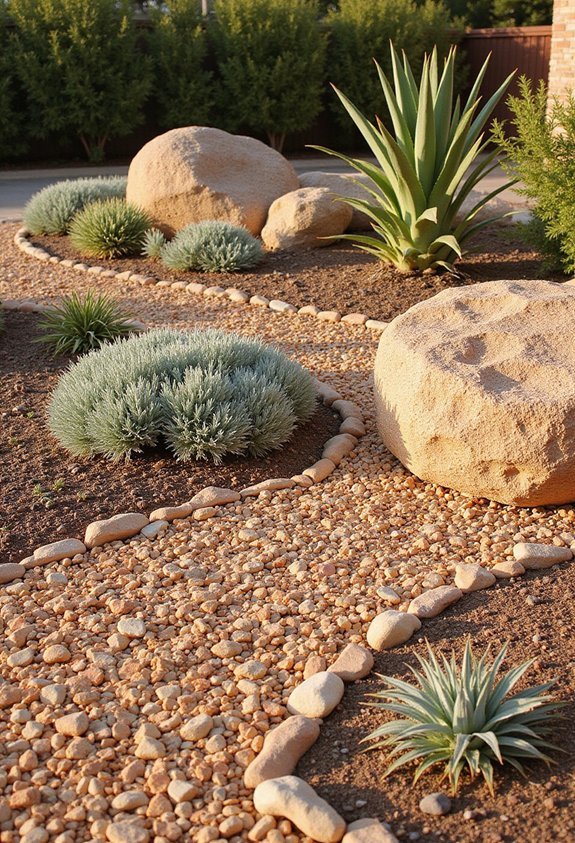
Traditional bark mulch breaks down over time, requires frequent replacement, and doesn’t align well with desert landscaping principles—which is why you’ll want to swap it out for decorative rock instead. Decorative rock offers superior durability, lasting years without decomposing or needing replenishment, making it a practical choice for arid climates. You can select from various options, including river rock, pea gravel, lava rock, and crushed granite, each providing distinct aesthetic qualities while maintaining functionality. These rocks suppress weeds effectively, retain soil moisture by reducing evaporation, and regulate ground temperature around your plants. Additionally, decorative rock complements desert plants naturally, creating a cohesive landscape that requires minimal maintenance, perfectly aligning with water-conservation goals and low-maintenance desert design principles.
Design Pathways With Permeable Pavers
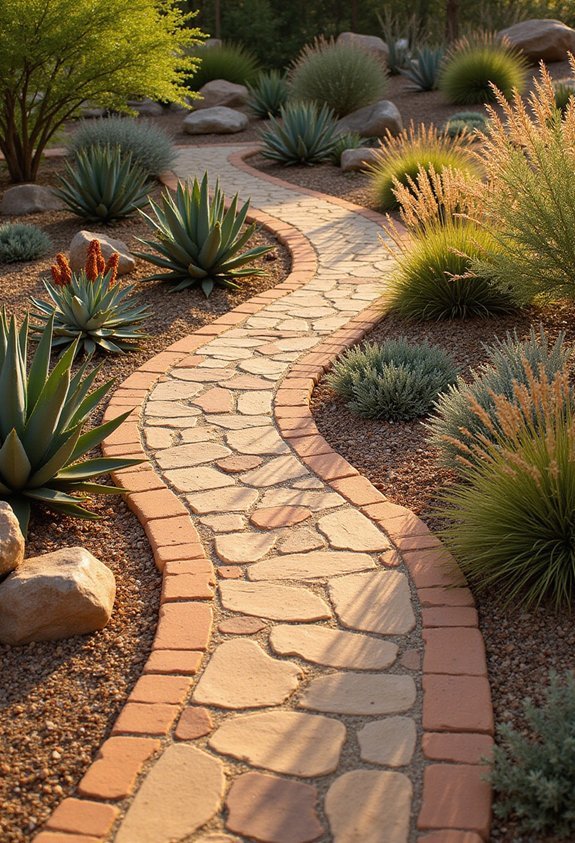
When you’re laying out pathways through your desert front yard, permeable pavers offer a practical solution that balances functionality with environmental responsibility. These specialized pavers allow water to drain through gaps and into the soil beneath, reducing runoff while supporting your landscape’s water needs. You’ll find permeable options in various materials, including recycled plastic, permeable concrete, and gravel-filled systems, each suited to different aesthetics and budgets. Installation requires proper base preparation with gravel layers to facilitate drainage and guarantee stability. The pavers create defined walkways that guide visitors through your space while maintaining the natural infiltration that desert plants require. This approach minimizes maintenance demands and aligns with sustainable landscaping practices, making pathways both functional and environmentally conscious additions to your desert front yard design.
Position Desert Boulders as Statement Pieces
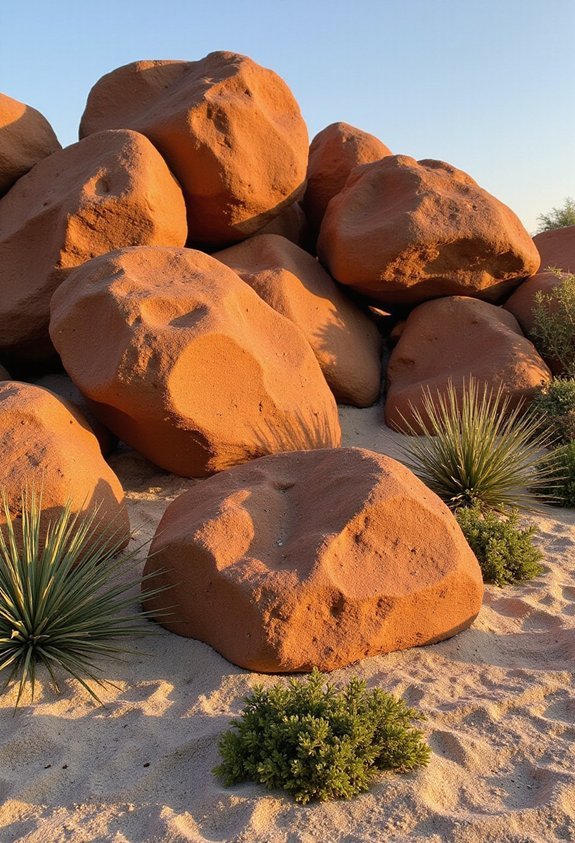
Beyond the practical pathways that structure your front yard’s layout, you’ll want to incorporate larger natural elements that serve as visual anchors throughout your landscape design. Desert boulders function as statement pieces that draw the eye and create focal points within your yard’s composition. You should position these rocks strategically at key locations, such as corners, entryways, or garden bed centers, where they’ll command attention naturally. Choose boulders in varying sizes, selecting larger specimens that match your landscape’s scale while arranging smaller rocks nearby for visual balance. When placing boulders, consider sight lines from your home’s entrance and street view, ensuring they’re visible and prominent from these vantage points. This thoughtful positioning transforms ordinary yards into dynamic outdoor spaces, establishing strong visual interest while requiring minimal maintenance and upkeep.
Frame Your Front Door With Strategic Plantings
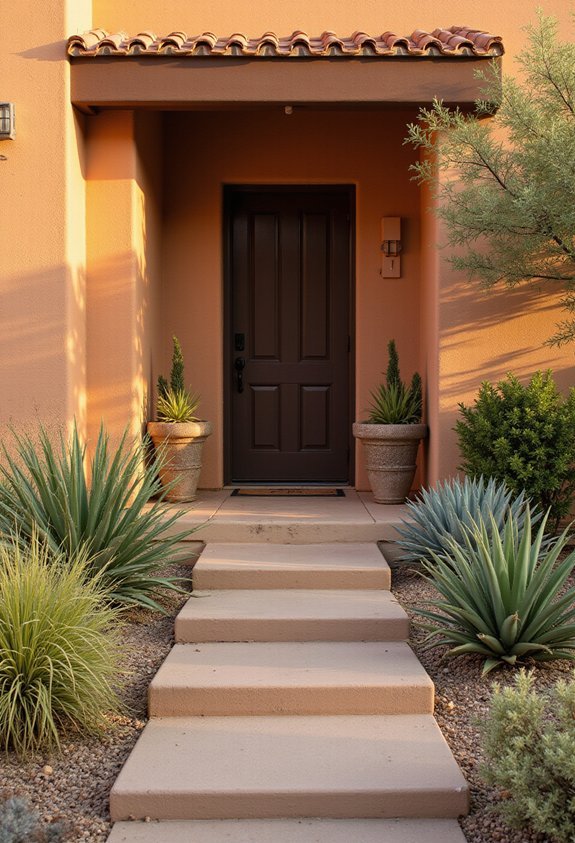
Your front door serves as the most important focal point of your home’s exterior, and you can dramatically enhance its visual appeal by strategically positioning desert plants around it. You’ll want to select plants that frame the entrance without blocking access or creating visual clutter. Consider placing tall, architectural plants like desert rose or desert marigold on either side of your doorway to create natural symmetry. Layer shorter plants in front to add depth and dimension. You should choose plants with varying textures and colors that complement your door’s finish. Guarantee adequate spacing allows plants to mature without overtaking the entrance. This strategic arrangement draws visitors’ eyes directly to your front door while maintaining accessibility and creating an inviting, well-designed entryway.
Create Shaded Spots to Sit and Relax
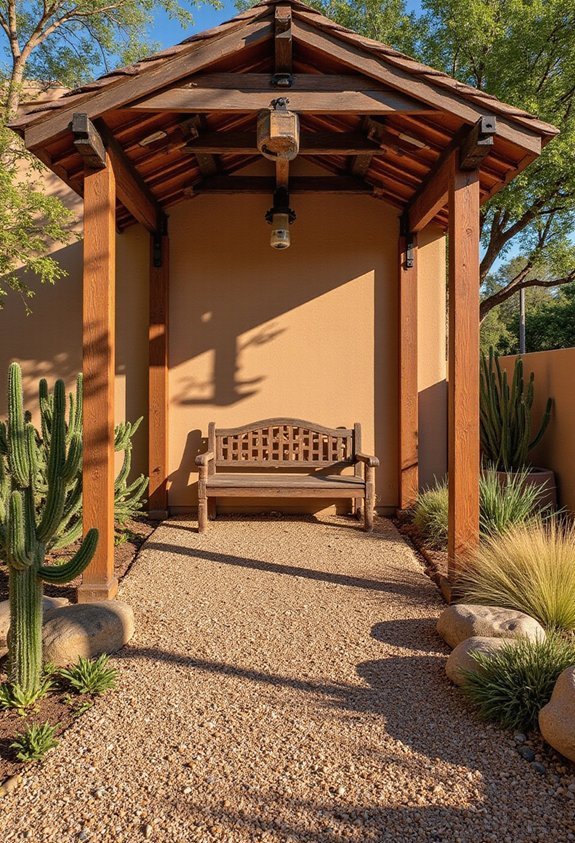
While a well-framed entrance creates visual interest, you’ll also want to design areas in your front yard where you can actually sit outside and enjoy the desert landscape you’ve created. Install a pergola or shade structure near your seating area to block intense afternoon sun while allowing filtered light through. Position benches or chairs on hardscape surfaces like pavers or gravel, which won’t retain excessive heat. Consider planting native trees strategically around your seating zone to provide natural shade and cooler temperatures. Incorporate drought-resistant plants that offer both visual appeal and protective coverage. Guarantee your shaded spots have clear sightlines to your landscaping features, creating comfortable vantage points. These relaxation areas transform your front yard into a functional outdoor living space where you can appreciate your desert design while staying cool and comfortable.
Choose Native Desert Shrubs for Structure
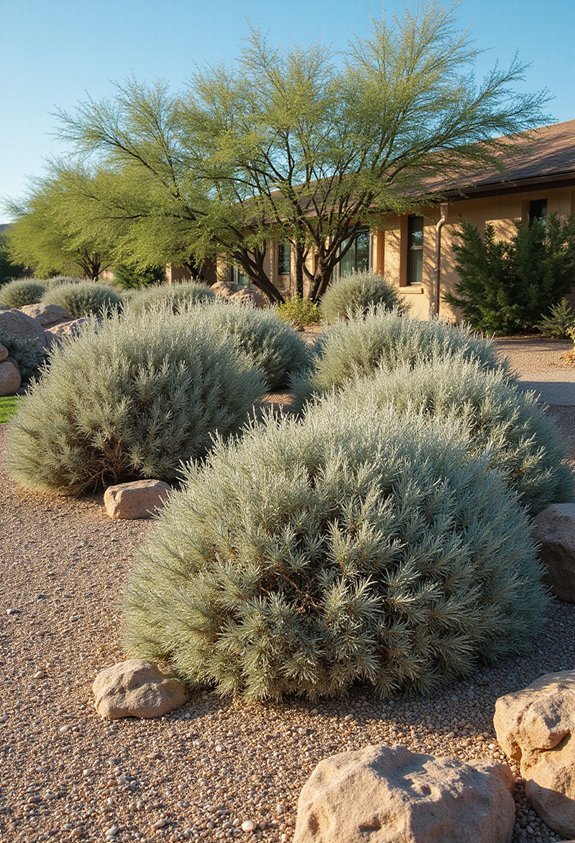
Native desert shrubs form the backbone of a well-designed front yard landscape, providing essential structure, texture, and visual interest throughout the year. You’ll want to select shrubs that thrive in arid conditions, such as creosote bush, desert marigold, and Apache plume, which require minimal water once established. These plants create natural focal points and define different zones within your yard, helping you organize the space effectively. When you plant shrubs strategically, you establish layered heights that add dimension and prevent your landscape from appearing flat or monotonous. You should space them according to their mature size, allowing room for growth while maintaining clear sightlines. Native shrubs also provide shelter for local wildlife and contribute to your region’s ecological balance, making them both practical and environmentally responsible choices for your desert front yard.
Install Drip Irrigation to Water Efficiently
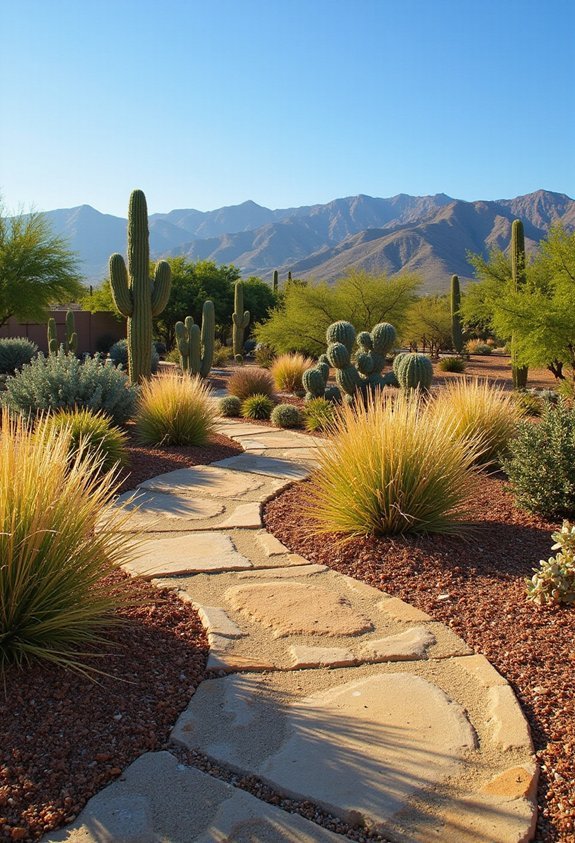
Because desert plants need consistent moisture during establishment but can’t tolerate excessive watering, drip irrigation systems offer an ideal solution that delivers water directly to plant roots while minimizing waste through evaporation. You’ll install soaker hoses or drip lines along plant bases, allowing water to seep slowly into the soil where roots absorb it most effectively. This method reduces water loss by up to 50% compared to traditional sprinklers. You can connect your drip system to a timer, enabling you to water during early morning hours when temperatures are cool and evaporation is minimal. Properly designed drip irrigation promotes deeper root development, strengthens plant resilience against drought stress, and considerably lowers your water bills while maintaining a thriving desert landscape.
Go Hands-Off: Select Drought-Tolerant Plants First
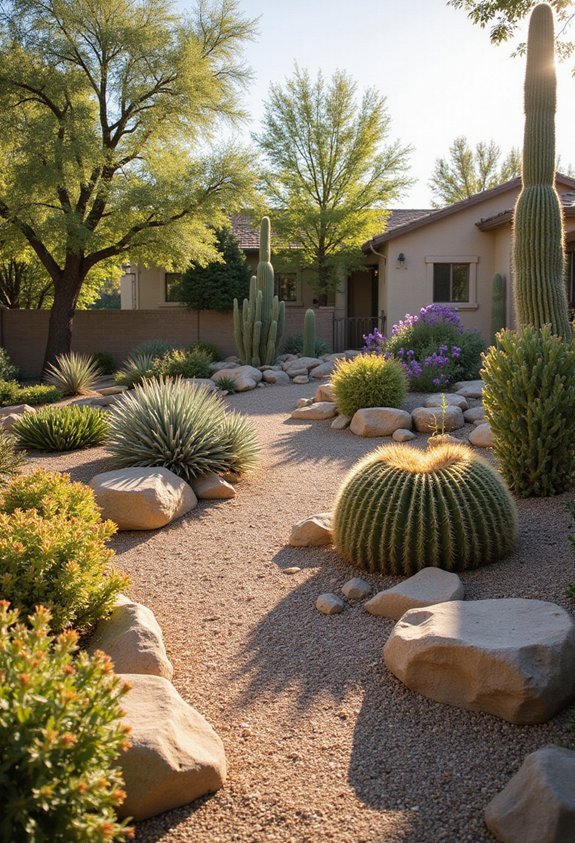
If you’re looking to create a desert landscape that doesn’t demand constant attention and watering, choosing the right plants is your most important first step. You’ll want to select species that’ve adapted to thrive in arid conditions with minimal moisture, such as agave, desert marigold, penstemon, and various cacti varieties. These plants store water in their leaves and roots, allowing them to survive extended dry periods without supplemental irrigation. Before purchasing anything, you should research which drought-tolerant plants grow well in your specific climate zone and soil type. Visit local nurseries specializing in native plants, where staff can recommend species perfectly suited to your region. You’ll also want to examine mature plant sizes and growth habits, ensuring they’ll fit your landscape design while requiring minimal maintenance throughout the year.
Add Metal and Wood Accents to Your Design
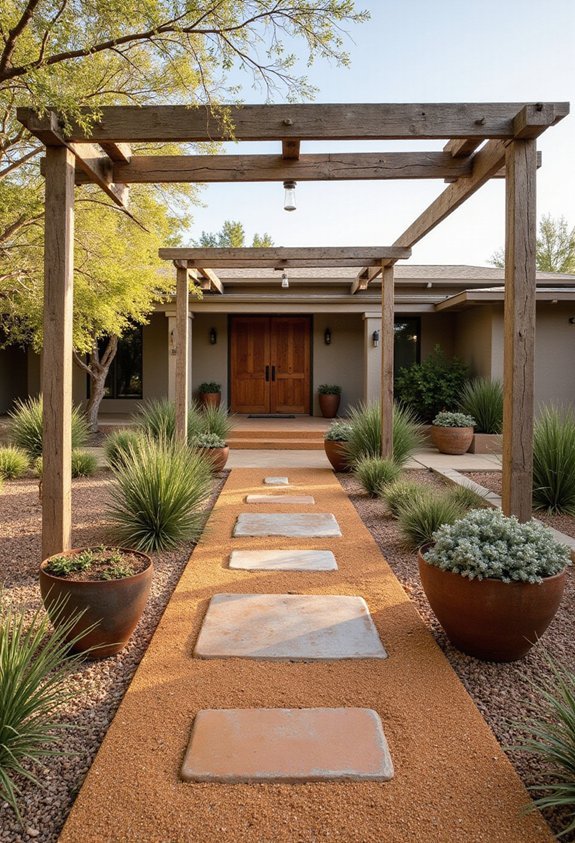
Once you’ve selected your drought-tolerant plants, you’ll want to incorporate architectural elements that’ll complement your desert landscape while adding visual interest and structure to your front yard. Metal accents like rustic gates, decorative screens, or steel planters create contrast against natural vegetation and sand tones. Wood elements such as cedar or composite decking, pergolas, and raised garden beds introduce warmth while withstanding desert conditions. Consider combining weathered wood with galvanized metal fixtures to achieve an authentic desert aesthetic. These materials won’t require excessive maintenance, aligning with your water-conscious design approach. Strategic placement of these accents—near entryways, along pathways, or framing plant groupings—establishes focal points that guide visitors’ eyes throughout your landscape and enhance your home’s curb appeal.
Add Desert-Smart Landscape Lighting
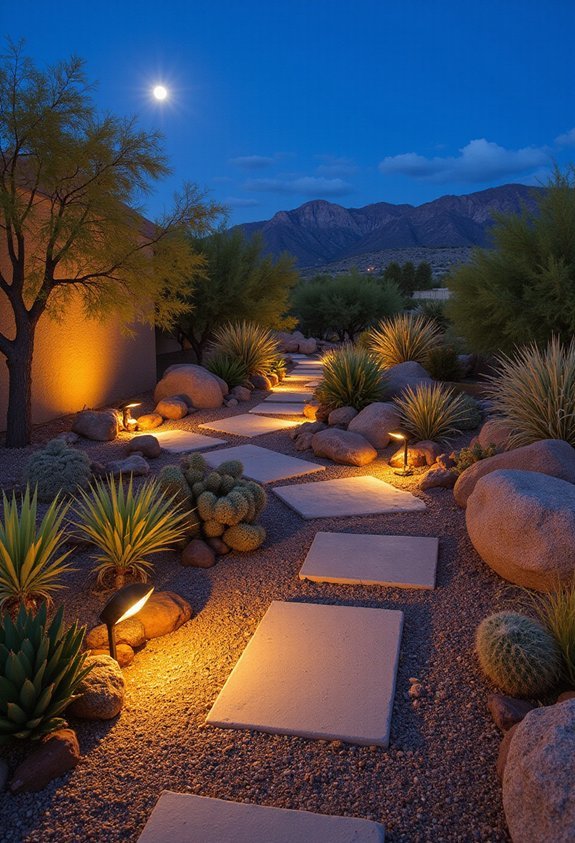
Strategic lighting transforms your desert front yard into an inviting outdoor space while highlighting the architectural elements and plants you’ve carefully chosen. You’ll want to install low-voltage LED lights along pathways, which consume less energy while providing adequate visibility during evening hours. Position uplighting beneath desert plants like yucca or agave to create dramatic shadows that showcase their unique shapes and textures. Consider placing accent lights near rock formations or metal features to emphasize the design elements you’ve added previously. Solar-powered options work exceptionally well in desert climates where sunlight is abundant during daytime hours. Timer controls allow you to automate your lighting schedule, ensuring your yard remains illuminated without constant manual adjustment. These strategic placements create depth and visual interest while maintaining safety and functionality throughout your outdoor space.
Ensure Year-Round Color With Strategic Bloom Timing
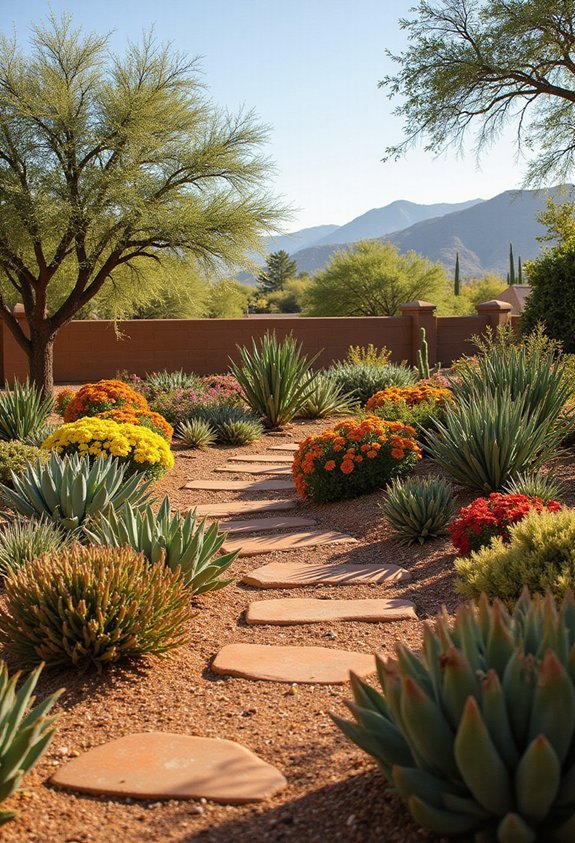
Because desert plants bloom during different seasons, you’ll want to select species that flower throughout the year so your front yard maintains visual interest in every season. Spring bloomers like desert marigold and palo verde trees provide early-season color, while summer options such as desert rose and lantana keep your landscape vibrant during hot months. Fall brings blooms from desert broom and salvia, extending your color palette into cooler weather. Winter-flowering plants like desert chia safeguard your yard from appearing barren during dormant periods. By strategically combining plants with staggered bloom times, you create continuous visual appeal without relying on seasonal annuals that demand frequent replanting. This approach reduces maintenance while guaranteeing your front yard remains colorful and engaging year-round.
Add Fragrant Desert Plants for Sensory Appeal
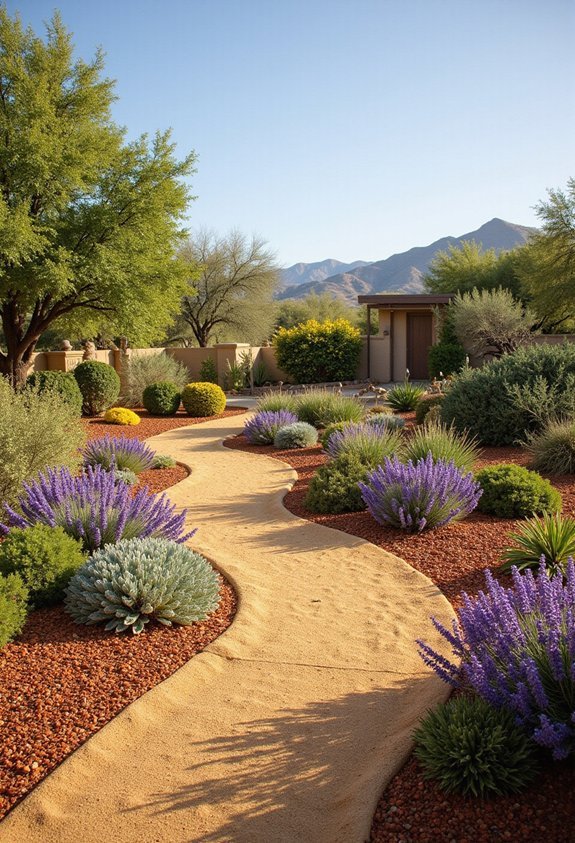
While visual color creates the foundation of an appealing front yard, incorporating fragrant desert plants elevates your landscape by engaging your sense of smell and enhancing the overall experience of your outdoor space. Desert rose, desert marigold, and desert lavender offer distinctive aromas that you’ll notice throughout different seasons. Plant fragrant species near seating areas, walkways, and entry points where you’ll naturally encounter their scents. You should position these plants strategically so that air circulation carries their fragrances toward your home and outdoor gathering spaces. Fragrant desert plants also attract pollinators like bees and butterflies, which further enriches your landscape’s ecological value. By combining visual appeal with aromatic elements, you’re creating a multisensory environment that makes your front yard genuinely inviting and memorable for you and your visitors.
Tie It All Together: Creating Visual Cohesion
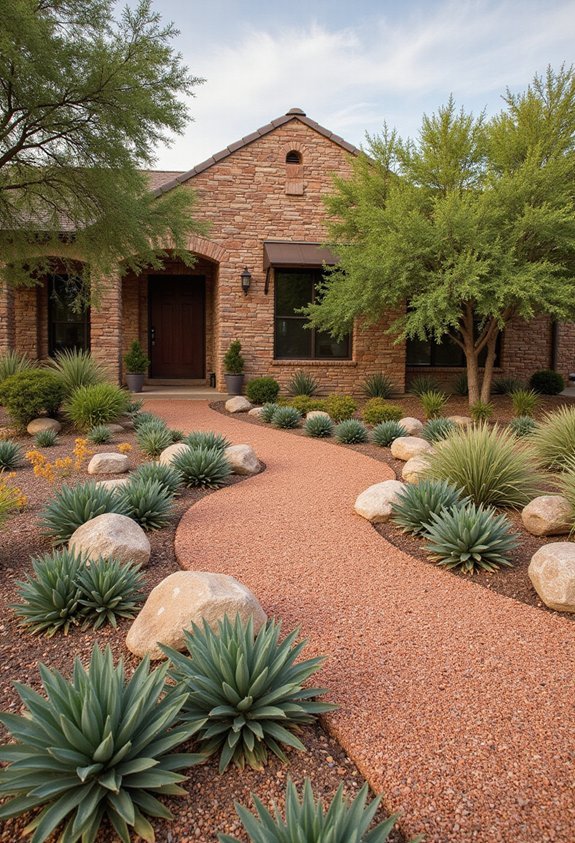
Now that you’ve incorporated color, texture, and fragrance throughout your desert front yard, the next step involves organizing all these elements so they work together as one unified design rather than appearing as separate, disconnected plantings. You’ll want to establish a consistent theme by repeating colors, plant types, and hardscape materials throughout your space. Group plants by their water needs and growth patterns so they’ll thrive together without competing for resources. Create clear sight lines using pathways and focal points that guide visitors’ eyes naturally through your yard. Layer your plantings by height, positioning taller specimens in the background and shorter varieties in front, which establishes depth and visual interest. This strategic arrangement guarantees your desert landscape feels intentional and harmonious rather than haphazard.
Use Uplighting to Showcase Your Desert Design at Night
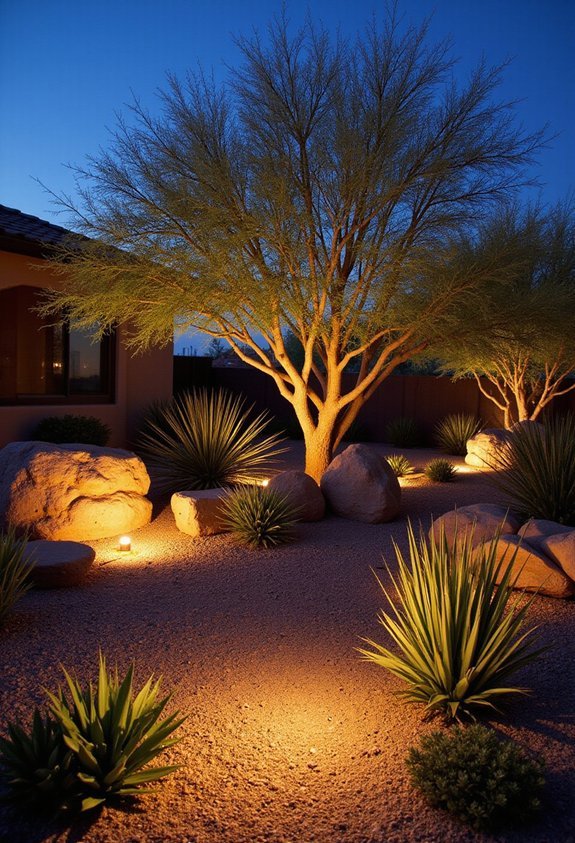
Three strategic lighting techniques can transform your desert front yard into an evening showcase that highlights the sculptural qualities of your plants and hardscape features. First, position uplights beneath tall cacti and architectural plants to cast dramatic shadows upward, creating visual interest against your home’s exterior walls. Second, install ground-level lights along pathways and rock formations to define edges and improve safety while maintaining your design’s nighttime visibility. Third, angle accent lights toward water features or specimen stones to emphasize texture and depth. These layered lighting approaches work together to extend your landscape’s visual appeal beyond daylight hours, allowing you to enjoy your desert design’s beauty throughout evening gatherings while strategically directing attention toward your yard’s most impressive elements.
Conclusion
You’ve now got the tools to transform your front yard into a desert masterpiece that’ll bloom year-round. By layering plants strategically, choosing warm neutrals as your foundation, and anchoring everything with focal point cacti and grasses, you’re building a landscape that’s both visually striking and practically low-maintenance. Your desert design, when finished with uplighting and thoughtful color placement, becomes a sophisticated outdoor space reflecting nature’s timeless beauty.