
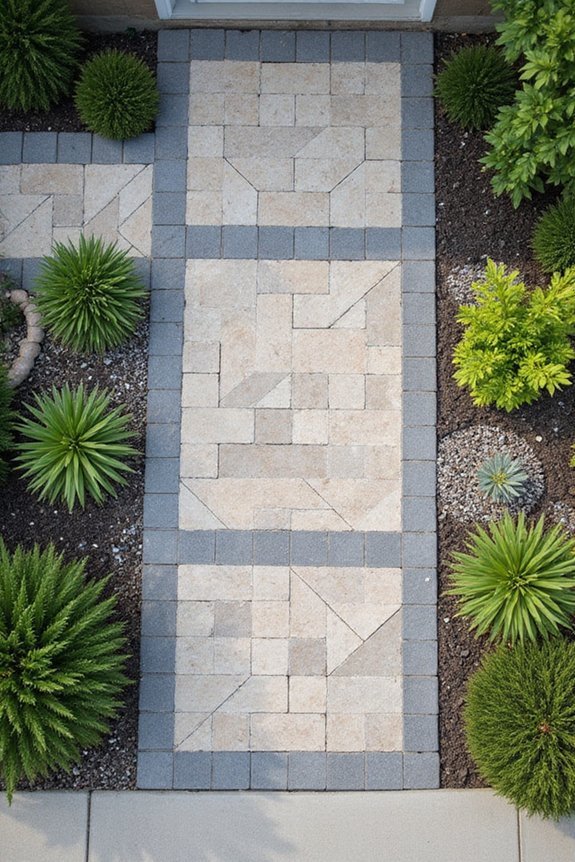
You might think front yard pavers are just functional stepping stones, but they’re actually a design opportunity that can completely transform your home’s entrance. When you select the right pattern—whether it’s a herringbone layout or a sleek grid design—you’ll create clean lines that draw the eye and enhance your property’s curb appeal. The key to achieving this polished look involves understanding which materials and installation techniques work best for your specific space.
Herringbone Pavers for Timeless Geometric Appeal
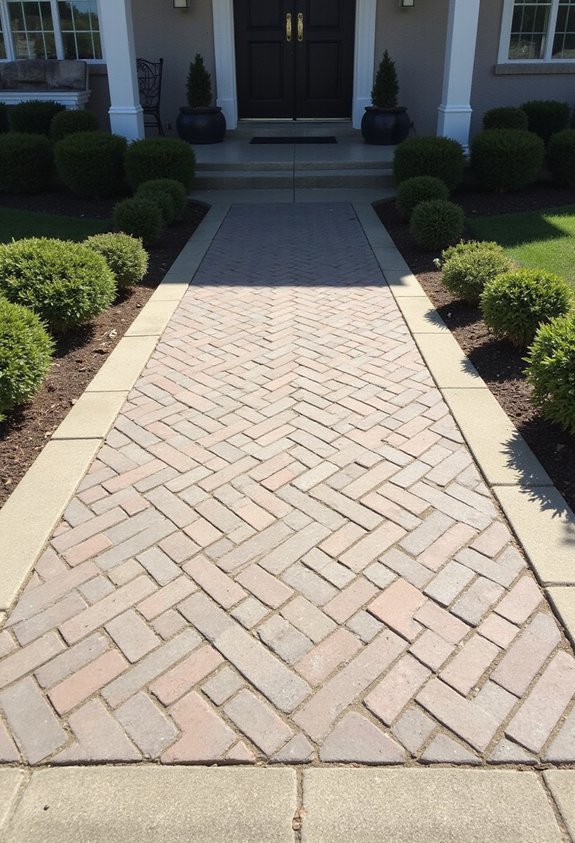
Because they’ve been used in design for centuries, herringbone pavers create a distinctive V-shaped or zigzag pattern that you’ll notice immediately in any front yard. You’ll arrange rectangular pavers at alternating 45-degree angles, which produces visual movement and sophistication that straight patterns can’t match. This layout works exceptionally well for driveways, walkways, and patios because the interlocking design distributes weight evenly across the surface, reducing shifting and cracking over time. You should prepare your base properly by compacting soil and adding gravel foundation layers, ensuring stability and drainage. The herringbone pattern requires careful measurement and planning, but the timeless aesthetic appeal justifies the effort. You can choose from various materials including brick, stone, or concrete pavers, allowing customization to match your home’s architectural style and landscape design preferences.
Also read: 21 HARDSCAPE FRONT YARD Layouts With Clean Lines!
Grid Layout Pavers for Clean-Line Minimalism
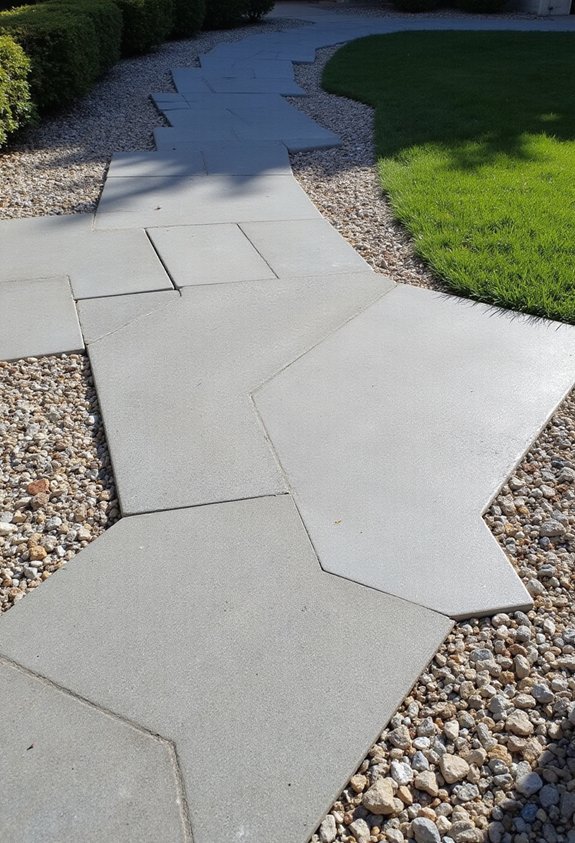
While herringbone patterns create visual drama through angled arrangements, grid layout pavers offer a contrasting approach that emphasizes clean lines and minimalist aesthetics. You’ll arrange square or rectangular pavers in straight, uniform rows and columns, creating a structured, organized appearance that complements modern home designs. This layout maximizes visual simplicity and requires less cutting of pavers, making installation more straightforward and cost-effective. You can enhance the grid pattern by varying paver colors in alternating rows or using consistent materials throughout for maximum minimalism. The straightforward design allows you to focus on quality materials and finishes rather than complex patterns. Grid layouts work exceptionally well in contemporary yards where you’re prioritizing functionality and clean aesthetics. This approach provides practical paving solutions without sacrificing visual appeal or architectural coherence.
Linear Stripe Patterns: Clean Lines for Modern Pathways
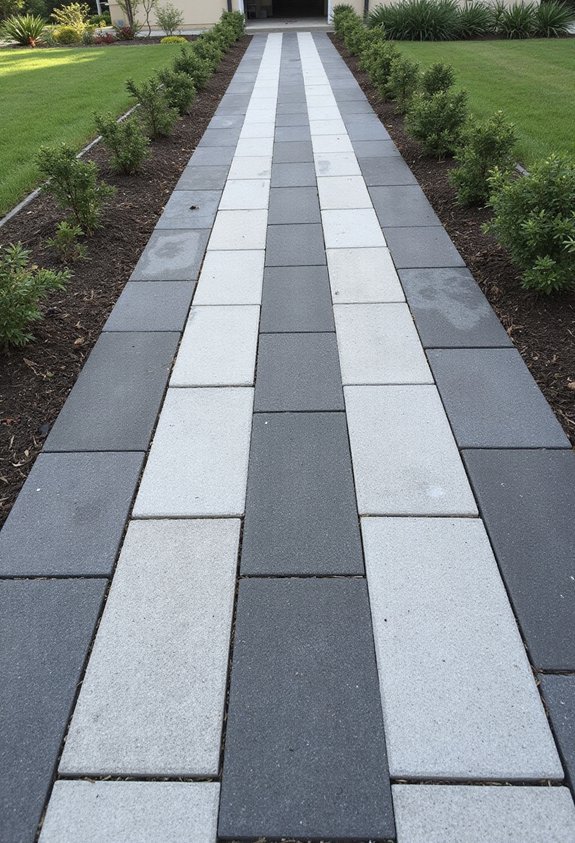
As you shift from the structured grid approach, linear stripe patterns offer another method to achieve modern aesthetics by arranging pavers in parallel lines that guide the eye in a single direction. You’ll create visual movement by laying rectangular pavers end-to-end along your pathway, which establishes a strong sense of direction and purpose in your front yard design. This pattern works especially well for narrow walkways or driveways because it naturally elongates the space and makes it feel wider. You can enhance the effect by alternating paver colors or textures between stripes, creating subtle contrast that adds depth without overwhelming the minimalist aesthetic. The result is a contemporary pathway that’s both functional and visually striking, providing clear navigation while maintaining clean, uncluttered lines throughout your landscape.
Large-Format Pavers for Seamless, Spacious Aesthetics
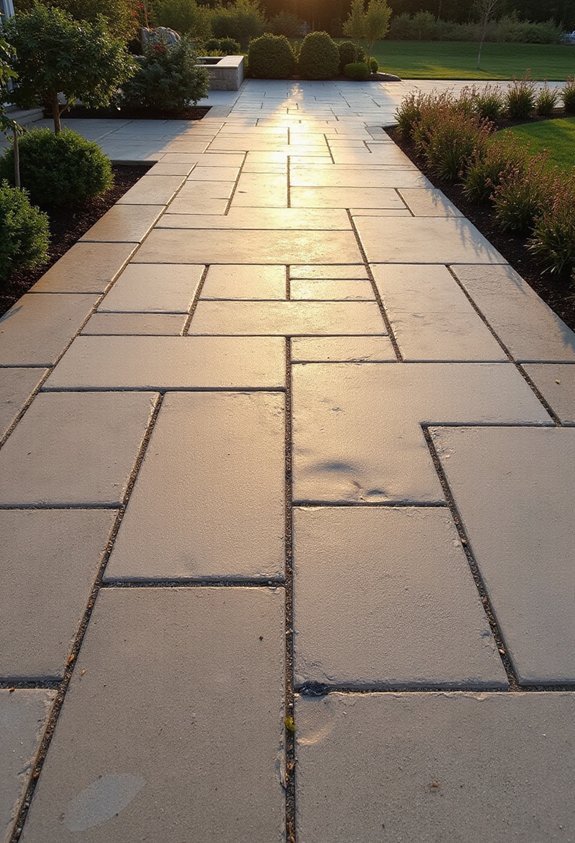
Large-format pavers—typically measuring 24 inches or larger on each side—create an entirely different visual experience in your front yard compared to traditional smaller tiles or standard-sized blocks. These expansive surfaces minimize grout lines and joints, which reduces visual interruptions and establishes a cleaner, more unified appearance. When you’re installing large-format pavers, you’ll notice that fewer seams mean less maintenance, since there’s less space for weeds and debris to accumulate. The increased size also makes your front yard appear more spacious and sophisticated, as the eye travels across broader expanses without obstruction. For ideal results, guarantee your base is properly compacted and level, since larger pavers distribute weight differently than smaller units. This installation method transforms your entryway into a modern, cohesive space.
Running Bond Pattern: Clean-Line Classic Flow
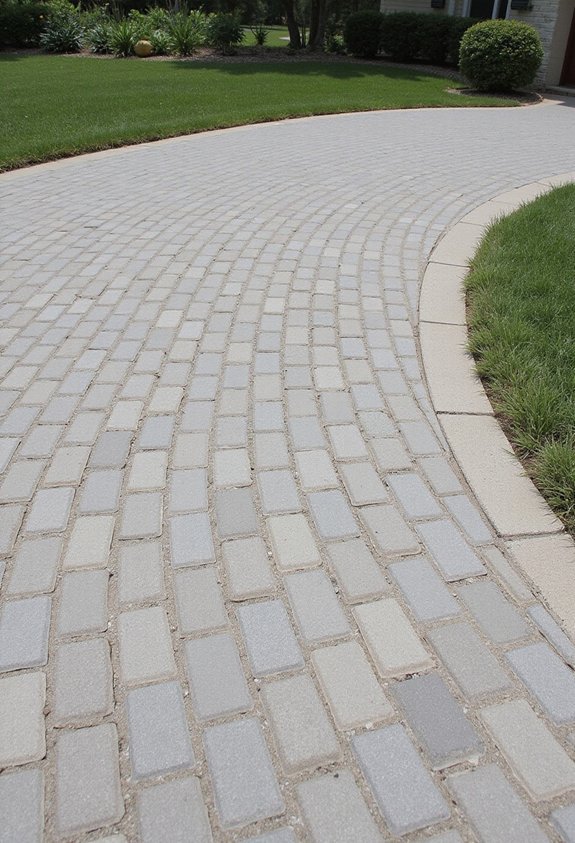
One of the most popular and timeless paver arrangements you’ll find in residential front yards is the running bond pattern, which creates a staggered, offset layout that’s both visually appealing and structurally sound. This pattern works by placing each row of pavers so that the joints don’t align vertically, distributing weight more evenly across your front yard surface. You’ll install the first row normally, then offset the second row by half a paver’s length, continuing this alternating sequence throughout your project. The running bond pattern offers excellent stability because the offset design prevents straight lines from forming, which strengthens the overall integrity of your paved surface. This classic arrangement complements various architectural styles, making it an ideal choice for achieving clean, organized lines while maintaining lasting durability and performance.
Monochromatic Color Schemes That Emphasize Clean Lines
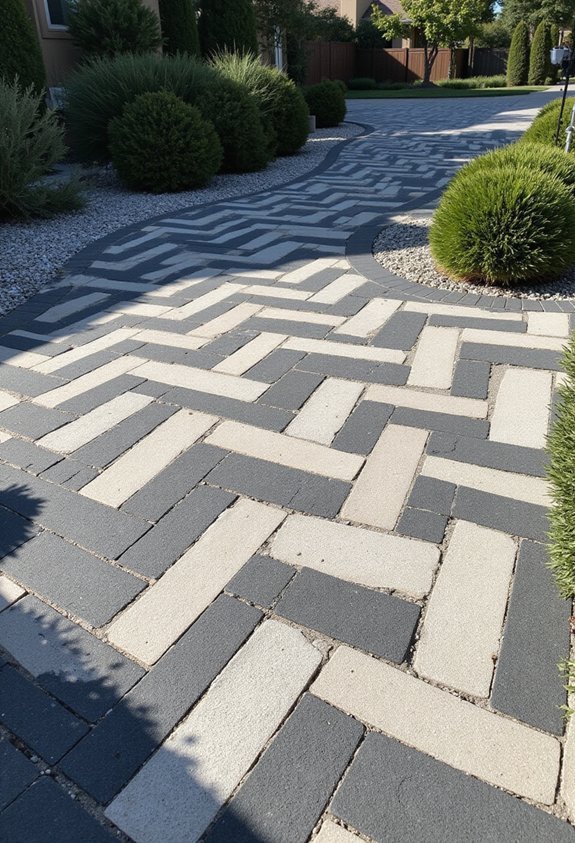
While the running bond pattern establishes your paver layout’s structural foundation, you’ll want to ponder how color choices can either enhance or diminish that clean, organized appearance you’ve worked to achieve. Monochromatic color schemes—using varying shades of a single color—create visual continuity that reinforces straight lines and geometric patterns in your front yard design. By selecting pavers in light gray, medium gray, and charcoal, you’ll develop subtle depth without introducing contrasting colors that could fragment your visual landscape. This approach emphasizes the clean geometry of your layout because your eye naturally follows the pattern rather than jumping between different hues. The result is a sophisticated, unified appearance that allows architectural elements and landscaping features to become focal points instead of the paving itself.
Inset Border Pavers to Frame Your Walkway
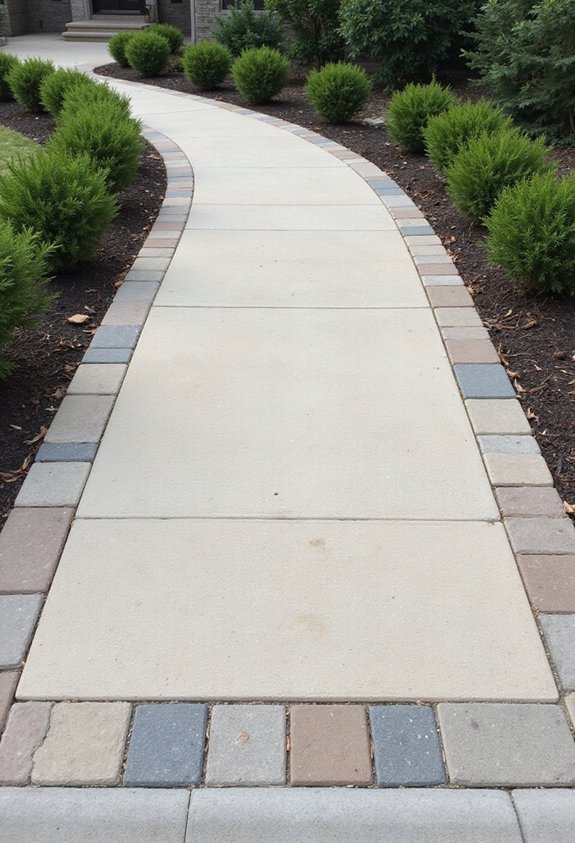
To create visual definition and a polished edge around your front yard walkway, you’ll want to install inset border pavers that run along both sides of your main pathway. These border pavers serve as a frame, separating your walkway from surrounding landscaping or lawn areas while adding architectural interest.
Choose border pavers in complementary colors or contrasting shades to enhance the clean lines established in your monochromatic scheme. Install them slightly recessed into the ground, creating a subtle but effective visual boundary that guides foot traffic and prevents lawn encroachment.
Proper spacing and alignment are essential, so measure carefully before laying each paver. This technique strengthens your walkway’s overall design while maintaining the sophisticated aesthetic you’ve established through your color choices and linear patterns.
Recycled Pavers for Sustainable, Eco-Conscious Design
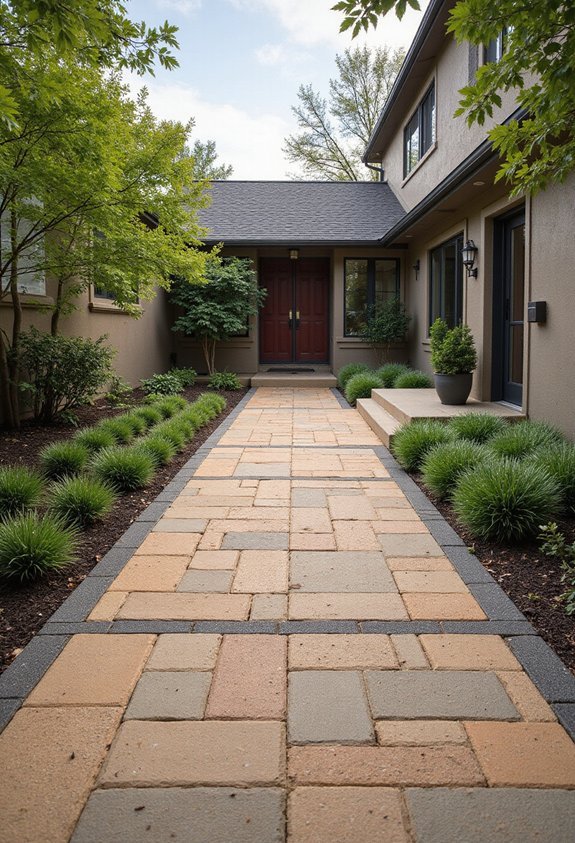
Choosing recycled pavers for your front yard walkway combines environmental responsibility with practical design benefits, allowing you to create an attractive outdoor space while reducing waste and your carbon footprint. Recycled pavers are manufactured from reclaimed materials like old bricks, concrete, and stone, making them an economical choice that diverts debris from landfills. You’ll find these pavers available in various colors, textures, and sizes, enabling you to design unique patterns that complement your home’s architecture. Installation follows standard paver procedures, requiring a properly prepared base and consistent spacing. Because recycled pavers have already weathered natural conditions, they typically develop character and patina quickly. You’ll appreciate both the environmental impact and the distinctive aesthetic appeal these sustainable materials bring to your front yard design.
Permeable Pavers for Eco-Friendly Drainage Solutions
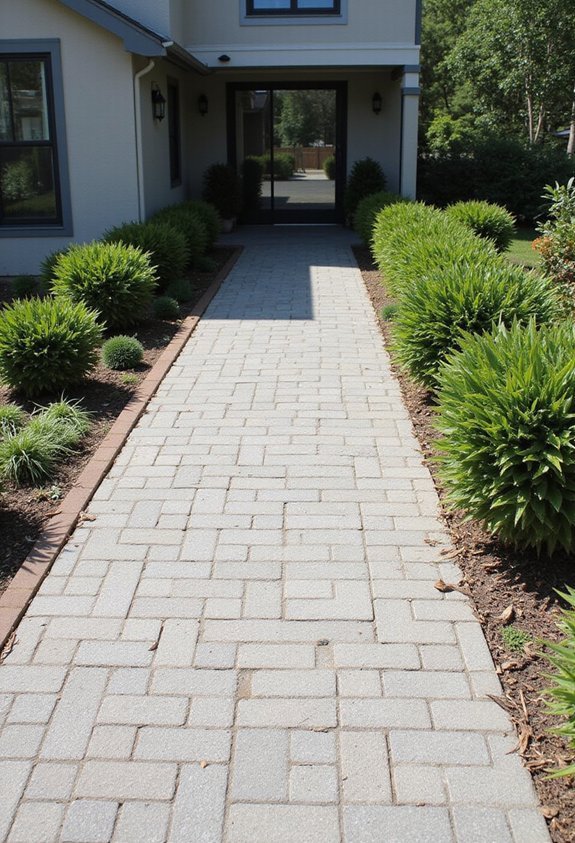
Beyond the environmental benefits of recycled materials, you can further enhance your front yard’s sustainability by installing permeable pavers, which allow water to drain through the surface rather than pooling on top. These specialized pavers feature tiny gaps or porous materials that let rainwater seep into the ground below, reducing runoff and preventing water accumulation. When you choose permeable pavers, you’re protecting your local water systems from overflow and erosion while also replenishing groundwater supplies naturally. This drainage system works particularly well in areas with heavy rainfall or poor soil drainage. Installation involves laying pavers on a permeable base layer, ensuring water flows downward efficiently. By selecting permeable pavers for your front yard, you’re combining aesthetic appeal with responsible environmental stewardship and practical water management.
Travertine Pavers for Natural Yet Refined Elegance
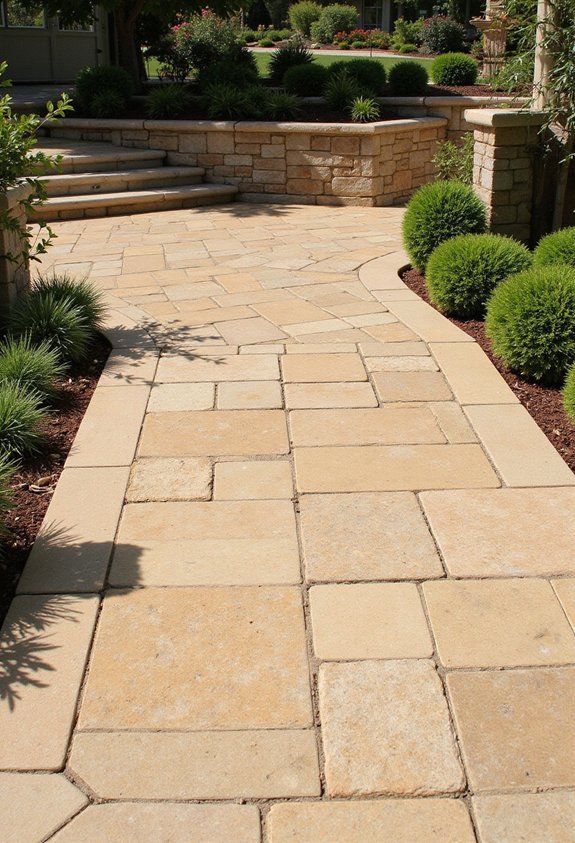
If you’re looking to bring out the natural beauty of your front yard while maintaining a polished appearance, travertine pavers stand out as an excellent choice that combines both qualities effortlessly. These natural stone pavers feature distinctive pitted surfaces and warm, earthy tones that range from cream to golden brown, creating visual depth and sophistication. Travertine’s porous composition allows water to drain effectively, making it an environmentally responsible option for your landscape. The material’s slip-resistant surface provides safety during wet conditions, while its thermal properties keep it cooler underfoot than concrete alternatives. Installation requires proper base preparation and professional placement to guarantee longevity. With regular sealing and maintenance, travertine pavers’ll enhance your front yard’s curb appeal while delivering durability and timeless elegance that complements various architectural styles.
Porcelain Pavers: Slip-Resistant and Low-Maintenance
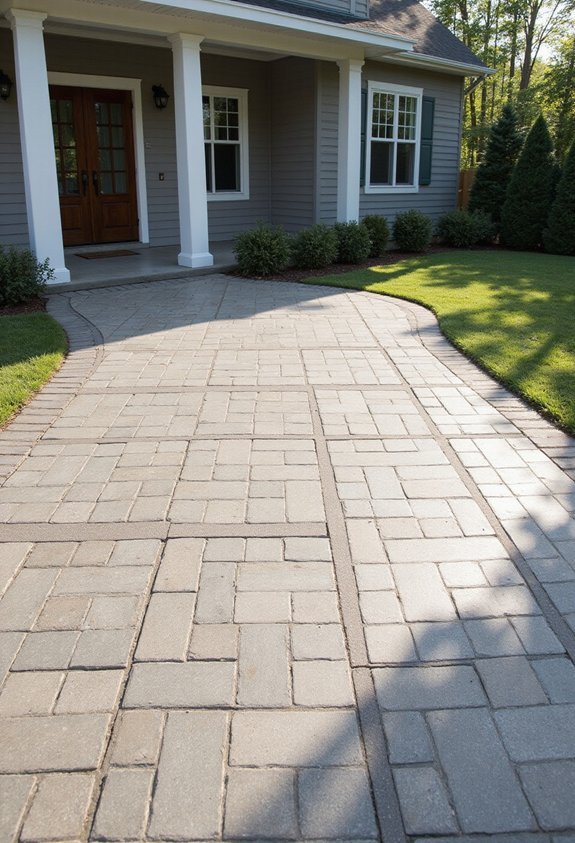
While travertine pavers offer natural elegance through their porous surfaces and warm tones, porcelain pavers present a different approach that prioritizes practicality and minimal upkeep for homeowners seeking a more hands-off solution. You’ll appreciate porcelain’s non-porous composition, which resists water absorption and staining far better than natural stone options. These pavers feature slip-resistant surfaces that make them ideal for wet climates or areas prone to moisture. You can clean them easily with just water and mild soap, eliminating the need for regular sealing treatments. Porcelain’s durability means you won’t worry about cracks from freeze-thaw cycles, and its consistent appearance creates clean, uniform lines throughout your front yard design. This low-maintenance choice lets you enjoy a polished outdoor space without demanding seasonal care routines.
Offset Patterns for Dynamic Clean-Line Layouts
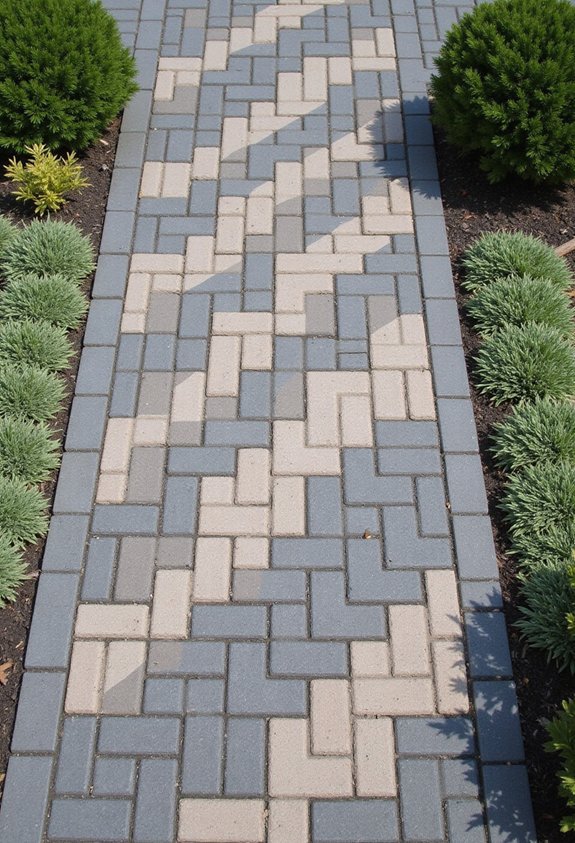
The running bond pattern, also called offset paving, creates visual interest and structural stability by staggering each row of pavers so that the joints don’t align vertically, which distributes weight more evenly across your front yard surface. You’ll achieve a sophisticated look by offsetting each paver by half its length, creating a cascading effect that guides the eye naturally across your landscape. This pattern works exceptionally well with rectangular pavers and complements modern home designs. You’ll benefit from improved durability because the offset arrangement prevents stress concentration at single points. When you install offset patterns, guarantee each row maintains consistent spacing and alignment. This method requires careful measurement and planning, but the resulting dynamic clean-line layout provides both aesthetic appeal and long-lasting performance for your front yard.
Segmented Curves Within Clean-Line Designs
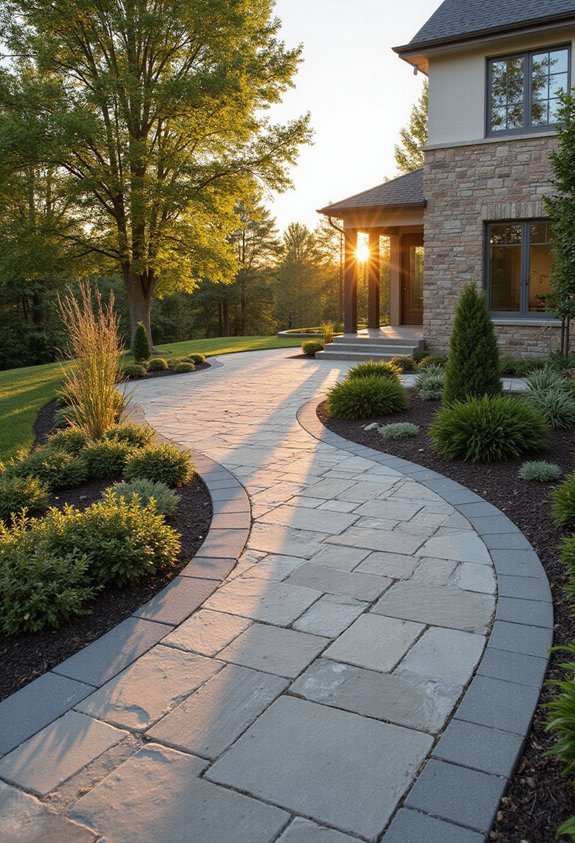
Beyond straight lines and angular patterns, you can incorporate gentle curves into your front yard paver design by using segmented curved layouts that blend softness with contemporary aesthetics. These designs feature curved sections created by arranging pavers in progressive arcs, which maintains clean visual lines while adding organic movement to your space. You’ll position pavers in gentle, sweeping patterns that guide viewers’ eyes through your front yard naturally. This approach works particularly well when you’re combining multiple paver materials or colors, as the curves create natural boundaries between different sections. Segmented curves also improve drainage flow and can soften harsh architectural angles on your home’s exterior. The key is spacing your curved segments consistently and ensuring each arc aligns properly with adjoining sections for a cohesive, polished appearance.
Checkerboard Pavers in Two-Tone Contrasts
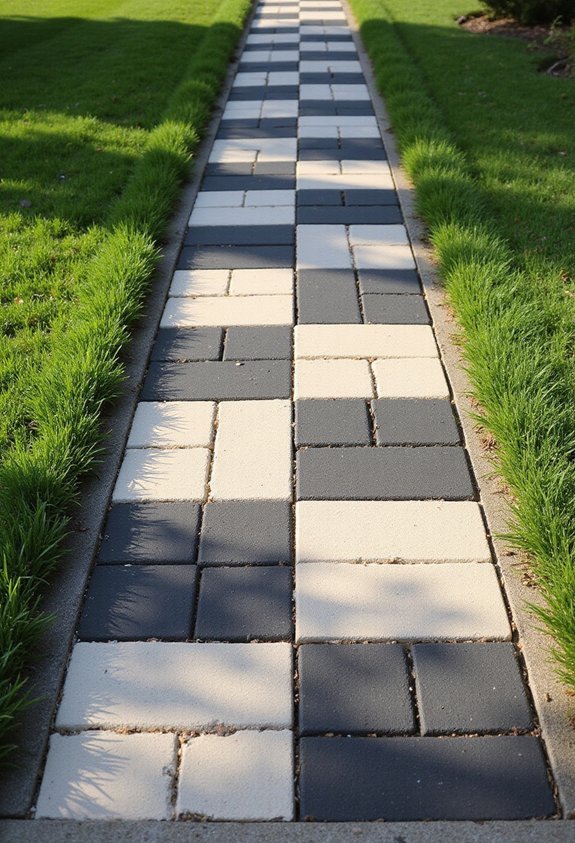
If you’re seeking a striking visual pattern that combines simplicity with bold design impact, checkerboard layouts using two contrasting paver colors or materials’ll create an instantly recognizable and dynamic front yard aesthetic. You’ll alternate square pavers in a precise grid pattern, typically using light and dark shades like cream and charcoal, or natural stone and concrete. This design requires careful planning and measurement to guarantee uniform spacing and alignment throughout your installation. You should prepare a level foundation and use string lines as guides for accurate placement. The checkerboard pattern visually expands your yard while maintaining clean architectural lines, making it ideal for modern homes. You’ll find this approach particularly effective in medium-sized front yards where the pattern can fully develop without appearing cramped or overwhelming.
Raised Paver Beds That Define Your Walkway
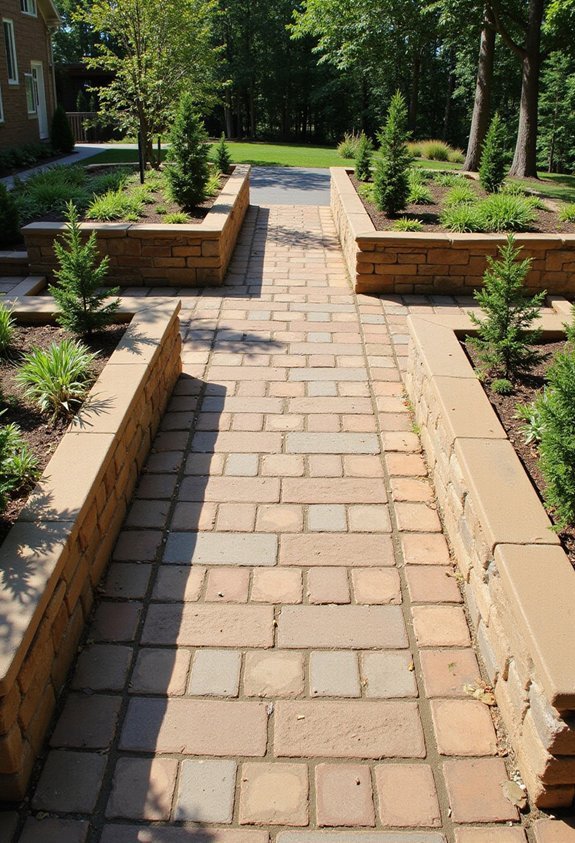
By elevating paver beds along your walkway’s edges, you’ll create distinct boundaries that separate your path from surrounding landscaping and lawn areas while adding depth and visual interest to your front yard design. These raised beds can be constructed using retaining wall blocks, metal edging, or wooden borders that sit four to eight inches above ground level. You’ll anchor pavers within these elevated frames, allowing them to form a cohesive, organized appearance. The height difference establishes clear spatial definition, making your walkway appear intentional and professionally designed. Additionally, raised paver beds simplify maintenance by containing mulch and soil, preventing spreading into adjoining areas. This structural approach enhances drainage, protects plant beds from foot traffic, and creates attractive layering throughout your landscaping scheme.
Estimated Costs: Pavers, Labor, and Material Breakdown
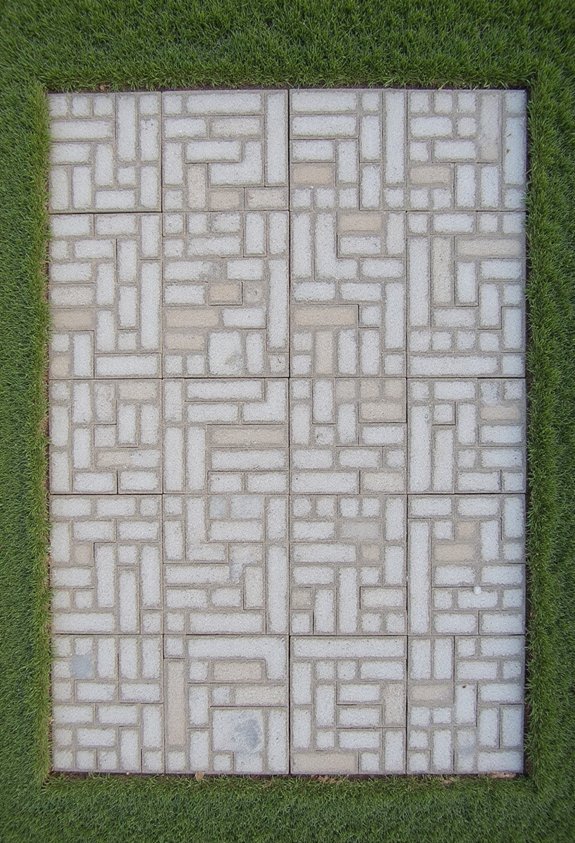
Before you’ll commit to a front yard paver project, you’ll want to understand the various expenses involved so you can budget appropriately and avoid unexpected costs down the line. Paver costs typically range from $10 to $50 per square foot, depending on material quality and type. Labor expenses usually account for $15 to $25 per square foot, representing a significant portion of your total investment. You’ll also need to factor in base materials like sand and gravel, which cost roughly $1 to $3 per square foot. Additional expenses include edging, sealant application, and delivery fees. When calculating your complete budget, multiply your project’s square footage by material and labor rates, then add these supplementary costs to determine your final expense estimate accurately.
Why Base Preparation Matters: Foundation Principles for Long-Lasting Pavers
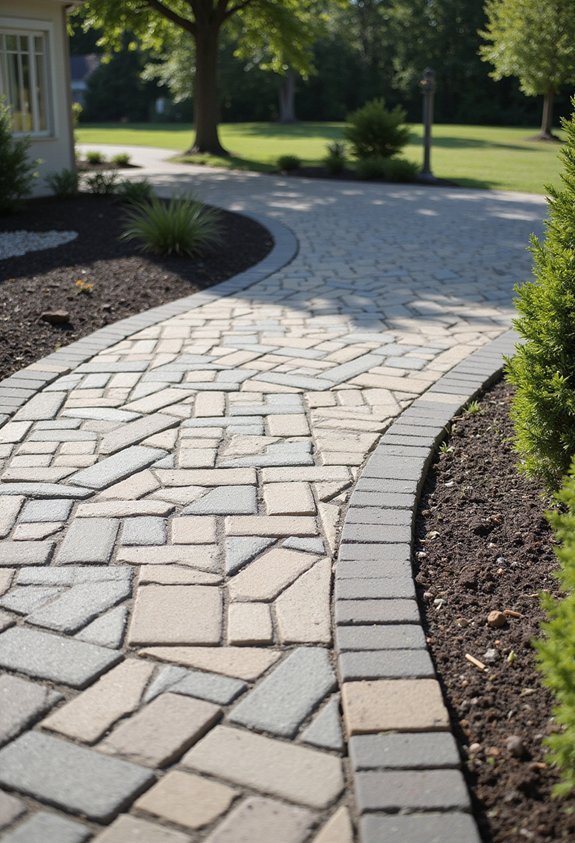
Although pavers themselves get most of the attention in front yard design, the foundation beneath them determines whether your investment’ll last for decades or crumble within a few years. You’ll need to excavate the area properly, removing topsoil and creating a level base that’s typically four to six inches deep. Then you’ll compact the soil thoroughly, which prevents settling and shifting over time. Next, you’ll add a layer of crushed stone or gravel, compacting it as well, creating a stable drainage system. Finally, you’ll install a sand base that allows water to drain properly while keeping pavers locked in place. This systematic preparation prevents cracking, uneven surfaces, and premature deterioration, making it essential for any successful paver installation.
Sealing, Cleaning, and Weed Control for Long-Term Durability
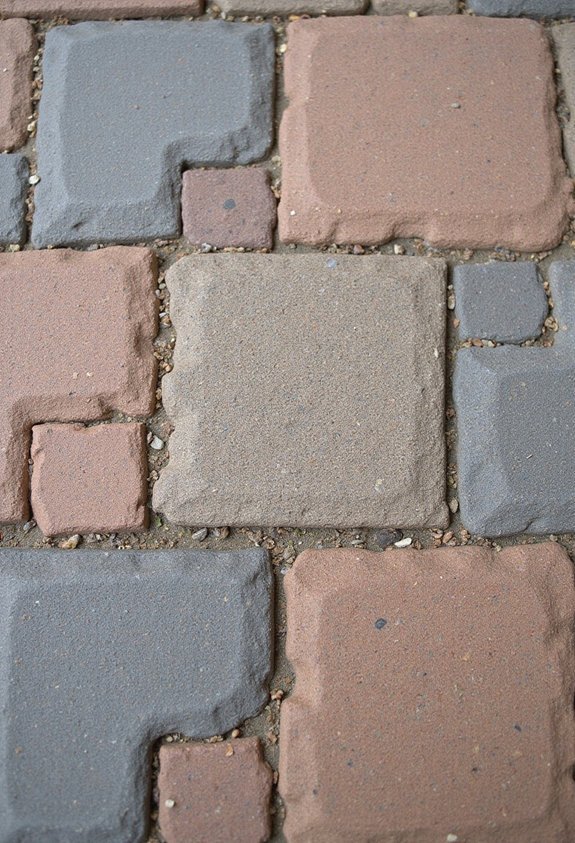
Once you’ve installed your pavers and they’ve settled into place, you’ll need to safeguard them through regular maintenance that addresses three critical areas: sealing the surface, cleaning away debris and stains, and preventing weeds from taking root between the joints. Applying a quality paver sealer every two to three years creates a protective barrier against moisture, oil stains, and UV damage, which extends your pavers’ lifespan considerably. You’ll want to clean your pavers seasonally using a pressure washer on low settings to remove dirt and algae buildup without causing damage. Finally, use polymeric sand in the joints, which hardens when moistened and blocks weed growth naturally. Combining these three maintenance practices ensures your front yard pavers remain durable, attractive, and functional for decades.
When to DIY vs. Hire a Professional Installer
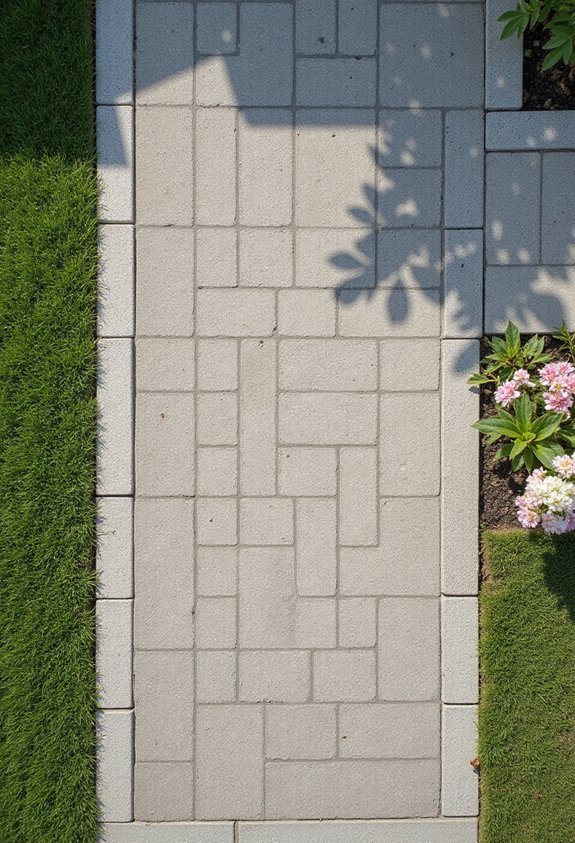
Deciding whether you’ll install your front yard pavers yourself or engage a professional installer depends on several important factors, including your skill level, available time, project complexity, and budget constraints. If you’re experienced with landscaping projects and have basic tools available, a smaller paver project might work well for DIY installation. However, you’ll need to invest time in proper preparation, base layer installation, and precise leveling. Professional installers bring expertise, specialized equipment, and warranty protection that guarantees your pavers are correctly installed with proper drainage. They’ll complete the project faster and handle unexpected complications. Consider hiring professionals for large areas, complex patterns, or challenging terrain. Reserve DIY installation for straightforward, manageable projects where you can dedicate adequate time and effort.
Common Paver Mistakes to Avoid in Your Front Yard
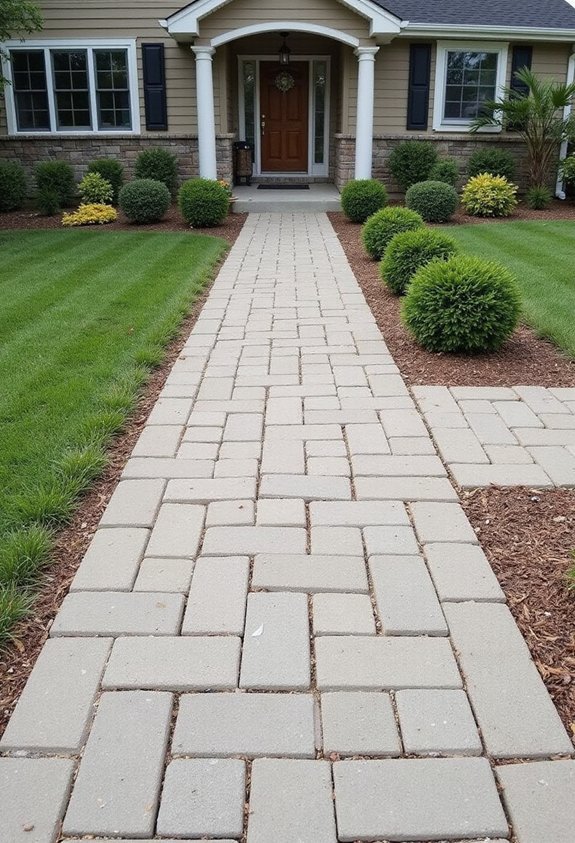
Whether you’ve decided to install your pavers yourself or you’re working alongside a professional, understanding the most common installation errors will help you achieve a durable and attractive front yard. One critical mistake is skipping proper base preparation, which causes uneven settling and cracking over time. You’ll also want to avoid using incorrect sand between pavers, as this affects drainage and stability. Many homeowners neglect slope requirements, preventing water from draining away from their foundations effectively. Additionally, spacing pavers inconsistently creates an unprofessional appearance and weakens structural integrity. Don’t underestimate compaction; inadequately compacted soil beneath pavers leads to shifting and deterioration. Finally, using low-quality materials might save money initially, but they’ll require costly repairs or replacement sooner than expected.
Conclusion
You’ve discovered how front yard pavers transform your home’s entrance with clean lines and lasting appeal. Studies show that quality hardscaping improvements like paver installations increase home values by up to 12%, making them a smart investment beyond aesthetics. By understanding proper base preparation, maintenance techniques, and whether to hire professionals or tackle the project yourself, you’re equipped to create a stunning, durable outdoor space that’ll serve your home for years.