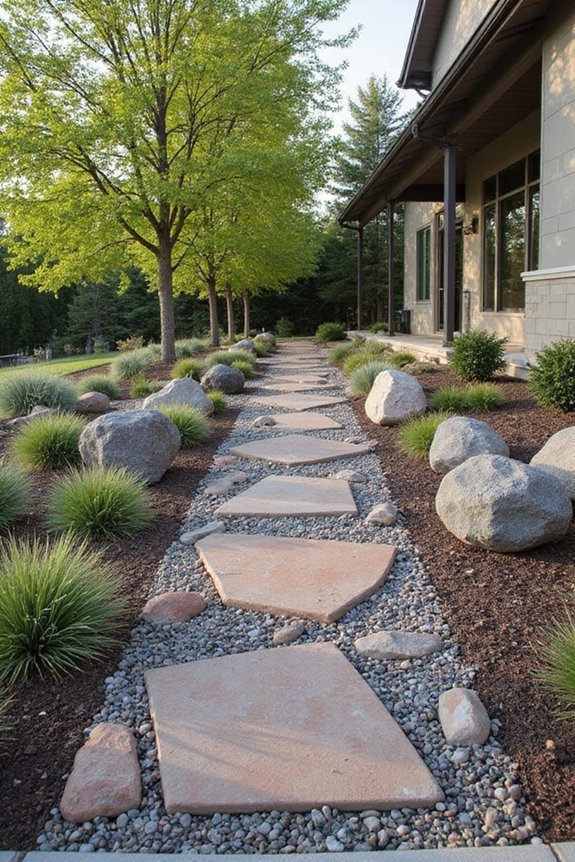
You can transform your front yard into a professionally designed landscape by strategically using rocks, and the approach you choose depends on your home’s style, climate, and maintenance preferences. Whether you’re drawn to clean geometric patterns, natural desert arrangements, or elegant river rock borders, each method offers distinct visual benefits. Understanding how to combine rocks with plants, terrain, and focal points will determine whether your yard achieves the polished appearance you’re aiming for—and we’ll show you exactly how.
Front Yard Rock Gardens With Clean Lines
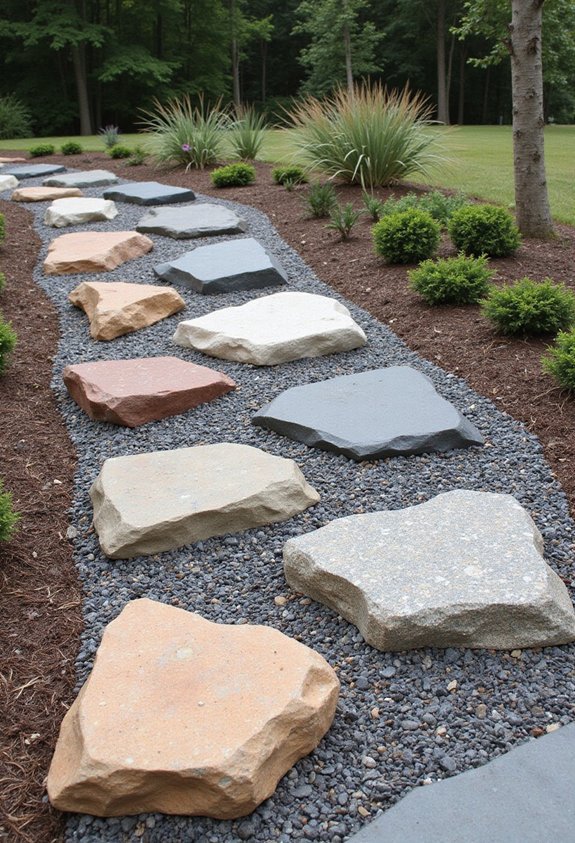
When you’re planning a front yard rock garden with clean lines, you’ll want to focus on creating organized, geometric patterns that make your landscape look intentional and well-designed. Start by mapping out your space with straight edges, using landscape edging to define distinct sections for rocks, plants, and pathways. You’ll create visual interest by arranging rocks in deliberate formations, such as straight rows or rectangular groupings, rather than scattering them randomly. Choose rocks of similar size and color to maintain cohesion throughout your design. Incorporate linear pathways using gravel or stepping stones to guide visitors’ eyes through your garden. This structured approach transforms your front yard into a polished, professional-looking space that demonstrates careful planning and attention to detail.
Also read: 17 FRONT YARD FIRE PIT Ideas That Feel Cozy!
Desert Rock Landscapes With Native Plantings
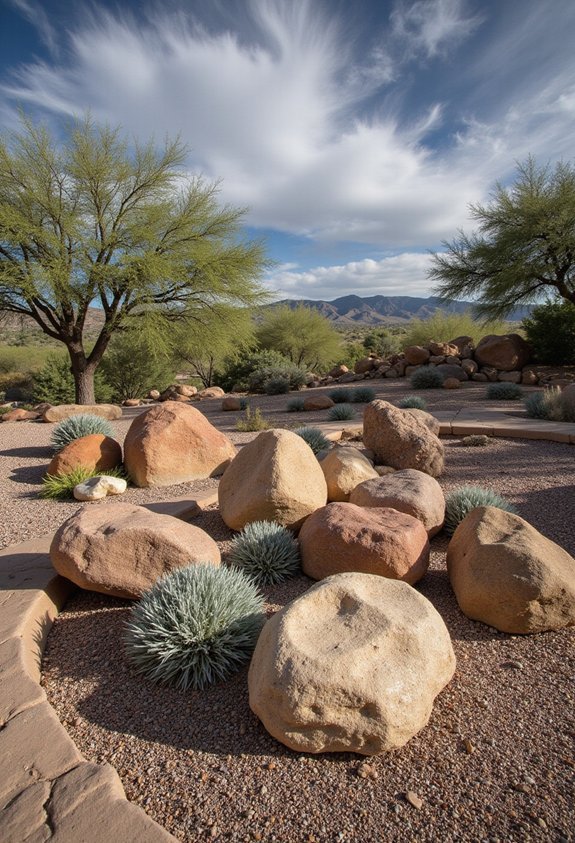
Desert rock landscapes offer you a practical and visually striking way to design a front yard that thrives in arid climates while requiring minimal maintenance and water resources. You’ll combine decorative rocks, gravel, and boulders with native plants that naturally flourish in dry conditions, such as sedums, desert marigolds, and ornamental grasses. This approach reduces your watering needs greatly while creating texture and visual interest. You can arrange larger rocks strategically to frame plantings and define pathways, allowing water to drain efficiently through the landscape. Native plants establish deep root systems that access groundwater, making them resilient during drought periods. By selecting appropriate species for your region and spacing them properly among rocks, you’ll create a sustainable, attractive front yard that demands considerably less care than traditional landscaping methods.
River Rock Borders for Elegant Transitions
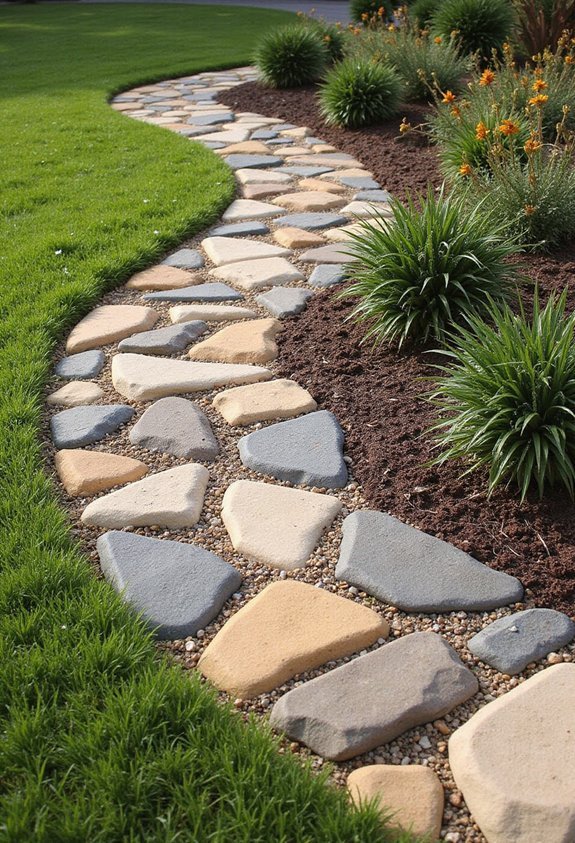
Many homeowners overlook the transformative power of river rock borders, yet they’re among the most effective ways to create clean, polished shifts between different landscape zones in your front yard. River rocks serve practical purposes beyond aesthetics, as they define garden beds, pathways, and planting areas while preventing soil erosion and weed encroachment. You’ll want to select smooth, rounded stones in neutral colors like gray, tan, or cream, which complement most architectural styles. Install your river rock borders by first edging the area with landscape fabric, then layering rocks two to three inches deep. This depth guarantees adequate coverage and stability. The gentle, natural appearance of river rock interchanges seamlessly between hardscaping and planted zones, creating sophisticated visual boundaries that enhance your home’s overall curb appeal.
Dry Creek Beds for Visual Drama and Movement
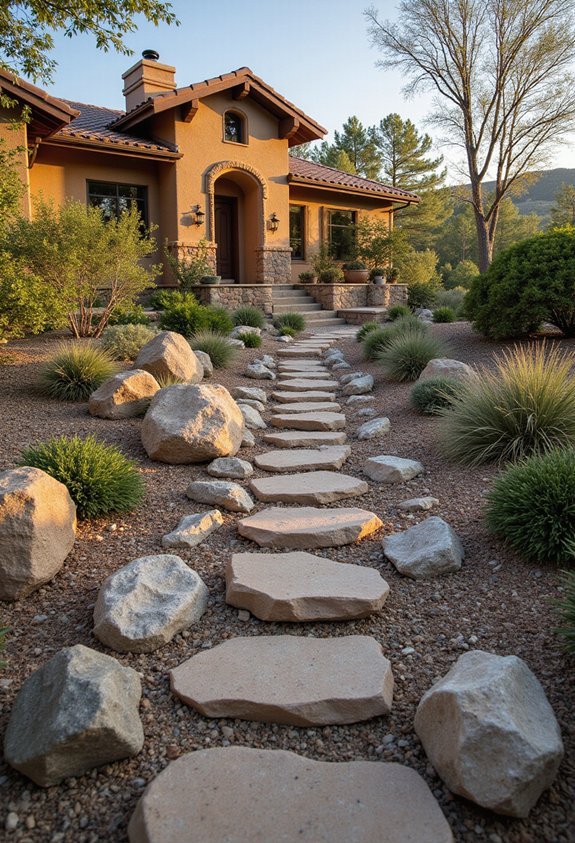
If you’re looking to add dynamic visual interest to your front yard while managing water drainage naturally, dry creek beds offer an excellent solution that combines aesthetic appeal with practical functionality. You’ll create these features by arranging rocks and pebbles in curved, flowing patterns that mimic natural waterways, directing rainfall toward designated drainage areas. Start by outlining your desired path with larger stones, then fill the channel with progressively smaller rocks and gravel, creating depth and texture. You can enhance the effect by incorporating native plants along the edges, which stabilize soil while adding greenery. The curved design creates movement and guides the eye throughout your landscape, making your front yard feel more spacious and naturally organized while protecting against erosion and water pooling issues.
Large Boulders as Focal Point Anchors
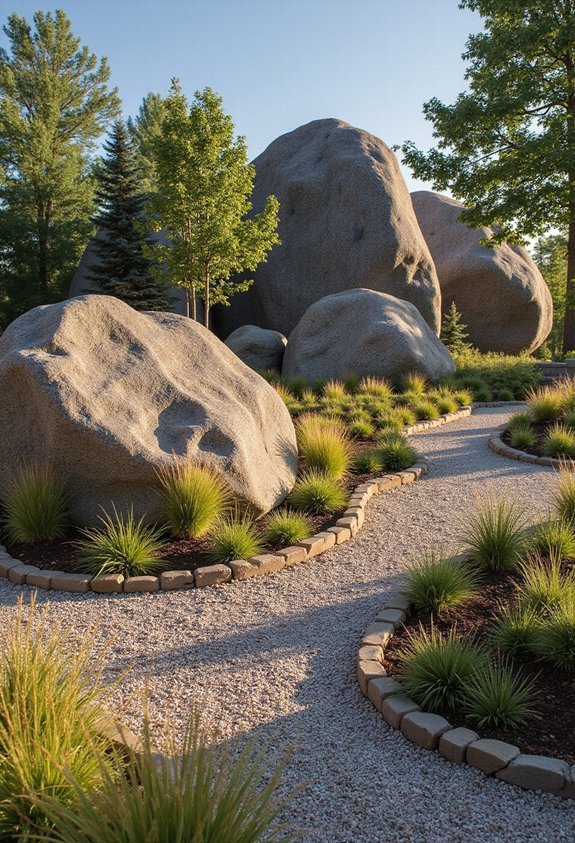
Strategic placement of large boulders creates visual anchors that draw attention and organize the overall design of your front yard landscape. You’ll want to position boulders at key points, such as garden bed corners, entryway sides, or landscape changes, where they’ll naturally guide your eye through the space. Choose boulders in varying sizes to create depth and visual interest, ensuring the largest pieces serve as primary focal points. You should select stones that complement your home’s architectural style and existing landscape materials. Grouping boulders in odd numbers, typically three or five, produces more natural, balanced compositions than even groupings. By anchoring your design with strategically placed boulders, you’ll establish a strong foundation that ties your entire front yard together cohesively.
Pea Gravel With Colorful Plant Accents
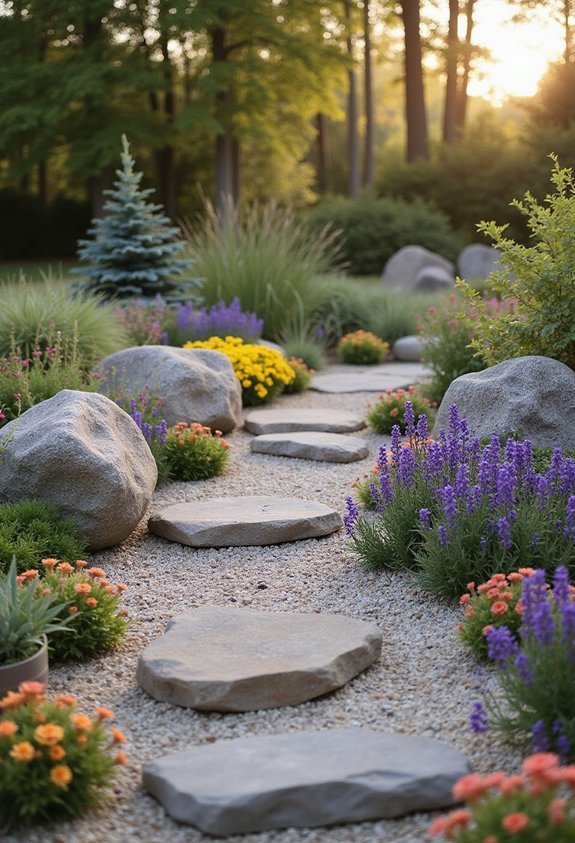
Pea gravel provides a practical and attractive ground cover that complements large boulders while creating texture and visual interest throughout your front yard. You’ll find that this small, smooth stone works perfectly as a base layer, allowing you to arrange colorful plants strategically across your landscape. Plant vibrant flowers like red salvia, purple petunias, or yellow coreopsis among the gravel to establish focal points that draw the eye. These colorful accents contrast beautifully against the neutral gravel tones, making your plantings stand out prominently. You should choose plants that thrive in your climate and require minimal maintenance. The pea gravel also helps retain soil moisture around plant roots while preventing weed growth when you add landscape fabric underneath. This combination creates a cohesive, low-maintenance front yard design.
Meandering Rock Pathways Through Your Yard
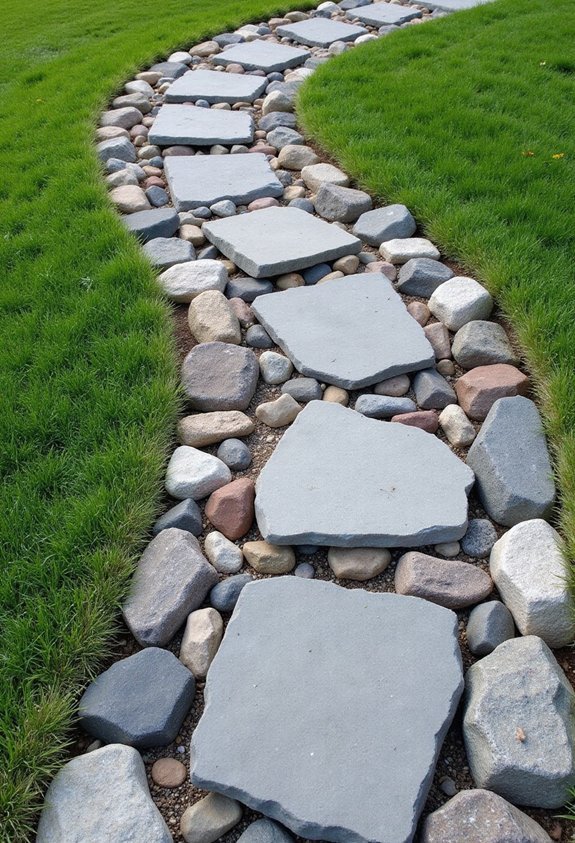
Building rock pathways through your front yard creates functional walkways that’ll guide visitors while adding structure and visual appeal to your landscape design. You can arrange stones in curved or winding patterns that naturally draw people’s eyes through your yard, making the space feel larger and more intentional. Start by outlining your pathway’s route, then excavate a shallow trench about two to three inches deep. Layer landscape fabric at the bottom to prevent weeds from growing between rocks. Fill the trench with your chosen stones—river rocks, flagstone, or gravel work well—and compact them firmly together. The meandering design creates visual interest while improving accessibility, allowing you to navigate your yard without stepping on plants or flower beds.
Mixed Stone Sizes for Textured Depth
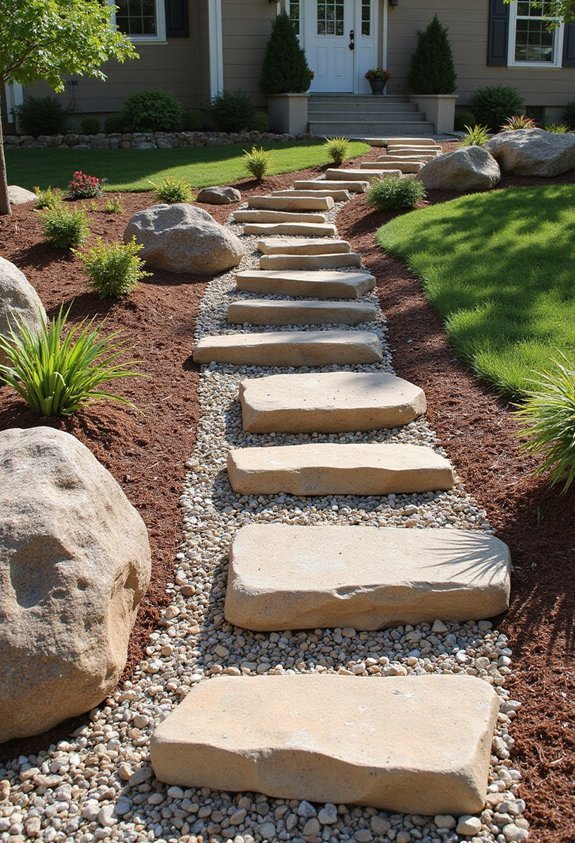
Combining various stone dimensions in your landscape design creates visual depth and prevents your front yard from appearing flat or monotonous, so you’ll want to select rocks in at least three different sizes—large boulders for focal points, medium stones for filling middle spaces, and small pebbles or gravel for ground coverage. This layering technique draws the eye across your yard naturally, making the space feel more intentional and professionally designed. When you arrange larger stones first as anchors, you establish structure, then position medium-sized rocks around them to create shifts, and finally fill remaining gaps with smaller gravel to complete the composition. This strategic sizing approach prevents visual chaos while maximizing textural interest throughout your front landscape.
Single-Color Rock Schemes for Understated Elegance
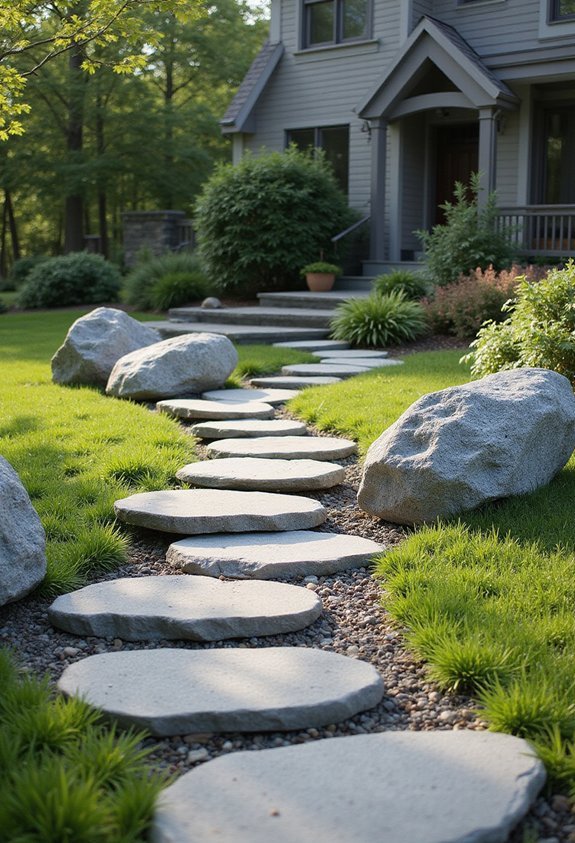
While you might assume that using rocks in multiple colors creates the most visually interesting front yard, selecting stones in a single color actually produces a sophisticated and calming landscape that doesn’t compete for attention. You can choose gray, tan, or white rocks to establish a unified, polished appearance throughout your entire yard. This monochromatic approach allows your home’s architecture and plantings to become the focal points, rather than drawing eyes to scattered color variations in the ground cover. Single-color schemes also require less maintenance planning, since you won’t need to coordinate different stone tones or worry about color fading unevenly over time. Your front yard develops a streamlined, intentional look that conveys careful design and restraint.
Mountain-Style Rock Gardens With Creeping Plants
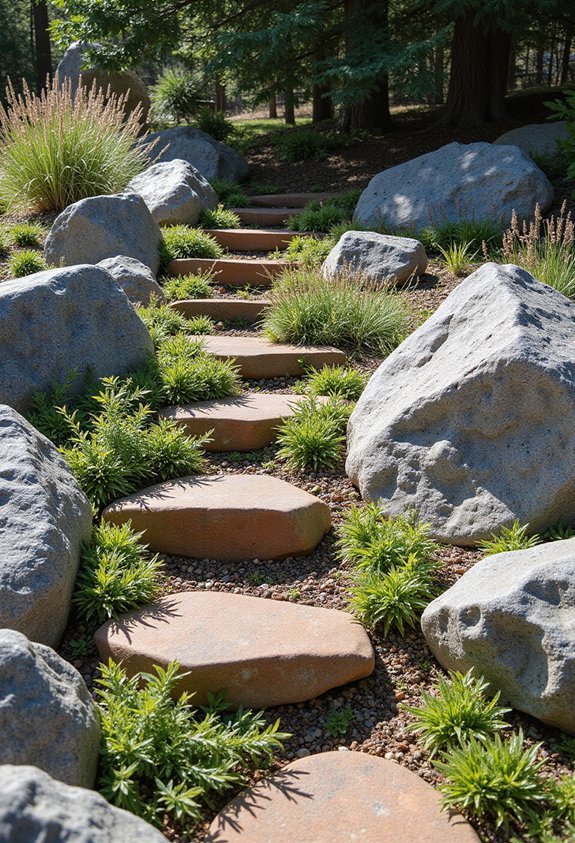
If you’re drawn to the understated elegance of single-color rock schemes but want to add more visual texture and natural movement to your front yard, mountain-style rock gardens with creeping plants offer an excellent way to incorporate both elements. You’ll arrange larger rocks to mimic mountain terrain, creating natural-looking slopes and valleys, then position low-growing plants like creeping phlox, sedums, and alpine thyme between the stones. These plants spread gradually across the rocky surface, softening harsh edges while maintaining the garden’s structural integrity. You’ll water strategically during establishment, then reduce frequency as plants mature. This approach creates a dynamic landscape that changes seasonally, requires minimal maintenance once established, and provides year-round visual interest through varying foliage colors and occasional flowering displays.
Stacked Rock Beds With Built-In Planting Spaces
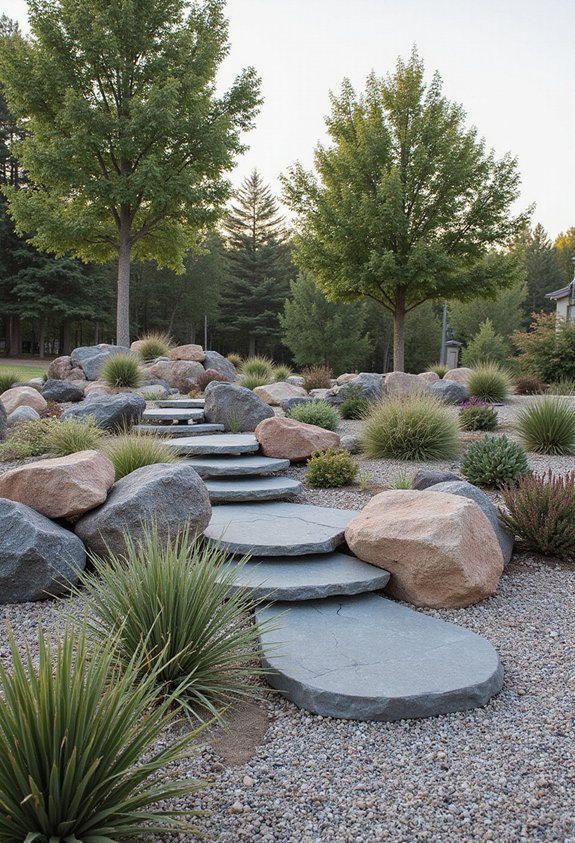
Practicality and visual appeal combine when you construct stacked rock beds that incorporate designated planting spaces throughout their structure. You’ll start by selecting flat stones of varying sizes, then arrange them in horizontal layers, ensuring each level sits securely on the one below. As you stack, you’ll leave intentional gaps between rocks where you can insert soil and plant small shrubs, sedums, or flowering perennials. These pockets create natural planting areas that prevent soil erosion while allowing roots to establish themselves within your rock formation. The staggered arrangement gives your front yard depth and dimension, while the embedded plants soften the hard edges of the stones. This method maximizes your available space and creates a cohesive, professionally designed appearance that requires minimal maintenance once plants become established.
Zen-Inspired Front Yards With Raked Gravel Patterns
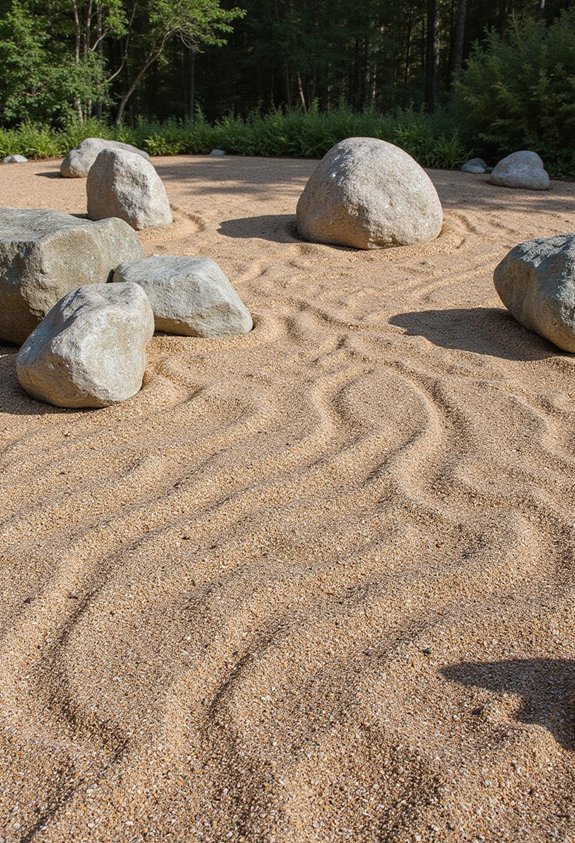
Because you’re seeking a serene and minimalist aesthetic, raked gravel patterns offer you an elegant way to transform your front yard into a peaceful retreat that mirrors traditional Japanese garden design. You’ll start by creating a designated gravel area, then use a specialized rake to form deliberate wave or linear patterns across the surface. These patterns require regular maintenance, as you’ll need to re-rake them periodically to maintain their crisp appearance. You can integrate strategically placed rocks, stepping stones, or ornamental plants to enhance the design’s visual interest. The raked gravel creates movement and depth, drawing the eye across your landscape while promoting tranquility. This technique works exceptionally well in smaller yards, where you’re limited on space but want maximum visual impact and meditative appeal.
Stacked Stone Borders and Retaining Walls
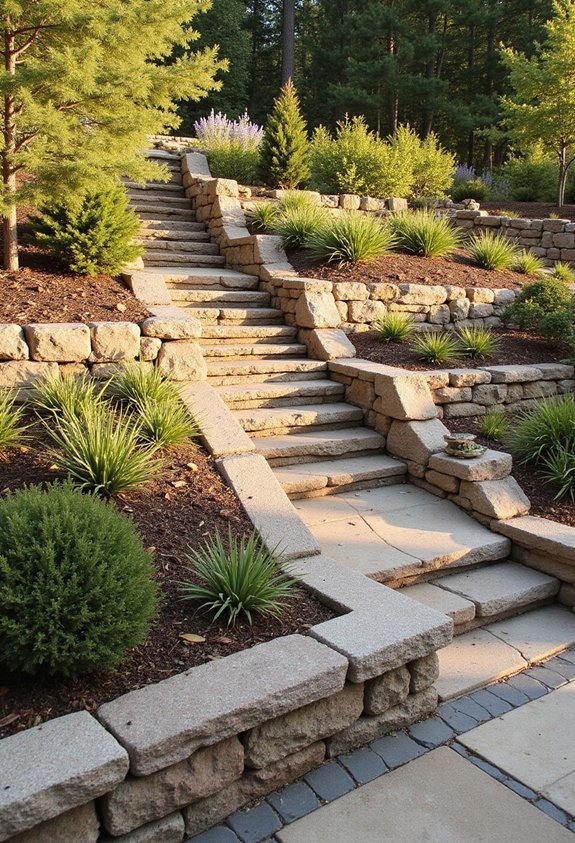
Several practical applications make stacked stone borders and retaining walls excellent choices for your front yard landscape, as they’ll provide both functional support and visual structure to your outdoor space. You can use stacked stones to create defined garden beds, prevent soil erosion on sloped terrain, and establish clear shifts between different landscape levels. When you’re building these structures, you’ll want to select stones with flat surfaces that stack securely, ensuring stability and longevity. Properly aligned stacked stones create clean lines that enhance your yard’s overall aesthetic appeal while serving essential drainage and soil retention purposes. You can choose from various stone types—including limestone, granite, or fieldstone—to match your home’s architectural style and complement existing landscaping elements effectively.
Black Lava Rock for Bold Contemporary Contrast
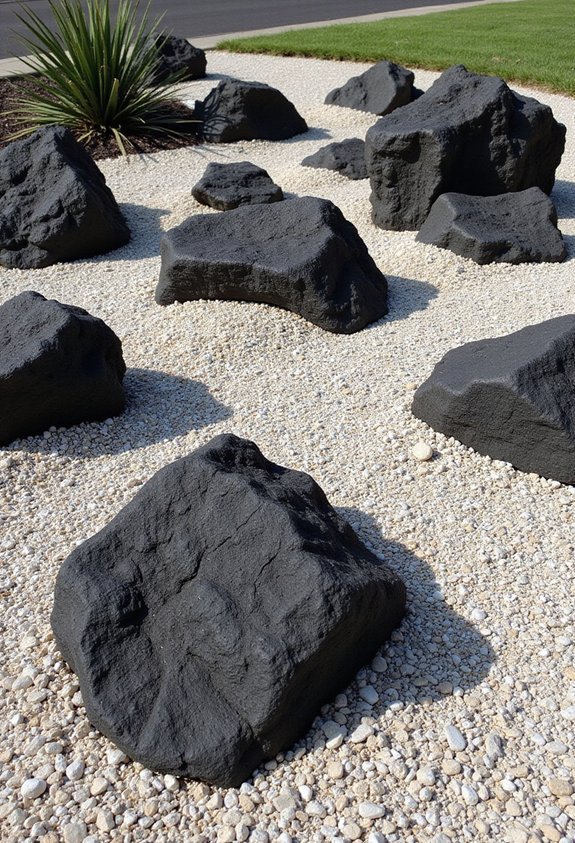
While stacked stone borders offer structured elegance through their layered construction, black lava rock delivers a striking visual impact that’ll transform your front yard into a modern landscape showcase. This volcanic rock features a dark, porous texture that creates dramatic contrast against green plants and lighter hardscaping elements. You’ll find that black lava rock drains exceptionally well, preventing water accumulation around your home’s foundation. When installing, lay landscape fabric beneath the rock to suppress weeds and reduce maintenance demands. The angular edges and varied sizes allow you to fill irregular spaces efficiently. Black lava rock complements contemporary architecture, minimalist designs, and Japanese-inspired gardens effectively. Consider combining it with ornamental grasses or architectural plants for maximum visual interest and depth in your front yard design.
Succulents on Rocky Slopes for Drought Tolerance
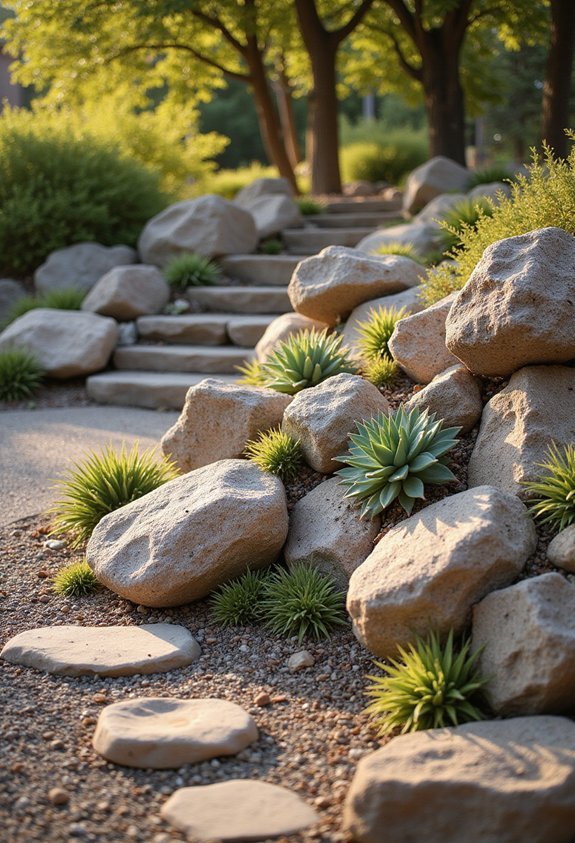
If you’re looking to create a low-maintenance front yard that thrives in dry conditions, succulents planted on rocky slopes offer an excellent solution that combines beauty with practical water conservation. You’ll want to select drought-tolerant varieties like sedums, echeveria, and sempervivum, which store water in their leaves and require minimal irrigation. When planting on slopes, you’re ensuring proper drainage, which prevents root rot and extends plant life. Position larger rocks strategically to create visual interest and retain soil moisture around plant bases. Space succulents appropriately to allow air circulation, reducing disease risk. This approach requires less frequent watering than traditional landscaping, considerably reducing your water bills while creating a striking, modern aesthetic that naturally complements the rocky terrain of your front yard design.
Curved Rock Borders That Soften Your Home’s Foundation
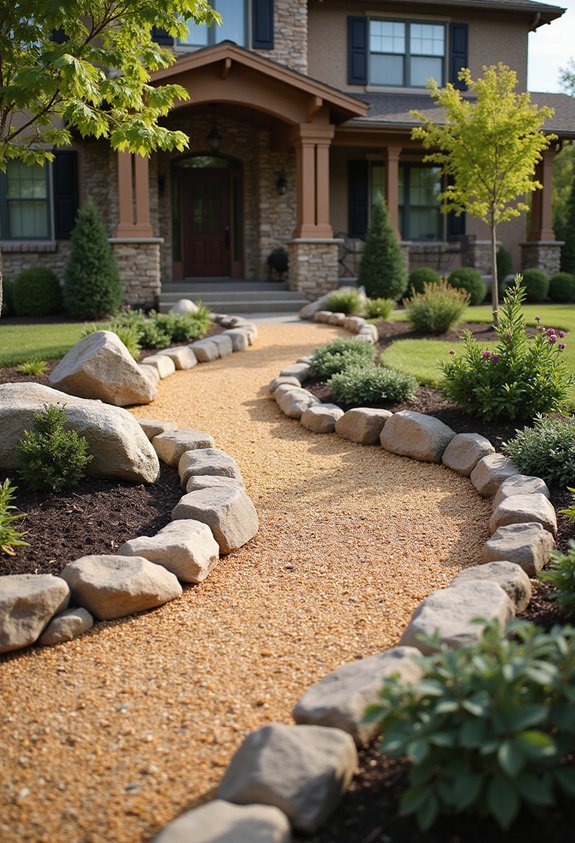
As your home’s foundation meets the ground, a harsh, straight line can make the entire structure look abrupt and disconnected from the surrounding landscape. You can soften this visual shift by installing curved rock borders that flow gracefully along your foundation’s perimeter. These curved arrangements create a natural, organic appearance that blends your home into the yard seamlessly. When you plan your border, use larger rocks as anchors and fill spaces with smaller stones, ensuring smooth, flowing curves rather than sharp angles. Position the border about six to twelve inches from your foundation, allowing room for proper drainage and maintenance access. The gentle curves you create will visually expand your front yard while establishing a welcoming connection between your home’s architecture and the natural landscape elements surrounding it.
Rock and Paver Combinations for Mixed Textures
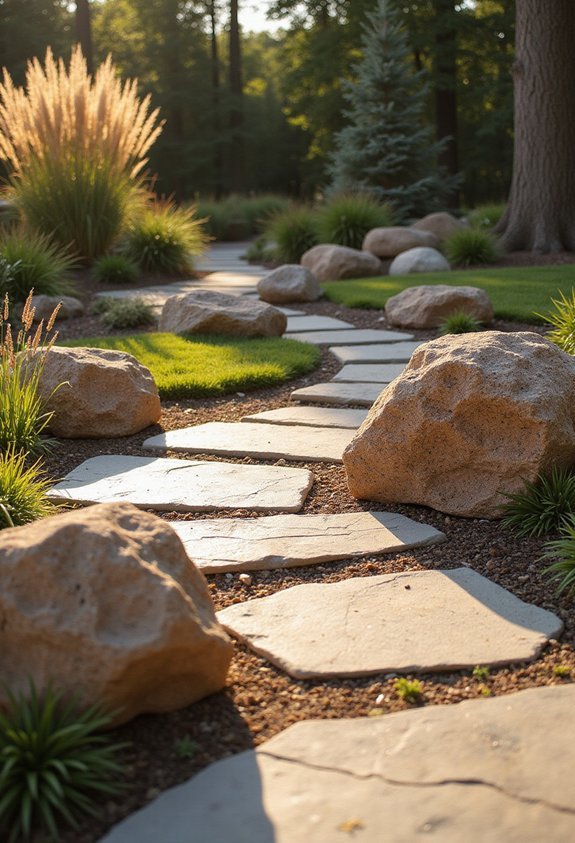
Combining rocks with pavers creates visual interest and functional variety in your front yard by blending different materials, colors, and textures that work together to enhance your landscape’s overall design. You can arrange large, flat pavers as walkways while filling surrounding areas with decorative rocks, which prevents weeds and adds dimension. Consider mixing river rocks, gravel, and slate pavers to establish distinct zones throughout your yard. The combination allows you to create defined pathways that guide visitors while rocks soften edges and fill gaps naturally. You’ll achieve better drainage when alternating between porous pavers and permeable rock layers. This mixed approach reduces maintenance needs while delivering a polished, intentional appearance that elevates your home’s curb appeal considerably.
Large Plants in Rock Garden Surrounds
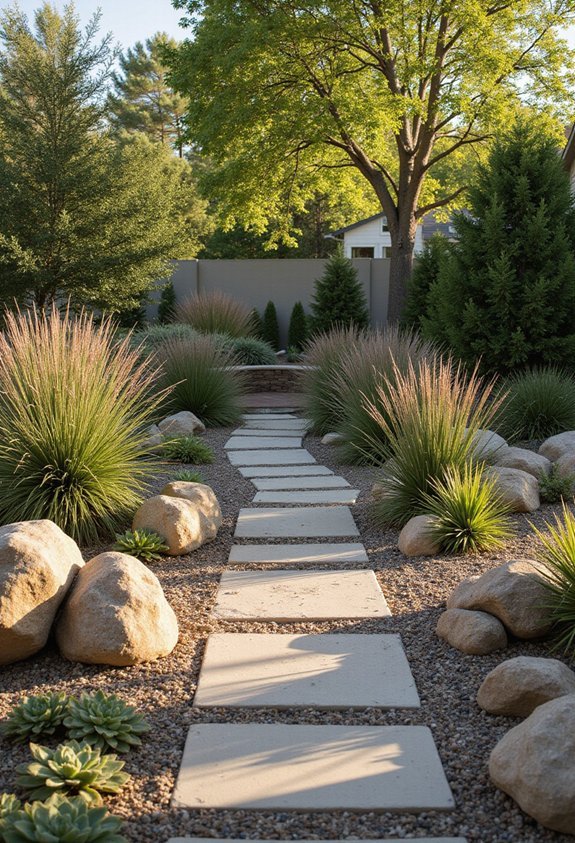
Strategically placing large plants within rock garden surrounds creates dramatic focal points that’ll draw the eye through your front yard while establishing natural balance against the hardscape elements you’ve already installed. You’ll want to select plants with varying heights, textures, and colors to complement your rock arrangements effectively. Consider ornamental grasses, dwarf evergreens, or flowering shrubs that thrive in rocky, well-drained conditions. Position taller specimens toward the back or center to create visual depth, while placing shorter plants around the perimeter. This layering technique prevents your landscape from appearing flat and monotonous. Guarantee adequate spacing between plants and rocks to allow for mature growth and proper air circulation. Water requirements should align with your regional climate, creating a cohesive, low-maintenance design that functions harmoniously.
Tiered Rock Beds for Sloped Front Yard Solutions
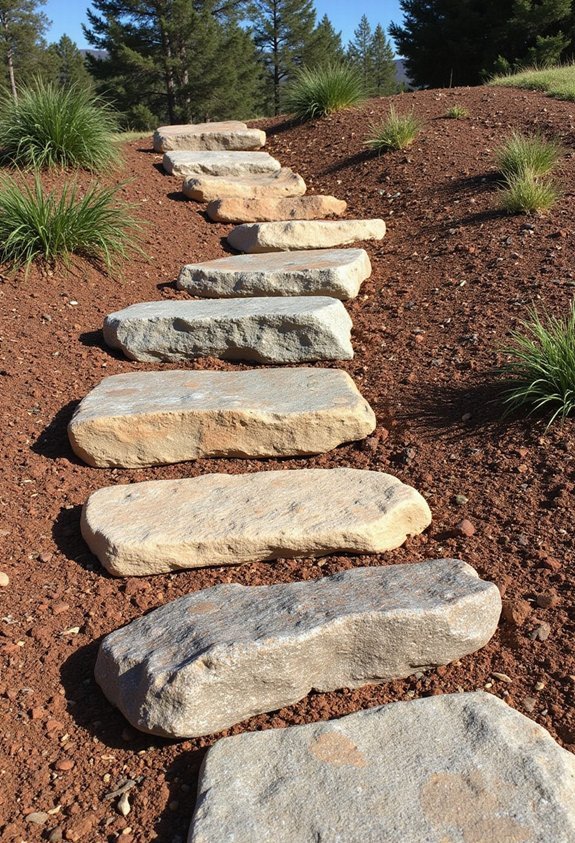
If you’re working with a sloped front yard, tiered rock beds offer an effective solution that’ll transform a challenging landscape into an organized, visually appealing outdoor space. By creating multiple levels with retaining walls or carefully stacked stones, you’ll prevent soil erosion while adding dimension to your yard’s appearance. Start at the bottom of your slope and work upward, ensuring each tier is level and stable before adding the next layer. You can fill these beds with decorative rocks, gravel, or drought-resistant plants that thrive in well-draining conditions. This method distributes water runoff more effectively, protecting your soil and foundation. Tiered beds also create natural focal points throughout your front yard, allowing you to showcase different rock textures, sizes, and colors across each level for maximum visual interest.
Coastal-Inspired Rock Gardens With Driftwood Accents
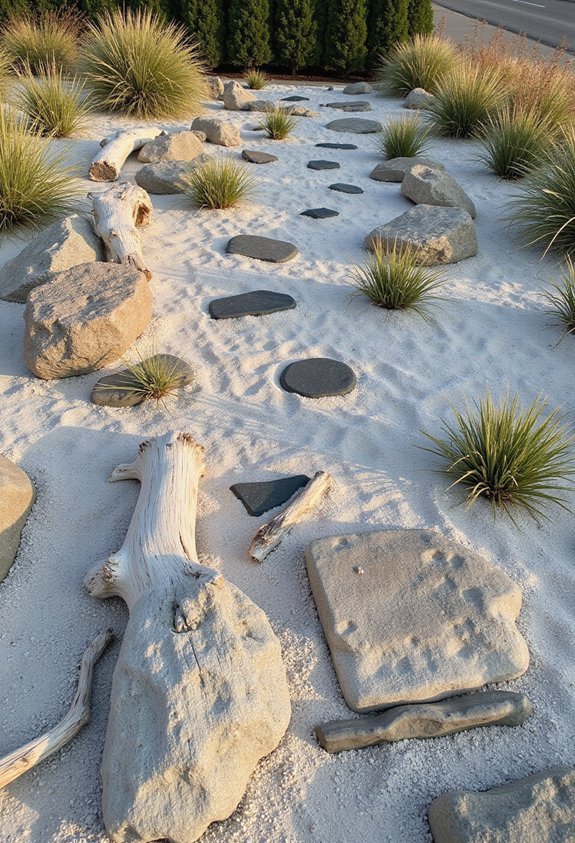
Because coastal landscapes naturally blend weathered wood with smooth stones and sandy soil, you can recreate this aesthetic in your front yard by incorporating driftwood pieces alongside various rock types to establish an authentic seaside feel. Select smooth, rounded rocks in neutral tones like gray, tan, and white, which mirror natural beach compositions. Position larger driftwood pieces as focal points throughout your garden beds, allowing them to create visual interest and depth. Layer smaller pebbles and decorative stones around the driftwood to simulate coastal terrain. Consider adding native beach grasses or salt-tolerant plants between rock groupings to enhance the oceanside atmosphere. This combination creates a cohesive design that transforms your front yard into a serene, seaside-inspired landscape requiring minimal maintenance while delivering maximum visual impact.
Low-Maintenance Rock Landscapes for Busy Homeowners
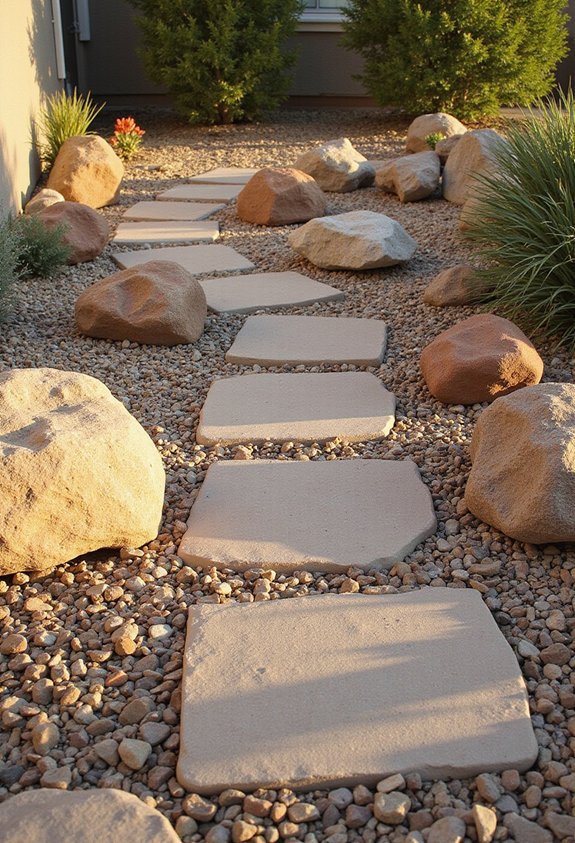
Rock landscapes offer three major advantages for homeowners who don’t have time for extensive yard work: they require minimal watering, they don’t need regular trimming or mowing, and they last for years without replacement. When you choose rocks for your front yard, you’re selecting materials that withstand harsh weather, resist erosion, and maintain their appearance with virtually no upkeep required. You can combine different rock sizes and colors to create visual interest while reducing your maintenance responsibilities substantially. Adding ground cover plants between rocks further decreases watering needs and prevents weed growth naturally. Your rock landscape won’t demand seasonal care, making it ideal for busy schedules. Once installed properly, these designs provide lasting curb appeal without consuming your valuable time or energy.
Before-and-After Transformations Using Rock Design
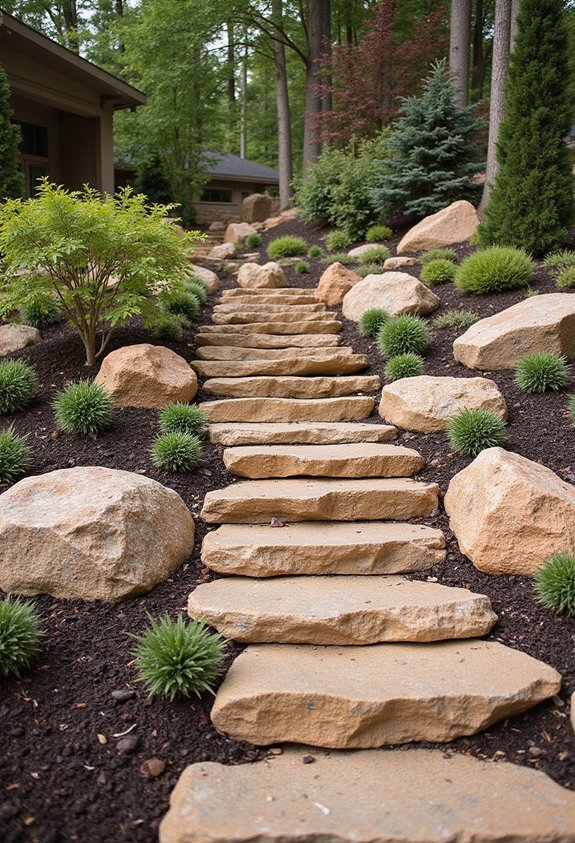
Seeing the dramatic changes that rock landscaping can create in a front yard demonstrates why this approach works so well for homeowners seeking quick visual improvements. You’ll notice that adding river rocks, boulders, or decorative gravel instantly transforms bare, dull spaces into visually appealing landscapes. Before projects often show overgrown grass, patchy soil, and an uninviting entrance, while after photos reveal organized, structured designs with strategically placed stones that create focal points. You can arrange rocks around existing trees, line walkways, or create borders that define garden beds, making your yard appear intentional and well-maintained. These transformations typically require just a few days of work, yet they produce results that look professionally designed. The investment in rocks pays dividends through improved curb appeal and functionality that lasts for years.
Conclusion
You’ll transform your front yard into a polished landscape by layering rocks strategically, much like building a house brick by brick, where each element supports the next. Start with borders to define spaces, add focal boulders for visual interest, and incorporate plants that complement your rock scheme. This methodical approach creates curb appeal that requires minimal maintenance while delivering professional results that’ll impress neighbors and increase your home’s value substantially.