Wouldn’t you rather wake up to the sights and sounds of a tropical paradise than an ordinary suburban street? You can transform your front yard into a vacation-worthy sanctuary by strategically layering specific plants, water features, and design elements that work together to create an immersive retreat. To discover which combination of these 19 ideas will work best for your climate and lifestyle, continue exploring the details ahead.
Plant Towering Palms for Instant Tropical Vibes

When you’re looking to transform your front yard into a tropical paradise, nothing works faster than planting tall palm trees, which’ll instantly establish that warm, exotic atmosphere you’re after. Palms create height and drama that other plants simply can’t match, drawing the eye upward and establishing a lush canopy overhead. You’ll want to choose varieties suited to your climate, such as Queen Palms in moderate zones or Coconut Palms in warmer regions. Plant them strategically near your home’s entrance or along property lines to frame your space effectively. Guarantee they receive adequate sunlight, typically six to eight hours daily, and plant them in well-draining soil. Space palms appropriately according to their mature width, allowing room for healthy growth without overcrowding.
Also read: 17 FRONT YARD FIRE PIT Ideas That Feel Cozy!
Layer Colorful Tropical Flowers by Height
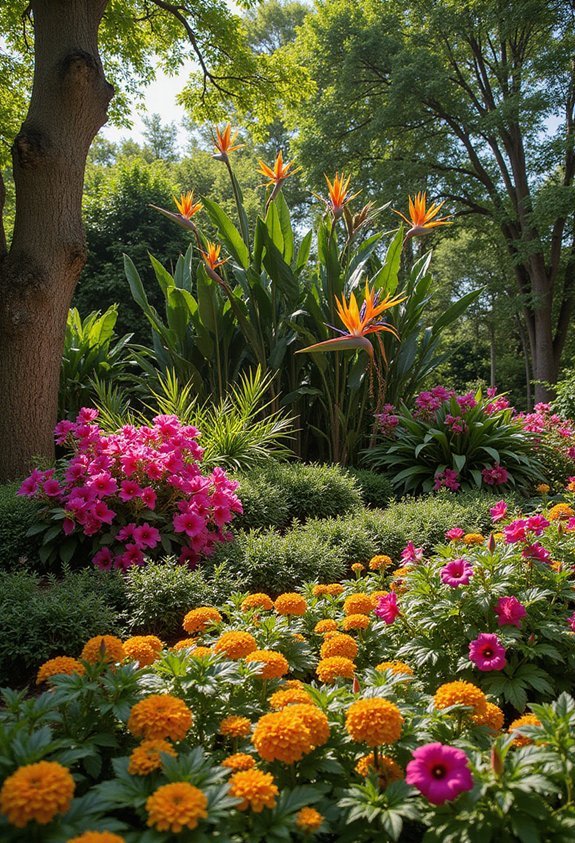
While your towering palms‘ll establish the structural backbone of your tropical front yard, layering colorful flowers at varying heights creates the visual depth and vibrant character that transforms your space into a truly immersive paradise. Start by planting tall flowers like bird of paradise or hibiscus in the back, positioning them against your home or fence. Next, arrange medium-height plants such as crotons and bougainvillea in the middle section, spacing them approximately three to four feet apart. Finally, place low-growing flowers like impatians and begonias along the front edges and pathways. This tiered approach guarantees every plant receives adequate sunlight, prevents overcrowding, and allows visitors to appreciate each flower’s unique color and texture. The graduated height arrangement creates natural sight lines that guide eyes through your entire landscape.
Install a Water Feature for Soothing Ambiance
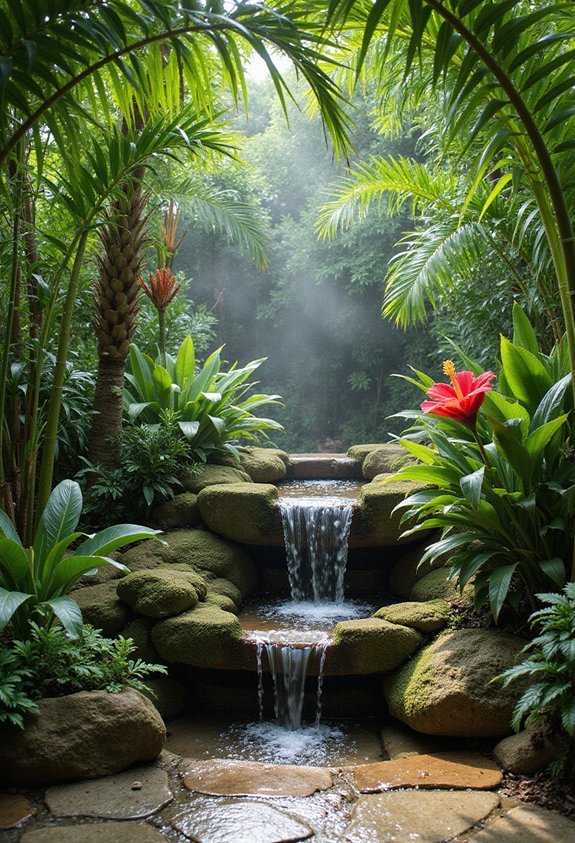
Beyond the visual appeal of layered flowers and tropical plants, adding a water feature‘ll bring an essential sensory dimension to your front yard by introducing the calming sights and sounds of moving water. You can choose from several options, including fountains, small ponds, or cascading waterfalls, depending on your space and budget. A fountain creates gentle splashing sounds that mask street noise, while a pond allows you to incorporate aquatic plants and fish, adding biodiversity to your landscape. When installing your water feature, guarantee proper drainage and positioning in an area that receives adequate sunlight for maintenance purposes. Regular upkeep involves cleaning filters, preventing algae growth, and checking water levels. A well-maintained water feature transforms your front yard into a serene retreat that enhances relaxation and creates an immersive tropical atmosphere.
Build a Natural Stone or Mulch Pathway
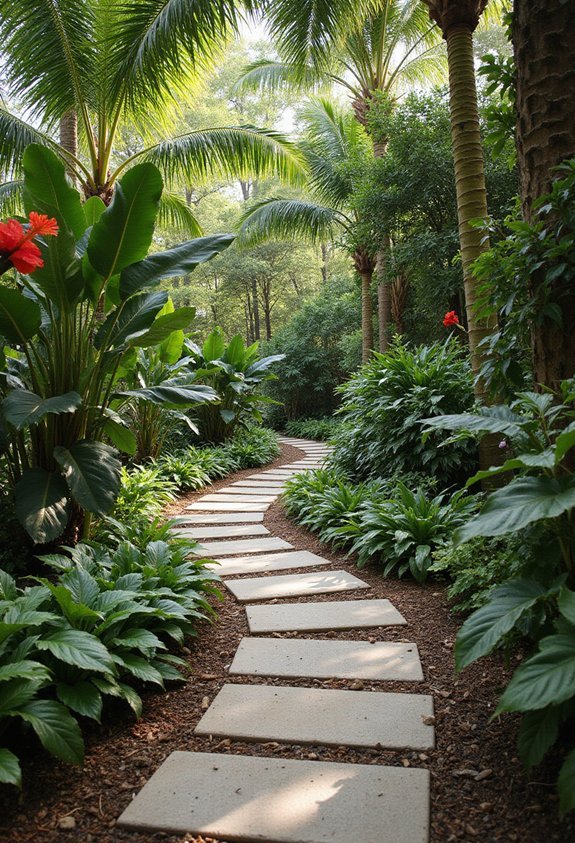
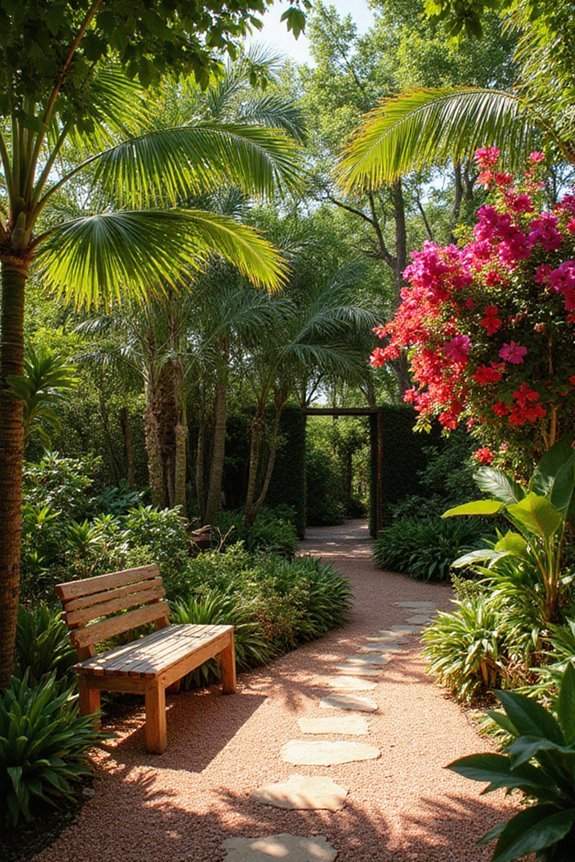
A well-designed pathway‘ll guide visitors through your tropical front yard while protecting your plants from foot traffic and adding another layer of visual interest to your landscape design. You can choose between natural stone pavers, such as flagstone or slate, which offer durability and an elegant appearance, or mulch pathways, which provide a softer, more organic aesthetic. When installing stone pathways, you’ll need to prepare the ground by leveling it and adding a sand base for stability. For mulch pathways, lay landscape fabric first to prevent weed growth, then spread 2-3 inches of wood chips or shredded bark. Both options require regular maintenance—weeding for stone pathways and mulch replenishment every 1-2 years. These pathways not only create defined routes but also enhance drainage and protect surrounding vegetation.
Pick Tropical Plants That Grow in Your Zone
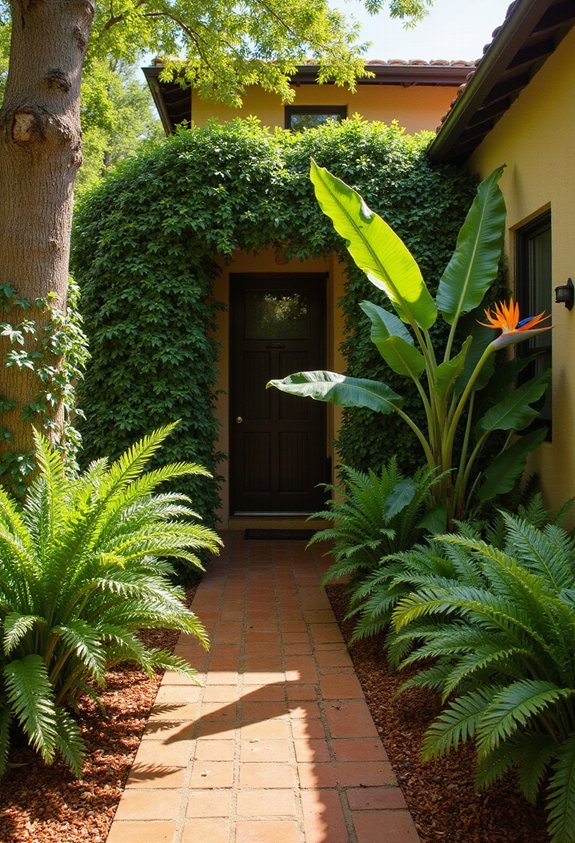
Since you’ve established your pathways and defined the layout of your front yard, it’s time to select plants that’ll thrive in your specific climate zone. Research your USDA hardiness zone by entering your zip code into the official zone map, which identifies temperature ranges your area experiences annually. This pivotal step prevents you from planting tropical species that won’t survive winter conditions in your region. Once you’ve confirmed your zone, choose plants suited to those parameters, such as hibiscus, bougainvillea, and bird of paradise for warmer zones, or hardier alternatives like cannas and elephant ears for cooler climates. Visit local nurseries to examine available options and consult with experienced staff who understand regional growing conditions, ensuring your tropical front yard remains vibrant year-round.
Add Comfortable Seating to Your Oasis
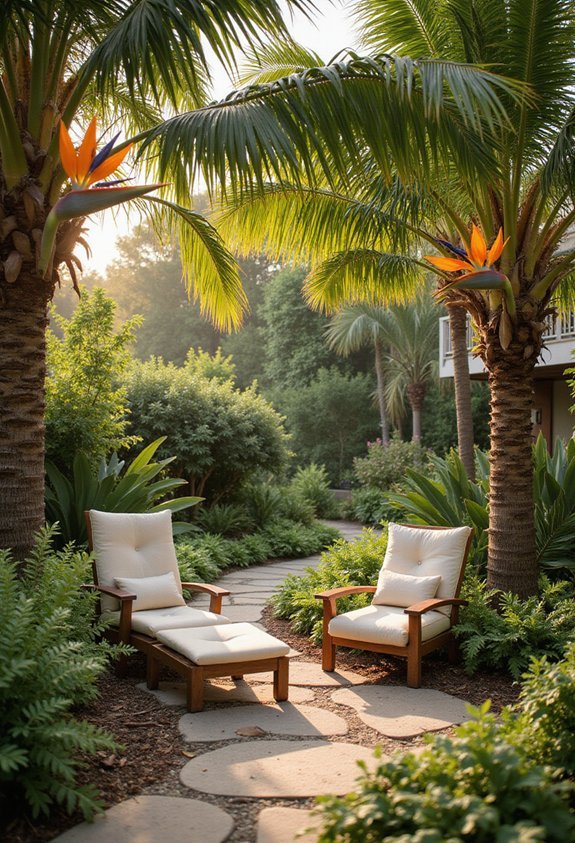
Once you’ve planted your tropical vegetation and established the foundational design of your front yard, you’ll want to incorporate seating areas that invite relaxation and enjoyment of your outdoor space. Consider placing weather-resistant chairs, benches, or loungers in shaded spots beneath trees or under pergolas, which’ll protect you from intense sun exposure. Select furniture made from materials like teak, metal, or high-quality plastic that can withstand humidity and rainfall without deteriorating. Position seating to face appealing views within your yard, creating focal points that draw your eye toward flowering plants or water features. Add cushions in tropical patterns and colors that complement your landscape design. Guarantee pathways leading to seating areas remain clear and accessible, allowing comfortable movement throughout your front yard oasis.
Use Ambient Lighting to Extend Evening Hours
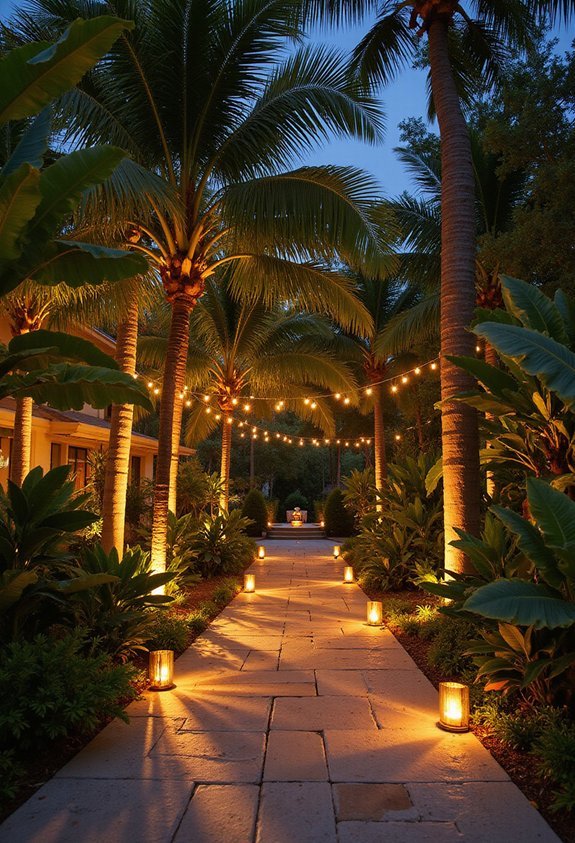
Your tropical front yard’s appeal doesn’t have to fade when the sun sets, and you can extend your enjoyment of the space well into the evening by installing ambient lighting throughout your landscape. String lights draped overhead create a warm, inviting glow that highlights your plants and pathways while consuming minimal energy. Solar-powered stake lights positioned along walkways improve safety and visibility without requiring electrical wiring. Consider uplighting for tall palms and trees, which casts dramatic shadows and adds depth to your yard. Wall-mounted sconces near seating areas provide functional illumination for reading or conversation. LED lanterns placed strategically among plants offer flexibility and can be repositioned seasonally. These lighting options work together to transform your tropical oasis into an enchanting evening retreat.
Incorporate Decorative Rocks as Focal Points
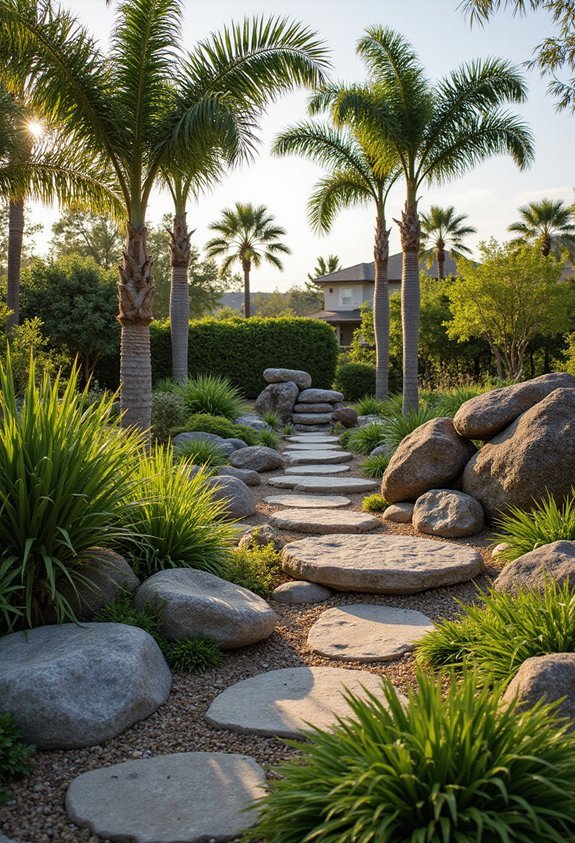
By strategically placing decorative rocks throughout your tropical front yard, you’ll create natural focal points that draw the eye and anchor your landscape design while requiring minimal maintenance. Choose large boulders or interesting stone arrangements for prominent locations near entryways or garden beds, as these serve as visual anchors that organize your space effectively. You can cluster smaller rocks around plants to define planting areas and create depth perception within your landscape. Consider using rocks with varied textures and colors that complement your tropical vegetation, such as volcanic stones or weathered granite that enhance your design’s natural aesthetic. Arrange rocks in odd numbers for more visually appealing groupings, and guarantee proper spacing allows water drainage and prevents soil erosion around your plants.
Design Raised Planting Beds for Better Display
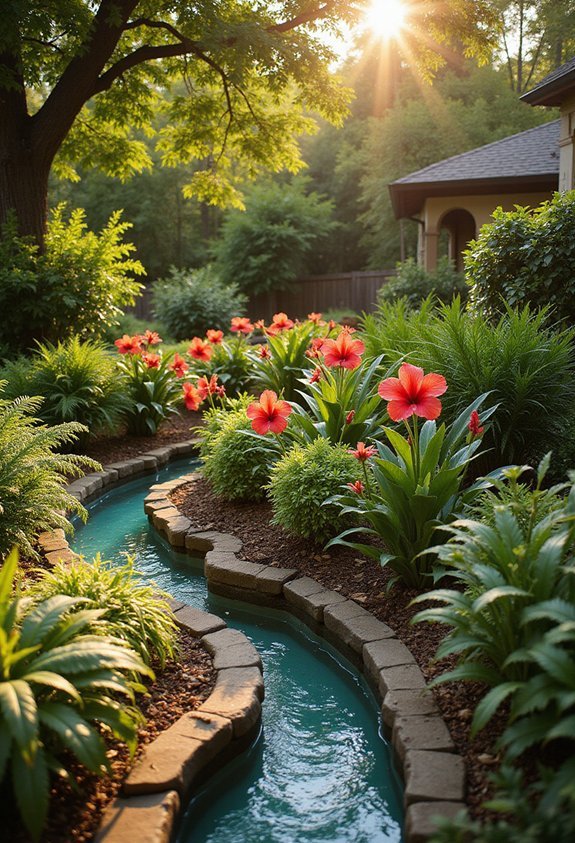
Elevated planting beds offer significant advantages for displaying your tropical plants while improving soil drainage and accessibility throughout your front yard. You can construct these beds using wood, stone, or composite materials, which allows you to create defined spaces that showcase your colorful foliage and flowering plants. When you build raised beds at varying heights—typically between twelve and eighteen inches—you’ll make maintenance easier and create visual depth in your landscape. You should fill these beds with quality soil mixed with organic matter, ensuring your tropical plants receive proper nutrients and drainage. Positioning taller plants in the back and shorter varieties in front creates a tiered display that maximizes visibility. This strategic arrangement transforms your front yard into a professionally designed tropical garden that draws attention and highlights your plant collection effectively.
Add Vibrant Island-Colored Outdoor Furniture
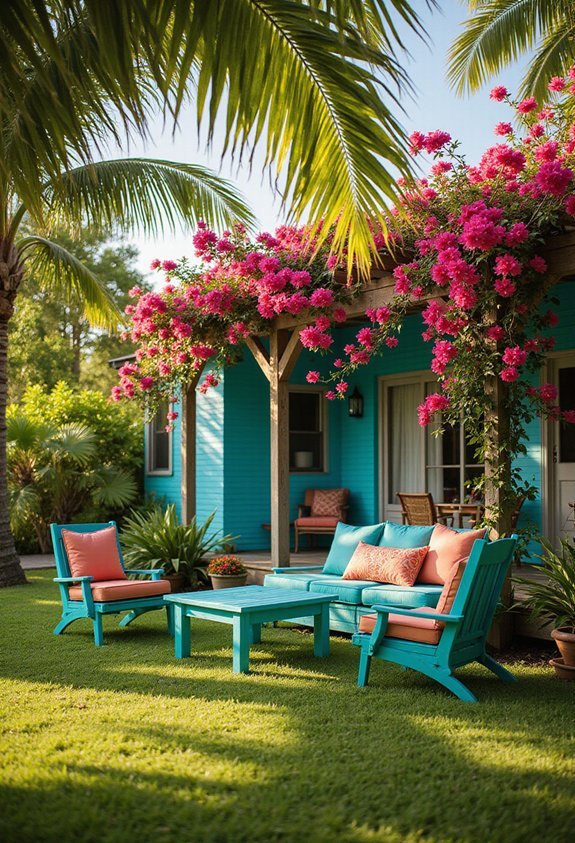
Colorful outdoor furniture pieces can’t be overlooked when you’re designing a tropical front yard, as they’ll anchor your landscape design while creating inviting spaces for relaxation and gatherings. You should select chairs, tables, and loungers in vibrant island colors like turquoise, coral, lime green, and sunny yellow to establish an authentic tropical atmosphere. These bold hues’ll complement your lush plantings and create visual interest throughout your outdoor space. Consider mixing materials such as wicker, metal, and wood to add texture and depth to your furniture arrangements. You’ll want to position seating areas strategically near focal points like water features or flowering plants, ensuring comfortable sightlines and functional gathering zones. Durable, weather-resistant cushions in coordinating patterns’ll enhance comfort while protecting your investment against harsh outdoor elements.
Install a Pergola for Tropical Shade
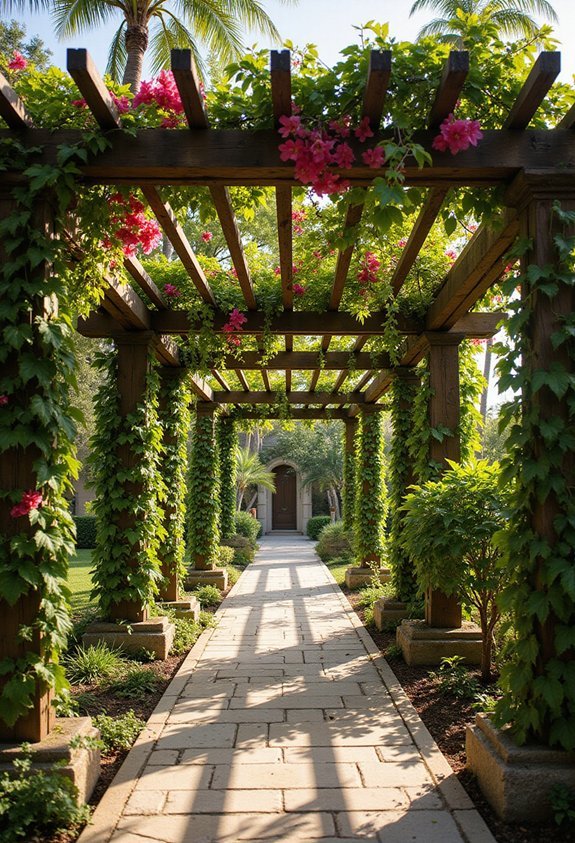
While your vibrant furniture creates comfortable gathering spaces, a pergola’ll provide the shade and architectural structure that tropical front yards need to feel complete and functional. You’ll want to select a pergola made from weather-resistant materials like cedar, composite wood, or metal, which can withstand humid tropical climates without deteriorating rapidly. Position your pergola near your seating area or entryway, guaranteeing it captures afternoon sun while providing relief from intense midday heat. Consider adding climbing vines such as bougainvillea, clematis, or passion flower to your pergola’s framework, which’ll create natural shade while enhancing the tropical aesthetic. Install your pergola on a level concrete foundation to prevent water damage and affirm structural stability throughout seasons of heavy rainfall common in tropical regions.
Use Ornamental Grasses to Soften Landscapes
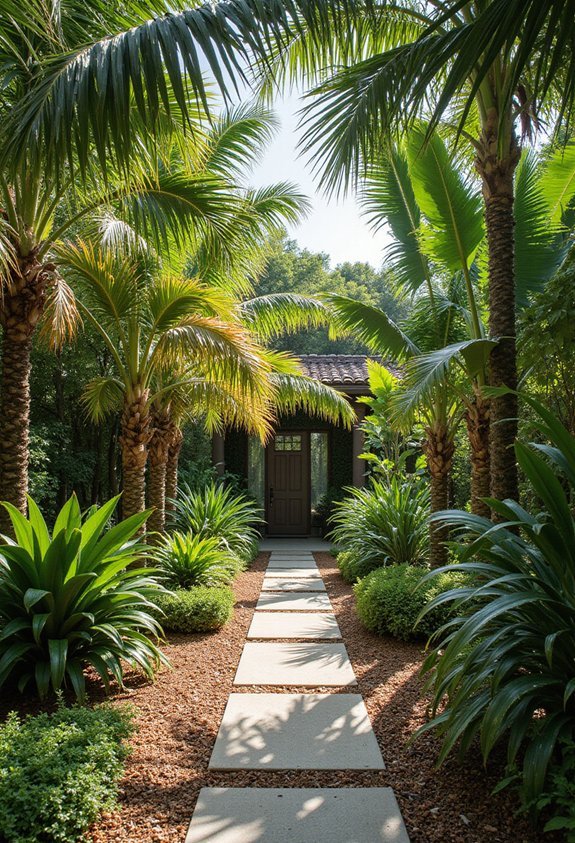
Three or four strategic plantings of ornamental grasses can transform your tropical front yard by breaking up hard landscaping lines and creating a softer, more natural appearance that complements your pergola and other structural elements. You’ll want to select grasses that thrive in warm climates, such as fountain grass, maiden grass, or feather reed grass, which grow well in full sun and tropical conditions. Position these plants along walkways, near garden beds, or as borders between different landscape zones to create visual interest and movement. The flowing foliage will catch breezes, adding dynamic texture and dimension to your yard’s design. Regular watering during establishment guarantees healthy growth, while minimal maintenance keeps your tropical front yard looking polished and vacation-ready.
Create Privacy With Tropical Screening Plants
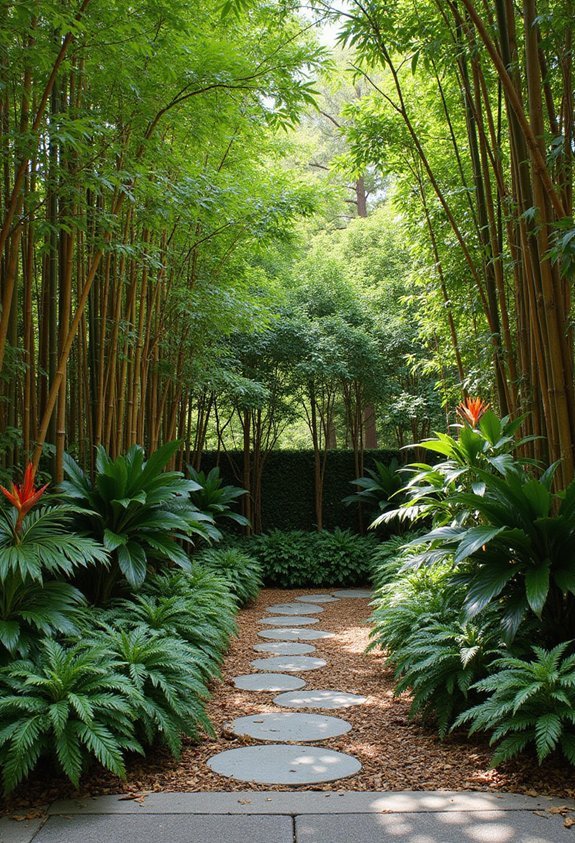
Beyond creating visual softness with ornamental grasses, you’ll want to establish privacy in your tropical front yard by strategically planting screening plants that block unwanted views while adding lush greenery and architectural interest to your outdoor space. Consider using tall, dense plants like bamboo, hibiscus, or oleander along property lines to create natural barriers. These plants grow quickly and develop thick foliage that effectively shields your yard from street traffic and neighboring properties. You can also layer shorter screening plants in front of taller ones, creating depth and visual interest while maximizing privacy coverage. Position screening plants near seating areas, entryways, or pool regions where privacy matters most. Regular pruning maintains their shape and density, ensuring your tropical sanctuary remains secluded and inviting throughout the seasons.
Add a Fire Pit for Cozy Tropical Nights
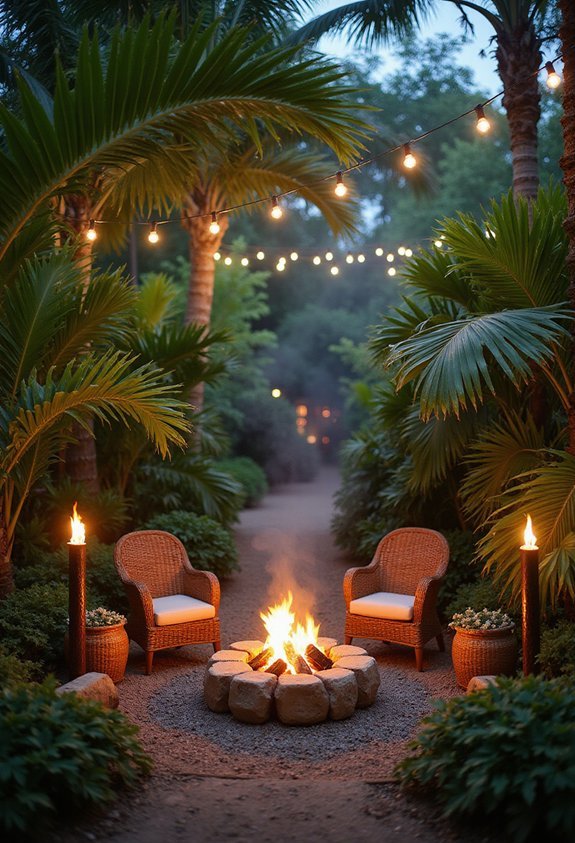
As evening temperatures drop in tropical climates, a fire pit becomes an excellent focal point for your front yard that’ll draw family and friends together while providing warmth and ambient light. You’ll want to position your fire pit in a safe location, at least ten feet away from your home, trees, and structures. Choose a design that complements your tropical aesthetic, such as a stone or metal ring construction. Guarantee proper ventilation by selecting an open area without overhead branches. Install a metal grate inside the pit to contain burning materials effectively. Consider adding comfortable seating around the pit, like weather-resistant chairs or benches, creating an inviting gathering space. Always maintain a fire extinguisher nearby and establish clear safety guidelines for all users to prevent accidents and injuries.
Add Tropical-Themed Garden Accents and Art
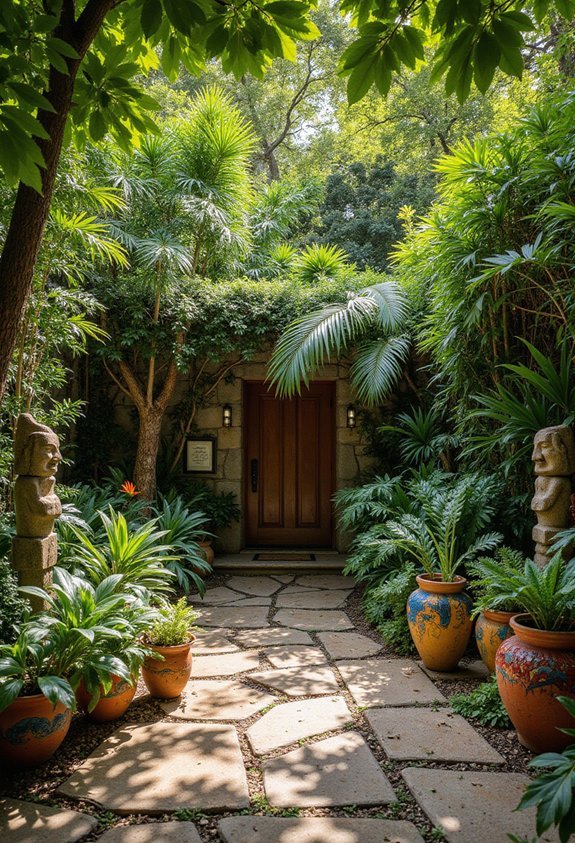
While you’re creating gathering spaces like your fire pit area, you’ll also want to incorporate decorative elements that reinforce your tropical aesthetic throughout your front yard. You can strategically place garden statues, such as tiki figures or stone sculptures, along pathways and near plant beds to create visual interest. Install hanging art pieces, including metal wall décor or wooden signs with tropical themes, on fences or exterior walls. Consider adding decorative planters in vibrant colors that complement your vegetation. Incorporate water features like small fountains or birdbaths that reflect tropical environments. Place outdoor rugs and cushions with palm or hibiscus patterns on seating areas. These garden accents work together to establish a cohesive tropical atmosphere, transforming your front yard into a unified vacation-like destination.
Play Island Music With Outdoor Speakers
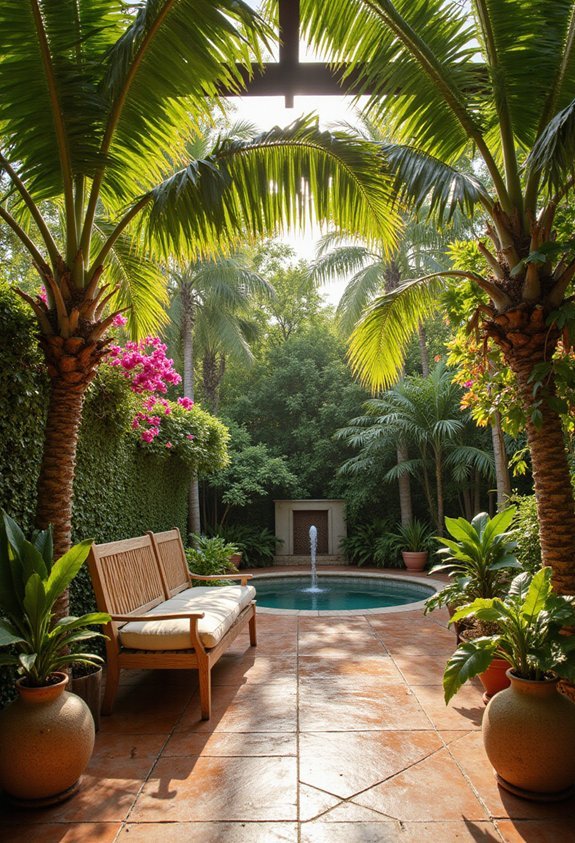
To complete your tropical front yard transformation, you’ll want to incorporate audio elements that enhance the island atmosphere you’ve created through plants, water features, and decorative accents. Install weather-resistant outdoor speakers in strategic locations around your yard, positioning them to deliver even sound distribution across your space. Choose speakers designed specifically for outdoor use, as they’ll withstand moisture, temperature fluctuations, and UV exposure. Connect your speakers to a wireless system that lets you stream music from your smartphone or tablet. Select appropriate music genres—think reggae, calypso, ukulele, or steel drum recordings—that evoke authentic island vibes. Adjust volume levels so music complements conversation rather than overpowering it, creating an immersive yet functional environment that transports visitors directly to a tropical paradise.
Design Low-Maintenance Tropical Gardens
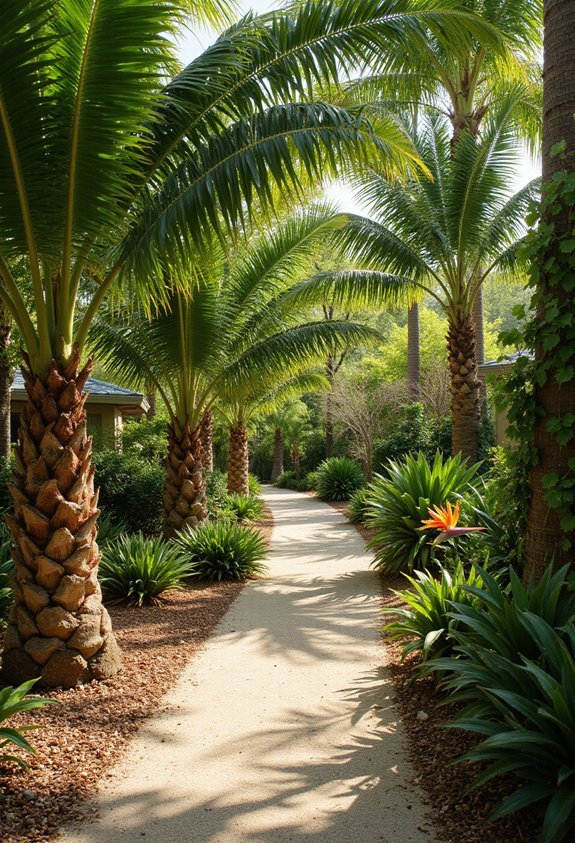
Many people assume that creating a tropical garden requires constant watering, pruning, and upkeep, but you can design one that thrives with minimal maintenance by selecting the right plants and implementing smart landscaping strategies. You’ll want to choose drought-tolerant tropical plants like hibiscus, bird of paradise, and ornamental grasses that naturally flourish in hot climates. Install a drip irrigation system to deliver water directly to plant roots, reducing waste and labor. Apply thick mulch layers around plants to retain moisture and suppress weeds. Group plants with similar water needs together, creating zones that you can manage efficiently. Use native tropical species adapted to your region’s climate, as these require less fertilizer and pest management. This approach transforms your front yard into a vacation-like space without demanding excessive maintenance.
Add Tropical Fruit Trees for Beauty and Produce
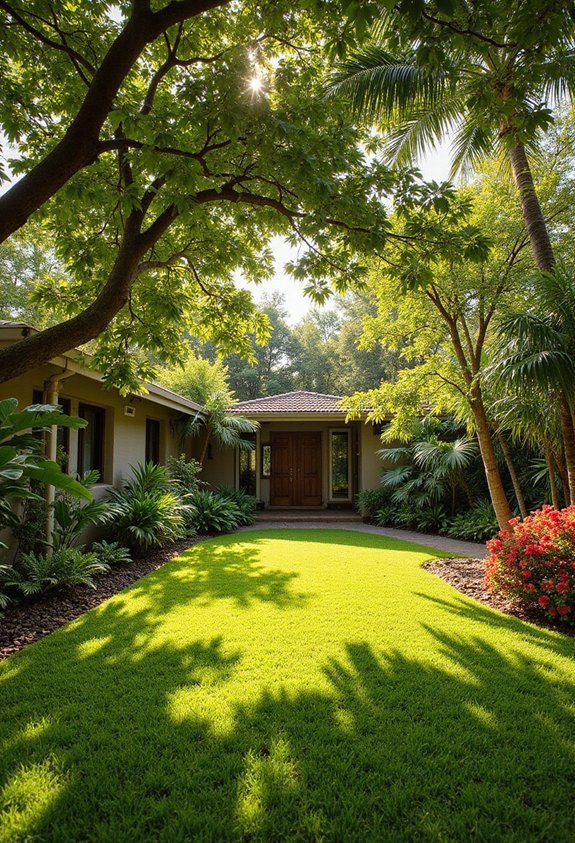
Beyond their visual appeal, tropical fruit trees offer you the dual benefit of enhancing your front yard’s aesthetic while providing fresh produce for your household. You’ll want to select trees that thrive in your climate zone, such as mango, papaya, or avocado varieties, ensuring they receive adequate sunlight and well-draining soil. When planting, space them appropriately to allow mature growth without overcrowding, and incorporate mulch around the base to retain moisture and regulate temperature. You should establish a regular watering schedule during the growing season, gradually reducing frequency as trees establish themselves. Pruning encourages healthy growth and shapes your trees for visual interest, while occasional fertilizing supports fruit production. This approach transforms your front yard into a productive landscape that combines ornamental beauty with practical food sourcing.
Combine Stone Pathways With Living Plant Beds
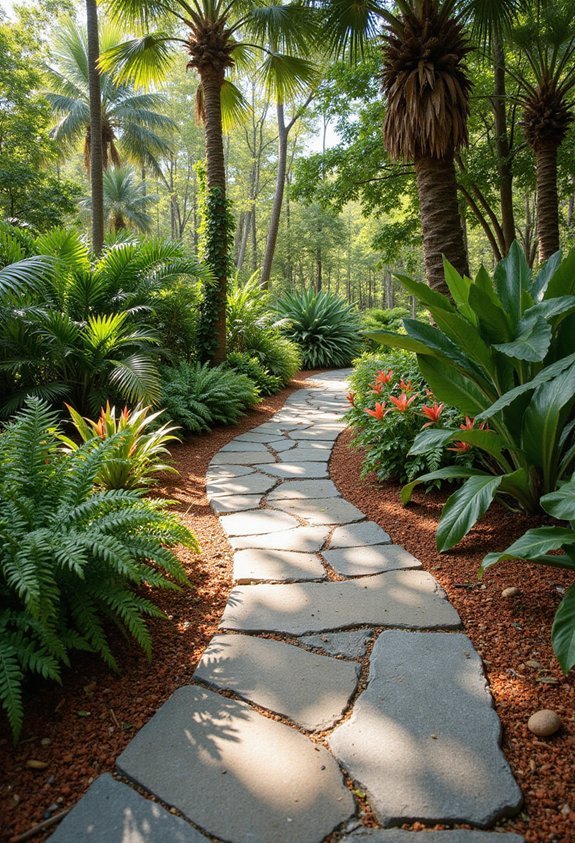
While stone pathways provide essential structure and accessibility to your front yard, they’ll work best when you integrate them with vibrant plant beds that soften their rigid lines and create visual flow throughout your landscape. You can frame your pathways with colorful flowering plants, ornamental grasses, and tropical shrubs that complement the stone’s natural texture. Position plants at varying heights along pathway edges so visitors naturally follow the route while enjoying layered vegetation. Consider using low-maintenance tropical plants like hibiscus, bird of paradise, and crotons, which thrive in warm climates and require minimal care. The contrast between hard stone surfaces and soft plant foliage creates visual interest, reduces the pathway’s stark appearance, and establishes connected garden spaces throughout your front yard.
Conclusion
You can transform your front yard into a tropical sanctuary by strategically combining palms, flowers, water features, and pathways that work together harmoniously. For instance, a homeowner in a temperate zone might layer heat-loving bougainvillea with shade-tolerant ferns, add a small fountain for ambiance, and install mulch pathways between planting beds. When you thoughtfully select plants suited to your climate and incorporate these layered design elements, you’ll create a cohesive, vacation-like retreat that enhances your home’s appeal year-round.