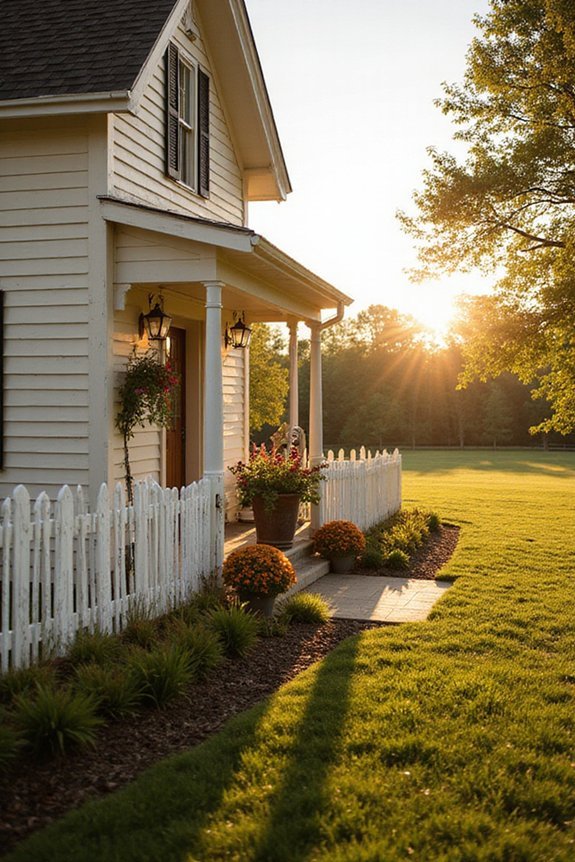
Picture a welcoming farmhouse entrance where white picket fencing frames lush gardens and warm lighting guides visitors down a gravel pathway. You can transform your front yard into a charming rural retreat by combining classic elements like board-and-batten siding, stone steps, and seasonal flower beds with authentic vintage accents. Understanding how to layer these design components—from barn shutters to split-rail fencing—creates the cohesive aesthetic you’re seeking. Here’s what makes the difference.
Classic White Picket Fencing With Rustic Gates
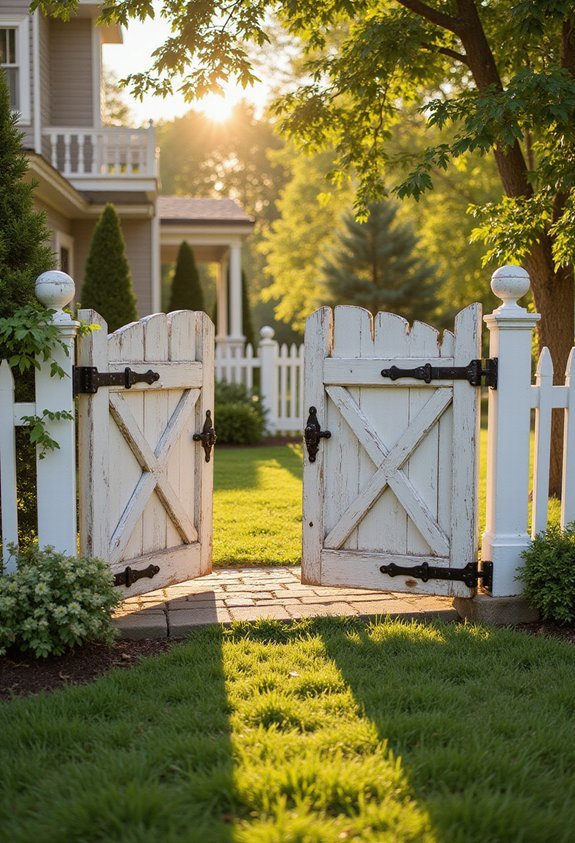
A timeless combination of clean lines and weathered charm, classic white picket fencing paired with rustic gates creates an inviting entrance that defines the farmhouse aesthetic while maintaining practical functionality for your property. You’ll find that white pickets offer crisp visual appeal against natural landscapes, while rustic gates—constructed from reclaimed wood or wrought iron—provide authentic character and durability. The contrast between pristine white fencing and weathered gate materials enhances your home’s curb appeal greatly. When installing this combination, you should guarantee proper spacing between pickets for visibility and security, typically four to six inches apart. Your rustic gates work best when they’re proportional to your fence height, usually matching at four to five feet tall. This pairing requires regular maintenance, including seasonal repainting of white sections and protective treatments for wooden gate elements, assuring longevity and sustained visual impact.
Also read: 17 FRONT YARD FIRE PIT Ideas That Feel Cozy!
Barn-Inspired Shutters in Muted Tones
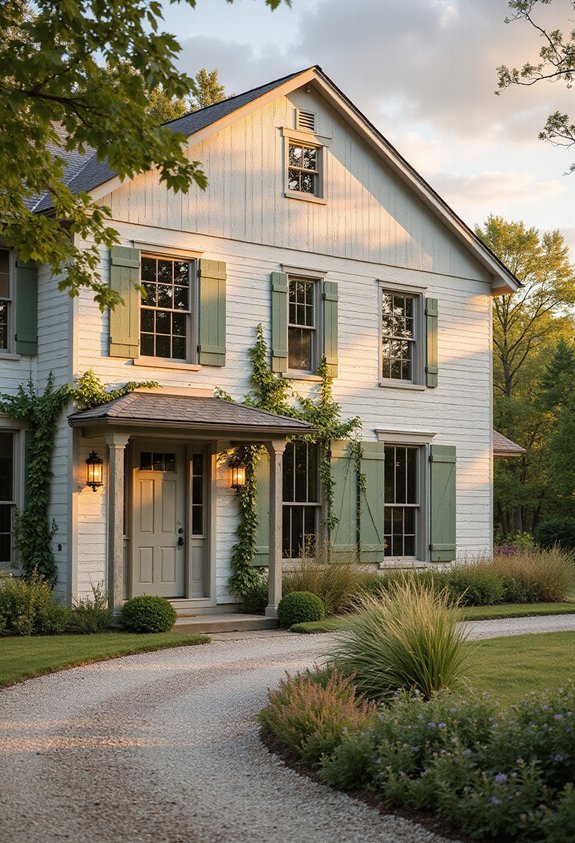
When you’re looking to enhance your farmhouse front yard’s character, barn-inspired shutters in muted tones offer an authentic architectural detail that complements rustic design while providing practical light control and weather protection for your home’s windows. You’ll find that colors like sage green, weathered gray, soft taupe, and muted blue work exceptionally well with farmhouse aesthetics. These shutters should feature traditional board-and-batten construction or louvered designs that reflect classic barn styling. You can mount them permanently alongside windows or opt for functional pairs that actually open and close. The subdued palette guarantees your shutters won’t clash with your home’s exterior siding or your white picket fencing. This design choice creates visual depth and dimension while maintaining the cohesive, timeless appeal that defines authentic farmhouse curb appeal.
Board-and-Batten Siding and Accent Walls
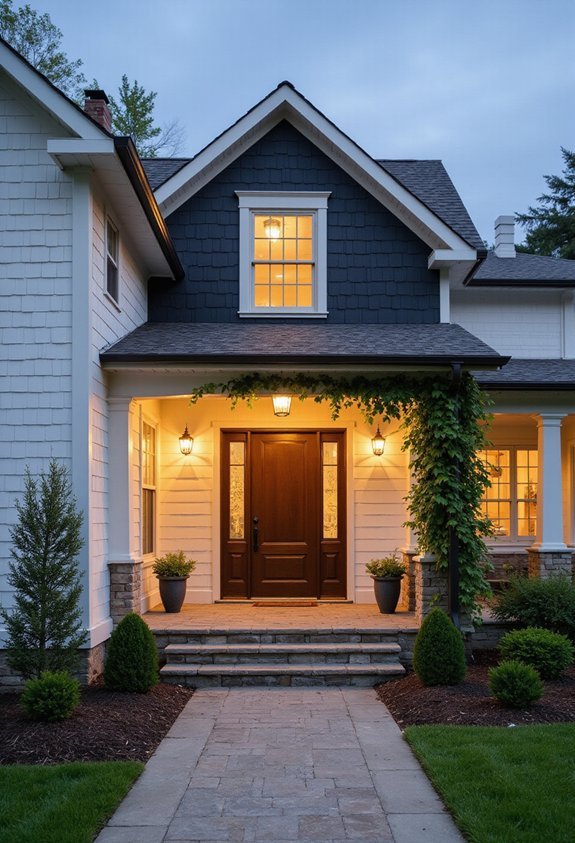
Because board-and-batten siding creates a distinctive vertical texture that’s both visually striking and historically authentic, it’s become a cornerstone element in farmhouse exterior design that you’ll want to ponder for your front yard’s overall aesthetic. This siding style consists of wide boards paired with narrow battens that cover the seams, producing clean lines that draw the eye upward and enhance your home’s proportions. You can paint your board-and-batten siding in soft whites, creams, or pale grays to maintain farmhouse authenticity. Consider creating an accent wall by applying contrasting colors like deep charcoal or sage green to specific sections, such as gable ends or areas surrounding your front entrance. This technique adds visual depth while preserving the classic farmhouse character you’re aiming to achieve.
Stone or Brick Entryway Steps
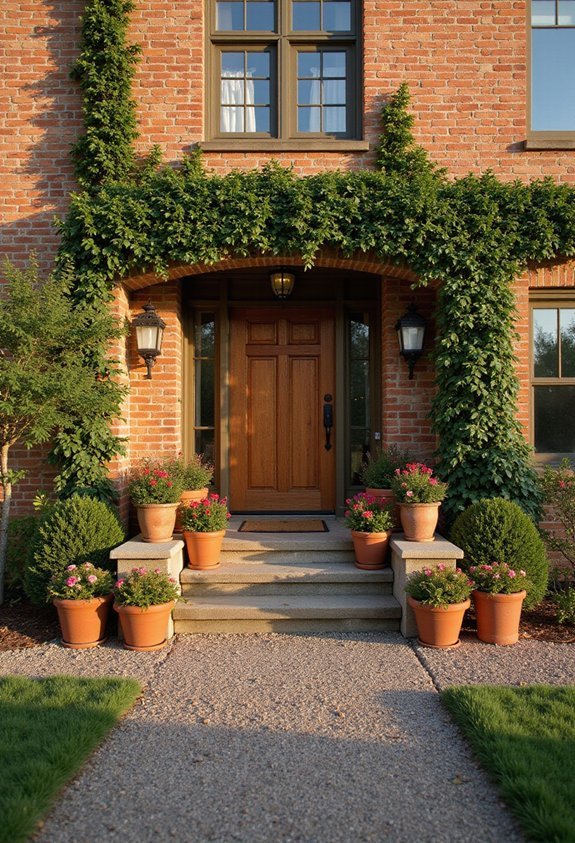
Your front entryway’s foundation sets the tone for your entire farmhouse aesthetic, and stone or brick steps offer both durability and visual appeal that’ll enhance your home’s curb appeal for years to come. When you’re selecting materials, consider natural stone like limestone or fieldstone for authentic farmhouse character, or opt for traditional brick that complements your home’s exterior. You’ll want to establish proper drainage beneath your steps to prevent water damage and deterioration, which means installing a solid foundation with adequate slope. Choose neutral colors—grays, taupes, and warm browns—that harmonize with your siding and landscaping. Install metal railings or wooden handrails for safety and added visual interest, creating a welcoming passage from your yard to your front door that reflects classic farmhouse design principles.
Gravel Pathways to Your Front Door
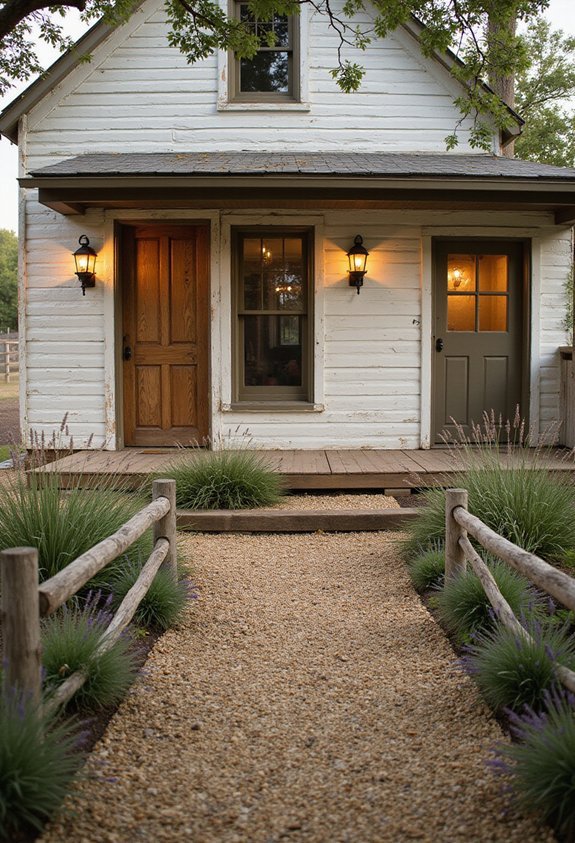
Many farmhouse homeowners find that gravel pathways offer an affordable and charming way to guide visitors from the street to your front entrance, while also providing practical benefits like improved drainage and easy maintenance compared to other materials. You’ll want to start by outlining your pathway’s shape and width, typically between two and four feet wide, ensuring adequate space for comfortable walking. Next, you’ll need to prepare the ground by removing grass and weeds, then adding a landscape fabric barrier to prevent unwanted growth. Finally, you’ll spread quality gravel evenly across the prepared area, choosing crushed stone or pea gravel that complements your farmhouse aesthetic. Regularly rake and refresh your gravel to maintain its appearance and functionality throughout the seasons.
Wraparound Porch With Rocking Chairs
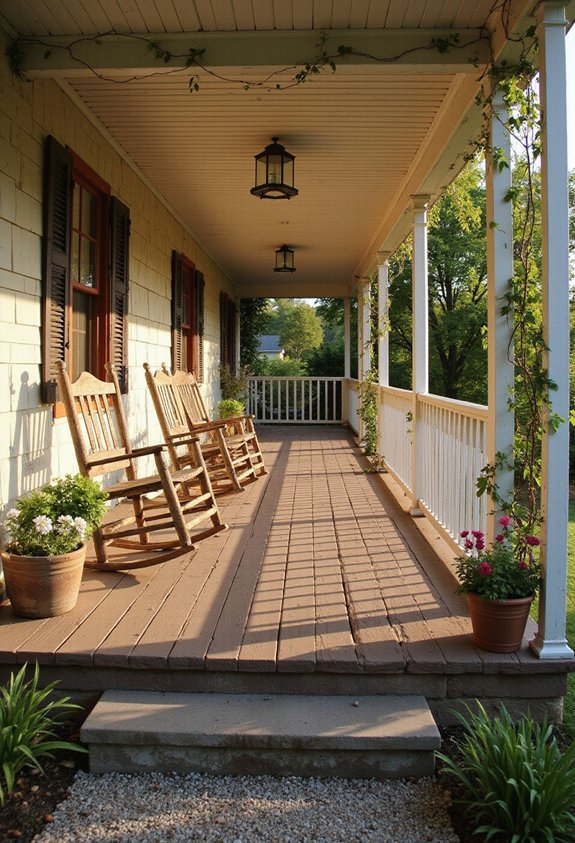
A wraparound porch serves as both a functional entryway and a welcoming gathering space that’s quintessentially farmhouse in character, offering you a place to relax while you’re able to observe your front yard and neighborhood from a shaded vantage point. You can enhance this classic feature by adding traditional rocking chairs, which provide comfortable seating and evoke authentic farmhouse aesthetics. When selecting rocking chairs, you’ll want to choose weather-resistant wood or metal options that’ll withstand seasonal changes without requiring constant maintenance. Position multiple chairs along the porch, creating natural conversation areas that encourage family interaction and neighborly visits. The gentle motion of rocking chairs combined with the expansive porch design establishes an inviting atmosphere that immediately communicates warmth and accessibility to anyone approaching your home.
Reclaimed Wood Bench for Front Porch Seating
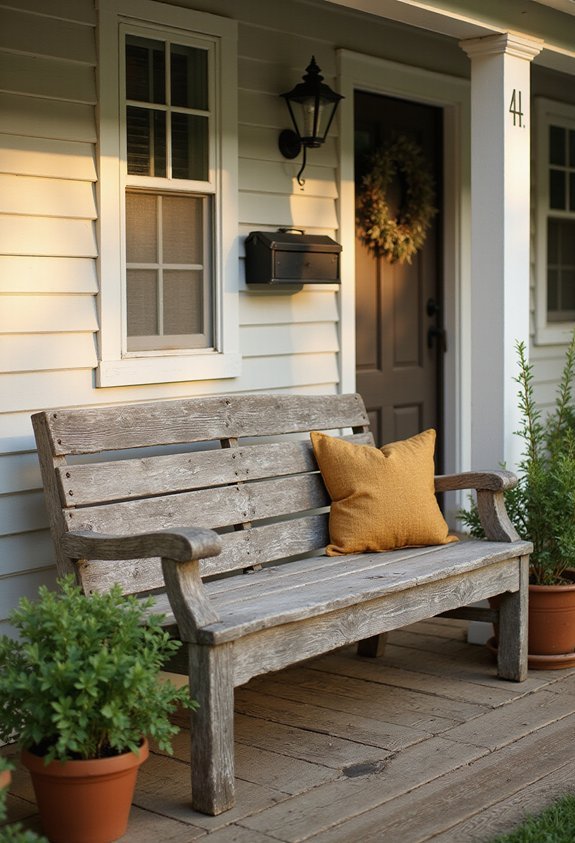
While rocking chairs offer individual seating with gentle motion, a reclaimed wood bench provides a sturdy, space-efficient alternative that can accommodate multiple people while adding rustic character to your front porch. You can source reclaimed wood from old barns, factories, or salvage yards, guaranteeing each piece carries authentic farmhouse appeal. The weathered patina and natural grain patterns create visual interest without requiring additional finishing. When selecting your bench, you’ll want to contemplate the dimensions of your porch space and guarantee proper clearance for foot traffic. Installing the bench on a level surface prevents wobbling and promotes safety. You can enhance the piece by adding cushions or pillows, which increases comfort while introducing color and texture that complements your existing porch décor.
Wooden Arbor or Trellis Entry Feature
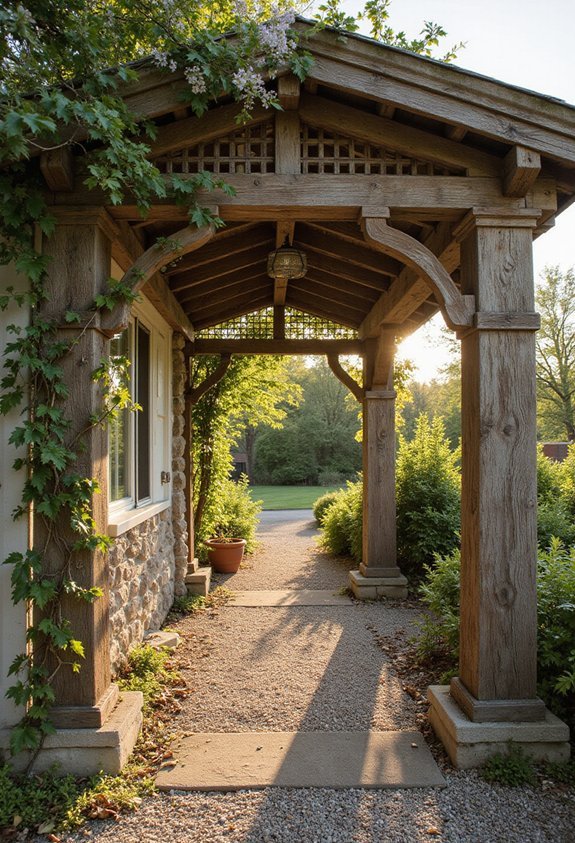
If you’re looking to create a dramatic focal point that frames your farmhouse entrance, a wooden arbor or trellis offers both visual appeal and practical function by providing structure for climbing vines and flowers. You’ll want to select weather-resistant wood like cedar or treated pine that’ll withstand seasonal changes without deteriorating quickly. Position your arbor directly over your front walkway or at your entryway gate to draw visitors’ eyes upward and create an inviting passage. Plant climbing roses, clematis, or jasmine around the base, allowing them to grow upward along the lattice structure. This combination creates natural shade, adds texture and color, and enhances your farmhouse’s rustic charm while establishing a welcoming entrance that visitors’ll remember.
Custom Metal Gate Signs
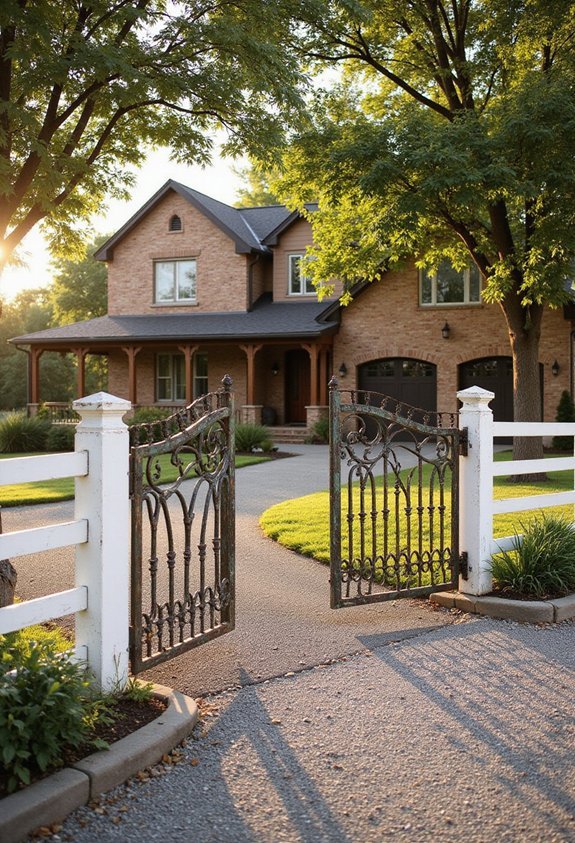
Custom metal gate signs’ll complement your farmhouse entrance by adding a personalized touch that extends beyond natural landscaping features like wooden arbors and climbing vines. You can select from various materials, including wrought iron, steel, or aluminum, each offering distinct durability and aesthetic qualities that suit different climates and maintenance preferences. Your sign can display your family name, address numbers, or a meaningful phrase that reflects your property’s character. Consider incorporating decorative elements such as scrollwork, leaf patterns, or geometric designs that align with farmhouse styling. Installation requires secure mounting on wooden posts or stone pillars, ensuring stability against weather conditions. Professional metalworkers can customize dimensions and finishes, allowing you to create a unique statement piece that enhances your home’s curb appeal while serving a functional purpose.
Lantern Sconces Flanking the Door
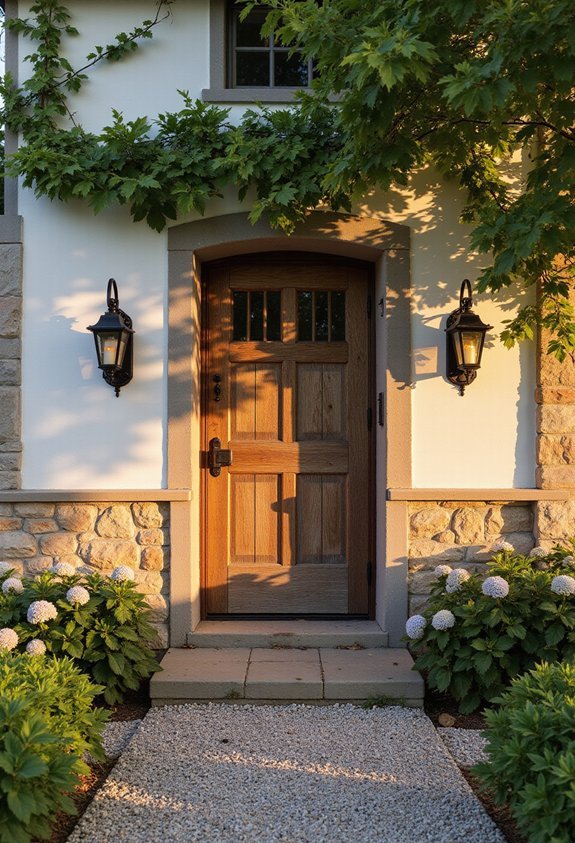
To enhance your farmhouse entrance with timeless charm, you’ll want to ponder installing lantern sconces on both sides of your front door, as this symmetrical arrangement creates a welcoming focal point that’s both functional and visually appealing. These fixtures should feature classic design elements like black metal frames, glass panels, and warm-toned lighting that complement traditional farmhouse aesthetics. When selecting your sconces, consider the scale relative to your door’s size and your home’s architectural style. Position them at eye level, typically 60 to 66 inches from the ground, ensuring they’re evenly spaced on each side. Choose sconces with durable materials that withstand weather conditions, and install them securely using appropriate wall anchors. You’ll also want to select LED bulbs that provide adequate illumination while maintaining energy efficiency throughout your outdoor space.
Warm Landscape Lighting for Evening Ambiance
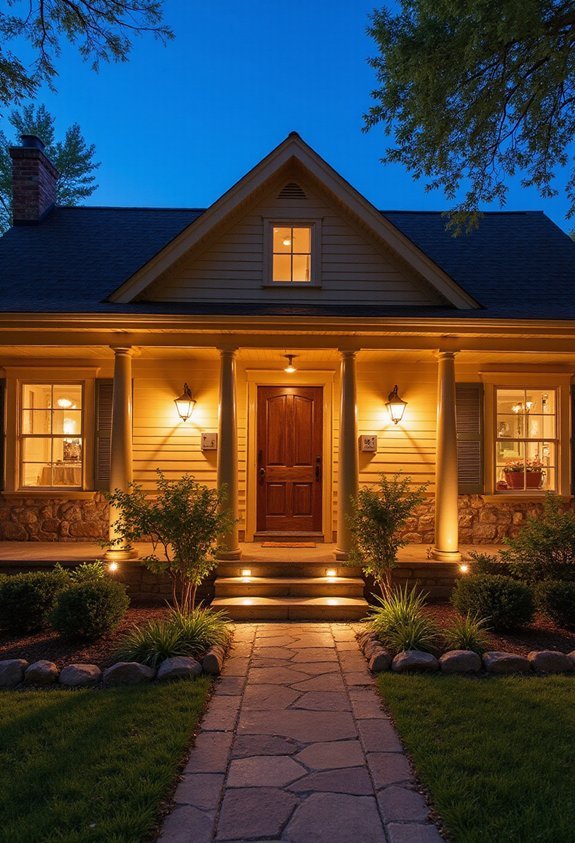
As evening descends on your farmhouse property, strategically placed landscape lighting transforms your front yard into an inviting outdoor space that’s both functional and atmospherically appealing. You’ll want to install soft, warm-toned lights along pathways, garden beds, and architectural features to create depth and visual interest. Consider uplighting trees or shrubs to cast gentle shadows that enhance your home’s character. Path lights guide visitors safely while adding charm, and you should position lights low to the ground to avoid harsh glare. Warm white bulbs, typically between 2700K and 3000K color temperature, produce that cozy farmhouse glow you’re seeking. Layer different lighting elements—combining uplights, path lights, and accent lights—to achieve balanced illumination that highlights your yard’s best features while maintaining the welcoming, rustic aesthetic.
Vintage Mailbox Styles That Anchor Curb Appeal
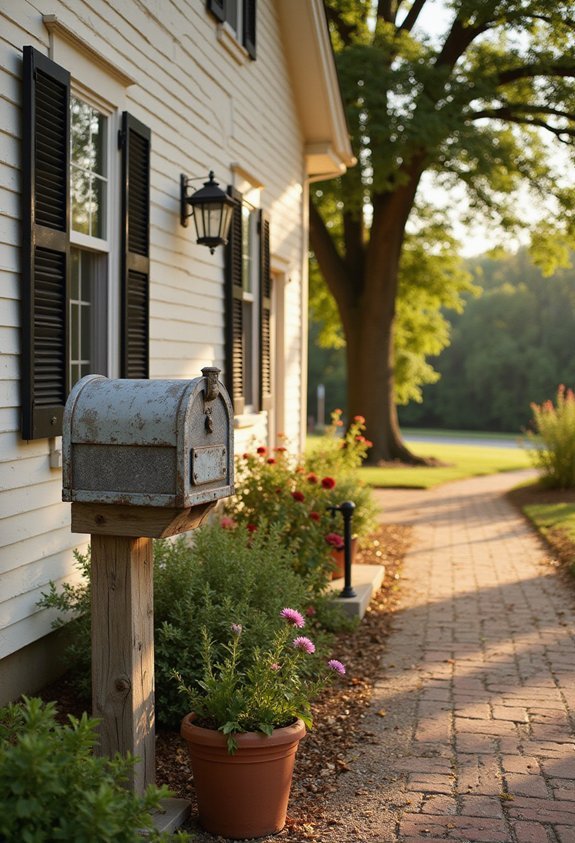
Your mailbox serves as one of the first elements visitors notice when they approach your farmhouse, making it a key opportunity to reinforce your home’s rustic charm and architectural style. Vintage mailbox styles, such as classic cast-iron designs, wooden post-mounted boxes, and black metal styles with decorative details, complement farmhouse aesthetics effectively. When selecting a mailbox, consider materials that’ll withstand weather while maintaining authentic appearance—galvanized steel, wrought iron, and reclaimed wood are excellent choices. Position your mailbox at an appropriate height along your driveway or property line, ensuring it’s easily accessible for mail carriers. Pairing your vintage mailbox with matching support posts, house numbers, and coordinating hardware creates a cohesive curb appeal that strengthens your farmhouse’s welcoming presence and establishes a polished first impression.
Weathered Wood Planters Filled With Seasonal Flowers
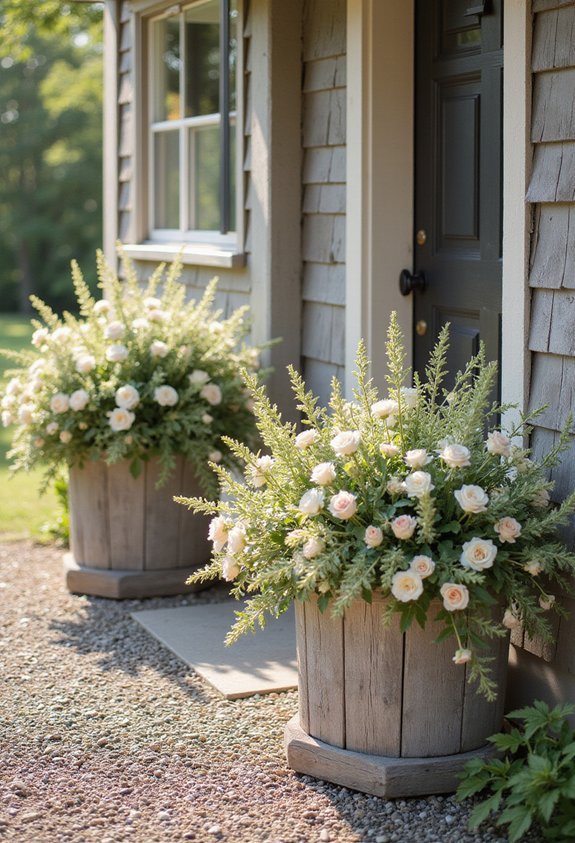
Weathered wood planters instantly add rustic character to your farmhouse front yard, and they’re an excellent way to introduce color and life to your entryway throughout the year. You’ll want to select planters made from reclaimed wood or naturally aged materials that complement your home’s exterior. Position these planters strategically on either side of your front door, along your porch, or flanking your mailbox for maximum visual impact. Fill them with seasonal flowers that thrive in your climate, rotating plantings quarterly to maintain interest. Spring calls for tulips and daffodils, summer demands vibrant zinnias and marigolds, fall suits mums and ornamental grasses, and winter works well with evergreens and berries. Guarantee proper drainage by adding holes to your planters, and apply weather-resistant stain periodically to preserve the wood’s authentic appearance.
Potted Plants by Your Entrance
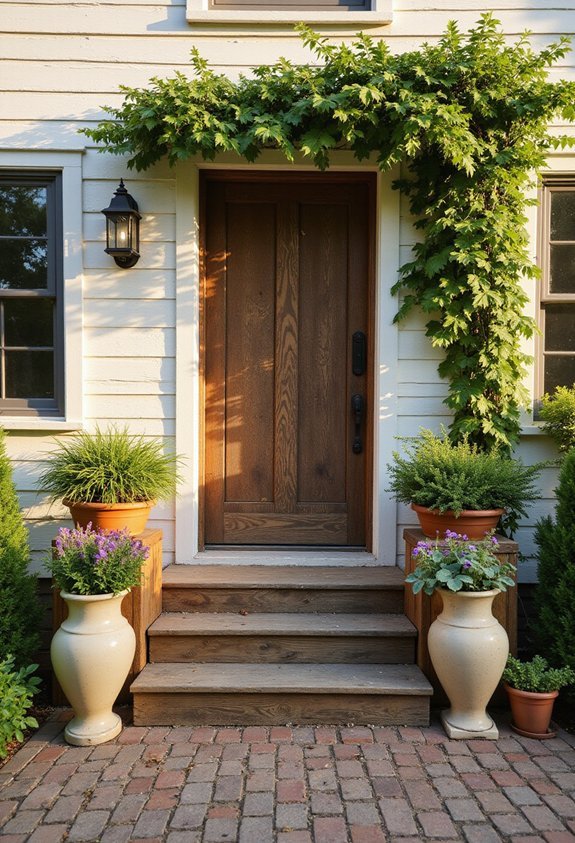
How can you transform your entryway into a welcoming focal point without committing to permanent landscaping? Potted plants positioned by your entrance offer flexible, seasonal décor solutions that define your farmhouse aesthetic. You’ll arrange containers in varying heights and sizes to create visual interest and guide visitors toward your door. Select terracotta or ceramic pots that complement your home’s exterior, filling them with flowering plants, ornamental grasses, or evergreens depending on the season. Group odd numbers of pots—typically three or five—along your porch steps or flanking your doorway for balanced, intentional placement. This approach allows you to rotate plantings throughout the year, rejuvenating your curb appeal without permanent installation. Strategic potted arrangements establish an inviting entrance while maintaining the rustic charm essential to farmhouse design.
Cottage Garden Design With Hydrangeas and Roses
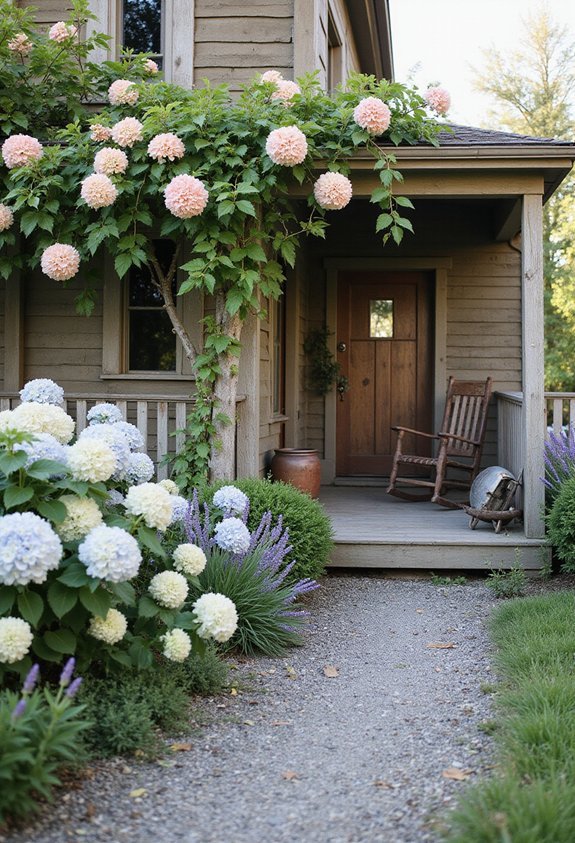
Cottage gardens filled with hydrangeas and roses‘ll give you a more permanent, planted aesthetic that goes beyond the seasonal flexibility of potted arrangements, creating lush beds of blooms that anchor your farmhouse front yard’s visual appeal. You’ll want to plant hydrangeas in areas that receive partial shade and consistent moisture, as they thrive in these conditions and produce abundant flowering clusters. Roses, conversely, prefer full sunlight and well-draining soil enriched with organic matter. Position these plants in dedicated garden beds along your walkway or foundation, spacing them according to their mature widths to guarantee proper air circulation. Both plants require regular deadheading, which removes spent flowers and encourages continuous blooming throughout the growing season, maintaining your yard’s attractive appearance.
Wildflower Gardens and Native Plants
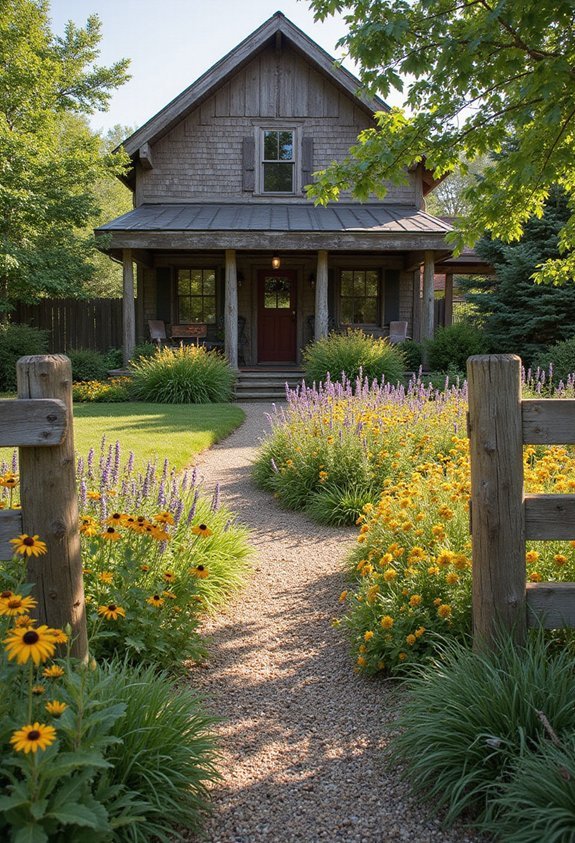
If you’re looking to create a lower-maintenance alternative to traditional flower beds, wildflower gardens and native plants offer you an excellent solution that’ll transform your farmhouse front yard while supporting local ecosystems. Native plants thrive in your region’s climate and soil conditions, requiring less water, fertilizer, and pest management than non-native species. You’ll establish a wildflower garden by selecting seeds adapted to your area, preparing the soil properly, and allowing plants to establish over several seasons. These gardens attract pollinators like bees and butterflies, which improve your landscape’s health. Native plants also prevent soil erosion and reduce maintenance costs considerably. By choosing species indigenous to your region, you’re creating a sustainable, visually appealing front yard that supports local wildlife while maintaining authentic farmhouse character.
Tiered Garden Beds for Seasonal Color and Depth
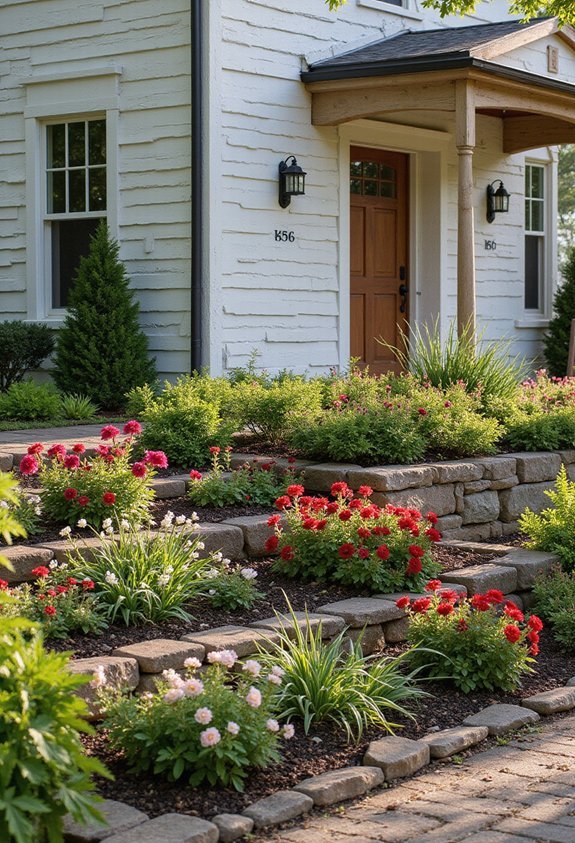
While wildflower gardens provide year-round sustainability with minimal upkeep, tiered garden beds allow you to layer plants at different heights, creating visual interest and seasonal bursts of color throughout your farmhouse front yard. You’ll position taller plants in the back and shorter varieties in front, ensuring every plant receives adequate sunlight and visibility. This arrangement prevents overcrowding and improves air circulation around your plants’ roots and foliage. Spring brings tulips and daffodils, summer showcases zinnias and coneflowers, while fall features chrysanthemums and ornamental grasses. Winter evergreens maintain structure and color during dormant months. By strategically selecting plants with staggered blooming periods, you’ll create continuous visual depth and maintain your farmhouse’s curb appeal throughout every season.
Split-Rail Fencing for Open Country Charm
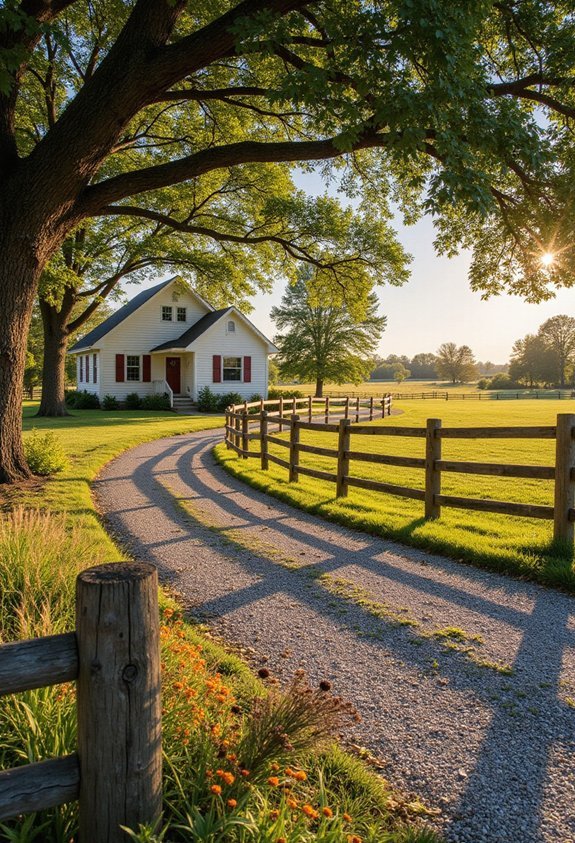
To complement your tiered garden beds and enhance your farmhouse’s authentic character, split-rail fencing offers a rustic, functional boundary that doesn’t obstruct views of your landscaping or surrounding countryside. You can install this traditional fencing style using wooden rails stacked horizontally between vertical posts, creating an open aesthetic that defines property lines without appearing heavy or imposing. The natural wood construction weathers beautifully over time, developing a silvery patina that reinforces farmhouse authenticity. You’ll find split-rail fencing relatively affordable compared to solid fence options, and it’s easier to maintain since you won’t need to paint or stain it regularly. This fencing style works particularly well for larger front yards where you want to showcase your tiered gardens while establishing clear boundaries that complement your countryside setting.
Repurposed Farm Tools as Decorative Accents
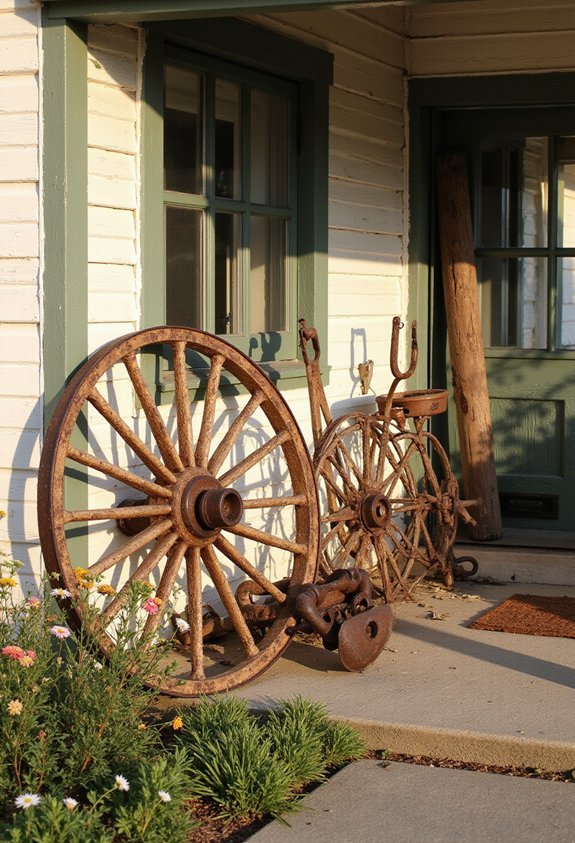
Once you’ve established your property boundaries with split-rail fencing, you can fill your front yard with authentic farmhouse character by displaying repurposed farm tools as decorative accents throughout your landscaping. Old wooden wagon wheels, vintage plows, and weathered rakes create visual interest when arranged strategically near garden beds, along fence lines, or beside your front entrance. You can lean tools against structures, hang them on walls, or position them within planting areas to establish focal points. Rusted metal pieces and worn handles contribute to the rustic aesthetic that defines farmhouse design. Search local antique shops, estate sales, and farm auctions to find genuine implements that tell stories of agricultural heritage. These authentic accents transform your yard into a nostalgic space celebrating rural traditions.
Choosing a Color Palette That Ties It All Together
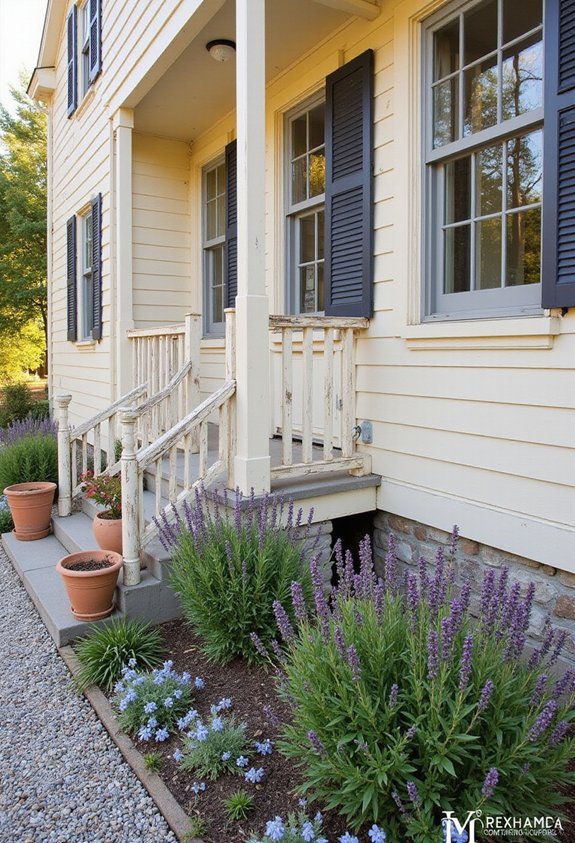
After you’ve selected your decorative elements and established the structural framework of your farmhouse front yard, selecting a cohesive color palette becomes essential for creating visual harmony throughout your entire landscape. You’ll want to choose neutral base colors, such as whites, creams, and soft grays, which form the foundation for your design scheme. Consider incorporating earthy tones like warm browns and muted greens to complement natural elements and repurposed farm tools. These colors reflect the authentic farmhouse aesthetic while remaining versatile for seasonal adjustments. You should limit your palette to three or four primary colors to avoid visual clutter and maintain sophistication. This approach guarantees that every element, from painted structures to planted gardens, works together cohesively, creating an inviting and intentional front yard appearance.
Conclusion
You’ve got all the ingredients to transform your front yard into a charming farmhouse haven by combining classic elements like white picket fencing, barn shutters, and stone steps with thoughtful garden beds and gravel pathways. When you tie together these components using a cohesive color palette of whites, creams, and earthy tones, you’ll create a welcoming outdoor space that’ll knock your socks off with authentic rustic appeal.