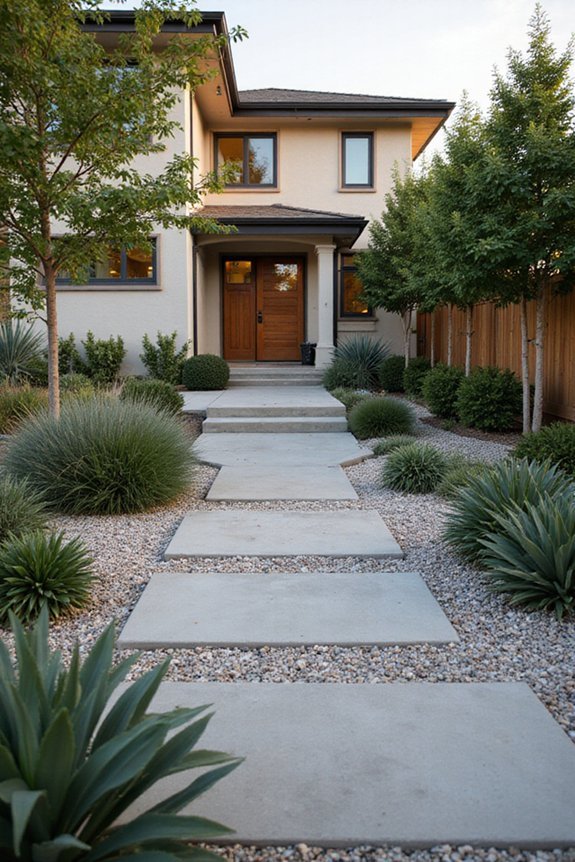
You can transform your front yard by eliminating grass entirely, replacing it with hardscaping, decorative gravel, native plants, and composite materials that require minimal maintenance while offering striking visual appeal. These designs combine clean lines, neutral color palettes, and strategic plant placement to create drought-tolerant landscapes that complement your home’s architecture. But achieving the right balance between materials and plantings demands careful planning—and that’s where specific design strategies become essential.
Modern Minimalist Front Yards Without Grass
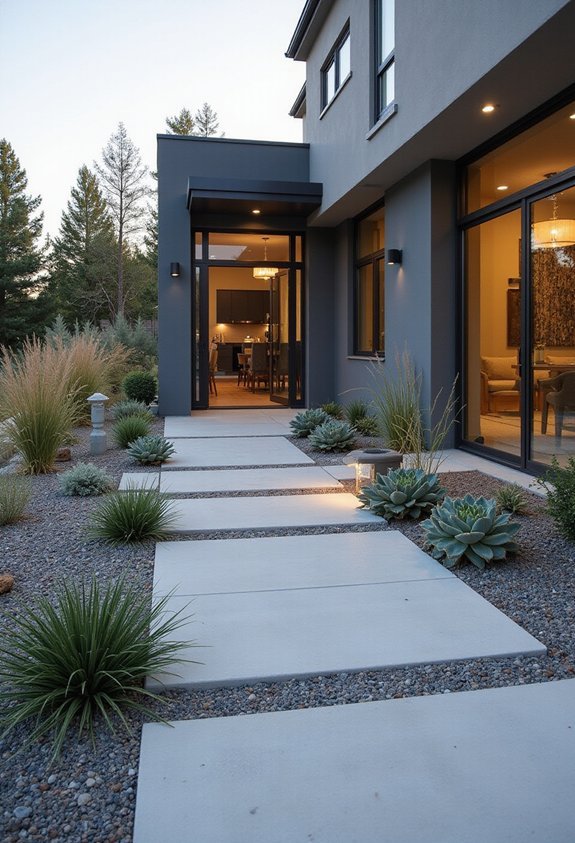
When you’re designing a grass-free front yard with a modern minimalist aesthetic, you’re creating a space that combines clean lines, purposeful plant selections, and strategic hardscaping to achieve a sophisticated look that requires less maintenance than traditional lawns. You’ll want to focus on neutral color palettes, incorporating materials like concrete, gravel, and stone to establish a foundation. Choose plants carefully, selecting low-growing varieties or architectural plants that provide visual interest without cluttering the space. Install raised beds or planters in geometric shapes to maintain the minimalist theme. Consider adding a water feature or sculptural element as a focal point. This approach reduces upkeep, conserves water, and creates an inviting outdoor area that reflects contemporary design principles while remaining functional and visually appealing.
Also read: 17 FRONT YARD FIRE PIT Ideas That Feel Cozy!
Permeable Patios That Let Water Through
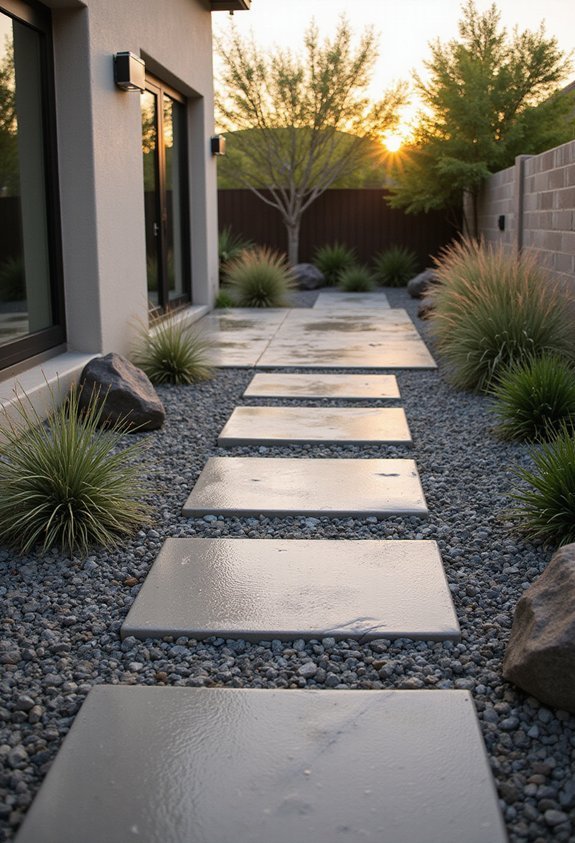
Permeable patios offer a practical solution for grass-free front yards because they allow rainwater to drain through the surface rather than pooling on top, which reduces runoff and helps recharge groundwater while still providing a solid walking area. You can choose from permeable pavers, porous concrete, or gravel-based systems, each offering different aesthetic and functional benefits for your landscape. These materials let water seep into the soil beneath, preventing flooding and erosion while maintaining a clean, modern appearance. Installation requires proper base preparation with drainage layers to guarantee water flows correctly through the system. You’ll find that permeable patios require minimal maintenance beyond occasional sweeping and can withstand regular foot traffic effectively.
Decorative Gravel Beds With Focal Stone Features
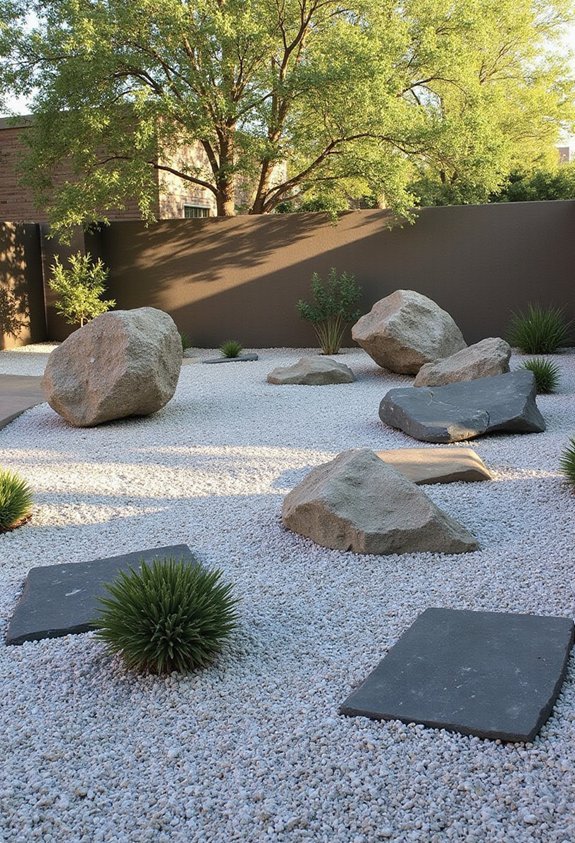
Because they’re versatile, low-maintenance, and visually striking, decorative gravel beds paired with focal stone features create an elegant grass-free front yard that you’ll find both practical and aesthetically appealing. You can arrange various gravel types—crushed granite, pea gravel, or river rocks—around strategically placed focal stones like boulders, slate pieces, or stacked stone formations. These focal points draw the eye and create visual interest while requiring minimal upkeep. Gravel beds naturally drain water efficiently, reducing puddles and erosion problems. You’ll benefit from reduced weeding since the gravel suppresses weed growth while allowing water penetration. Choose focal stones that complement your home’s architectural style, positioning them asymmetrically for modern appeal. This combination delivers a sophisticated, contemporary landscape design that requires considerably less maintenance than traditional grass lawns.
Contemporary Hardscaping With Composite Materials
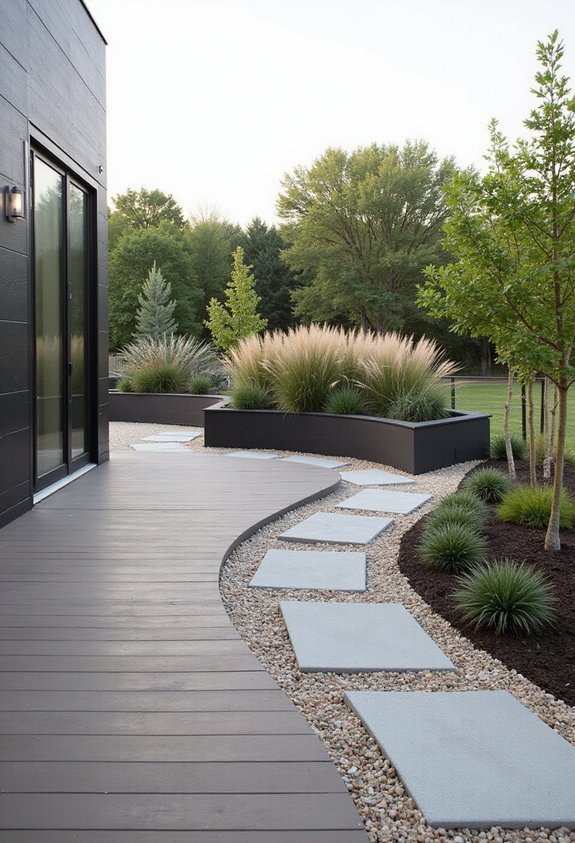
As you look to create a modern front yard without grass, composite materials offer a durable and stylish alternative that combines the appearance of natural stone or wood with superior performance and longevity. These engineered products won’t crack, fade, or splinter like traditional materials, making them ideal for high-traffic areas. You’ll appreciate how composite pavers and decking require minimal maintenance compared to natural stone, which demands regular sealing and cleaning. Installation involves laying materials in geometric patterns that enhance your yard’s contemporary aesthetic. Composite materials come in various colors and textures, allowing you to design custom layouts that reflect your personal style. Additionally, they’re eco-friendly options made from recycled plastics and wood fibers, supporting sustainable landscaping practices while delivering professional results.
Sleek Concrete and Metal Accents
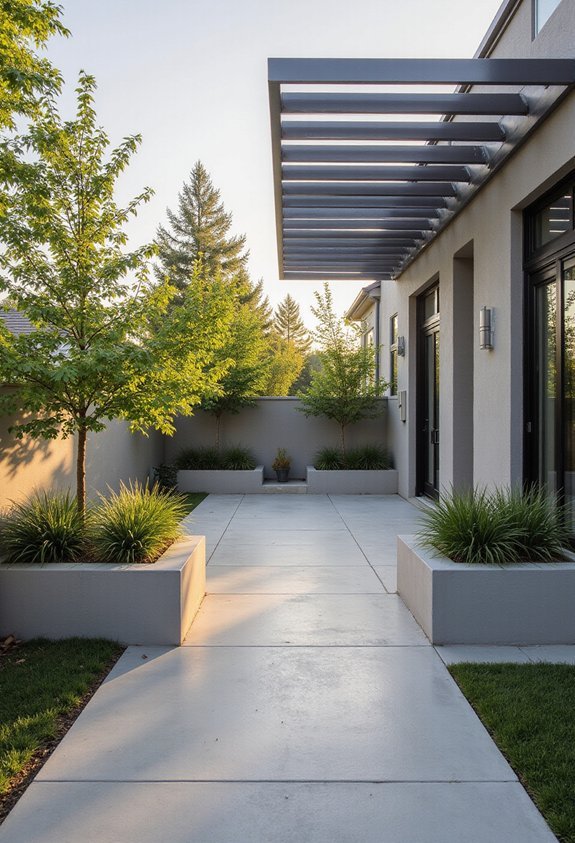
When you’re designing a modern front yard without grass, concrete and metal accents create a sophisticated, industrial-inspired aesthetic that’s both functional and visually striking. Polished concrete surfaces serve as clean, minimalist foundations that you can pair with steel or aluminum features like railings, planters, and decorative screens. These materials complement each other naturally, offering durability against weather conditions and minimal maintenance requirements. You’ll want to ponder, reflect on, or examine incorporating metal edging along concrete pathways to define spaces and create visual interest. The contrast between cool concrete tones and reflective metal finishes produces a contemporary appearance that feels intentional and well-designed. This combination works particularly well in urban settings where you’re seeking a sleek, architectural look for your front yard landscape.
Drought-Tolerant Xeriscaping Instead of Turf
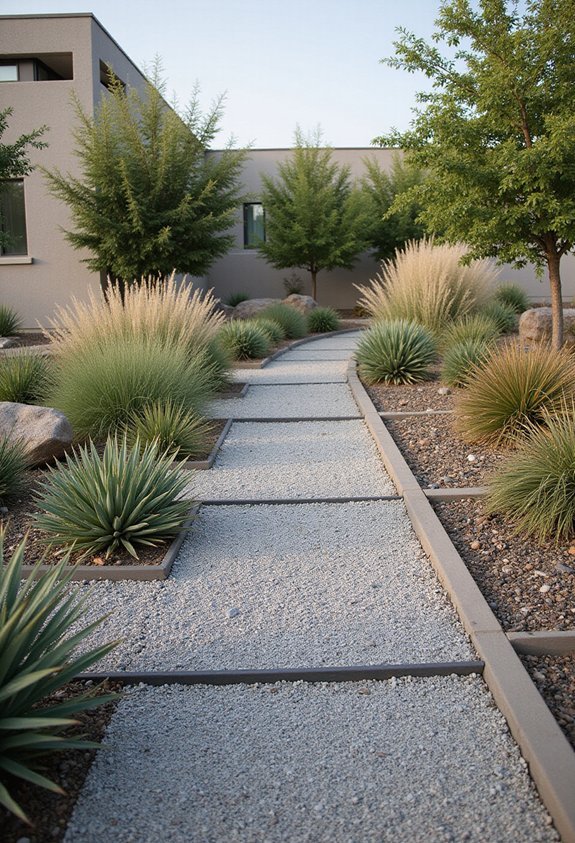
If you’re looking to replace your grass lawn with a water-efficient alternative, drought-tolerant xeriscaping offers an excellent solution that’s both environmentally responsible and visually appealing. This landscaping approach uses plants, rocks, and hardscaping materials that require minimal water, making it ideal for dry climates and reducing your utility bills considerably. You’ll incorporate native plants like ornamental grasses, succulents, and shrubs that thrive naturally in arid conditions without constant irrigation. Decorative rocks, mulch, and gravel create visual interest while suppressing weeds and retaining soil moisture. The design emphasizes strategic plant placement based on water needs, grouping similar plants together for efficient watering. You’ll appreciate how xeriscaping reduces maintenance requirements while delivering a modern, clean aesthetic that complements contemporary home architecture.
Low-Maintenance Succulent Landscapes
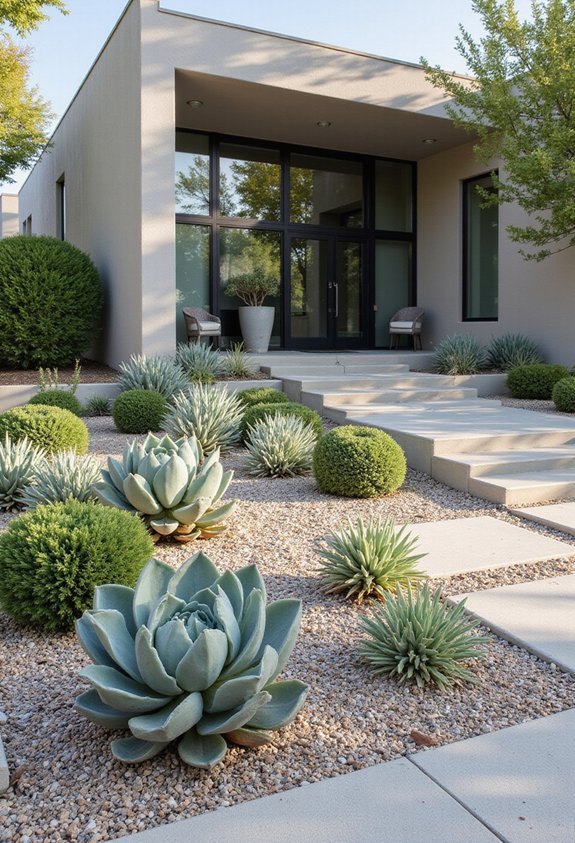
Because succulents store water in their leaves and stems, they’re incredibly forgiving plants that’ll thrive in your front yard with minimal care and attention. You can arrange them in decorative patterns across raised beds or rocky terrain, creating visual interest while requiring very little watering or fertilizing. Popular varieties like sedums, echeveria, and aloe adapt well to various climates and soil conditions, making them versatile choices for different regions. You’ll want to guarantee proper drainage by using well-draining soil and positioning plants in sunny locations, which encourages healthy growth and vibrant colors. Combining succulents of different heights, textures, and hues produces dynamic landscapes that remain attractive year-round, eliminating the constant maintenance demands of traditional grass lawns while delivering striking, modern aesthetics.
Sustainable Ground Covers for Full Coverage
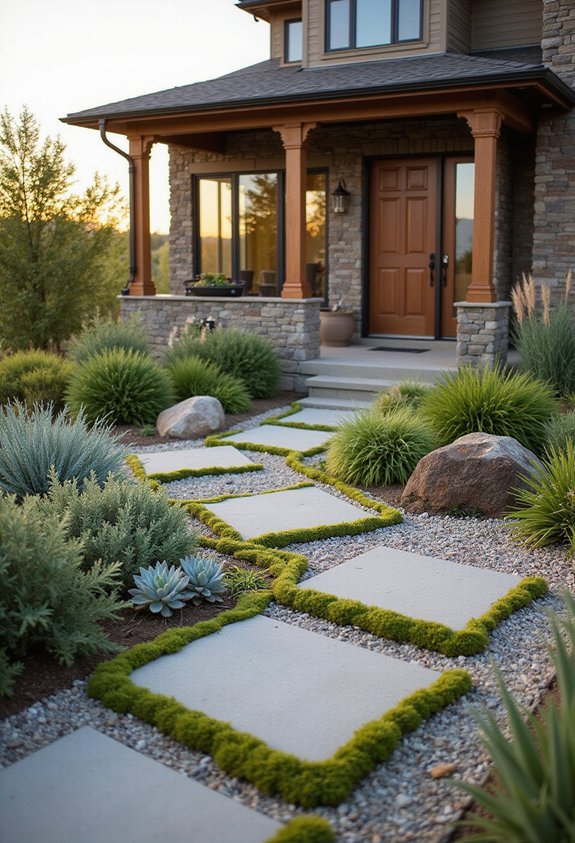
Ground covers offer you another excellent alternative that goes beyond succulents, providing dense, continuous vegetation that’ll blanket your entire front yard while remaining eco-friendly and low-maintenance. You can choose from creeping thyme, which tolerates foot traffic and produces fragrant flowers, or clover varieties that naturally fix nitrogen in soil, reducing your need for fertilizers. Sedum species spread horizontally, creating textured mats that suppress weeds effectively. Ornamental grasses like fescue provide movement and visual interest while requiring minimal water once established. Ajuga groundcover grows quickly, offering purple blooms and dense foliage that prevents soil erosion. When you select ground covers suited to your climate and sunlight conditions, you’ll establish a sustainable landscape that requires considerably less maintenance than traditional grass, while improving soil health and supporting local pollinators.
Native Plant Gardens That Attract Pollinators
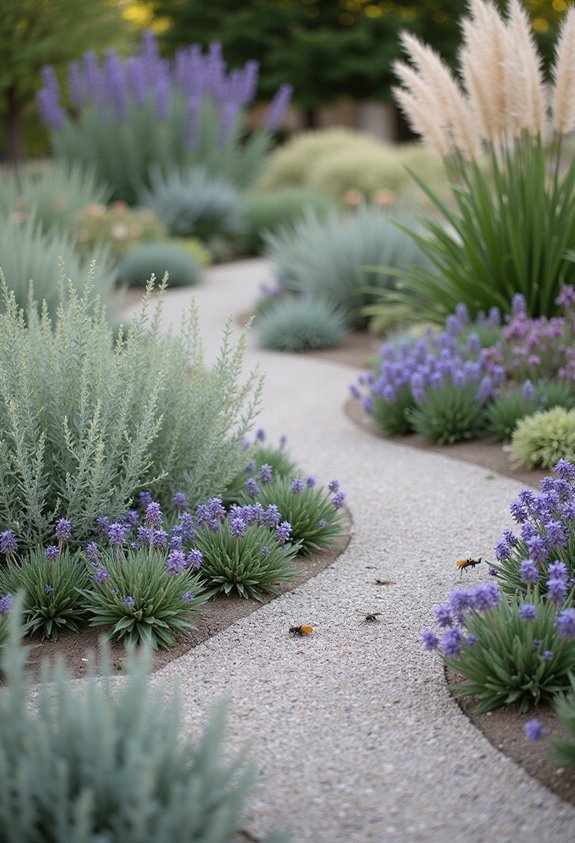
As you move from sustainable ground covers to creating a more dynamic landscape, native plant gardens offer you an excellent opportunity to transform your grass-free yard into a vibrant ecosystem that supports bees, butterflies, and other essential pollinators. You’ll want to research plants native to your specific region, since they’re adapted to your local climate and soil conditions, requiring less maintenance than non-native species. When you select flowering plants that bloom at different times throughout the year, you’re ensuring that pollinators have consistent food sources from spring through fall. You should avoid pesticides entirely, as they harm the insects you’re trying to attract. By grouping plants by height and color, you’ll create visual interest while establishing natural pathways that guide pollinators through your yard efficiently.
Ornamental Grasses for Movement and Texture
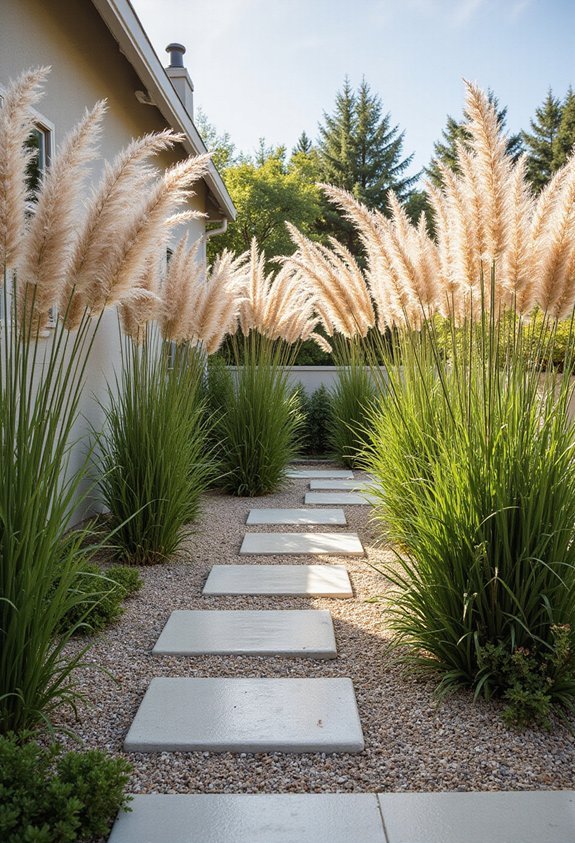
While native flowering plants provide the foundational structure and pollinator support for your grass-free yard, ornamental grasses offer a complementary layer that’ll enhance your landscape’s visual appeal and dynamic quality. You can incorporate ornamental grasses like feather reed grass, blue fescue, or autumn fern to create movement and textural variety throughout your front yard design. These grasses sway gracefully in the wind, adding visual interest and dimension to otherwise static plantings. Their tall, flowing forms create natural focal points and help define landscape sections without requiring mowing or heavy maintenance. Additionally, ornamental grasses provide year-round structure, maintaining visual appeal through seasonal changes while reducing your yard’s overall upkeep demands and environmental impact.
Japanese Zen Gardens Without a Lawn
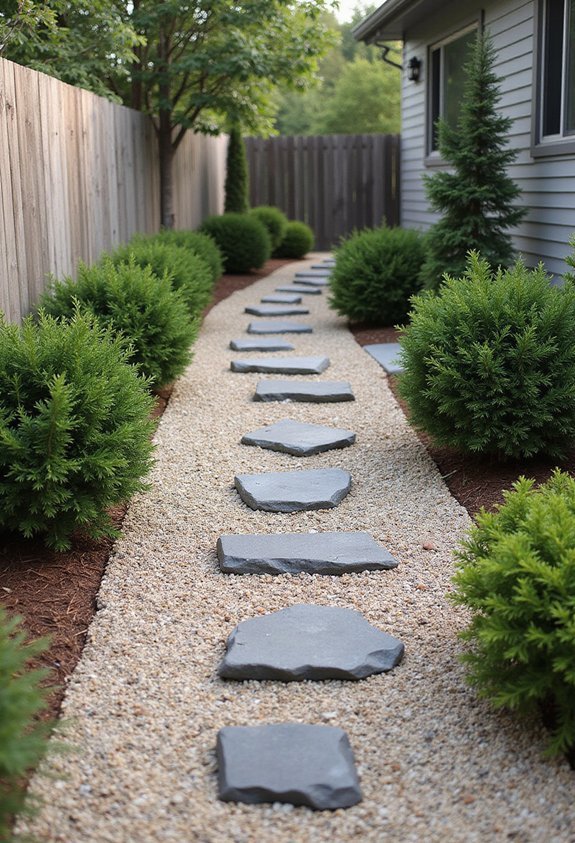
Why not transform your front yard into a peaceful Japanese zen garden that eliminates the need for grass altogether? You’ll create a serene landscape by combining carefully raked gravel or sand, strategically placed rocks, and minimalist plantings. Start by defining your space with a clean border, then add layers of fine gravel that you’ll rake into meditative patterns. Position larger stones asymmetrically to represent mountains or islands, maintaining visual balance without symmetry. Incorporate low-growing plants like moss, bamboo, or Japanese maples sparingly to preserve the open, calming aesthetic. Add a simple water feature like a stone basin or small fountain for peaceful ambiance. This approach requires minimal maintenance while delivering maximum tranquility and modern visual appeal to your front entrance.
Mediterranean-Inspired Dry Gardens
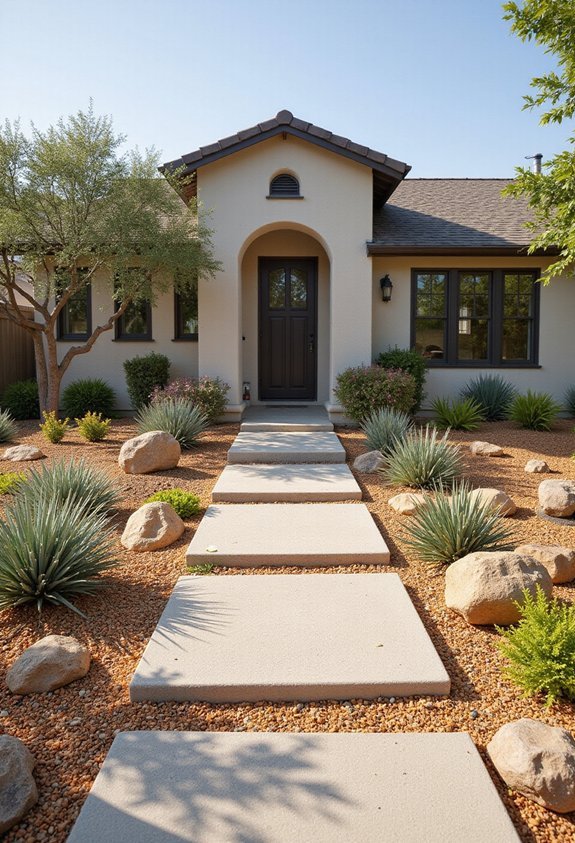
Drought-resistant plants and sun-baked landscapes bring the warm, rustic charm of Mediterranean regions directly to your front yard without requiring constant watering or maintenance. You can create this style by incorporating olive trees, lavender, rosemary, and ornamental grasses that thrive in dry conditions. These plants naturally tolerate intense sun exposure and minimal rainfall, making them ideal for water-conscious homeowners. Layer your plantings strategically, positioning taller specimens like cypress trees in the background while placing shorter shrubs and groundcovers in the foreground. Add hardscaping elements such as gravel pathways, stone borders, and terracotta accents to enhance the Mediterranean aesthetic. This design approach simultaneously reduces your environmental impact while establishing a visually cohesive, low-maintenance landscape that captures authentic Mediterranean character throughout the year.
Cottage-Style Perennial Borders Without Grass
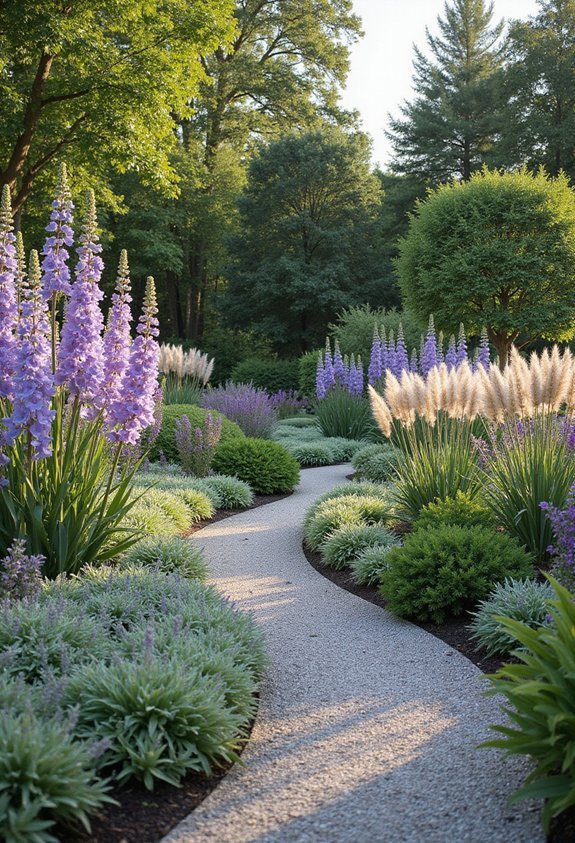
A charming cottage garden aesthetic doesn’t require a single blade of grass to succeed, and you can achieve this classic look by replacing your lawn with dense, colorful perennial borders that bloom throughout the seasons. You’ll want to select plants of varying heights, arranging taller specimens toward the back and shorter ones in front to create visual depth and interest. Choose perennials like coneflowers, black-eyed Susans, daylilies, and salvia that naturally thrive together and require minimal maintenance once established. Plant them closely together to eliminate weeds and reduce watering needs. Incorporate winding pathways using mulch or gravel to navigate through your garden beds, enhancing the cottage charm while providing practical access to all areas of your front yard design.
Colorful Rock Gardens and Boulder Arrangements
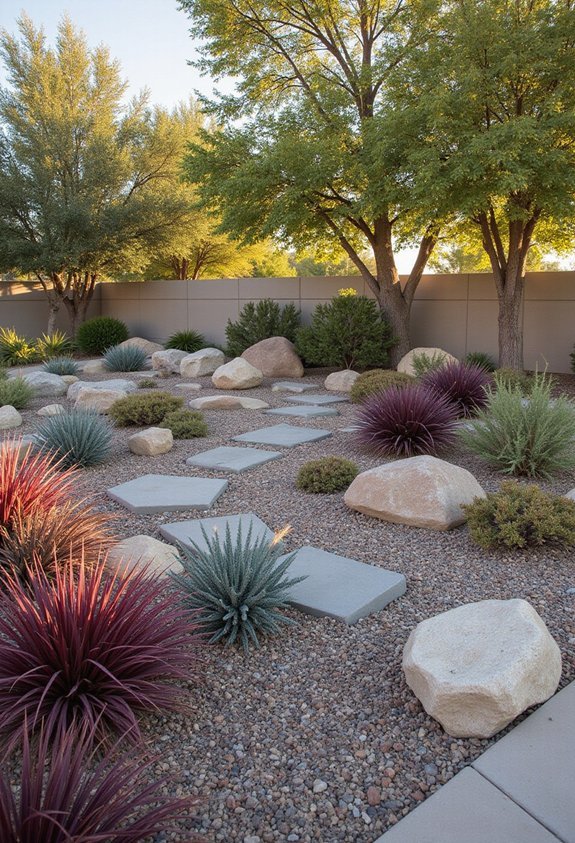
If you’re looking for a low-maintenance alternative to grass that adds visual interest and texture to your front yard, rock gardens and boulder arrangements can transform your landscape into a striking, modern design that requires minimal watering and upkeep. You’ll arrange various sizes of rocks, pebbles, and boulders to create natural-looking formations that complement your home’s architecture. Incorporate drought-tolerant plants like sedums, ornamental grasses, and succulents between stones to add color and softness to the hardscape. Select rocks in complementary colors—grays, blacks, and earth tones—that harmonize with your exterior. Layer different rock sizes strategically, positioning larger boulders as focal points while using smaller pebbles for ground coverage, ensuring proper drainage and creating visual depth throughout your landscape design.
Desert Landscape With Cacti and Agave
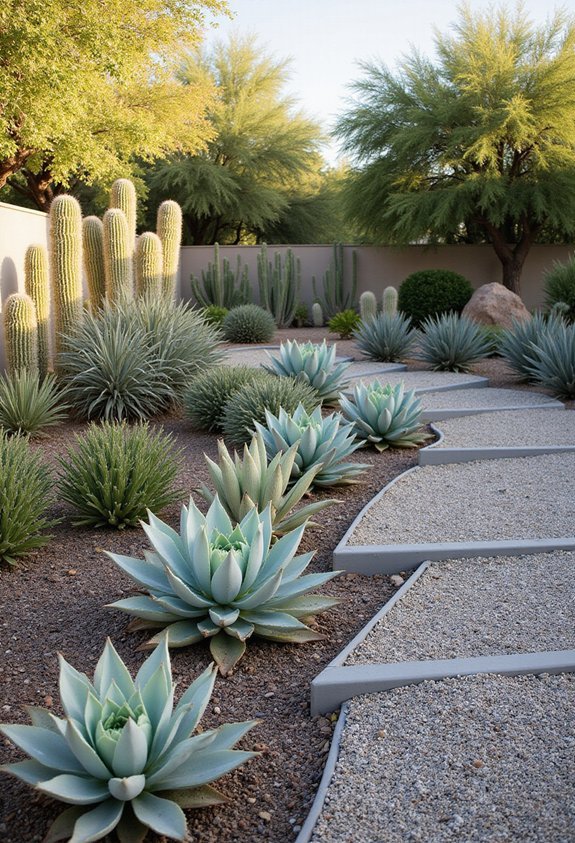
Many homeowners can create a striking desert landscape by combining cacti, agave plants, and sandy soil to establish a modern front yard that thrives in hot, dry conditions while demanding very little water or maintenance. You’ll want to select drought-resistant species like barrel cacti, prickly pear, or agave varieties that naturally withstand extreme temperatures and prolonged dry periods. Arrange these plants strategically across your yard, spacing them appropriately to allow for mature growth without overcrowding. Layer the ground with decomposed granite or coarse sand, which mimics natural desert environments while promoting proper drainage. You can accent your design with decorative rocks, gravel pathways, and minimalist hardscaping elements that complement the plants’ architectural shapes. This approach creates a visually compelling, low-maintenance landscape requiring minimal irrigation once established.
Modern Water Features and Dry Creek Beds
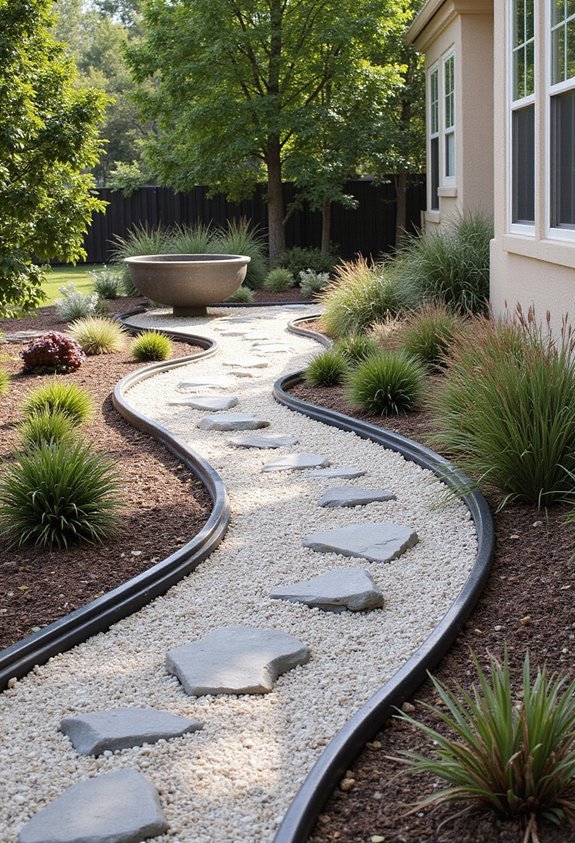
Modern water features and dry creek beds can transform your grass-free front yard into an engaging landscape that combines visual interest with functional drainage solutions. You can install a shallow creek bed using river rocks and boulders, which channels water during rain while adding natural texture to your design. Consider adding a small fountain or pond as a focal point that attracts wildlife and creates soothing ambient sounds. You’ll want to incorporate native plants around these features, selecting drought-tolerant species that thrive in your climate. Strategic placement of water features near your home’s foundation helps manage runoff effectively, preventing erosion and water damage. These elements work together to create a sophisticated, low-maintenance landscape that’s both practical and visually appealing for modern front yard designs.
Industrial-Style Courtyards With Minimal Planting
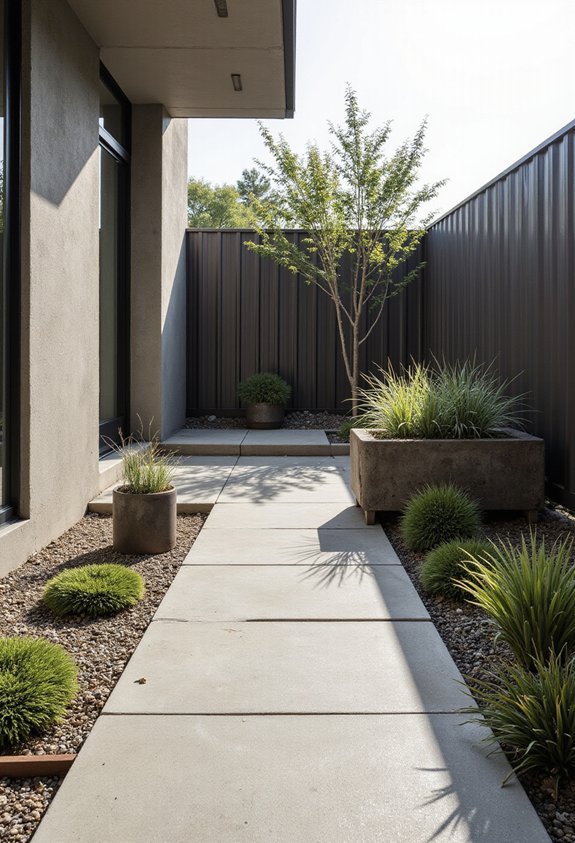
You can strip away excessive greenery and embrace a sleek industrial aesthetic by designing a front yard courtyard that prioritizes clean lines, raw materials, and purposeful open space over dense vegetation. Incorporate concrete, steel, and gravel as your primary materials, which require minimal maintenance while creating a sophisticated appearance. Use metal planters strategically placed along boundaries or corners, containing only essential specimen plants or ornamental grasses that complement your design. Install hardscape elements like raised geometric beds or corten steel edging to define spaces without relying on abundant planting. Polished concrete pads, permeable pavers, or decomposed granite surfaces reduce vegetation needs while maintaining visual interest. This approach eliminates watering schedules and mowing duties, delivering a modern, low-maintenance front yard that showcases intentional design principles.
Formal Topiary and Structured Shrub Designs
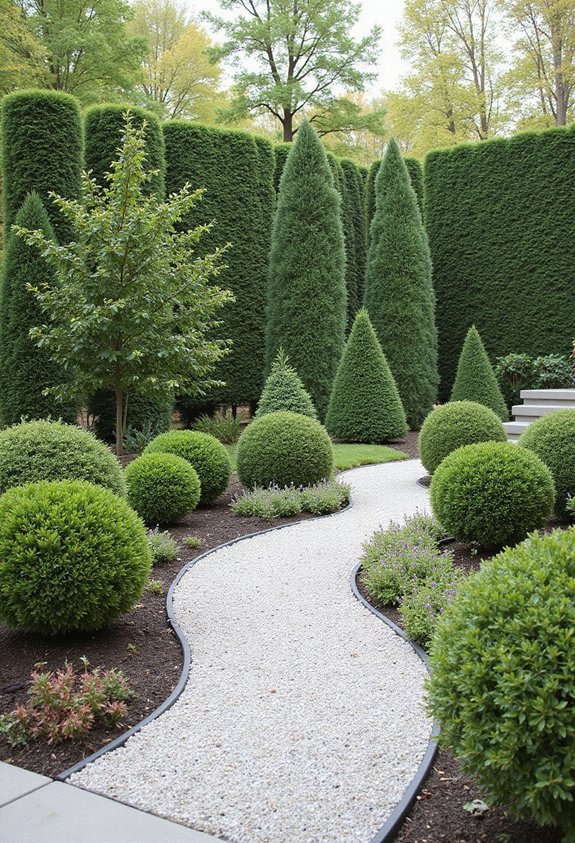
If you’re seeking a front yard that demonstrates precision and elegance, formal topiary and structured shrub designs offer a grass-free alternative that transforms your landscape into a carefully curated outdoor room. You’ll create geometric shapes by trimming boxwoods, privets, and hollies into spheres, pyramids, or cones that provide year-round visual interest. These sculpted plants work exceptionally well when arranged symmetrically along pathways or framing entryways, establishing a sense of order and sophistication. You can combine topiary specimens with hardscaping elements like gravel, pavers, or decorative stones to enhance the formal aesthetic. Regular pruning maintains the defined shapes, requiring commitment but rewarding you with a polished, architectural appearance that elevates your home’s curb appeal while eliminating lawn maintenance entirely.
Textured Plantings and Architectural Plants
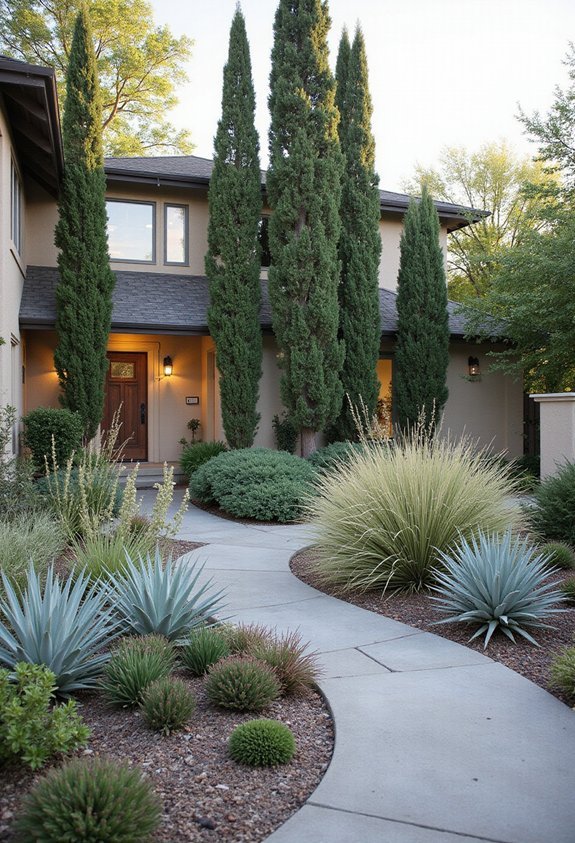
While formal topiary demands consistent pruning schedules and geometric precision, textured plantings and architectural plants offer a grass-free approach that works with nature’s growth patterns rather than against them, giving your front yard dynamic visual depth without requiring the same level of maintenance. You can layer plants with varying heights, leaf sizes, and colors to create visual interest that changes throughout seasons. Consider incorporating ornamental grasses, feathery ferns, spiky yuccas, and broad-leafed hostas together, which establish contrasting textures that catch light differently. These plants naturally complement each other’s forms, producing sophisticated compositions without constant intervention. Architectural specimens like Japanese maples or structural evergreens serve as focal points, while softer plantings around them provide balance. This strategy transforms your front yard into a multidimensional landscape that’s both visually compelling and practically manageable.
Layered Materials: Pavers, Gravel, and Plant Zones Together
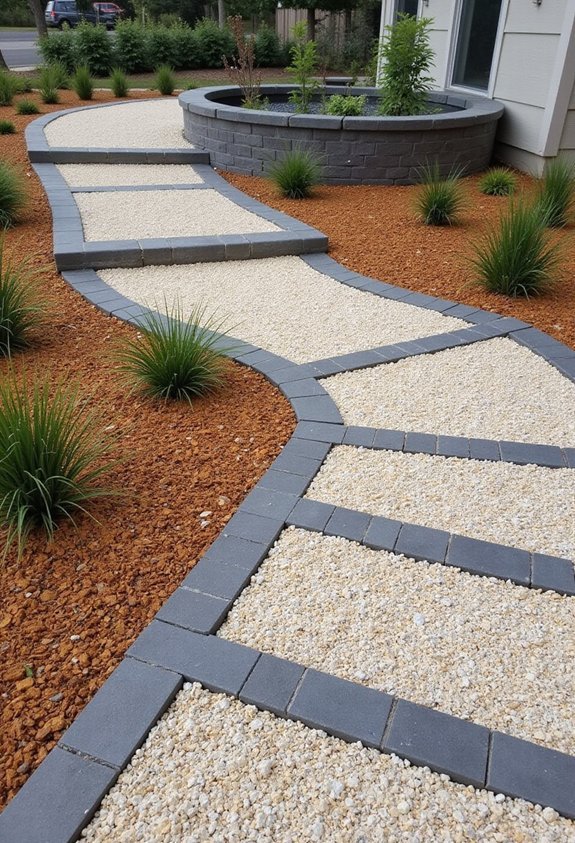
Creating distinct zones in your grass-free front yard through layered materials provides both functional organization and visual structure that guides the eye naturally through your landscape. You can combine pavers with gravel to define different areas, such as walkways, seating spaces, and planting beds, each serving a specific purpose. Pavers create clean, defined pathways that direct foot traffic efficiently, while gravel fills surrounding zones and allows water drainage. Strategic plant placement between these materials softens hard surfaces and adds greenery. This layered approach requires you to examine shifts carefully, ensuring materials complement each other visually and functionally. When you combine these elements thoughtfully, you create a modern, organized front yard that maximizes usable space while minimizing maintenance demands.
Mulch Blends and Creeping Ground Covers for Full Coverage
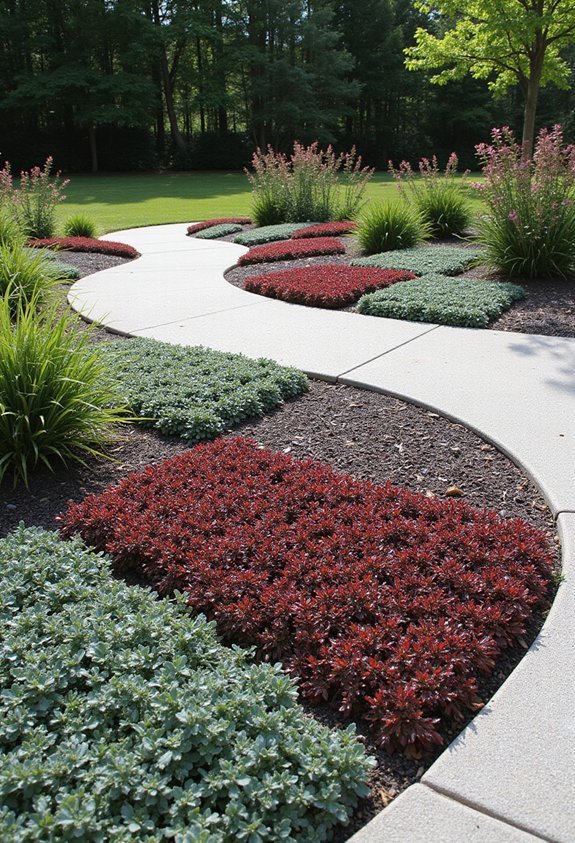
Beyond the structured zones you’ve established with pavers and gravel, mulch blends and creeping ground covers offer you a way to fill remaining spaces while adding texture, color, and living elements to your landscape. You can layer different mulch types—such as bark chips, wood fiber, and colored mulch—to create visual interest and define planting areas. Creeping ground covers like sedum, creeping thyme, or ornamental grasses spread horizontally across soil, suppressing weeds while requiring minimal maintenance. These low-growing plants work particularly well in shift areas between hardscaping features. By combining organic mulch with resilient ground covers, you’ll achieve complete coverage that reduces bare soil exposure, enhances drainage, and creates a cohesive modern aesthetic throughout your grass-free yard design.
Conclusion
You’ve discovered dynamic, drought-tolerant designs that ditch traditional grass while delivering distinctive, modern aesthetics. By blending hardscaping elements—permeable patios, composite materials, and concrete components—with carefully curated plants and purposeful gravel zones, you’ll create a contemporary outdoor space that’s both beautiful and practical. These methodical modifications minimize maintenance demands while maximizing environmental benefits, transforming your front yard into a striking, sustainable landscape that complements your home’s architectural character and reflects your commitment to innovative, eco-conscious design choices.