You can transform your front yard into a warm gathering space by choosing the right fire pit design for your needs and budget. Whether you’re drawn to classic stone rings, modern metal bowls, or budget-friendly cinder block options, each style offers distinct advantages in functionality and aesthetics. Understanding the differences between these designs—along with essential safety considerations—will help you create an inviting outdoor environment that works for your specific situation.
The Classic Stone Ring Fire Pit
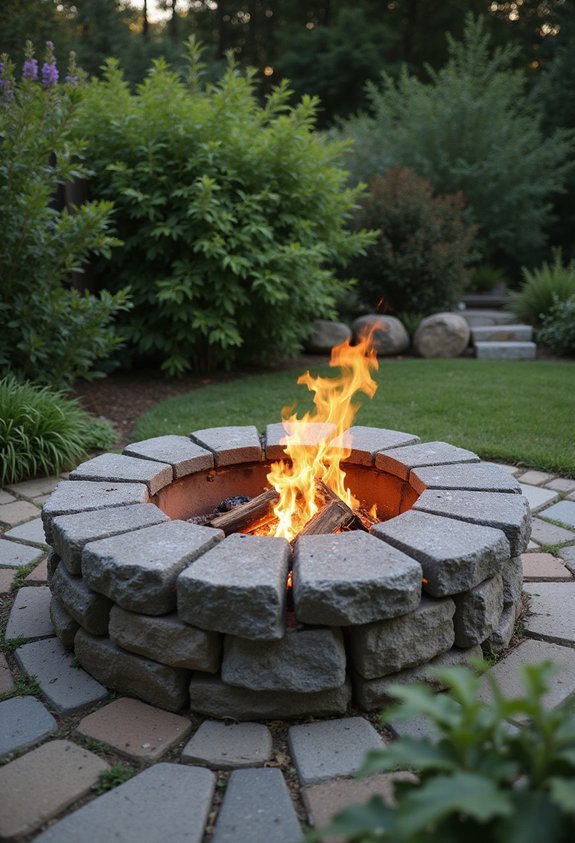
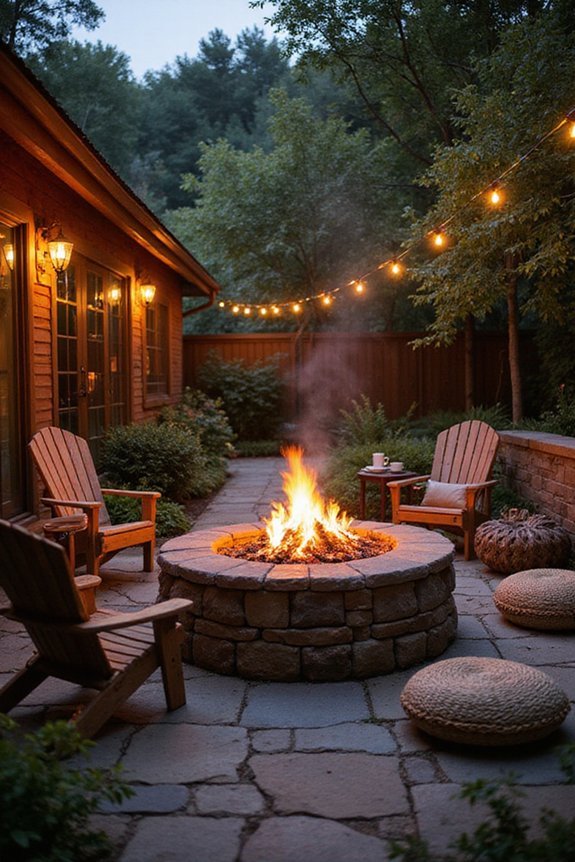
If you’re looking for the most straightforward and timeless approach to creating a front yard fire pit, the classic stone ring design won’t disappoint you. You’ll start by selecting a flat, level area at least ten feet from your home, trees, and structures, then clear away grass and debris to expose bare soil. Next, you’ll arrange stones in a circular pattern, typically two to three feet in diameter, ensuring they’re firmly set and won’t shift. Stack the stones two to three layers high, creating a sturdy, contained structure. Fill the interior with gravel or sand for drainage, then add a metal grate if desired. This design provides excellent heat distribution, easy maintenance, and a functional gathering space that lasts for years.
Also read: 24 SIMPLE FRONT YARD Ideas That Look So Clean!
Sunken Fire Pit With Seating Walls
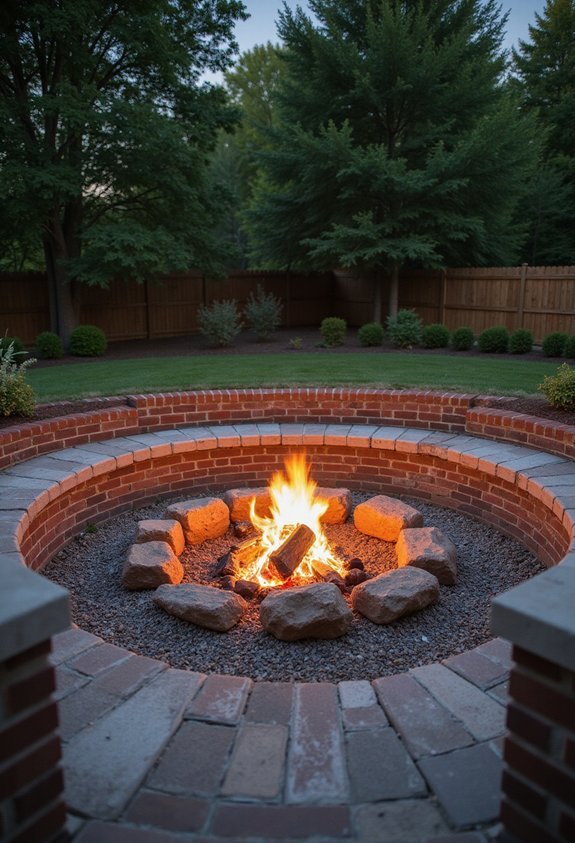
For a more sophisticated and comfortable outdoor gathering space, you’ll want to ponder building a sunken fire pit with seating walls, which takes the basic stone ring design and expands it into an integrated seating area. You’ll dig down approximately two to three feet into your yard, creating a recessed pit that naturally contains heat and smoke while providing wind protection. Along the excavated perimeter, you’ll construct sturdy retaining walls using stone, brick, or concrete blocks, which simultaneously function as permanent seating surfaces. This design eliminates the need for separate chairs, encouraging guests to settle in comfortably around the fire. The sunken configuration also enhances safety by lowering the flames below ground level, reducing accidental contact risks while creating an intimate gathering environment that feels intentionally designed and professionally finished.
Modern Metal Fire Bowl Design
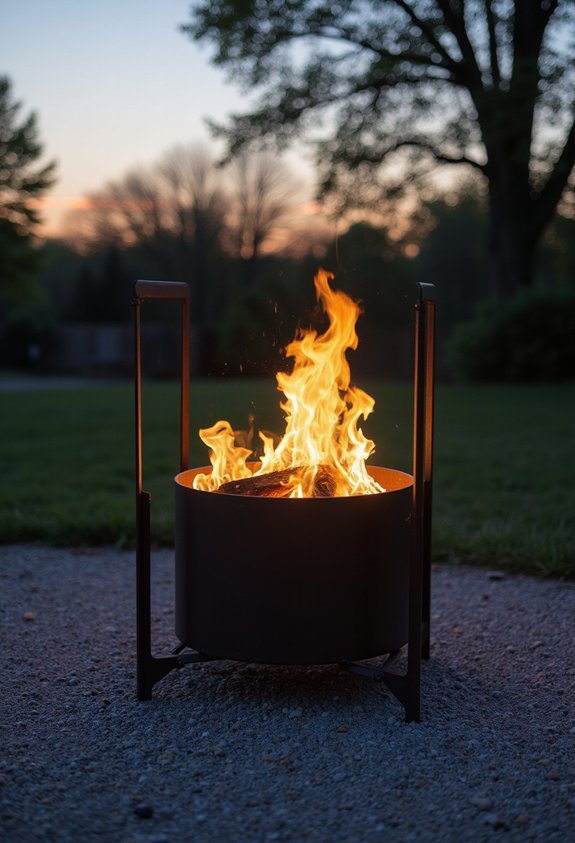
Contemporary fire bowls have emerged as a sleek alternative to traditional stone rings, combining aesthetic appeal with practical functionality in a compact footprint that doesn’t require excavation or permanent installation. You’ll find these bowls crafted from steel or cast iron, designed to withstand high temperatures while maintaining their structural integrity over extended use. The elevated design keeps flames at an ideal viewing height, and you can position them anywhere in your yard without permanent commitment. You’ll appreciate how their clean lines complement modern landscaping, while their portability allows seasonal relocation. Many models include mesh screens to contain sparks effectively, and you can easily add or remove grates for different fuel types. These fire bowls represent an efficient, flexible solution for creating ambient outdoor warmth.
Rustic Log Cabin–Style Pit
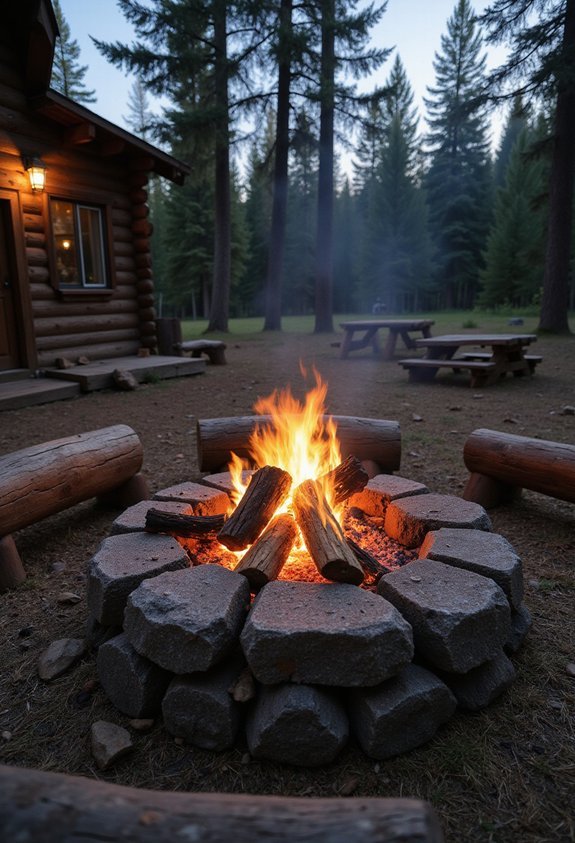
When you’re drawn to the warmth and character of traditional outdoor spaces, a rustic log cabin–style fire pit delivers an authentic aesthetic that grounds your front yard in natural charm and timeless appeal. You’ll want to construct a circular or square stone base using stacked fieldstone or brick, which creates a sturdy foundation for your pit. Arrange untreated wooden logs or timber frames around the perimeter to establish the cabin aesthetic, ensuring they’re positioned safely away from the fire’s heat. You can incorporate a metal fire ring or grate inside the stone structure to contain flames effectively. Add complementary elements like nearby wooden benches or log seating to enhance the cozy atmosphere. This design choice transforms your outdoor space into an inviting gathering area that mirrors classic cabin environments while maintaining practical functionality and safety standards.
Budget-Friendly Cinder Block Fire Pit
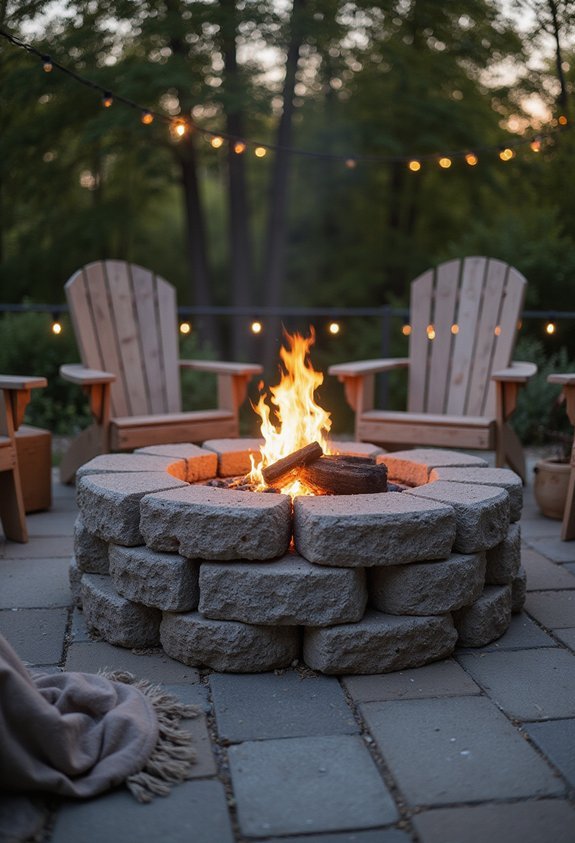
If you’re looking to create a fire pit without spending a lot of money, cinder blocks offer an affordable and practical solution that doesn’t compromise on functionality or appearance. You’ll stack standard cinder blocks in a circular formation, typically creating two to three layers for adequate depth and safety. Before assembling, you’ll want to clear your chosen area of grass and debris, then level the ground carefully. Next, you’ll arrange your first layer of blocks in a circle, ensuring they’re positioned tightly together to prevent gaps. You’ll repeat this stacking process for additional layers, checking that everything remains level as you progress. Finally, you’ll add a metal grate on top to hold your firewood securely, creating a sturdy and functional fire pit that’s both economical and straightforward to construct.
Raised Fire Pit With Built-In Benches
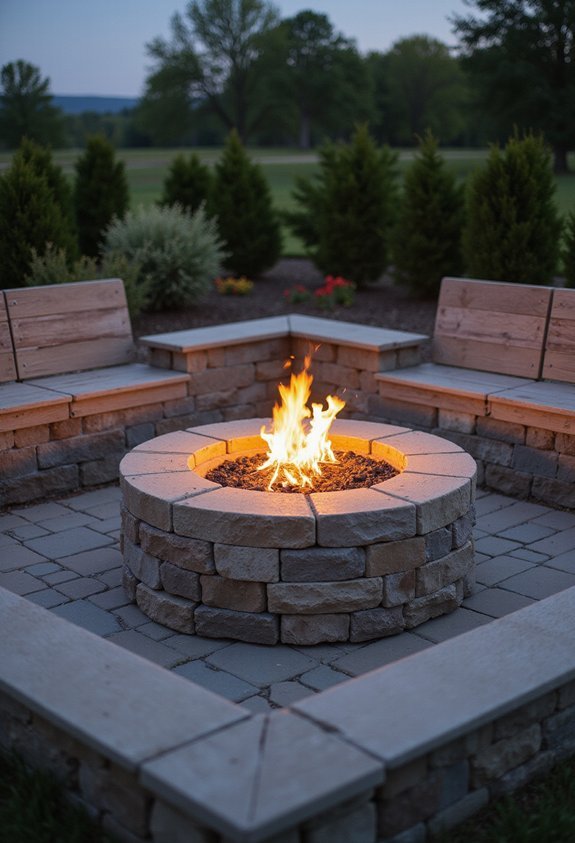
For those who’d like more comfort and functionality than a simple cinder block fire pit provides, a raised fire pit with built-in benches combines seating and warmth in one attractive structure. You can construct this project using concrete blocks, stone, or wood, stacking materials to create both the fire pit wall and integrated seating around it. The height you build, typically between 12 and 18 inches, allows you to sit comfortably while enjoying the fire without bending down. Built-in benches save space compared to placing separate chairs around a traditional fire pit, making this design ideal for smaller yards. You’ll want to reinforce the structure properly and guarantee adequate ventilation for safe burning. This setup creates an inviting gathering spot that encourages conversation and relaxation.
Minimalist Steel Frame Fire Pit
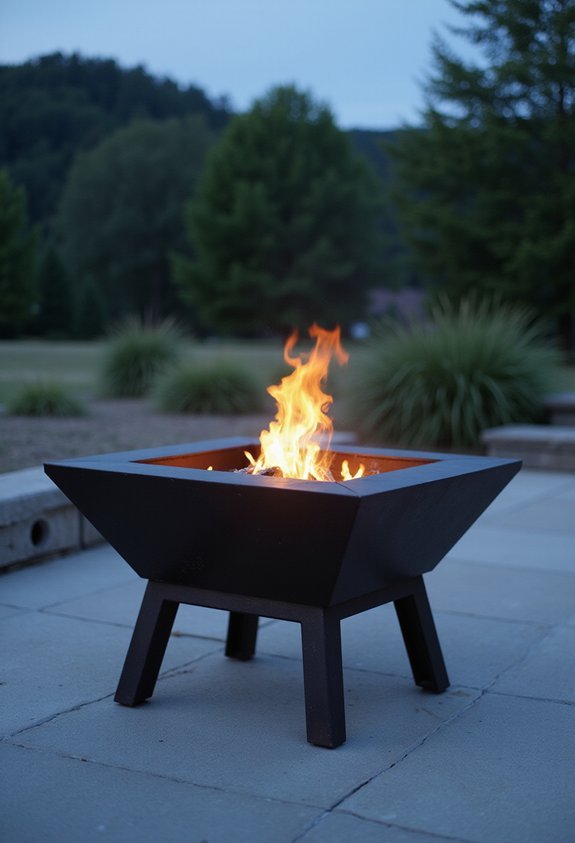
Because you’re seeking a sleek, modern alternative to traditional masonry fire pits, a minimalist steel frame design offers clean lines and contemporary appeal that complements various outdoor aesthetics. You’ll appreciate how these structures utilize durable steel construction, which resists weathering and requires minimal maintenance compared to brick or stone options. The open framework design allows you to view flames from multiple angles while promoting efficient airflow for ideal burning. You can customize your steel frame pit by selecting powder-coated finishes in black, bronze, or steel colors that coordinate with your landscaping. Installation involves positioning the base on level ground, securing components according to manufacturer specifications, and ensuring proper clearance from vegetation and structures. This design choice delivers modern functionality without sacrificing practical performance or safety considerations.
Gravel and River Rock Fire Pit Ring
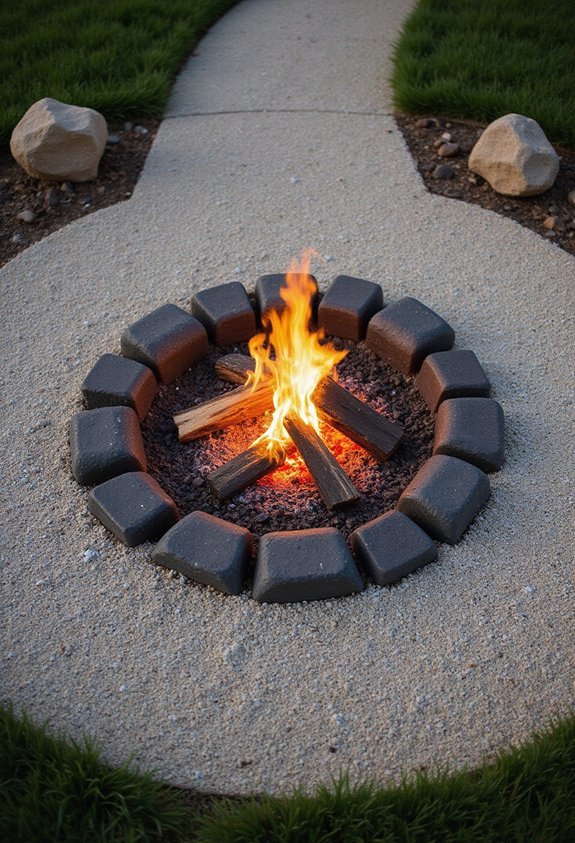
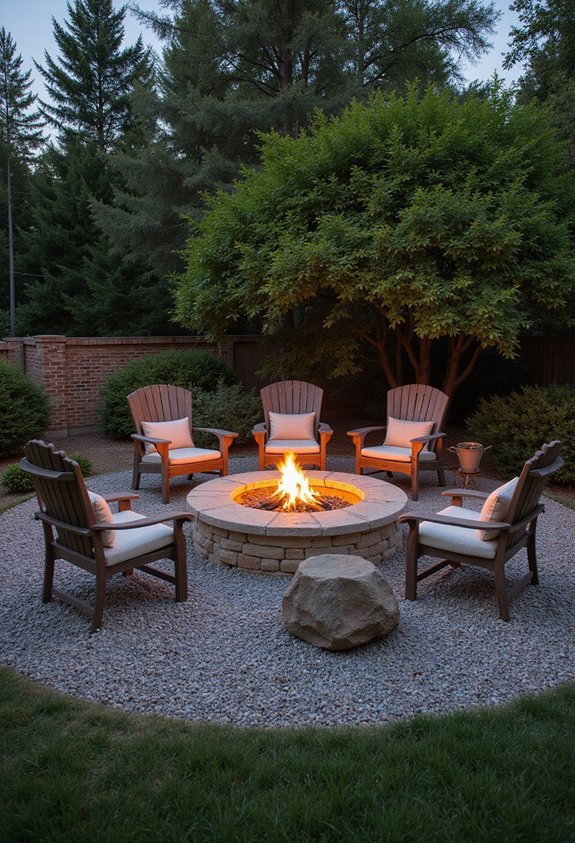
While you’re looking for a budget-friendly and natural alternative to constructed fire pit structures, a gravel and river rock fire pit ring provides an accessible option that you can build with readily available materials from landscaping suppliers. You’ll arrange river rocks in a circular pattern on level ground, creating a defined perimeter that contains your fire safely. Fill the interior with gravel or sand to absorb heat and prevent ground damage, then add a metal grate if you’d like. This design offers excellent drainage, reduces heat transfer to surrounding soil, and allows you to adjust the ring’s diameter based on your space. The natural appearance blends seamlessly into most yards, and you can disassemble and reconfigure it whenever needed.
Decorative Brick Fire Pit Ring
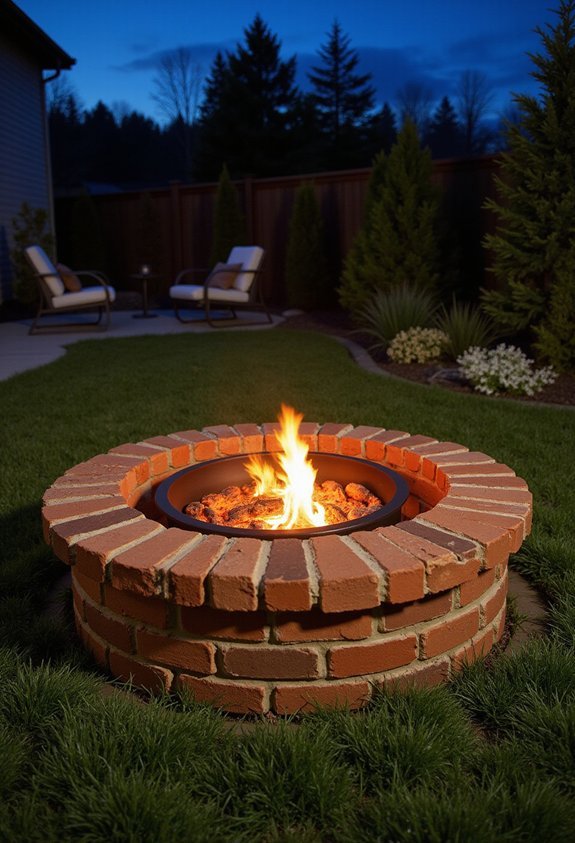
If you’re seeking a more structured and permanent fire pit option that offers greater visual appeal than loose materials, a decorative brick fire pit ring presents an excellent upgrade that combines functionality with aesthetic enhancement. You’ll arrange bricks in a circular pattern, creating a defined containment area that’s both durable and visually appealing. The brick’s thermal mass helps retain and distribute heat evenly, while its varied colors and textures add character to your yard. Installation involves preparing a level foundation, applying mortar between bricks, and allowing adequate curing time. You can customize the design by selecting different brick styles, sizes, or patterns that complement your landscape. This option provides superior longevity compared to temporary solutions, requiring minimal maintenance while offering reliable performance for years.
Fire Pit With Paver Patio Base
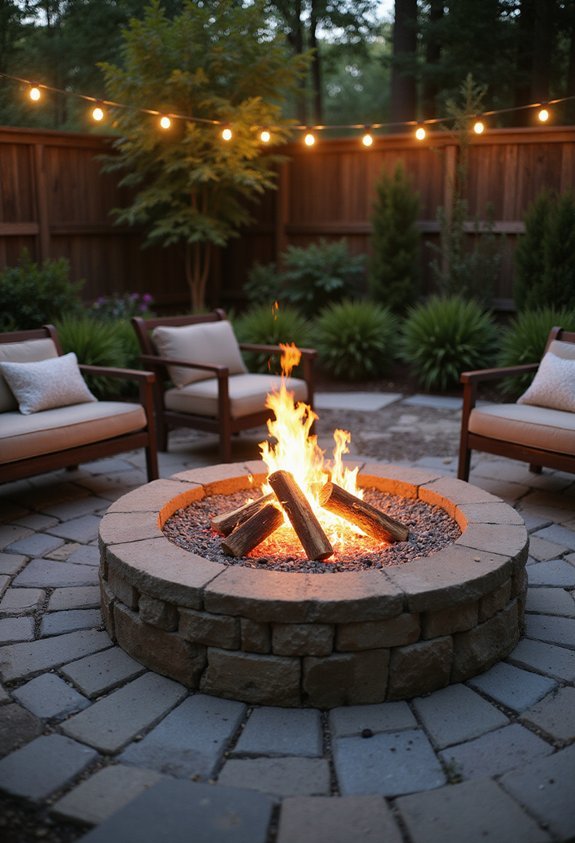
Taking your fire pit installation a step further, you can create a complete outdoor entertaining space by building your fire pit directly onto a paver patio base that extends outward from the central fire structure. This approach provides you with a stable, level foundation that prevents shifting and settling over time. You’ll arrange pavers in geometric patterns around your fire pit’s perimeter, creating defined seating areas where guests can gather comfortably. The patio base also protects surrounding grass from foot traffic and heat damage, reducing maintenance concerns. When installing pavers, you’ll need to prepare the ground with proper drainage and a sand base layer, ensuring longevity and stability. This setup transforms your front yard into a functional entertainment zone that accommodates multiple people safely.
Tiered Stone Fire Pit for Sloped Yards
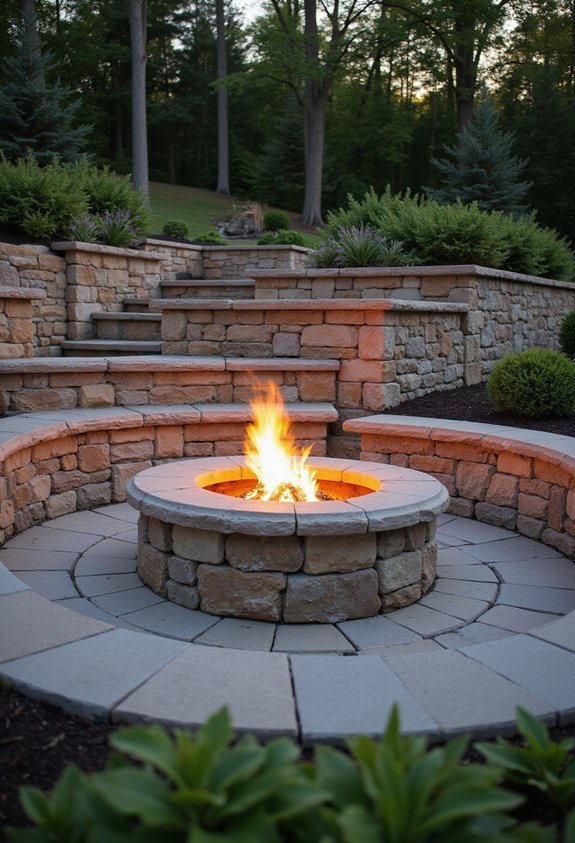
Sloped yards present unique challenges that a flat paver patio can’t always resolve, but you can work with your landscape’s natural grade by constructing a tiered stone fire pit that adapts to the terrain’s elevation changes. You’ll build multiple levels using stacked stone or retaining wall blocks, creating a stable structure that follows your yard’s slope. Start by marking out your fire pit location, then excavate each tier to guarantee level surfaces for stacking. Use landscape fabric and gravel as a base layer to improve drainage and prevent shifting. Stack your stones carefully, checking alignment frequently, and secure each tier with concrete or construction adhesive. This approach maximizes safety while creating a functional, attractive feature that complements your yard’s natural topography.
Portable Metal Fire Pit for Small Spaces
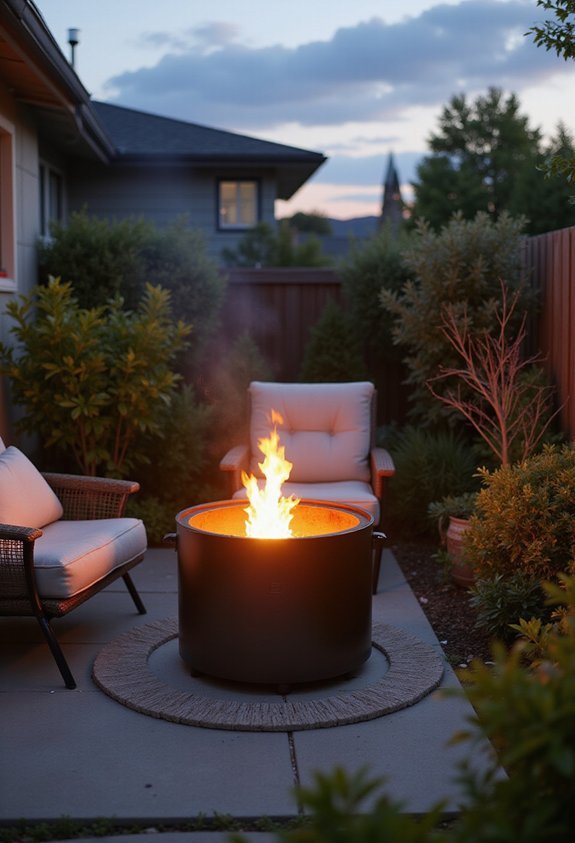
Because your yard doesn’t have much room to work with, a portable metal fire pit offers you a practical solution that you can place, use, and move whenever you need it. These compact fire pits come in various sizes, typically ranging from 24 to 36 inches in diameter, making them perfect for patios, decks, and small yards. You’ll find models constructed from steel or cast iron, both of which withstand high temperatures effectively. Most portable options feature sturdy legs and a mesh or grated bottom that allows airflow for efficient burning. You can easily transport your fire pit to different locations within your yard, or even to camping trips and gatherings. Simply position it on level ground away from structures, vegetation, and overhead hazards before igniting your fire.
Open Semicircle Fire Pit for Flexible Seating
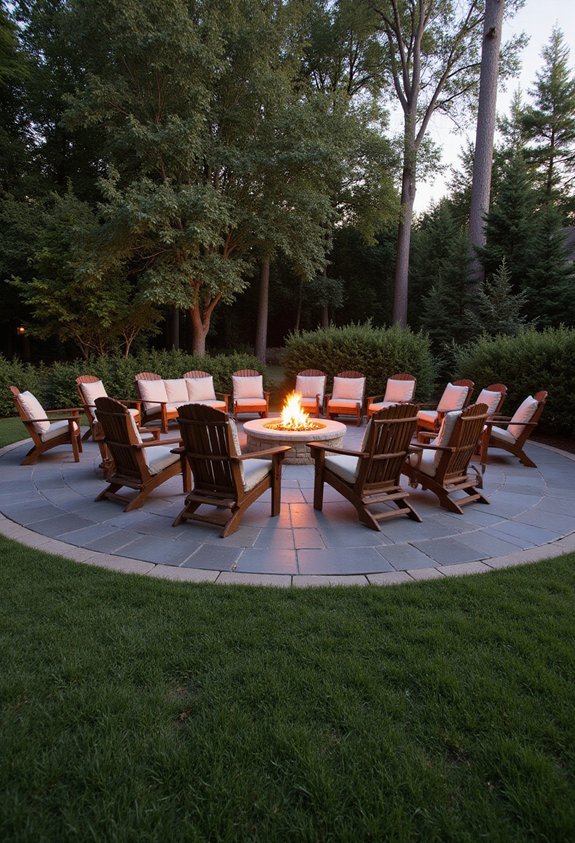
If you’d like to gather with friends and family while enjoying a fire, an open semicircle fire pit design offers you a seating arrangement that’s both functional and welcoming. You’ll arrange your seating in a curved formation around the fire, which allows everyone to view the flames and feel the warmth equally. This layout works well for various yard sizes because you can adjust the semicircle’s radius based on your available space. You’ll benefit from improved sightlines, as no one sits with their back to the fire, and the open design makes conversation easier since participants face each other. The semicircle configuration also simplifies setup because you won’t need a surrounding structure, just cleared ground space and appropriately placed seating. This flexibility makes it ideal for rotating guests or rearranging your gathering space.
Fire Pit With Chimney for Better Draft
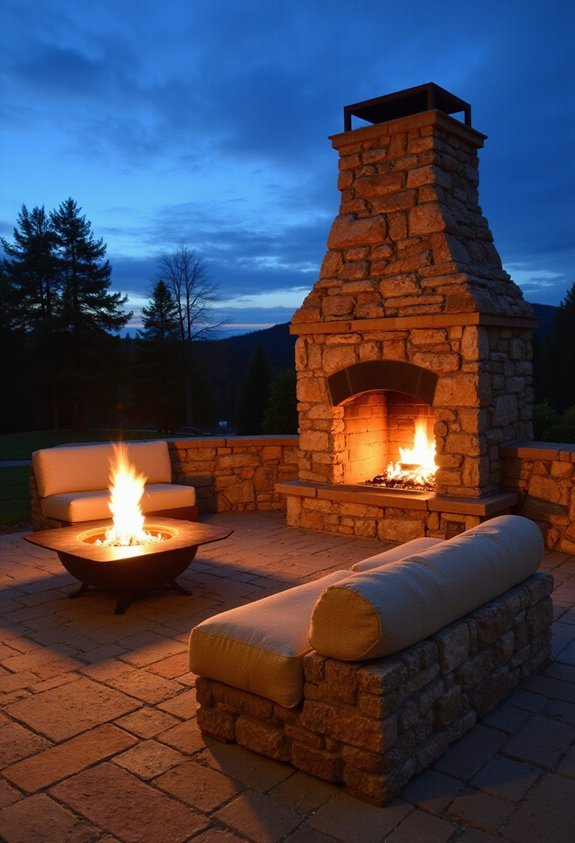
When you’re looking to improve your fire pit’s performance and reduce smoke in your gathering area, adding a chimney structure will dramatically enhance the draft and airflow around your fire. A chimney works by creating an upward flow that pulls smoke and gases away from where you’re sitting, making your experience much more comfortable. You’ll construct the chimney using heat-resistant materials like stainless steel or brick, positioning it directly above your fire pit’s center. The height matters greatly; a taller chimney creates stronger draft than a shorter one. You can customize the design to match your yard’s aesthetic while maintaining functionality. Installing a chimney requires securing it firmly to prevent tipping, and you should guarantee proper ventilation around the structure so air can flow freely beneath it.
Rustic Fire Pit With String Lights and Seating
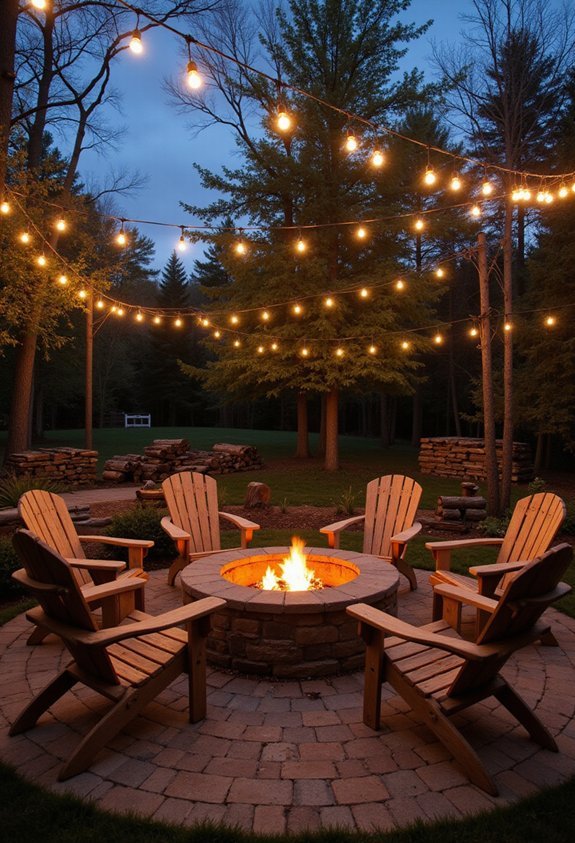
Creating a rustic fire pit gathering space that combines warmth, ambiance, and comfortable seating will transform your front yard into an inviting outdoor retreat where family and friends can relax together. You’ll want to arrange weathered Adirondack chairs or wooden benches in a semicircle around your fire pit, ensuring safe distances from the flames. Drape string lights overhead between posts or trees to create soft, ambient lighting that extends your enjoyment into evening hours. Choose Edison-style bulbs for authentic rustic appeal. Layer outdoor cushions and blankets on seating for added comfort during cooler nights. This setup combines functional fire pit design with aesthetic elements, creating an outdoor space that’s both practical and visually appealing for year-round entertaining and relaxation.
Fire Pit With Built-In Planter Surround
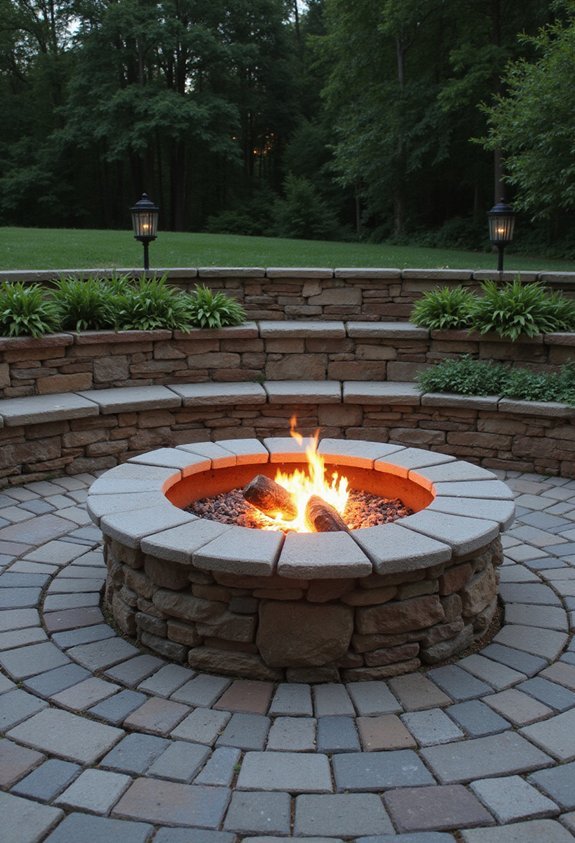
While seating and lighting create an inviting atmosphere around your fire pit, you can further enhance your outdoor space by incorporating living elements that’ll add both visual interest and practical functionality to the area. A built-in planter surround accomplishes this by combining hardscape materials with vegetation in a single design feature. You’ll construct a circular or rectangular structure around your fire pit’s base using stone, brick, or composite materials, creating designated planting beds within the framework. Fill these beds with low-growing shrubs, ornamental grasses, or flowering plants that thrive in your climate zone. This design approach provides natural screening, reduces soil erosion, creates visual definition, and allows you to customize your landscape with seasonal plantings while maintaining proper clearance from the fire pit itself.
Safety Tips and Building Code Considerations
Before you install a fire pit in your front yard, you’ll need to understand the safety requirements and building codes that govern outdoor fire structures in your area, since regulations vary remarkably between municipalities and can affect everything from placement distance to construction materials. You’ll typically need to maintain clearance of at least 10-15 feet from structures, fences, and overhanging branches to prevent fire spread. Check with your local building department about permit requirements, setback distances, and whether you need inspections. You should also verify that ground-level fire pits are permitted in your zone, as some areas restrict them entirely. Install your fire pit on level, non-flammable ground, and keep a fire extinguisher nearby for emergencies. These precautions protect your property and guarantee legal compliance.
Conclusion
You’ve now explored nine fire pit designs that’ll transform your front yard into a warm gathering space, each offering distinct advantages from budget-friendly cinder blocks to sophisticated metal bowls. By selecting a design that matches your space, budget, and lifestyle, you’ll create an outdoor haven where memories ignite like flames. Whether you’re building a sunken pit or a rustic setup, following safety guidelines guarantees your cozy retreat burns bright for years ahead.