You’re probably tired of spending weekends mowing, watering, and fertilizing your front lawn, especially when it struggles to thrive in your specific climate conditions. Traditional grass lawns demand constant maintenance, consume excessive water resources, and often fail to support local wildlife ecosystems that desperately need habitat alternatives. Instead of fighting against nature’s preferences for your property, you can transform your front yard into a sustainable, low-maintenance landscape that works with your environment rather than against it, creating something far more interesting than conventional turf.
Native Plant Front Yards That Never Need Watering
Why struggle with constant watering, fertilizing, and mowing when you can transform your front yard into a thriving ecosystem that maintains itself? Native plants have evolved over thousands of years to thrive in your specific climate and soil conditions, requiring minimal intervention once established. You’ll choose species like purple coneflowers, black-eyed Susans, or native grasses that naturally resist local pests and diseases. These plants develop deep root systems that access groundwater effectively, eliminating your need for irrigation. You’ll create visual interest through varied heights, textures, and seasonal blooms while supporting local wildlife and reducing maintenance costs considerably.
Also read: 22+ FRONT YARD MAKEOVER Ideas With Big Results!
Wildflower Meadows That Feed Local Pollinators
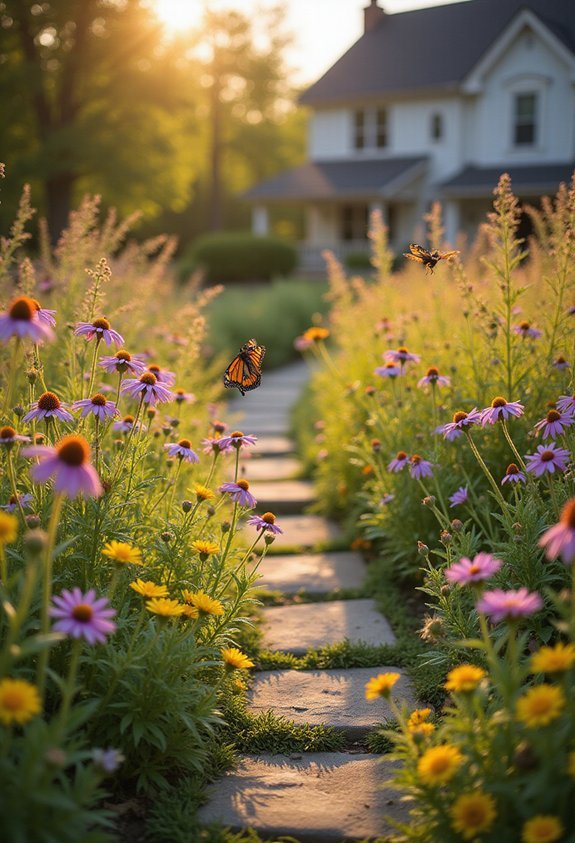
Dozens of native wildflower species can transform your front yard into a pollinator paradise that requires minimal maintenance while providing critical habitat for bees, butterflies, and hummingbirds. You’ll need to select region-specific wildflower seeds that bloom throughout different seasons, ensuring continuous nectar sources from spring through fall. Plant seeds in fall or early spring after removing existing grass and preparing soil with light tilling. Include diverse flower shapes and heights, such as coneflowers, black-eyed Susans, and bee balm, to attract various pollinator species. Annual mowing once yearly maintains meadow health while allowing plants to self-seed naturally.
Prairie-Style Front Yards With Ornamental Grasses
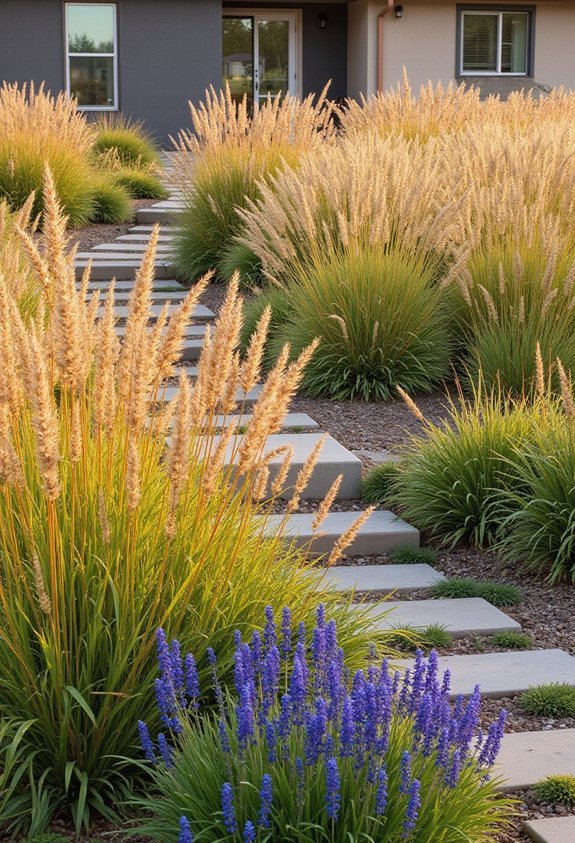
When you’re creating a prairie-style front yard, ornamental grasses serve as the foundational backbone that provides year-round structure, movement, and visual interest while requiring markedly less water and maintenance than traditional turf. Select native varieties like little bluestem, buffalo grass, or fountain grass that naturally thrive in your climate zone. Plant them in drifts rather than single specimens to create authentic prairie patterns, spacing each clump according to mature size specifications. You’ll achieve maximum impact by combining different heights and textures, positioning taller grasses toward the back and shorter varieties in front for proper visual layering.
Front Yard Rain Gardens For Natural Water Management
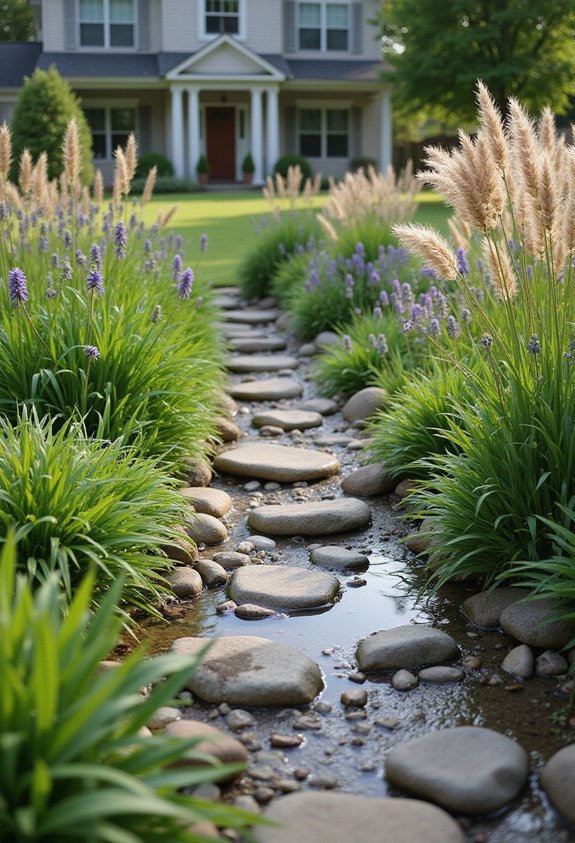
Beyond ornamental grasses, you can harness your front yard’s natural drainage patterns by installing a rain garden that captures, filters, and slowly absorbs stormwater runoff from your roof, driveway, and other impervious surfaces. Position your rain garden in the lowest area of your yard, creating a shallow depression that’s approximately six inches deep. Select native plants with deep root systems, such as sedges, ferns, and wildflowers, which thrive in both wet and dry conditions. These plants naturally filter pollutants while preventing erosion, creating an attractive, low-maintenance landscape that manages water runoff effectively throughout different seasons.
Moss Front Yards For Shady Properties
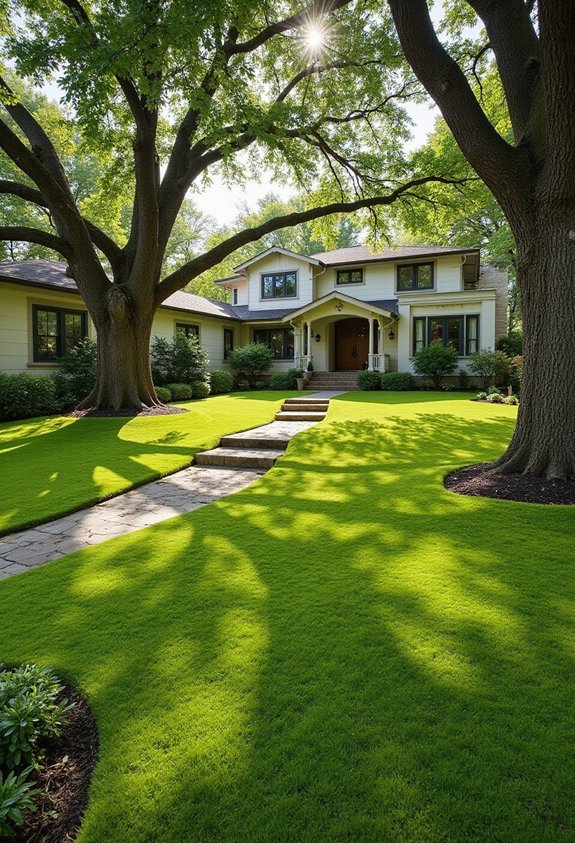
Moss gardens transform shady front yards into lush, carpet-like landscapes that require minimal maintenance once established. You’ll need areas with consistent moisture and limited direct sunlight, making moss perfect for north-facing slopes or tree-covered spaces. Start by removing existing vegetation and debris, then create a smooth, slightly acidic soil surface with a pH between 5.0 and 6.5. You can transplant moss patches from other areas of your property or purchase moss slurry to spread across prepared ground. Water regularly during the first few weeks, then enjoy your soft, green carpet that stays beautiful year-round without mowing.
Desert Front Yard Landscapes With Cacti And Agave
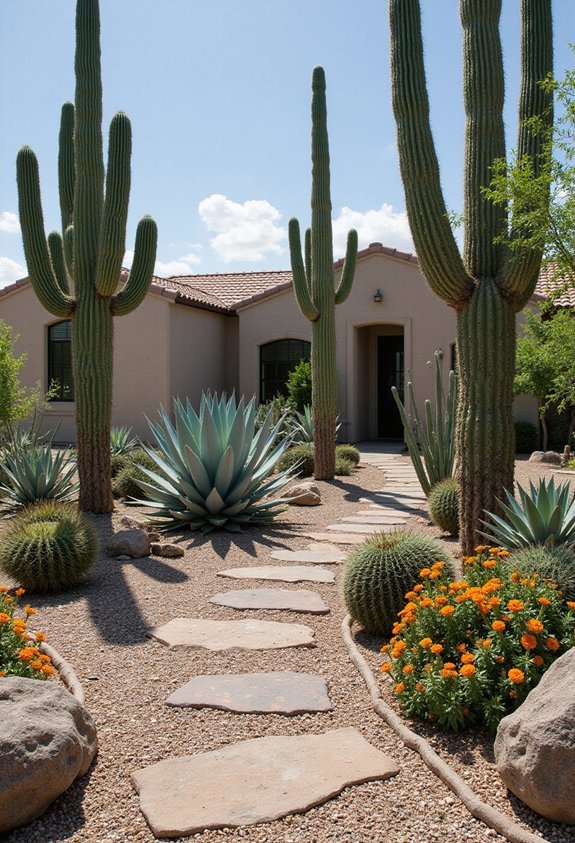
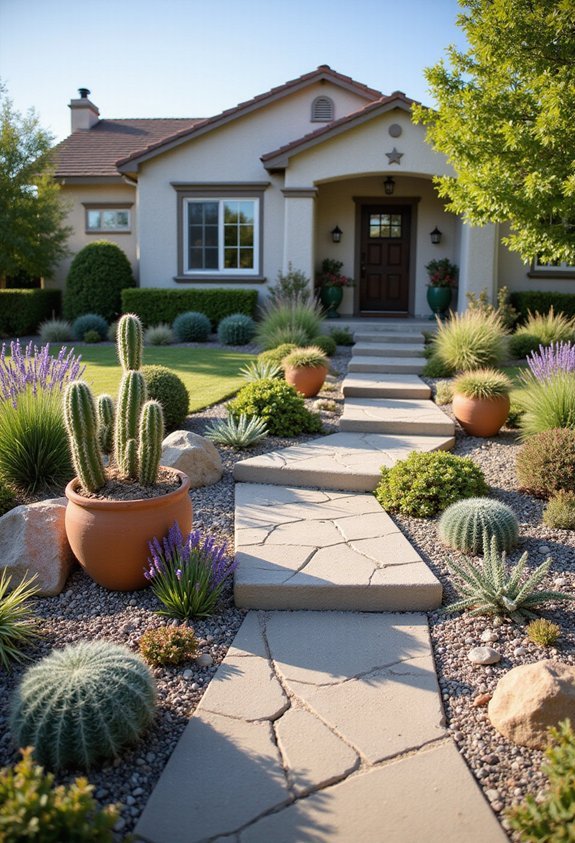
Desert landscapes create striking front yards that thrive in hot, dry climates while requiring virtually no water once established. You’ll want to select native cacti like barrel cactus, prickly pear, and cholla for dramatic vertical elements, while incorporating agave varieties such as century plant and blue agave for sculptural focal points. Plant these specimens in well-draining soil mixed with sand and gravel, spacing them generously to showcase their natural forms. You can enhance the design by adding decorative rocks, colored gravel pathways, and drought-tolerant accent plants like desert marigold or brittlebush for seasonal color and textural contrast throughout your front yard.
Mediterranean Front Yards With Lavender And Olive Trees
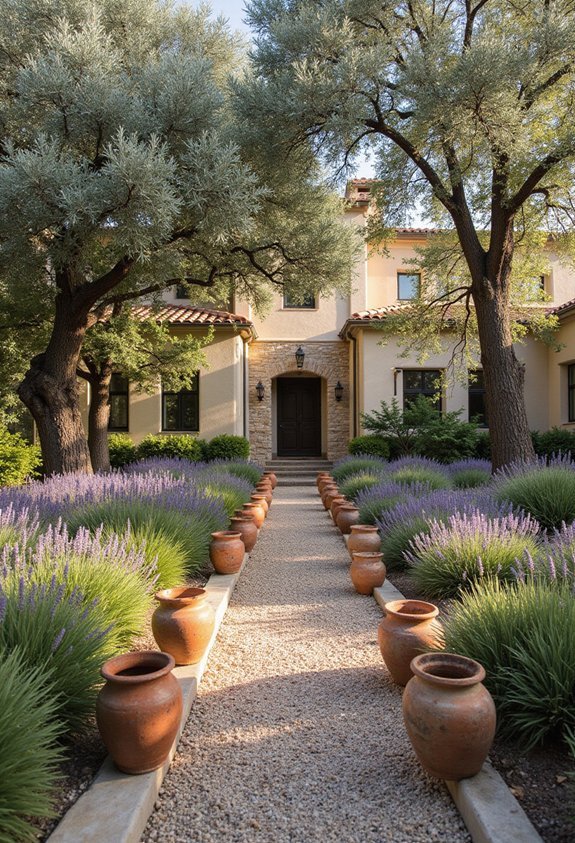
Mediterranean landscapes bring together the timeless elegance of olive trees with the fragrant beauty of lavender to create front yards that evoke the charm of coastal Europe while thriving in warm, dry climates. You’ll plant olive trees as focal points, spacing them fifteen to twenty feet apart to allow proper canopy development. Lavender creates stunning borders when planted in rows eighteen inches apart, releasing aromatic oils when brushed against. Add Mediterranean herbs like rosemary, thyme, and oregano between larger plantings for texture variation. Gravel pathways connect these elements while providing excellent drainage that prevents root rot in clay soils.
Drought-Resistant Succulent Gardens
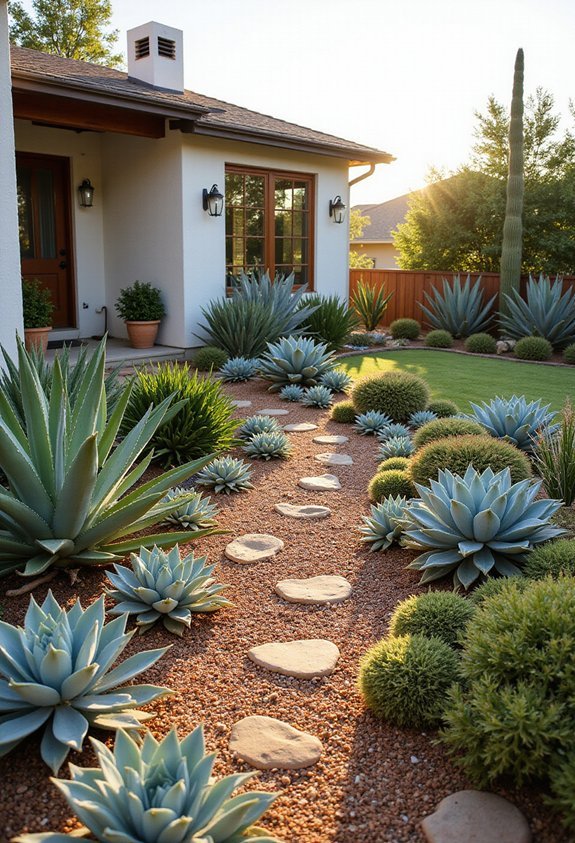
How do you create a stunning front yard that thrives with minimal water while showcasing nature’s most resilient plants? You’ll start by selecting drought-tolerant succulents like agave, aloe vera, echeveria, and barrel cacti, which store water in their thick leaves and stems. Plant these varieties in well-draining soil mixed with sand and gravel, spacing them according to their mature sizes to prevent overcrowding. You can arrange different heights and textures by combining tall architectural agaves with low-spreading sedums and colorful jade plants. Add decorative rocks, decomposed granite pathways, and metal planters to complete your water-wise landscape design.
Rock Gardens With Alpine Plants And Boulders
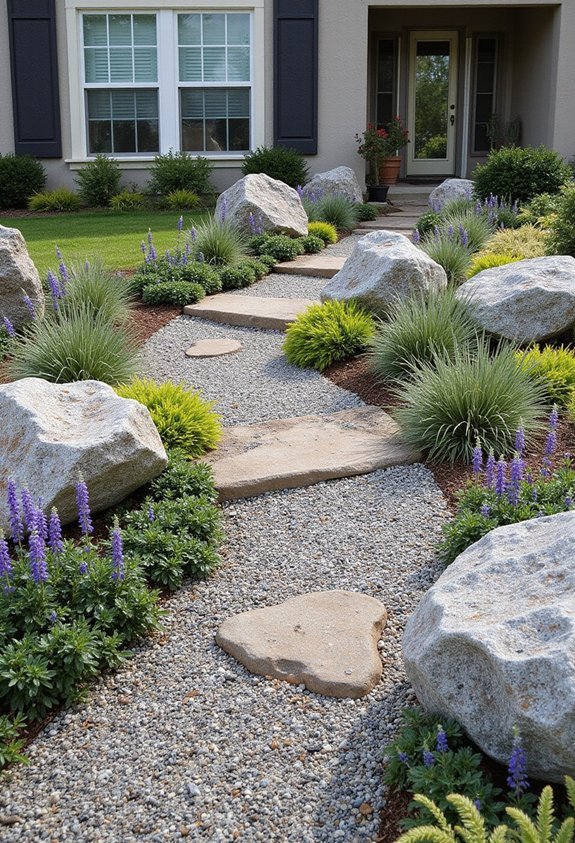
Rock gardens transform your front yard into a natural mountain landscape that requires minimal maintenance while showcasing hardy alpine plants nestled among carefully placed boulders and stones. You’ll start by selecting varying sizes of rocks, creating natural-looking arrangements that mimic mountain terrain. Choose alpine plants like sedums, creeping phlox, and alpine asters that thrive in well-draining, rocky conditions. Position larger boulders as focal points, then fill spaces with smaller stones and gravel for proper drainage. Plant selections should include species that handle temperature fluctuations and poor soil conditions, ensuring your rock garden remains vibrant throughout changing seasons.
Japanese Zen Front Yards With Gravel And Stone
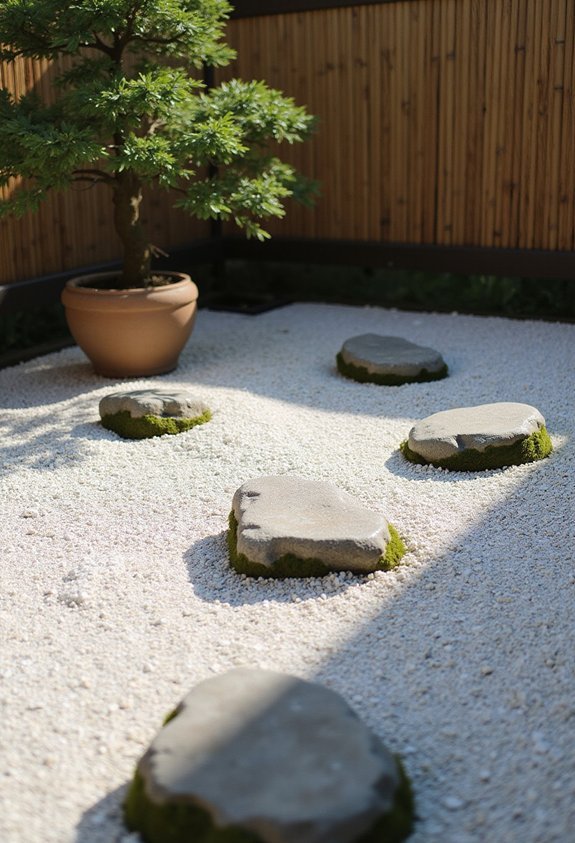
Japanese Zen gardens bring a peaceful, meditative quality to your front yard through the artful arrangement of gravel, stones, and minimal plantings that create spaces for contemplation and visual harmony. You’ll rake fine gravel into flowing patterns that represent water, while placing larger stones strategically to symbolize islands or mountains. Choose neutral-colored gravel like white, gray, or tan for the base, then add three to five carefully positioned rocks of varying sizes. Include sparse plantings such as ornamental grasses, small evergreens, or bamboo to maintain the minimalist aesthetic while providing subtle texture and seasonal interest.
Modern Hardscaping With Geometric Pavers
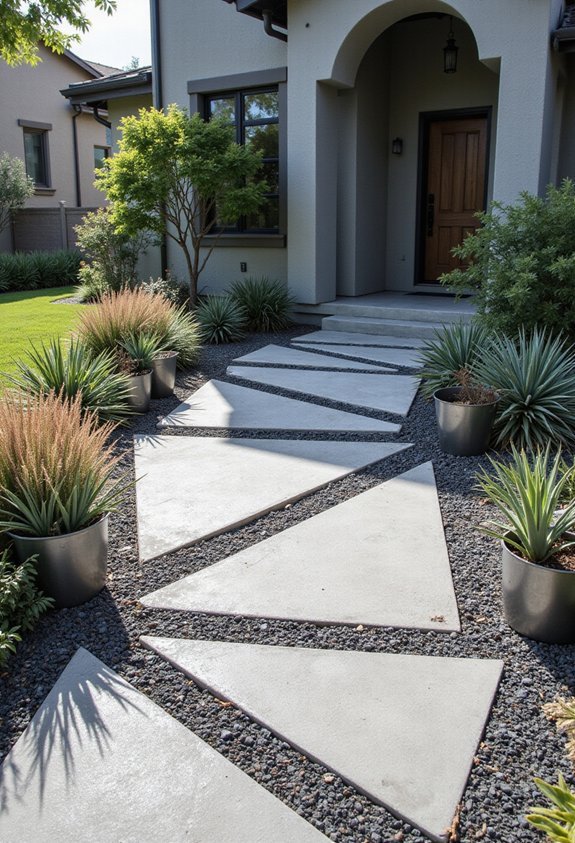
Geometric pavers transform your front yard into a contemporary showcase that combines clean lines, bold patterns, and durable materials to create striking visual impact while eliminating traditional lawn maintenance. You’ll arrange rectangular, square, or hexagonal pavers in repeating patterns that emphasize symmetry and modern design principles. Choose materials like concrete, porcelain, or natural stone in neutral colors such as gray, charcoal, or beige to maintain sophisticated aesthetics. Install pavers with consistent spacing and precise alignment to achieve professional results. This approach reduces water consumption, eliminates mowing requirements, and provides long-lasting functionality while delivering architectural appeal that complements contemporary home styles.
Formal Front Yard Designs With Boxwood And Topiaries
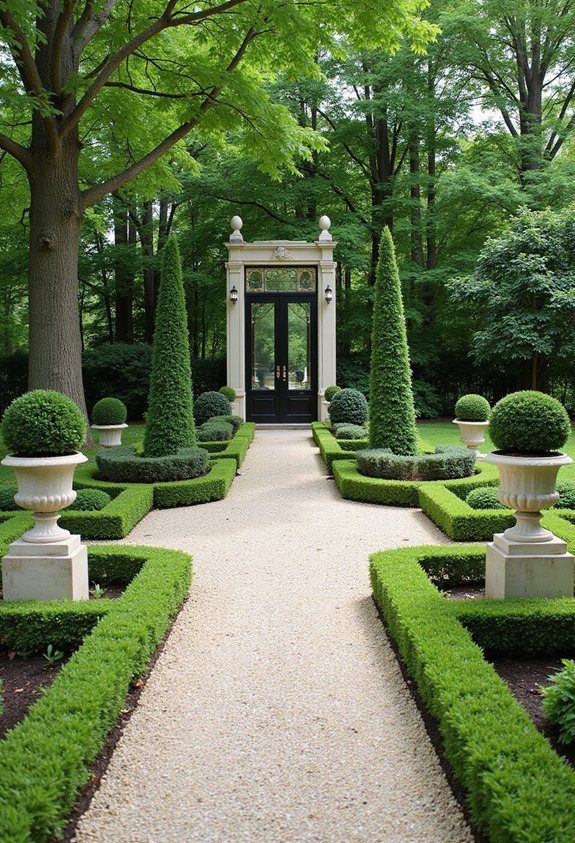
You’ll create an elegant, structured landscape by incorporating boxwood shrubs and carefully shaped topiaries that deliver timeless sophistication to your front yard while completely replacing traditional grass areas. Position boxwood hedges along walkways and property borders to establish clear boundaries and geometric patterns. Install topiary forms in strategic locations, such as flanking your entrance or creating focal points throughout the design. Select classic shapes like spheres, pyramids, or spirals that complement your home’s architecture. Maintain consistent spacing between plants to achieve symmetry, and add gravel pathways or decorative stones to complete the formal aesthetic.
Terraced Front Yards For Sloped Properties
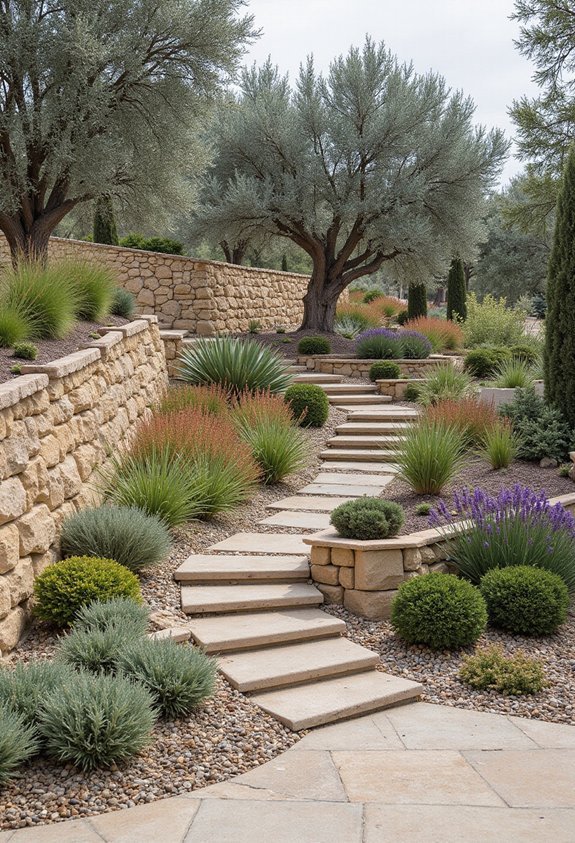
When your property features a steep slope, terracing transforms challenging terrain into stunning multi-level garden spaces that eliminate the need for traditional lawn areas. You’ll create flat planting zones by building retaining walls from stone, concrete blocks, or timber, which prevents soil erosion while maximizing usable space. Each terrace level accommodates different plants, from drought-tolerant succulents on upper levels to moisture-loving perennials below. You can incorporate steps, pathways, and decorative elements between levels, creating visual interest and practical access. This approach turns problematic slopes into organized, beautiful landscapes that require less maintenance than grass while providing excellent drainage.
Cottage-Style Front Yards With Perennial Flowers

Creating a cottage-style front yard with perennial flowers brings the romantic charm of English countryside gardens to your home while eliminating the need for traditional lawn maintenance. You’ll want to plant classic cottage perennials like lavender, delphinium, hollyhocks, and foxgloves in informal clusters rather than rigid rows. These flowers return year after year, reducing replanting costs and effort. Mix different heights, textures, and bloom times to create continuous color throughout growing seasons. Add gravel or stone pathways winding through flower beds, and consider installing a picket fence or low stone border to complete the authentic cottage garden aesthetic.
Woodland Front Yards Under Existing Trees
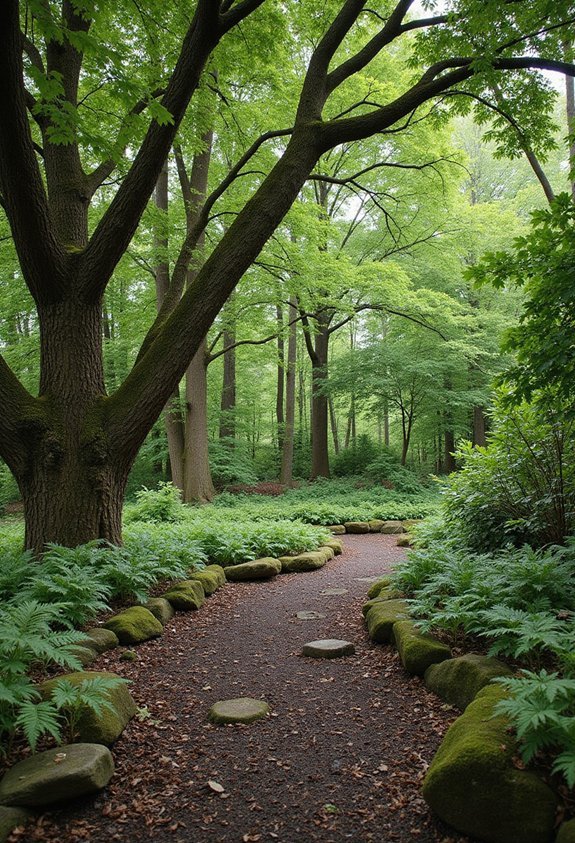
Large mature trees in your front yard present unique opportunities to design a natural woodland landscape that works with existing shade conditions rather than against them. You’ll want to select native shade-tolerant plants like hostas, ferns, and wild ginger that thrive beneath tree canopies. Create meandering pathways using natural materials such as wood chips, bark mulch, or stepping stones to guide visitors through your woodland garden. Layer different plant heights by combining groundcovers, understory shrubs, and shade perennials to establish visual depth and interest while maintaining the natural forest floor appearance.
Ground Cover Front Yards With Thyme And Clover
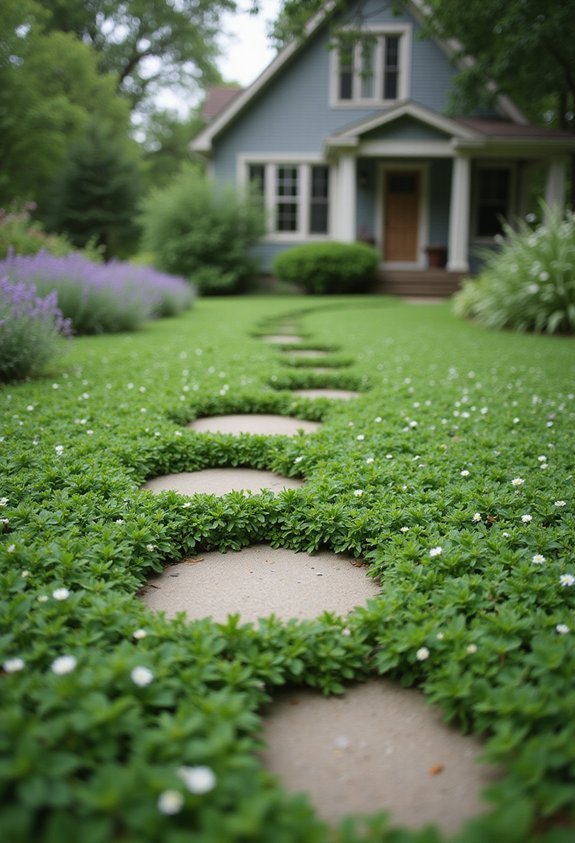
Ground covers like thyme and clover offer homeowners a practical alternative to traditional grass lawns while providing numerous environmental and maintenance benefits. You can establish creeping thyme varieties such as woolly thyme or wild thyme, which spread naturally across your front yard, creating dense, fragrant mats that require minimal watering once established. White clover serves as an excellent nitrogen-fixing companion plant, enriching your soil while attracting beneficial pollinators like bees and butterflies. You’ll need to prepare the soil by removing existing vegetation, adding compost, and ensuring proper drainage before planting these ground covers in spring or early fall.
Edible Front Yard Gardens With Herbs And Vegetables
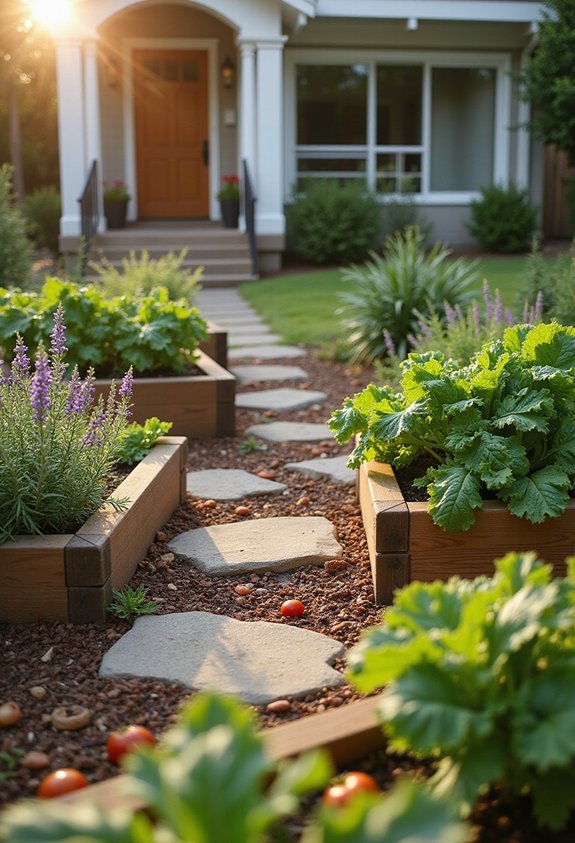
Three key advantages make edible front yard gardens an increasingly popular choice for homeowners seeking both functionality and visual appeal in their landscape design. You’ll save money on groceries while creating an attractive, productive space that requires no traditional lawn maintenance. These gardens combine vegetables like lettuce, kale, and cherry tomatoes with aromatic herbs such as basil, rosemary, and oregano to create visually striking patterns. You can design raised beds, container arrangements, or mixed borders that showcase colorful produce alongside ornamental plants, transforming your front yard into a sustainable food source that enhances your home’s curb appeal year-round.
Container Garden Front Yards With Raised Planters
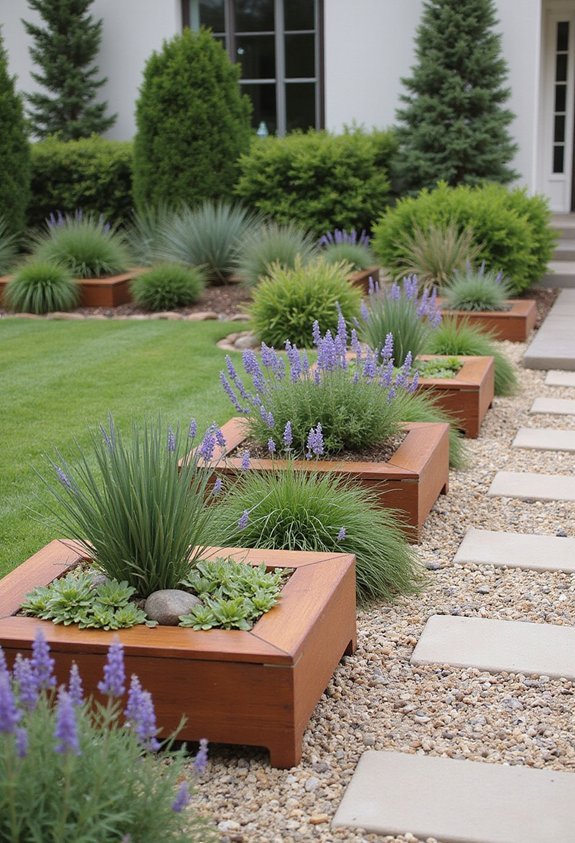
Container garden front yards with raised planters offer you complete control over soil quality, drainage, and plant placement while creating distinct visual zones throughout your landscape. You can construct planters using cedar boards, concrete blocks, or metal edging to match your home’s architectural style. Fill containers with quality potting mix that drains well, then arrange them at varying heights to add visual interest. Plant perennials, ornamental grasses, and seasonal flowers in separate containers so you can easily rearrange displays throughout the year. This approach works especially well on slopes, poor soil areas, or rental properties.
Front Yard Herb Spirals And Kitchen Gardens
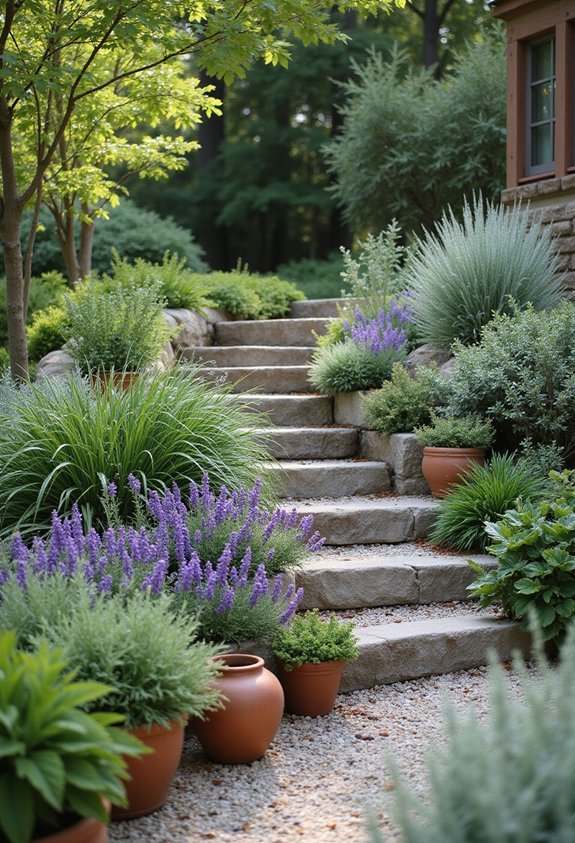
Since herb spirals maximize growing space in a compact design, you can create a functional and attractive front yard kitchen garden that produces fresh herbs and vegetables right outside your door. Build your spiral using stones or bricks in a circular pattern that rises toward the center, creating microclimates for different plants. Place Mediterranean herbs like rosemary and thyme at the top where drainage is best, while positioning moisture-loving herbs like parsley and chives at the bottom. You’ll establish defined pathways between garden beds, incorporate decorative edging materials, and maintain easy access for daily harvesting.
Artificial Turf Front Yards That Look Natural
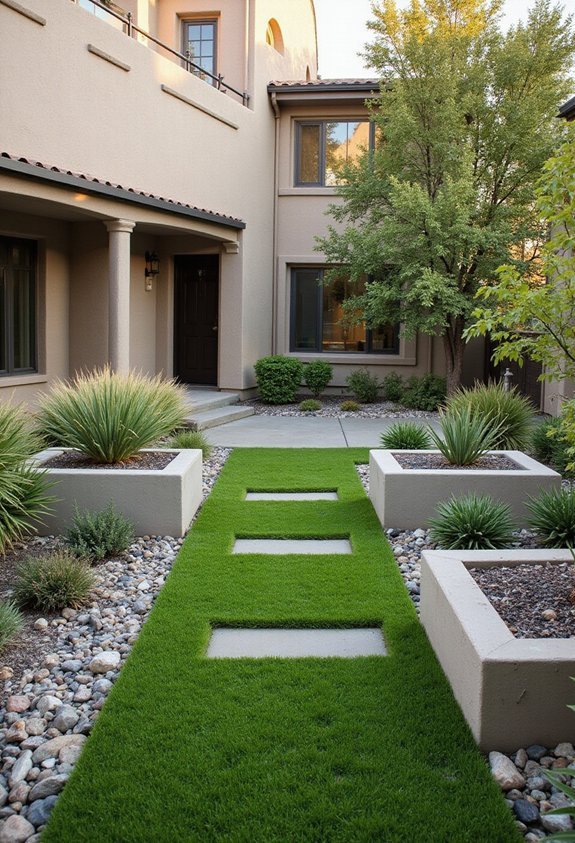
When traditional gardening requires too much time, water, or maintenance for your lifestyle, modern artificial turf offers a practical alternative that can closely mimic natural grass appearance without the associated upkeep demands. You’ll want to select high-quality synthetic grass with varied blade heights, multiple green tones, and realistic texture patterns that replicate natural growth variations. Proper installation requires removing existing vegetation, creating adequate drainage layers, and securing edges with landscape borders or decorative stones. You can enhance the natural appearance by incorporating live plants around perimeters, adding mulched flower beds, or installing decorative pathways that break up large artificial surfaces.
Gravel Front Yards With Planted Border Accents
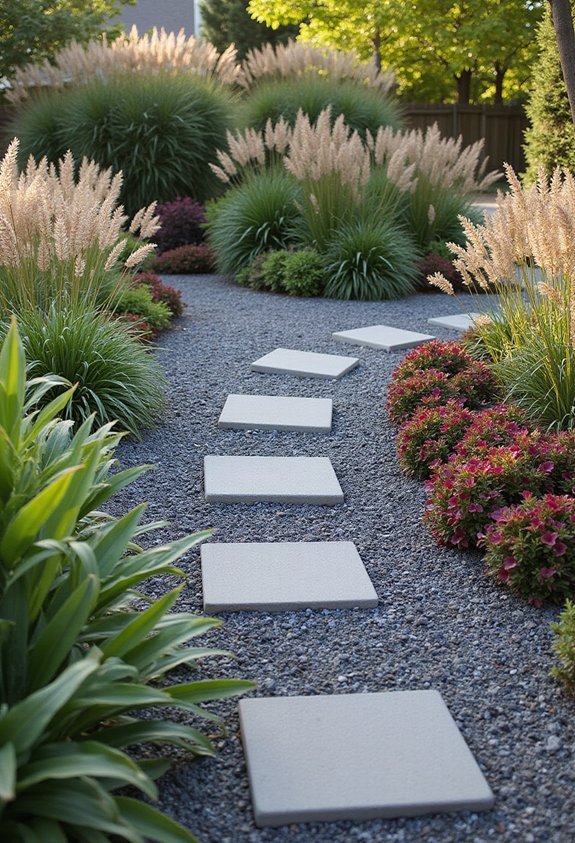
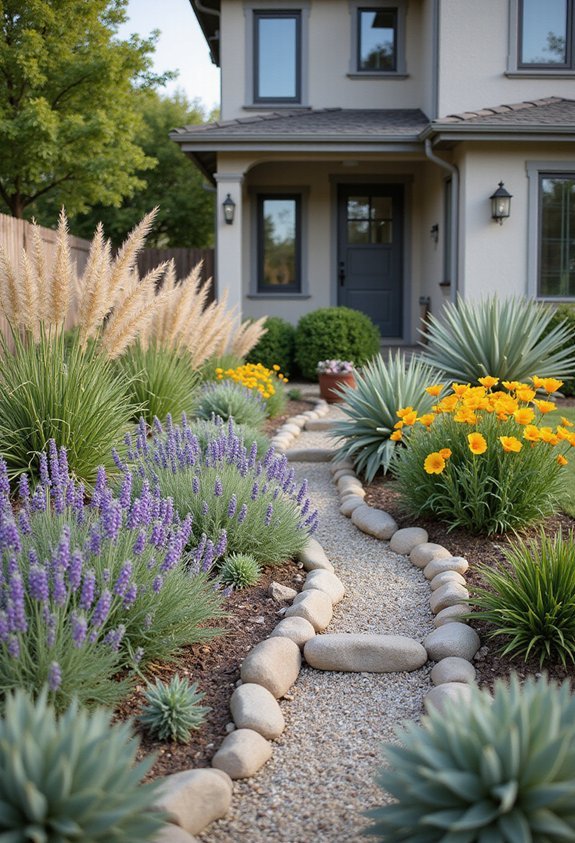
While artificial turf provides one low-maintenance solution, gravel front yards offer an equally practical approach that combines minimal upkeep with natural aesthetic appeal through strategic planted border accents. You’ll create visual interest by installing decorative gravel as your primary ground cover, then establishing planted borders along walkways, property lines, and around key focal points. Choose drought-tolerant perennials, ornamental grasses, or native shrubs that complement your gravel’s color and texture. This combination reduces watering requirements, eliminates mowing, and provides year-round structure while allowing seasonal plant changes to refresh your landscape’s appearance without major renovation efforts.
Mixed Front Yard Designs Combining Plants And Stone
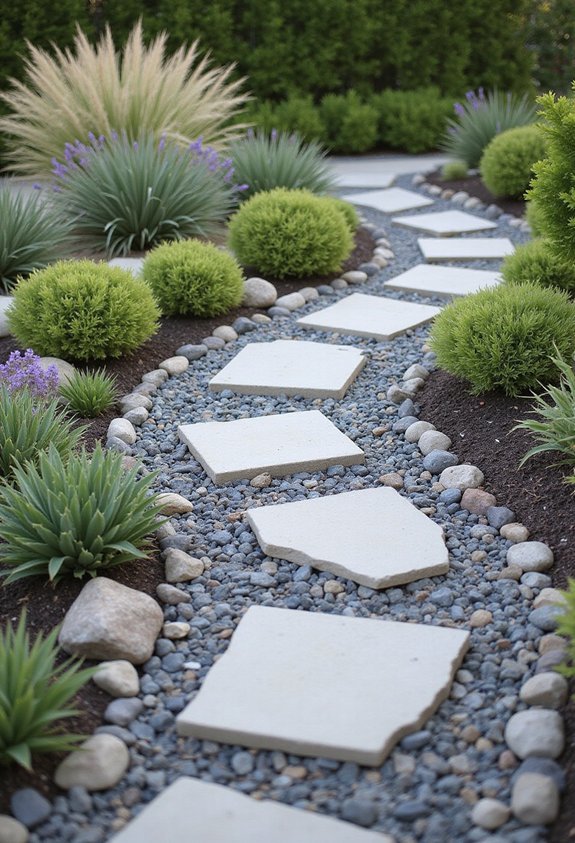
Building on the gravel and planted border concept, mixed front yard designs take this approach further by weaving together diverse stone elements with carefully selected plants to create layered, dynamic landscapes that function as living artwork. You’ll combine flagstone pathways with river rock sections, boulder clusters with ornamental grasses, and decomposed granite areas with drought-tolerant perennials. This integration creates natural flow between hardscape and softscape elements, establishing distinct zones while maintaining visual continuity. You can incorporate stepping stones through planted areas, use different stone sizes to define spaces, and select plants that complement your stone colors and textures.
Conclusion
You’ve now explored twenty-two practical alternatives to traditional grass lawns that’ll reduce your maintenance workload while creating an environmentally sustainable front yard. These options, from native plant gardens to gravel designs with planted borders, offer solutions for various climates, soil conditions, and aesthetic preferences. You’ll save water, support local wildlife, and create unique curb appeal by choosing the approach that best matches your property’s specific conditions and your personal style preferences.