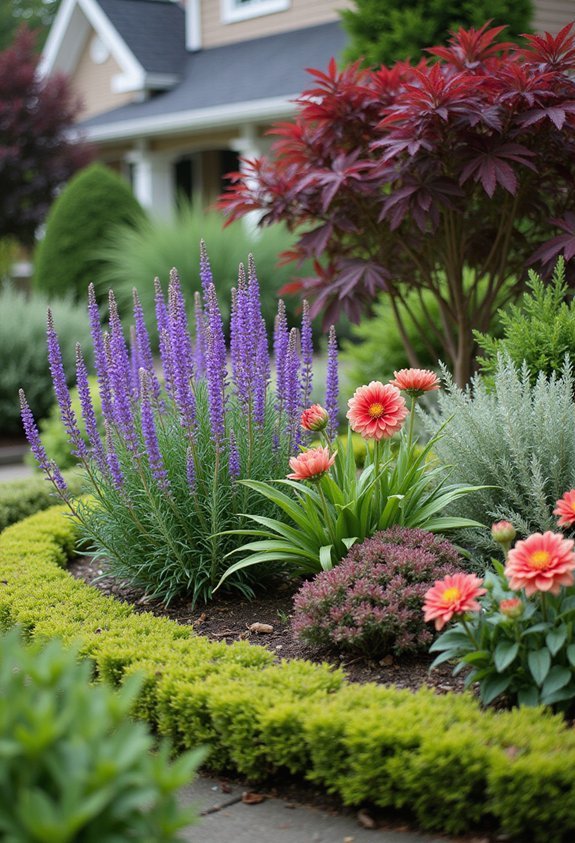
You’ve probably walked past countless front yards that made you stop and wonder what made them look so incredible. The secret isn’t expensive landscaping or professional design—it’s choosing the right plants that deliver maximum visual impact with minimal effort. From Japanese maples that create stunning focal points to resilient liriope that defines clean borders, certain plants consistently outperform others in creating that “wow factor” you’re after. Here’s exactly which ones transform ordinary yards into neighborhood showstoppers.
Japanese Maple: Colorful Canopy That Anchors Any Front Yard
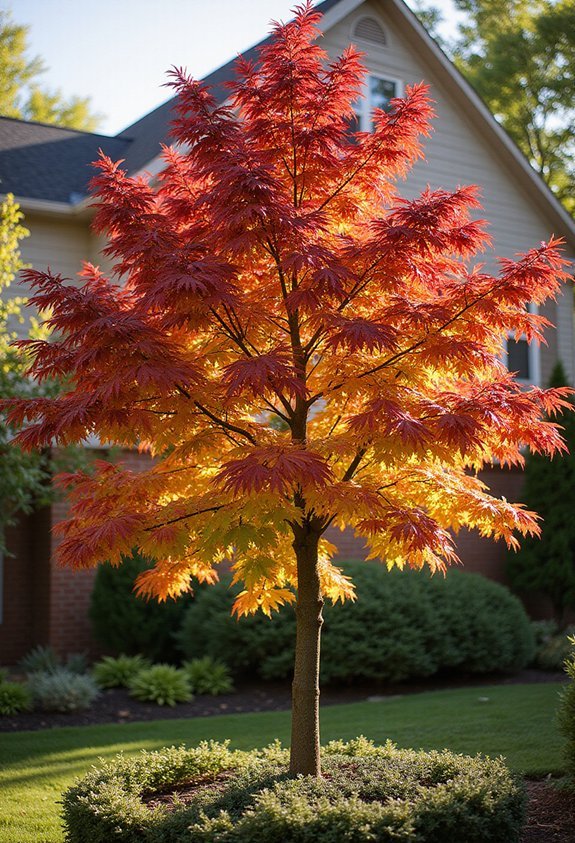
When you’re selecting a focal point tree for your front yard landscaping, the Japanese maple stands out as one of the most versatile and visually striking options available to homeowners. These deciduous trees offer four-season interest, displaying vibrant spring foliage that moves from summer greens to brilliant autumn reds, oranges, and yellows. You’ll find varieties ranging from compact dwarf cultivars reaching six feet to larger specimens growing twenty-five feet tall. Their distinctive leaf shapes, from delicate lace-leaf varieties to broader palmate forms, create architectural interest while their branching patterns provide elegant winter structure even after leaves drop.
Also read: 22+ FRONT YARD MAKEOVER Ideas With Big Results!
Ornamental Trees: Year-Round Interest For Maximum Impact
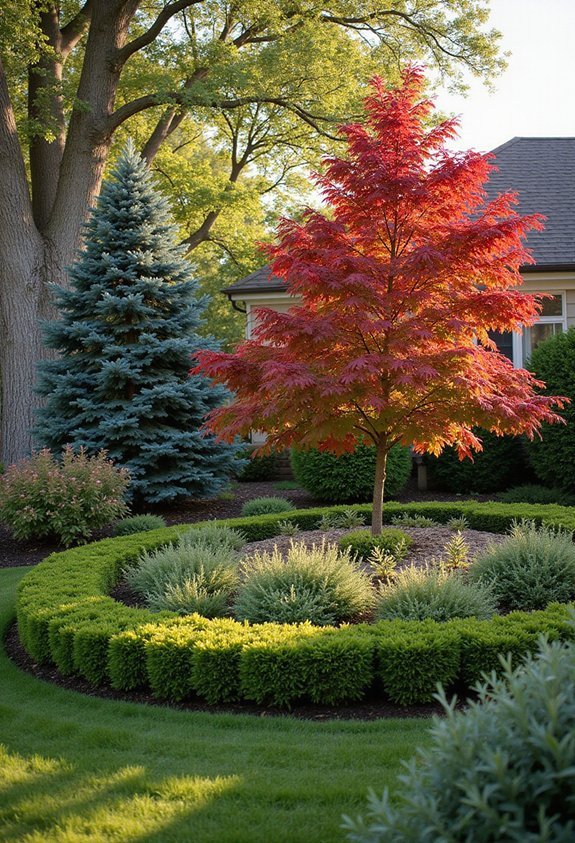
Beyond the Japanese maple’s impressive seasonal display, dozens of other ornamental trees can transform your front yard into a landscape that captivates visitors throughout every season of the year. You’ll find flowering crabapples offering spring blooms and colorful fall fruit, while dogwood trees provide delicate white or pink flowers followed by brilliant autumn foliage. Consider redbud trees for early purple-pink blooms, or select ornamental cherry varieties that create stunning spring canopies. Evergreen options like dwarf conifers maintain structure during winter months, ensuring your landscape never loses its visual appeal regardless of seasonal changes or weather conditions.
Hydrangeas: Massive Summer Blooms In Every Color
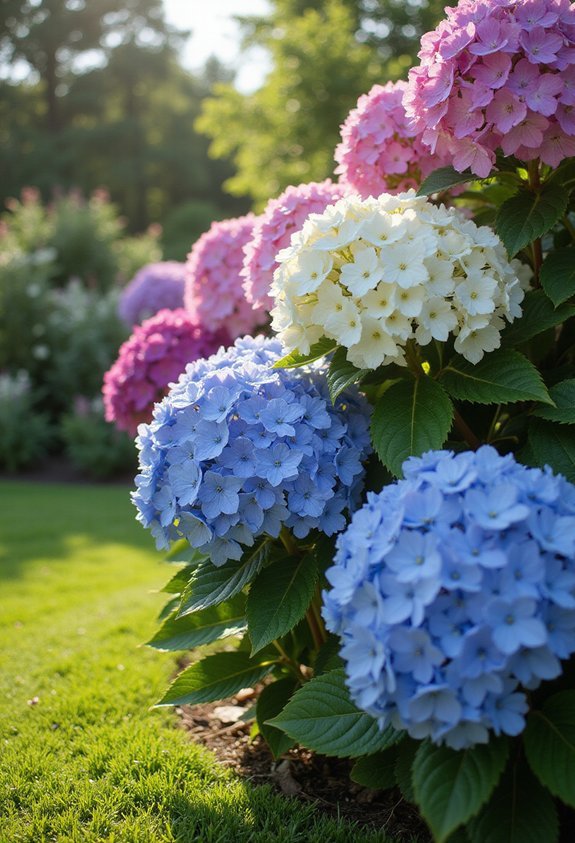
Hydrangeas deliver some of the most spectacular flowering displays available for front yard landscaping, producing enormous clusters of blooms that can measure up to twelve inches across in shades ranging from deep blue and vibrant pink to crisp white and rich purple. You’ll find these versatile shrubs thrive in partial shade conditions, making them perfect for areas where other flowering plants struggle. The bloom color often depends on your soil’s pH level, with acidic soil producing blue flowers and alkaline soil creating pink blooms, allowing you to customize colors through simple soil amendments.
Weigela: Spring-Blooming Shrubs That Stop Traffic
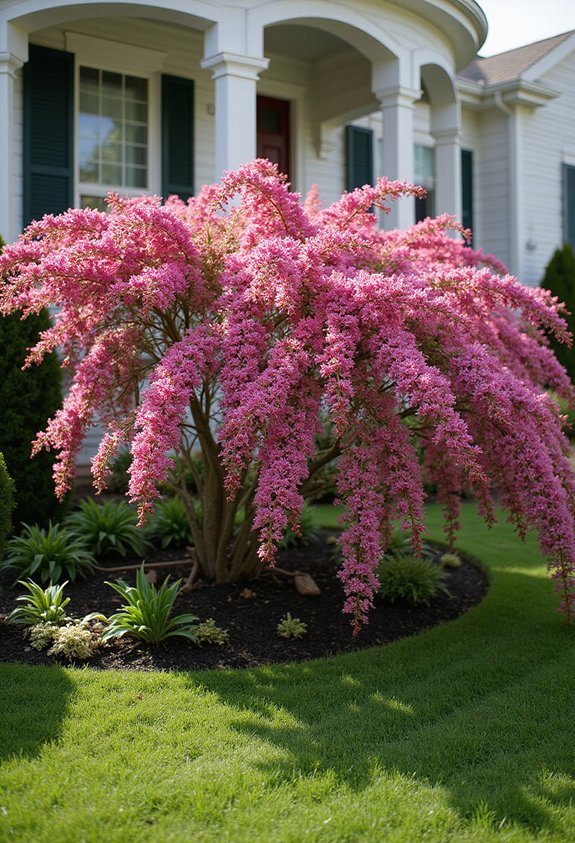
While hydrangeas command attention with their summer spectacle, weigela shrubs create an equally impressive display during late spring and early summer, producing masses of trumpet-shaped flowers in brilliant shades of red, pink, white, or coral that cascade along gracefully arching branches. You’ll find these deciduous shrubs reach heights of four to ten feet, making them perfect for foundation plantings, hedges, or specimen installations. They thrive in full sun to partial shade conditions and adapt to various soil types. Plant weigela in well-draining locations, and you’ll enjoy decades of reliable blooms that attract hummingbirds and butterflies to your landscape.
Azaleas: Explosive Spring Color That Returns Every Year
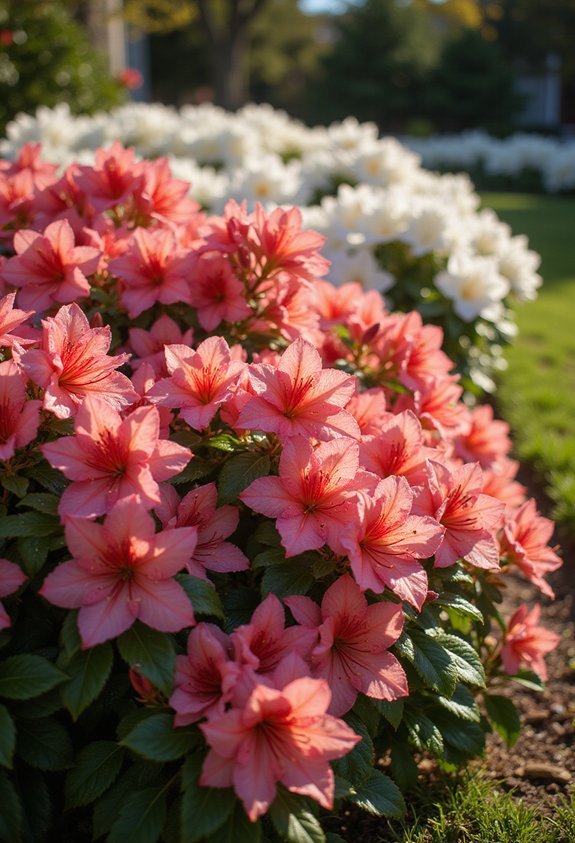
When azaleas burst into bloom each spring, they transform ordinary front yards into spectacular displays of vibrant color that can be seen from blocks away, producing thousands of funnel-shaped flowers in brilliant shades of pink, red, white, purple, and coral that completely cover the shrub’s branches for several weeks. You’ll find azaleas thrive in partial shade with well-draining, acidic soil that stays consistently moist but never waterlogged. Plant them in protected areas away from harsh afternoon sun, and they’ll reward you with reliable blooms year after year while requiring minimal maintenance once established.
Spirea: Cascading White Flowers For Dramatic Spring Appeal
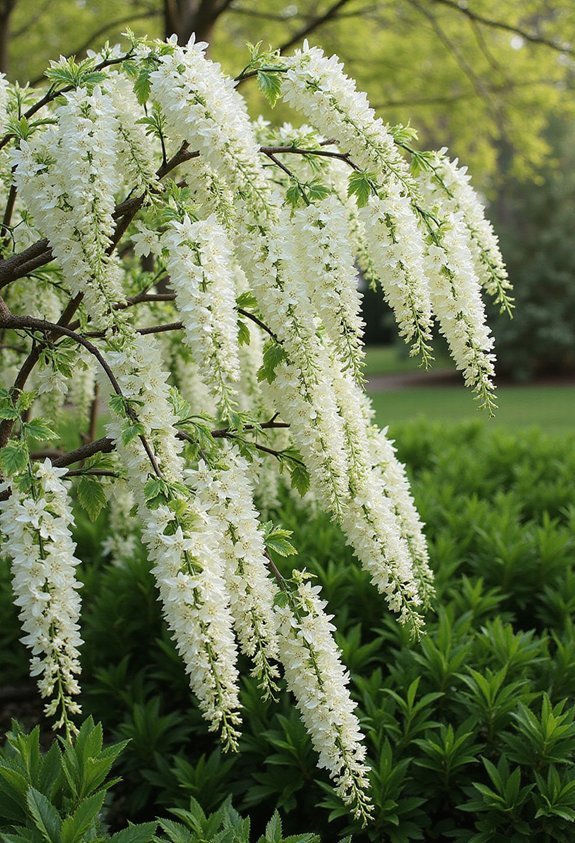
Spirea shrubs create stunning focal points in front yard landscapes with their graceful, arching branches that become completely covered in clusters of small, white flowers during late spring, forming dramatic cascades that flow downward like natural waterfalls and provide an elegant contrast to the bold, upright blooms of azaleas. You’ll find these hardy perennials thrive in full sun to partial shade conditions and adapt well to various soil types. Plant them three to four feet apart for proper spacing, and you’ll enjoy low-maintenance beauty that requires only annual pruning after flowering ends to maintain their distinctive weeping shape.
Boxwood: Timeless Structure That Never Goes Out Of Style
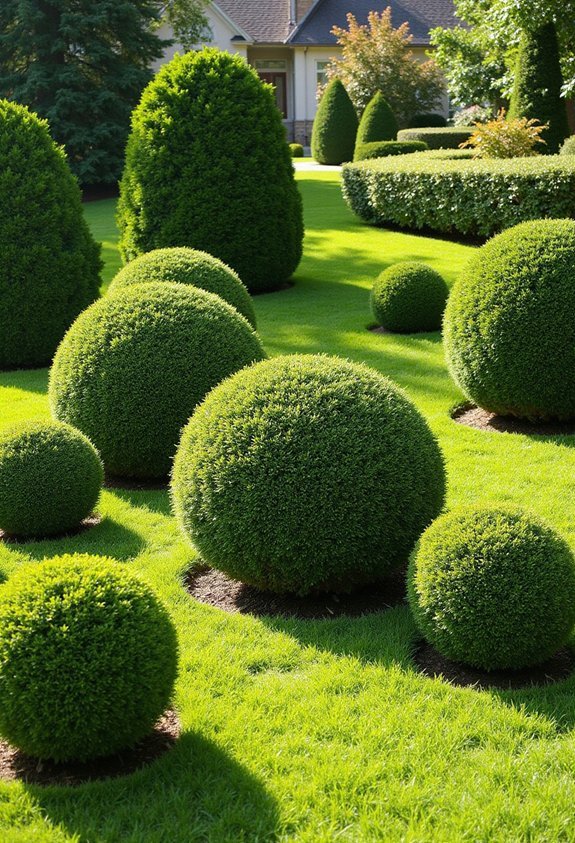
Boxwood shrubs serve as the backbone of traditional landscape design, offering dense, evergreen foliage that maintains its rich green color throughout all four seasons and provides structure that anchors your front yard’s visual composition year-round. You’ll find these versatile plants adapt to various light conditions, from full sun to partial shade, making them suitable for most front yard locations. Their compact growth habit responds well to regular pruning, allowing you to shape them into formal hedges, geometric forms, or natural rounded shapes that complement your home’s architectural style and create defined borders for flower beds.
Dwarf Conifers: Evergreen Texture That Looks Expensive
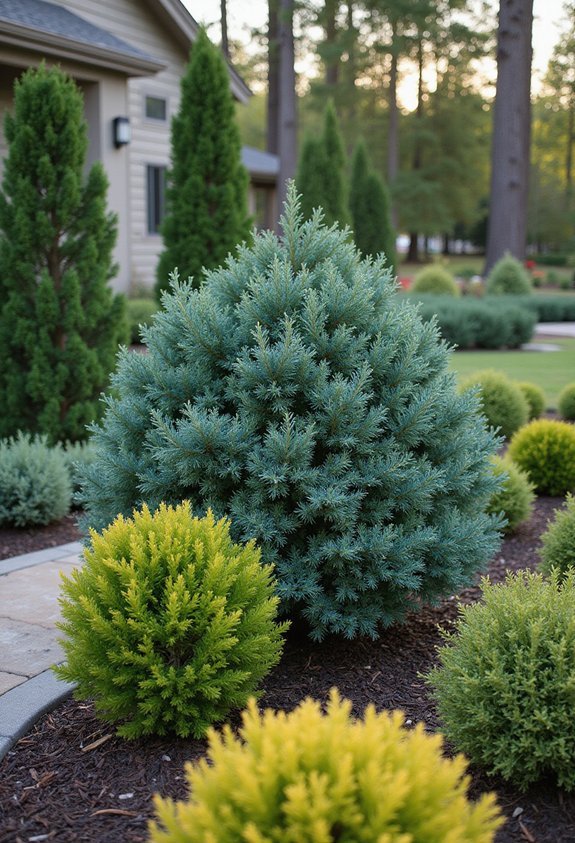
Dwarf conifers bring sophisticated texture and year-round color to your front yard without the overwhelming size of their full-scale relatives, creating an upscale appearance that suggests professional landscape design while remaining manageable for homeowners who prefer low-maintenance plantings. You’ll find varieties like dwarf Alberta spruce, compact blue spruce, and miniature pine trees that provide structural elements through their distinctive needle patterns, bark textures, and natural geometric shapes. These evergreens require minimal pruning, tolerate various soil conditions, and maintain their attractive appearance throughout all seasons, making them practical investments for long-term landscaping success.
Ornamental Grasses: Flowing Movement In Every Breeze
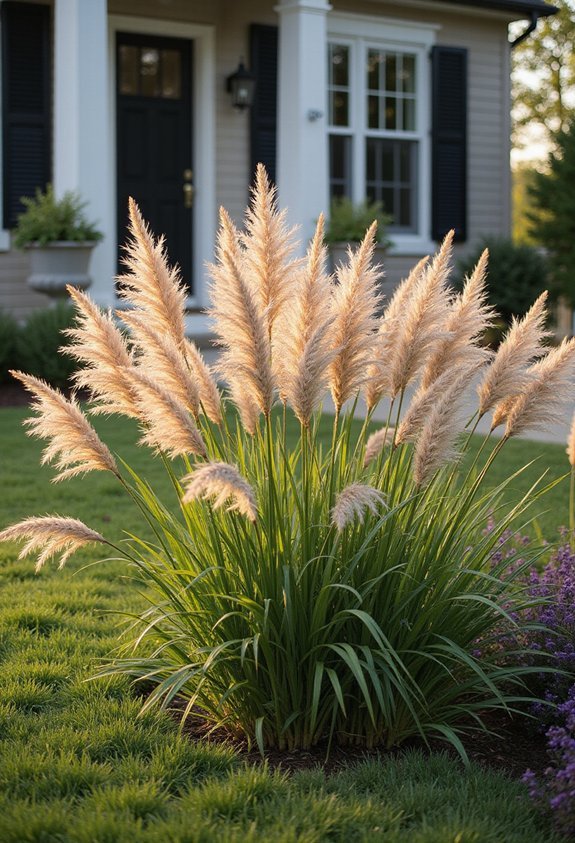
Graceful ornamental grasses add natural movement and seasonal interest to your front yard through their flowing stems that dance with every breeze, creating a dynamic landscape element that changes throughout the day while requiring minimal maintenance compared to traditional flowering plants. You’ll find varieties like fountain grass, feather reed grass, and maiden grass provide different textures, heights, and colors throughout growing seasons. These grasses establish quickly in most soil conditions, tolerate drought once rooted, and offer year-round structure when left standing through winter months, making them practical choices for busy homeowners seeking attractive, low-maintenance landscaping solutions.
Catmint: Purple Spikes That Bloom All Season Long
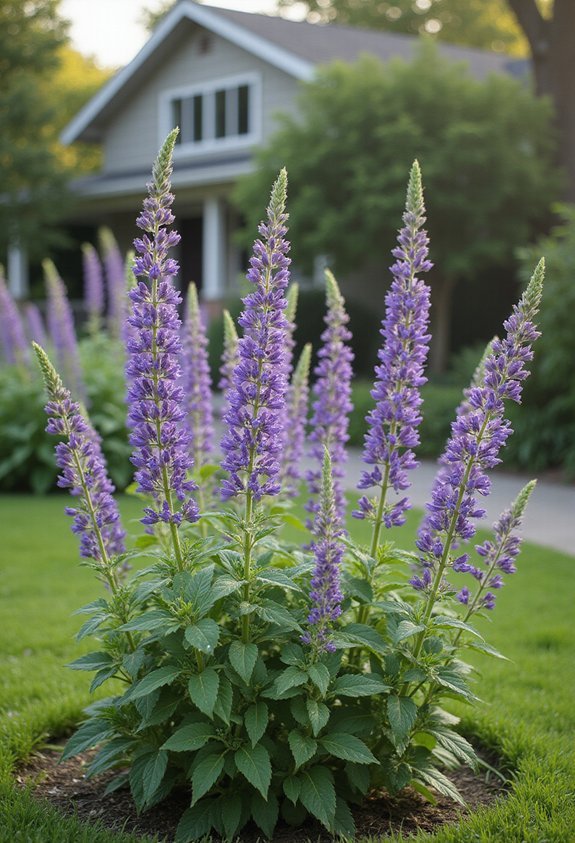
Numerous gardeners discover that catmint produces cheerful purple flower spikes from late spring through the first frost, delivering months of continuous color that surpasses most perennial plants in blooming duration and reliability. You’ll find catmint thrives in full sun to partial shade conditions while tolerating drought once established, making it perfect for low-maintenance front yard landscapes. The plant grows twelve to eighteen inches tall with silvery-green foliage that complements the lavender-purple blooms beautifully. You can encourage additional flowering by cutting back spent blooms, though this isn’t necessary since catmint naturally continues producing new flower spikes throughout the growing season.
Lavender: Fragrant Front Yard Plants That Attract Butterflies
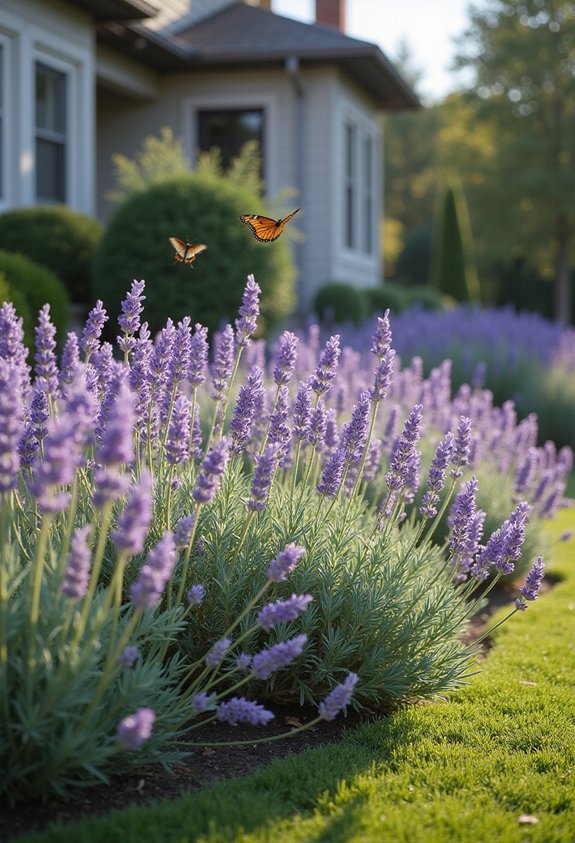
When you plant lavender in your front yard, you’ll create a fragrant garden centerpiece that attracts butterflies, bees, and other beneficial pollinators while producing aromatic purple flower spikes from early summer through fall. This drought-tolerant perennial thrives in well-draining soil and full sun conditions, requiring minimal maintenance once established. You can choose from several varieties, including English lavender for colder climates or French lavender for warmer regions. Space plants eighteen to twenty-four inches apart to guarantee proper air circulation, and prune stems after flowering to maintain compact growth and encourage continued blooming throughout the growing season.
Daylilies: Foolproof Color That Blooms For Months
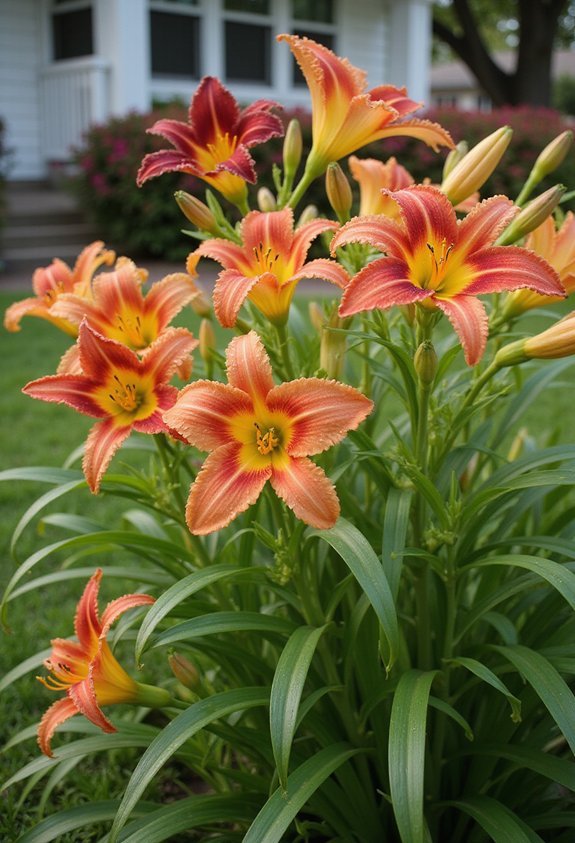
Although individual daylily flowers last only twenty-four hours, these hardy perennials produce dozens of buds on each stem that open in succession, creating continuous color displays that can extend from late spring through early fall depending on the varieties you select. You’ll find daylilies incredibly reliable since they tolerate drought, poor soil, and neglect while still producing vibrant blooms in colors ranging from yellow and orange to deep red and purple. Plant them in full sun to partial shade, space them eighteen to twenty-four inches apart, and they’ll multiply naturally to fill larger areas over time.
Black-Eyed Susan: Golden Flowers That Light Up Dark Corners
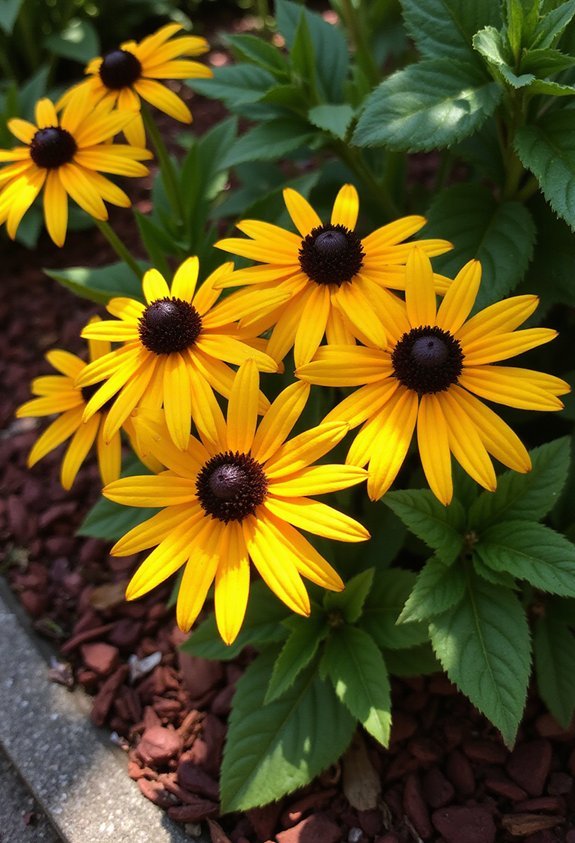
The cheerful Black-Eyed Susan brings reliable golden blooms to your front yard from midsummer through the first frost, making it an excellent choice for adding consistent color to areas that receive partial shade or inconsistent sunlight throughout the day. You’ll find these hardy perennials require minimal maintenance once established, tolerating drought conditions and poor soils better than most flowering plants. Plant them in spring after the last frost, spacing seedlings eighteen inches apart to allow proper air circulation. You can deadhead spent flowers to encourage additional blooms, though leaving some seed heads provides winter interest and attracts beneficial birds to your landscape.
Coneflowers: Prairie Beauties That Feed Local Wildlife
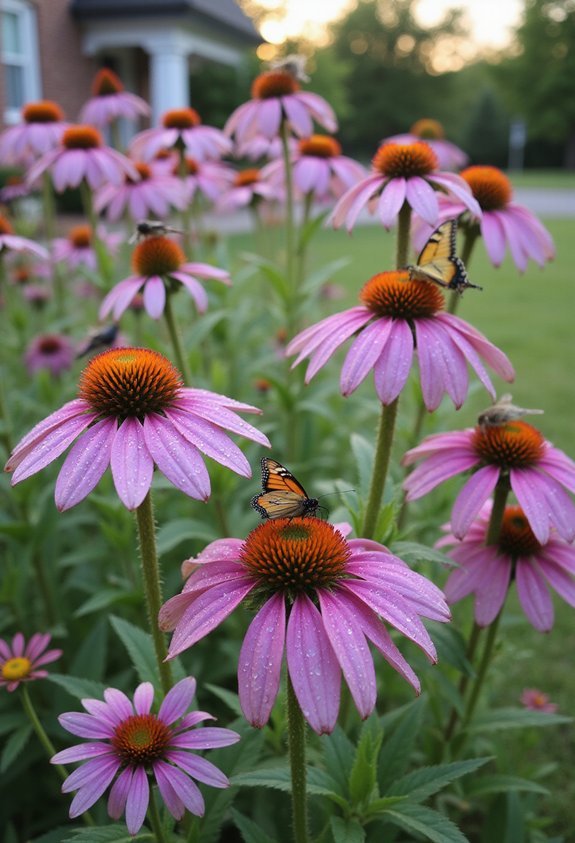
Since coneflowers originated on America’s vast prairies, these sturdy perennials naturally thrive in front yard conditions while providing essential food sources for butterflies, bees, and seed-eating birds throughout multiple seasons. You’ll find these drought-tolerant plants produce distinctive daisy-like blooms with raised, cone-shaped centers from summer through fall. Purple coneflowers (Echinacea purpurea) represent the most common variety, though you can select from white, orange, and yellow cultivars. Plant them in full sun with well-draining soil, spacing them eighteen inches apart. Their seed heads attract goldfinches and chickadees during winter months, creating year-round wildlife habitat in your landscape.
Peonies: Showstopping Blooms Worth The One-Week Wait

While peonies bloom for just one spectacular week each spring, these long-lived perennials reward patient gardeners with enormous, fragrant flowers that can reach six inches across and return faithfully for decades with minimal care. You’ll find three main types: herbaceous peonies that die back to ground level each winter, tree peonies with woody stems, and intersectional hybrids combining both characteristics. Plant them in well-draining soil with morning sun and afternoon shade, ensuring you don’t bury the crown more than two inches deep. Once established, they’ll thrive without frequent watering or fertilizing, making them ideal low-maintenance front yard anchors.
Sedum: Drought-Proof Succulents For Modern Appeal
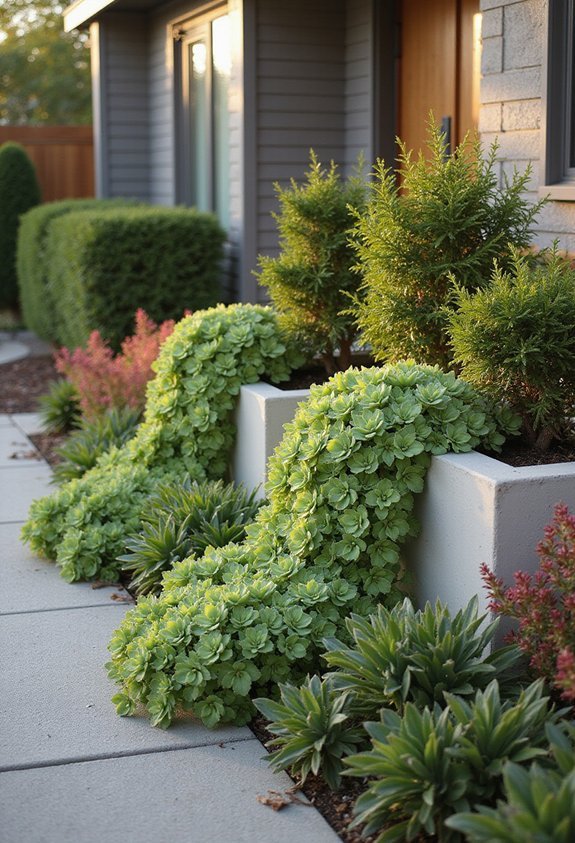
Because sedums store water in their thick, fleshy leaves, these versatile succulents can survive extended dry periods that would devastate other plants, making them perfect choices for water-conscious homeowners who want attractive front yard displays without constant irrigation. You’ll find sedums available in numerous varieties, from low-growing groundcovers like ‘Dragon’s Blood’ to upright species such as ‘Autumn Joy’ that reach eighteen inches tall. These plants thrive in full sun conditions and well-draining soil, requiring minimal maintenance once established. Their star-shaped flowers appear in late summer, attracting beneficial pollinators while adding seasonal color to your drought-resistant landscape design.
Salvia: Spiky Towers In Colors That Pop
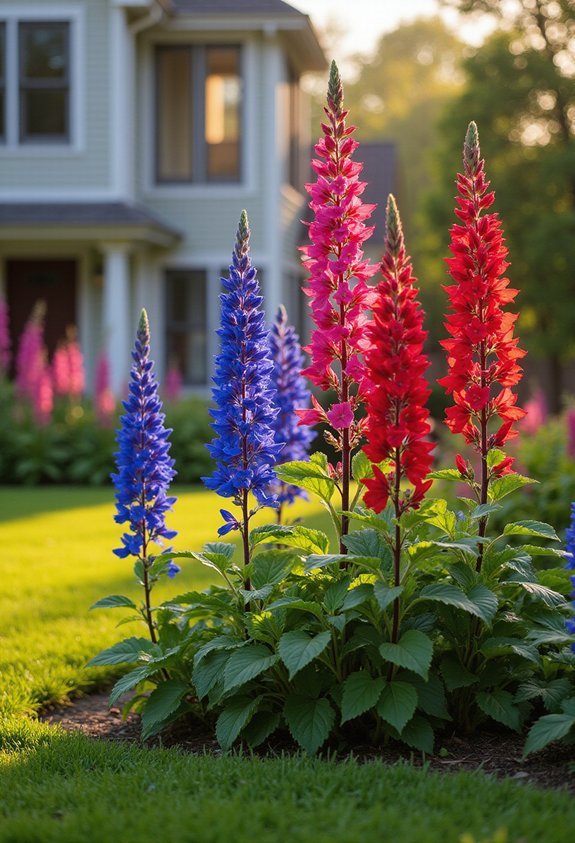
When you need dramatic vertical elements that deliver months of continuous blooms, salvias stand out as exceptional front yard performers that combine striking architectural form with brilliant flower colors ranging from deep purple and vibrant red to soft pink and pristine white. You’ll find these perennials thrive in full sun conditions with well-draining soil, requiring minimal maintenance once established. Their tall flower spikes create excellent backdrop plantings behind shorter specimens, while their drought tolerance makes them perfect for water-wise landscaping. Plant salvias eighteen inches apart to allow proper air circulation and prevent overcrowding that can reduce flowering performance.
Hostas: Dramatic Leaves That Thrive Without Sun
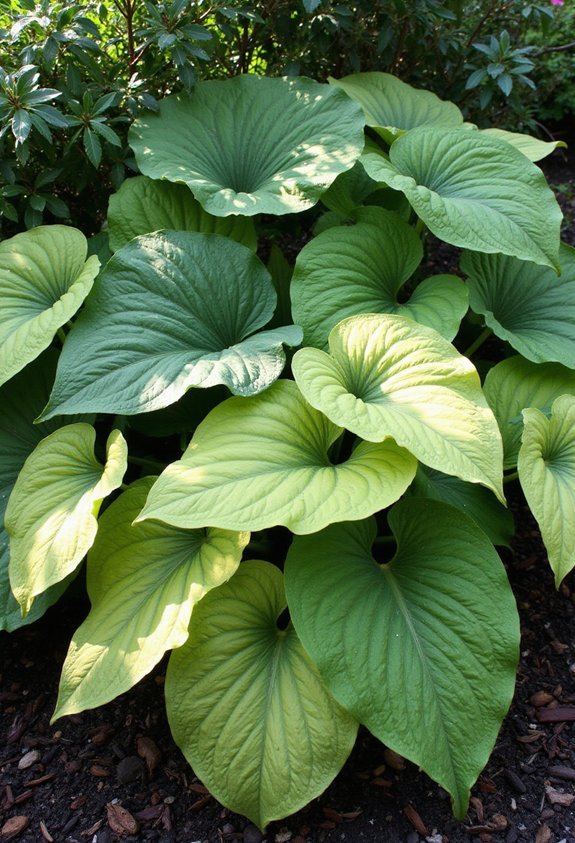
Hostas represent the perfect solution for those challenging shaded areas of your front yard where sun-loving plants like salvias simply won’t flourish, offering instead an impressive display of foliage that ranges from deep emerald green to striking variegated patterns in cream, white, and gold. You’ll find these perennials establish robust clumps that expand yearly, creating substantial ground coverage beneath trees or alongside north-facing walls. Plant them in well-draining soil enriched with compost, spacing larger varieties three feet apart and smaller cultivars eighteen inches apart. Water consistently during dry periods, and you’ll enjoy their architectural presence from spring through fall.
Ferns: Lush Green Texture For Difficult Spots
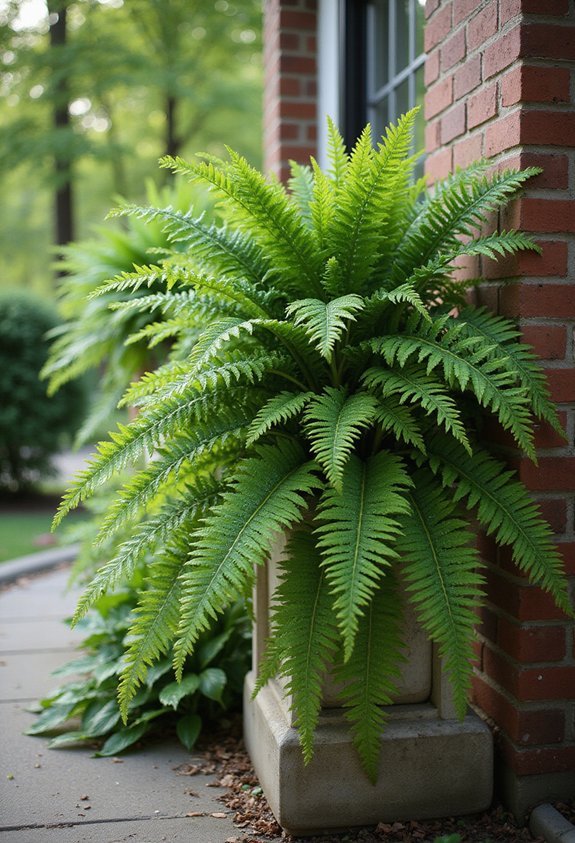
Ferns bring an elegant, feathery texture to your front yard’s most challenging locations, thriving in the deep shade, moist conditions, and poor soil where most other plants struggle to survive. These hardy perennials require minimal maintenance once established, making them perfect for busy homeowners who want attractive landscaping without constant upkeep. Christmas ferns stay green year-round in most climates, while ostrich ferns create dramatic height with their large, arching fronds that can reach four feet tall. Plant them in areas with consistent moisture, such as near downspouts or under trees, where they’ll naturally multiply and fill empty spaces.
Astilbe: Feathery Plumes That Brighten Shade Gardens

Although they’re often overlooked in garden centers, astilbe plants deliver spectacular bursts of color to shaded front yard areas where most flowering perennials fail to bloom reliably. You’ll discover these hardy perennials produce distinctive feathery flower plumes in white, pink, red, and lavender shades during late spring through midsummer. Plant astilbe in moist, well-draining soil with consistent moisture levels, spacing them eighteen to twenty-four inches apart for ideal growth. Their fern-like foliage remains attractive throughout the growing season, creating excellent ground cover beneath trees or alongside foundation plantings where direct sunlight can’t penetrate effectively.
Coral Bells: Designer Foliage In Stunning Color Combinations

Coral bells transform shaded front yard spaces with their remarkable foliage that displays vibrant colors ranging from lime green and chartreuse to deep burgundy, bronze, and silver. You’ll find these perennials create stunning visual impact through their ruffled, heart-shaped leaves that maintain color intensity throughout the growing season. Plant them in partial shade with well-draining soil, spacing each plant twelve to eighteen inches apart for ideal growth. Their compact mounding habit reaches eight to twelve inches tall, making them perfect border plants. You can combine different varieties to create dramatic color contrasts that enhance your landscape design year-round.
Caladiums: Heart-Shaped Leaves In Eye-Catching Patterns
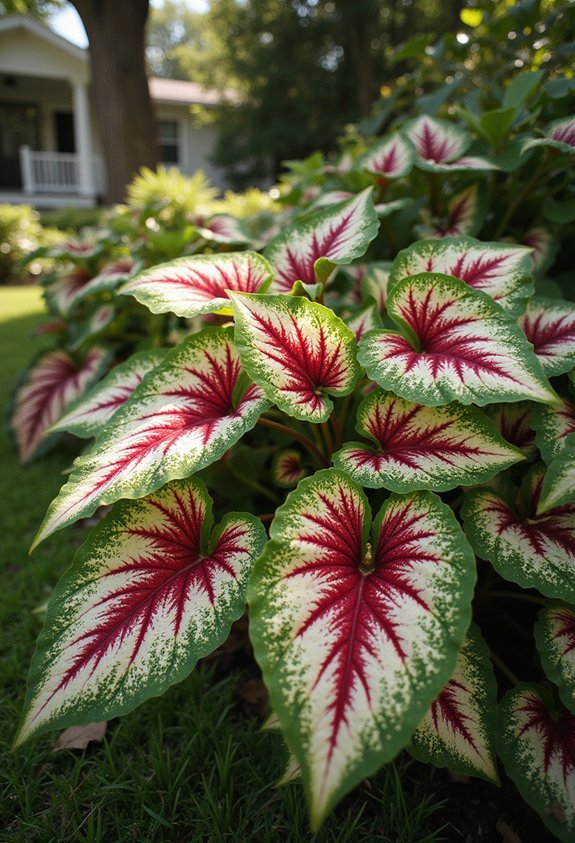
Caladiums bring tropical elegance to your front yard landscape through their distinctive heart-shaped leaves that showcase intricate patterns in combinations of pink, red, white, and green. You’ll find these shade-loving plants perform best in partial to full shade conditions with consistently moist, well-draining soil. Plant caladium bulbs after soil temperatures reach sixty-five degrees Fahrenheit, spacing them twelve inches apart at two-inch depth. You can select from fancy-leafed varieties with broad foliage or strap-leafed types featuring narrow leaves. These tender perennials require winter protection in cold climates, so you’ll need to lift bulbs before frost arrives.
Begonias: Continuous Blooms From Spring Until Frost
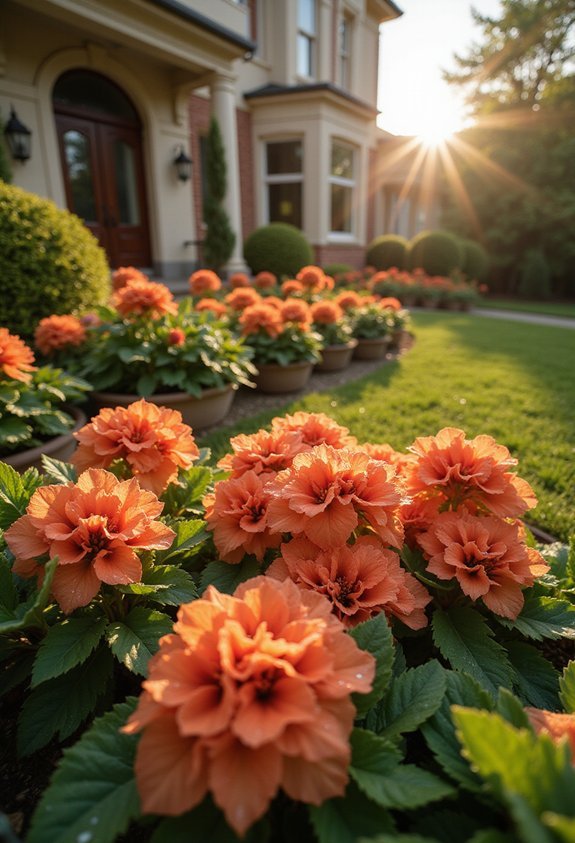
While caladiums excel in shaded areas with their colorful foliage, begonias offer front yard gardeners the perfect combination of attractive leaves and abundant flowers that bloom continuously from spring through the first hard frost. You’ll find three main types suitable for front yard planting: wax begonias with their glossy leaves and small clustered flowers, tuberous begonias featuring large, rose-like blooms, and rex begonias grown primarily for their ornate foliage patterns. Plant them in well-draining soil with morning sun and afternoon shade, water consistently without overwatering, and deadhead spent flowers regularly to encourage continuous blooming throughout the growing season.
Coleus: Vibrant Foliage That Outshines Any Flower

Few plants can match coleus for delivering spectacular color combinations that remain vibrant throughout the entire growing season, making these foliage powerhouses an exceptional choice for front yard displays where you want maximum visual impact without relying on fleeting flowers. You’ll find varieties featuring burgundy, lime green, orange, pink, and purple leaves in stunning patterns that create dramatic focal points. These versatile plants thrive in partial shade to full sun, depending on the variety you choose. You can easily propagate coleus through cuttings, allowing you to expand your collection inexpensively while maintaining consistent color schemes throughout your landscape design.
Ornamental Kale: Cool-Weather Color When Everything Else Fades

Ornamental kale steps up to deliver striking rosettes of ruffled leaves in shades of purple, pink, white, and green precisely when autumn’s chill causes most annual flowers to wither and fade, making it an invaluable addition to your front yard’s late-season display. You’ll find that cooler temperatures actually intensify the colors, with leaves becoming more vibrant as frost approaches. Plant these hardy specimens in well-draining soil with full sun exposure, spacing them twelve inches apart for ideal growth. They’ll thrive in temperatures between 40-65°F, providing continuous color through winter in most climates until harsh freezes arrive.
Elephant Ears: Tropical Drama That Returns Every Year
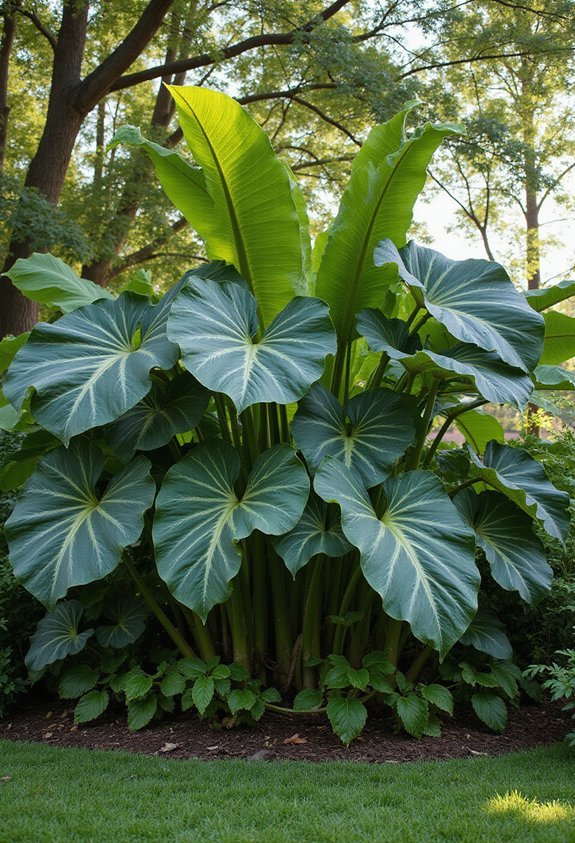
When temperatures warm and spring arrives, elephant ears emerge as commanding focal points that transform ordinary front yards into lush, tropical-inspired landscapes with their massive heart-shaped leaves that can span two to three feet across. You’ll find these perennial plants extremely adaptable, thriving in both full sun and partial shade conditions while preferring consistently moist, well-draining soil. Plant bulbs after the last frost date, spacing them three feet apart to accommodate their impressive spread. During winter months, you can either dig up bulbs for indoor storage or allow them to naturally die back and return the following spring.
Liriope: Grass-Like Borders That Handle Anything
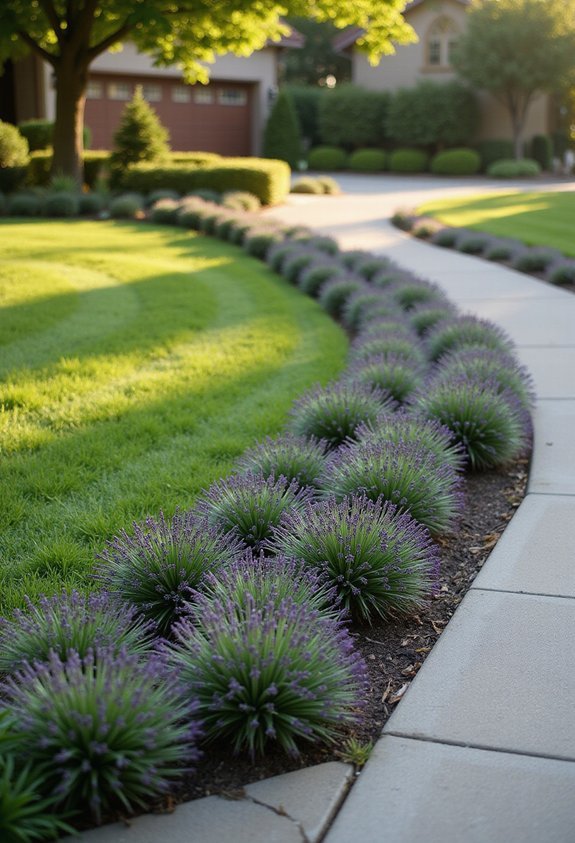
Most landscapers consider liriope the ultimate problem-solver for challenging front yard areas where other plants struggle to establish themselves, as this resilient grass-like perennial thrives in dense shade, tolerates drought conditions once established, and creates neat borders that require minimal maintenance throughout the growing season. You’ll find liriope produces slender, arching leaves that form dense clumps measuring twelve to eighteen inches tall, making it perfect for edging walkways, defining planting beds, or filling difficult spaces beneath trees. This hardy perennial sends up purple flower spikes in late summer, followed by small black berries that add seasonal interest.
Lamb’s Ear: Silvery Texture That Adds Sophistication
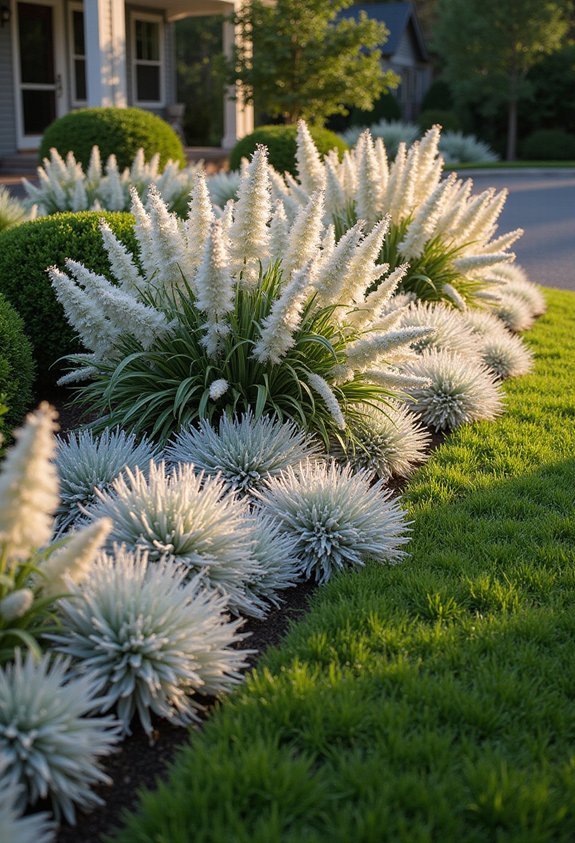
While liriope provides reliable green foliage for your front yard borders, lamb’s ear brings an entirely different visual element through its distinctive silver-gray leaves that create striking contrast against darker plants and add sophisticated texture to any landscape design. You’ll find this perennial thrives in full sun to partial shade conditions, requiring well-draining soil to prevent root rot during wet periods. The fuzzy, woolly texture of lamb’s ear leaves creates visual interest while serving as an excellent ground cover that spreads naturally through underground runners, making it perfect for filling large areas.
Conclusion
You’ll create an impressive front yard by combining these diverse plants strategically throughout your landscape. Start with larger focal points like Japanese maples or ornamental trees, then layer in colorful shrubs such as hydrangeas and azaleas for seasonal interest. Add textural elements like lamb’s ear and elephant ears for contrast, while using liriope as reliable edging. This systematic approach guarantees you’ll achieve both visual appeal and manageable maintenance requirements year-round.