You’ll discover that your front yard patio serves as the foundation for your home’s first impression, directly influencing how visitors perceive your property before they even reach your door. The design choices you make, from selecting appropriate materials that complement your home’s architecture to implementing strategic layouts that enhance functionality, will determine whether your entrance creates a memorable welcome or falls into forgettable mediocrity. Understanding which specific patio style aligns with your home’s existing features becomes essential for achieving that unforgettable entrance you’re seeking.
Design Styles For Every Home Architecture
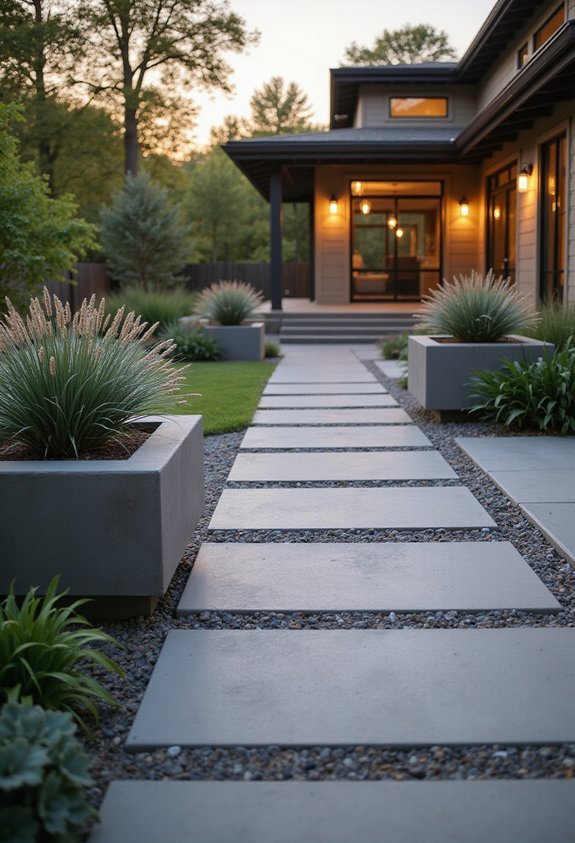
When you’re planning your front yard patio, you’ll need to choose a design style that complements your home’s existing architecture to create a cohesive and visually appealing outdoor space. Traditional homes benefit from classic brick or flagstone patios with curved edges and ornamental elements. Modern houses work well with clean-lined concrete or large-format tile installations featuring geometric patterns. Colonial-style homes pair perfectly with cobblestone or aged brick surfaces that echo historical design elements. Ranch houses complement natural stone or stamped concrete patios with earthy tones. Victorian homes require intricate patterns using mixed materials like brick and stone combinations.
Also read: 22+ FRONT YARD MAKEOVER Ideas With Big Results!
Modern Minimalist Front Patios With Clean Lines
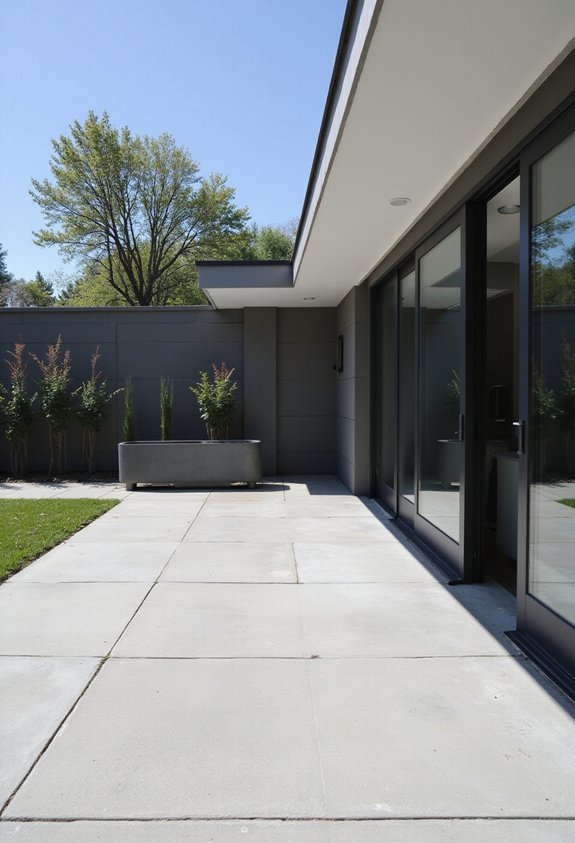
Although modern minimalist design emphasizes simplicity above all else, creating a successful front patio in this style requires careful attention to proportion, material selection, and spatial organization to achieve the clean, uncluttered aesthetic that defines contemporary architecture. You’ll want to select materials with smooth textures and neutral colors, such as polished concrete, natural stone slabs, or large-format tiles. Keep furniture pieces geometric and low-profile, choosing sleek benches or angular planters rather than ornate decorations. Focus on creating defined zones through strategic placement of hardscaping elements, and incorporate subtle lighting that highlights architectural features without creating visual clutter.
Rustic Stone Patios For Traditional Homes
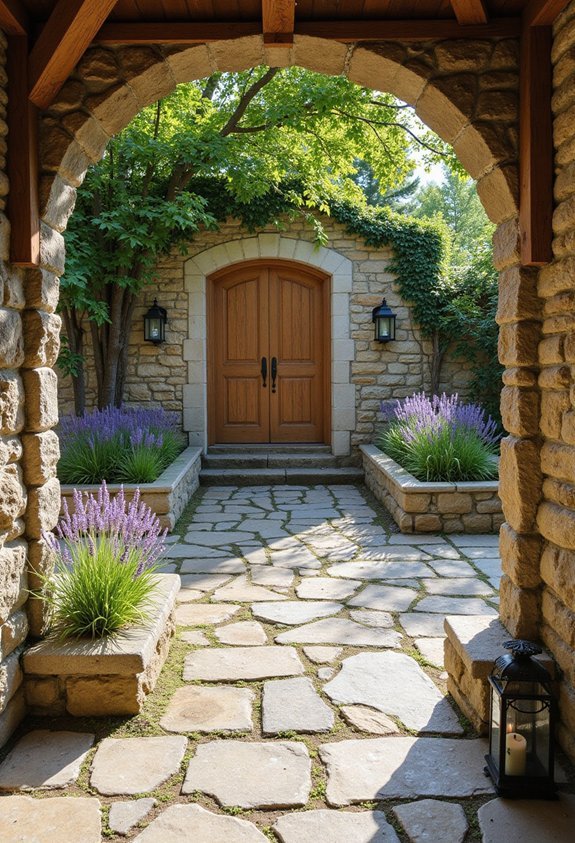
Natural stone creates an authentic foundation for traditional front patios, offering homeowners the opportunity to establish a warm, welcoming entrance that complements classic architectural styles through carefully selected materials and time-tested design principles. You’ll find flagstone, limestone, and sandstone work exceptionally well for rustic applications, providing natural color variations and textures that age beautifully over time. Install these materials using irregular patterns or random layouts to enhance the organic appearance, while incorporating moss or ground cover between joints softens hard edges. Choose earth-tone stones that coordinate with your home’s exterior materials, creating visual harmony throughout your property’s entrance.
Mediterranean-Style Front Patios With Colorful Tiles

Mediterranean-style front patios bring vibrant energy to your home’s entrance through the strategic use of colorful tiles that reflect the warm, sun-soaked aesthetic of coastal European design. You’ll want to select hand-painted ceramic tiles in rich blues, terracotta oranges, and golden yellows to create authentic Mediterranean appeal. These tiles work best when arranged in geometric patterns or mosaic designs that draw the eye toward your front door. Consider incorporating decorative border tiles around the patio’s perimeter, and pair your colorful tile work with natural stone accents, wrought iron furniture, and Mediterranean plants like lavender or rosemary.
Craftsman-Style Front Patios With Natural Materials
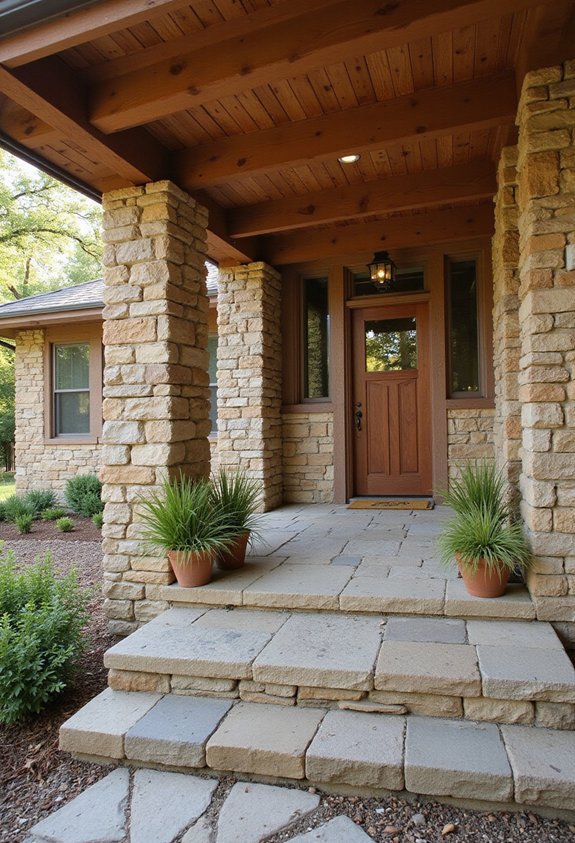
Craftsman-style front patios embrace the philosophy of using authentic, locally-sourced materials that showcase the beauty of natural textures and earth-toned colors in your home’s welcoming entrance. You’ll want to incorporate rough-hewn stone, weathered wood beams, and handcrafted brick elements that reflect the movement’s emphasis on artisanal quality. Install wide, sturdy columns made from river rock or stacked fieldstone to support overhead pergolas constructed with cedar or reclaimed timber. Choose furniture pieces crafted from teak, oak, or wrought iron that complement the organic palette. Add planters filled with native grasses, ferns, and flowering shrubs to complete the harmonious, nature-inspired design.
Colonial Home Front Patio Adaptations
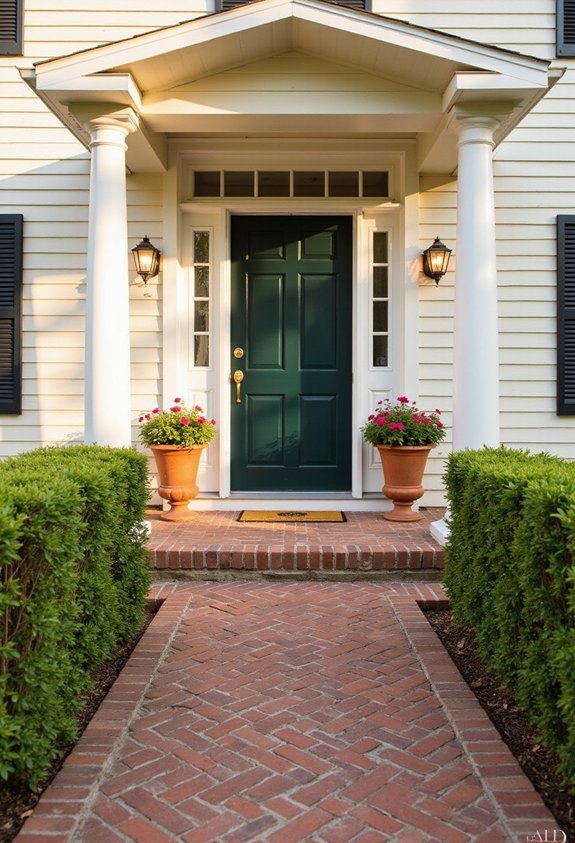
Colonial homes require a completely different approach to front patio design that honors their formal, symmetrical architecture while incorporating period-appropriate materials and classical design elements. You’ll need brick pavers or flagstone that matches your home’s foundation, arranged in geometric patterns like herringbone or running bond. Install symmetrical planters with boxwood hedges or seasonal flowers on either side of your entrance steps. Choose wrought iron furniture with clean lines, and add lantern-style lighting fixtures to maintain the historical aesthetic. Keep decorative elements minimal and balanced, focusing on classical proportions that complement your home’s traditional colonial features and timeless appeal.
Mid-Century Modern Front Patios With Geometric Shapes
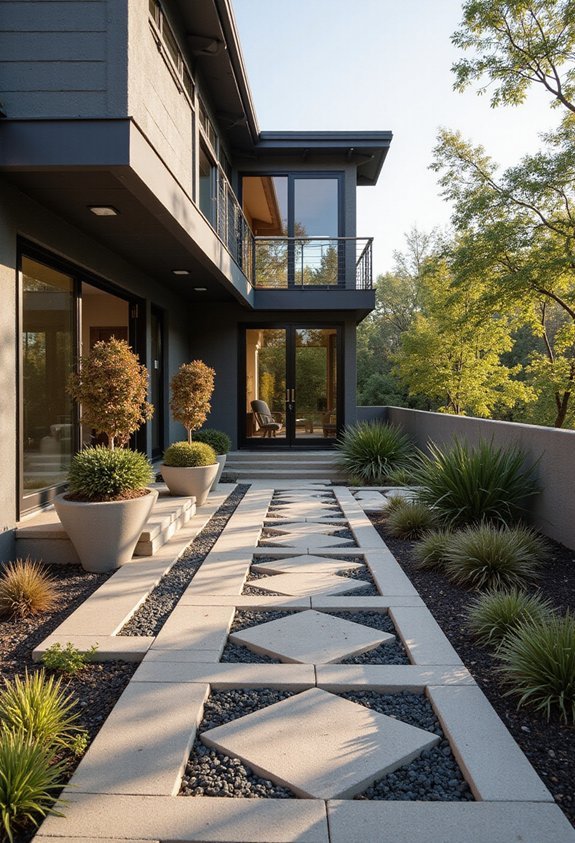
When designing a mid-century modern front patio, you’ll want to embrace bold geometric shapes and clean angular lines that define this architectural style from the 1950s and 1960s. Choose rectangular concrete pavers arranged in linear patterns, or install large square tiles with minimal grout lines for maximum visual impact. Consider incorporating triangular planting beds filled with architectural plants like agave or ornamental grasses. Add geometric planters in cylindrical or rectangular forms, and select furniture with sharp edges and metal frames. Use materials like polished concrete, natural stone, and steel to reinforce the clean, structured aesthetic.
Farmhouse Front Patios With Vintage Charm
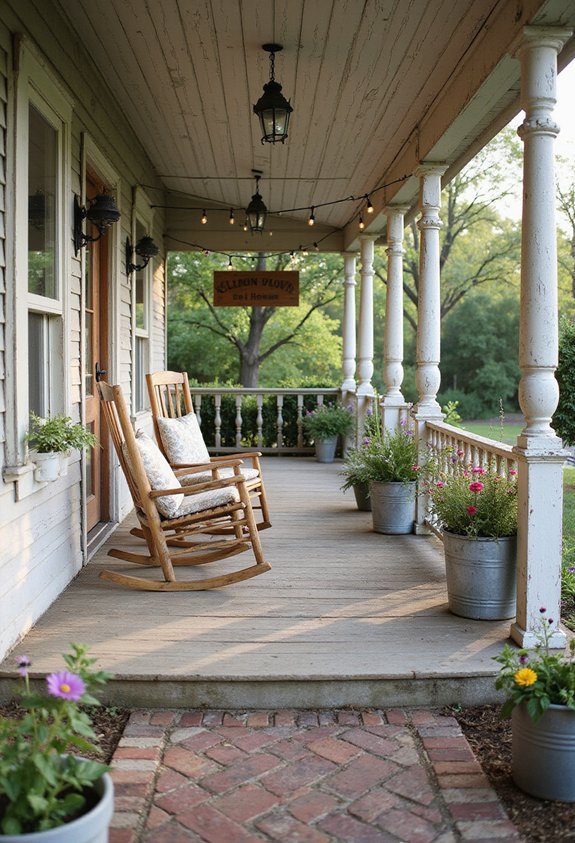
Farmhouse front patios embrace rustic materials and weathered textures that create a welcoming, lived-in atmosphere completely opposite to the sleek modernist approach. You’ll want to incorporate reclaimed wood planks, vintage brick pavers, or natural stone with irregular edges to establish your foundation. Add galvanized metal planters filled with wildflowers, herbs, or climbing vines that soften hard surfaces. Install wrought iron furniture with distressed finishes, complemented by wooden benches with peeling paint. String Edison bulb lights overhead for warm evening illumination, and place vintage watering cans or mason jars as decorative elements that reinforce the authentic farmhouse aesthetic.
Contemporary Front Patios With Metal Accents
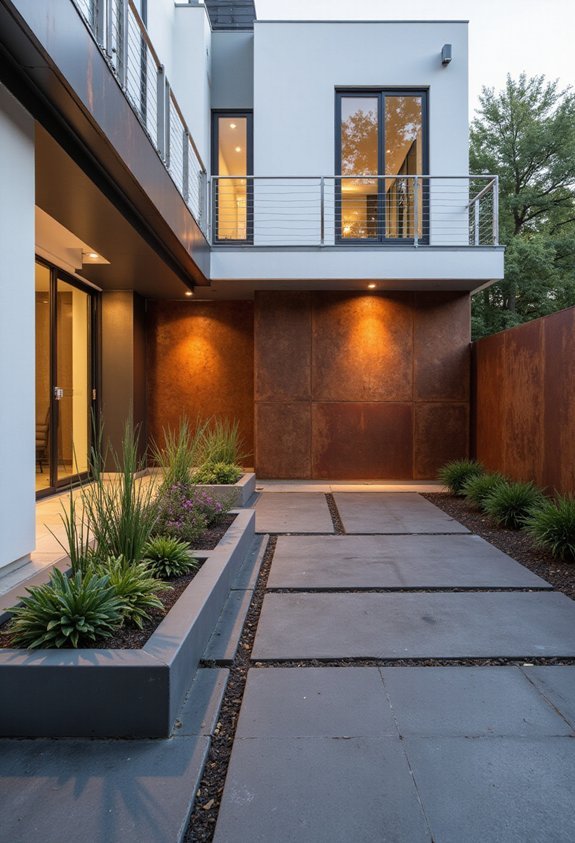
Several contemporary front patio designs showcase metal accents that deliver clean lines and industrial sophistication to your home’s entrance. You’ll find steel railings, aluminum planters, and wrought iron furniture create striking focal points against concrete or stone surfaces. Consider incorporating brushed stainless steel posts with cable wire systems for modern boundaries, or choose powder-coated metal screens that provide privacy while maintaining visual appeal. Metal fire bowls and geometric light fixtures add functional elements that enhance nighttime ambiance. These durable materials require minimal maintenance, resist weather damage, and complement both neutral and bold color schemes throughout different seasons.
Cottage-Style Front Patios With Curved Edges

Cottage-style front patios embrace soft, curved edges that create a welcoming contrast to the sharp angles found in contemporary metal designs. You’ll want to incorporate natural stone or brick materials that complement your home’s traditional architecture, while curved pathways guide guests naturally toward your entrance. These patios work best when you add flower beds along the curved borders, using perennial plants like lavender, roses, or hydrangeas that soften the hardscape elements. Consider installing low garden walls with gentle curves that define your patio space without creating harsh boundaries, maintaining the cottage aesthetic’s characteristic charm.
Size And Layout Solutions
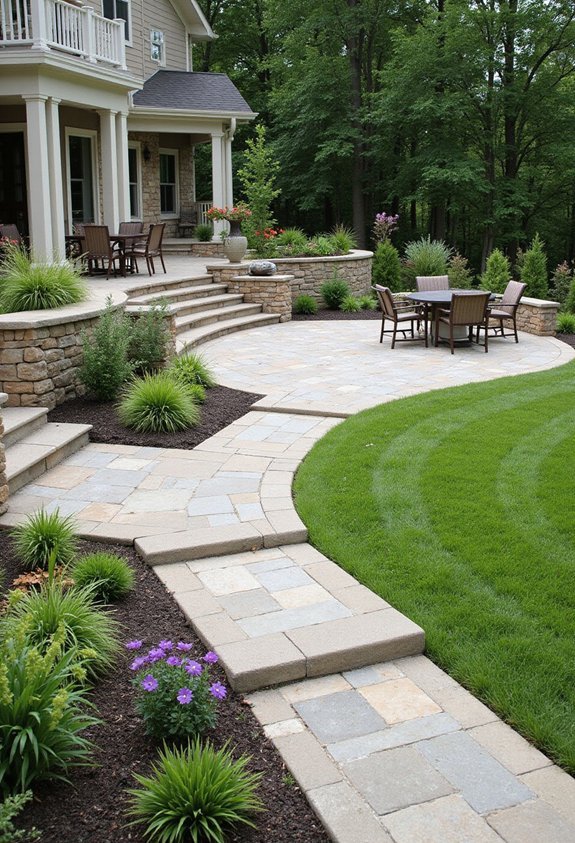
Three key factors determine the success of your front yard patio layout: available space, traffic flow patterns, and the relationship between your patio and your home’s entrance. You’ll need to measure your yard’s dimensions carefully, considering property lines and existing landscaping features. Plan pathways that guide guests naturally from the street to your door while incorporating seating areas that don’t obstruct movement. Position your patio to complement your home’s architectural style, ensuring it enhances rather than competes with your entrance. Consider creating distinct zones within larger spaces, using furniture placement and decorative elements to define separate areas for different activities.
Small Front Patio Ideas That Maximize Space
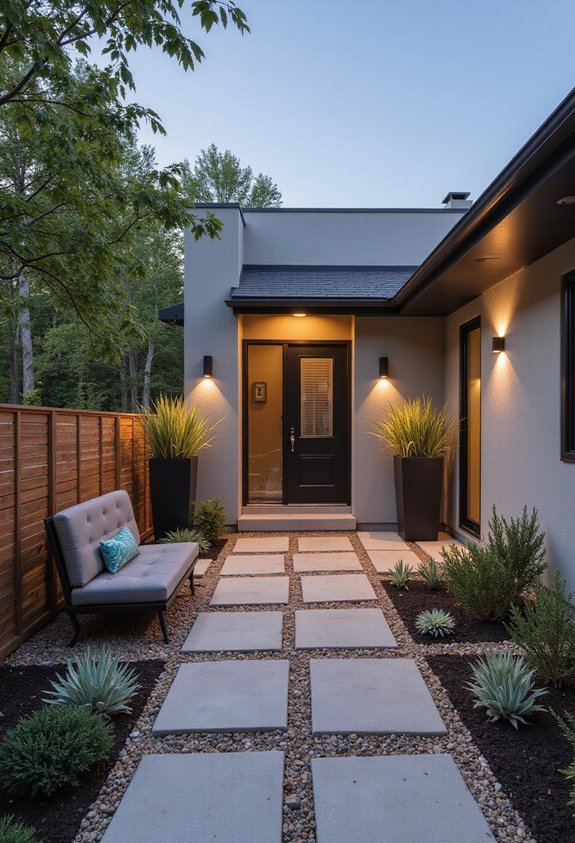
When you’re working with limited square footage in your front yard, smart design choices can transform even the smallest spaces into functional and inviting outdoor areas. Choose compact furniture like bistro sets or folding chairs that won’t overwhelm the space, and consider built-in seating along walls or planters to save floor area. Vertical elements such as wall-mounted planters, trellises, or hanging baskets draw the eye upward and create visual interest without consuming precious ground space. Light-colored pavers or decking materials reflect sunlight and make your small patio appear larger, while strategic plant placement defines boundaries without blocking sightlines.
Large Front Yard Patio Proportioning Tips
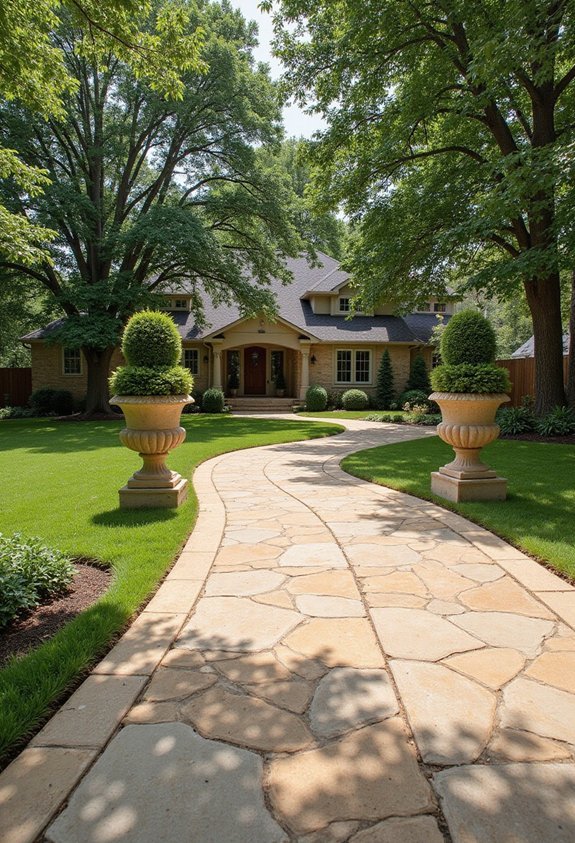
While small patios require creative space-saving solutions, large front yard patios present the opposite challenge of creating proper proportions that don’t overwhelm your home’s architecture or leave vast areas feeling empty and disconnected. You’ll need to establish distinct zones within your expansive space, using furniture groupings, planters, or level changes to create intimate conversation areas. Scale your elements appropriately by selecting larger furniture pieces, wider walkways, and substantial decorative features that match your patio’s size. Consider breaking up the space with pergolas, fire pits, or water features that serve as natural focal points and prevent the area from appearing barren.
Corner Lot Front Patio Design Strategies
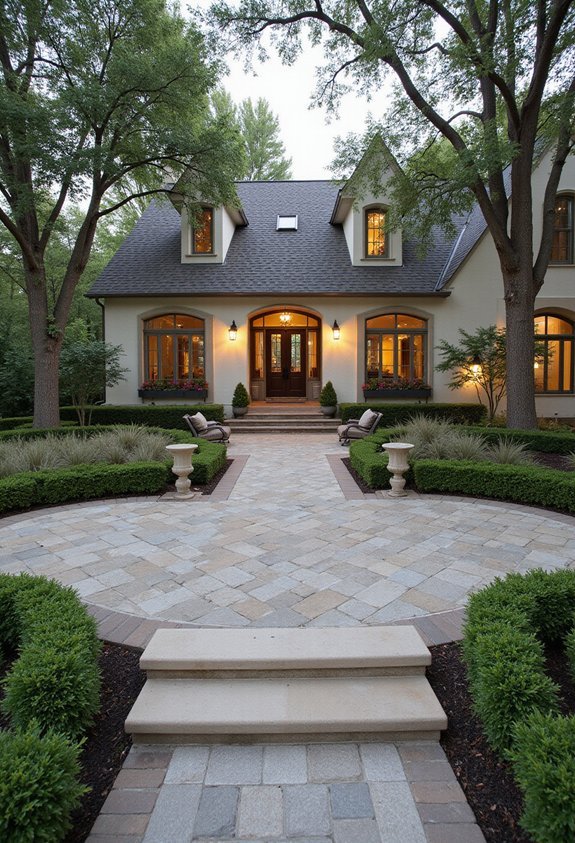
Corner lot properties offer unique advantages for front patio design, as you’ll have access to two street-facing sides that create expanded visual and functional possibilities beyond traditional single-frontage homes. You can position your patio to take advantage of morning or afternoon sun by choosing the eastern or western exposure. Consider creating an L-shaped configuration that wraps around the corner, maximizing both street views while maintaining privacy through strategic plantings or decorative screens. Design separate zones for different activities, such as dining near one street and lounging near the other, creating a dynamic outdoor space that enhances your home’s curb appeal.
Narrow Urban Front Patios For City Homes
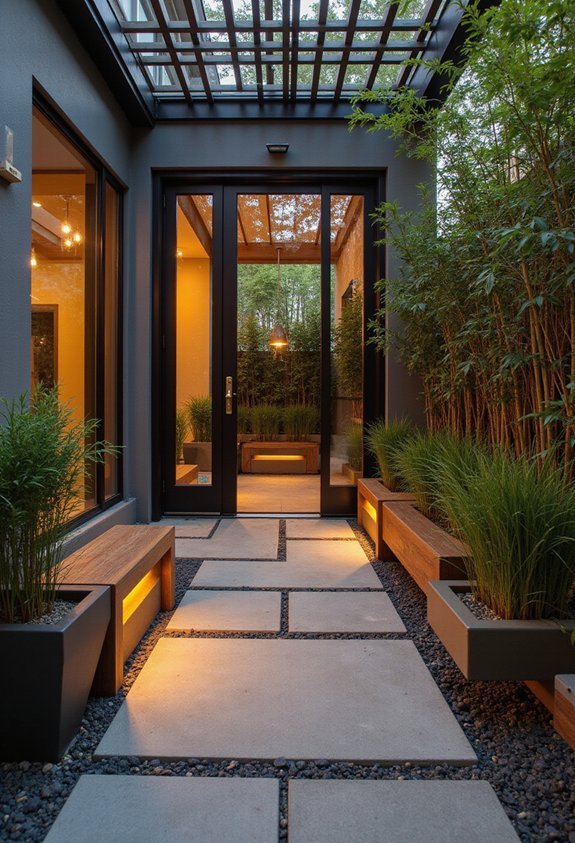
Urban homeowners face distinct challenges when designing front patios, as limited space and close proximity to neighbors require creative solutions that maximize functionality while respecting privacy boundaries. You’ll need to focus on vertical elements like tall planters, privacy screens, or compact water features that draw attention upward rather than outward. Consider using multi-level furniture, such as stackable seating or folding tables, to create flexible arrangements for different occasions. Install overhead elements like retractable awnings or pergolas to define your space without encroaching on sidewalks. Strategic lighting and carefully chosen plants can create intimate atmosphere despite tight quarters.
Grand Circular Patios As Statement Entrances
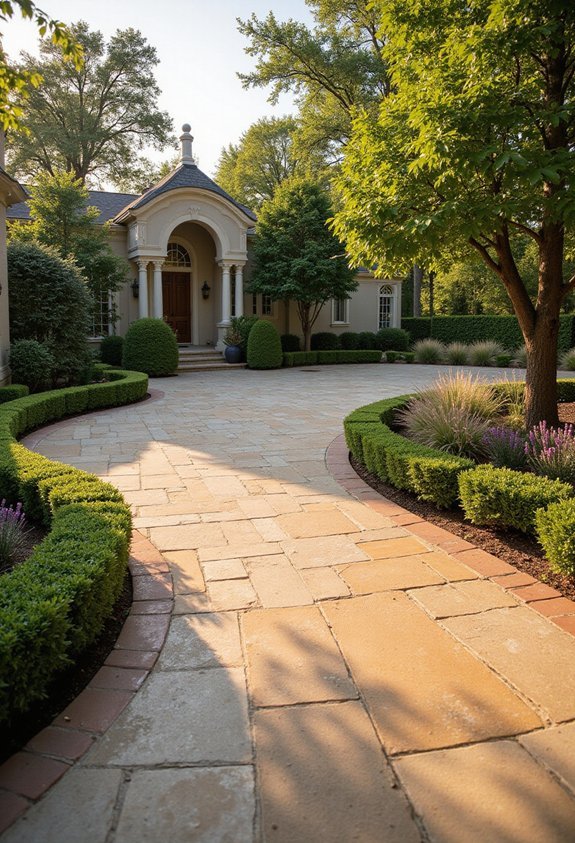
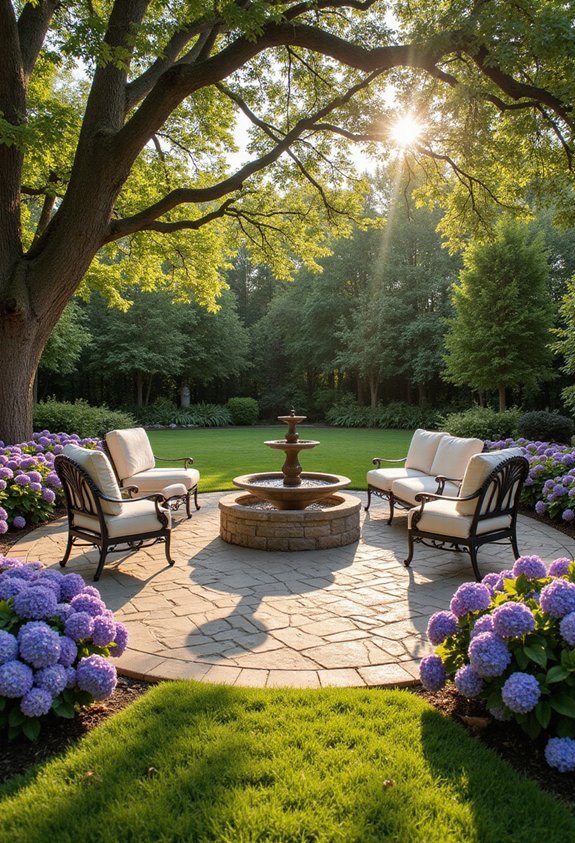
A grand circular patio transforms your front entrance into an impressive focal point that commands attention and creates a welcoming atmosphere for guests arriving at your home. You’ll need to plan the diameter carefully, ensuring it’s proportional to your house’s scale and provides adequate space for outdoor furniture arrangements. Install curved pavers, natural stone, or stamped concrete in concentric patterns to emphasize the circular design’s elegance. Consider incorporating a central feature like a fountain, decorative planter, or fire pit as an anchor point. Strategic lighting around the perimeter enhances the patio’s dramatic effect during evening hours.
Multi-Level Terraced Patio Designs
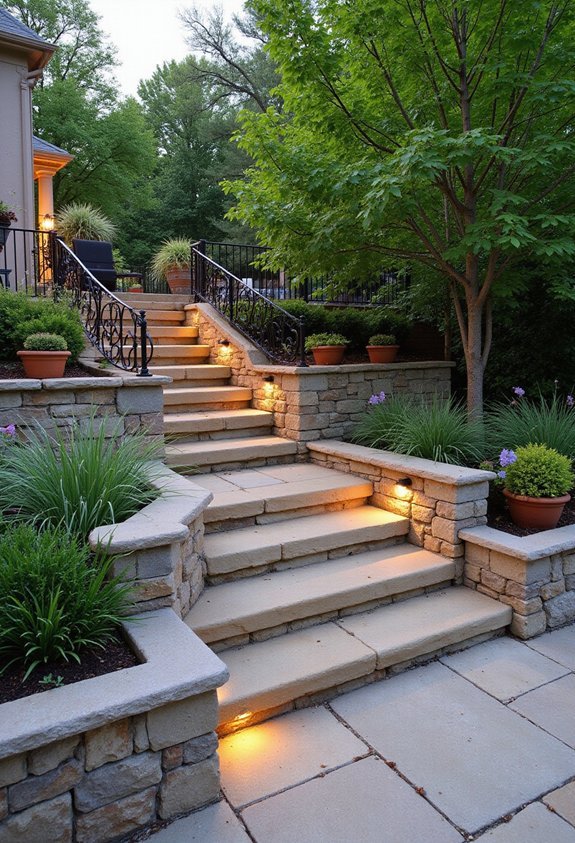
Multi-level terraced patio designs offer an elegant solution when your front yard features sloped terrain or when you want to create distinct functional zones within your outdoor space. You’ll construct each level using retaining walls made from stone, concrete blocks, or timber, ensuring proper drainage between tiers. The upper level typically serves as your main seating area, while lower terraces can accommodate planters, water features, or secondary gathering spaces. You’ll connect levels with wide stone steps or gently sloped pathways for easy navigation. This design approach maximizes usable space while creating visual interest through varying elevations and defined outdoor rooms.
Wraparound Patios That Connect Side Yards
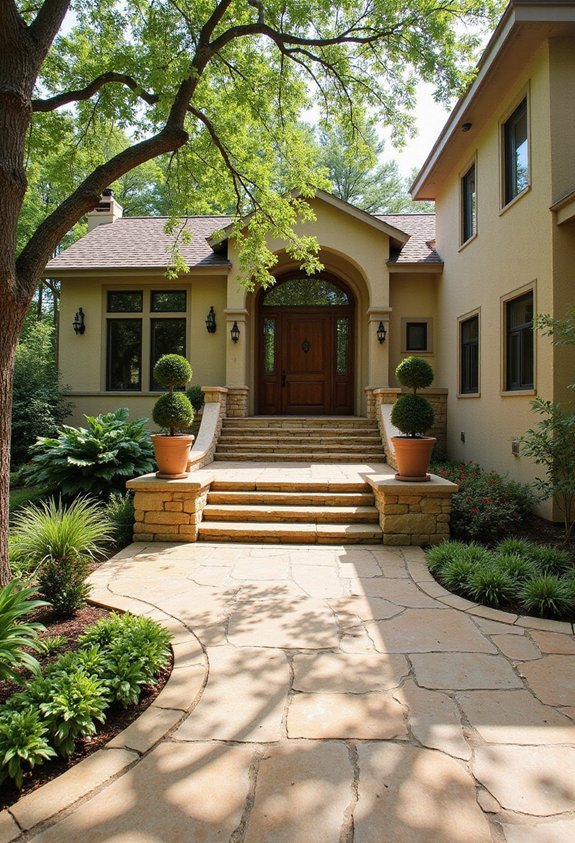
Wraparound patios extend your outdoor living space by flowing seamlessly from the front yard around the corners of your home to connect with side yard areas, creating one continuous entertainment and relaxation zone. You’ll need to carefully plan the patio’s width around corners, ensuring adequate clearance for walkways and landscaping elements. Consider using consistent materials throughout the wraparound design to maintain visual continuity, while incorporating level changes or decorative borders to define different functional areas. This design maximizes your property’s usable outdoor space and creates natural traffic flow patterns that guide guests from your home’s entrance to private gathering spaces.
Intimate Bistro-Style Front Yard Spaces
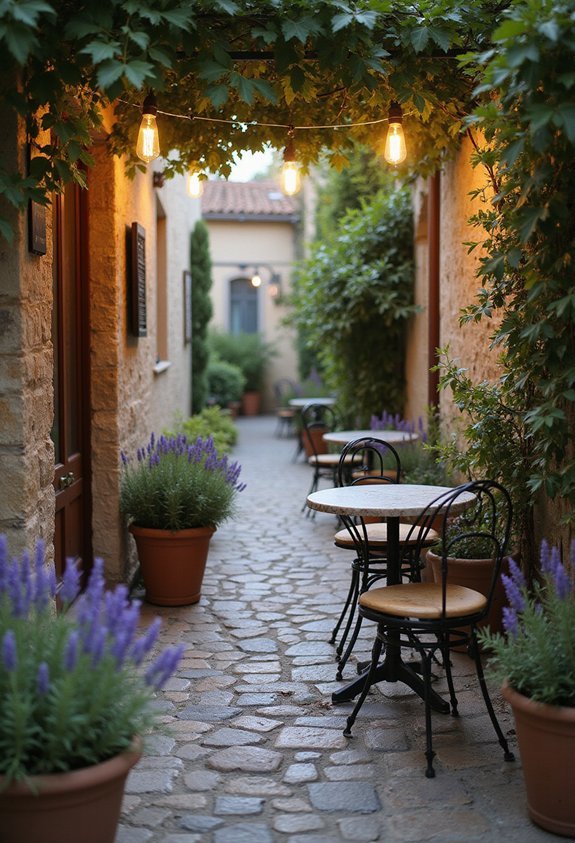
Cozy bistro-style patios transform your front yard into an intimate European-inspired retreat that captures the charm of sidewalk cafés while maintaining your home’s welcoming curb appeal. You’ll need a small round table with two chairs positioned strategically near your front entrance, creating an inviting conversation area that doesn’t overwhelm the space. Install string lights overhead and add potted herbs like lavender or rosemary around the seating area to enhance the authentic café atmosphere. Choose weather-resistant furniture in classic bistro colors such as forest green, navy blue, or black iron to guarantee durability while maintaining the sophisticated aesthetic.
Material Options And Finishes
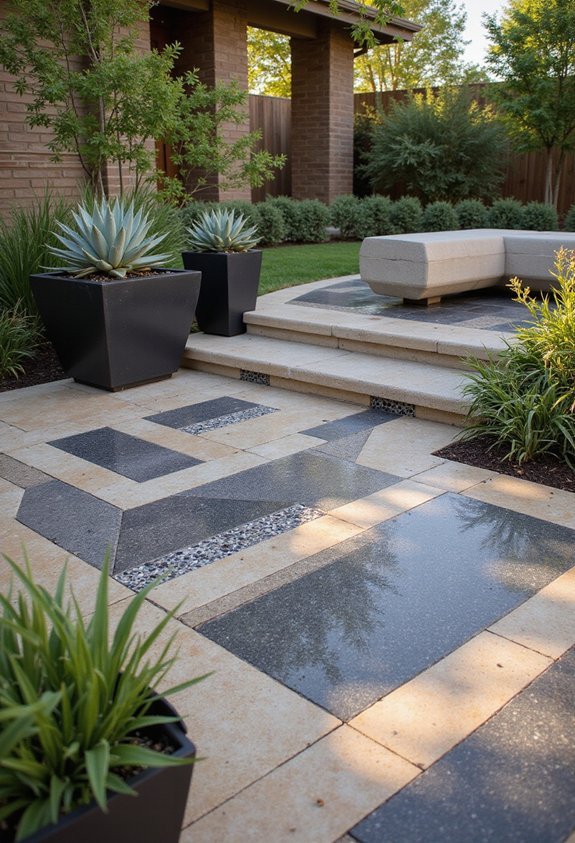
Three primary material categories define front yard patio construction: natural stone, concrete products, and brick or pavers, each offering distinct advantages for durability, maintenance, and aesthetic integration with your home’s architecture. Natural stone provides timeless elegance but requires higher investment and periodic sealing. Concrete offers versatility through stamped patterns, stained colors, and textured finishes while maintaining budget-friendly pricing. Brick and pavers deliver classic charm with excellent drainage properties and easy repair options when individual pieces crack or shift. You’ll want to examine your climate’s freeze-thaw cycles, intended maintenance level, and desired visual connection to your home’s existing exterior materials.
Natural Flagstone Patios With Organic Appeal
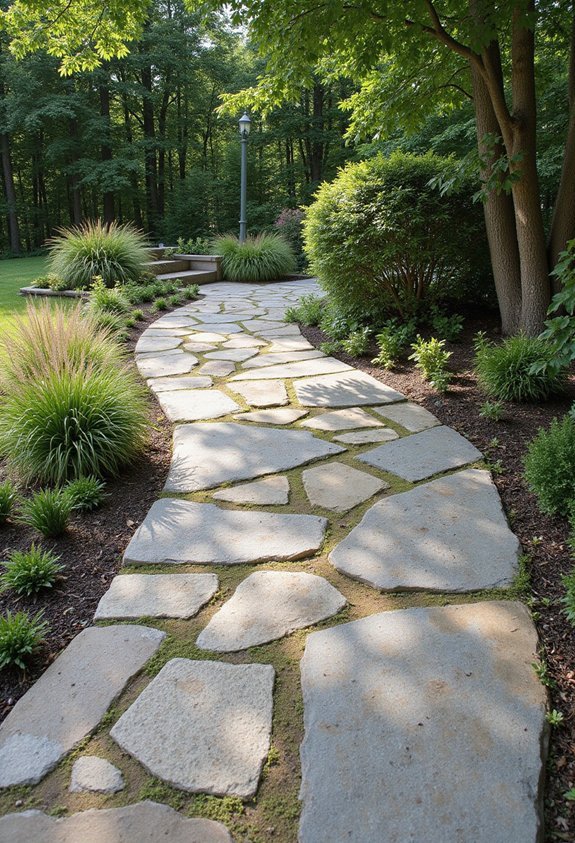
When you choose natural flagstone for your front yard patio, you’re selecting irregular pieces of sedimentary rock that create flowing, curved edges rather than geometric patterns, giving your outdoor space an organic appearance that mimics nature’s own formations. You’ll find flagstone available in sandstone, limestone, slate, and quartzite varieties, each offering different colors ranging from gray and brown to red and blue tones. The natural texture provides excellent slip resistance, while the varied thickness of each piece creates subtle elevation changes that add visual depth and authentic character to your entrance design.
Brick Herringbone Pattern Front Patios
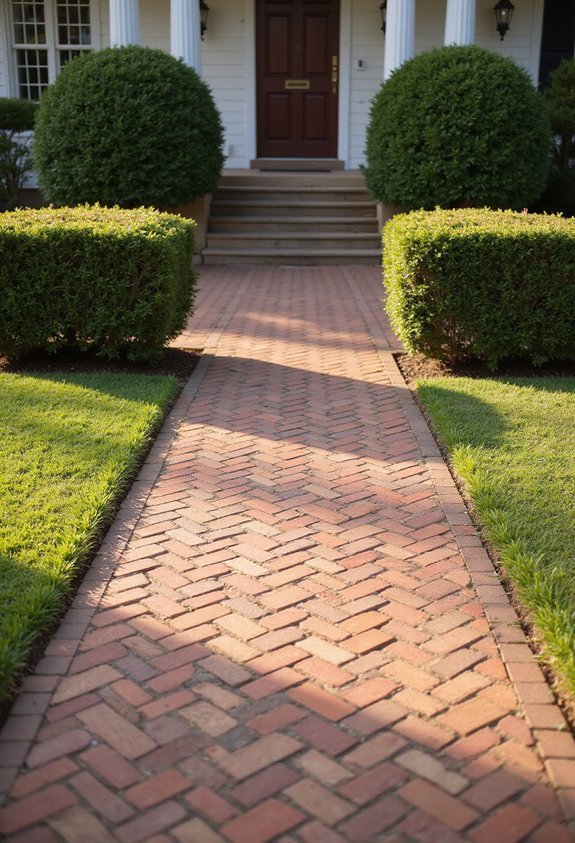
Although brick herringbone patterns require more planning than traditional straight-laid designs, you’ll create a sophisticated front patio that combines timeless elegance with exceptional durability through this distinctive 90-degree interlocking arrangement. This classic pattern involves placing rectangular bricks at alternating right angles, forming a zigzag configuration that distributes weight evenly across the surface. You’ll need to establish precise measurements and maintain consistent spacing throughout installation, as the interlocking design demands accuracy for proper alignment. The herringbone pattern naturally resists shifting and settling while creating visual interest that complements both traditional and contemporary home architectures with its geometric appeal.
Concrete Stamped Patios With Texture
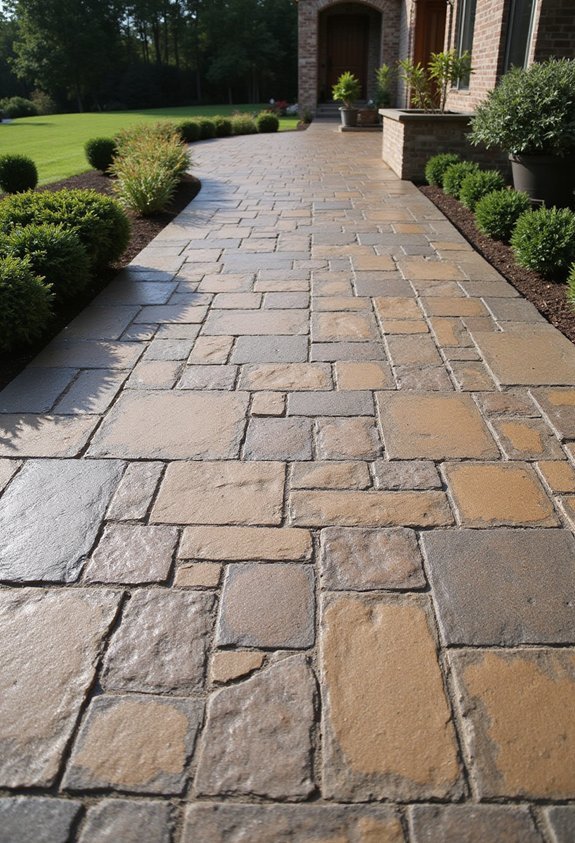
Stamped concrete patios offer an economical alternative to natural stone or brick while delivering the sophisticated appearance of premium materials through specialized texturing and coloring techniques. You can choose from patterns that mimic slate, flagstone, cobblestone, or wood planks, creating visual interest through detailed impressions made during the concrete’s curing process. The stamping process involves pressing textured mats into wet concrete, followed by color application through integral pigments or surface hardeners. You’ll benefit from concrete’s durability and low maintenance requirements while achieving custom aesthetics that complement your home’s architecture and greatly enhance your front yard’s curb appeal.
Geometric Patterned Patio Surfaces
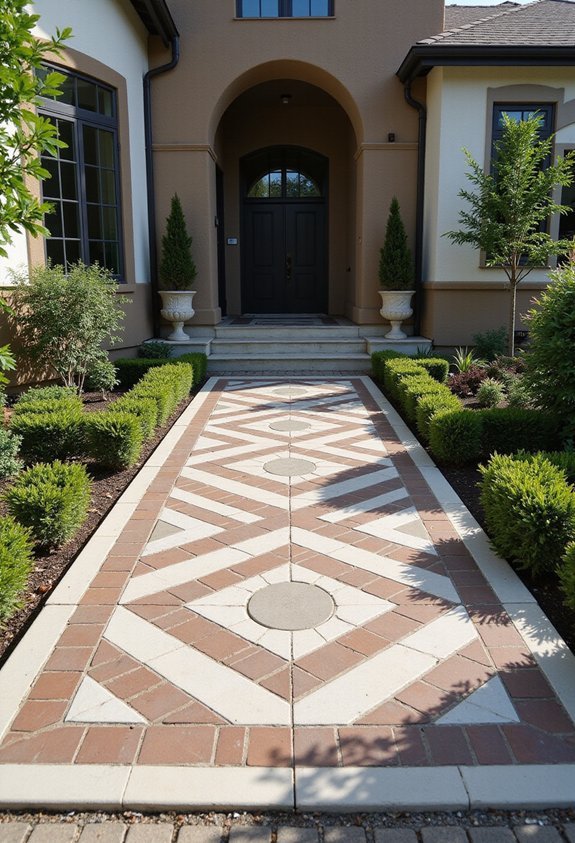
Geometric patterned patio surfaces create striking visual focal points through the strategic arrangement of shapes, lines, and repetitive designs that transform ordinary front yard spaces into sophisticated outdoor living areas. You’ll find hexagonal tiles, diamond layouts, and chevron patterns offer distinct aesthetic appeals for different architectural styles. These designs work effectively with materials like concrete pavers, natural stone, and porcelain tiles. When planning your geometric patio, you should consider the scale of patterns relative to your space size, ensuring larger patterns complement bigger areas while smaller motifs suit compact front yards for ideal visual balance.
Raised Front Patios For Better Curb Appeal
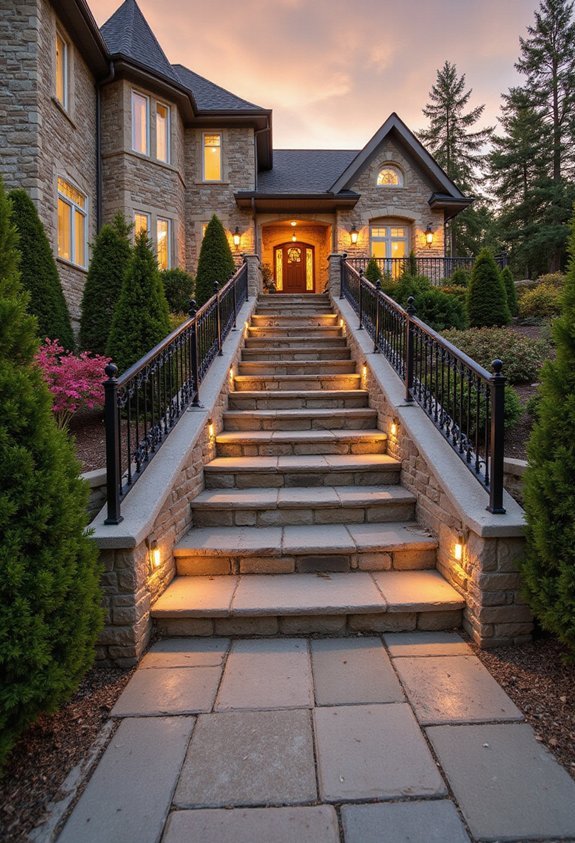
Elevation adds dramatic impact to front yard patios by creating distinct levels that naturally draw attention and establish your outdoor space as a prominent landscape feature. You’ll achieve enhanced visual interest by constructing raised platforms that separate your patio from surrounding lawn areas, making the space appear more intentional and designed. Build raised patios using retaining walls, stone blocks, or concrete foundations that lift the surface twelve to eighteen inches above ground level. This elevation technique creates clear boundaries between different landscape zones while improving drainage and preventing water pooling during heavy rainfall seasons.
Budget-Friendly Paver Options That Look Expensive
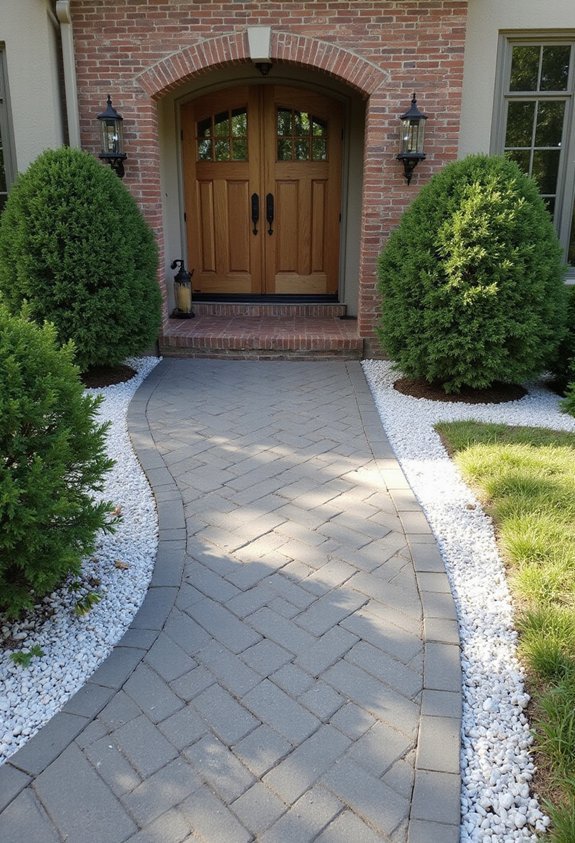
While premium natural stone can strain your renovation budget, concrete pavers offer sophisticated appearances that rival expensive materials at fraction of the cost. You’ll find concrete pavers that mimic travertine, slate, and brick textures through advanced manufacturing techniques. Choose large-format pavers in neutral colors like charcoal, beige, or warm gray to create upscale appearances. Installing pavers in running bond or herringbone patterns adds visual interest without additional material costs. You can achieve premium looks by selecting pavers with consistent color variations and subtle surface textures that replicate natural stone’s organic characteristics while maintaining durability.
Special Features And Focal Points
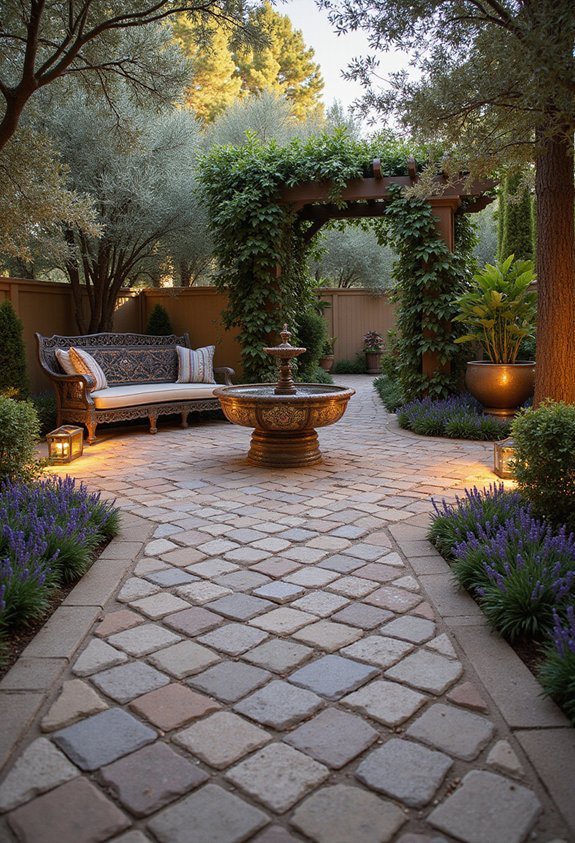
A well-designed front yard patio becomes extraordinary when you incorporate special features that serve as natural gathering points and conversation starters. You’ll create visual impact with a striking fire pit positioned as your central focal point, surrounded by comfortable seating that encourages relaxation. Consider installing decorative water features like fountains or small ponds that add soothing sounds while masking street noise. Built-in planters filled with colorful flowers define your space’s boundaries and provide seasonal interest. Strategic outdoor lighting highlights these features after dark, extending your patio’s usability into evening hours while creating dramatic shadows and warm ambiance.
Pergola-Covered Front Patio Sanctuaries
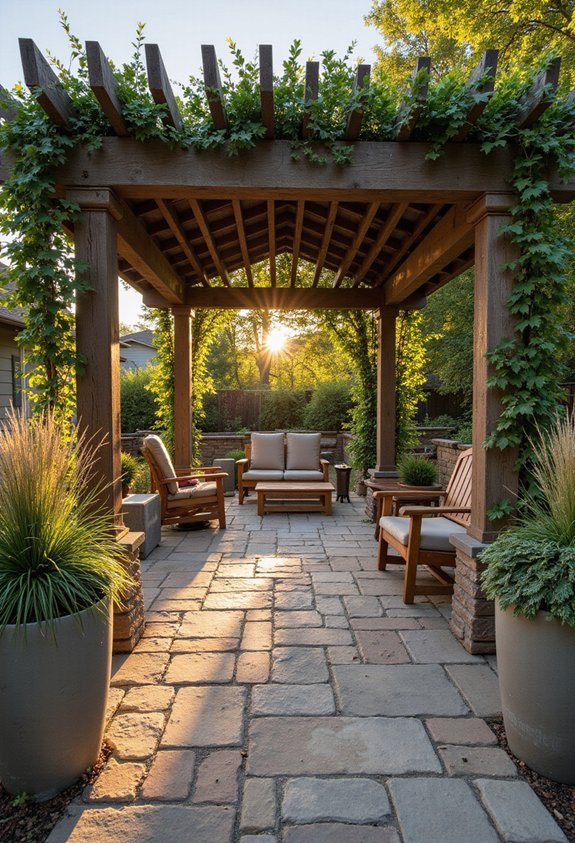
Beyond creating stunning focal points, pergolas offer one of the most transformative additions you can make to your front yard patio by providing both architectural definition and practical overhead coverage. You’ll gain immediate protection from harsh sunlight while creating distinct zones within your outdoor space. Position your pergola strategically to frame seating areas, dining spaces, or entrance pathways, ensuring the structure complements your home’s architectural style. Install climbing vines like jasmine or wisteria along the framework to develop natural shade coverage over time. Consider adding outdoor curtains or retractable canopies for enhanced privacy and weather protection during different seasons.
Fire Pit Areas For Evening Gatherings
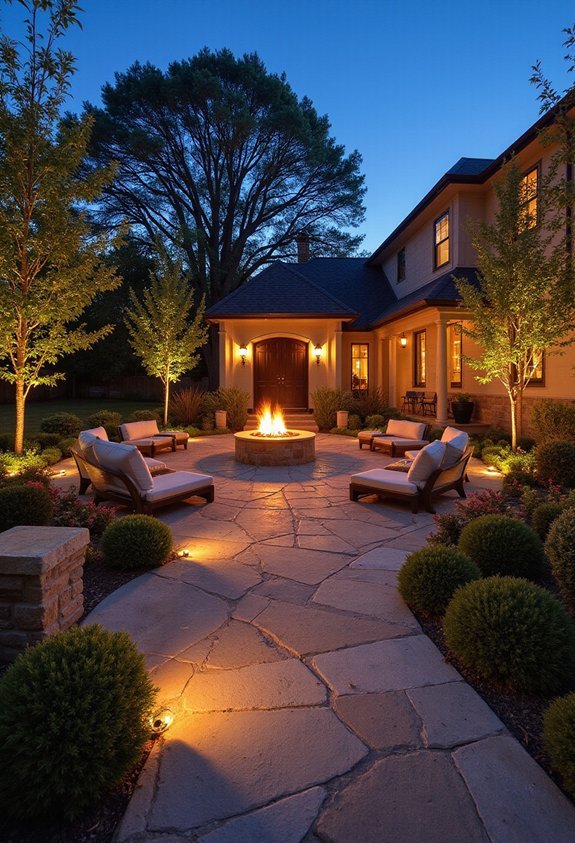
Fire pit areas bring warmth and ambiance to your front yard patio while extending your outdoor entertaining season well into cooler months. Position your fire pit at least eight feet from your home’s exterior walls, fencing, and overhanging branches to guarantee safety compliance. Choose between portable metal bowls for flexibility or permanent stone installations for lasting appeal. Surround the fire feature with heat-resistant seating like concrete benches, stone blocks, or metal chairs arranged in a semicircle to encourage conversation. Install proper drainage underneath permanent installations, and keep a fire extinguisher or water source nearby for emergency situations.
Water Features That Welcome Guests
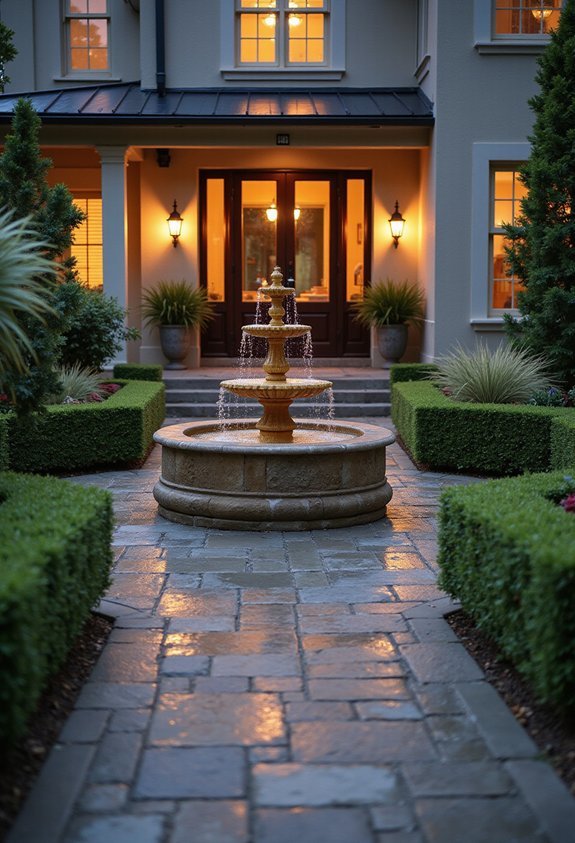
When you incorporate water features into your front yard patio design, you’ll create an inviting atmosphere that masks street noise while adding visual interest and tranquil sounds for your guests. Small fountains work well in compact spaces, requiring only electrical outlets for recirculating pumps. Wall-mounted water features save floor space while providing the same soothing effects. You can install pond-less waterfalls that eliminate safety concerns around standing water, making them ideal for families with children. Solar-powered options reduce energy costs and simplify installation since you won’t need electrical connections, though they require direct sunlight for ideal performance throughout the day.
Built-In Planter Boxes Along Patio Edges
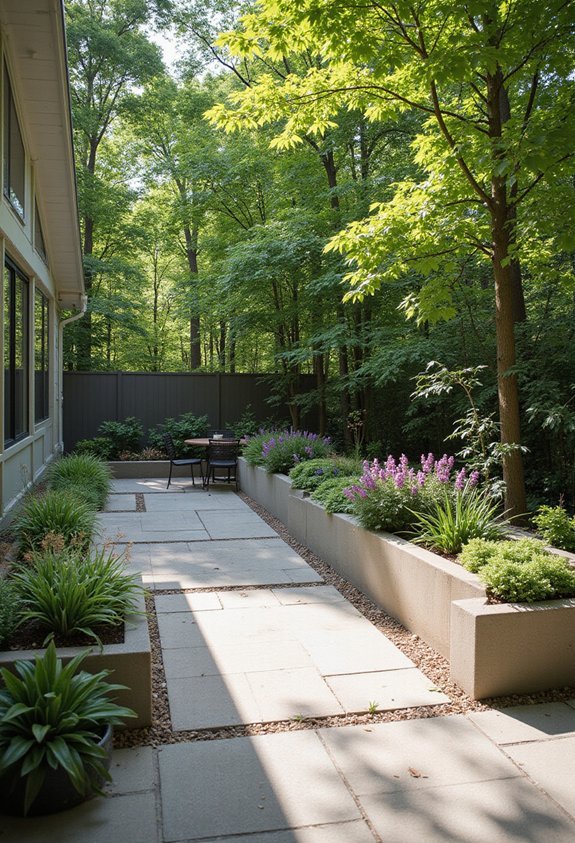
Built-in planter boxes along your patio’s perimeter create defined boundaries while adding natural beauty and functionality to your outdoor space. These permanent structures integrate seamlessly with your hardscaping materials, whether you choose matching stone, complementary brick, or contrasting concrete. Design them at varying heights between twelve and twenty-four inches to create visual interest and accommodate different plant types. Install proper drainage systems with gravel layers and drainage holes to prevent water accumulation and root rot. Select plants that thrive in your climate zone and consider seasonal color changes, evergreen structure plants, and low-maintenance varieties for year-round appeal.
Outdoor Lighting Ideas For Magical Evenings
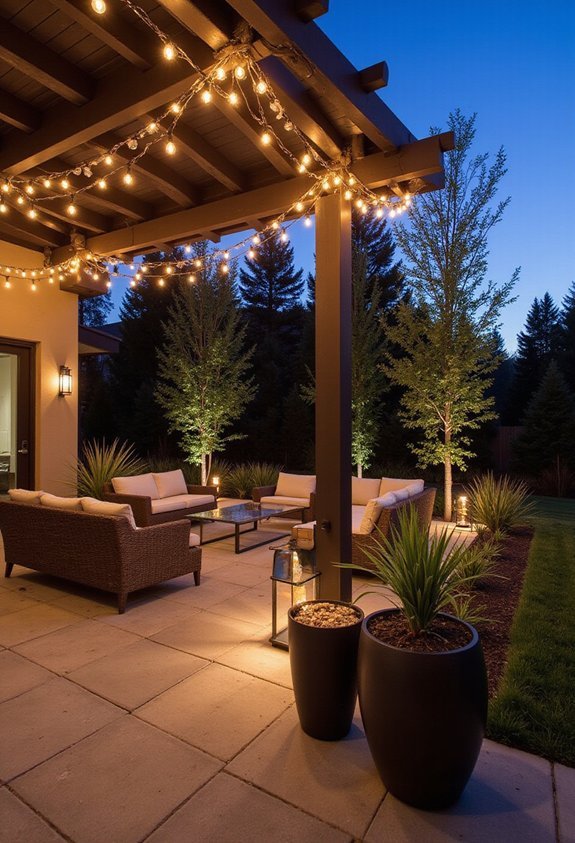
Strategic lighting transforms your front yard patio from a daylight-only space into an enchanting evening retreat that extends your outdoor living hours well into the night. Install string lights overhead to create warm ambient illumination that defines your seating areas. Place solar pathway lights along walkways to guide guests safely while adding visual interest. Consider uplighting trees or architectural features with LED spotlights to create dramatic shadows and depth. Add lanterns or candles on tables for intimate dining atmospheres. Layer different light sources at varying heights to establish zones and prevent harsh shadows while maintaining proper visibility for activities.
String Light Installation For Cozy Ambiance
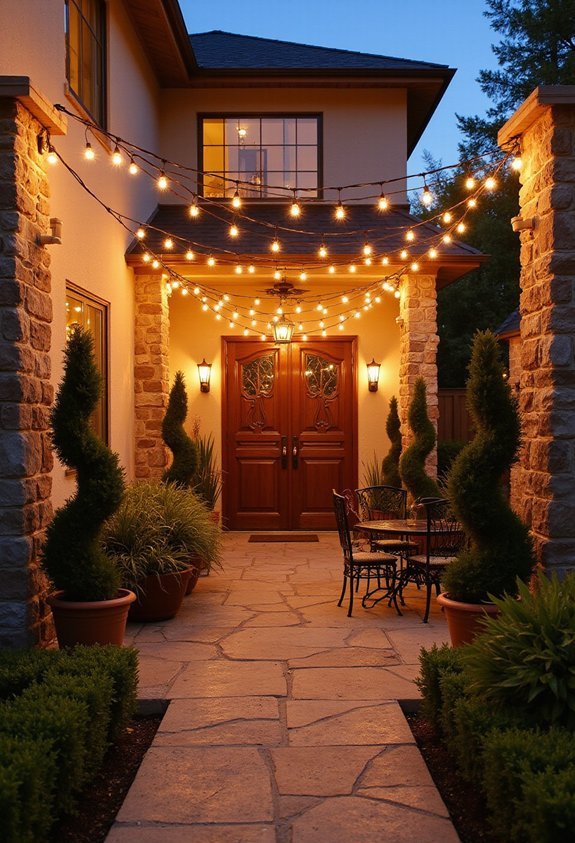
String lights create the most versatile and cost-effective foundation for your front yard patio’s evening ambiance, offering endless installation possibilities that can accommodate any space size or architectural style. You’ll need to plan your power source first, determining whether battery-operated or plug-in options work best for your layout. Install sturdy anchor points using eye hooks, shepherd’s hooks, or existing architectural features like porch columns and tree branches. Measure distances carefully to prevent sagging, maintaining consistent spacing between lights for uniform illumination. Choose warm white LEDs for longevity and energy efficiency, creating gentle pools of light that enhance your patio’s welcoming atmosphere.
Privacy And Comfort Solutions
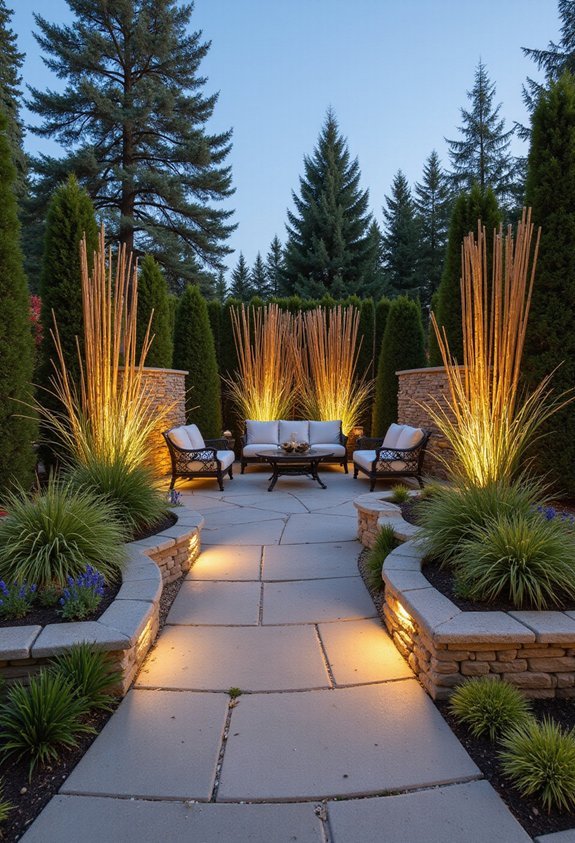
While your front yard patio serves as an inviting outdoor space, you’ll need effective privacy solutions to create comfortable boundaries that shield your activities from street traffic and neighboring properties without sacrificing the welcoming atmosphere you’ve worked to establish. Install lattice panels with climbing vines, decorative screens, or tall planters filled with evergreen shrubs to block unwanted views while maintaining curb appeal. Position outdoor furniture strategically, using larger pieces like sectional seating or dining sets to create natural barriers. Add weather-resistant cushions, throw pillows, and outdoor rugs to enhance comfort and establish distinct zones within your patio space.
Creating Intimate Seating Behind Privacy Screens
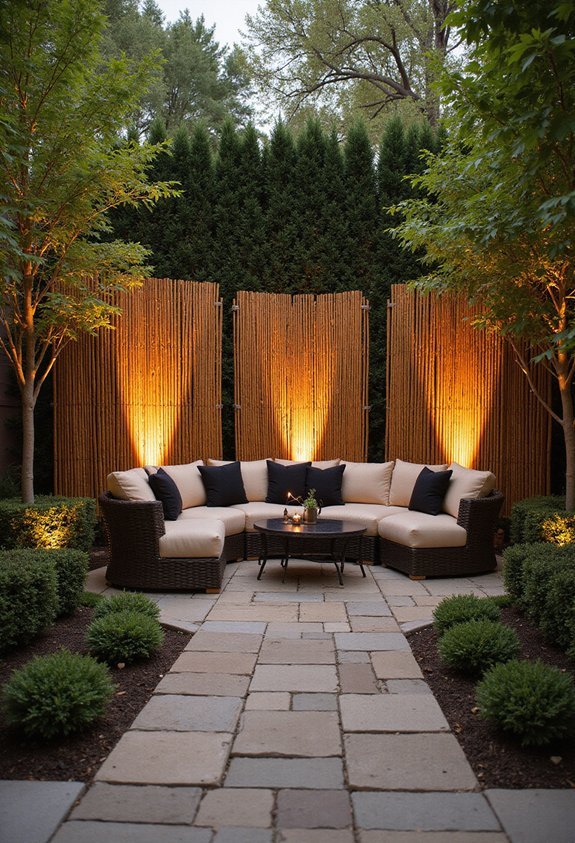
Once you’ve installed your privacy screens, you can transform the sheltered space behind them into a cozy retreat that feels completely separate from the busy street beyond your front yard. Position your main seating pieces at least three feet from the screens to create breathing room and prevent the area from feeling cramped. Arrange chairs and sofas in a conversational U-shape or L-configuration, angling them slightly inward to encourage interaction while maintaining clear sightlines throughout the space. Add a low coffee table or side tables within arm’s reach of each seat, ensuring guests can easily access drinks and personal items.
Privacy Solutions That Don’t Block Views
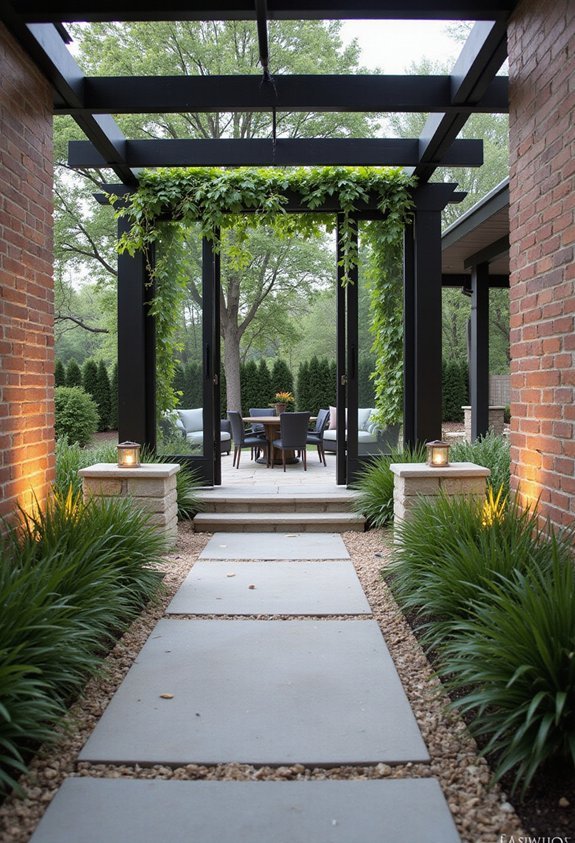
If you’re concerned about creating privacy while maintaining your connection to the neighborhood, you’ll find that several strategic solutions can shield your patio without completely blocking your view of the surrounding area. Install partial-height screens that reach only chest or shoulder level, allowing you to see over them while seated. Consider glass panels or acrylic barriers that create physical separation without visual obstruction. Strategically placed planters with ornamental grasses or medium-height shrubs provide natural screening while preserving sightlines above the foliage. You can also use decorative lattice panels that filter views rather than completely blocking them.
Outdoor Ceiling Fans For Hot Summer Days
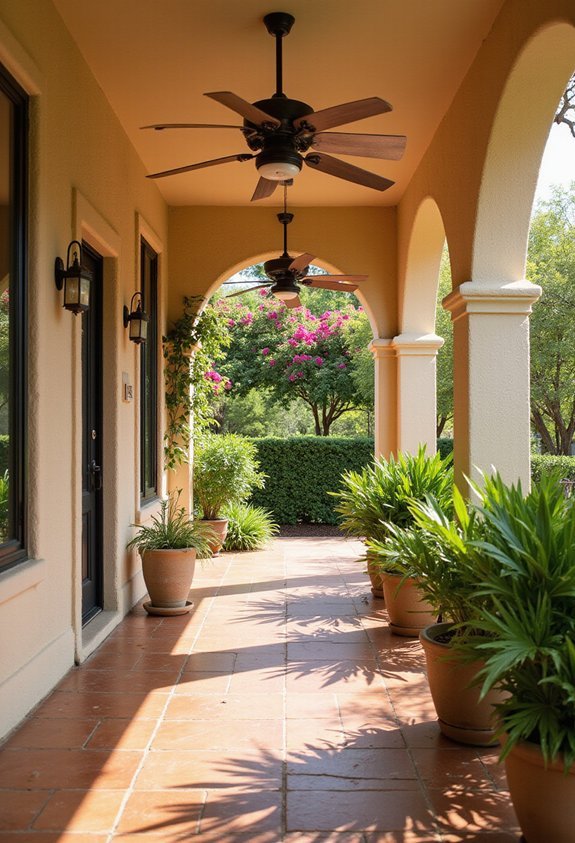
Because front yard patios receive direct sunlight for most of the day, installing an outdoor ceiling fan becomes essential for creating a comfortable space during the hottest months of the year. You’ll need to select a fan specifically rated for outdoor use, which means it’s built with weather-resistant materials and sealed motors that can withstand moisture and temperature changes. Mount the fan at least eight feet above the ground to guarantee proper airflow circulation, and consider models with variable speed controls so you can adjust the breeze intensity based on current weather conditions and your comfort preferences.
Wind Protection Ideas For Exposed Front Patios
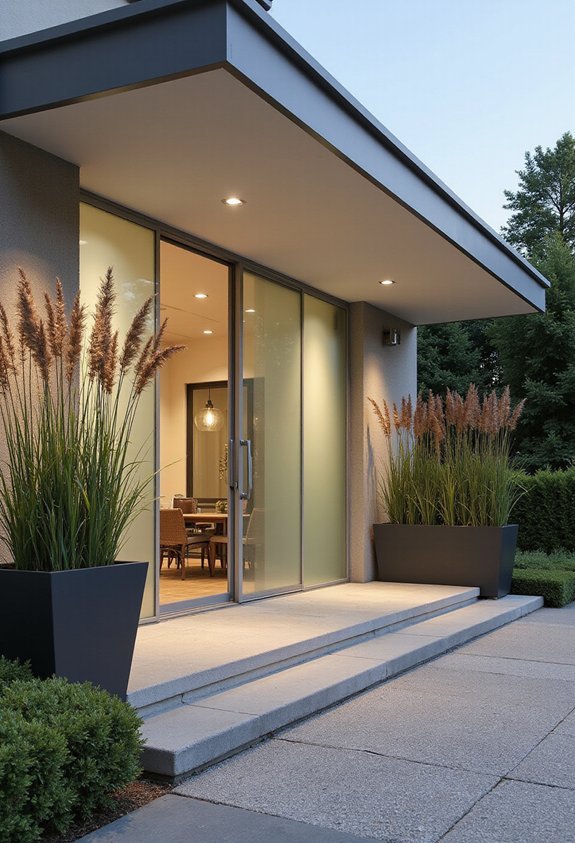
While outdoor ceiling fans help circulate air and provide cooling relief, front yard patios often face the challenge of strong winds that can make your outdoor space uncomfortable and potentially unsafe for lightweight furniture and decorations. You can install permanent windbreaks like glass panels, lattice screens, or decorative fencing along the windward sides of your patio. Portable solutions include retractable screens, outdoor curtains, or strategically placed tall planters with dense shrubs. Consider adding a pergola with side panels that you can adjust based on wind direction and intensity for maximum flexibility and protection.
Climate-Specific Considerations
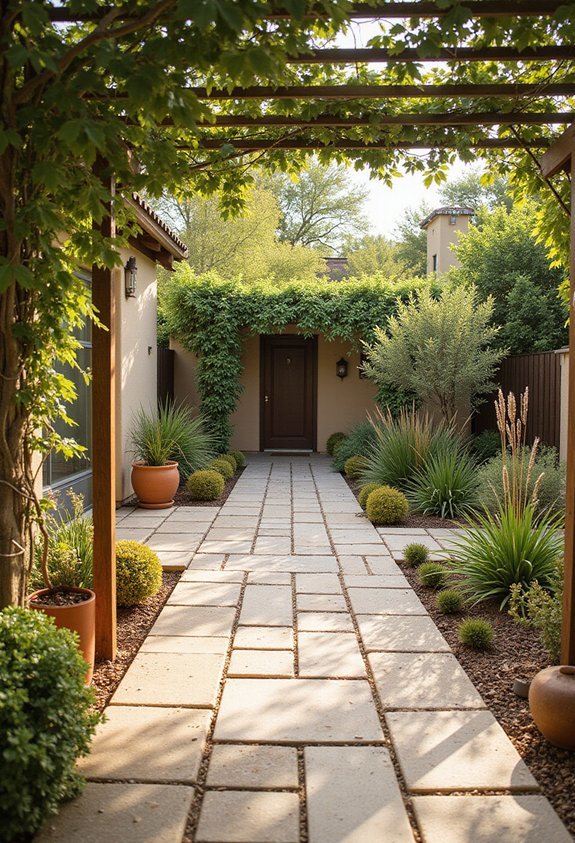
Beyond wind protection, your front yard patio design must account for your specific climate zone and seasonal weather patterns to guarantee year-round functionality and comfort. In hot, arid regions, you’ll need shade structures like pergolas, awnings, or strategically planted trees to block intense sun exposure during peak hours. Cold climate zones require heated elements such as fire pits, outdoor heaters, or radiant heating systems installed beneath paving materials. Humid areas benefit from elevated surfaces that promote air circulation and prevent moisture accumulation, while regions with heavy rainfall need proper drainage systems and covered sections to maintain usability during storms.
Northern Climate Front Patios Built For Winter
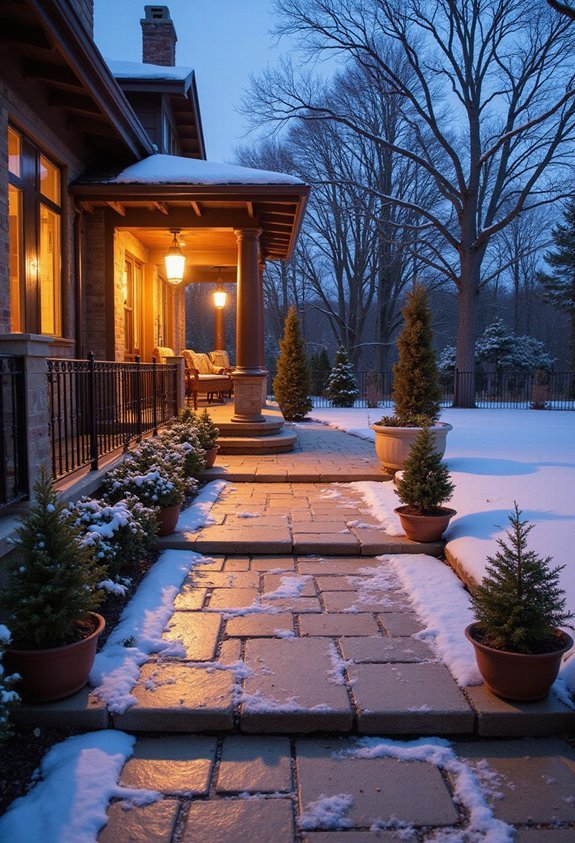
When designing a front patio for northern climates, you must prioritize materials and features that withstand freezing temperatures, heavy snow loads, and frequent freeze-thaw cycles that can crack or damage standard patio elements. Choose concrete with proper air entrainment, natural stone like granite or slate, or interlocking pavers with sand joints that allow movement. Install adequate drainage systems to prevent water accumulation and ice formation. Consider heated elements such as radiant heating cables beneath the surface or heated mats for walkways. Add windbreaks like pergolas or privacy screens to reduce wind chill and create comfortable microclimates during winter months.
Southern Front Patio Heat Management
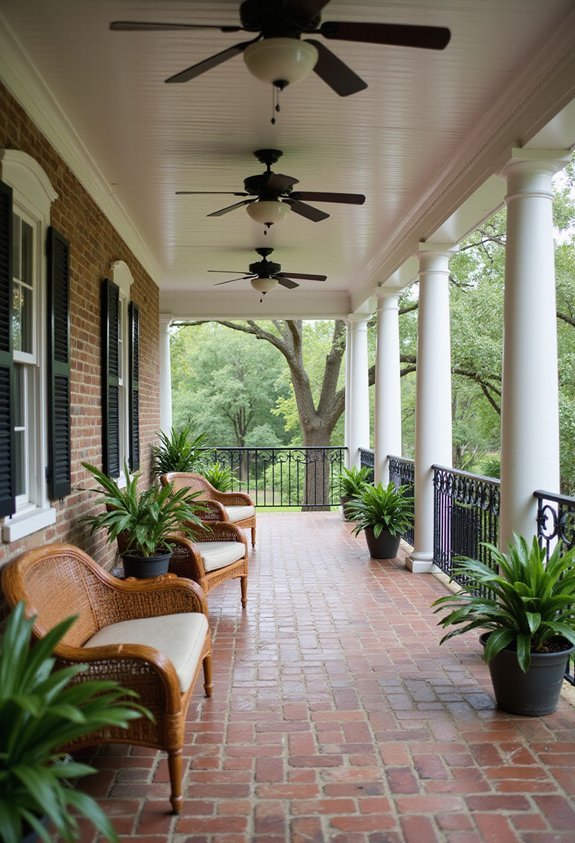
Since southern climates present unique challenges with intense heat, blazing sun, and high humidity levels that can make outdoor spaces uncomfortable for most of the year, you’ll need to implement strategic cooling solutions and protective measures when designing your front patio. Install overhead shade structures like pergolas, awnings, or shade sails to block direct sunlight during peak hours. Choose light-colored materials for paving and furniture, as they reflect heat rather than absorbing it. Add ceiling fans or misting systems to create air circulation and cooling effects. Plant trees strategically to provide natural shade and reduce ambient temperatures.
Coastal Front Patio Weather Resistance
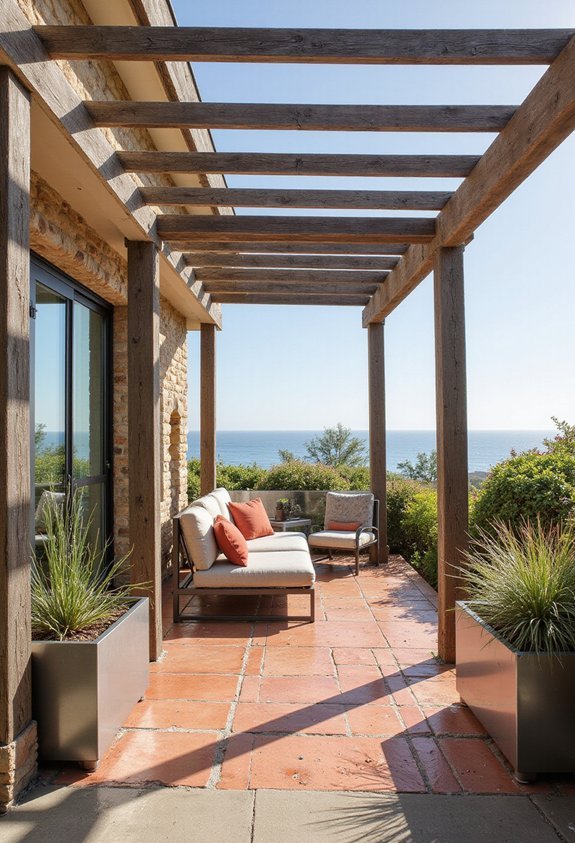
Coastal properties face distinctly different environmental challenges than inland southern locations, requiring specialized materials and design approaches that can withstand salt air, high winds, and frequent storms. You’ll need corrosion-resistant materials like marine-grade aluminum, stainless steel hardware, and composite decking that won’t deteriorate from salt exposure. Install wind-resistant furniture with weighted bases or built-in storage compartments, and choose fabrics treated with UV and mildew protection. Consider adding windbreaks through strategic plantings of salt-tolerant shrubs, and guarantee proper drainage systems to handle heavy rainfall while preventing water damage to your patio’s foundation and surrounding structures.
Desert Landscape Front Patio Solutions
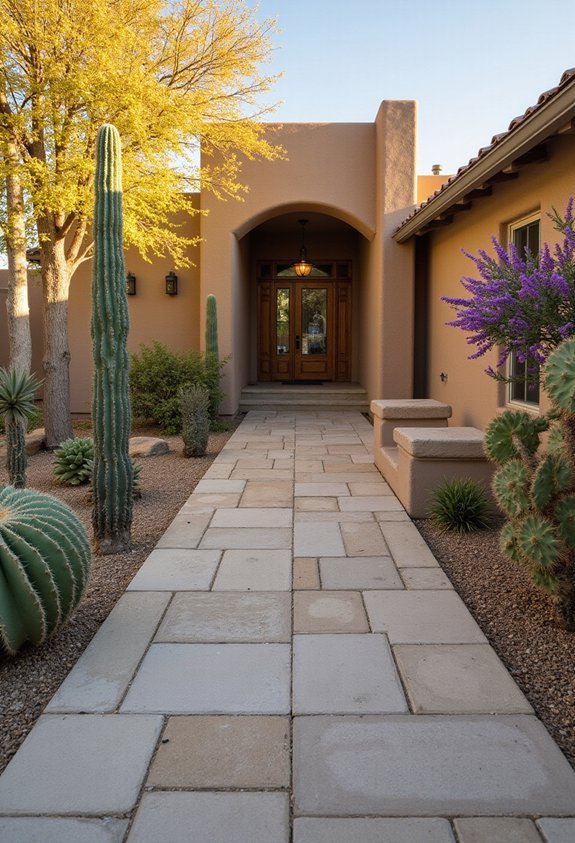
Desert environments present unique challenges for front patio construction that require careful material selection and strategic design choices to combat extreme heat, intense UV radiation, and minimal rainfall. You’ll need heat-resistant materials like natural stone, concrete pavers, or ceramic tiles that won’t crack under temperature fluctuations. Install shade structures such as pergolas, awnings, or strategically placed trees to create comfortable outdoor spaces. Choose drought-tolerant plants like succulents, cacti, and native desert species that thrive without frequent watering. Consider adding misters or fans for cooling, and use light-colored surfaces to reflect heat rather than absorbing it.
Landscaping Integration
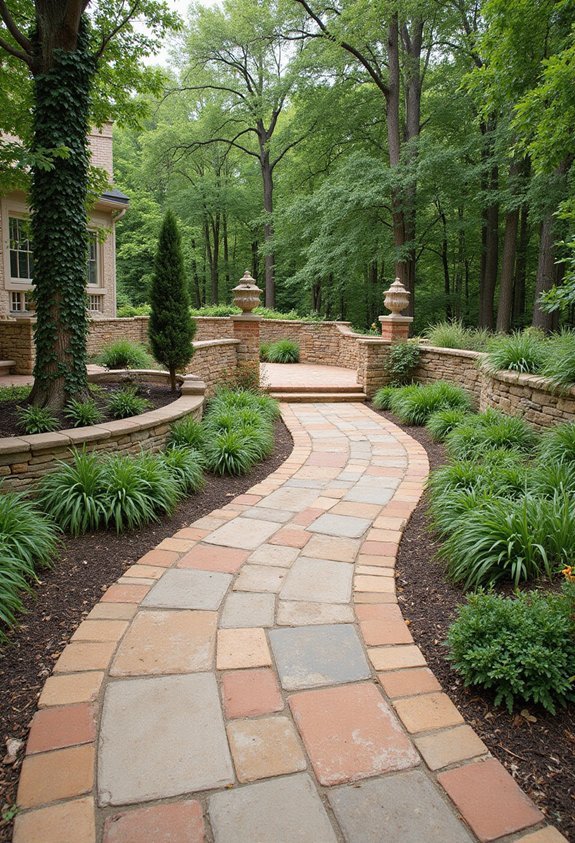
Creating a successful front yard patio requires thoughtful integration with your existing landscape to achieve a cohesive design that enhances your property’s overall aesthetic appeal and functionality. You’ll need to ponder your home’s architectural style, existing plants, and natural terrain when planning your patio placement and materials. Select complementary colors and textures that echo elements already present in your yard, such as matching stone materials to your home’s foundation or choosing plants that bloom in coordinating colors. Additionally, you should incorporate existing mature trees or shrubs into your design rather than removing them, creating natural boundaries and shade areas.
Tree-Integrated Patio Designs That Flow Naturally
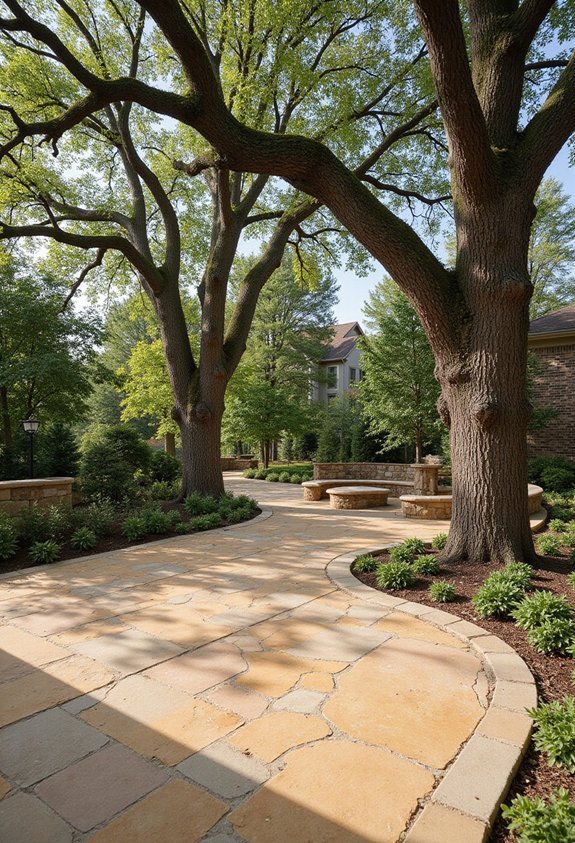
Why remove beautiful mature trees when you can design your front yard patio to embrace and showcase these natural focal points? You’ll create stunning curved pathways that wind around tree trunks, using flexible materials like flagstone or brick pavers that adapt to root systems. Build raised planting beds around tree bases, incorporating mulch and shade-loving plants that complement the canopy above. Design split-level patios that step around large roots, creating natural seating areas beneath branches. You can install permeable surfaces that allow water and nutrients to reach tree roots while maintaining elegant walkways that guide guests toward your entrance.
Tropical Plant Selections For Front Patios
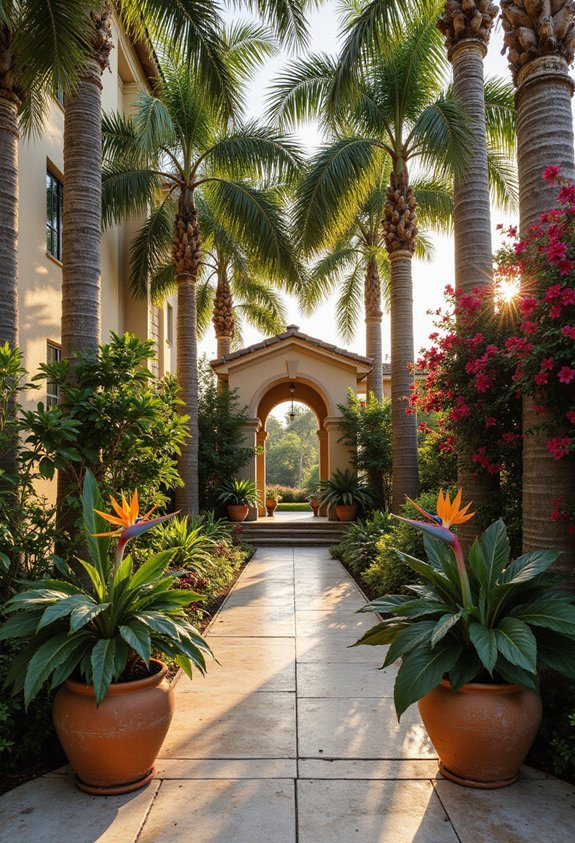
When you’re selecting tropical plants for your front patio, you’ll want to focus on species that thrive in your specific climate zone while creating an inviting entrance that welcomes guests year-round. Choose hardy palms like windmill or Mediterranean fan palms for dramatic height and structure. Add colorful bromeliads and bird of paradise for striking focal points that produce vibrant blooms. Include fragrant jasmine or plumeria near seating areas to create sensory appeal. Layer different textures with broad-leafed elephant ears, spiky agaves, and cascading Boston ferns. Consider seasonal rotation containers for tender varieties that require winter protection in cooler climates.
Seasonal Decoration Strategies For Year-Round Appeal
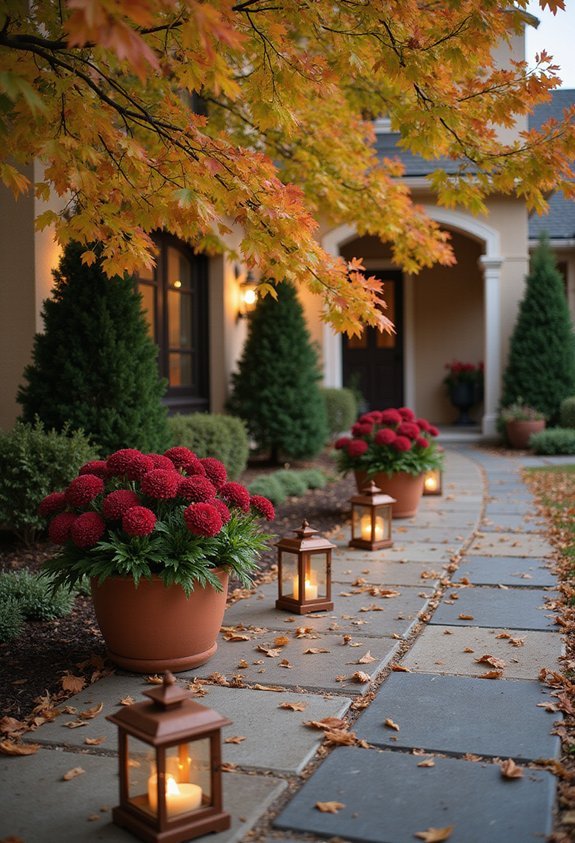
The art of seasonal decoration transforms your front yard patio from a static outdoor space into a dynamic welcome area that reflects the changing rhythms of nature throughout the year. You’ll need to establish a rotation system using portable containers, seasonal lighting, and weather-resistant accessories that can shift smoothly between seasons. Spring requires fresh pastel colors through cushions and lightweight fabrics, while summer demands vibrant umbrellas and cooling elements. Fall calls for warm-toned decorations like pumpkins and autumn wreaths, and winter necessitates evergreen arrangements with subtle lighting to maintain visual interest during dormant months.
Color Schemes That Match Your Home’s Exterior

Building upon your seasonal decoration foundation, you’ll discover that selecting colors for your front yard patio requires careful consideration of your home’s existing exterior palette to create a unified and visually appealing outdoor space. Start by identifying your home’s primary colors, including siding, trim, and roof materials, then choose patio elements that either complement or contrast strategically with these tones. Neutral patios work well with bold house colors, while homes with subdued exteriors can accommodate more vibrant patio accents. Consider your landscaping’s seasonal colors, ensuring your patio scheme harmonizes with both architectural features and natural elements throughout the year.
Practical Planning And Installation
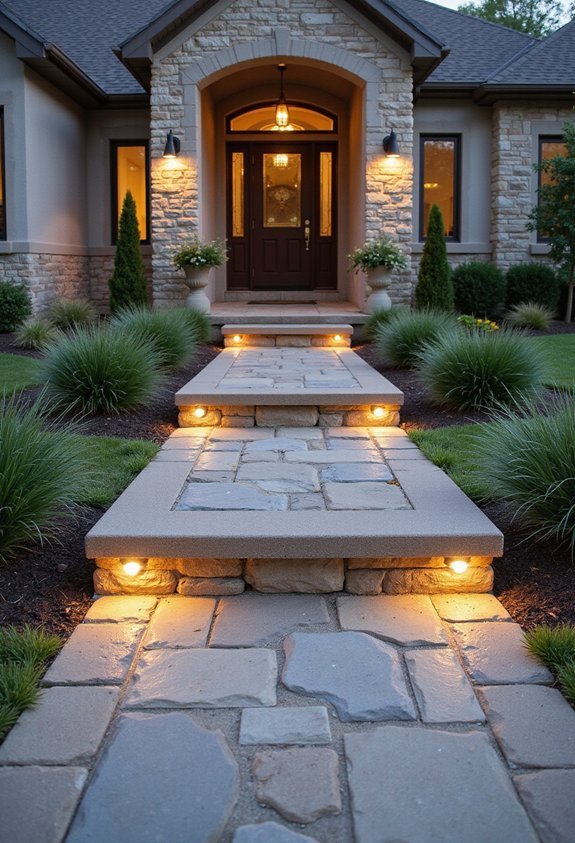
Successful front yard patio installation depends on thorough planning that addresses site preparation, material selection, and local building requirements before you break ground. Begin by checking with your local building department about permits, setback requirements, and utility line locations. Mark underground utilities through your area’s 811 service at least two days before excavation. Measure your designated space accurately, accounting for proper drainage slopes of one-quarter inch per foot away from your home’s foundation. Choose materials that complement your home’s architecture while considering your budget, climate conditions, and long-term maintenance requirements for ideal durability.
Building Front Patios On Sloped Yards
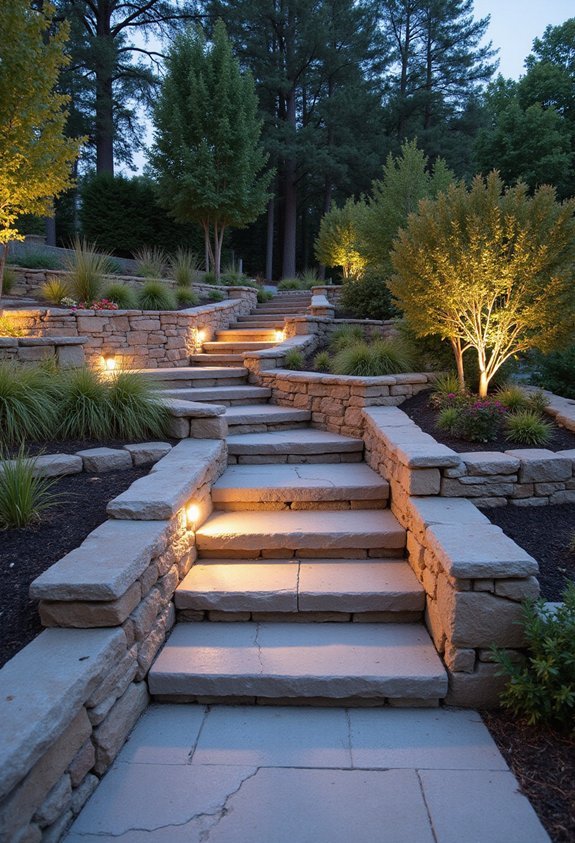
Sloped front yards present unique challenges that require specialized techniques to create level, stable patio surfaces. You’ll need to excavate and grade the area, removing soil from higher elevations while adding fill material to lower sections. Install proper drainage systems, including French drains or perforated pipes, to prevent water accumulation behind retaining structures. Build retaining walls using concrete blocks, natural stone, or treated timber to hold back soil and create terraced levels. Compact each layer of base material thoroughly, ensuring adequate slope for water runoff. Consider stepped patios that follow the natural grade for cost-effective installation.
Conclusion
You’ve learned about various patio styles, from modern minimalist designs to rustic stone installations, that can transform your home’s entrance. Now you can select appropriate materials, colors, and decorative elements that complement your home’s architecture. Remember to contemplate seasonal decoration strategies and practical installation challenges like sloped yards. With careful planning and attention to detail, you’ll create a welcoming front patio that enhances your home’s curb appeal and leaves visitors with a memorable first impression.