Fall transforms your front yard into a canvas for celebration. The season’s natural palette of warm colors, textural elements, and harvest abundance provide everything needed to create genuinely festive streetside displays. Yet many homeowners default to predictable decorations that feel more novelty than design. The front yards that capture authentic fall festivity are those where decorations feel intentional, where color choices complement your home’s architecture, and where elements work with seasonal plantings rather than against them. These 26 ideas demonstrate how to create fall displays that feel sophisticated and celebratory while honoring the season’s natural beauty and maintaining the refined aesthetic that makes your home genuinely inviting.
Stack Crates and Gourds for Rustic Height
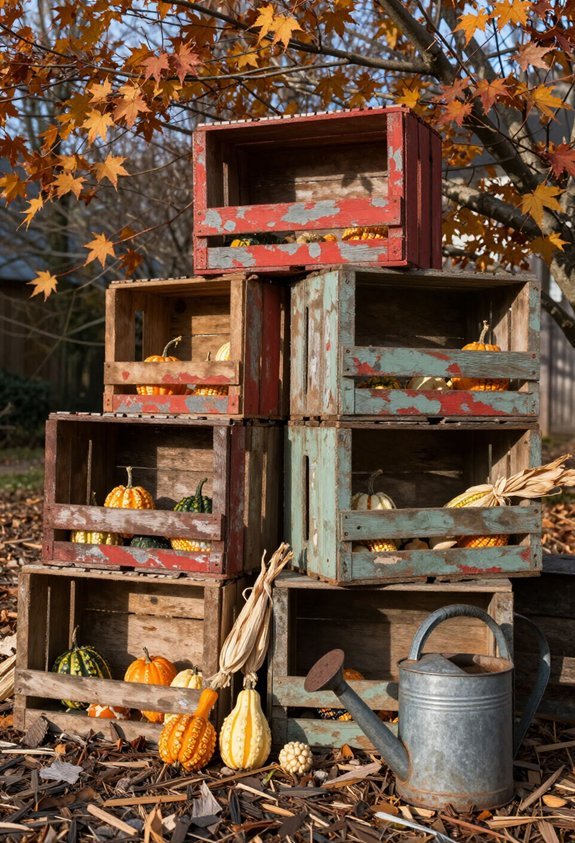
Stack wooden crates in asymmetrical tiers to create vertical interest along porch steps or garden pathways, securing each layer with small nails or outdoor adhesive to prevent shifting during autumn storms. Weathered or distressed crates produce authentic rustic character, while uniform paint application yields cohesive visual structure. Gourds of varying sizes, shapes, and surface textures occupy crate compartments and surrounding surfaces, establishing organic contrast against rigid wooden geometry. Warty, smooth, elongated, and rounded specimens distribute visual weight unevenly, mimicking natural accumulation. Miniature gourds fill narrow gaps between larger decorative elements, eliminating empty spaces that disrupt compositional flow. Dried corn husks, bundled wheat stalks, or twisted grapevine weave through crate slats, adding linear elements that extend vertical reach. This arrangement requires minimal maintenance, withstands temperature fluctuations, and adapts to spaces of limited horizontal dimension.
Also read: 20+ MINIMALIST FRONT YARD Ideas With Clean Lines!
Layer Mums and Pumpkins by Your Front Door
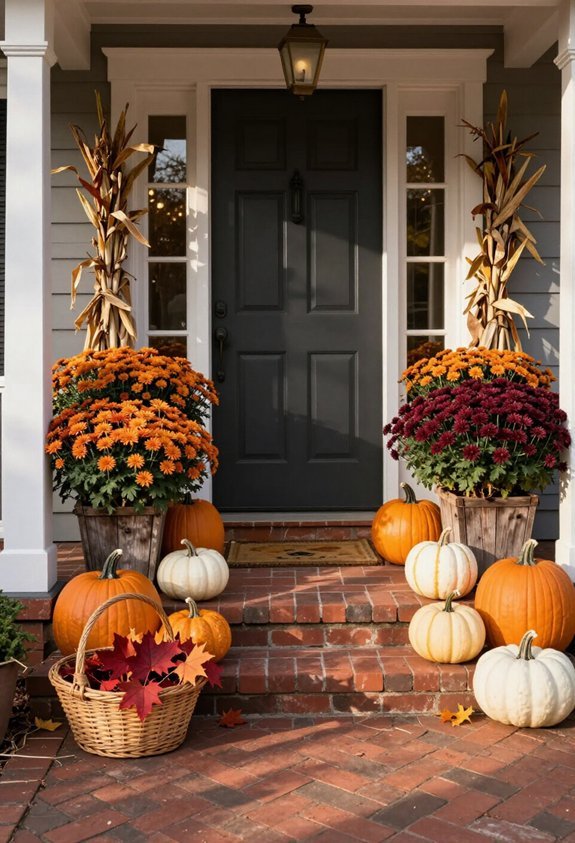
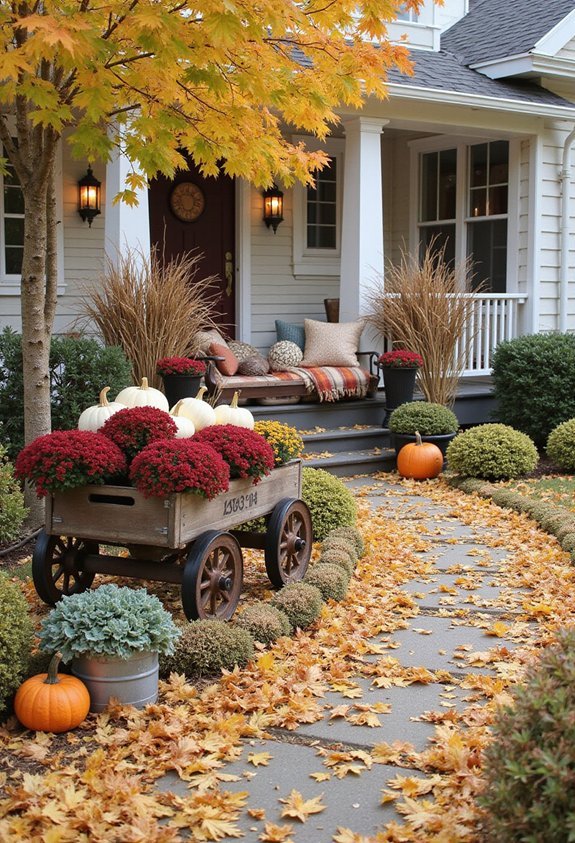
As autumn temperatures begin to drop and daylight hours shorten, the combination of chrysanthemums and pumpkins creates an immediate seasonal presence at residential entry points that requires thoughtful spatial arrangement to achieve visual balance. Select three to five mums in complementary colors such as burgundy, gold, and orange, placing the largest containers at the rear and smaller specimens forward to establish depth. Position pumpkins of varying sizes between and slightly in front of the floral groupings, ensuring each gourd rests on a stable surface to prevent rolling. Stack medium pumpkins atop inverted pots for elevation, while nestling small specimens directly at ground level. This layered approach generates visual interest through height variation and textural contrast, drawing the eye naturally toward the doorway without obstructing pedestrian traffic.
Plant Kale and Cabbage in Galvanized Tubs
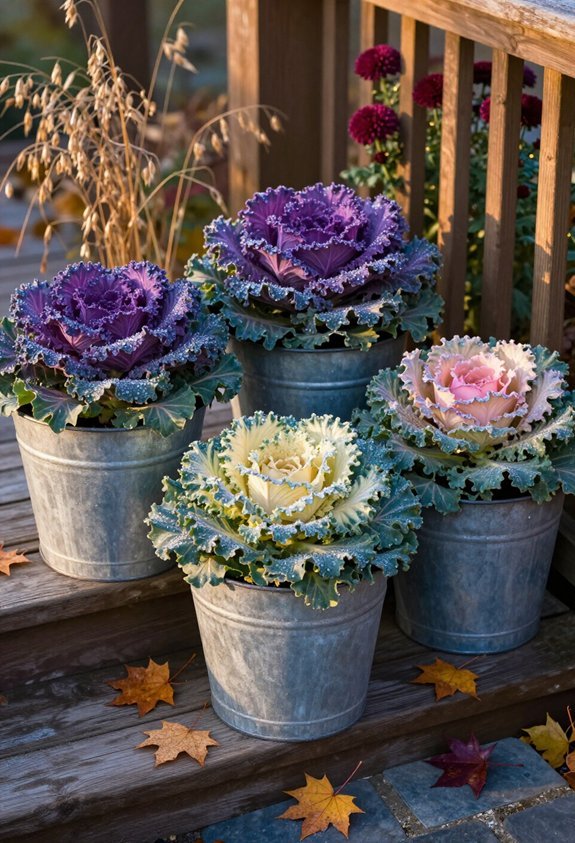
Although flowering plants dominate many autumn displays, ornamental kale and cabbage provide structural foliage that persists through frost and deepens in color as temperatures fall, making them ideal candidates for container arrangements that anchor shifting garden spaces. Galvanized tubs offer durability alongside rustic aesthetic compatibility with fall themes. Select containers measuring fourteen to twenty inches in diameter, ensuring adequate drainage holes to prevent root rot from autumn rainfall. Fill tubs with potting soil mixed with slow-release fertilizer, then plant kale and cabbage varieties featuring purple, white, or green rosettes at consistent depths. Position containers near entryways or along pathways where their geometric leaf patterns create visual rhythm against dormant perennial beds. Maintain consistent moisture without saturation, allowing these brassicas to develop saturated coloration through repeated cold exposure.
Drape Faux Leaf Garlands Across Your Porch Railing
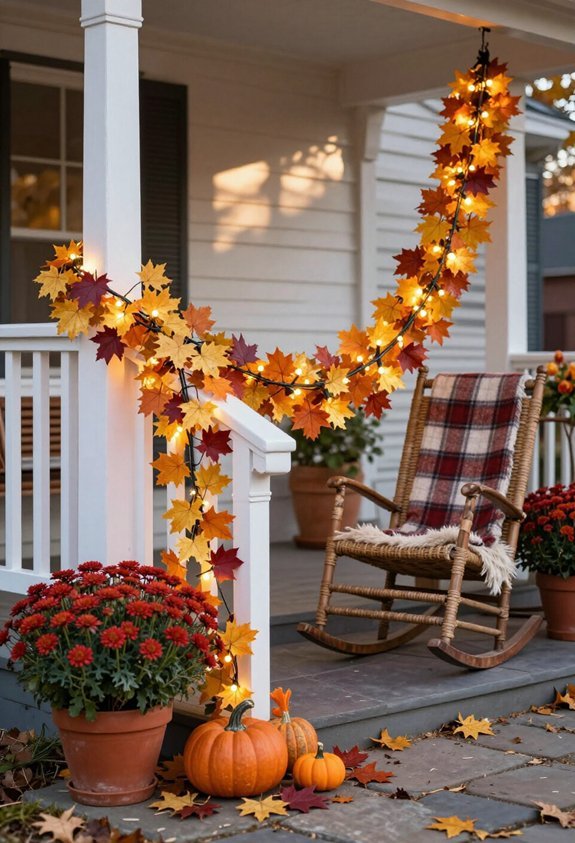
While container plantings establish grounded focal points, vertical elements extend seasonal interest upward and outward, drawing the eye across architectural features that might otherwise remain visually dormant. Faux leaf garlands offer a practical solution for porch railings, requiring no maintenance while providing consistent color throughout autumn months. These artificial vines, constructed from fabric or plastic polymers, resist wind damage and moisture degradation that affect organic materials.
Installation requires minimal tools: weather-resistant zip ties or clear fishing line secure garlands at measured intervals. Draping techniques vary by railing design; swagged patterns create rhythmic curves, while taut horizontal placement emphasizes linear architecture. Maple, oak, and birch leaf varieties provide color gradients from amber to crimson. Interwoven berry clusters or miniature gourds increase textural complexity. Properly secured garlands withstand seasonal storms without sagging or displacement.
Line Your Walkway With Lanterns and LED Candles
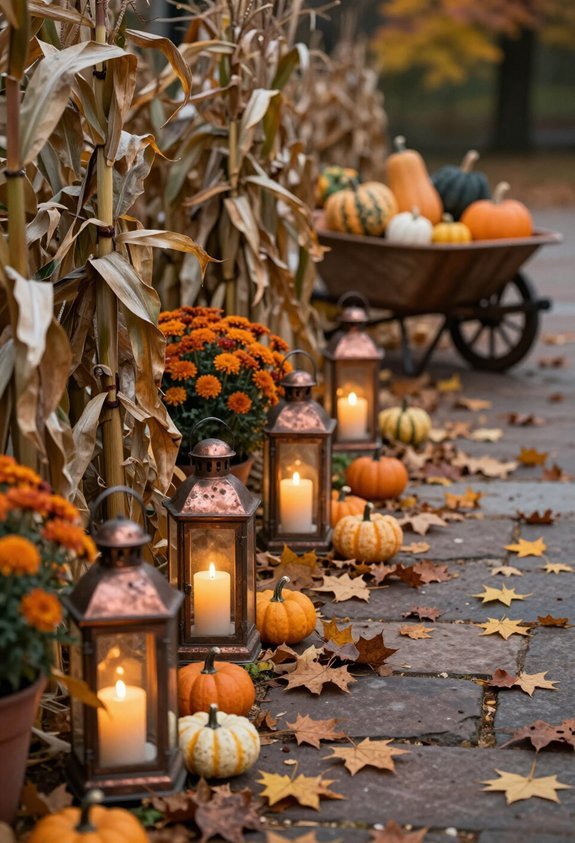
Illuminate your walkway with lanterns and LED candles to establish a welcoming path that guides visitors toward your entrance while extending decorative appeal into the evening hours. Select weather-resistant lanterns constructed from metal, glass, or treated wood to withstand autumn precipitation and temperature fluctuations. Position these fixtures at regular intervals along both sides of the walkway, maintaining consistent spacing of approximately three to four feet for visual rhythm. Insert LED candles featuring realistic flickering effects and automatic timers to eliminate manual operation and conserve battery life. Choose candle colors in deep amber, burnt orange, or cream to complement seasonal foliage. Secure lanterns on flat stones or purpose-built stakes to prevent tipping during wind events. This arrangement creates layered illumination that enhances safety while contributing warm, ambient light to the overall fall display.
Tuck Mini Gourds Into Window Boxes With Ivy
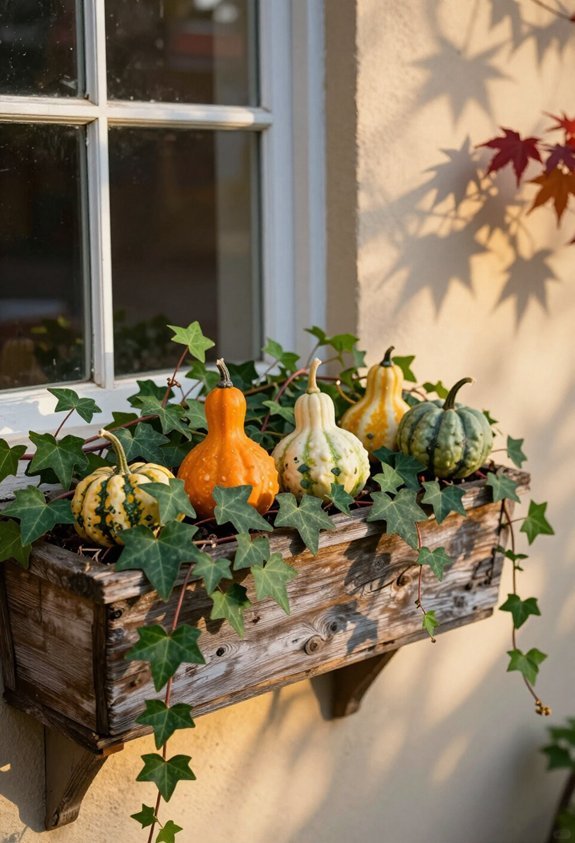
Moving upward from ground-level arrangements, window boxes offer an elevated platform for extending autumnal display into vertical dimensions. Miniature gourds, selected in varied shapes and muted earth tones, nestle effectively among trailing ivy vines, creating layered textural contrast. The ivy, with its lobed leaves and vining habit, provides a living green backdrop that complements the gourds’ organic forms. Installation requires minimal effort: position the gourds at varying depths within the soil, allowing some to rest partially buried while others sit atop the surface for dimensional interest. The combination withstands cooler temperatures, maintaining visual appeal throughout the season. Regular watering sustains the ivy, while the gourds require no maintenance. This arrangement draws the eye toward architectural features, integrating natural elements with the home’s facade.
Hang a Wooden Wreath With Velvet Ribbon
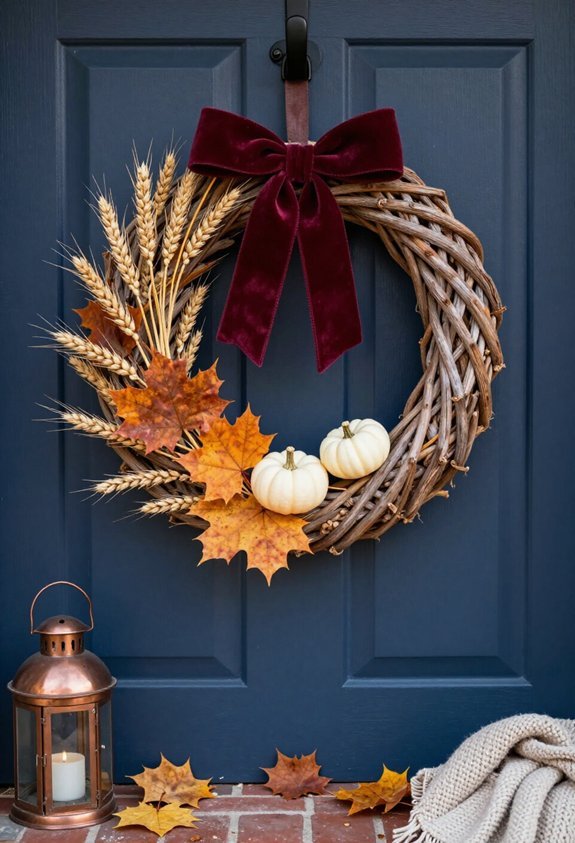
Anchor a wooden wreath to the front door using a wide velvet ribbon, creating a focal point that bridges natural textures with refined material contrast. Select a wreath constructed from grapevine, birch bark, or weathered wood slices to emphasize organic autumnal character. Choose ribbon in deep burgundy, forest green, or burnt orange, measuring three to four inches in width for substantial visual weight. Loop the ribbon through the wreath’s upper portion, securing it with a tight knot or discreet wire before draping it over the door hook, allowing the ends to cascade symmetrically. Position the wreath at eye level, approximately sixty inches from the ground, ensuring it remains centered within the door frame. This combination introduces warmth through material juxtaposition while maintaining structural simplicity suitable for seasonal change.
Fill Buckets With Dried Hydrangeas and Seed Heads
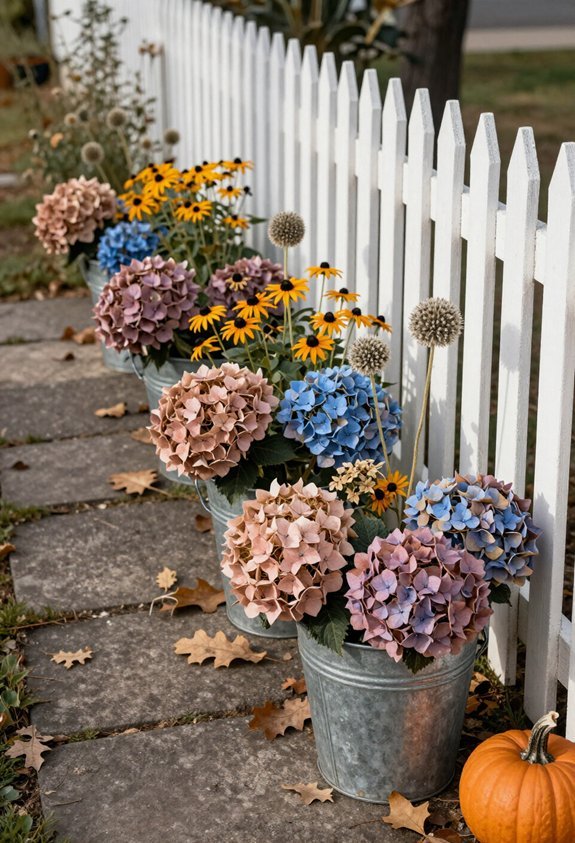
Arrange galvanized metal buckets, weathered wooden crates, or ceramic vessels along porch steps, pathways, or clustered near entryways to establish vertical layers of autumnal interest, then fill each container with dried hydrangea blossoms and assorted seed heads gathered from late-season garden remnants. Select hydrangeas in muted tones of burgundy, sage, and dusty rose, which retain structural integrity once desiccated, and intersperse spherical allium heads, spiky teasel, or velvety cockscomb for textural contrast. Secure stems with floral foam or sand to prevent shifting in wind. Vary container heights to create depth, placing taller arrangements toward the rear and compact groupings forward. This approach requires no maintenance, withstands frost, and shifts seamlessly from early autumn through Thanksgiving, offering enduring visual impact without reliance on seasonal replacements or artificial elements.
Build a Hay Bale Nook With Plaid Throws
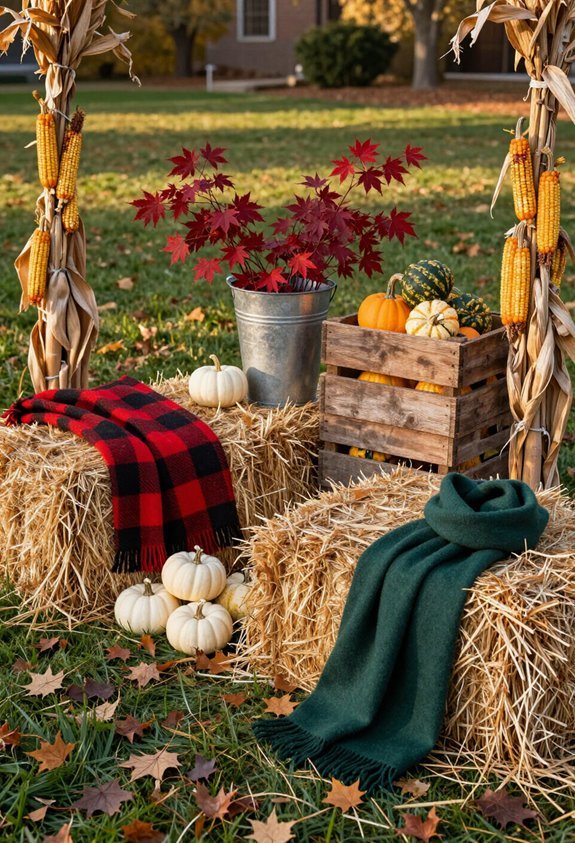
Three rectangular hay bales, arranged in a U-shape or L-shape configuration, establish the foundational structure for an outdoor seating area that invites extended use during crisp autumn afternoons. The bales, positioned on a level surface to prevent shifting, create defined boundaries that contain cushions and define the space. Weather-resistant plaid throws, layered across the seating surfaces, add texture and warmth while protecting clothing from scratchy straw fibers. Additional folded blankets, stored in a wooden crate placed adjacent to the nook, provide supplementary coverage as temperatures decline. The arrangement accommodates two to three individuals comfortably, with the open side oriented toward the yard or street to maintain visibility and airflow. This setup requires minimal maintenance, withstands light precipitation, and dismantles easily after the season concludes.
Cluster Birch Logs and Pumpkins Around Your Mailbox
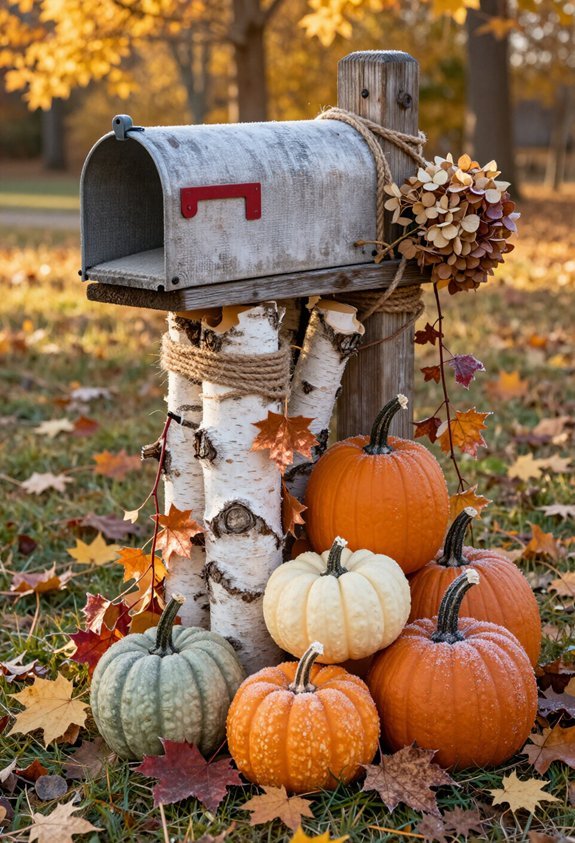
Several upright birch logs, positioned in an asymmetrical grouping beside the mailbox post, create a vertical focal point that draws the eye upward while framing the structure within its surroundings. The pale, peeling bark of the birch provides contrast against darker autumn elements, establishing visual balance through tonal variation. Three to five logs of varying heights, ranging from two to four feet, prove sufficient for most standard mailbox installations.
Pumpkins nestle at the base of this arrangement, with larger specimens placed toward the rear and smaller gourds positioned forward to generate depth and dimension. The rounded forms of the pumpkins soften the vertical lines of the birch, producing complementary geometric tension. Heirloom varieties in muted orange, pale white, and deep green extend the seasonal palette beyond conventional orange.
This installation requires minimal maintenance while withstanding early autumn temperature fluctuations.
String Warm White Lights Through Bare Branches
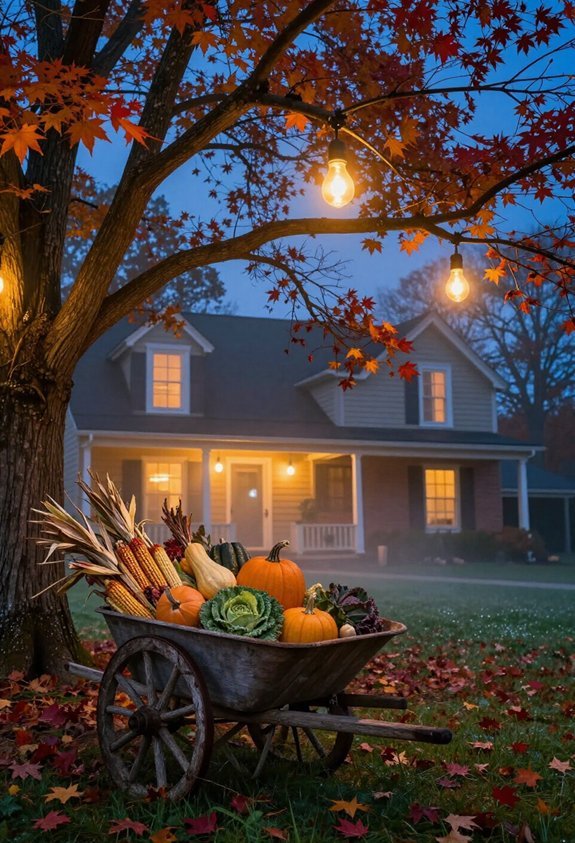
Drape strands of warm white lights through the bare branches of deciduous trees to introduce illumination that extends the visual impact of fall landscaping into evening hours. Select LED strings with amber or soft white tones, avoiding cool blue hues that conflict with autumn palettes. Wrap lights beginning at the trunk, working outward along primary branches in a loose spiral pattern. Secure connections with weather-resistant ties rated for outdoor use. Connect multiple strands through end-to-end outlets, checking manufacturer specifications for maximum wattage capacity. Install timers to activate illumination at dusk, conserving energy while ensuring consistent operation. This technique transforms skeletal canopies into glowing sculptural elements, providing structural definition when flowering plants have finished their seasonal cycle. The resulting effect creates depth perception along property boundaries without requiring additional ground-level fixtures.
Display Heirloom Squash in a Weathered Wheelbarrow
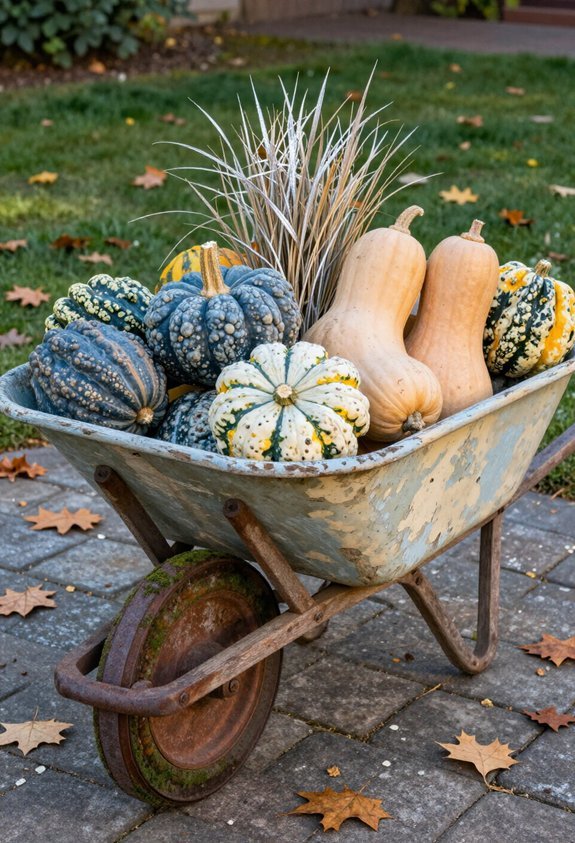
Curators of seasonal staging may select a weathered wheelbarrow as a vessel for presenting heirloom squash varieties, capitalizing on the juxtaposition of rustic metal or aged wood against the smooth, often warty surfaces of ornamental gourds. The wheelbarrow should be positioned at a visible angle near entry pathways, allowing passersby to observe the arrangement from multiple vantage points. Selection of squash requires attention to scale, color gradation, and textural contrast, with specimens ranging from small, striped delicata to large, slate-blue hubbards creating visual hierarchy. Placement follows a deliberate sequence: larger forms anchor the composition at rear and base levels, while medium and small varieties fill intermediate spaces. Some practitioners incorporate dried corn husks or wheat stalks as supplementary elements, though these remain subordinate to the primary squash display. The arrangement requires no additional structural support beyond the wheelbarrow’s natural containment.
Prop Vintage Ladders With Twining Vine Garlands

Vertical wooden rungs offer an ideal framework for suspending dried vine garlands, which may be wound methodically around each side rail and horizontal support of a weathered ladder positioned at an angle against a porch wall or garden shed. The twisting nature of grapevine, bittersweet, or honeysuckle garlands creates visual texture as they loop between rungs, forming natural curves that soften the rigid geometry of the ladder’s structure. Secure placement requires fastening vines at multiple points using neutral-toned floral wire, invisible against the woody stems. For added depth, intersperse dried seed pods, miniature pumpkins, or clusters of artificial berries among the leaves. The ladder’s height draws the eye upward, expanding vertical space in compact yards. Grounding the base with potted mums or stacked gourds anchors the display, preventing visual imbalance. Weathered paint or natural patina on aged wood complements autumnal browns and golds.
Paint Pallet Wood Into Seasonal Welcome Signs
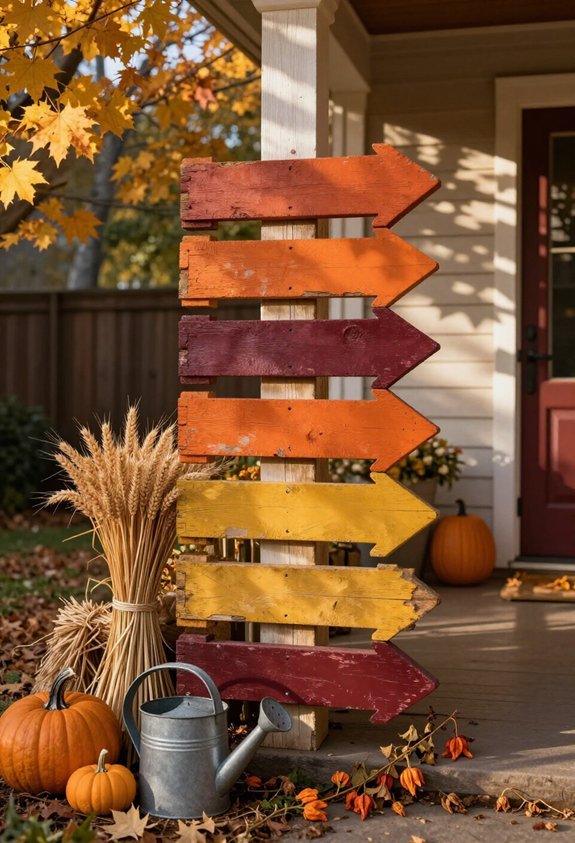
Gather weathered pallet boards and dismantle them carefully to reclaim the wood for rectangular sign panels, selecting planks of similar thickness to guarantee an even painting surface. Sand each piece lightly to remove splinters while preserving rustic texture, then join planks horizontally using wood glue and small nails to form sturdy rectangles. Apply a base coat of burnt orange, deep burgundy, or mustard yellow acrylic paint, allowing complete drying before adding lettering. Use stencils or freehand brushwork to spell “Welcome,” “Harvest,” or “Autumn Blessings” in contrasting cream or black paint. Embellish with simple leaf silhouettes, pumpkins, or acorn corners for seasonal recognition. Seal finished signs with clear matte polyurethane to protect against rain and sun fading. Mount completed signs on posts near walkways or lean against porch railings for immediate curb appeal.
Hang Dried Wheat or Cornstalk Bundles by Your Door
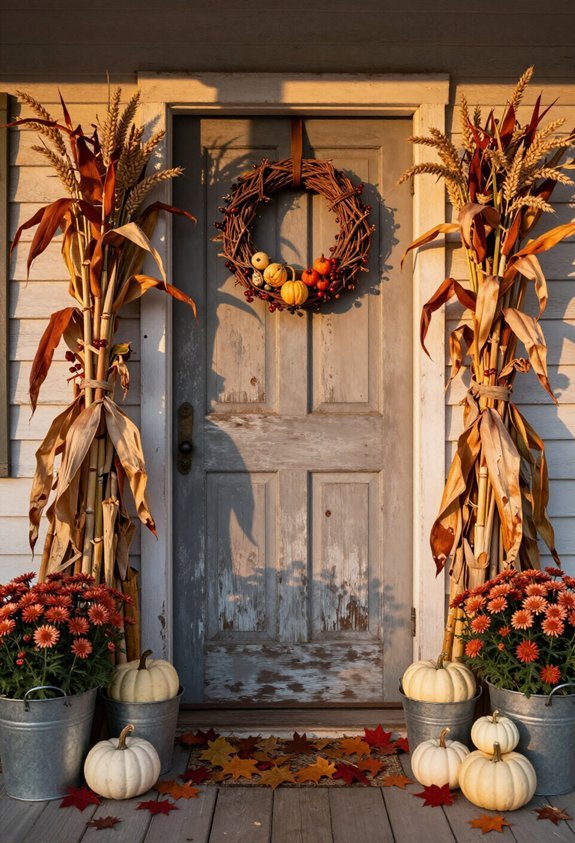
Because dried wheat and cornstalk bundles evoke the traditional harvest aesthetic with minimal effort, they serve as an accessible entry point for seasonal door decoration that requires no specialized crafting skills. These natural elements, readily available at farm stands, craft stores, or harvested from personal gardens, provide texture and vertical interest when positioned beside entryways. Installation involves securing bundles with weather-resistant twine or wire, then attaching them to door frames, porch columns, or exterior wall hooks at varying heights for visual depth. Wheat bundles, with their golden stalks and intact seed heads, offer a refined, slender profile, while cornstalks contribute robust height and rustic character. For longevity, selecting fully dried specimens prevents mold and insect issues. Arranging multiple bundles asymmetrically creates balanced composition without rigid uniformity, allowing organic shapes to dominate the display.
Weave Plaid Ribbons Through Porch Posts

Weave plaid ribbons through porch posts to introduce pattern and color that complements autumn’s earthy palette without requiring permanent modifications to structural elements. Select ribbons measuring two to four inches in width, choosing traditional tartan patterns featuring burgundy, forest green, mustard yellow, or burnt orange hues that coordinate with existing exterior paint colors. Begin at the base of each post, securing the ribbon end with weather-resistant floral wire concealed behind the post, then wrap upward in a spiral pattern maintaining consistent spacing of approximately six inches between loops. At the top, fasten the ribbon securely and allow a short tail to flutter in breezes, or form a simple bow for additional visual interest. This technique works equally well on square or round posts, adapting to various architectural styles from farmhouse to colonial. Remove ribbons promptly after the season concludes to prevent fabric degradation from prolonged sun exposure.
Position Copper Planters by Your Steps
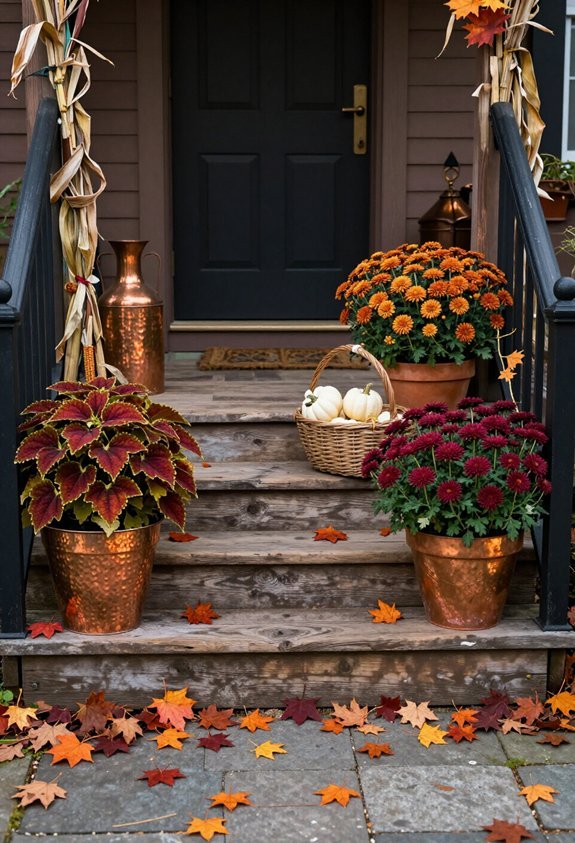
Shifting from fabric elements to metallic accents, copper planters introduce warm, reflective surfaces that catch autumn sunlight and establish visual rhythm along stairway approaches. These vessels, when placed in ascending arrangements beside each step, create deliberate sightlines that guide the eye upward toward entry points. The height of planters should vary slightly, with taller specimens positioned at the stair base and progressively shorter selections ascending, ensuring no sight obstruction occurs for safe passage. Plant selection favors hardy autumn varieties: ornamental cabbage, kale, and sedum provide textural contrast against copper patina. For dimensional interest, planters may be grouped in odd numbers, typically threes, with spacing calculated at approximately eighteen inches from step edges. Drainage holes prevent water accumulation during seasonal rains, while interior liners extend vessel longevity against soil acidity and root expansion pressures.
Frame Your Front Door With Maple Leaf Garlands
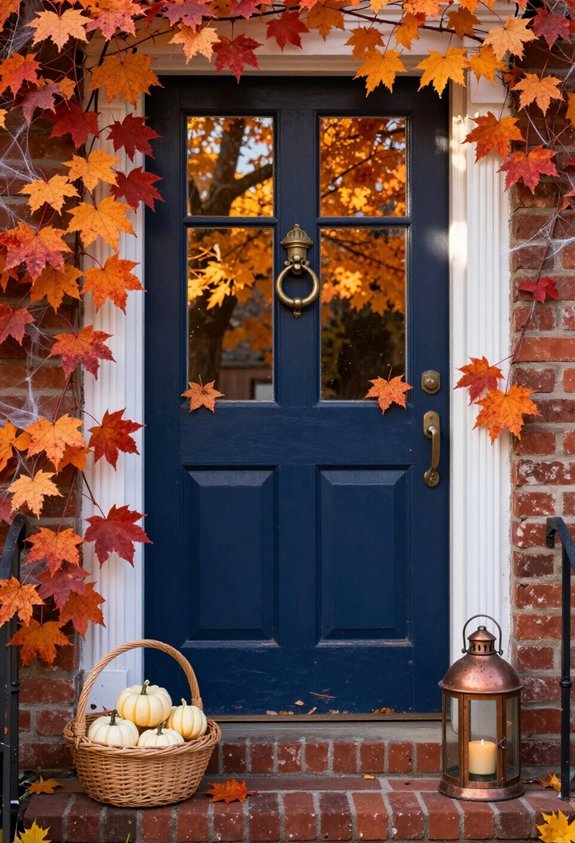
Symmetry offers an immediate visual anchor when maple leaf garlands flank a front door, creating balanced entry frames that signal seasonal shift with deliberate clarity. Woven artificial foliage in burnt orange, crimson, and gold provides durable color that resists autumn precipitation without fading. Installers should measure door height precisely, selecting garlands approximately one and one-half times the frame length to achieve proper draping volume. Secure upper corners with sturdy metal hooks rated for outdoor use, allowing fabric leaves to cascade naturally downward. For enhanced dimension, layer varying leaf sizes, positioning larger specimens at the base where visual weight grounds the composition. Weather-resistant wire stems enable gentle bending around door casings without structural damage. Regular inspection prevents wind displacement, ensuring maintained alignment throughout the season. This framing technique extends decorative impact vertically, drawing observer focus toward the home’s primary entry point with organized intent.
Create Glowing Pumpkins With Battery Fairy Lights
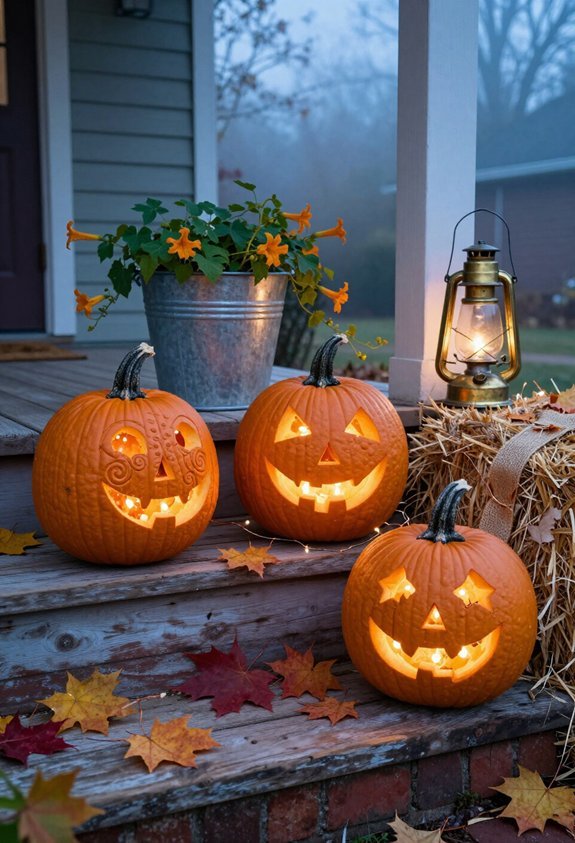
Transform ordinary pumpkins into luminous evening accents by inserting battery-operated fairy lights through carefully carved openings, producing a soft, diffused glow that extends seasonal decoration into nighttime hours. Select firm pumpkins with smooth surfaces, then carve geometric patterns, spirals, or traditional faces using appropriate tools. Create holes large enough to accommodate light strands while maintaining structural integrity. Place battery packs in concealed locations, either inside the pumpkin or tucked behind nearby foliage, ensuring weather protection and easy access for switching on at dusk. Use warm white or amber lights for traditional appeal, or select multicolored options for varied effects. Space bulbs evenly throughout the interior cavity to eliminate dark spots and maximize illumination. Arrange completed pumpkins along walkways, steps, or porch railings, spacing them at measured intervals for visual rhythm. Remove lights before rainfall, and store components separately to preserve functionality for subsequent seasons.
Set Out Vintage Crates Filled With Pillar Candles
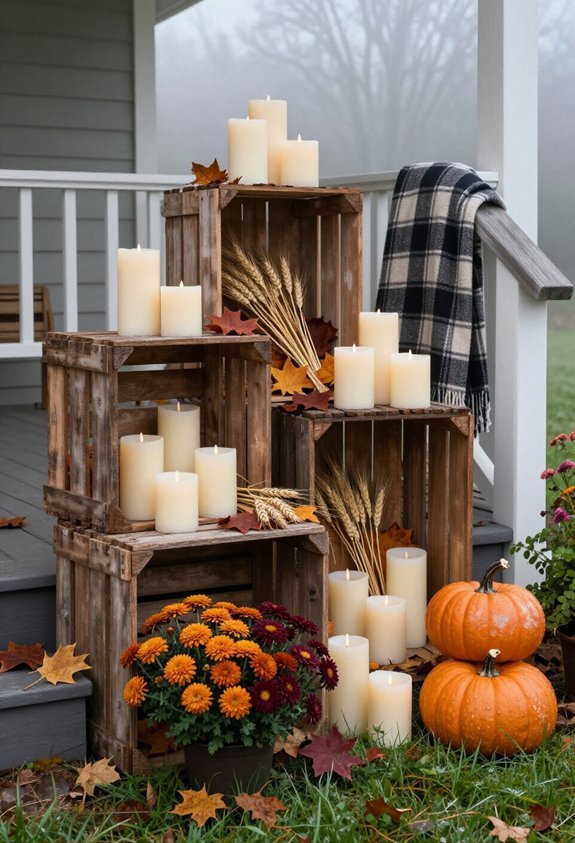
While illuminated pumpkins provide welcoming light along pathways, vintage crates filled with pillar candles establish striking vertical arrangements that draw the eye upward and create intimate gathering spaces. Weathered wooden crates, sourced from flea markets or estate sales, introduce rustic texture and historical character to autumn displays. Arranging three crates in graduated heights produces visual rhythm and dimensional interest against flat surfaces like porches or steps.
Select pillar candles in cream, rust, or deep burgundy to complement fall color palettes. Battery-operated candles eliminate fire hazards while maintaining flickering authenticity. Nestle candles among preserved moss, miniature gourds, or dried wheat stalks to fill gaps and reinforce seasonal themes. Grouping multiple crate arrangements symmetrically flanking entryways frames doorways effectively. For evening entertaining, concentrated candlelight transforms ordinary yards into atmospheric extensions of interior living spaces.
Prop up Chalkboard Signs With Handwritten Greetings
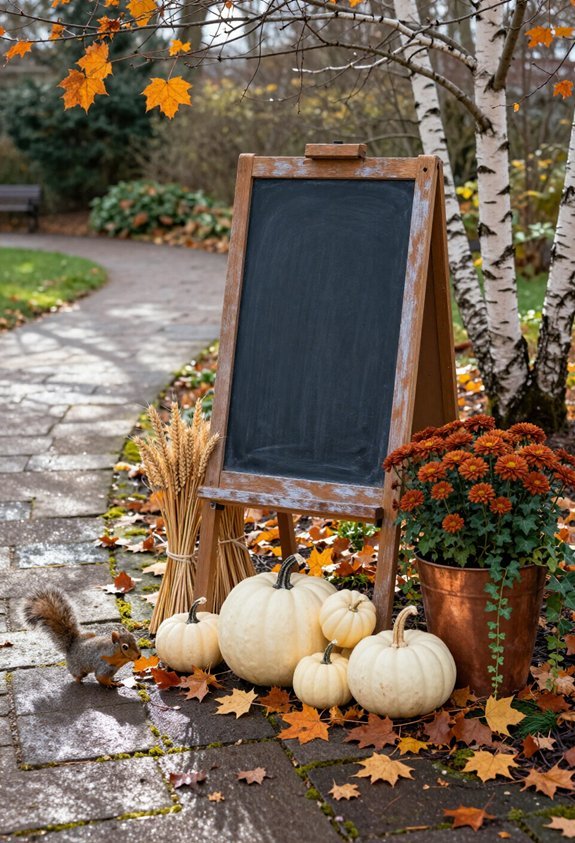
Several chalkboard signs positioned near entryways or garden paths offer visitors immediate, personalized communication that static decorations cannot achieve. Property owners select reclaimed wooden frames or simple easel-style stands to support these reusable surfaces, allowing for seasonal message updates without additional material costs. Messages typically include welcoming phrases, harvest-themed quotes, or directional arrows pointing toward doorways, written with white or orange chalk for visibility against dark backgrounds. Some individuals incorporate small illustrations of leaves, pumpkins, or acorns to reinforce autumnal themes without overwhelming the text. Weather-resistant sealants applied to chalkboard surfaces prevent moisture damage during rain or morning dew, extending functional lifespan throughout the season. Placement requires stable ground or weighted bases to prevent tipping in wind conditions. Regular erasing and rewriting maintains crisp appearance, ensuring continued legibility for approaching guests.
Craft Scarecrow Figures From Old Flannel Shirts
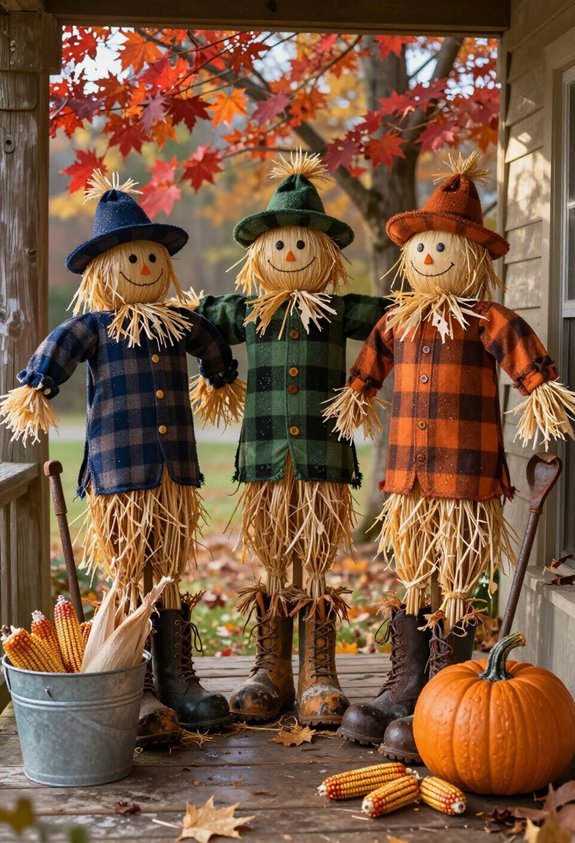
Worn flannel shirts, often stored in closets or purchased secondhand, serve as foundational materials for constructing scarecrow figures that guard garden beds and porch areas throughout autumn months. Crafters begin by selecting shirts in seasonal colors, such as burnt orange, forest green, or deep red, then stuff them with dried straw, crumpled newspaper, or plastic bags to create the torso. Wooden stakes or tomato cages provide internal structure, extending through the neck opening to support a burlap-sack head. Jeans or overalls complete the lower body, secured with rope belts at the waist. Straw hands emerge from cuffed sleeves, while painted facial features or button eyes personalize each figure. Positioned among cornstalks or seated on hay bales, these constructed guardians withstand weather when sprayed with fabric sealant.
Install Motion-Activated Projector Lights for Evenings
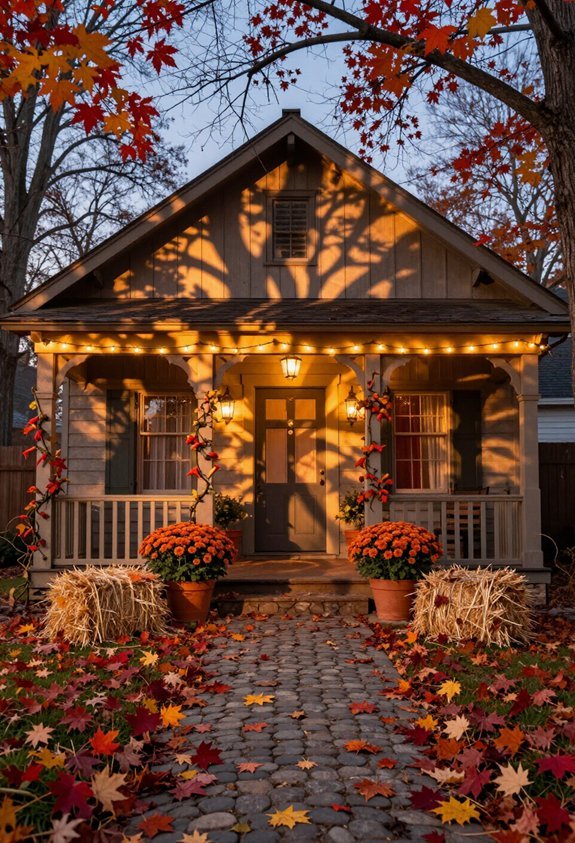
Daytime decorations offer visual interest, but evening hours present opportunities to extend seasonal displays through illumination. Motion-activated projector lights serve this purpose efficiently by casting autumn-themed imagery onto exterior surfaces when darkness falls. Installation requires selection of weather-resistant units rated for outdoor use, with appropriate lumen output to project visible patterns against siding, trees, or lawn areas without overwhelming neighboring properties.
Positioning involves mounting fixtures at ground level or on elevated surfaces, angled to maximize coverage while minimizing direct glare toward pedestrian pathways or street traffic. Sensors detect movement within predetermined ranges, activating amber maple leaves, harvest moons, or swirling pumpkin patterns for thirty-second to two-minute intervals. Energy consumption remains low due to LED technology and intermittent operation. Adjusting sensitivity settings prevents false triggers from small animals or wind-blown debris.
Stencil Fall Motifs Onto Plain Concrete Pavers
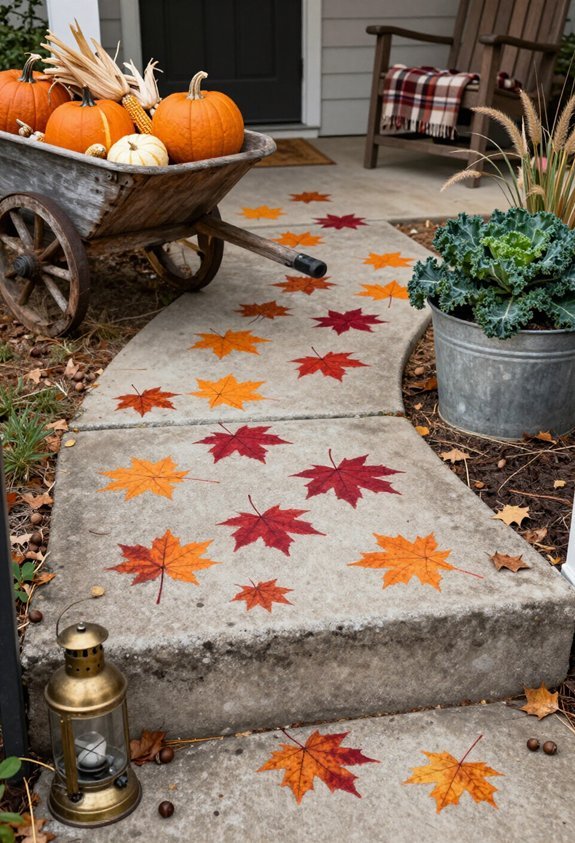
Transform plain concrete pavers into seasonal accents by applying stenciled fall motifs directly onto their surfaces. Select exterior-grade acrylic paint in autumnal hues of burnt orange, deep crimson, golden yellow, and chocolate brown to guarantee weather resistance throughout the season. Clean pavers thoroughly, removing debris and allowing surfaces to dry completely before positioning reusable stencils of maple leaves, acorns, pumpkins, or cornucopias. Secure stencils with painter’s tape to prevent shifting during application, then dab paint gently with a foam brush using vertical stippling motions rather than sweeping strokes to minimize seepage beneath edges. Apply two thin coats for opacity, allowing adequate drying time between layers. Once fully cured, seal with clear polyurethane formulated for outdoor concrete to protect designs from moisture, UV exposure, and foot traffic.
Build a Dried Flower Arch Over Your Garden Gate
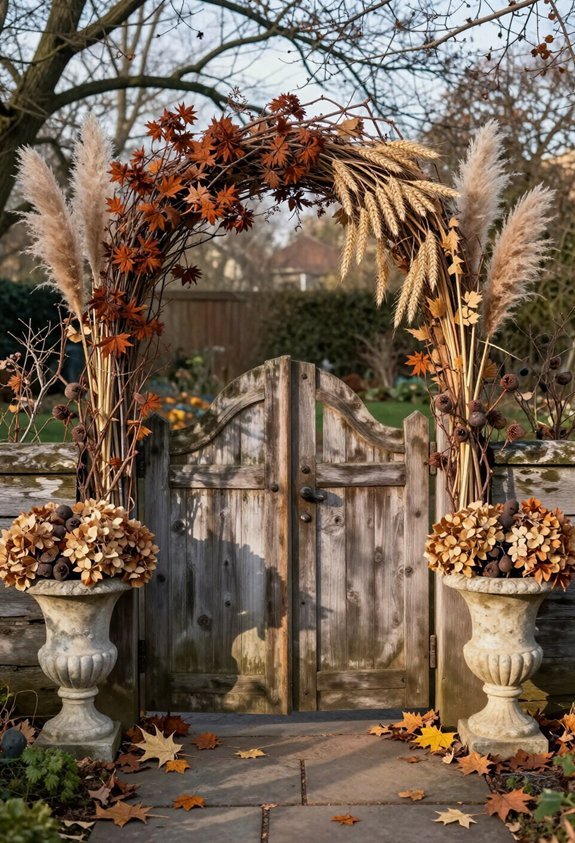
After completing smaller decorative projects like painted pavers, homeowners may wish to undertake a more prominent structural addition that frames an entrance with seasonal botanical elements. A dried flower arch over the garden gate achieves this effect through deliberate construction and material selection.
The process begins with measuring the gate width and desired arch height, typically requiring two weather-resistant metal or wooden uprights connected by a curved top frame. Anchor these supports in concrete footings for stability. Next, attach a grid of wire mesh or fishing line across the frame to create attachment points. Source dried materials such as hydrangea blooms, wheat stalks, strawflowers, and preserved eucalyptus, which resist moisture damage throughout autumn. Secure these botanicals to the grid using floral wire, layering from bottom to top to guarantee coverage. This structure welcomes visitors while marking the seasonal shift.
Mix Weatherproof Textures: Burlap, Sisal, Velvet
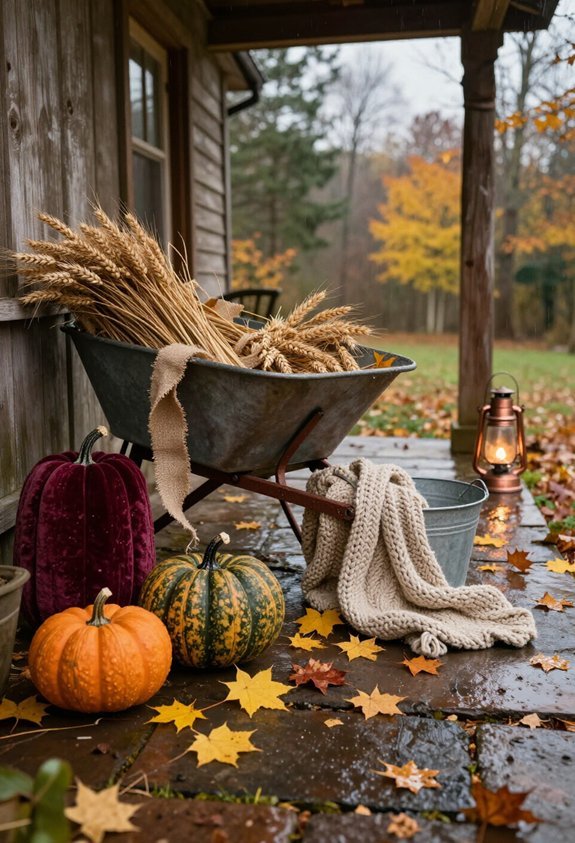
Outdoor durability requires strategic material selection when combining textiles that withstand autumn conditions while contributing visual depth through contrasting surfaces. Burlap, sisal, and velvet form a practical triad for fall exterior staging. Burlap, a woven jute fabric, resists moisture decay when treated with sealant, and its coarse weave introduces organic, rustic texture to wreath bases or ribbon-wrapped urns. Sisal rope or matting, derived from agave fibers, tolerates temperature fluctuation and UV exposure, functioning as binding material for garlands or wrapped around porch posts for tactile interest. Velvet, typically reserved for interior use, appears in outdoor contexts through synthetic poly blends that repel water; plush cushions or banner accents provide smooth, light-absorbing counterpoints to rougher textures. Layering these three materials creates dimensional contrast. Weather-resistant adhesives and stainless fasteners guarantee longevity through freeze-thaw cycles.
Frequently Asked Questions
How Long Do These Decorations Typically Last Outdoors?
Seasonal outdoor decorations typically endure four to eight weeks depending on material quality and weather exposure. Synthetic fabrics deteriorate faster than weather-resistant plastics or treated wood, while prolonged moisture and direct sunlight accelerate fading and structural weakening considerably.
What’s the Best Way to Secure Items Against Wind?
Anchor lightweight pieces with garden stakes or weighted bases; secure inflatables with tether stakes and guy lines; fasten hangings to sturdy hooks; position heavier items windward to shield lighter décor from gusts.
Are These Decorations Safe for Pets and Wildlife?
Many autumn yard adornments pose risks to animals. Small decorative gourds may cause intestinal blockages if ingested. Candle-lit displays risk burns. Artificial cobwebs trap birds and insects. Treated corn stalks contain harmful chemicals. Natural, untreated materials offer safer alternatives.
How Do I Store These Items After the Season Ends?
Clean decorations thoroughly before storage. Pack fragile items in labeled plastic bins with protective wrapping. Store in a cool, dry location away from direct sunlight. Inflatable decorations require complete drying to prevent mildew formation.
What’s the Most Budget-Friendly Option for Beginners?
Dried corn stalks and straw bales offer affordable starting points. Pumpkins from local markets provide seasonal color. Repurposed materials like old ladders or wooden crates create rustic displays without significant expense.
Conclusion
Implementing these fall front yard decorations creates a cohesive seasonal display that balances visual interest with practical durability. By combining varied heights through stacked crates, layering complementary textures like weathered wood and galvanized metal, and incorporating both living plants and artificial elements, homeowners establish an inviting entrance that shifts smoothly from day to evening with strategic lighting. Regular maintenance, including securing lightweight items against wind and revitalizing plant materials as needed, guarantees lasting appeal throughout the autumn months.