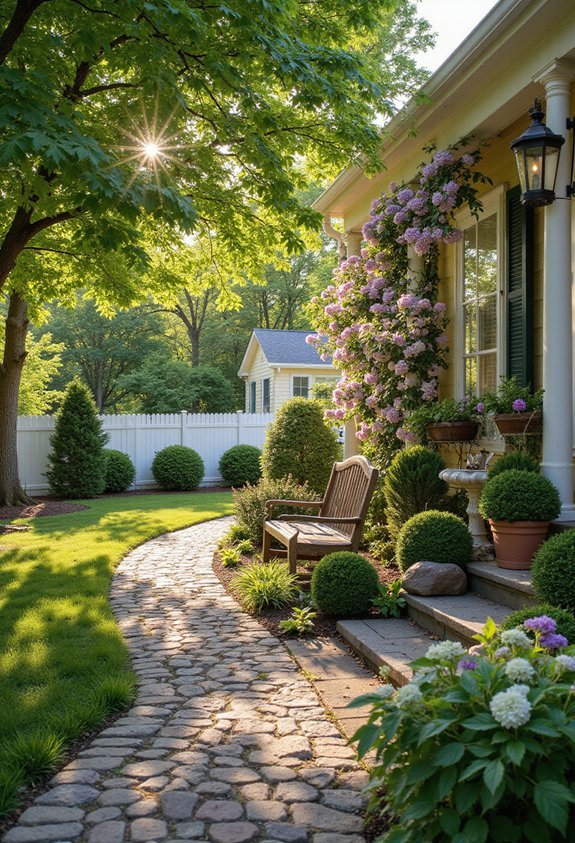
Your front yard is the first impression your home makes. A beautifully landscaped streetside transforms not just how visitors perceive your property but how you experience living there. The best front yards go beyond simple maintenance, becoming cohesive compositions where plants, hardscaping, and architectural elements work together in ways that feel both natural and intentional. They invite appreciation from passersby while creating genuine outdoor spaces worth inhabiting. These 25 ideas showcase landscapes that elevate curb appeal while demonstrating that beautiful front yards aren’t accidents of nature but results of thoughtful planning, strategic plant selection, and design discipline that rewards every season.
Plant a Native Meadow for Zero-Upkeep Color
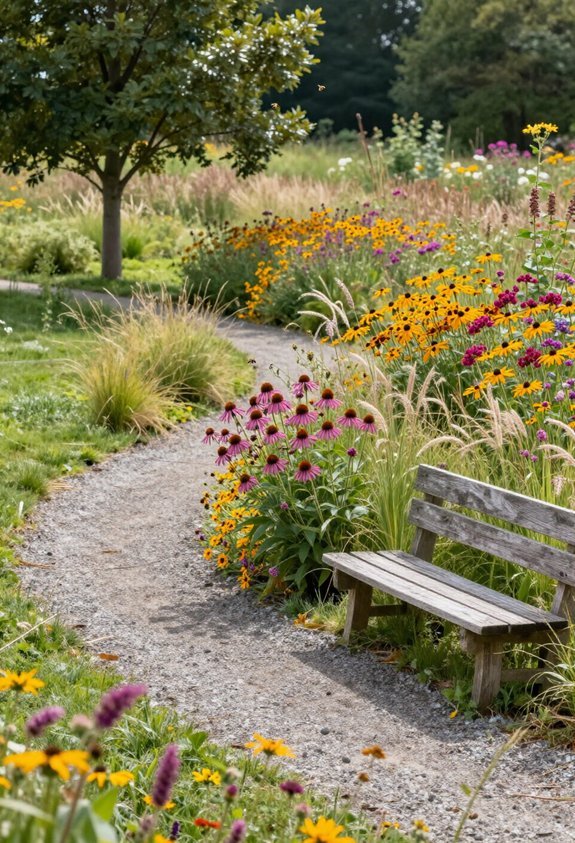
Because traditional lawns demand constant watering, mowing, and fertilizing, many homeowners now turn to native meadows as a practical alternative that requires minimal intervention once established. Native meadows consist of wildflowers and grasses that grow naturally in the region, adapting to local rainfall patterns and soil conditions without supplemental irrigation or chemical fertilizers. Installation begins with removing existing turf through sheet mulching or sod cutting, followed by sowing seed mixes matched to the specific growing zone and sunlight exposure. Early establishment demands some weeding and watering, typically for one growing season, after which the meadow self-sustains through deep root systems that prevent erosion and support pollinators including bees and butterflies. Seasonal maintenance involves a single late-winter mowing to clear debris and stimulate spring growth, contrasting sharply with weekly lawn care.
Also read: 22+ FRONT YARD MAKEOVER Ideas With Big Results!
Replace Your Lawn With Creeping Groundcover That Never Needs Mowing
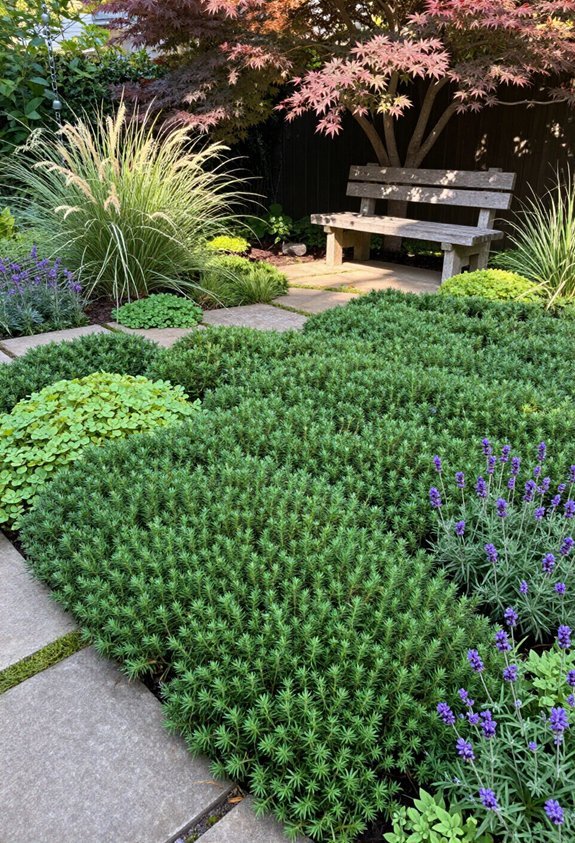
Swap out high-maintenance turf for low-growing creeping groundcover to eliminate mowing entirely while maintaining an attractive, uniform green surface. Species such as creeping thyme, sedum, or clover spread horizontally through runners and stolons, forming dense mats that rarely exceed six inches in height. Installation requires removing existing grass, amending soil with compost, and spacing plugs six to twelve inches apart, depending on growth rate and coverage goals. Water regularly during establishment, typically four to six weeks, then reduce frequency as roots deepen. Most varieties tolerate moderate foot traffic and produce small flowers seasonally, attracting pollinators without requiring fertilizer or chemical treatments. Once established, annual maintenance consists of occasional weeding and trimming edges where growth encroaches on pathways or borders, consuming considerably less time and resources than traditional lawn care.
Design a Drought-Tolerant Gravel Garden With Architectural Succulents
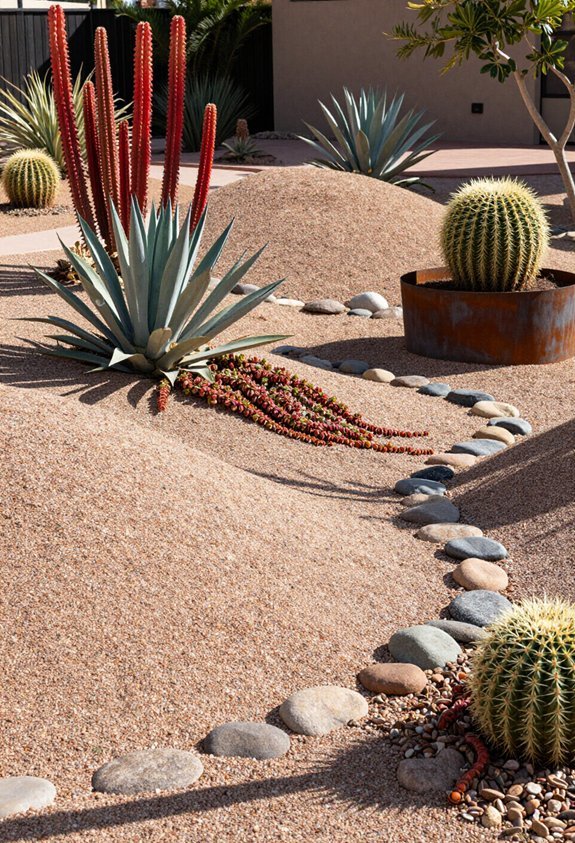
Several structural principles govern the successful creation of a gravel garden centered on architectural succulents, beginning with the selection of a level or gently sloping site that receives six or more hours of direct sunlight daily. The soil requires amendment with coarse sand or fine gravel to facilitate rapid drainage, preventing root rot in specimens such as agave, aeonium, and echeveria. A foundation layer of landscape fabric suppresses weed emergence while allowing water penetration. Angular gravel, measuring three-eighths to three-quarters of an inch, spreads four to six inches deep, creating thermal mass that moderates soil temperature. Planting holes cut through the fabric accommodate specimens spaced according to mature dimensions. Top-dressing with matching gravel unifies the composition. Irrigation employs drip lines with emitters positioned at root zones, delivering infrequent, deep watering that encourages drought resilience without promoting excessive growth.
Build a Xeriscape Front Yard for Hot, Dry Climates
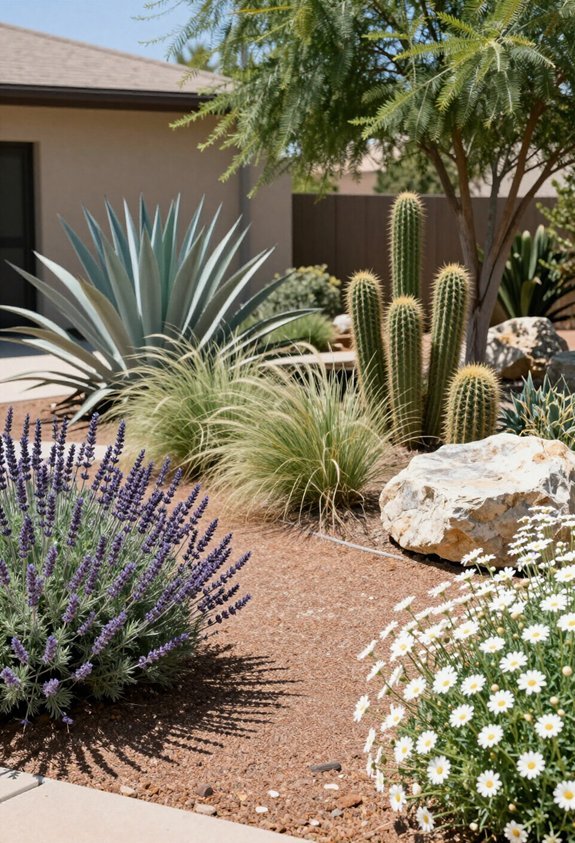
How does one transform a sun-scorched front yard into a thriving landscape that demands minimal water and maintenance? The answer lies in xeriscaping, a methodical approach designed specifically for arid environments where rainfall is scarce and temperatures climb relentlessly.
Xeriscaping begins with soil amendment, incorporating organic compost to improve water retention before any plant enters the ground. Next comes the strategic placement of hydrozoning, grouping plants by similar water needs to eliminate waste. Native specimens such as agave, yucca, and desert marigold form the backbone, their deep root systems drawing moisture from far below the surface.
Efficient irrigation, typically drip systems rather than sprinklers, delivers water directly to roots without evaporative loss. Finally, inorganic mulch, often crushed granite or lava rock, blankets the soil to suppress weeds and reflect heat. The result requires 50 to 75 percent less water than conventional lawns, yielding a structured, sustainable front yard built for endurance.
Swap Straight Concrete for a Winding Brick Walkway
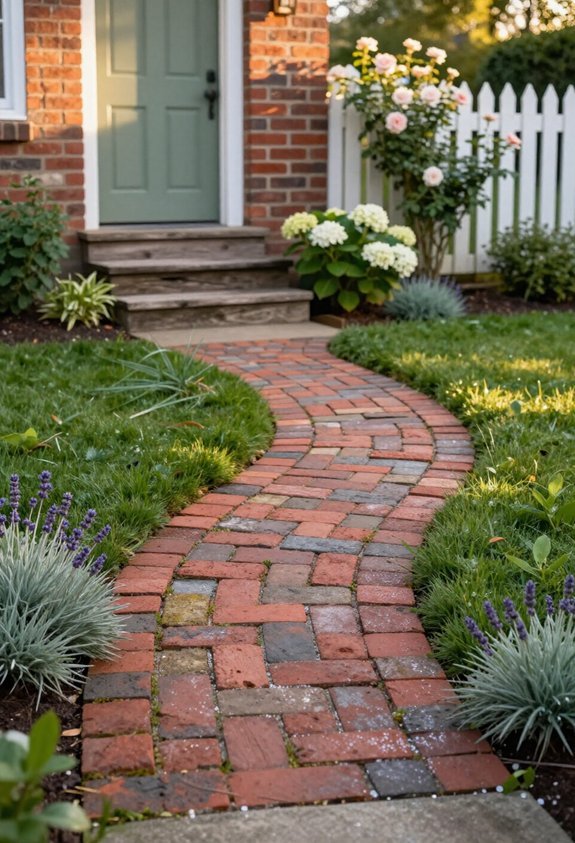
Where arid landscapes rely on structure and efficiency to conserve resources, the approach to hardscape design can reshape how a front yard welcomes visitors. Swapping straight concrete for a winding brick walkway introduces organic movement that softens rigid geometry and guides the eye through planted borders. Bricks, available in fired clay, concrete, or reclaimed varieties, offer texture and color variation absent in poured surfaces. Installation requires excavating six to eight inches, layering crushed stone for drainage, then setting bricks in sand or mortar depending on climate and expected load. Patterns—herringbone, running bond, or basketweave—add visual interest without overwhelming simplicity. Curves should flow naturally, avoiding sharp angles that disrupt pedestrian movement. Proper edging, whether concrete, metal, or stone, prevents spreading and maintains defined boundaries. Permeable gaps between bricks reduce runoff, supporting adjacent plantings.
Line Your Path With Solar-Powered Garden Lights
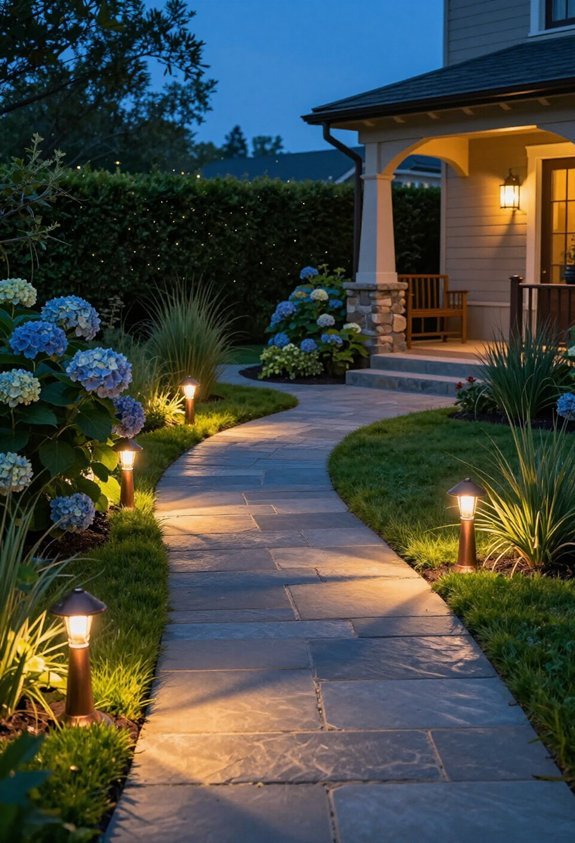
Illuminate your walkway with solar-powered garden lights that capture sunlight during hours of daylight and convert stored energy into soft illumination after dusk. These fixtures require no electrical wiring, reducing installation complexity and eliminating ongoing energy costs. Photovoltaic cells embedded in each unit absorb solar radiation throughout the day, storing power in rechargeable batteries housed within weather-resistant casings. As ambient light diminishes, photosensors activate the LED elements automatically. Placement should occur at regular intervals, approximately six to eight feet apart, ensuring continuous visual guidance without excessive brightness. Stake-mounted designs penetrate soft ground easily, while surface-mounted options suit paved surfaces through adhesive or hardware attachment. Materials range from stainless steel to powder-coated aluminum, offering durability against moisture and temperature fluctuation. Available styles include traditional lantern shapes, modern cylindrical forms, and recessed disk lights that sit flush with pathway surfaces.
Edge Your Beds With Classic Boxwood for Crisp, Clean Lines
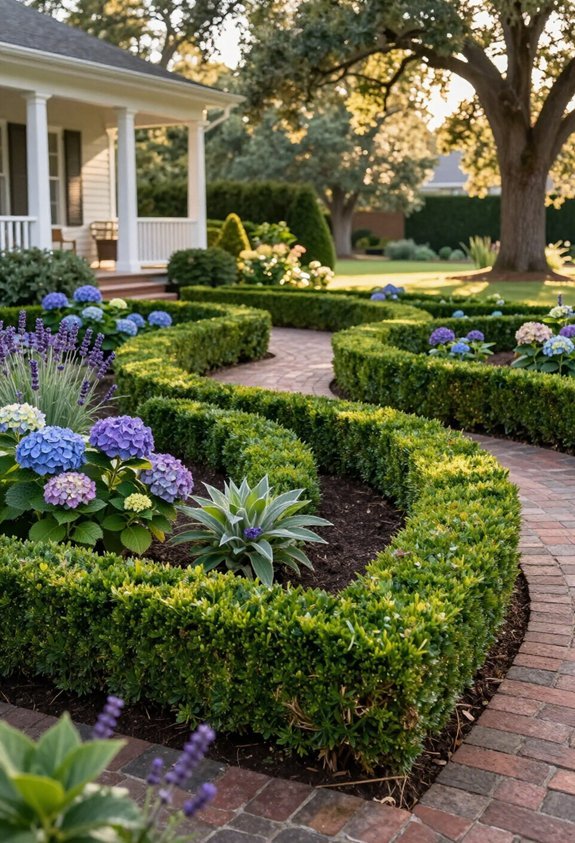
Define garden borders with boxwood, a dense evergreen shrub that responds well to shearing and maintains its deep green foliage throughout all seasons. Install young plants approximately twelve to eighteen inches apart, allowing their branches to interlock as they mature, which forms an unbroken living wall. Select Buxus sempervirens for colder regions, or Buxus microphylla japonica where summers bring intense heat. Prune twice annually, once in late spring after new growth hardens, and again in early autumn, using sharp hand shears for precision. Shape the tops narrower than the bases, ensuring sunlight penetrates lower branches to prevent bare wood. Water deeply during establishment, then reduce frequency, as established specimens tolerate moderate drought. Amend soil with organic matter for drainage, and apply balanced fertilizer sparingly to avoid leggy growth.
Add a Dry-Stack Stone Wall to Your Front Yard for Cottage Charm
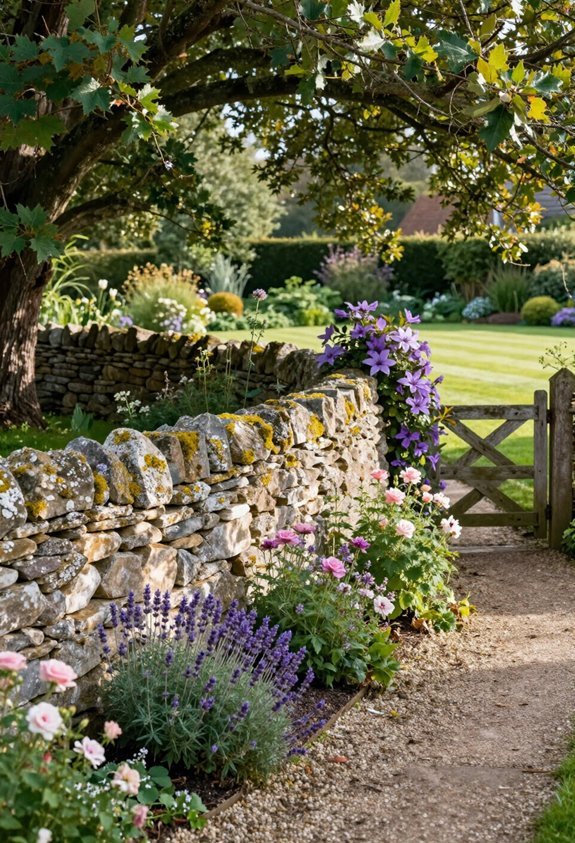
A dry-stack stone wall introduces timeless cottage character to any front yard without requiring mortar, heavy equipment, or specialized masonry training. The technique relies entirely on gravity and careful stone selection, where each rock rests securely upon those below through precise placement and interlocking shapes. Builders begin by excavating a trench six inches deep, filling it with compacted gravel to create a stable base that prevents shifting during freeze-thaw cycles. Flat stones work best for the bottom layers, while smaller, irregular pieces fill gaps and add texture toward the top. The wall typically leans slightly backward into the slope, a design feature called batter that increases stability against soil pressure. Proper drainage behind the structure, achieved using landscape fabric and crushed stone, eliminates water buildup that could cause collapse. Local fieldstone offers authentic regional character, though quarried limestone or sandstone provide consistent thickness for easier stacking.
Frame Your Front Door With Matching Container Gardens
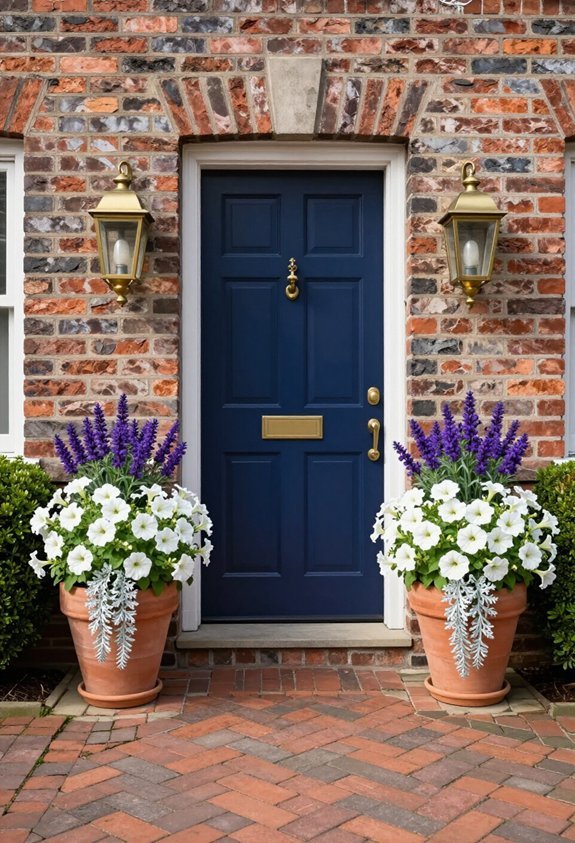
Whether your entryway feels bare or lacks visual focus, symmetrical container gardens on either side of the front door create an immediate sense of balance and welcome for visitors approaching the home. The process begins with selecting two identical containers, typically crafted from ceramic, stone, or metal, ensuring they share matching dimensions, color, and texture. Each vessel receives the same layered arrangement: a tall central plant, medium-height fillers, and trailing varieties that cascade toward the ground. Options include boxwood topiaries surrounded by colorful annuals, or ornamental grasses paired with blooming perennials. Proper drainage prevents root rot, while consistent watering maintains healthy growth. Seasonal rotations keep the display vibrant throughout the year. This structured approach transforms an ordinary entrance into a defined, polished focal point without permanent installation.
Anchor Your Yard With a Sculptural Japanese Maple
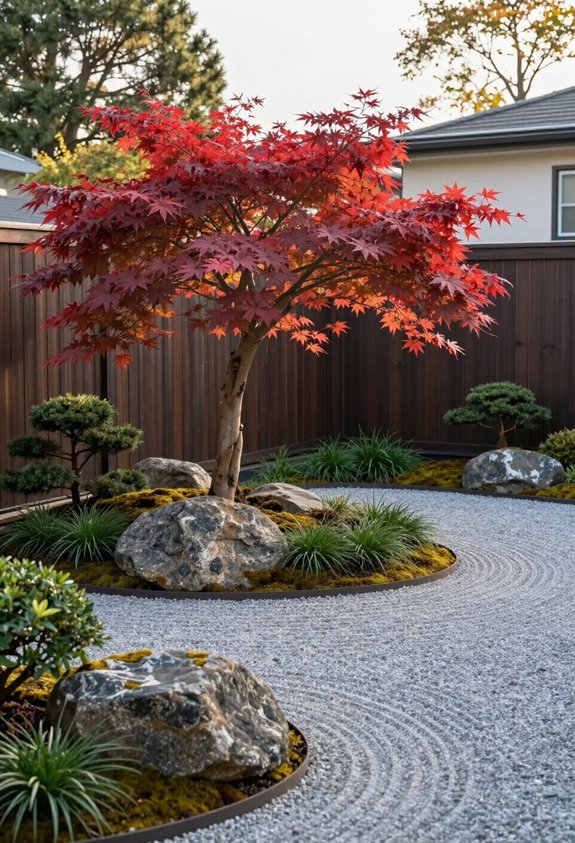
While symmetrical arrangements draw the eye toward entryways, a single, carefully placed specimen can command attention across an entire yard. A Japanese maple serves this purpose through its distinctive architecture and seasonal color shifts. Select varieties with branching patterns that spread horizontally for low, wide coverage, or choose upright forms for vertical emphasis. Position the tree slightly off-center rather than directly in the middle, allowing sight lines to flow naturally around it. Consider mature width carefully, ensuring adequate space so pruning remains minimal and the natural shape develops fully. Bark texture and fall foliage provide visual interest even during dormancy. Underplant with ground covers or shade-tolerant perennials to unify the composition, avoiding competition for root space. Water consistently during establishment, then allow the tree to adapt to existing soil moisture.
Grow Climbing Roses on a Curved Entry Arch
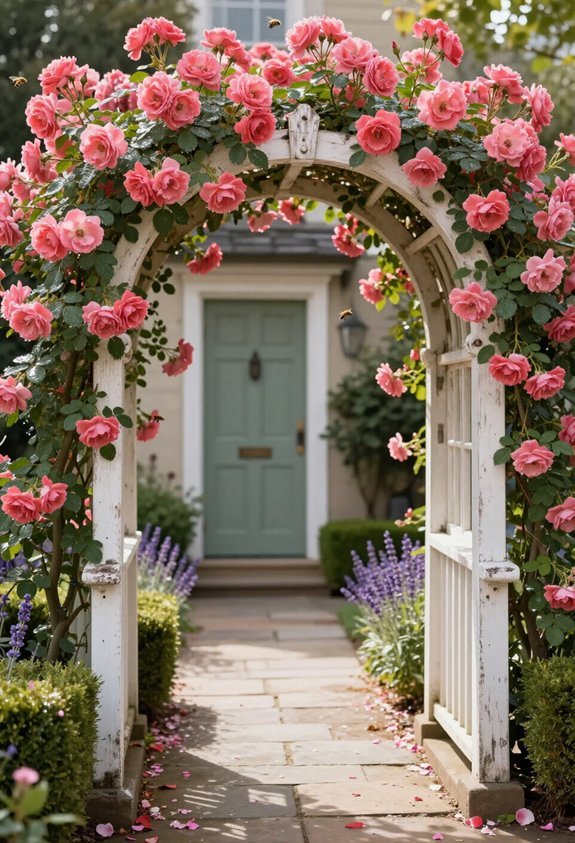
Transform a standard walkway into a defined garden passage by installing a curved arch and training climbing roses across its surface. Select a metal or wooden arch structure with adequate height for pedestrian clearance, ensuring it is firmly anchored into the ground with concrete footings. Choose climbing rose varieties known for vigorous growth and repeat blooming, such as ‘Eden’ or ‘New Dawn’, which produce abundant flowers throughout the season. Plant one specimen at each base of the arch, positioning roots slightly deeper than the nursery container level. Train main canes vertically initially, then secure lateral branches horizontally to encourage flowering spurs. Prune annually in late winter, removing dead wood and thinning congested growth to maintain air circulation. Apply balanced fertilizer in spring and maintain consistent soil moisture for ideal bloom production.
Unify Your Design With Coordinated Pots and Garden Accents
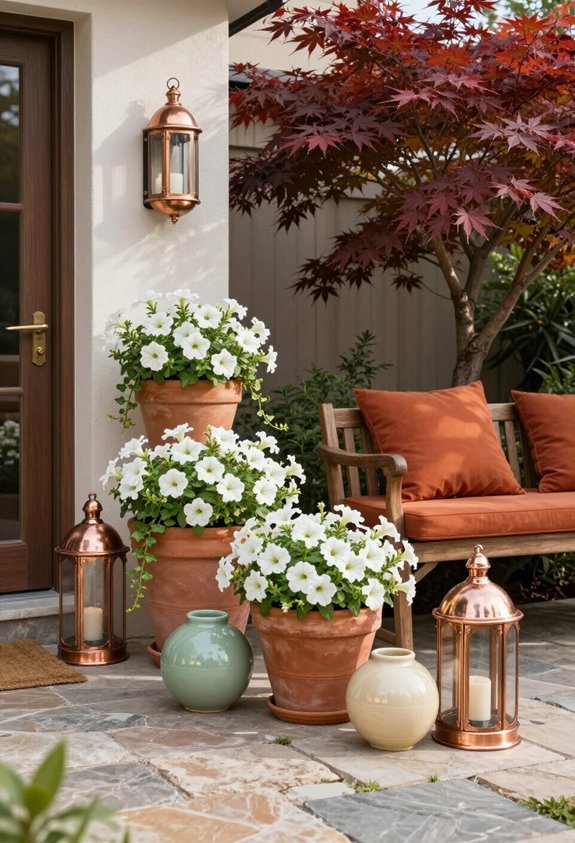
Although individual plants and structures can create visual interest on their own, a cohesive front yard design requires deliberate coordination of decorative elements to achieve a unified aesthetic. Matching or complementary containers establish visual rhythm when placed at entry points, along walkways, or clustered near seating areas. Material selection, whether terracotta, glazed ceramic, or weathered metal, should echo existing architectural features, such as door hardware, light fixtures, or fencing. Garden accents, including birdbaths, obelisks, or sculptural elements, reinforce this cohesion through consistent finishes or recurring motifs. Scale demands careful attention; oversized pots overwhelm compact spaces, while diminutive pieces disappear in expansive beds. Color coordination extends beyond containers to include cushions, door mats, and window boxes, creating layered continuity. Repetition of shapes, textures, or colors prevents visual fragmentation, transforming disparate elements into an integrated landscape composition.
Sequence Blooms for Three Seasons of Continuous Color
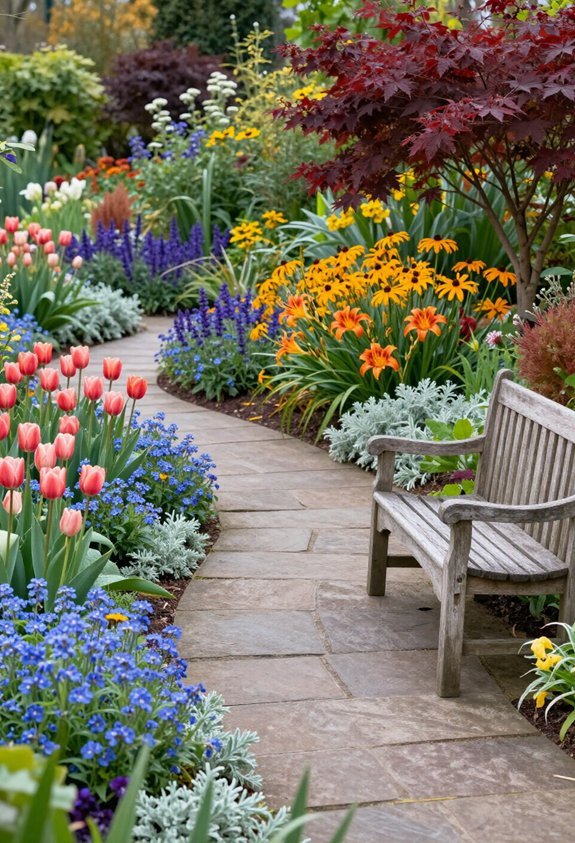
Several carefully chosen plant varieties, arranged with attention to their flowering periods, can provide uninterrupted color from early spring through late autumn in a front yard landscape. Gardeners should select species based on bloom times, grouping early, mid-season, and late-flowering plants together. Spring-blooming shrubs, such as azaleas or rhododendrons, establish initial color, while summer perennials, including coneflowers or black-eyed Susans, maintain visual interest through warm months. Autumn-blooming asters and ornamental grasses deliver final seasonal impact. Layering these plants according to height and spread guarantees each successive bloom remains visible without obstruction. Foliage color and texture variations supplement flowering gaps. This methodical approach eliminates barren periods, creating consistent aesthetic appeal across the growing season with minimal replanting requirements.
Naturalize Spring Bulbs for Effortless Early Color

While layered perennials provide sustained color through summer and fall, the earliest weeks of the growing season often present a different challenge for front yard landscapes. Naturalizing spring bulbs offers a practical solution, requiring minimal effort while delivering reliable early color before other plants emerge.
Scatter bulbs such as crocus, snowdrops, and grape hyacinth across lawn areas or beneath deciduous trees, where they complete their cycle before grass begins active growth. Plant bulbs at random intervals rather than in formal rows, using a ratio of approximately twenty bulbs per square foot for adequate coverage. Select varieties with staggered bloom times to extend the display across six to eight weeks. Once flowering concludes, foliage must remain intact until it yellows naturally, allowing bulbs to store energy for subsequent years. This approach eliminates replanting needs, as bulbs multiply underground and spread gradually through the landscape.
Soften Foundation Corners With Cascading Flower Borders
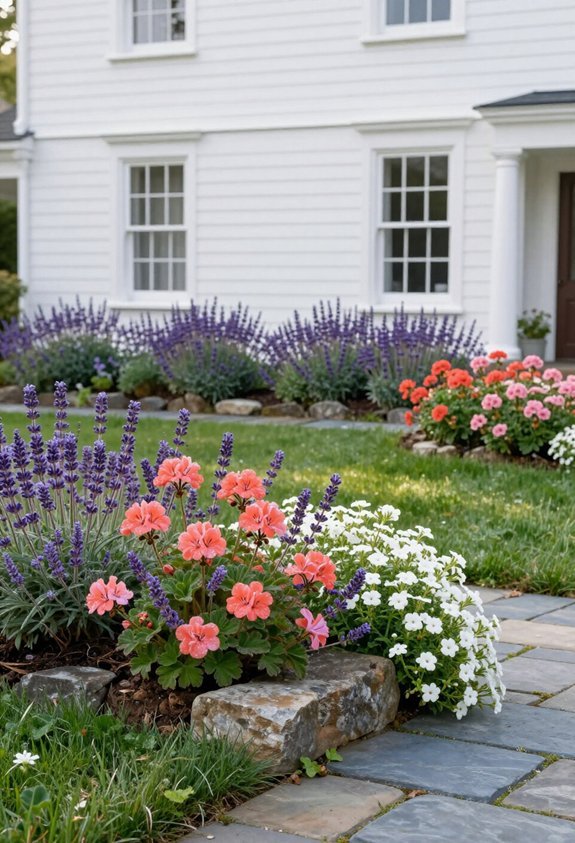
Many front yard designs suffer from rigid, angular foundations that create visual tension where walls meet planting beds. Cascading flower borders solve this problem by draping soft, flowing forms over these harsh corners. Plant low-growing perennials such as creeping phlox, sedum, or trailing verbena at the base of exterior walls, positioning taller species like catmint or salvia slightly behind. This layering technique creates a graduated shift from vertical structure to horizontal ground. Install plants in staggered groupings rather than straight lines, allowing blooms to spill organically onto walkways or lawn edges. Choose flowers with sequential blooming periods to maintain color from spring through fall. Water thoroughly after planting, then apply mulch to retain moisture and suppress weeds. Trim spent blossoms regularly to encourage repeat flowering and maintain neat, controlled edges throughout the growing season.
Plant Fragrant Herbs Along Your Walkway for Sensory Appeal
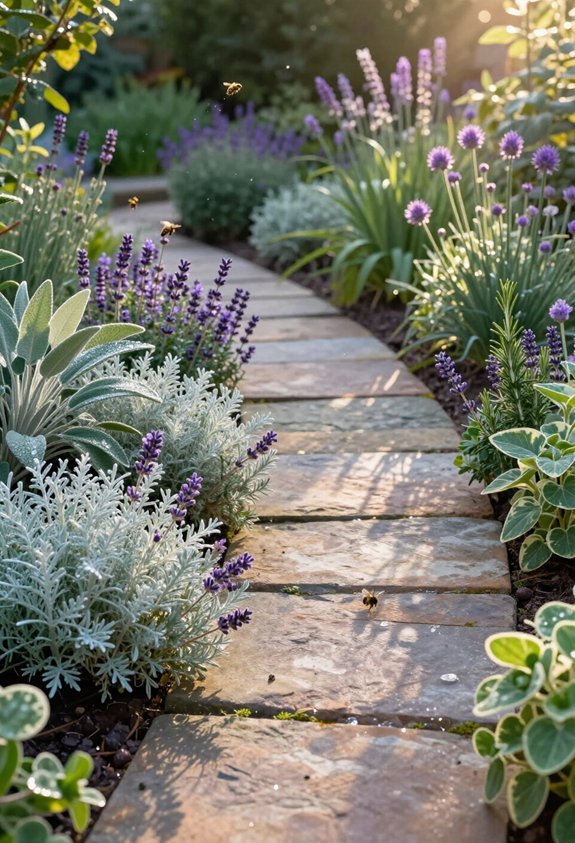
Once structural softening addresses the visual stiffness of foundation corners, attention can shift toward engaging the remaining senses in the front yard landscape. Planting fragrant herbs along walkways introduces tactile and olfactory elements that transform routine passage into sensory experience.
Suitable candidates include lavender, thyme, rosemary, and mint, each releasing distinct aromatic oils when brushed or stepped upon. These plants tolerate moderate foot traffic and require minimal maintenance beyond occasional pruning and well-drained soil placement. Positioning herbs between pavers or along stepping stone edges maximizes contact frequency, ensuring scent dispersal with each movement through the space.
Edible varieties offer secondary utility for kitchen harvest, while non-culinary options like catmint or lemon balm provide equivalent fragrance without consumption pressure. The deliberate integration of aromatic plantings converts utilitarian pathways into multi-sensory corridors, extending landscape function beyond visual appeal into experiential design.
Attract Pollinators With a Butterfly-Friendly Plant Palette
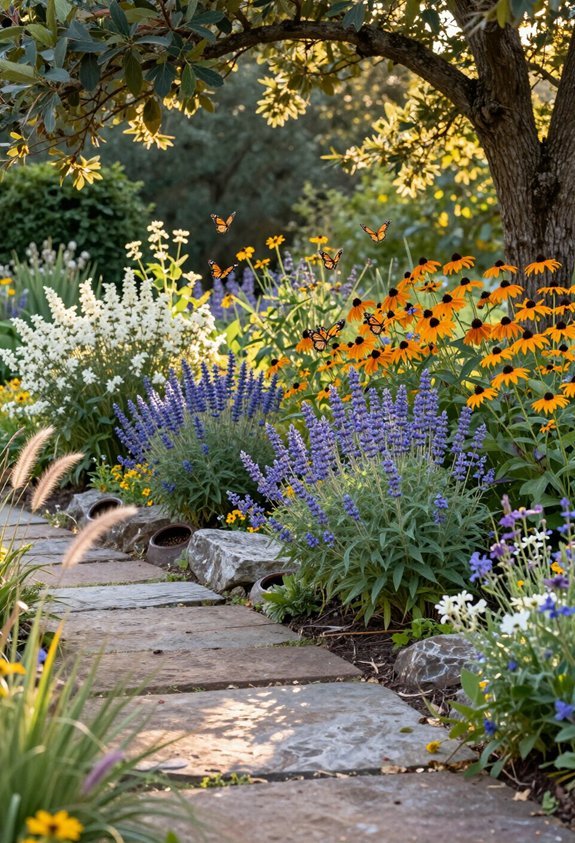
A well-planned selection of flowering plants can transform a front yard into a vital feeding station for butterflies and other important pollinators. Native species, including milkweed, coneflower, and black-eyed Susan, provide nectar sources while supporting local butterfly populations through their entire life cycles. Gardeners should cluster plants in groups of three to five specimens, creating visible targets that attract pollinators more effectively than scattered individual plantings. Blooming periods must be staggered across spring, summer, and fall to guarantee continuous food availability. Flat-topped flowers, such as yarrow and sedum, offer accessible landing platforms. Pesticides require complete elimination, as these chemicals harm both adult butterflies and caterpillars. Host plants for larvae, including parsley and dill, should be incorporated alongside nectar sources. Water features with shallow dishes containing stones provide essential hydration without drowning risks.
Create Privacy With a Mixed Hedge of Flowering Shrubs
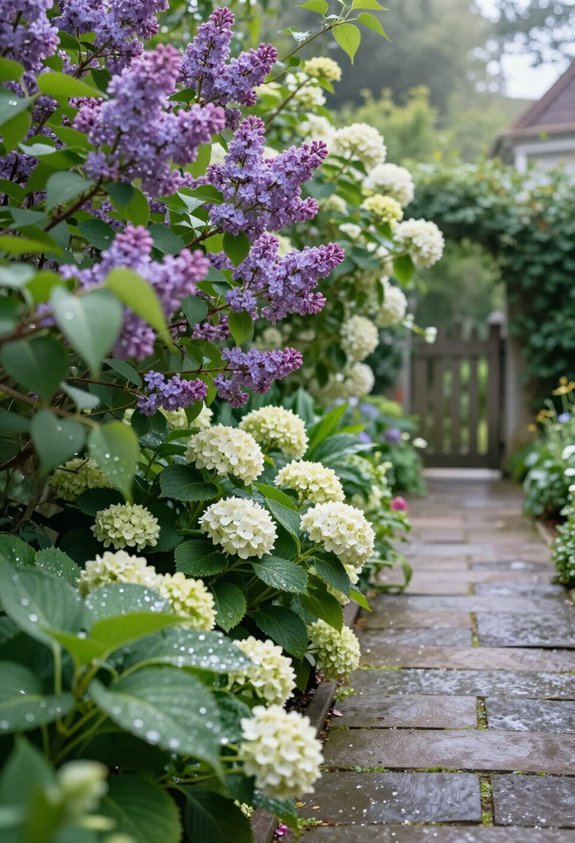
While pollinator gardens open front yards to winged visitors, homeowners seeking seclusion from street traffic and neighboring properties can achieve natural screening through strategic shrub placement. A mixed hedge composed of flowering shrubs offers dual functionality, combining visual opacity with seasonal color progression throughout the growing months.
Selection requires attention to mature dimensions, ensuring adequate height without encroaching upon utility lines or sightline regulations common to many municipalities. Koreanspice viburnum contributes early spring fragrance, while panicled hydrangeas extend interest through summer with large white inflorescences that evolve into dried architectural forms. Oakleaf hydrangea provides additional autumn foliage color and winter textural elements.
Layering deciduous and broadleaf evergreen specimens maintains partial screening during dormant months. Spacing plants according to mature width prevents overcrowding competition, reducing maintenance demands. Annual pruning shapes density without sacrificing bloom production on spring-flowering varieties.
Add Whimsy With a Curved Picket Fence and Climbing Vines
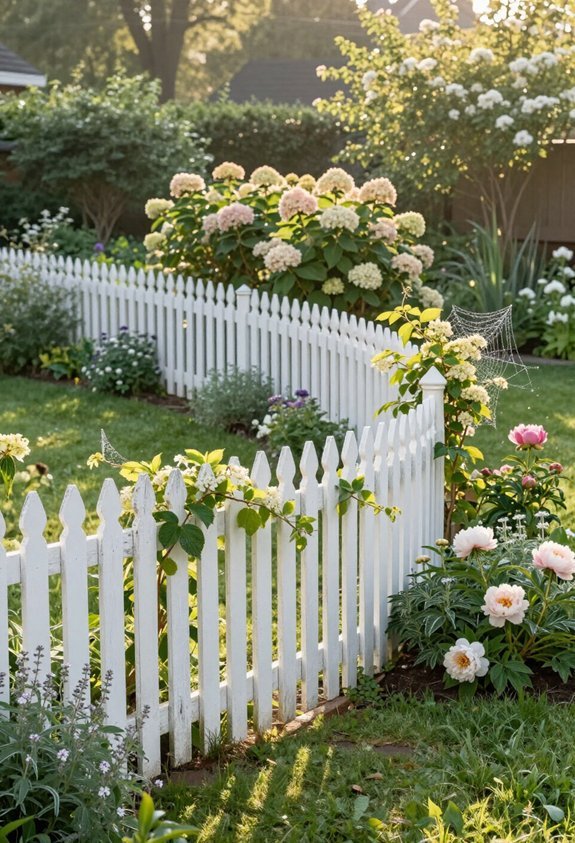
Linear boundaries and rigid angles dominate many front yard designs, yet introducing organic curvature through a picket fence creates visual movement and informal charm without sacrificing structural definition. Curved picket fences soften connections between lawn and sidewalk, guiding visitors toward entry points with gentle arcs that echo natural landscape contours. Climbing vines, such as clematis, morning glory, or jasmine, weave through fence pickets to form living vertical tapestries that shift with seasons. Installation requires anchoring fence posts in concrete at measured intervals along the planned curve, ensuring stability despite the irregular line. Vine selection depends on regional climate and sunlight exposure, with perennial options offering year-round structure and annual varieties providing rapid, colorful coverage. Regular pruning maintains fence integrity and prevents overgrowth that obscures the fence’s graceful silhouette.
Build a Rain Garden That Handles Runoff Beautifully
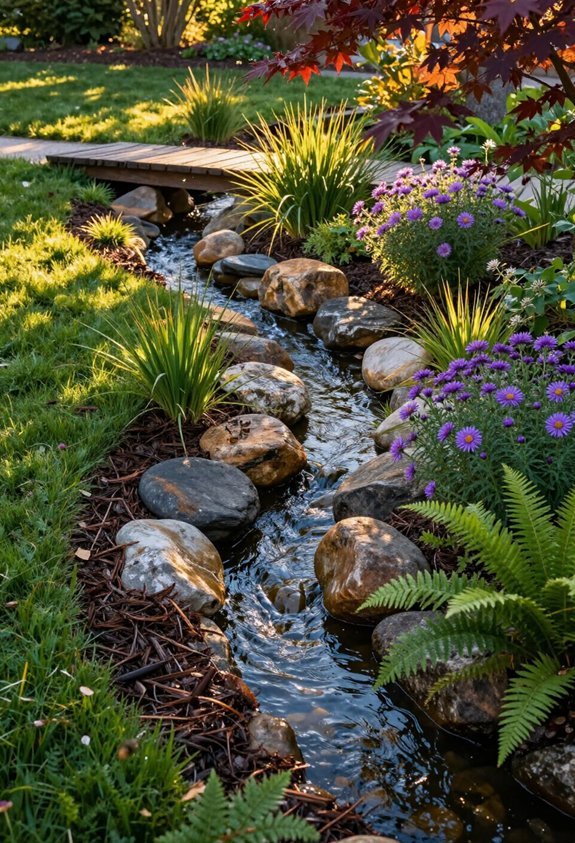
Because impervious surfaces like driveways and walkways prevent water from soaking into the ground, rain gardens serve as designed landscape features that capture, filter, and absorb stormwater runoff before it can carry pollutants into storm drains or cause erosion. Homeowners identify a low-lying area, typically downslope from a roof downspout or driveway, where water naturally collects during rainfall. Excavation creates a shallow depression, roughly six to twelve inches deep, filled with specialized soil mixtures containing sand, compost, and existing topsoil to promote rapid drainage. Native plants with deep root systems, such as switchgrass, black-eyed susans, or bayberry shrubs, fill the garden because these species tolerate both wet conditions and periodic drought without requiring fertilizers or pesticides. Mulch layers reduce weed growth and maintain soil moisture. Proper sizing, typically one-third the drainage area, guarantees adequate capacity during heavy storms.
Add a Modern Sculptural Fountain as Your Centerpiece
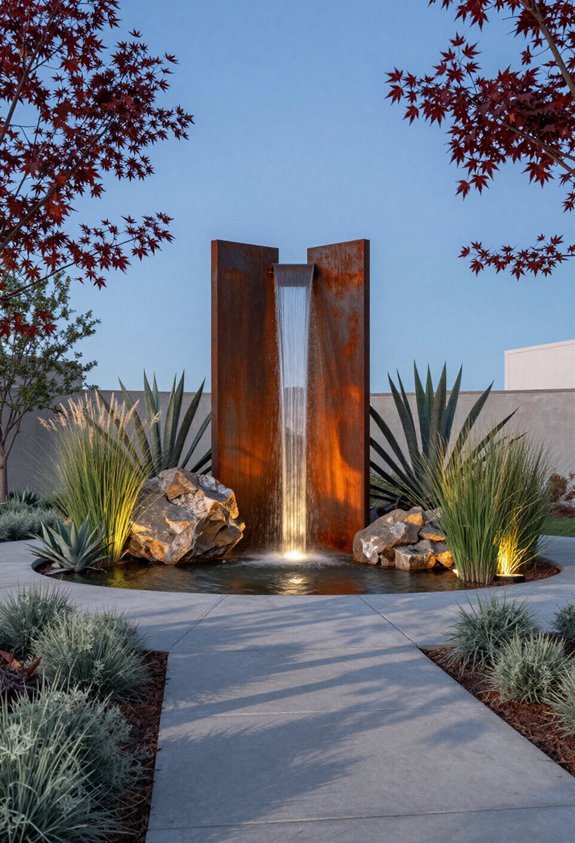
A sculptural fountain introduces vertical dimension and auditory interest to front yard spaces that might otherwise rely solely on vegetation and hardscape materials. Modern designs favor clean geometric forms, stainless steel surfaces, or concrete castings that complement contemporary architecture. Placement requires careful consideration of sight lines from the street and main entrance. The fountain should anchor the composition without obstructing pathways or views. Water recirculation systems minimize maintenance and water consumption. Electrical connections demand professional installation with ground fault protection. LED lighting integrated into the basin or surrounding landscape extends visual impact into evening hours. Sound levels warrant evaluation, as excessive noise may disturb neighbors. Scale must correspond to lot size, with proportional relationships between fountain height, basin diameter, and surrounding plantings. Proper winterization prevents damage in freezing climates.
Build Raised Beds for Edible Curb Appeal
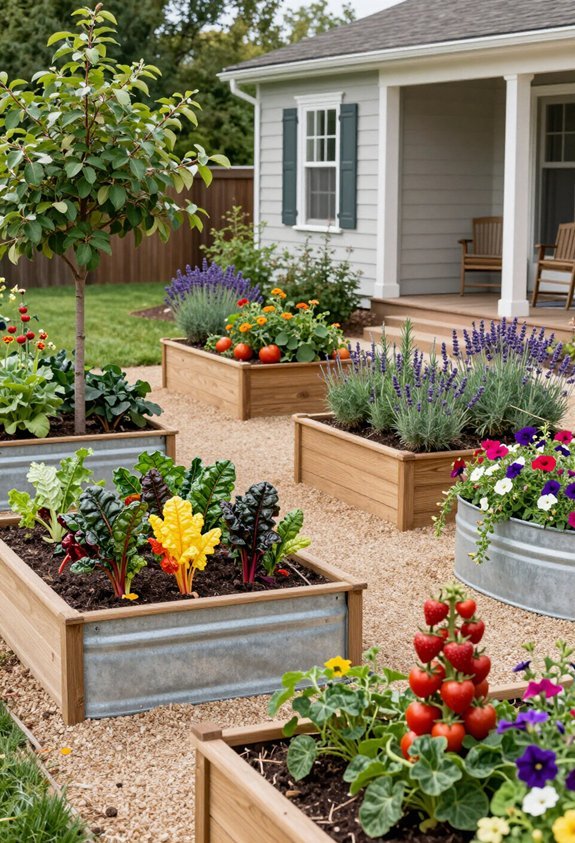
While sculptural fountains create visual focal points through water and geometry, raised beds offer an alternative approach that merges practical function with aesthetic structure in front yard design. Elevated planters constructed from cedar, galvanized steel, or stone define clear boundaries between pathways and growing spaces while improving soil drainage and reducing weed competition. Vegetables, herbs, and edible flowers arranged in geometric patterns transform utilitarian plantings into organized visual compositions that complement architectural lines. Tiered configurations accommodate slope changes, maximizing planting area on uneven terrain. Drip irrigation systems installed beneath mulch layers conserve water and direct moisture precisely to root zones. Seasonal succession planting guarantees continuous harvests and evolving color palettes throughout growing months. Structural materials selected to weather naturally or retain finished appearances determine long-term maintenance requirements and visual integration with existing hardscape elements.
Add a Small Front Patio for Neighborly Gatherings
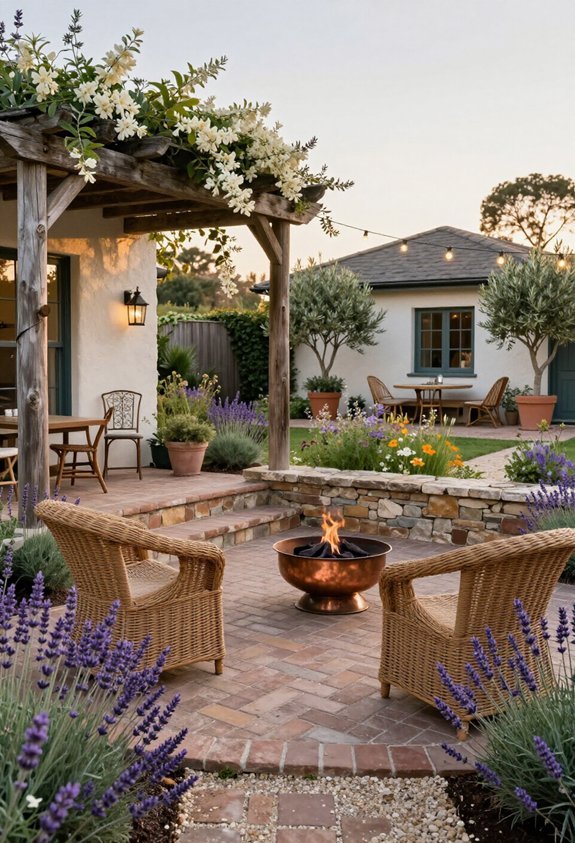
Strategic placement of a compact seating area near the street transforms underutilized front lawn into deliberate social infrastructure, extending domestic life beyond the threshold and fostering incidental exchange with passersby. Such installations typically measure eight to twelve feet square, accommodating two to four chairs and a small surface for beverages, positioned to face sidewalk traffic rather than the house facade. Materials require careful selection: poured concrete offers durability, permeable pavers reduce runoff, and decomposed granite provides economical permeability. Elevation matters modestly, with a single step or flush installation depending on local grading codes and accessibility requirements. Shade consideration proves essential, whether through canvas sails, compact umbrella stands, or strategic tree canopy pruning. Planting buffers maintain defined edges without obstructing sightlines, using low hedges or ornamental grasses. This reconfiguration of domestic frontage replaces passive lawn maintenance with active spatial programming.
Paint Your Front Door a Bold Color for Instant Impact
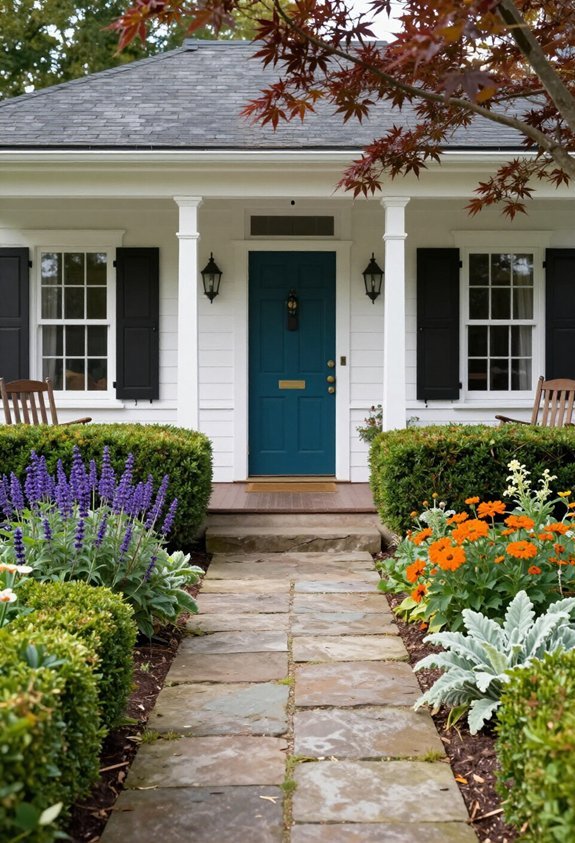
Color selection for a front door operates as one of the most cost-effective methods for altering a home’s exterior character, delivering visual impact without structural modification or significant material investment. Crimson reds, cobalt blues, and emerald greens function as reliable choices that contrast effectively with neutral siding tones, while black offers sophisticated versatility across architectural styles. Proper execution requires thorough surface preparation, including cleaning, sanding, and priming, followed by exterior-grade paint application in multiple thin coats. Semi-gloss finishes withstand weather exposure and resist fading more effectively than flat alternatives. Hardware replacement, including knockers and handles, complements the refreshed surface. Homeowners should evaluate surrounding elements—shutters, trim, and landscaping—to guarantee coordination rather than competition. The completed project establishes a focal point that guides visitor attention and distinguishes the property from neighboring residences with minimal expenditure.
Refresh Tired Mulch With Long-Lasting Decorative Stone
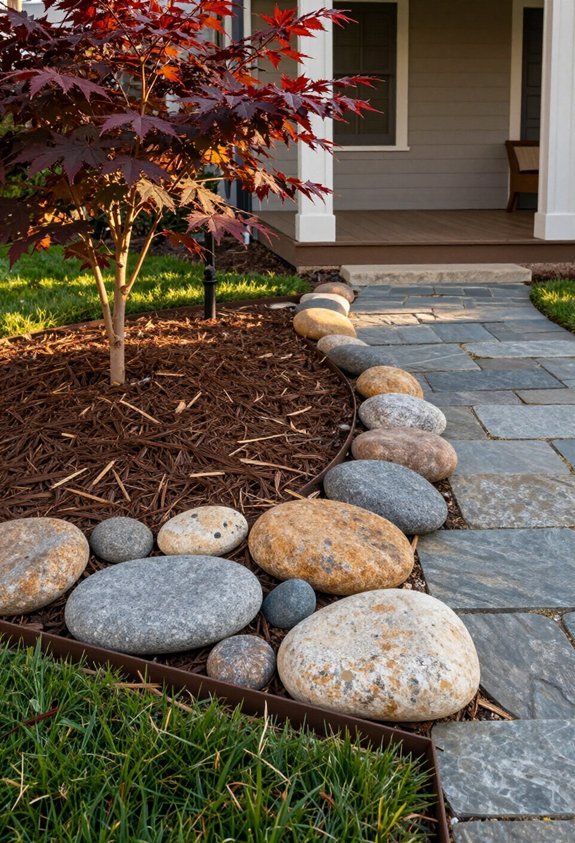
Organic mulch decomposes annually, demanding repeated replenishment that accumulates substantial material costs and labor hours across multiple growing seasons. Decorative stone offers a permanent alternative, eliminating yearly maintenance while providing consistent visual appeal. River rock, crushed granite, and lava stone present varied textures and color palettes, from neutral grays to warm earth tones, that complement diverse architectural styles. Installation begins with removal of existing mulch and placement of landscape fabric to suppress weed growth, followed by even distribution of stone at two to three inches depth. This barrier retains soil moisture, moderates ground temperature, and prevents erosion more effectively than degradable materials. Though initial investment exceeds organic options, the fifteen to twenty-year lifespan yields measurable long-term savings and sustained curb appeal without seasonal intervention.
Frequently Asked Questions
What’s the Average Cost to Implement These Front Yard Ideas?
Costs vary widely based on scope and location. Basic improvements range $2,000-$10,000. Extensive renovations with hardscaping, irrigation, and mature plantings typically reach $15,000-$50,000 or more for high-end professional installations.
How Long Do These Landscaping Projects Typically Take to Complete?
Landscape project duration varies markedly by scope. Simple installations conclude within days, while extensive renovations extend across multiple weeks. Weather conditions, material availability, and crew scheduling frequently introduce additional delays beyond initial projections.
Do I Need a Professional Landscaper or Can I DIY?
One determines necessity of professional assistance based upon project complexity, personal skill level, and available time. Simple plantings and maintenance suit DIY approaches. Structural work, drainage systems, or large hardscaping typically require licensed professionals for proper execution.
Will These Changes Increase My Home’s Resale Value?
Well-maintained front yard landscaping typically increases resale value by enhancing curb appeal. Professional designs yield higher returns than DIY efforts, though even modest improvements attract buyers. ROI varies by neighborhood standards and local market conditions.
Are Any Permits Required for Front Yard Modifications?
Permits depend on locality and project scope. Hardscaping, tree removal, irrigation systems, and fence installations typically require approval. One should consult municipal zoning departments before commencing work to guarantee compliance with setback requirements and environmental regulations.
Conclusion
These front yard landscaping ideas demonstrate how aesthetic appeal and practical function work together through intentional plant choices, sustainable materials, and efficient spatial arrangements. Readers can adapt these concepts to match local climate conditions, available maintenance time, and personal design preferences. Success depends on selecting appropriate combinations of hardscape elements and living plants, followed by consistent, seasonally-adjusted care. Implementation proceeds most effectively when planned during the dormant season prior to active growth periods.