
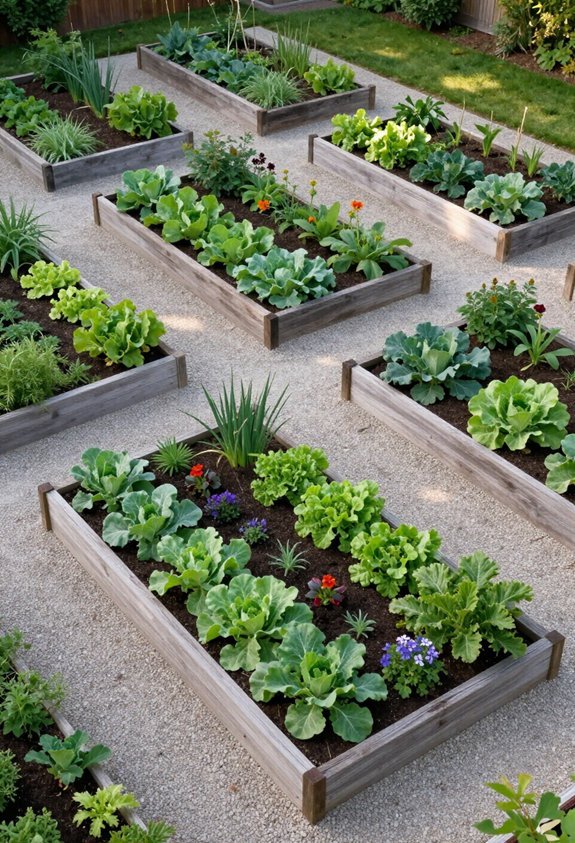
Front yard raised beds prove that productive gardens can be beautifully organized. Rather than sprawling vegetable patches, structured beds create clean lines that enhance curb appeal while delivering fresh produce steps from your door. The best raised bed gardens feel intentional and polished, where defined edges, consistent materials, and thoughtful plant arrangements communicate care and purpose. These 21 ideas showcase raised beds that transform front yards into productive spaces without sacrificing the neat aesthetic that makes them genuinely appealing neighbors will admire.
Raised Beds as Front Yard Focal Points
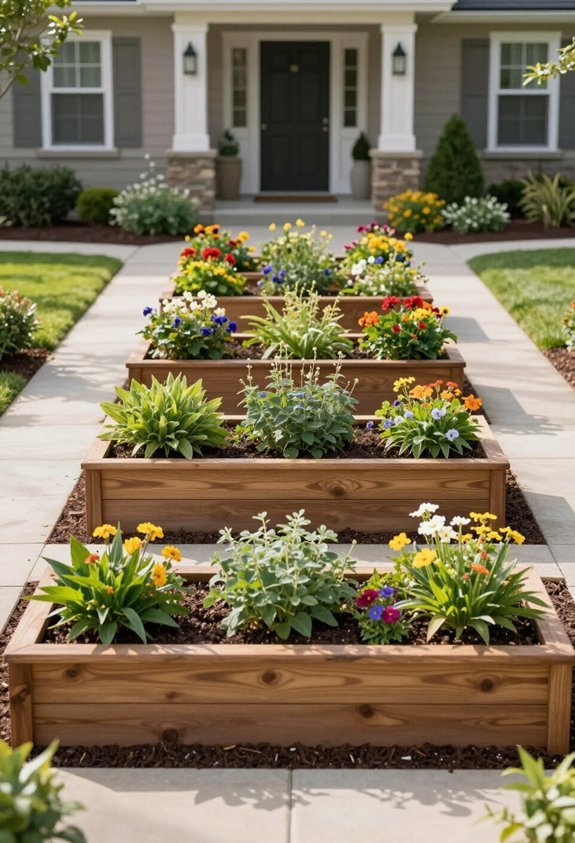
Raised garden beds offer homeowners a practical and visually appealing way to transform their front yards into attractive outdoor spaces that draw attention and admiration from passersby. These elevated planting structures serve as natural focal points that organize landscaping and create visual interest through their geometric shapes and layered plantings. By strategically positioning raised beds near entryways, along walkways, or as centerpieces in front yards, homeowners can guide visitors’ eyes toward specific areas while establishing defined garden zones. The structured appearance of raised beds enhances curb appeal through clean lines and organized plant arrangements. Additionally, their elevated nature makes plants more visible and accessible, allowing flowers, vegetables, or ornamental plants to showcase their colors and textures prominently. This deliberate placement transforms ordinary front yards into intentionally designed landscapes that reflect homeowner care and aesthetic consideration.
Also read: 20+ MINIMALIST FRONT YARD Ideas With Clean Lines!
Choosing the Right Materials for Durability and Style
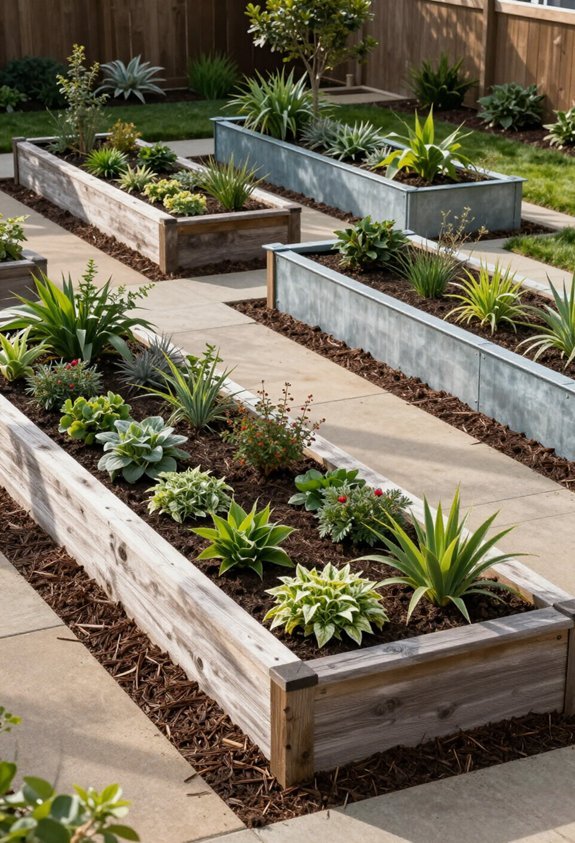
Several material options exist for constructing front yard raised beds, each offering distinct advantages regarding durability, maintenance requirements, and aesthetic appeal. Cedar and redwood provide natural rot resistance and attractive warm tones, though they require periodic sealing. Composite materials combine wood fibers with plastic, delivering longevity without regular maintenance, making them ideal for busy homeowners. Galvanized metal offers a contemporary look while resisting rust and lasting decades. Concrete blocks provide affordability and stability, though they lack visual refinement. Composite and metal options prove superior for long-term durability in harsh climates, while cedar suits homeowners prioritizing natural aesthetics. Budget considerations, climate conditions, and desired visual impact should guide material selection, ensuring raised beds remain functional focal points that enhance curb appeal while minimizing upkeep demands.
Size Your Beds to Fit Your Space
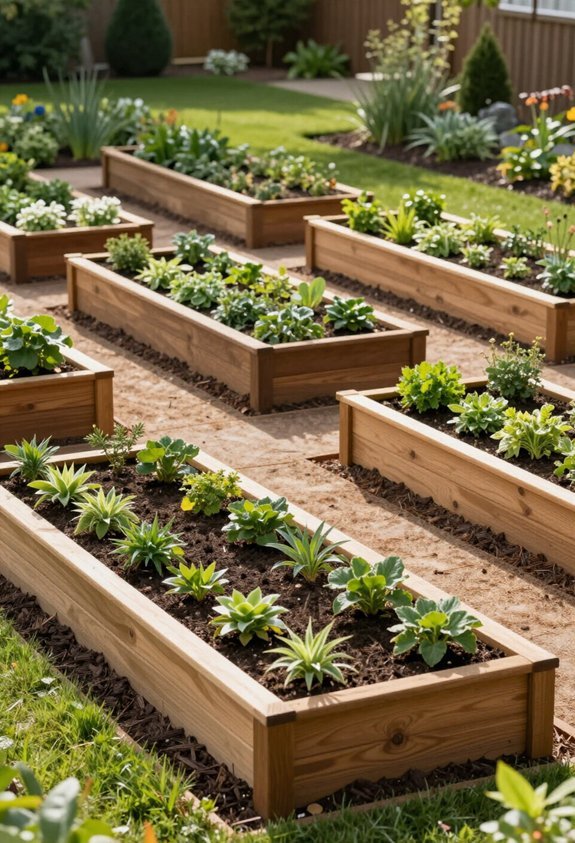
Once the appropriate materials have been selected based on durability and style preferences, determining the proper dimensions for front yard raised beds becomes the next practical step in the planning process. Homeowners should measure their available space carefully, accounting for walkways and existing landscaping features that require clearance. Standard bed dimensions typically range from two to four feet wide and six to eight feet long, allowing comfortable access from both sides without overreaching. Depth should measure at least twelve inches for shallow-rooted vegetables, though eighteen inches accommodates deeper-rooting plants more effectively. Considering the front yard’s visual balance is essential, as oversized beds may overwhelm smaller properties while undersized beds appear insignificant in larger spaces. Proper proportioning guarantees both functional gardening and aesthetic harmony.
Organize Your Layout Around Existing Features
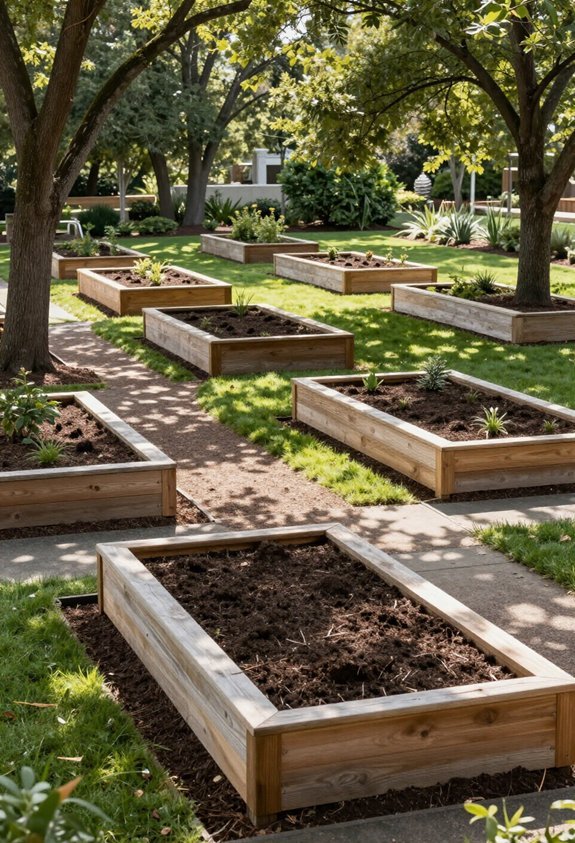
Strategic placement of front yard raised beds requires careful consideration of permanent landscape elements already present on the property. Existing trees, shrubs, utility lines, and pathways should influence bed positioning to avoid conflicts and maintain functionality. Builders should identify areas receiving adequate sunlight, typically six to eight hours daily, while avoiding shadows cast by structures or mature vegetation. Driveways, walkways, and access routes need protection from bed placement to preserve safety and movement. Underground utilities, including water pipes and electrical lines, demand careful mapping before installation. By organizing beds around these fixed features rather than against them, homeowners create layouts that enhance curb appeal while respecting existing landscape infrastructure and ensuring long-term garden success.
Select Low-Maintenance Plants That Look Polished
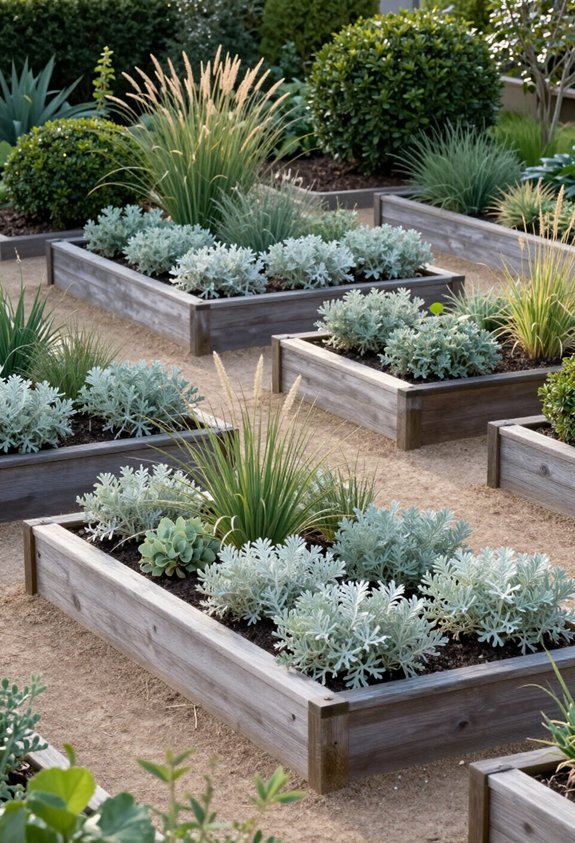
After positioning raised beds around existing landscape features and securing ideal sunlight exposure, homeowners can focus on populating these beds with plants that require minimal upkeep while maintaining an attractive, finished appearance throughout the growing season. Selecting ornamental grasses, native perennials, and evergreen shrubs provides year-round structure and visual interest without demanding constant attention. Plants such as coreopsis, black-eyed Susans, and sedums thrive in various soil conditions and require infrequent watering once established. Incorporating flowering plants with extended bloom periods, like salvia and coneflowers, guarantees continuous color without replanting efforts. Mulching between plants conserves moisture, suppresses weeds, and contributes to the polished aesthetic. This strategic approach combines beauty with practicality, allowing raised beds to remain attractive and manageable throughout all seasons.
Plan Your Bed Spacing for Visual Balance
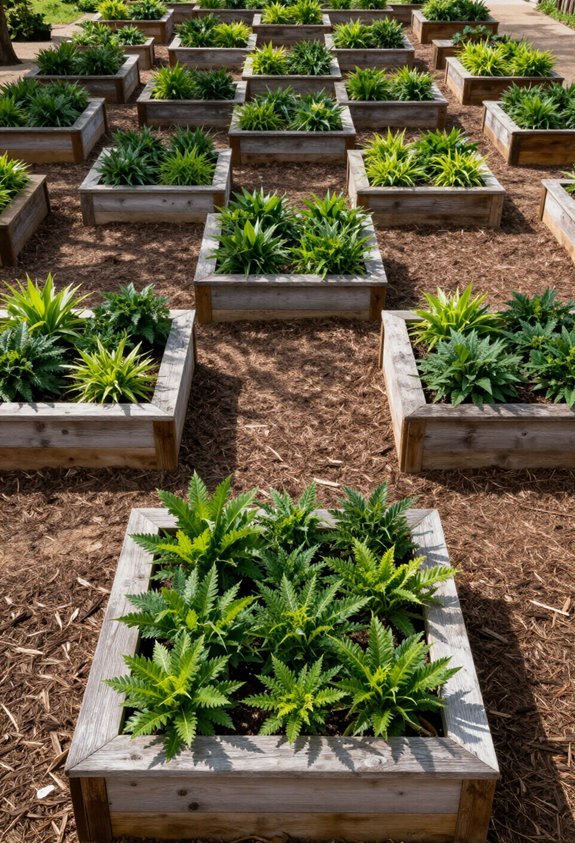
Proper spacing between raised beds creates visual harmony in a front yard landscape while ensuring that each bed functions as an intentional design element rather than appearing cluttered or random. Maintaining consistent distances between beds, typically eighteen to twenty-four inches, allows pathways for maintenance access and mowing while preventing the yard from feeling cramped. Symmetrical arrangements, such as parallel rows or organized grids, establish order and visual balance that enhances curb appeal. Uneven spacing creates confusion and suggests poor planning, whereas deliberate placement communicates intentional design. Gardeners should consider sight lines from the street and driveway, positioning beds to frame the home’s entrance effectively. This methodical approach transforms raised beds from functional garden structures into cohesive landscape features that improve the property’s overall aesthetic appeal.
Build Clean Edges to Prevent Spillover
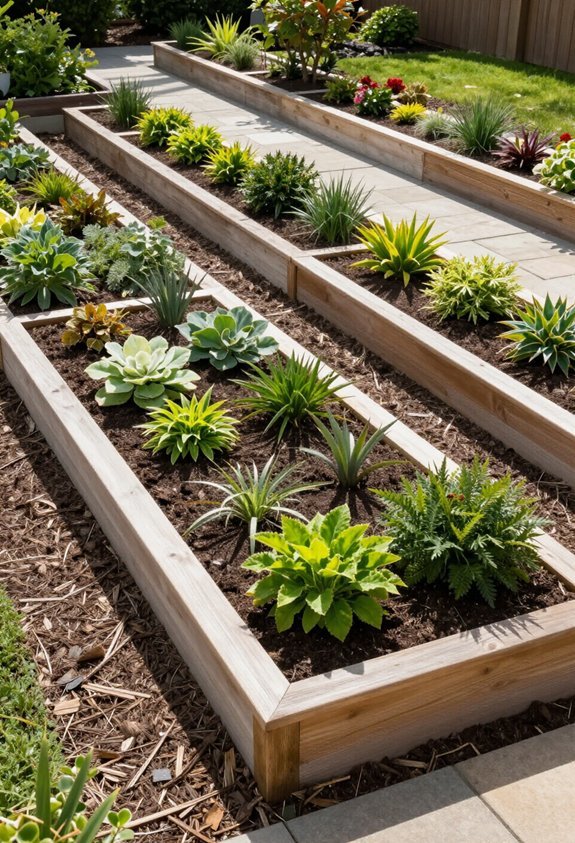
While thoughtful spacing establishes the overall framework of a raised bed garden, the edges of each bed require equally careful attention to maintain the landscape’s polished appearance and prevent soil, mulch, and plants from encroaching into surrounding areas. Installing sturdy edging materials, such as metal borders, wood frames, or composite trim, creates defined boundaries that contain the bed contents effectively. These physical barriers not only prevent spillover but also provide a finished, intentional look to the garden design. Proper edging installation requires secure anchoring into the ground to withstand weather conditions and plant growth pressure. Regular maintenance of these edges, including removing debris and checking for deterioration, guarantees that the raised beds remain visually distinct and organized, contributing considerably to the overall tidiness and aesthetic appeal of the front yard landscape.
Install Proper Drainage to Avoid Waterlogging
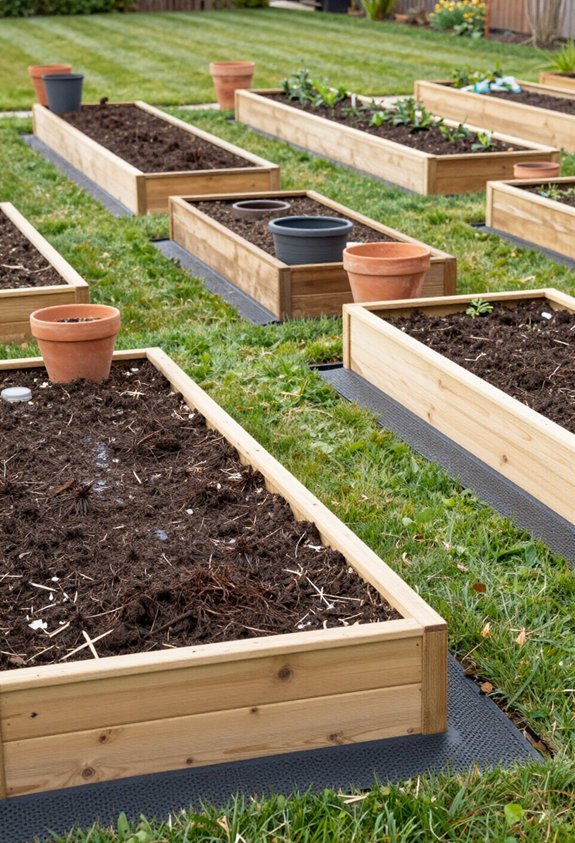
Since raised beds sit above ground level, they require deliberate drainage planning to prevent water from accumulating around plant roots and causing rot or fungal diseases. To establish proper drainage, gardeners should first verify the bottom of the raised bed has adequate holes or gaps, allowing excess water to escape into the soil below. Adding a layer of gravel or coarse material at the base creates additional space for water movement. For beds constructed over clay soil or poorly draining ground, consider installing a perforated drain pipe along the bottom interior, directing water away from the planting area. Elevating the bed further or creating a slight slope encourages water runoff, maintaining ideal moisture levels while protecting plants from waterlogging damage.
Fill Your Beds With Quality Soil and Amendments
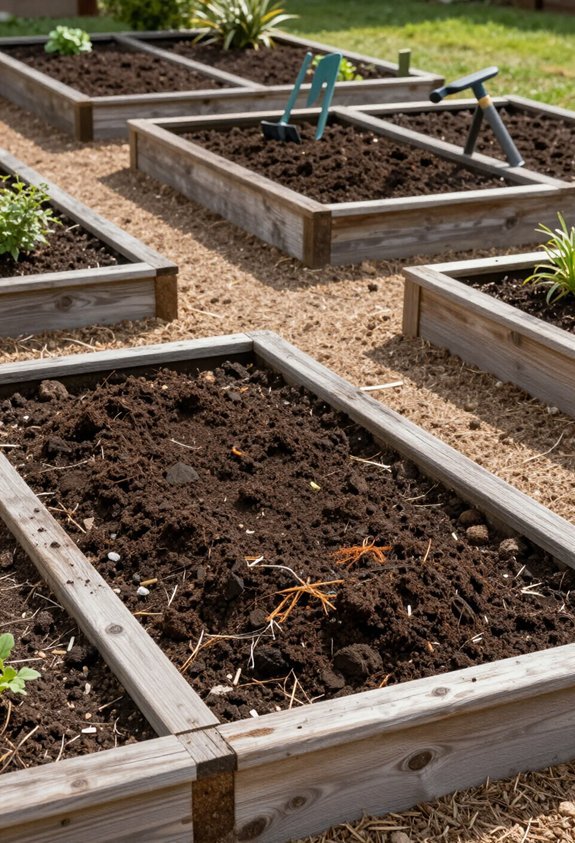
Once drainage is established, gardeners can begin filling their raised beds with a nutrient-rich soil mixture that will support healthy plant growth throughout the growing season. A quality combination typically includes topsoil, compost, and peat moss or coconut coir in equal proportions, creating a balanced foundation for vegetables and flowers. Adding amendments such as aged manure, perlite, or vermiculite improves soil structure and water retention while preventing compaction. Gardeners should avoid using garden soil directly from their yard, as it often contains weeds, pests, and pathogens that compromise plant health. Instead, purchasing pre-mixed raised bed soil or creating a custom blend guarantees ideal growing conditions. Filling beds to within two inches of the rim allows space for mulch application and water settling during watering sessions.
Add Mulch to Suppress Weeds and Retain Moisture
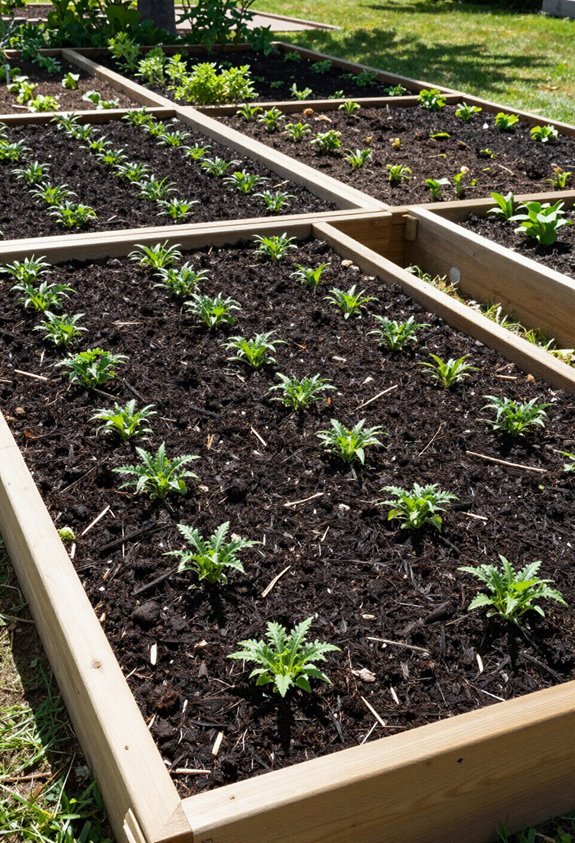
Applying a layer of mulch across the soil surface of raised beds provides multiple benefits that enhance plant growth and reduce garden maintenance demands. Mulch acts as a protective barrier that blocks sunlight from reaching weed seeds, preventing unwanted plants from germinating and competing with vegetables for nutrients and water. Additionally, mulch moderates soil temperature by insulating the earth during both hot summers and cold winters, creating a more stable growing environment. The organic material also breaks down gradually, improving soil structure and adding beneficial nutrients over time. A two to three-inch layer of wood chips, straw, or shredded leaves works effectively, though gardeners should keep mulch several inches away from plant stems to prevent rot and pest problems.
Incorporate Tiered Designs for Visual Interest
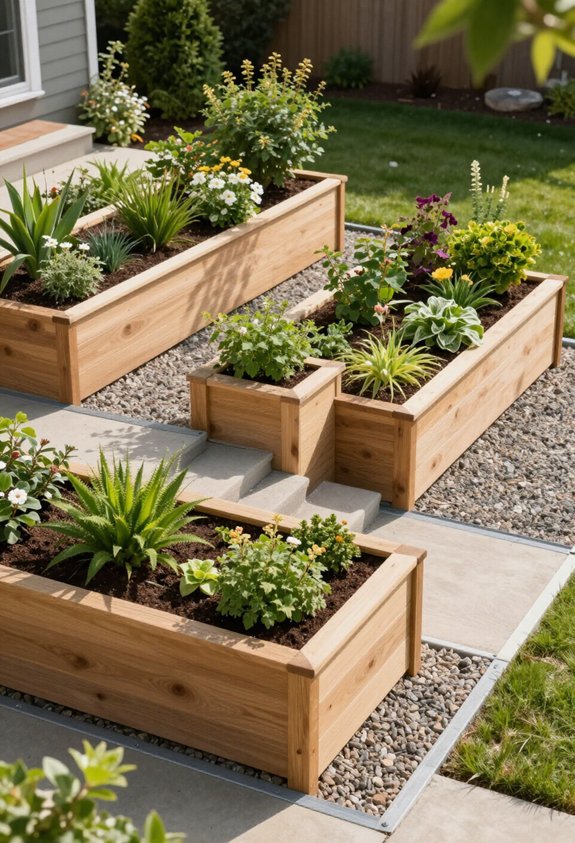
Tiered raised beds, which are constructed at varying heights and levels, create dynamic visual appeal while offering practical gardening advantages for front yard landscapes. By stacking beds of different elevations, gardeners establish focal points that draw the eye upward, making modest yards appear larger and more sophisticated. This design strategy also improves accessibility, allowing easier planting and maintenance without excessive bending. Taller beds positioned at the back and shorter ones in front create natural sight lines, while varied levels provide distinct microclimates where different plants can thrive according to their specific sunlight and drainage requirements. Tiered arrangements additionally serve functional purposes by directing water flow downward, preventing erosion while ensuring proper hydration across all planting zones.
Create Pathways Between Beds for Easy Access
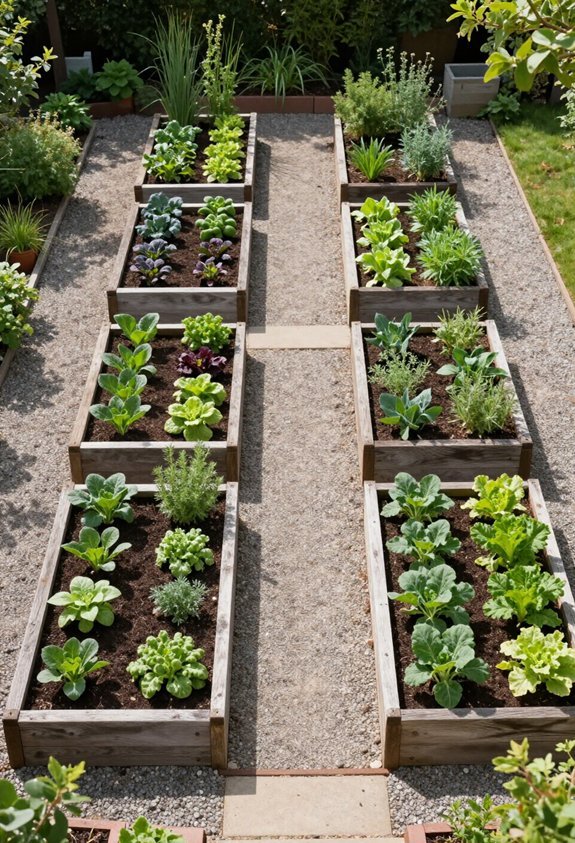
Well-designed pathways between raised beds serve as essential infrastructure that transforms front yard gardens from functional spaces into easily navigable landscapes, allowing gardeners to move efficiently between planting zones while minimizing soil compaction and protecting plants from accidental damage. Pathways can be constructed using various materials, including mulch, gravel, wood chips, or stepping stones, each offering distinct aesthetic and functional advantages. Mulch pathways provide natural appearance while suppressing weeds, while gravel offers excellent drainage and durability. Stepping stones create formal elegance and prevent mud accumulation during wet weather. Establishing pathways approximately two to three feet wide guarantees comfortable passage with wheelbarrows and garden tools. Proper pathway planning prevents unnecessary foot traffic through planted areas, maintains garden organization, and enhances overall accessibility for all gardeners, regardless of physical ability.
Add Finishing Borders and Edging
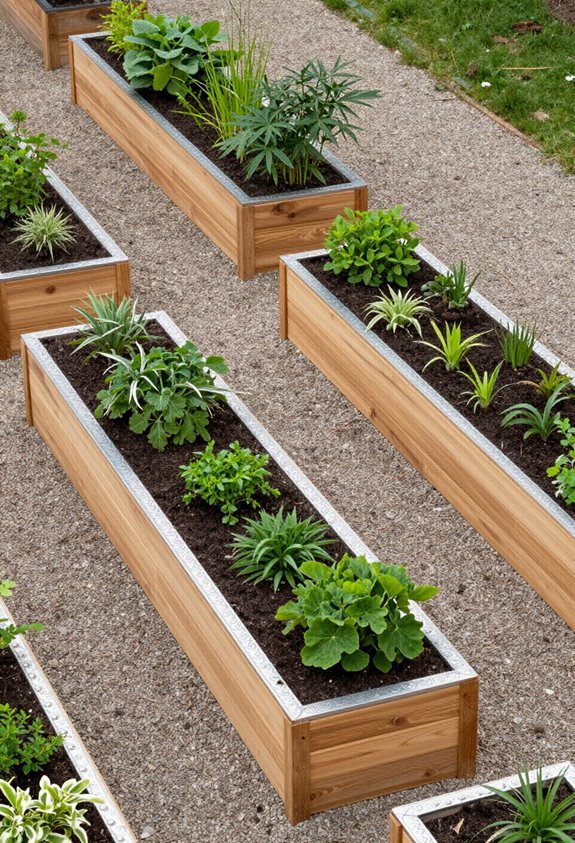
The final step in completing a front yard raised bed garden involves installing borders and edging materials that define the perimeter of each bed, creating clean lines between the planted areas and surrounding landscape while simultaneously providing structural support that prevents soil from spilling onto pathways and lawn spaces. Popular edging options include wood boards, composite materials, metal strips, and stone pavers, each offering distinct aesthetic and functional benefits. Wood provides a natural appearance but requires periodic maintenance, while composite materials resist rot and decay for longer-lasting durability. Metal edging creates modern, precise boundaries, and stone offers substantial permanence and decorative appeal. Selecting appropriate edging materials depends on the garden’s overall design scheme, budget constraints, and desired maintenance level. Properly installed borders enhance visual organization while protecting the landscape’s integrity.
Set Up a Low-Mess Watering System
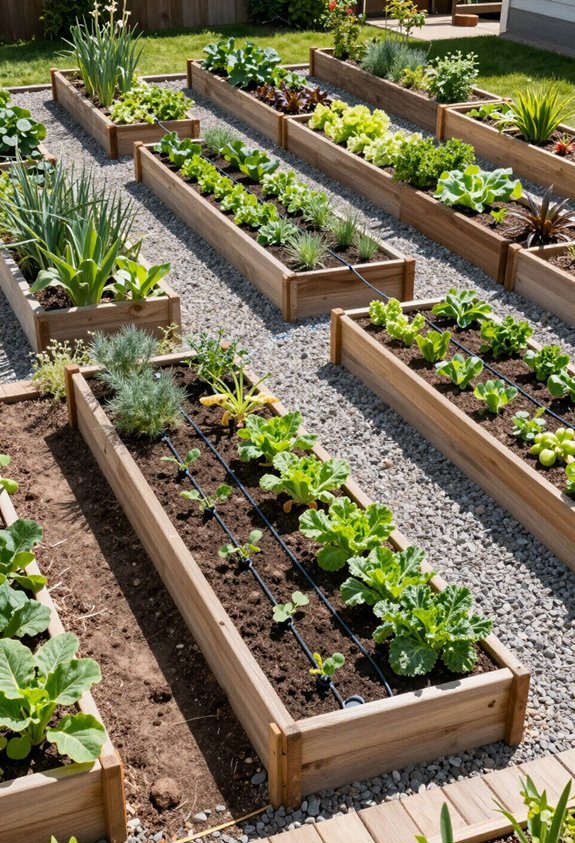
Efficient watering systems prove essential for maintaining healthy raised bed gardens while minimizing water waste and keeping surrounding pathways and lawn areas dry. Drip irrigation systems deliver water directly to plant roots through small tubing, reducing evaporation and runoff considerably. Soaker hoses, which are perforated along their length, provide similar benefits by distributing moisture slowly and consistently throughout the soil. Installing these systems on timers guarantees plants receive adequate hydration even during busy periods or vacations. Mulching around plants further retains soil moisture and decreases watering frequency. For simpler setups, hand-watering with a gentle spray nozzle controls water application precisely. Positioning beds strategically away from high-traffic areas and slopes prevents water from splashing onto hardscaping surfaces, maintaining neat garden aesthetics while promoting plant health through targeted hydration practices.
Use Container Liners to Keep Soil Contained
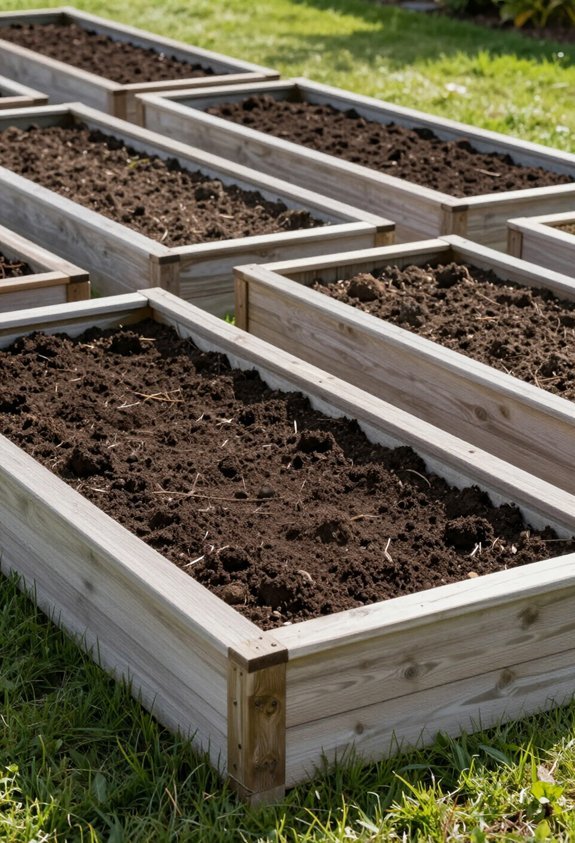
Container liners serve as protective barriers that prevent soil from escaping raised beds while maintaining the structural integrity of the garden setup, complementing the hydration methods discussed previously by creating a contained environment where water and nutrients remain where plants need them most. Gardeners can select from landscape fabric, heavy-duty plastic, or cardboard options, each offering distinct advantages depending on climate and durability requirements. Landscape fabric allows water drainage while blocking soil migration, making it ideal for most applications. Plastic liners provide maximum containment but require drainage holes to prevent waterlogging. Cardboard offers a biodegradable alternative that eventually enriches the soil. Proper liner installation involves securing edges firmly against bed walls, ensuring complete coverage without gaps where soil particles could escape into surrounding areas.
Choose Protective Barriers for Pests and Foot Traffic
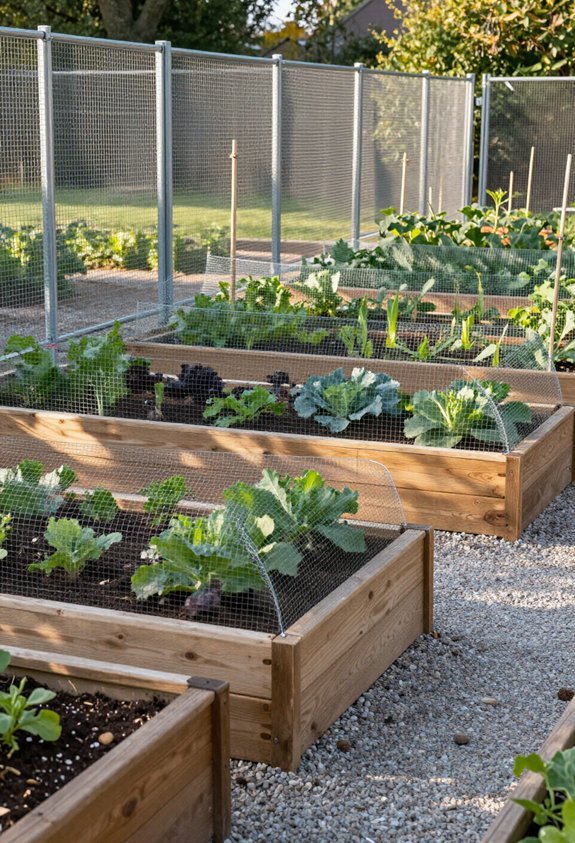
While container liners protect soil from escaping the raised bed structure, equally important protective measures must address external threats to the garden’s success, including unwanted animals and the wear caused by people walking near or through planting areas. Installing physical barriers like chicken wire or hardware cloth beneath raised beds prevents burrowing animals from accessing plant roots, while fencing around garden perimeters deters larger creatures such as deer and rabbits. Above-ground netting protects tender seedlings from birds and insects during vulnerable growth stages. Pathways constructed alongside or between beds redirect foot traffic away from planted areas, preserving soil integrity and plant health. Combining these protective strategies creates an extensive defense system that maintains garden appearance and productivity throughout growing seasons.
Grow Herbs in Dedicated Front Yard Beds
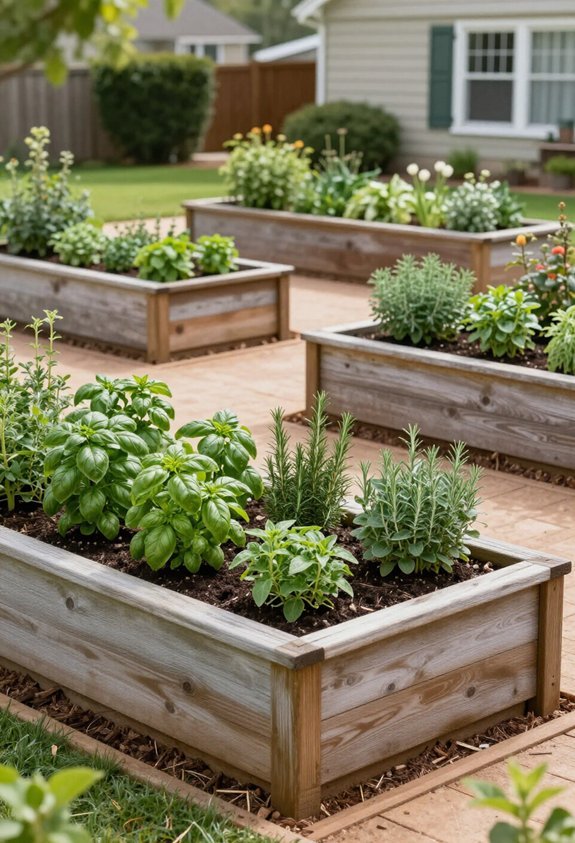
Beyond protecting the garden from external threats, front yard raised beds offer an ideal environment for cultivating herbs, which require specific growing conditions that raised beds naturally provide, including excellent drainage, controlled soil composition, and accessible positioning for regular harvesting. Gardeners can organize herbs by growth patterns and water requirements, placing moisture-loving varieties like basil and parsley together while positioning drought-tolerant herbs such as rosemary and thyme in separate sections. This arrangement prevents overwatering sensitive plants and guarantees each herb receives appropriate care. Front yard herb beds also provide convenient access for cooking preparations, reducing the distance between garden and kitchen. Additionally, visible herb gardens enhance curb appeal while serving practical purposes, creating attractive landscapes that simultaneously produce fresh culinary ingredients for household use.
Incorporate Raised Beds Into Modern Minimalist Yards
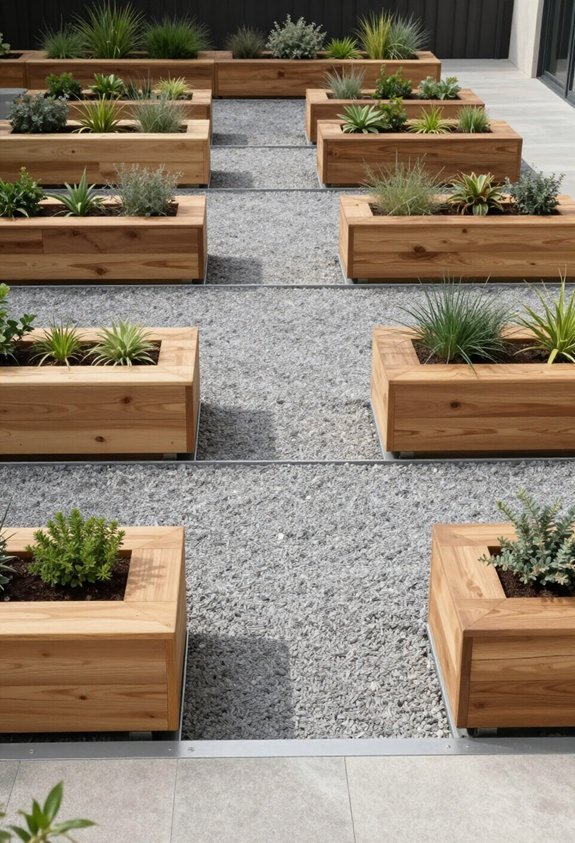
Modern minimalist yards emphasize clean lines, uncluttered spaces, and purposeful design elements, making raised beds an excellent choice for gardeners seeking to maintain this aesthetic while growing fresh produce and herbs. Selecting materials like composite wood, galvanized metal, or concrete guarantees a cohesive, contemporary appearance that complements minimalist landscapes. Positioning raised beds in geometric patterns or linear arrangements reinforces the ordered, intentional feel essential to minimalist design. Incorporating drought-resistant plants and maintaining consistent bed heights creates visual harmony throughout the yard. Grouping beds strategically reduces visual clutter while maximizing functionality, allowing gardeners to achieve productivity without compromising the serene, streamlined appearance minimalist yards demand. This approach successfully merges practical gardening with sophisticated landscape design principles.
Build Rustic Beds With Reclaimed Wood
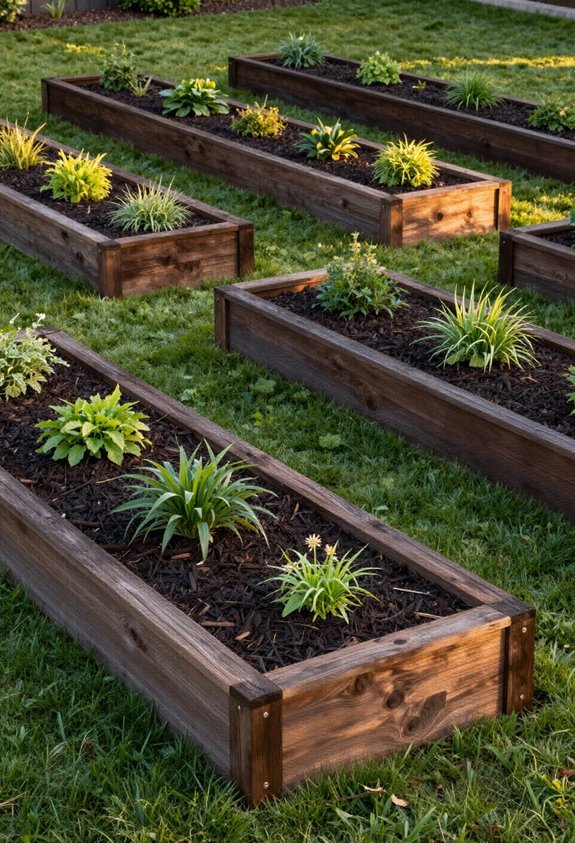
Charm and sustainability merge when gardeners choose reclaimed wood for building rustic raised beds, as this approach transforms salvaged materials into functional garden structures while adding authentic character to front yard landscapes. Sourcing reclaimed wood from old barns, fences, or construction sites provides durable materials that develop weathered patinas over time. Builders should inspect wood thoroughly for structural integrity, removing nails and treating surfaces if necessary to prevent splinter hazards. Assembling beds requires basic tools including saws, drills, and screws, which hold corners securely without chemical treatments that could leach into soil. The resulting beds accommodate vegetables, herbs, or ornamental plants while reducing waste, creating environmentally conscious gardens with distinctive rustic appeal that enhances curb appeal considerably.
Keep Your Raised Beds Tidy With Consistent Mulch
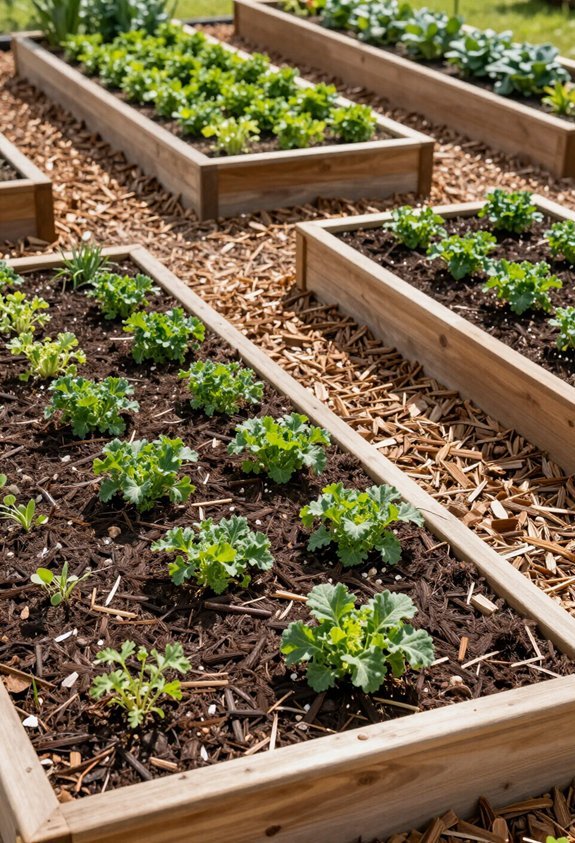
Maintaining raised beds requires regular mulch application, a simple yet essential practice that suppresses weeds, regulates soil moisture, and creates a neat, finished appearance throughout the growing season. Mulch acts as a protective barrier, preventing unwanted plants from germinating while reducing water evaporation during hot months. A consistent layer of two to three inches works effectively across most garden beds. Gardeners should apply mulch after planting, keeping it several inches away from plant stems to prevent rot and pest problems. Organic mulches like wood chips or shredded bark gradually decompose, enriching the soil with nutrients over time. Renewing mulch annually maintains its appearance and effectiveness, ensuring beds remain organized, healthy, and visually appealing throughout the year.
Refresh Your Beds Annually for Long-Term Appeal
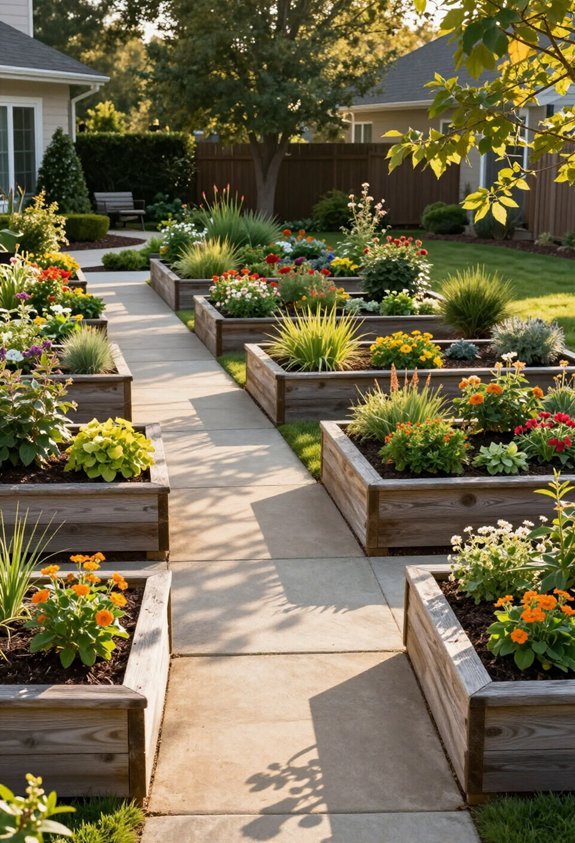
While annual mulch renewal keeps raised beds looking neat and functioning properly, the beds themselves benefit from a more thorough refresh that goes beyond surface-level maintenance to guarantee long-term durability and garden productivity. Gardeners should inspect wooden frames for rot, replacing damaged boards to prevent structural failure. Soil quality deteriorates over time as nutrients deplete and organic matter breaks down, necessitating the addition of fresh compost and nutrient-rich amendments each season. Testing soil pH and composition helps identify deficiencies requiring correction. Removing accumulated debris, fallen leaves, and compacted soil layers improves drainage and root penetration. Rotating planting locations within beds prevents disease buildup and pest cycles. This extensive annual maintenance approach preserves bed integrity while sustaining ideal growing conditions for years.
Frequently Asked Questions
How Often Should I Replace or Refresh the Soil in My Raised Beds?
Gardeners should refresh raised bed soil annually by adding 1-2 inches of compost or organic matter to the top layer. Complete soil replacement is recommended every 3-5 years, depending on soil quality and plant health.
What’s the Best Way to Prevent Pets and Wildlife From Damaging Raised Beds?
Installing sturdy fencing around raised beds prevents larger wildlife access. Netting protects plants from birds and insects. Motion-activated sprinklers deter animals. Chicken wire buried underground stops burrowing creatures. Regular monitoring guarantees early damage detection.
Can I Build Raised Beds on Top of Existing Grass or Lawn?
Yes, raised beds can be built directly on grass. One should remove the turf first or lay cardboard underneath to prevent grass growth. This creates a clean barrier and aids decomposition, improving soil quality over time.
How Deep Should Raised Beds Be for Growing Vegetables Versus Ornamental Plants?
Vegetable beds require 12-18 inches minimum depth for root vegetables and tomatoes, while 8-12 inches suffices for shallow-rooted crops. Ornamental plants typically need only 6-8 inches of soil depth for adequate growth and establishment.
What Budget Should I Expect for a Complete Front Yard Raised Bed Project?
A complete front yard raised bed project typically costs between $300 to $2,000, depending on bed size, materials chosen, soil quality, and landscaping complexity. Budget increases with premium wood or composite materials.
Conclusion
Homeowners can transform their front yards into organized, visually appealing gardens by implementing raised bed designs that combine functionality with aesthetic appeal. By selecting appropriate materials, sizing beds thoughtfully, and choosing low-maintenance plants suited to their climate, they create landscapes that enhance curb appeal while requiring minimal upkeep. Strategic placement around existing features, consistent mulching, and annual refreshes guarantee these gardens remain tidy and attractive for years to come.