
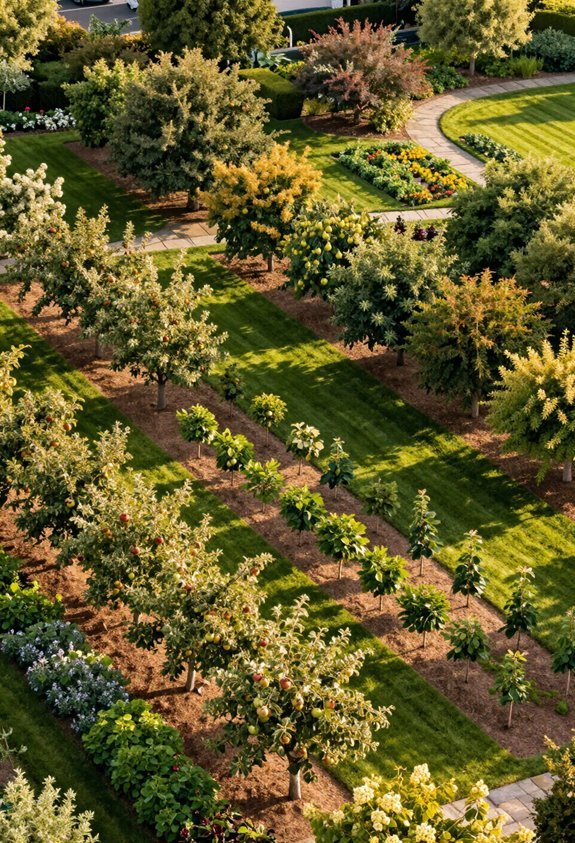
Many front yard orchards underperform because homeowners prioritize appearance over productivity or focus on productivity without considering how orchards integrate into their home’s overall aesthetic. Poorly placed trees receive insufficient sun and produce minimal fruit. Spacing errors lead to overcrowding that compromises both fruit quality and visual appearance. Neglected pruning creates unruly shapes that look unkempt rather than productive. Lack of supporting landscape design makes orchards appear disconnected from the rest of the property. The solution requires balancing horticultural requirements with landscape design principles, ensuring trees receive proper conditions for productivity while remaining visually integrated into your front yard. These eighteen ideas solve these challenges, offering both inspiration and practical guidance for creating front yard orchards that feel genuinely productive while enhancing your home’s curb appeal and character.
Choose Your Hardiness Zone and Climate First
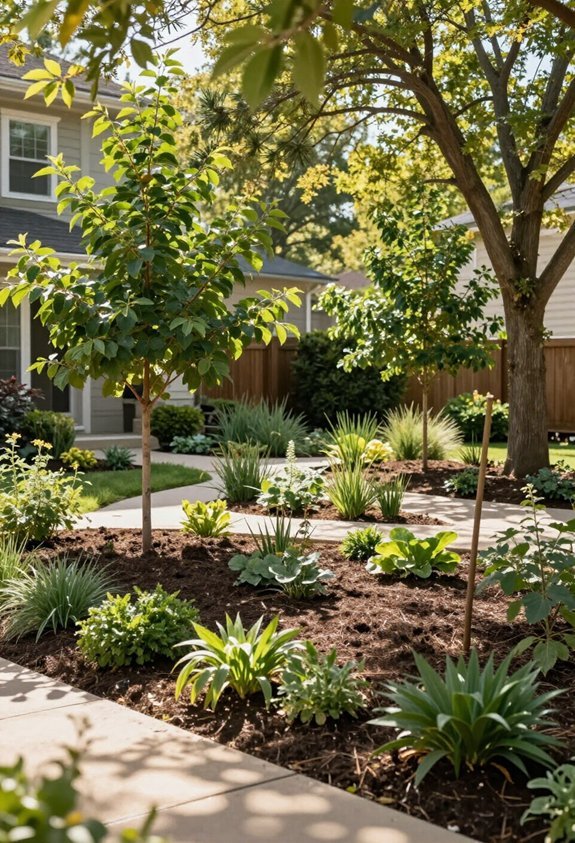
Before selecting fruit trees for a front yard orchard, it is crucial to understand the local hardiness zone and climate conditions, as these factors directly determine which varieties can survive and thrive in a specific geographic area. The United States Department of Agriculture divides the country into hardiness zones based on average minimum winter temperatures, helping gardeners identify appropriate plant selections. Additionally, homeowners must consider precipitation patterns, humidity levels, and summer heat, since these elements considerably influence tree growth and fruit production. Researching local climate data and consulting regional agricultural extension offices provides valuable information for making informed decisions. Matching tree varieties to environmental conditions guarantees successful establishment, reduces maintenance requirements, and maximizes orchard productivity and longevity.
Also read: 20+ MINIMALIST FRONT YARD Ideas With Clean Lines!
Dwarf Apple Trees for Year-Round Harvests
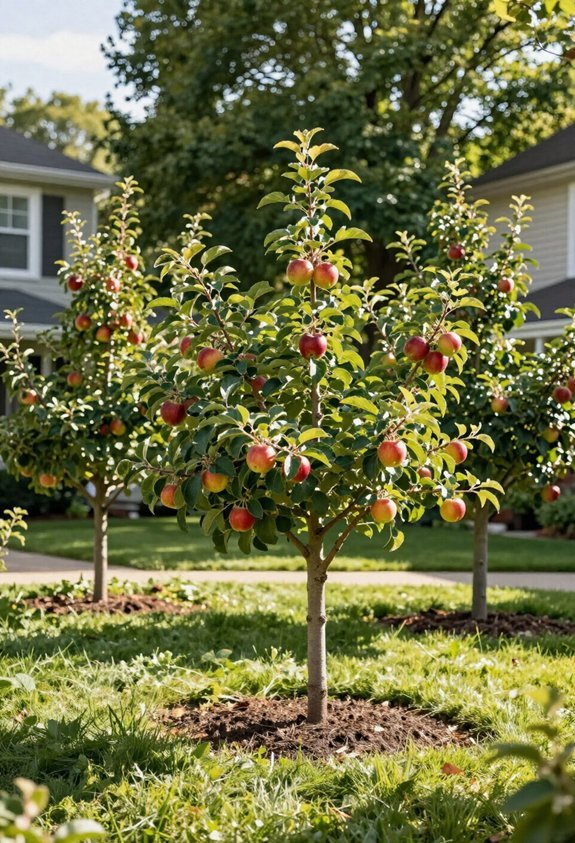
Once a gardener has identified the appropriate hardiness zone and climate conditions for a front yard orchard, selecting specific fruit varieties becomes the next logical step in the planning process. Dwarf apple trees represent an excellent choice for front yard cultivation because they produce full-sized fruit while requiring considerably less space than standard varieties. These trees typically mature between eight and ten feet in height, making them manageable for most residential properties. Dwarf apples can yield fruit within two to three years of planting, providing relatively quick harvests compared to other orchard options. When selecting varieties, gardeners should choose types suited to their specific climate zone to maximize productivity and guarantee consistent annual yields throughout the growing season.
Compact Citrus Varieties That Thrive in Front Yards
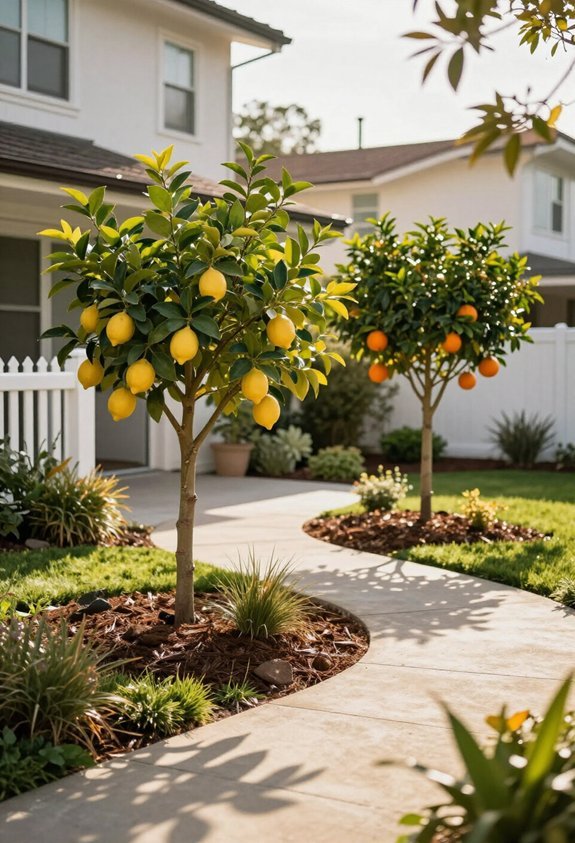
While dwarf apple trees offer reliable harvests in cooler climates, compact citrus varieties present an excellent alternative for gardeners living in warmer regions where front yard orchards can flourish year-round. Dwarf lemon, lime, and orange trees grow successfully in containers or small garden spaces, reaching heights of 8 to 12 feet when mature. These varieties require full sun exposure, well-draining soil, and consistent watering to produce quality fruit. Popular options include Meyer lemons, which tolerate partial shade, and Calamondin oranges, which offer ornamental appeal alongside edible fruit. Gardeners should apply balanced fertilizer during growing seasons and prune branches to maintain compact shapes. Strategic placement near patios or entryways maximizes both productivity and aesthetic value while ensuring adequate airflow prevents disease development.
Fig Trees for Mediterranean Charm and Fruit
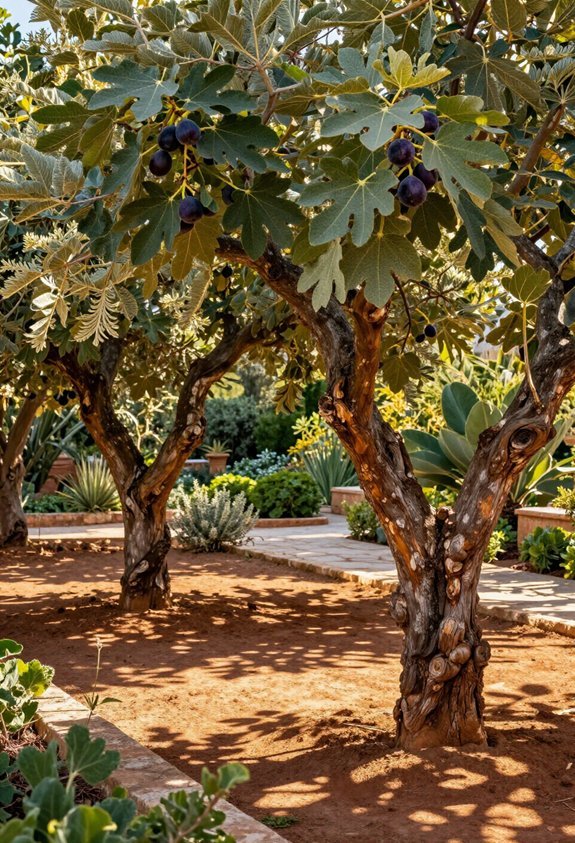
Fig trees represent an excellent choice for front yard orchards seeking to combine Mediterranean aesthetics with practical fruit production, as these plants naturally flourish in warm climates and require minimal maintenance once established. These deciduous trees develop broad, distinctive leaves that provide substantial shade while contributing visual interest throughout growing seasons. Fig varieties such as ‘Brown Turkey’ and ‘Celeste’ produce sweet, edible fruits within two to three years of planting, offering reliable harvests for home gardeners. The trees tolerate poor soil conditions and drought stress remarkably well, making them ideal for regions with limited water availability. Proper placement in full sunlight and well-draining soil guarantees optimal growth and fruit development, while occasional pruning maintains desired shape and encourages productive branching.
Peach and Nectarine Trees in Small Spaces
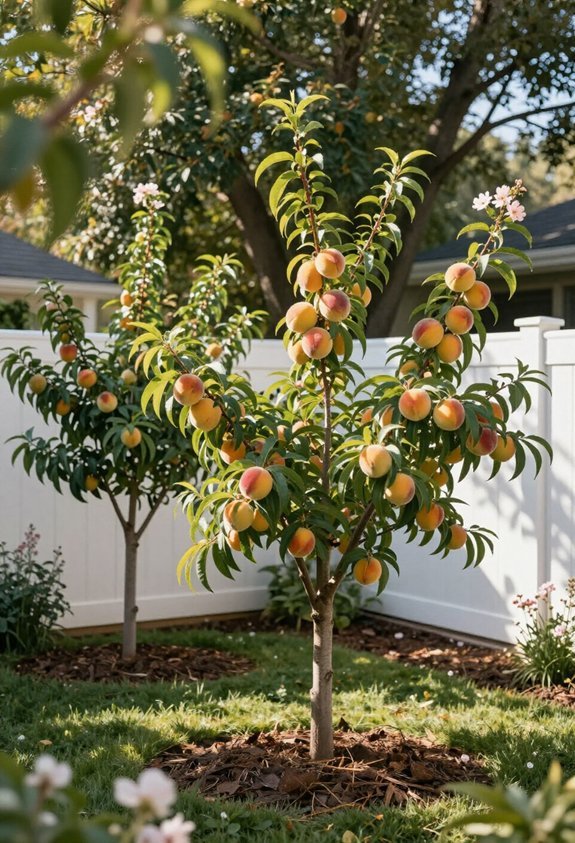
Peach and nectarine trees offer gardeners an excellent opportunity to grow delicious stone fruits in limited spaces, as these compact varieties adapt well to small front yards and container growing when selected and managed properly. Dwarf cultivars, reaching heights of eight to twelve feet, provide substantial harvests without overwhelming residential landscapes. These trees require full sunlight—at least six to eight hours daily—and well-draining soil to prevent root rot and disease. Proper pruning during dormancy maintains manageable shapes and encourages fruit production on lateral branches. Regular watering during growing seasons, combined with balanced fertilization, supports healthy development. Container-grown specimens thrive in large pots with drainage holes, allowing gardeners to relocate trees for frost protection during critical spring months when delicate blossoms need shelter.
Berry Bushes as Living Borders
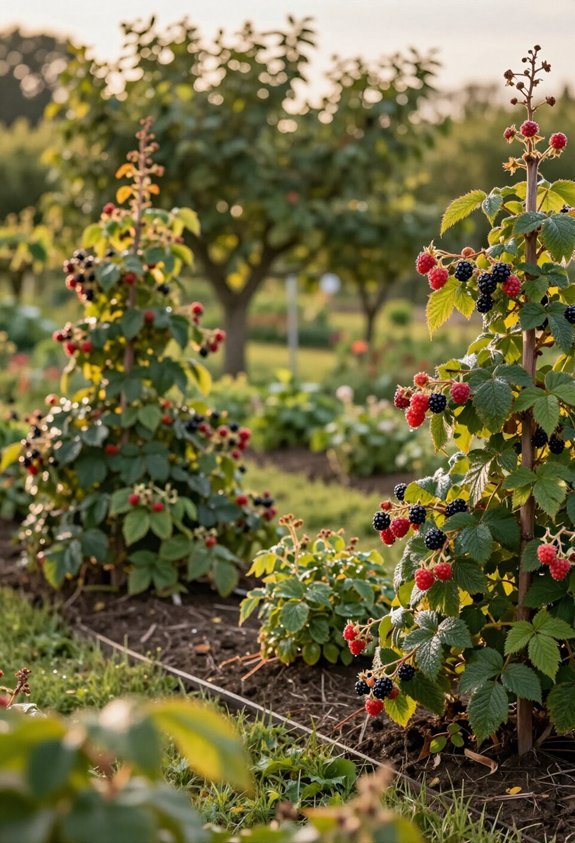
Berry bushes provide homeowners with a practical and attractive way to define property boundaries while simultaneously producing nutritious fruit for household consumption, offering an efficient alternative to traditional fencing or hedging materials. Blackberry, raspberry, and blueberry varieties grow densely enough to create natural barriers that discourage trespassing while occupying minimal space. These plants establish root systems that prevent soil erosion along property lines, contributing to landscape stability. When planted in staggered rows approximately three to four feet apart, berry bushes mature into thick, interconnected walls within two to three years. Homeowners benefit from annual harvests during summer and fall months, receiving both aesthetic appeal and functional food production. Strategic placement of berry borders transforms property perimeters into productive landscape features, maximizing limited yard space effectively.
Spacing Formulas: Distance Trees for Full-Sun Coverage
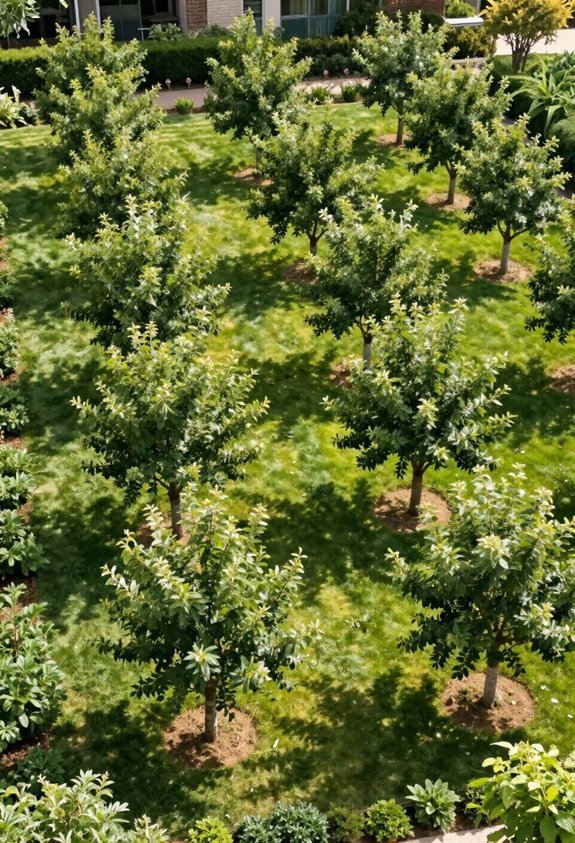
Proper spacing between fruit trees determines whether each tree receives adequate sunlight, air circulation, and nutrients necessary for healthy growth and peak fruit production. A general rule involves planting dwarf varieties 8 to 10 feet apart, semi-dwarf varieties 12 to 15 feet apart, and standard varieties 20 to 25 feet apart. These distances allow mature canopies to develop without excessive overlap or competition. Gardeners should also consider the tree’s ultimate width at maturity rather than its current size, measuring from trunk center to trunk center when positioning new plantings. South-facing slopes receive prime sun exposure throughout the day, making them ideal locations for positioning trees. Proper spacing guarantees each tree achieves full potential for fruit yield and longevity.
Columnar Orchard Trees: Growing Vertical
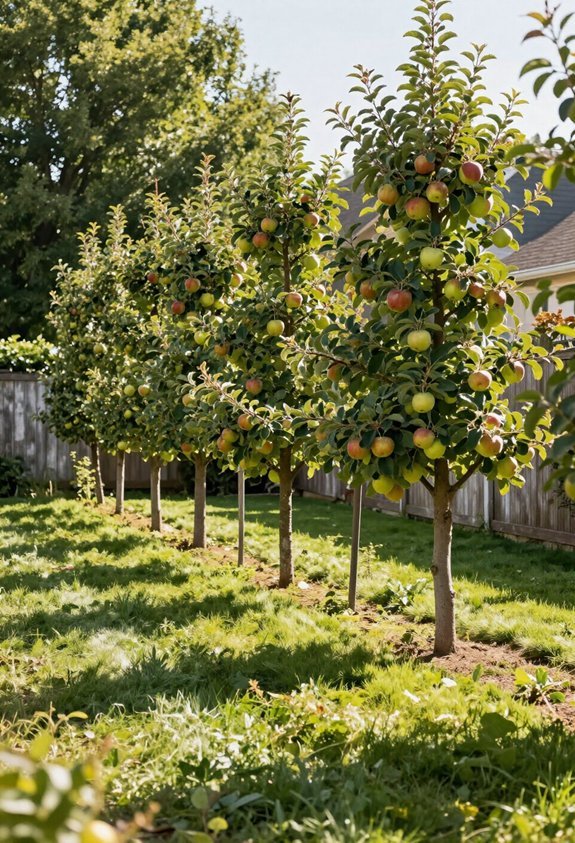
While traditional orchard layouts require substantial horizontal space, columnar fruit trees offer an innovative solution for gardeners with limited yard areas by growing tall and narrow rather than wide and spreading. These specialized varieties, including columnar apples, pears, and cherries, develop a single central stem with minimal lateral branches, creating a striking vertical silhouette that maximizes fruit production in confined spaces. Gardeners can position columnar trees along fence lines, property boundaries, or in narrow planting beds without sacrificing yield or aesthetic appeal. Their compact form requires less pruning maintenance compared to standard orchard trees, while still producing abundant harvests. This vertical growing method transforms small front yards into productive growing spaces, allowing homeowners to cultivate multiple varieties within surprisingly compact footprints while maintaining an organized, visually appealing landscape design.
Espalier Techniques for Flat-Growing Productivity
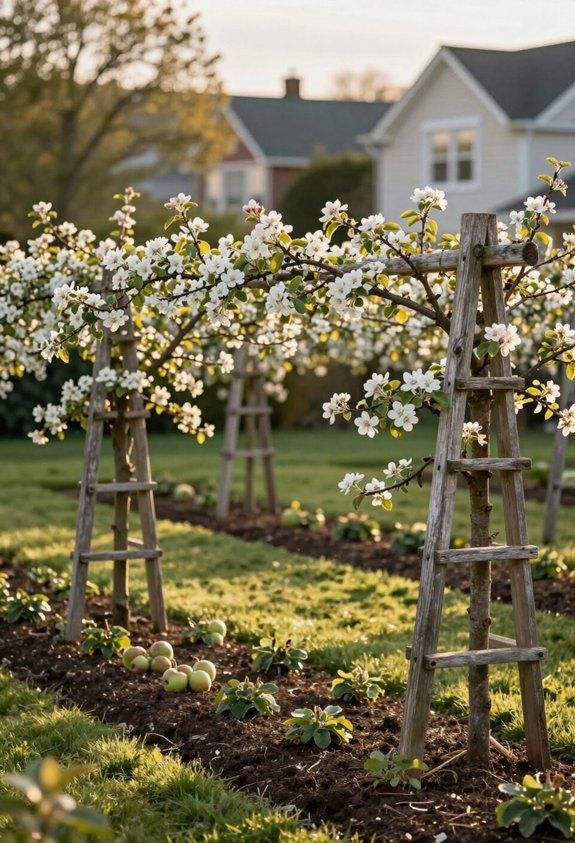
Transforming fruit trees into flat, two-dimensional forms, espalier training directs tree growth along a single plane by carefully positioning and tying branches to a framework of wires, trellises, or walls. This ancient horticultural technique maximizes sunlight exposure and air circulation around developing fruit, resulting in improved yields and quality. The process requires consistent pruning and branch manipulation throughout the growing season, with gardeners gradually bending flexible stems into desired patterns such as horizontal, diagonal, or fan configurations. Espalier systems work exceptionally well for apples, pears, and stone fruits in front yards, as they occupy minimal space while producing abundant harvests. Proper training takes several years to establish, but the aesthetic appeal combined with productivity makes this investment worthwhile for dedicated fruit growers.
Multigraft Trees That Produce Multiple Varieties
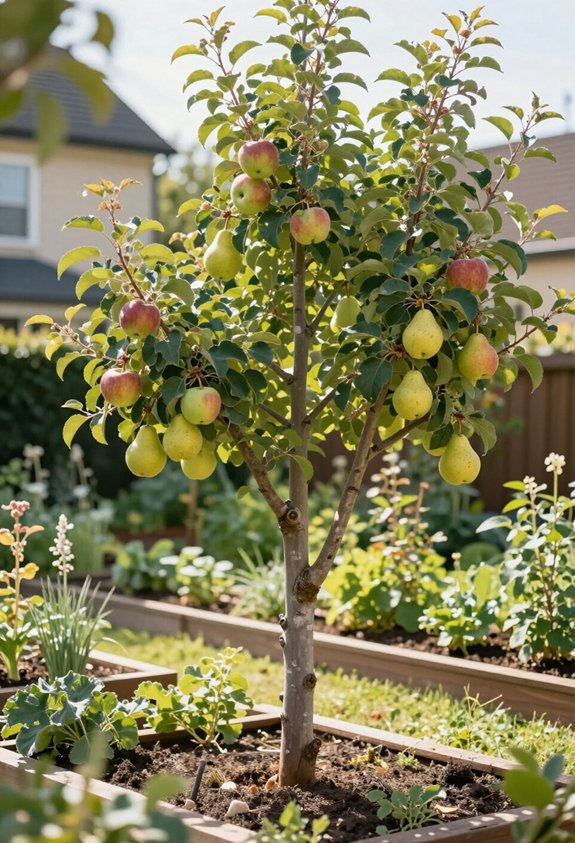
A single fruit tree can be grafted with multiple varieties, allowing gardeners to grow several different types of fruit on one plant by joining branches or buds from different cultivars onto a common rootstock. This technique maximizes limited space in front yards while increasing harvest diversity, since multiple apple varieties, stone fruits, or pear cultivars can thrive on one tree. Gardeners should select compatible varieties that share similar growth requirements and ripening times to guarantee successful coexistence. The grafted branches develop independently, each producing its characteristic fruit while drawing nutrition from the shared root system. Multigraft trees require careful pruning to maintain balance among varieties and prevent one from dominating others, resulting in a productive, space-efficient orchard solution.
Container Orchards for Maximum Flexibility
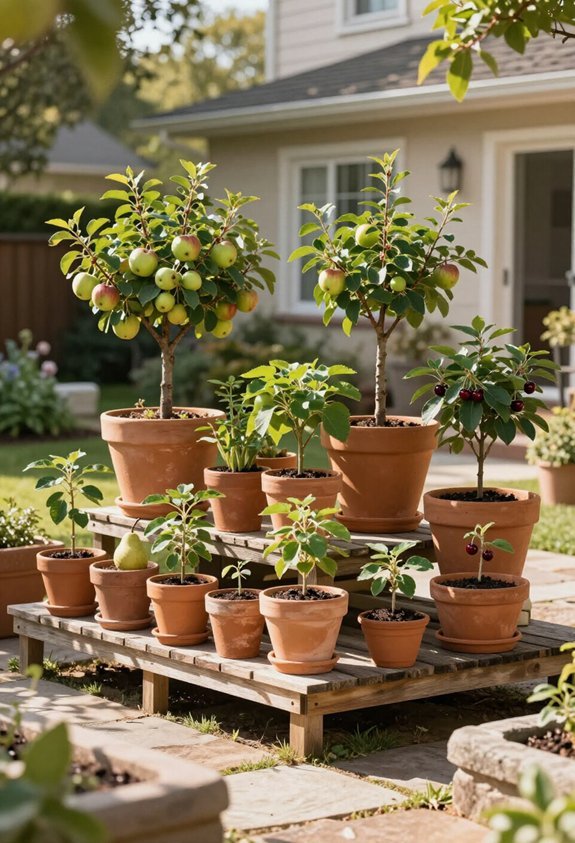
Container orchards offer another practical solution for front yard fruit production, particularly for gardeners dealing with limited space, poor soil conditions, or the desire to relocate trees seasonally. Dwarf fruit varieties thrive in large containers, typically requiring 15 to 20 gallons of soil capacity per tree. Gardeners should select containers with drainage holes and fill them with quality potting mix specifically formulated for fruit trees. Container-grown trees demand consistent watering, as soil in pots dries faster than ground soil, necessitating daily attention during growing seasons. Strategic placement allows gardeners to move trees toward sunlight, protect them from harsh weather, or reorganize their landscape design. This flexibility enables experimentation with different fruit combinations and seasonal adjustments without permanent landscape commitment.
Staggering Harvests: Which Fruits Ripen When
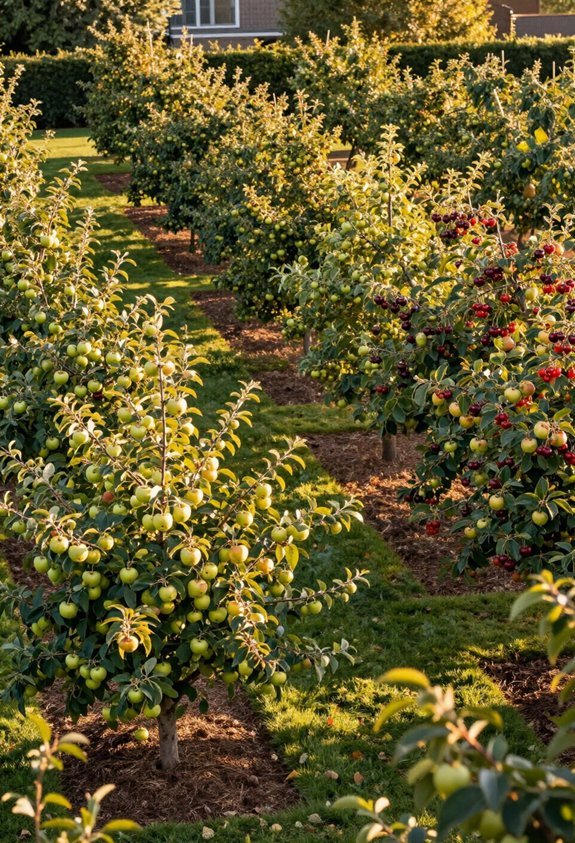
How can gardeners guarantee a steady supply of fresh fruit throughout the growing season rather than experiencing a single overwhelming harvest all at once? By selecting fruit varieties with staggered ripening times, gardeners can extend their harvest window considerably. Early-season fruits like strawberries and cherries ripen in late spring, followed by mid-summer producers such as blueberries and raspberries. Peaches and apples mature in late summer and early fall, while some varieties continue producing into autumn. Gardeners should research specific cultivar maturation dates for their climate zone and plan accordingly. Planting multiple varieties with different ripening schedules guarantees consistent fruit availability. This strategic approach maximizes productivity and prevents waste, allowing households to enjoy homegrown fruit continuously rather than managing surplus all simultaneously.
Fix Waterlogging: Drainage Solutions for Orchard Health
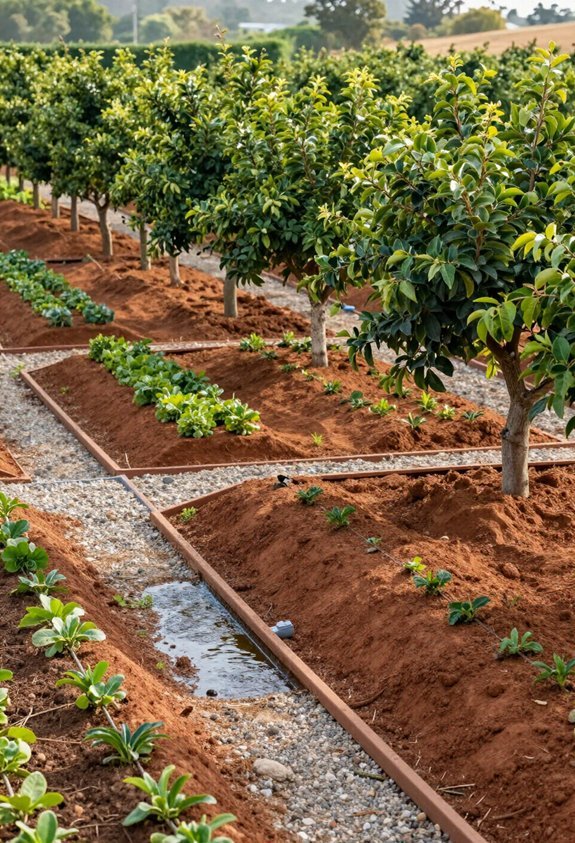
Waterlogged soil poses one of the most serious threats to orchard health, as excessive moisture suffocates tree roots and creates conditions favorable for fungal diseases and root rot. To combat this problem, orchardists should implement effective drainage solutions. Raised beds elevate trees above problematic soil, allowing water to drain naturally away from root zones. Installing French drains, which are trenches filled with gravel and perforated pipes, directs excess water away from the orchard area. Amending soil with organic matter improves its structure and drainage capacity considerably. Additionally, creating gentle slopes around trees channels water downward and outward. For severe waterlogging issues, consider installing surface or subsurface drainage systems designed specifically for orchards. Proper drainage management guarantees prime growing conditions and protects trees from moisture-related diseases.
Herbs That Pair With Fruit Trees
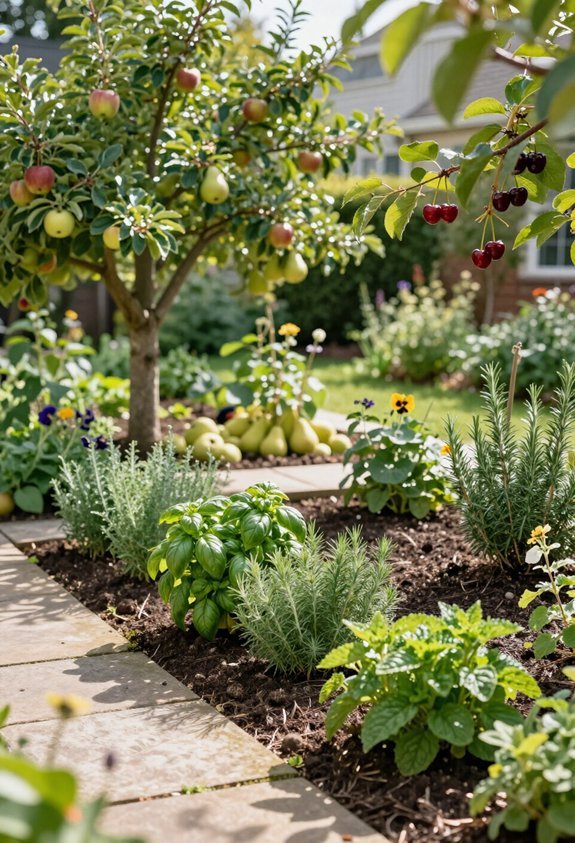
Because many herbs flourish in the same sunny, well-drained conditions that fruit trees prefer, planting them together creates a mutually beneficial garden arrangement that maximizes space and enhances orchard productivity. Basil, rosemary, and thyme grow effectively beneath apple and pear trees, improving soil quality while deterring harmful insects. Oregano and marjoram attract pollinators essential for fruit production, increasing yields substantially. Lavender repels pests that damage stone fruits like peaches and plums, reducing the need for chemical treatments. Mint thrives in partially shaded areas beneath larger trees, suppressing weeds naturally. These companion herbs also provide secondary harvests for culinary use, making the front yard orchard simultaneously functional and economically efficient for homeowners seeking productive outdoor spaces.
Pollinator Plants for Front Yard Orchards
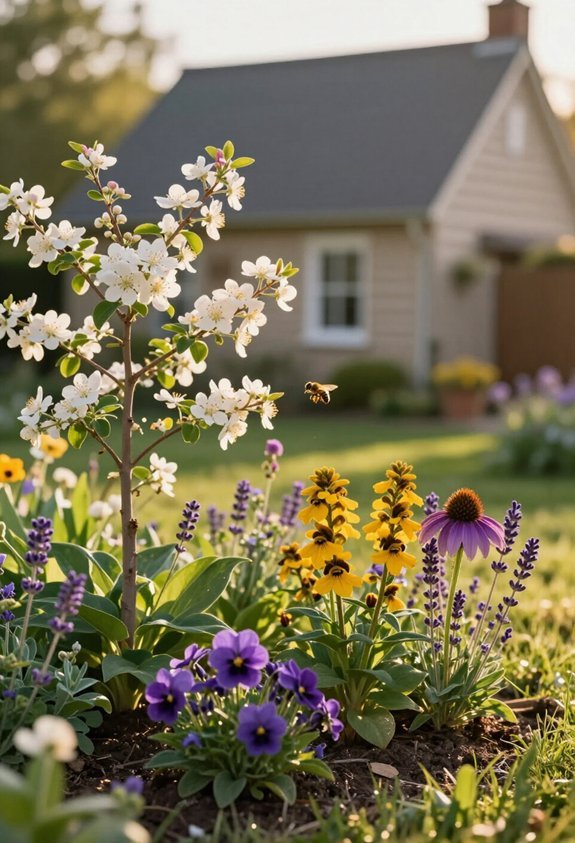
While companion herbs create a supportive environment for fruit trees by improving soil and deterring pests, the presence of active pollinators makes the difference between a modest harvest and an abundant one, making the strategic selection of pollinator plants a practical necessity for maximizing orchard productivity. Native wildflowers like coneflowers, black-eyed Susans, and bee balm attract essential pollinators such as bees, butterflies, and hummingbirds throughout the growing season. Flowering shrubs including serviceberry and elderberry provide nectar sources while their blooms coordinate with fruit tree flowering periods. Planting pollinator plants in clustered groupings near fruit trees increases pollination efficiency and guarantees consistent fruit set. Selecting species that bloom at different times extends pollinator activity from spring through fall, creating a reliable ecosystem that directly enhances orchard yield.
Keeping Pests Out (Without Ugly Sprays)
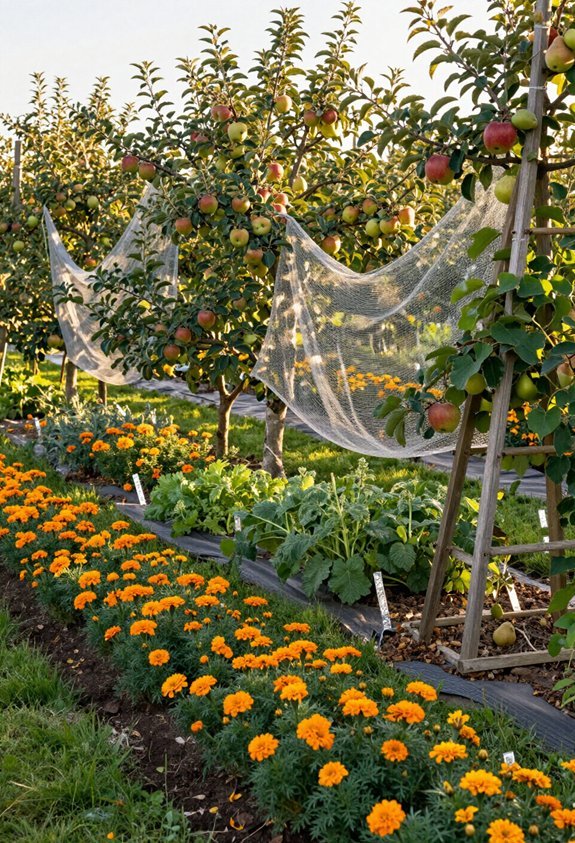
Many common orchard pests can be effectively managed through non-chemical methods that keep fruit trees healthy without the need for synthetic sprays or harsh treatments. Introducing beneficial insects, such as ladybugs and lacewings, naturally controls aphids and other destructive pests by preying on them throughout the growing season. Installing physical barriers like fine netting protects developing fruit from insects and birds while allowing sunlight and water to reach the trees. Regular inspection of leaves and branches enables early detection of pest infestations before they become severe problems. Removing affected branches promptly prevents spread to healthy portions of the tree. Maintaining proper tree spacing guarantees adequate air circulation, which reduces fungal diseases and creates an inhospitable environment for many pests. These integrated approaches maintain aesthetic appeal while protecting fruit yields effectively.
Pruning Trees for Shape and Yield
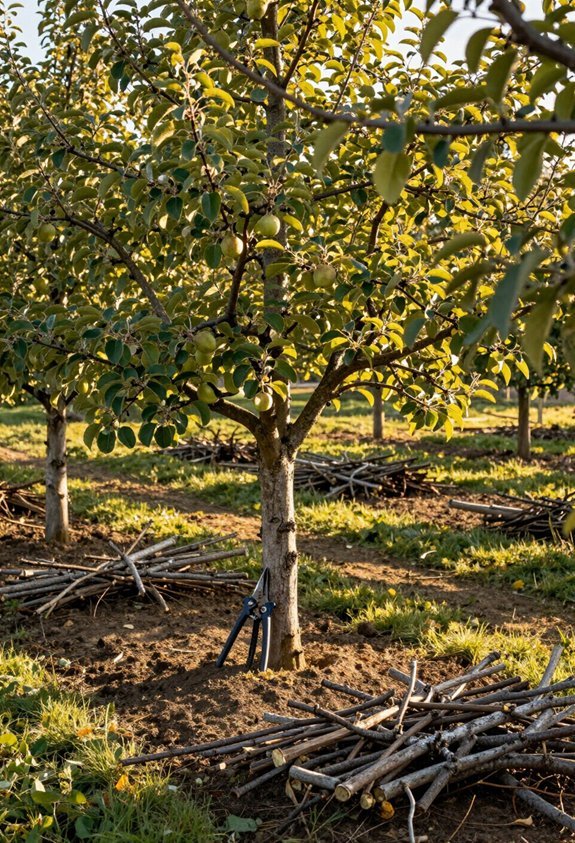
Strategic pruning shapes fruit trees into productive forms that maximize sunlight exposure, promote healthy growth, and increase fruit production year after year. Gardeners should remove dead, diseased, or crossing branches first, as these inhibit proper development and invite pest problems. Thinning the canopy allows light to penetrate inner branches, encouraging fruit formation throughout the tree rather than just at the outer edges. Young trees benefit from establishing a strong central leader or open-center structure, depending on the species, which creates a framework for future branches. Pruning during dormancy minimizes stress on trees, while summer pruning can redirect growth energy. Regular maintenance pruning, performed annually, prevents overgrowth and maintains accessibility for harvesting fruit efficiently from branches within comfortable reach.
Balancing Beauty and Function in Layout Design
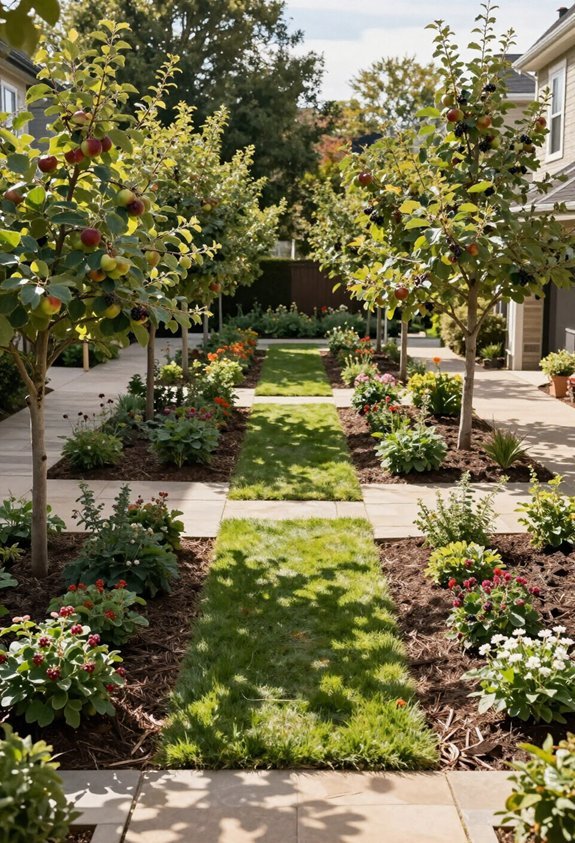
A front yard orchard requires thoughtful planning that considers both visual appeal and practical productivity, as the most successful designs integrate aesthetic elements with functional features that support tree health and fruit harvesting. Arranging trees in curved or diagonal patterns creates visual interest while allowing adequate spacing for air circulation and sunlight penetration. Positioning taller varieties toward the north or west provides shade for sensitive plants while maintaining sightlines from the street. Incorporating pathways between trees facilitates maintenance access and harvest activities without trampling soil or damaging roots. Selecting complementary ornamental understory plants, such as flowering shrubs or groundcovers, enhances curb appeal while suppressing weeds and retaining moisture. Strategic placement of seating areas or garden structures encourages enjoyment of the space, reinforcing the orchard’s dual purpose as both a productive food source and an attractive landscape feature.
Frequently Asked Questions
How Long Does It Take for Front Yard Fruit Trees to Produce Their First Harvest?
Most fruit trees require three to five years before producing their first significant harvest. Dwarf varieties may fruit slightly earlier, while standard trees take longer. Factors like species, climate, and care practices influence timing considerably.
What’s the Best Way to Protect Young Fruit Trees From Harsh Winter Weather?
Young fruit trees thrive with protective measures during winter. Wrapping trunks with tree guards prevents frost crack and animal damage. Mulching around the base insulates roots. Windbreaks shield saplings from harsh elements effectively.
Can I Grow Fruit Trees in Shaded Front Yards, or Do They Need Full Sun?
Most fruit trees require full sun, ideally six to eight hours daily, to produce abundant fruit. Some species tolerate partial shade but yield fewer fruits. Shaded front yards typically prove inadequate for productive fruit tree cultivation.
How Much Will a Productive Front Yard Orchard Cost to Establish and Maintain Annually?
A productive front yard orchard typically costs $300-$1,000 initially per tree, depending on species and size. Annual maintenance ranges from $50-$200 per tree, including pruning, fertilizing, pest management, and harvesting supplies.
What Should I Do if My Front Yard Soil Is Clay-Heavy or Nutrient-Poor?
One should amend clay-heavy soil by incorporating organic matter, compost, and sand to improve drainage and structure. Adding balanced fertilizer addresses nutrient deficiencies. Regular mulching maintains soil health and moisture retention over time.
Conclusion
A successful front yard orchard requires thoughtful planning across multiple dimensions: selecting appropriate hardiness zones, choosing space-efficient tree varieties, integrating pollinator plants, and implementing effective pest management strategies. By combining dwarf apple trees, compact citrus varieties, and complementary understory plants while applying pruning techniques and strategic layout design, homeowners can create productive outdoor spaces that yield consistent harvests while maintaining visual appeal throughout the seasons.