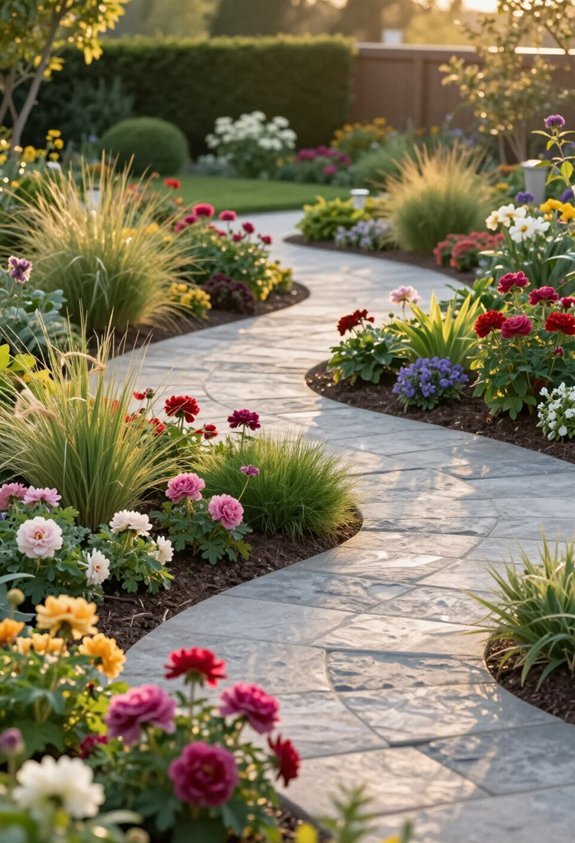
A front yard garden challenges conventional thinking about what a residential streetside should look like. Rather than defaulting to lawn and ornamental shrubs, a well-designed front yard garden becomes a living showcase that demonstrates your commitment to beauty, abundance, and thoughtful design. Yet many homeowners hesitate because they worry that gardens automatically look messy or unkempt. The reality is that intentionally planned front yard gardens can feel just as polished and refined as any formal landscape, while delivering far greater visual interest and seasonal richness. The gardens that succeed are those where every plant placement serves a purpose, where layers create depth without chaos, and where structure keeps abundance feeling controlled and elegant. These 23 ideas demonstrate how to create front yard gardens that feel genuinely neat while radiating the charm that only living landscapes can provide.
Raised Beds for Structured Organization
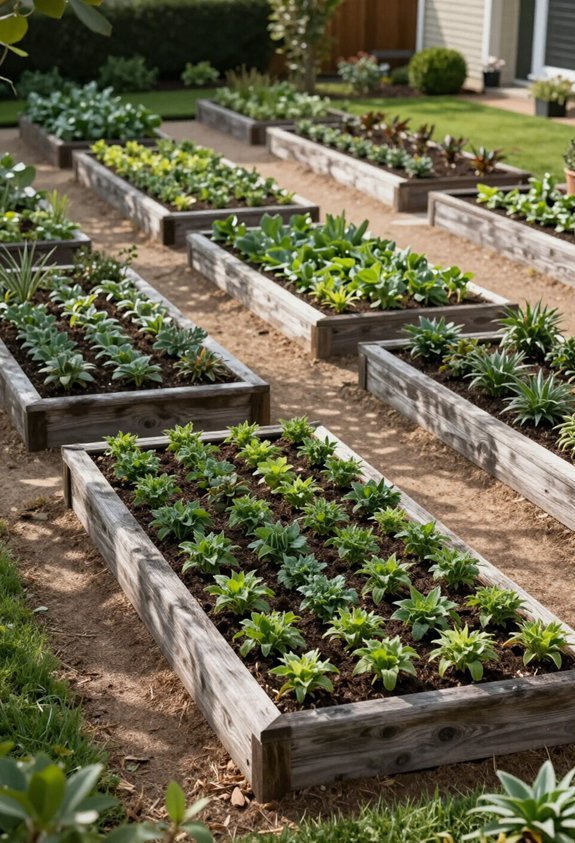
Organization forms the foundation of a successful front yard garden, and raised beds offer a practical solution for achieving that goal. These elevated planting structures, typically constructed from wood, metal, or composite materials, create clearly defined growing spaces that prevent soil compaction and simplify maintenance tasks. Raised beds provide several advantages for front yard gardening, including improved drainage, easier access for planting and harvesting, and better pest management through physical barriers. Gardeners can arrange multiple beds in geometric patterns, creating visual organization while maximizing sunlight exposure for different plant varieties. The structured layout allows for systematic crop rotation and companion planting strategies, enhancing overall garden productivity. Additionally, raised beds enable gardeners to control soil quality precisely, ensuring ideal growing conditions for vegetables, herbs, and flowers throughout the growing season.
Also read: 20+ MINIMALIST FRONT YARD Ideas With Clean Lines!
Container Gardens That Keep Things Contained
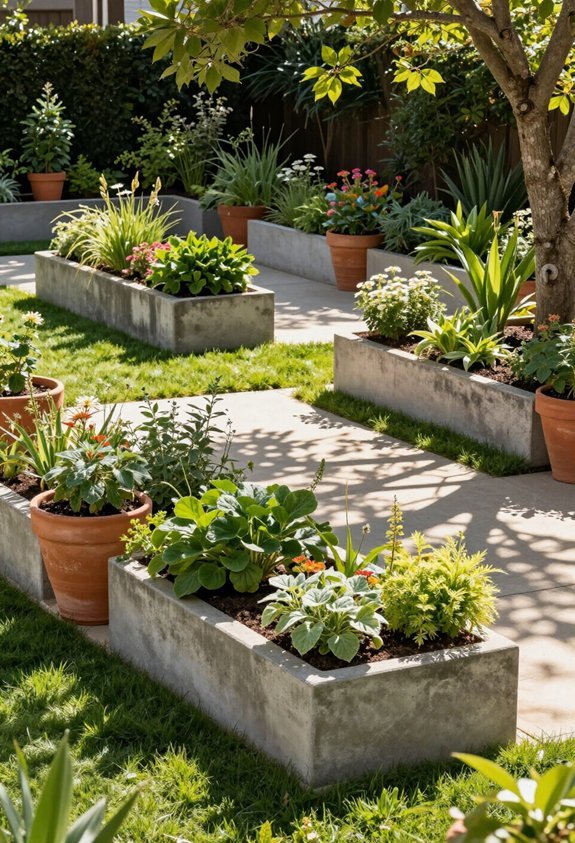
While raised beds work well for gardeners with available ground space, container gardens offer a flexible alternative that adapts to various front yard situations, from small patios to narrow walkways. Containers come in numerous sizes, materials, and styles, including ceramic pots, wooden boxes, and plastic planters, allowing gardeners to customize their outdoor spaces according to personal preferences and available resources. This method provides excellent drainage control, prevents soil compaction, and enables easy repositioning of plants throughout seasons. Container gardens work particularly well for growing herbs, vegetables, and flowering plants, making them ideal for front yards with limited soil quality or difficult terrain. Additionally, containers simplify maintenance tasks, such as weeding and watering, while creating visually organized garden displays that enhance curb appeal and neighborhood aesthetics.
Hardscaping + Garden Beds: Creating Clean Lines
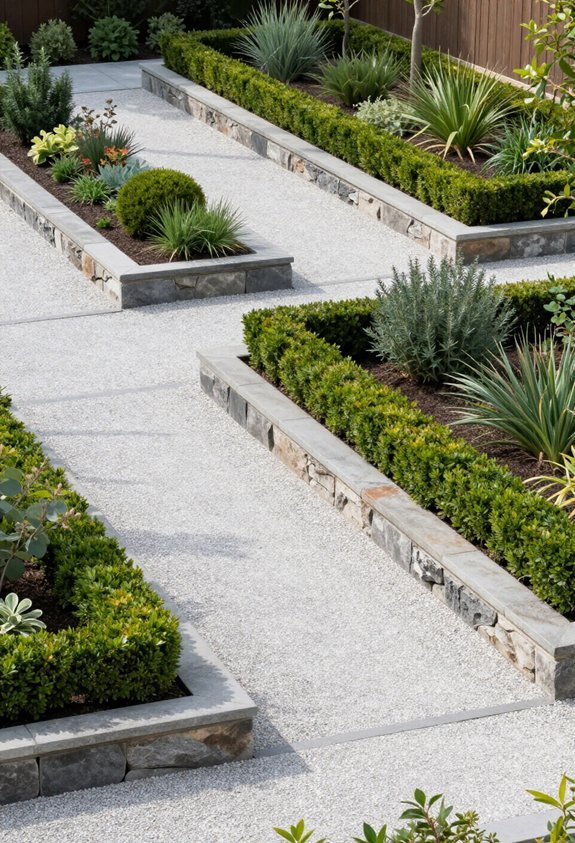
Many front yard gardens benefit from the strategic combination of hardscaping elements and defined garden beds, which work together to establish clear visual boundaries, improve organization, and create a polished appearance throughout the landscape. Hardscaping includes pathways, edging, and retaining walls that frame garden areas and prevent soil from spreading onto lawns or driveways. Garden beds outlined with stone, metal, or composite materials create distinct growing zones that simplify maintenance and watering schedules. This structured approach allows homeowners to maintain neat, compartmentalized spaces while accommodating diverse plant types in appropriate sections. The integration of hard materials with planted areas produces a professional aesthetic that enhances curb appeal while reducing visual clutter, making front yards appear intentionally designed rather than haphazard.
Vertical Gardens: Maximizing Space Without Sprawl
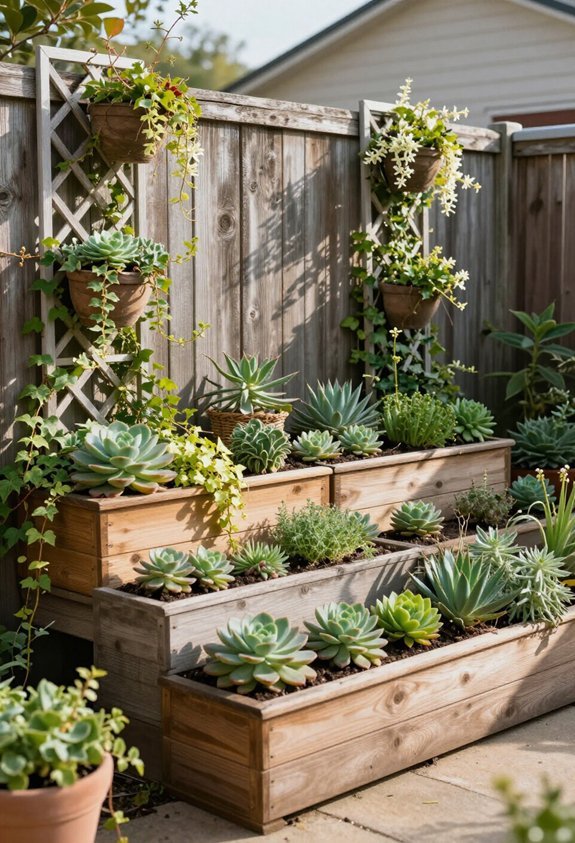
Vertical gardening offers homeowners an innovative solution for cultivating plants in front yards where ground space may be limited or already occupied by hardscaping features and organized garden beds. Wall-mounted planters, trellises, and hanging baskets transform vertical surfaces into productive growing spaces, allowing gardeners to display flowers, herbs, and vegetables without consuming valuable ground area. This approach maximizes available light exposure while creating visual interest and depth in front yard designs. Climbing vines can be trained along structures to soften hardscape edges, whereas tiered planting systems accommodate multiple plant varieties in compact footprints. Vertical gardens also improve drainage and air circulation around plants, reducing disease susceptibility and maintenance demands. By utilizing height strategically, homeowners achieve fuller, more dynamic landscapes while maintaining the organized aesthetic that neat front yards require.
Front Porch Planters and Container Displays
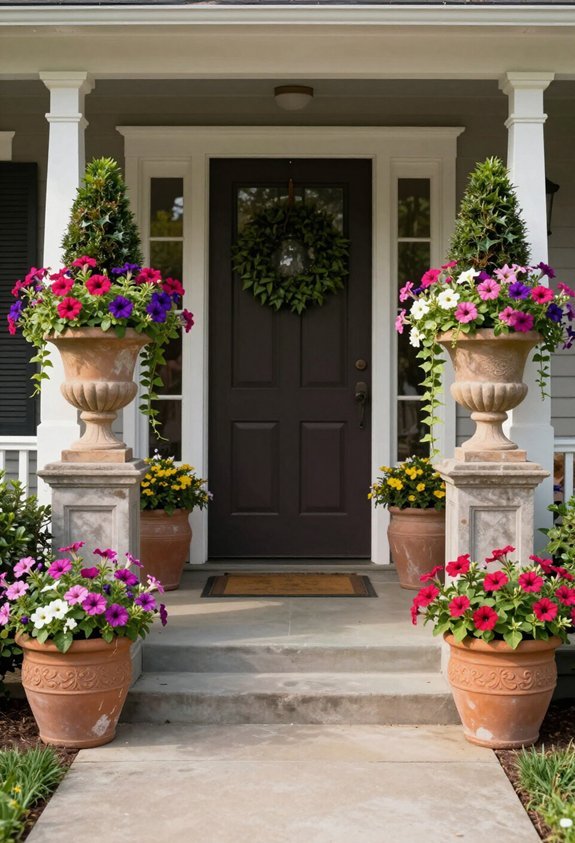
Front porch planters and container displays serve as an accessible and flexible method for adding color, texture, and greenery to entryways without requiring permanent landscape modifications or extensive ground preparation. Homeowners can arrange containers of varying heights and sizes to create visual interest and depth along porch steps, railings, and corners. Selecting appropriate plants for local climate conditions, light exposure, and moisture levels guarantees successful growth throughout seasons. Container gardening allows easy seasonal plant rotation, enabling residents to refresh their displays with spring bulbs, summer flowers, or autumn foliage. Regular watering, proper drainage holes, and quality potting soil maintain plant health in confined spaces. Strategic placement of planters guides visitors toward entrances while establishing welcoming, well-maintained curb appeal that reflects thoughtful landscape design.
Edging and Borders: Defining Your Garden Space
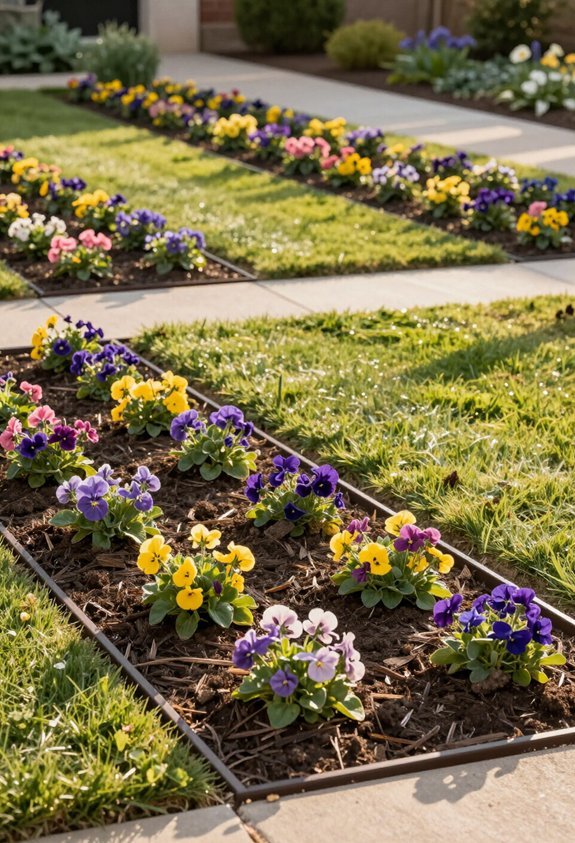
Garden edging and borders serve as essential design elements that define planting areas, separate different zones within a landscape, and create clean, organized passages between gardens and lawn spaces. These structural features prevent soil from spilling onto walkways while establishing visual boundaries that enhance the overall appearance of the front yard. Homeowners can choose from various materials including metal strips, plastic edging, stone, brick, or wood to achieve their desired aesthetic. Properly installed borders reduce maintenance by containing mulch and preventing grass from encroaching into garden beds. The height and style of edging should complement the home’s architectural features and existing landscaping elements. Strategic placement of borders creates distinct garden compartments, guiding visitors’ eyes through the landscape while maintaining a polished, intentional appearance.
Gravel or Mulch Pathways Between Sections
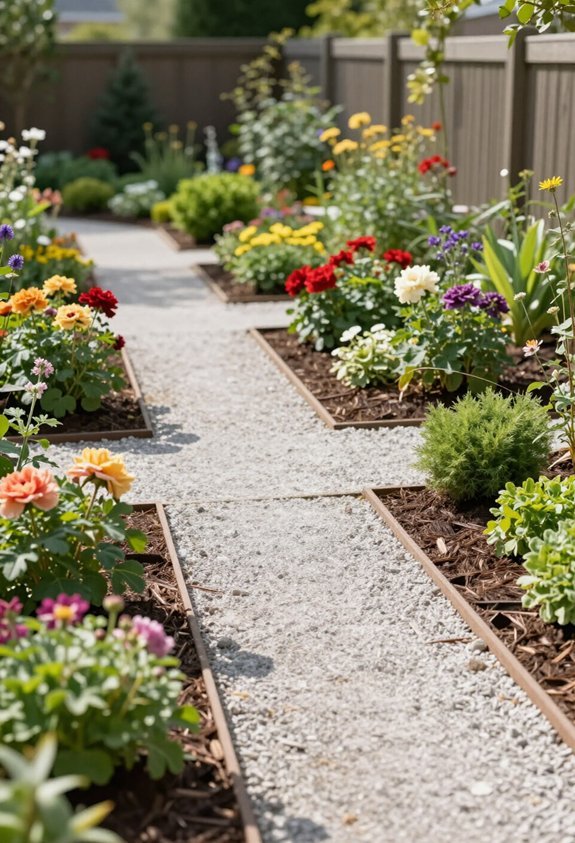
Pathways constructed from gravel or mulch offer practical solutions for connecting different sections of a front yard garden while simultaneously enhancing the landscape’s visual appeal and functionality. Gravel pathways provide excellent drainage and create a distinctive crunching sound when walked upon, making them both functional and aesthetically pleasing. Mulch pathways, by contrast, offer a softer appearance and help retain soil moisture while suppressing weeds in adjacent planting beds. When designing these pathways, gardeners should consider the width, typically two to three feet, ensuring comfortable foot traffic. Both materials require periodic maintenance and replenishment, as they gradually decompose or disperse over time. Selecting between gravel and mulch depends on climate conditions, maintenance preferences, and the overall garden design aesthetic desired for the front yard space.
Herb Gardens in Neat Rows or Clusters
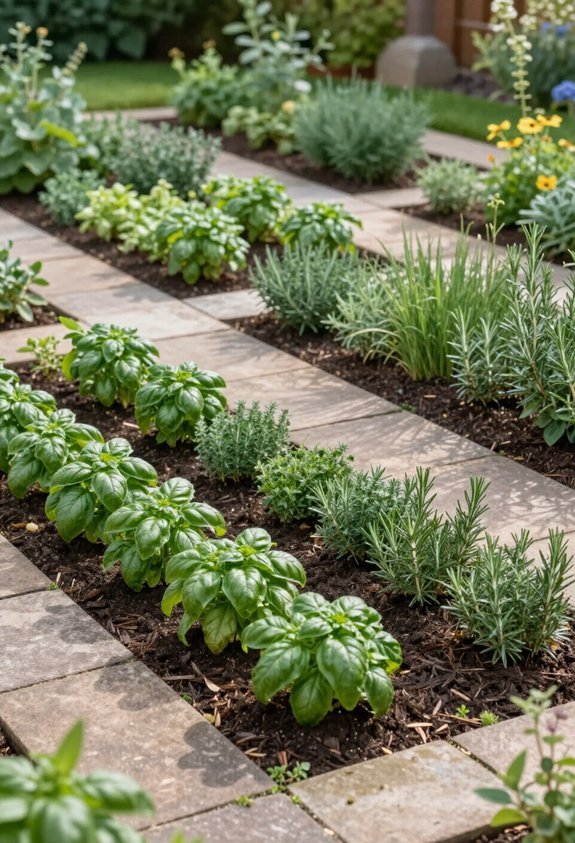
Culinary herbs present an excellent opportunity for front yard gardeners to combine practicality with visual organization, as these plants thrive when arranged in either neat rows or compact clusters depending on the available space and personal preference. Organized rows work well for larger areas, allowing easy access for harvesting and maintenance, while clusters suit smaller spaces by creating focused planting zones near entryways or pathways. Popular herbs like basil, rosemary, thyme, and oregano develop strong root systems in well-draining soil, contributing to a polished appearance. Spacing plants appropriately prevents overcrowding and guarantees adequate air circulation, reducing disease risk. Grouping herbs by water and sunlight requirements simplifies care routines, while their aromatic qualities and culinary value enhance both aesthetics and household functionality simultaneously.
Vegetable Beds That Look Intentional
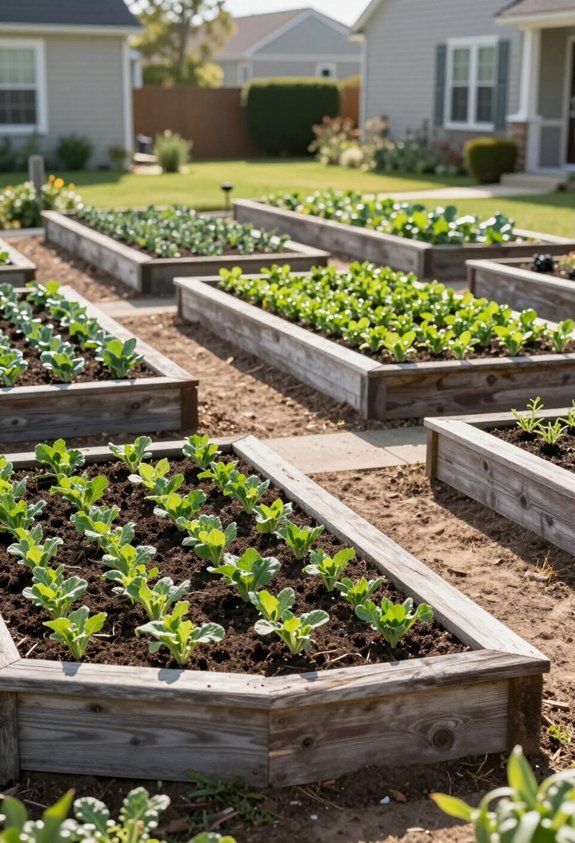
Raised beds and defined planting areas transform front yards into attractive vegetable gardens by establishing clear boundaries and visual structure that elevate the overall landscape design. Creating geometric shapes such as rectangles, squares, or tiered levels provides organization while making the garden appear purposeful rather than random. Incorporating edging materials like wood, stone, or metal frames further defines each bed and prevents soil erosion. Arranging vegetables by height, with taller plants positioned toward the back, guarantees all plantings receive adequate sunlight and creates visual depth. Grouping similar plants together by their growing requirements and harvest times simplifies maintenance while enhancing aesthetic appeal. Consistent spacing between beds and uniform mulching establish a polished appearance that complements surrounding landscape features, transforming utilitarian gardening into an intentional design element.
Front Yard Flower Beds in Geometric Patterns
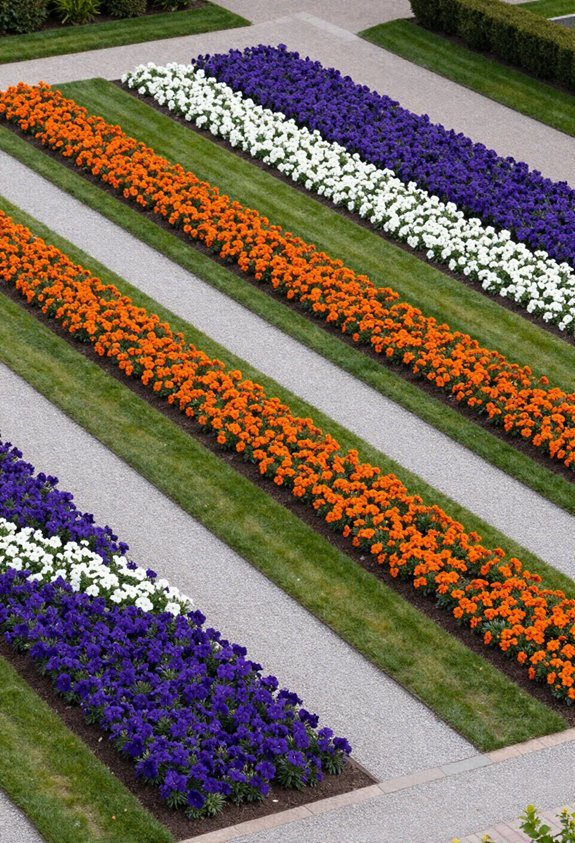
How can geometric patterns transform a front yard into an organized and visually striking garden display? By arranging flower beds in deliberate shapes—such as circles, rectangles, diamonds, or triangles—homeowners create a structured aesthetic that immediately catches attention. These patterns establish visual order and make the landscape appear intentionally designed rather than random. Geometric beds work particularly well when positioned symmetrically along pathways or property lines, creating balance and harmony. Selecting flowers with contrasting colors enhances the pattern’s definition and impact. Homeowners should consider the viewing angle from the street, ensuring the pattern is clearly visible and recognizable. Maintaining clean edges between beds and surrounding lawn reinforces the geometric precision, contributing to an overall neat and professional appearance that considerably elevates front yard curb appeal.
Tiered Planting: Creating Organized Depth
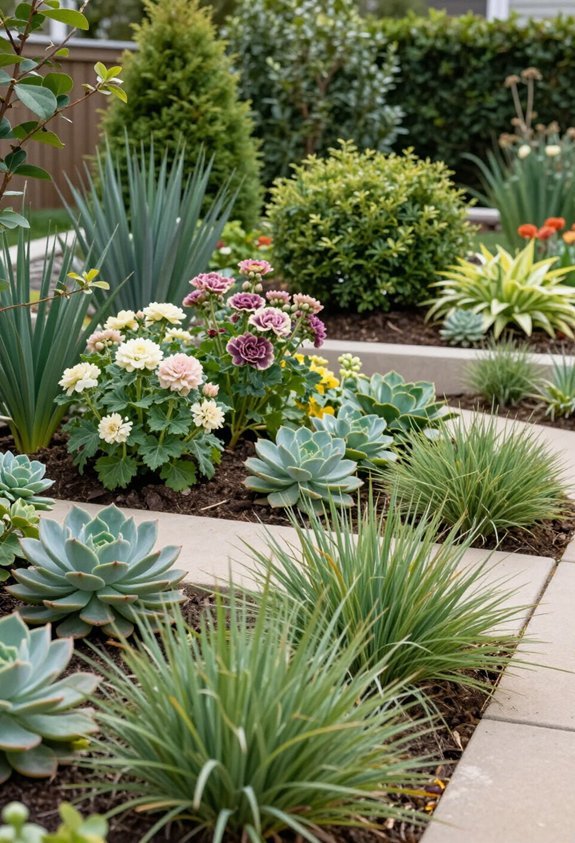
Tiered planting arrangements create visual depth and organizational structure by positioning plants at progressively higher or lower levels throughout the front yard, establishing a dynamic landscape that guides the viewer’s eye through the garden space. This technique involves strategically placing taller plants toward the back or center, medium-height specimens in the middle sections, and shorter varieties toward the front, creating layers that prevent overcrowding while maximizing visibility of each plant. Implementing tiered planting requires careful measurement of heights, consideration of mature plant sizes, and attention to sunlight requirements at different levels. Gardeners can use raised beds, hillside slopes, or step-like arrangements to achieve this effect, ensuring proper drainage and soil distribution throughout the tiered system for healthy plant growth.
Native Plants: Low-Fuss Borders That Thrive
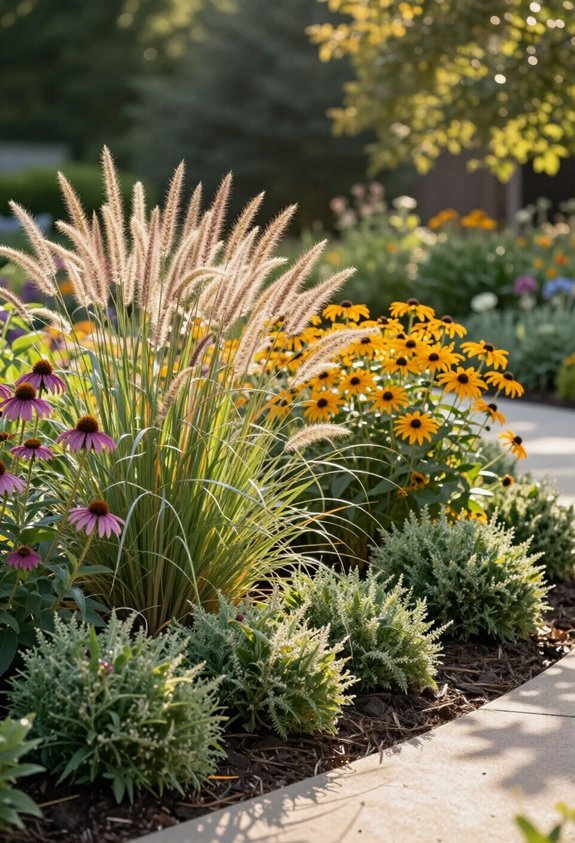
While tiered planting establishes the visual framework and structure of a front yard garden, incorporating native plants into border areas provides a practical method for achieving long-term beauty with minimal maintenance demands. Native plants, which evolved in specific regional climates, naturally adapt to local soil conditions, rainfall patterns, and temperature fluctuations, requiring fewer resources than non-native species. These plants demand less watering, fertilizing, and pest management because they are inherently suited to their environment. By selecting native species for border plantings, homeowners reduce both labor and expense while creating habitats that support local pollinators and wildlife. Native plant borders establish themselves more quickly than ornamental alternatives, reaching mature form within one to two growing seasons and providing reliable structure and aesthetic appeal throughout the year.
Pollinator Gardens: Organized Beauty for Insects
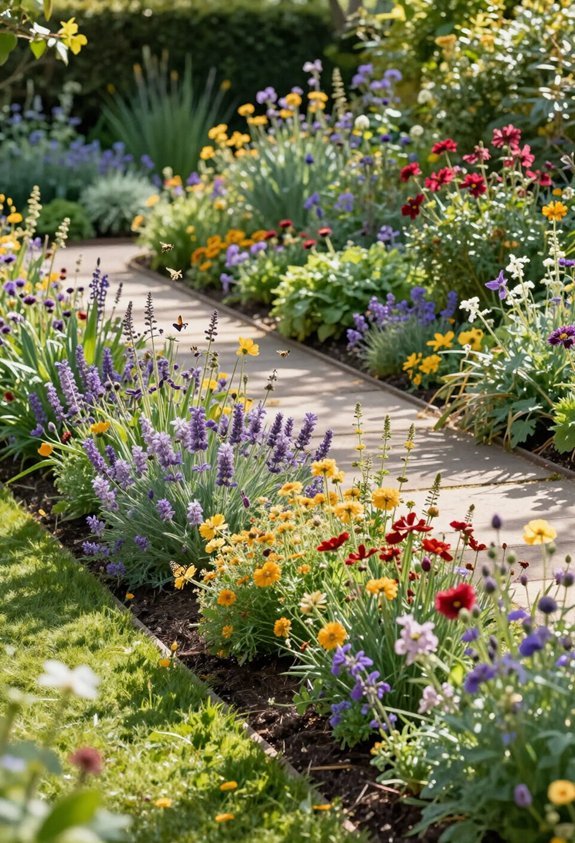
Many homeowners can transform their front yards into thriving ecosystems by designing gardens specifically to attract and support pollinators such as bees, butterflies, and hummingbirds, which play an essential role in plant reproduction and food production. These gardens benefit from strategic plant selection, featuring native flowers that bloom at different times throughout the growing season, ensuring consistent food sources for visiting insects. Organizing plants by height, color, and bloom time creates visual structure while maximizing pollinator accessibility. Including water sources, such as shallow dishes or birdbaths, provides essential hydration. Avoiding pesticides protects beneficial insects, while leaving some areas unmulched offers nesting opportunities. This approach combines ecological functionality with aesthetic appeal, resulting in front yards that appear intentionally designed while supporting local wildlife populations effectively.
Perennial Gardens: Tidy, Reliable Color
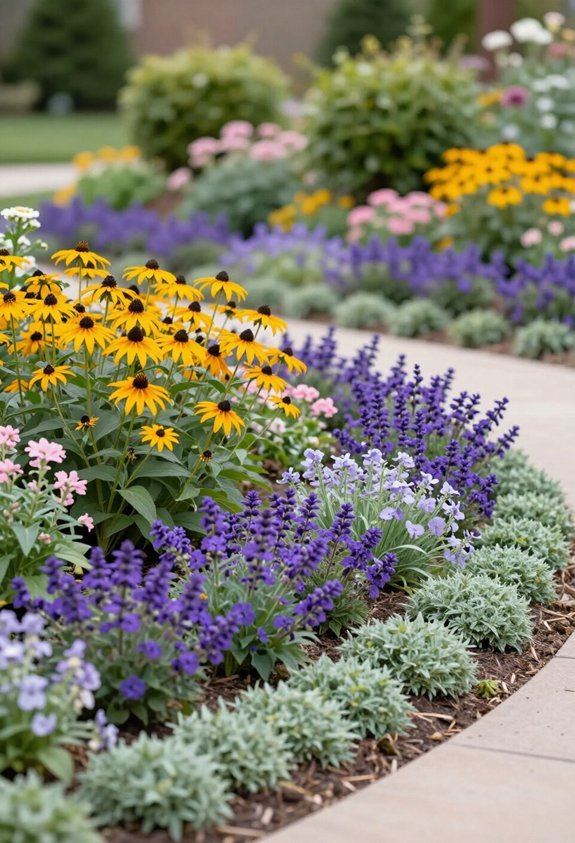
Because perennial plants return year after year without requiring replanting, they offer homeowners a dependable way to maintain consistent color and structure in front yard gardens with minimal annual effort. Selecting perennials suited to local climate zones guarantees reliable blooming seasons, while varying heights and flower colors creates visual interest throughout the growing season. Grouping plants by water and sunlight needs simplifies maintenance routines and promotes healthier growth. Strategic placement of taller varieties in back rows and shorter plants toward garden edges establishes organized, tiered displays that appear intentional and well-maintained. Deadheading spent flowers encourages continuous blooming, while spring mulching suppresses weeds and conserves soil moisture. This garden style balances aesthetic appeal with practical sustainability, making it ideal for homeowners seeking attractive landscapes without excessive seasonal replanting.
Symmetrical Gardens for Balance and Neatness
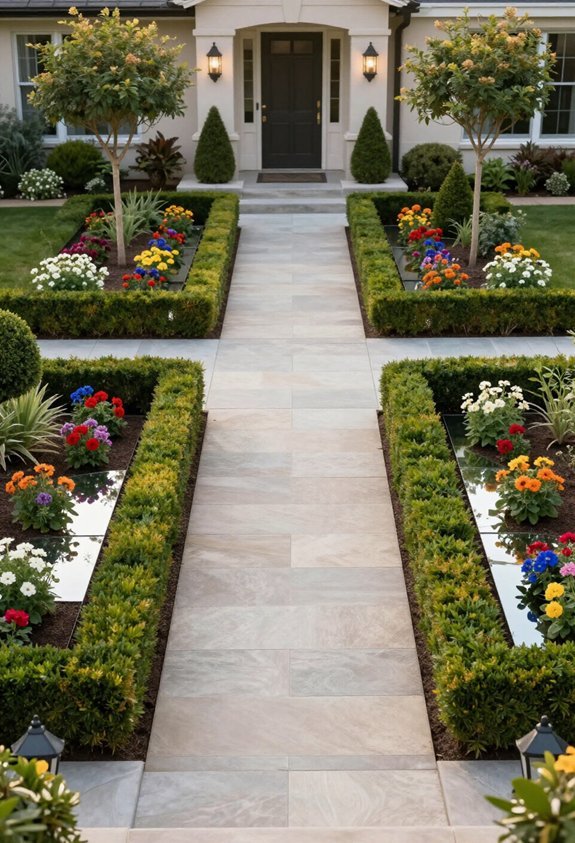
Symmetrical gardens create a sense of order and visual harmony by mirroring plant arrangements, hardscape elements, and design features on either side of a central axis, typically a pathway, driveway, or focal point like an entrance door. This design approach provides several practical benefits for front yards, including creating a polished appearance that enhances curb appeal and making maintenance more straightforward since gardeners can apply identical care routines to matching plant beds. When implementing symmetrical designs, homeowners should select plants of equal height and similar growth patterns for each side, ensuring both sections develop uniformly over time. Stone edging, decorative planters, or matching shrubs positioned symmetrically reinforce the balanced aesthetic. This structured approach transforms front yards into organized, visually pleasing spaces that convey intentional landscape planning.
Cottage Gardens With Purposeful Plant Selection
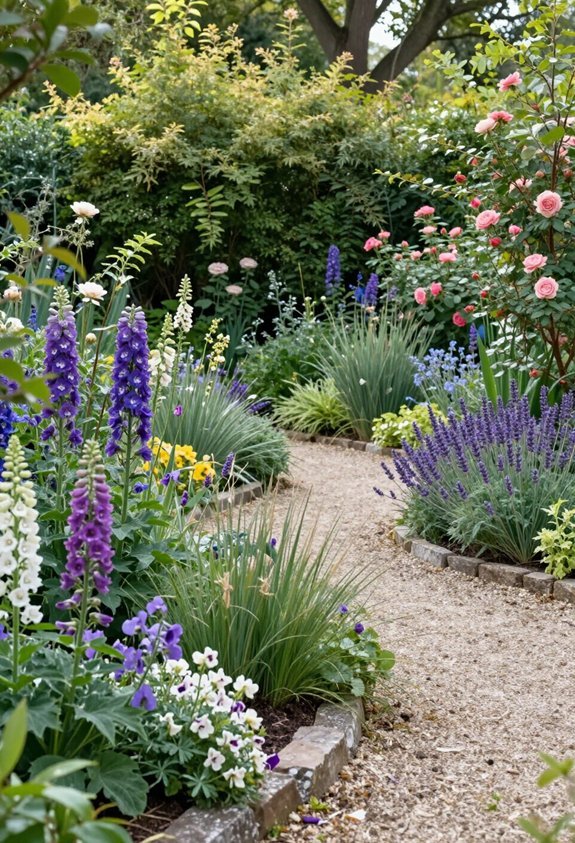
Cottage gardens offer homeowners a charming alternative to formal, structured landscaping by combining plants and flowers in an abundance that celebrates diversity rather than uniformity, yet this apparent randomness actually requires careful, deliberate selection of species that will thrive together in the front yard environment. Gardeners should choose plants with complementary bloom times, guaranteeing continuous color throughout seasons, and select varieties suited to local climate conditions and soil types. Grouping plants by water and sunlight requirements prevents conflicts and reduces maintenance challenges. Incorporating perennials alongside annuals creates layers of interest while maintaining structural cohesion. Strategic placement of taller specimens behind shorter varieties ensures visibility and visual balance. This methodical approach allows cottage gardens to achieve abundant, vibrant displays while remaining neat and intentionally designed rather than appearing neglected or chaotic.
Front Yard Mediterranean Gardens
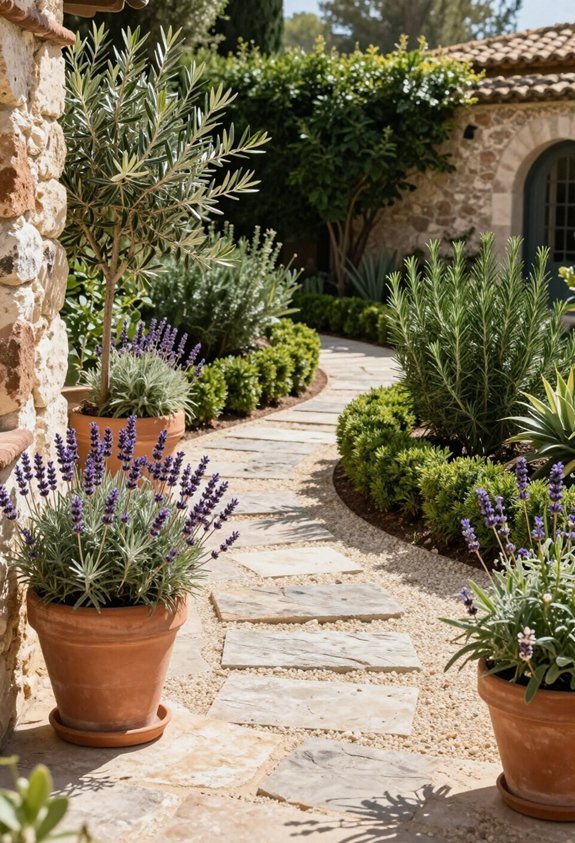
While cottage gardens prioritize abundant diversity and layered plantings, Mediterranean gardens embrace a distinctly different philosophy centered on drought-tolerant plants, warm color palettes, and the architectural elements inspired by regions surrounding the Mediterranean Sea, such as Greece, Italy, Spain, and Southern France. These front yards typically feature drought-resistant plants like lavender, rosemary, and olive trees that thrive in hot, dry conditions with minimal water requirements. Terracotta pots, stone pathways, and gravel beds create the characteristic Mediterranean aesthetic, while warm yellows, deep purples, and soft greens define the color scheme. Wooden pergolas and arched entryways provide structural interest and shade, mimicking traditional Mediterranean architecture. This garden style demands less maintenance than cottage gardens, making it an efficient choice for homeowners seeking elegant front yard landscaping with reduced upkeep.
Japanese Garden Elements for Minimalist Design
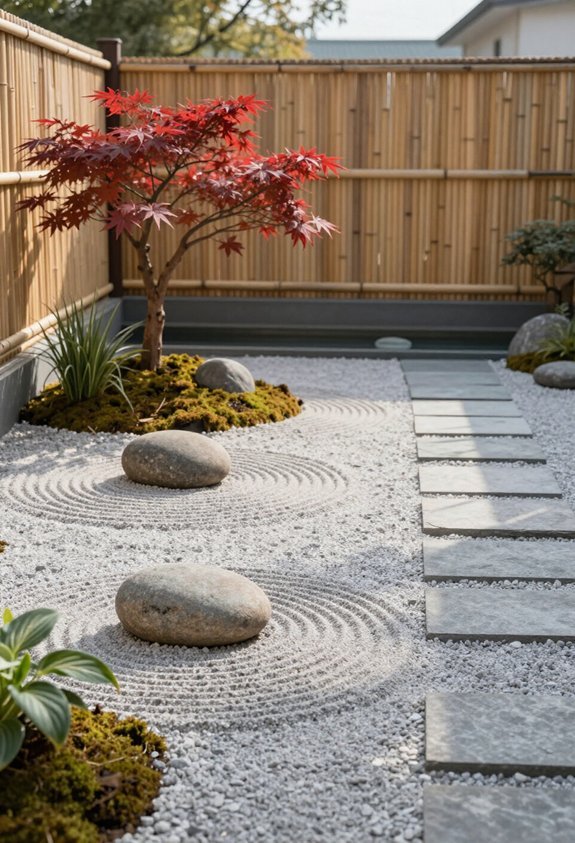
Japanese garden design offers a philosophical approach to front yard landscaping that contrasts sharply with the Mediterranean style’s emphasis on colorful plants and warm tones, instead prioritizing simplicity, balance, and the deliberate use of empty space. Key elements include carefully placed rocks, gravel pathways, and minimalist plant selections, typically featuring bamboo, moss, and evergreens that require minimal maintenance. Water features like small fountains or ponds create focal points while promoting tranquility. Stone lanterns and wooden bridges serve both aesthetic and symbolic functions. Pathways guide visitors through intentional viewing angles, encouraging contemplation. The design philosophy emphasizes negative space as equally important as physical elements, creating visual restraint that calms the environment and reduces visual clutter in residential settings.
Seasonal Plant Swaps for Year-Round Interest
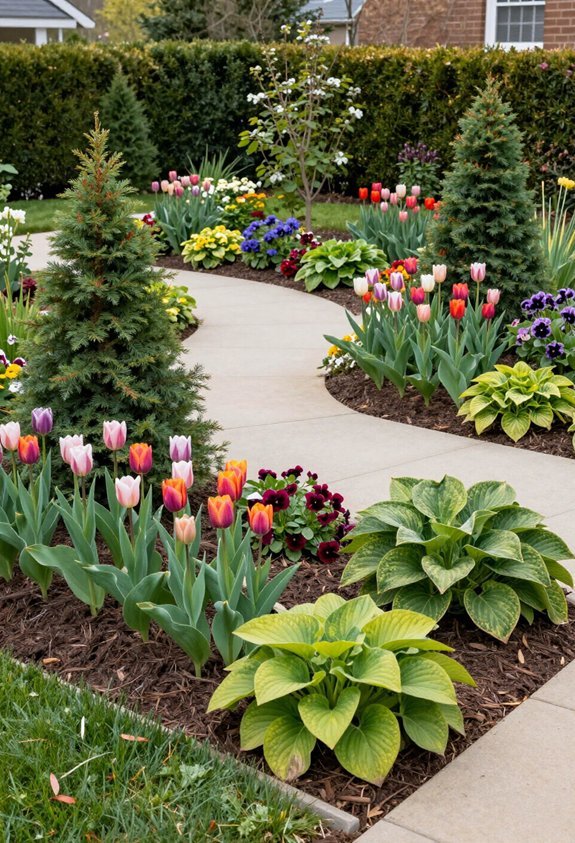
Maintaining visual interest throughout all four seasons requires strategic planning and the deliberate rotation of plants that thrive during different times of the year, a practice known as seasonal plant swaps that transforms a front yard from dormant and brown in winter to vibrant and textured in spring and summer. Gardeners should select spring bloomers like tulips and daffodils, summer perennials such as coneflowers and black-eyed Susans, fall favorites including ornamental grasses and mums, and winter interest plants like evergreens and hollies. This systematic approach guarantees continuous color and texture throughout the year. By planning ahead and organizing plantings by season, homeowners create a dynamic landscape that maintains curb appeal and visual appeal regardless of weather conditions or time of year.
Rock and Succulent Gardens: Ultra-Neat Design
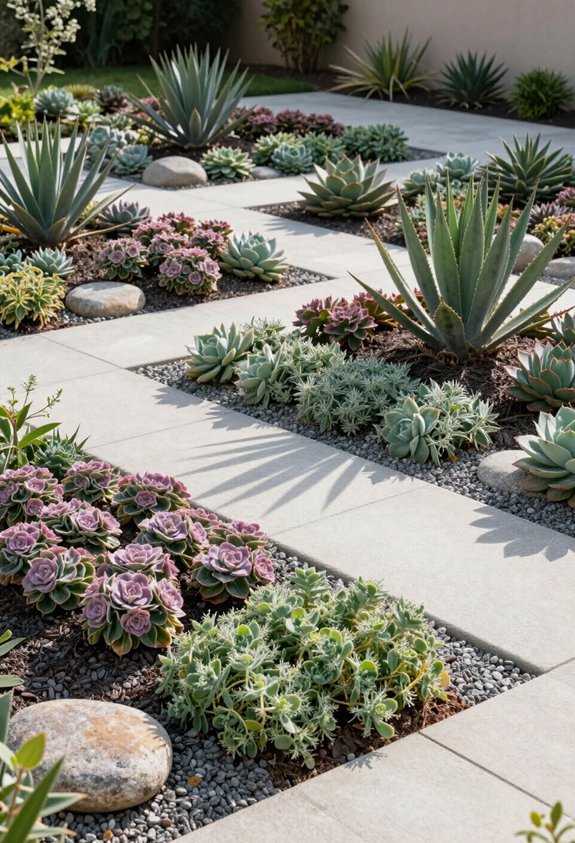
Rock and succulent gardens offer homeowners a low-maintenance landscaping solution that combines aesthetic appeal with practical simplicity, making them an ideal choice for front yards that demand minimal watering, pruning, and seasonal adjustments. These gardens utilize decorative rocks, gravel, and drought-resistant succulents arranged in organized patterns that create visual interest while requiring considerably less care than traditional flower beds. The layered design typically features larger rocks as focal points, with smaller stones filling spaces between plants, preventing weed growth and reducing soil erosion. Succulents like sedums, echeveria, and jade plants thrive in well-draining soil common in rock gardens, storing water in their leaves for extended drought periods. This combination produces a neat, structured appearance that maintains its tidy presentation throughout all seasons without constant maintenance interventions.
Groundcovers: Neat Lawn Alternatives
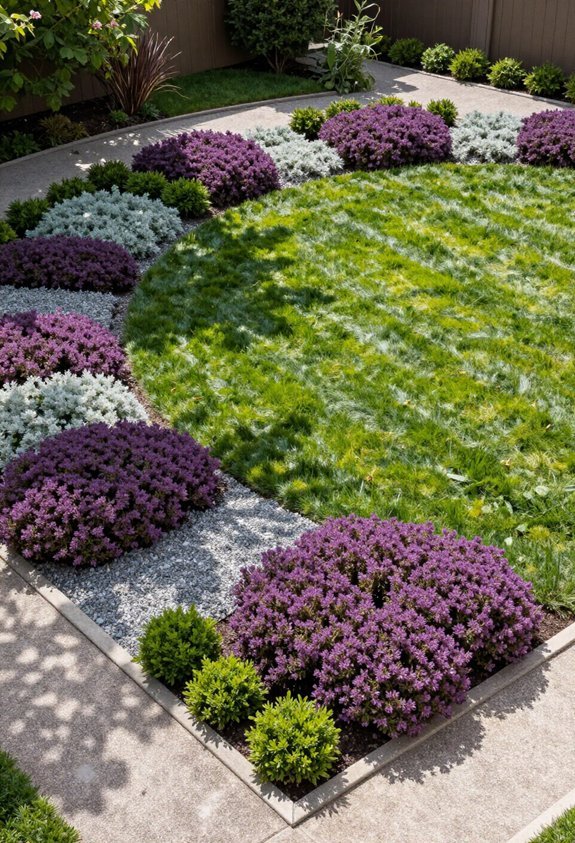
While traditional grass lawns require regular mowing, watering, and fertilizing to maintain their appearance, groundcovers offer homeowners a practical alternative that delivers a polished, orderly look with remarkably reduced maintenance demands. These low-growing plants, such as creeping thyme, sedum, and ornamental grasses, spread horizontally across soil surfaces, creating dense, attractive layers that suppress weeds naturally and retain moisture effectively. Groundcovers eliminate the need for frequent cutting while establishing uniform visual textures throughout front yard spaces. They adapt well to various light conditions and soil types, making them versatile choices for different landscapes. Once established, groundcovers require minimal intervention beyond occasional weeding and seasonal tidying, providing homeowners with an efficient solution that maintains aesthetic appeal while considerably reducing yard work obligations and resource consumption.
Color-Blocked Borders for Maximum Impact

Color-blocked borders create striking visual effects in front yards by grouping plants of the same color together in defined sections, rather than scattering different hues randomly throughout the landscape. This organized approach establishes clear visual boundaries, making the yard appear intentional and well-designed. Gardeners can select complementary color schemes, such as purple and yellow, or analogous combinations like various shades of blue and green, to achieve cohesive arrangements. When implementing this technique, planting similar-colored flowers, shrubs, and foliage in clustered groups intensifies the visual impact compared to isolated plantings. Strategic placement of color blocks throughout the front yard guides the viewer’s eye and creates rhythm across the landscape, resulting in a polished, professionally landscaped appearance that enhances curb appeal while maintaining the neat aesthetic.
Garden Lighting: Highlighting Design After Dark
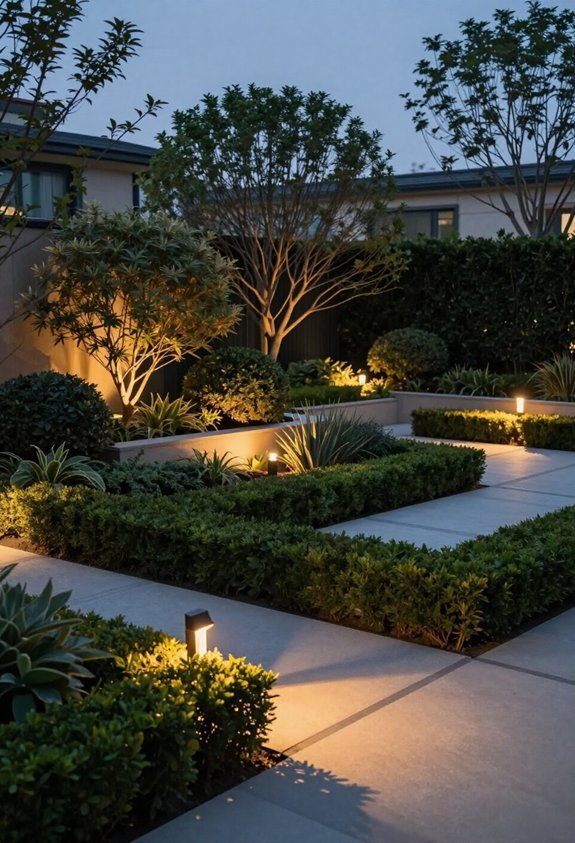
As daylight fades, strategic garden lighting transforms front yards into visually enchanting spaces by illuminating carefully designed landscape features and plant arrangements. Uplighting, which directs light upward from ground level, accentuates tree trunks and creates dramatic shadows on plant foliage, adding depth and dimension to the landscape. Path lighting guides visitors safely along walkways while simultaneously highlighting garden borders and flower beds. Spotlights can emphasize focal points such as sculptures, water features, or architectural elements. Soft ambient lighting around seating areas establishes inviting outdoor gathering spaces. Layering different light sources and varying their brightness levels produces visual interest and prevents monotony. Homeowners should select warm-toned LED bulbs to maintain a welcoming atmosphere while reducing energy consumption and heat output in their front yard gardens.
Frequently Asked Questions
How Do I Prevent Weeds From Overtaking My Neat Front Yard Garden Beds?
One prevents weeds by applying mulch layers, installing landscape fabric barriers, and performing regular hand-pulling. Homeowners should maintain consistent weeding schedules, use pre-emergent herbicides, and guarantee proper plant spacing to minimize bare soil exposure.
What’s the Best Budget-Friendly Way to Start a Front Yard Garden Design?
Starting a front yard garden affordably begins with planning the layout on paper, using seeds instead of plants, composting kitchen scraps, and repurposing household items as planters and garden markers.
How Often Should I Maintain My Front Garden to Keep It Looking Neat?
Regular maintenance typically requires weekly attention during growing seasons. Deadheading, weeding, and watering demand consistent effort. Monthly deep cleaning, pruning, and soil amendments keep gardens flourishing. Winter months require less frequent intervention but periodic checks remain necessary.
Which Front Yard Garden Style Requires the Least Amount of Watering?
Xeriscaping requires the least watering. This style utilizes drought-resistant plants, native species, and succulents that thrive in dry conditions. Mulch and rock ground covers reduce moisture loss, minimizing irrigation needs considerably.
How Can I Protect My Organized Front Garden From Pets and Foot Traffic?
One can install low fencing or decorative barriers around garden beds to deter pets and pedestrians. Raised garden boxes, signage, and strategic plant placement also effectively protect organized gardens from unwanted foot traffic and animal damage.
Conclusion
Front yard gardens achieve neatness through strategic organization using raised beds, containers, and hardscaping elements that create distinct planting zones while preventing soil sprawl. Native plants reduce maintenance demands, while vertical arrangements and groundcovers maximize space efficiency without cluttering the landscape. Incorporating geometric patterns, color-blocked borders, and strategic lighting transforms outdoor spaces into visually appealing, functional gardens that enhance curb appeal while remaining manageable and well-defined throughout seasons.