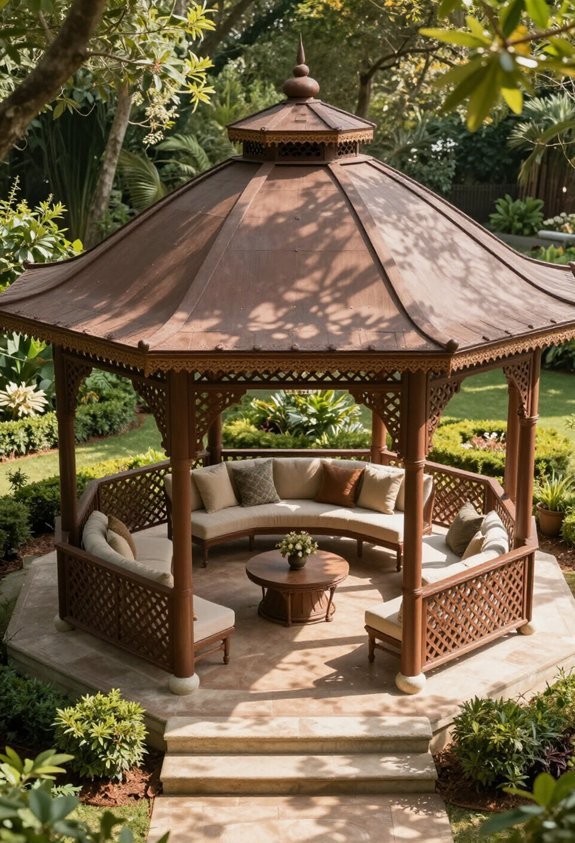
A front yard gazebo serves as both architectural statement and functional retreat. It anchors your home’s streetside presence while creating an inviting shelter that draws people outside and encourages lingering. Unlike backyard structures that remain hidden from public view, a front yard gazebo becomes part of your home’s visual identity, signaling that you value both beauty and livability. The best gazebos feel proportional to their settings, complement your home’s architectural style, and create genuinely comfortable spaces rather than decorative afterthoughts. They offer shade where you need it most while framing views of your property in thoughtful ways. These 17 ideas showcase gazebos that enhance curb appeal while delivering the cozy shelter that makes your front yard feel like an actual destination.
Choose Your Gazebo Style: A Quick Decision Framework
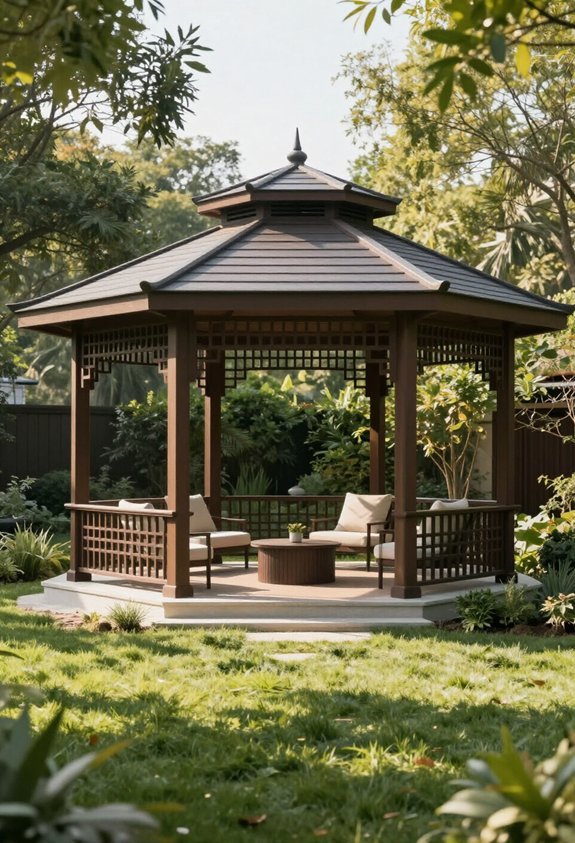
How should one begin the journey of selecting the perfect gazebo for a front yard? The process requires evaluating several key factors systematically. First, consider the available space and measure the yard carefully to determine appropriate dimensions. Second, assess the climate conditions, including wind patterns, rainfall, and sun exposure, since these factors influence which gazebo materials will perform best. Third, examine the architectural style of the house and surrounding landscape to guarantee visual harmony. Fourth, establish a realistic budget that accounts for both purchase and maintenance costs. Fifth, decide between permanent structures and portable options based on future plans. Finally, determine the intended purpose, whether for entertaining guests, providing shade, or creating a focal point. This methodical framework enables homeowners to narrow options and make informed decisions aligned with their specific needs and circumstances.
Also read: 23+ FRONT YARD BUSHES SHRUBS That Look Expensive!
Classic Wooden Gazebo for Timeless Appeal
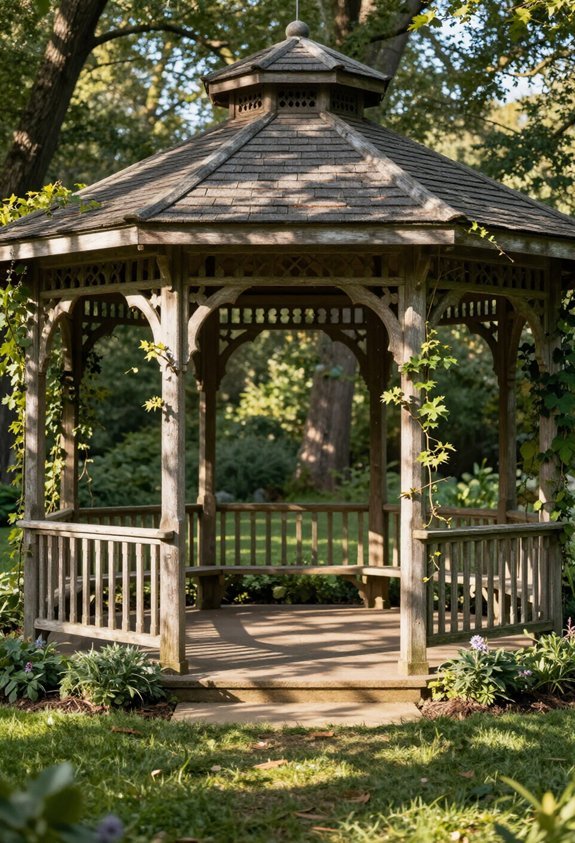
Because wooden gazebos have graced residential landscapes for centuries, they remain one of the most popular choices for homeowners seeking timeless elegance and natural beauty in their front yards. Wooden structures offer versatility in design, ranging from simple rectangular frames to intricate octagonal pavilions with decorative lattice work and detailed roofing. The natural warmth of wood creates an inviting atmosphere that complements various architectural styles, from rustic cottages to modern homes. Homeowners can select from different wood types, including cedar, redwood, or pressure-treated lumber, each providing distinct aesthetic qualities and durability levels. Regular maintenance, such as staining and sealing, preserves the wood’s appearance and protects against weather damage. Classic wooden gazebos provide excellent shade coverage while maintaining a connection to nature and traditional garden design principles.
Modern Metal Frame Gazebo for Contemporary Homes
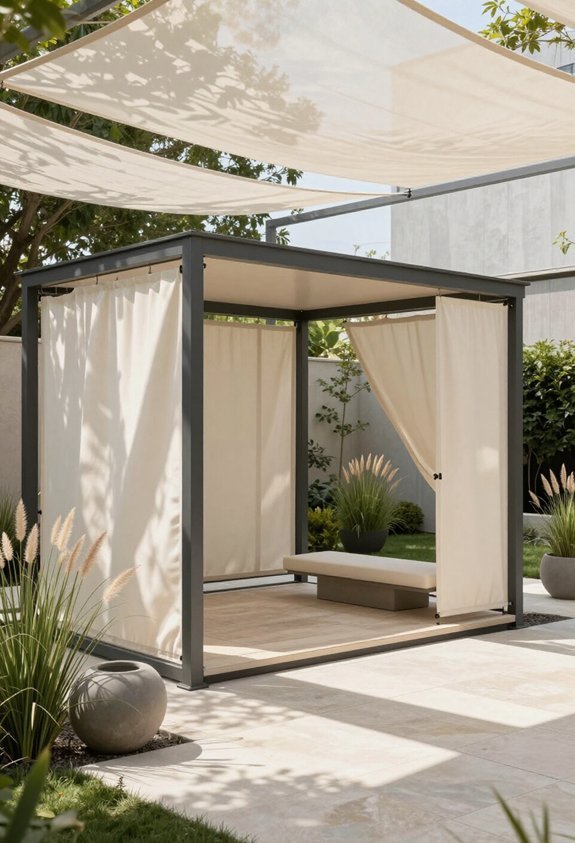
While wooden gazebos continue to appeal to those valuing traditional aesthetics, contemporary homeowners increasingly turn to modern metal frame gazebos that align with sleek architectural styles and minimalist design principles. These structures feature clean lines, typically constructed from aluminum or steel, which provides durability and requires minimal maintenance compared to wood. Metal frames support various covering options, including fabric shade cloths, polycarbonate panels, or retractable awnings, offering flexibility in design customization. The open framework design allows air circulation while maintaining protection from direct sunlight, making these gazebos practical for warm climates. Their industrial aesthetic complements modern home exteriors, creating focal points that enhance landscaping. Metal gazebos resist weathering, rot, and pest damage, ensuring long-term functionality and visual appeal for contemporary residential spaces.
Vintage Pergola With Climbing Vines
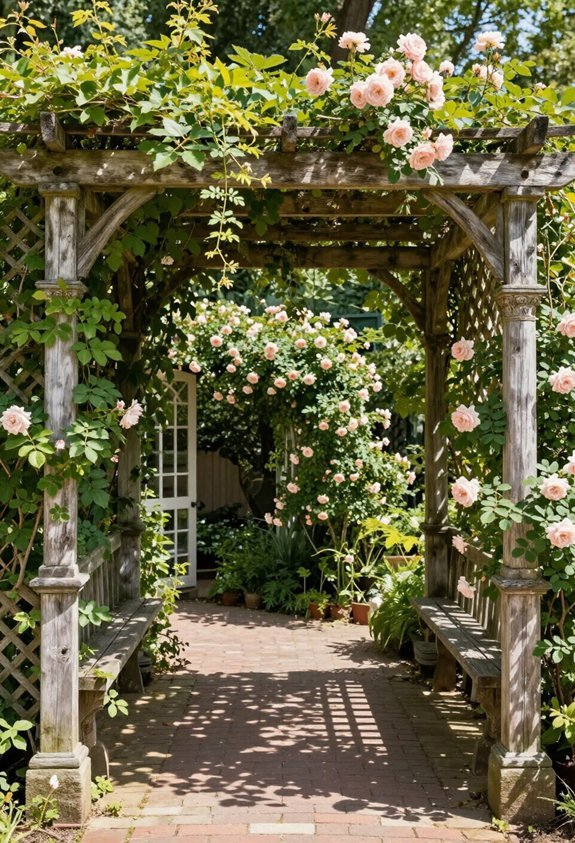
A vintage pergola with climbing vines offers homeowners a charming alternative to modern gazebo designs, combining classic architectural elements with natural greenery to create an inviting outdoor retreat. These structures feature a framework of wooden beams arranged in a lattice pattern, allowing climbing plants such as clematis, jasmine, or ivy to weave through the openings. The vegetation provides natural shade while filtering sunlight, creating dappled patterns across the ground below. Vintage pergolas require regular maintenance, including pruning vines and treating wood to prevent deterioration. The climbing plants benefit from this framework, as they gain structural support while homeowners enjoy enhanced privacy and aesthetic appeal. This design choice bridges traditional craftsmanship with sustainable landscaping practices, making it an environmentally conscious option for front yard improvements.
Hexagonal Design for Defined Shade Zones
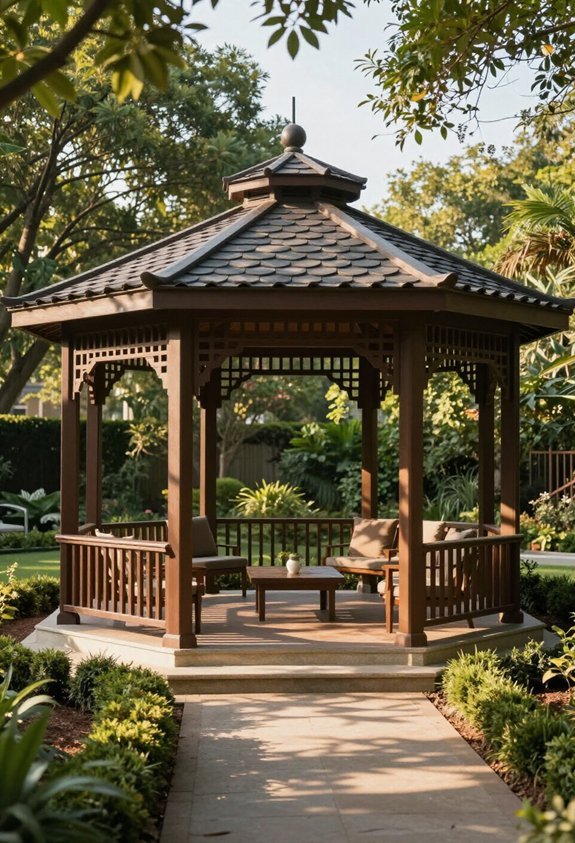
Hexagonal gazebo designs offer homeowners a geometric alternative to traditional round or square structures, providing clearly defined shade zones that maximize outdoor comfort and functionality in front yard spaces. The six-sided shape creates natural seating areas along each wall, allowing families to organize outdoor gatherings efficiently. This geometric configuration directs airflow differently than circular designs, promoting better ventilation during warm months. Hexagonal gazebos typically feature a central peak that channels rainfall away effectively, protecting occupants from sudden downpours. The angular design accommodates landscaping elements and pathways more easily than curved structures, creating seamless shifts between the gazebo and surrounding yard features. Installing a hexagonal gazebo requires precise measurements and careful foundation preparation to guarantee structural stability and longevity.
Rustic Stone Base With Timber Roof
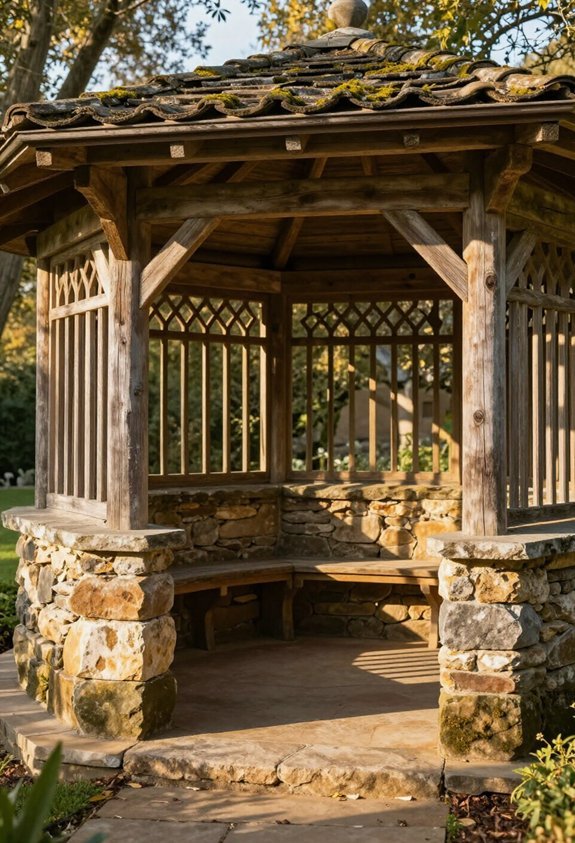
How can homeowners create a front yard gazebo that combines durability with classic aesthetic appeal? A rustic stone base with timber roof offers an excellent solution by merging strength with timeless design. The stone foundation provides a stable, weather-resistant platform that resists deterioration from moisture and ground contact, requiring minimal maintenance over decades. Stacked or mortared stone creates visual texture while supporting substantial timber framing above. The timber roof, constructed from cedar or oak beams, adds warmth and natural character while protecting the structure from rain and sun exposure. This combination guarantees longevity through proper material selection, with stone’s permanence anchoring the design and wood’s classic appeal establishing inviting outdoor ambiance. The contrasting materials create architectural interest while delivering functional performance suitable for various front yard landscapes.
Fabric Canopy Gazebo for Easy Installation
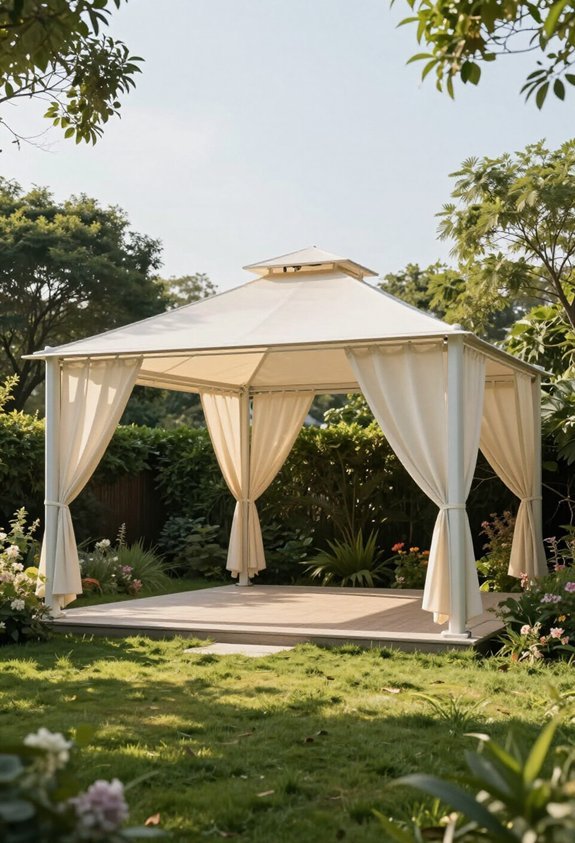
For homeowners seeking an alternative to permanent stone and timber structures, fabric canopy gazebos present a practical option that requires minimal installation effort and delivers immediate outdoor shelter. These portable structures feature lightweight frames, typically made from aluminum or steel, paired with durable fabric panels that provide UV protection and weather resistance. Assembly generally involves connecting frame components and securing fabric sections, tasks that most people can complete in several hours without professional assistance. The fabric canopy design allows for excellent air circulation while blocking harmful sun rays, making these gazebos ideal for various climates. Additionally, fabric canopies are removable for cleaning and maintenance, and can be replaced if damaged. Their flexibility in placement and ease of installation make fabric canopy gazebos an excellent choice for temporary or semi-permanent front yard shade solutions.
Japanese-Inspired Design for Serene Minimalism
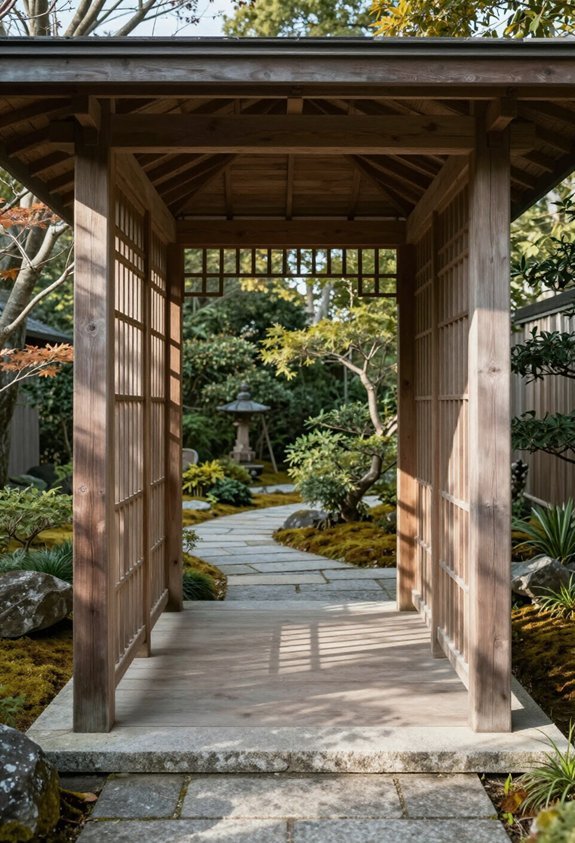
While fabric canopy gazebos prioritize practicality and portability, Japanese-inspired gazebo designs take a distinctly different approach by emphasizing aesthetic harmony, natural materials, and philosophical principles that have guided Japanese architecture for centuries. These structures, called pavilions or tea houses, feature open sides, clean lines, and sloped roofs that blend seamlessly with surrounding landscapes. Traditional elements include wooden posts, lattice panels, and gravel bases that create peaceful outdoor spaces for meditation and contemplation. The designs incorporate natural materials like cedar and bamboo, which weather gracefully over time. Minimal ornamentation and strategic placement among gardens or near water features characterize authentic Japanese-inspired gazebos. This design philosophy prioritizes balance, simplicity, and connection to nature, offering homeowners a serene retreat that promotes relaxation and mindfulness through thoughtful architectural principles.
Victorian Gazebo as Your Outdoor Focal Point
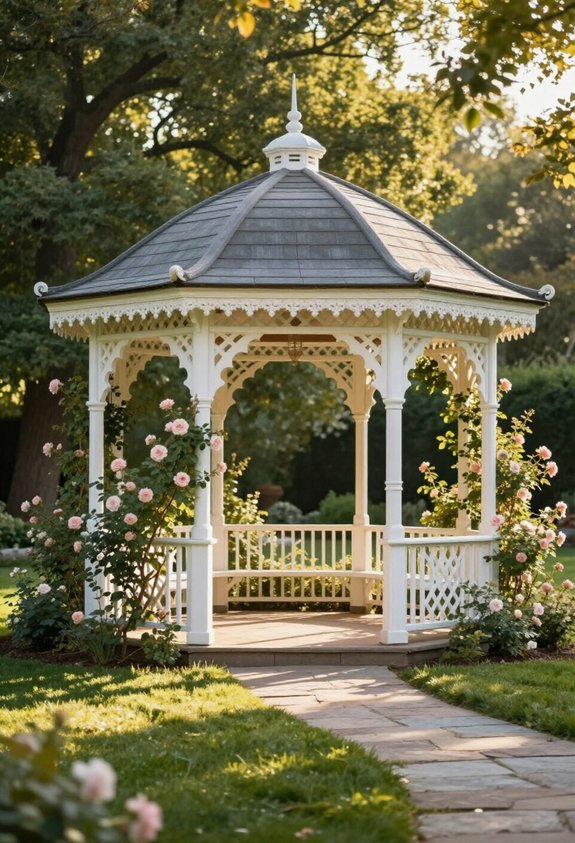
Ornamental elegance and architectural grandeur define the Victorian gazebo, a structure that transforms any front yard into a sophisticated outdoor centerpiece through its distinctive design elements and commanding presence. These gazebos feature ornate details including decorative railings, intricate trim work, and peaked roofs that reflect nineteenth-century craftsmanship. The Victorian style typically incorporates turned posts, lattice patterns, and detailed brackets that create visual interest from every angle. When positioned strategically in a front yard, a Victorian gazebo serves as an architectural anchor that enhances curb appeal and establishes an inviting entrance point. The structure’s formal aesthetic complements traditional home exteriors while providing functional outdoor shelter. Homeowners can enhance the Victorian gazebo further through climbing vines, period-appropriate furnishings, and landscape plantings that accentuate its refined character and historical charm.
Cottage-Style Gazebo for Romantic Character
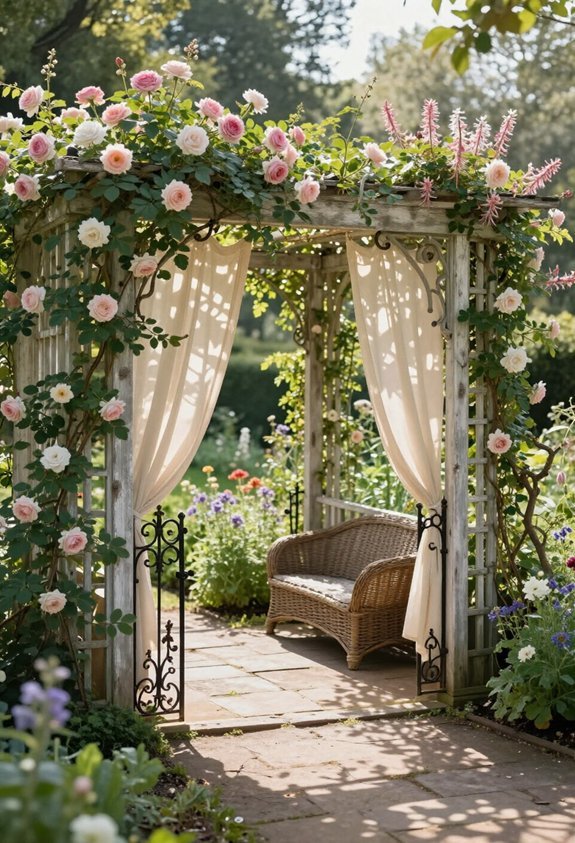
As homeowners seek to create intimate outdoor spaces that evoke warmth and nostalgic charm, the cottage-style gazebo emerges as an ideal choice for front yards that prioritize romantic character over formal grandeur. These structures typically feature gently sloped roofs, decorative trim work, and weathered finishes that suggest timeless appeal. Cottage gazebos often incorporate climbing vines, flower boxes, and latticed sides that soften their architectural lines, creating welcoming environments for relaxation and entertaining. The design emphasizes curved elements and ornamental details rather than geometric precision, distinguishing it from more structured architectural styles. Materials such as painted wood and vintage-inspired hardware enhance the nostalgic aesthetic. When positioned thoughtfully within front yards, cottage-style gazebos serve as charming focal points that establish an inviting first impression while providing functional shade and shelter.
Octagonal Shape: Maximum Space Efficiency
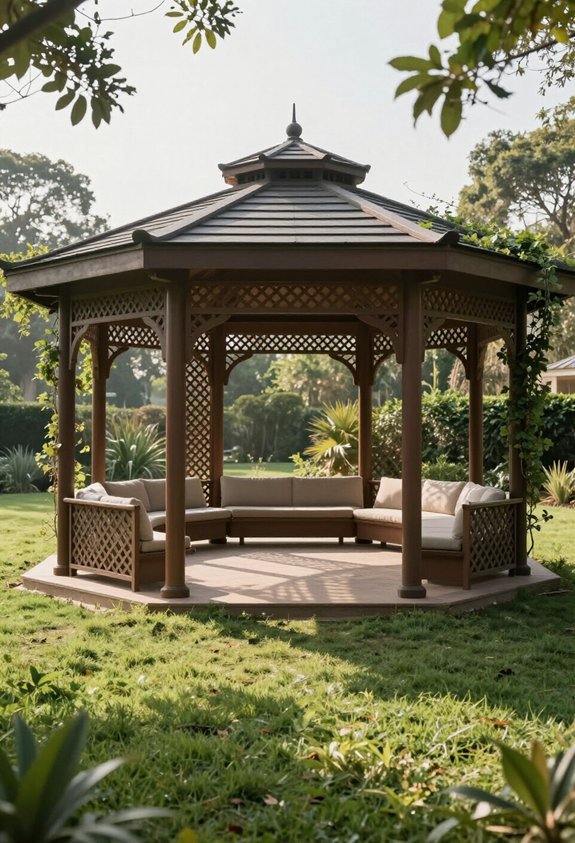
The octagonal gazebo design offers a practical alternative to the decorative cottage style, prioritizing efficient use of space through its geometric eight-sided structure. This shape maximizes interior square footage while minimizing the footprint required in front yards, making it ideal for properties with limited space. The eight equal sides distribute weight evenly, creating structural stability and allowing for larger covered areas without additional support posts that would obstruct views or movement. Octagonal gazebos accommodate more seating arrangements and functional elements, such as tables, grills, or standing room, compared to traditional round or square designs. The corners provide natural angles for installing railings, screens, or decorative panels. This geometric efficiency makes octagonal gazebos a practical choice for homeowners seeking maximum usable shelter space within compact yards while maintaining visual appeal and structural integrity.
Open-Sided Gazebo for Modern Flexibility
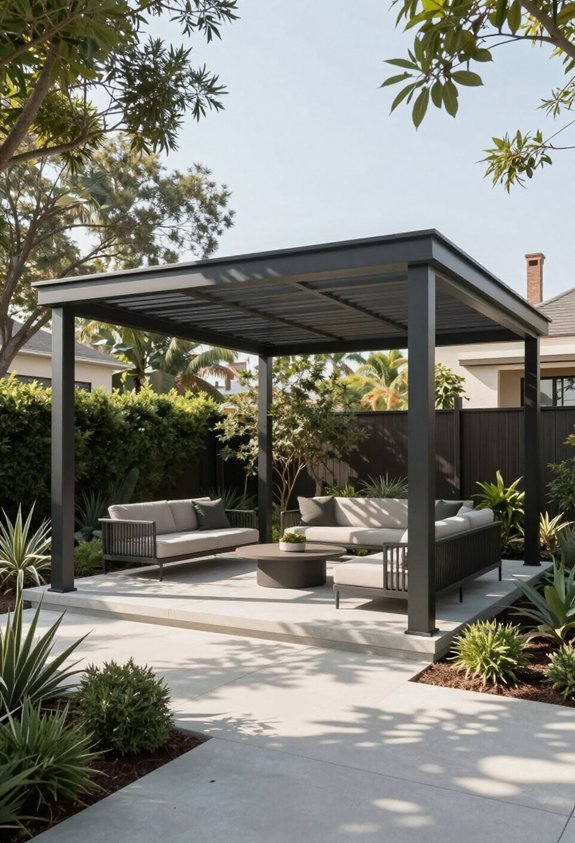
Open-sided gazebos represent a contemporary design approach that prioritizes adaptability and unobstructed sightlines, offering homeowners a flexible structure that functions across multiple purposes and seasons. Unlike fully enclosed structures, these designs feature supporting posts and a roof while eliminating walls, allowing for seamless transitions between indoor and outdoor spaces. This configuration permits natural air circulation, reducing heat buildup during summer months and enabling comfortable use throughout the year. Open-sided gazebos accommodate various activities, from dining and entertaining to workspace setup, without sacrificing visibility of surrounding landscapes. The design also simplifies installation and maintenance, requiring fewer materials and weatherproofing considerations. Homeowners can easily modify these structures by adding removable shade cloths or seasonal panels, providing customizable protection while maintaining the fundamental flexibility that defines this modern gazebo style.
Built-In Seating and Storage Solutions
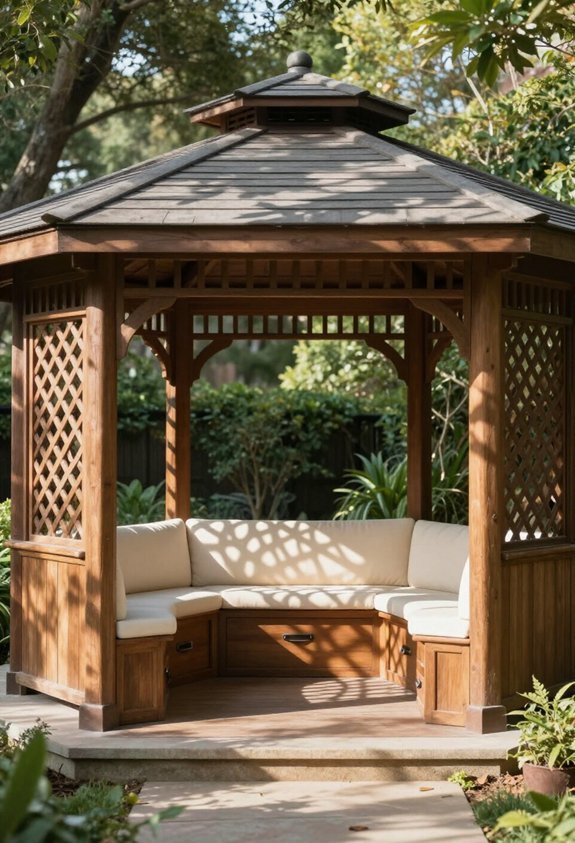
Maximizing functionality within a front yard gazebo requires thoughtful planning of interior elements that serve dual purposes, combining comfort with practicality to create a space that accommodates both relaxation and organization. Built-in benches along the gazebo’s perimeter provide seating while offering hidden storage compartments beneath cushioned tops, effectively utilizing otherwise wasted space. These storage areas can house garden tools, outdoor cushions, or entertaining supplies, keeping items protected from weather and easily accessible. Additionally, installing shelving units or cabinets against interior walls organizes decorative items and supplies without consuming floor space. Incorporating corner nooks with integrated seating creates intimate conversation areas while benches with lift-top designs provide convenient access to stored belongings. Such multifunctional design elements transform the gazebo into an organized, comfortable outdoor living area that maximizes every available inch efficiently.
Metal Roof Gazebo for Weather Protection
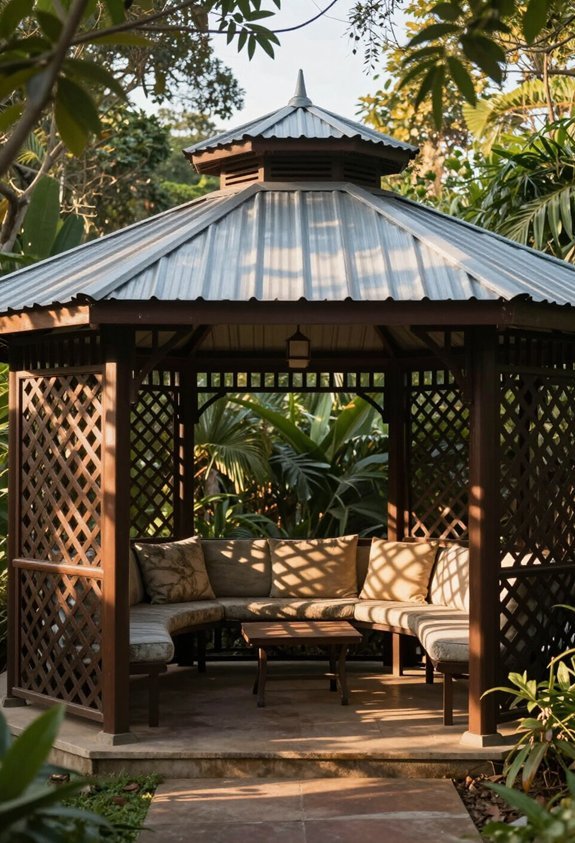
Metal roofing represents one of the most effective solutions for protecting a front yard gazebo from the elements, offering superior durability and weather resistance compared to traditional roofing materials. Metal roofs withstand heavy rain, strong winds, and intense sunlight without deteriorating, making them ideal for outdoor structures exposed to varying climate conditions. The material reflects heat effectively, keeping the gazebo cooler during summer months while preventing water accumulation that leads to rust or decay. Installation requires proper ventilation and drainage systems to guarantee longevity and prevent moisture buildup underneath the structure. Metal roofing also provides excellent noise insulation during rainfall. Maintenance remains minimal, requiring only occasional inspections for loose fasteners or debris removal, making metal roofs a practical, long-lasting investment for homeowners seeking reliable weather protection.
Integrated Lighting and Ceiling Fans
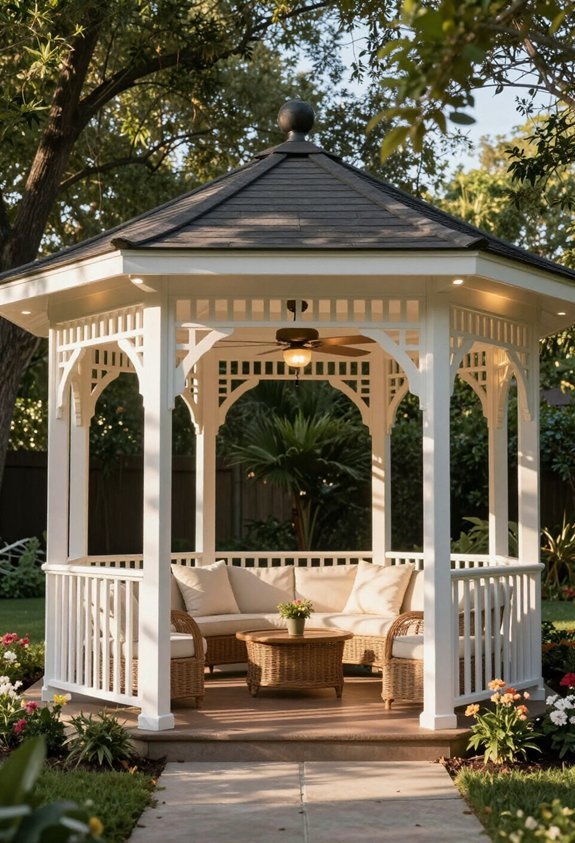
Ambiance and comfort combine effectively when homeowners incorporate integrated lighting and ceiling fans into their front yard gazebo designs, creating outdoor spaces that remain functional and enjoyable throughout the day and into evening hours. LED string lights or recessed fixtures installed along the gazebo’s interior provide adjustable illumination for nighttime gatherings, while ceiling fans improve air circulation during warm weather by distributing breezes throughout the structure. Motion-sensor lighting enhances security and convenience, automatically activating when movement is detected. Solar-powered options reduce electricity costs and environmental impact. Homeowners should ascertain proper electrical installation or consult professionals to guarantee safety compliance. These integrated features transform gazebos into versatile outdoor rooms suitable for entertaining, relaxing, or dining regardless of time or temperature conditions.
Stone or Brick Base for Lasting Durability
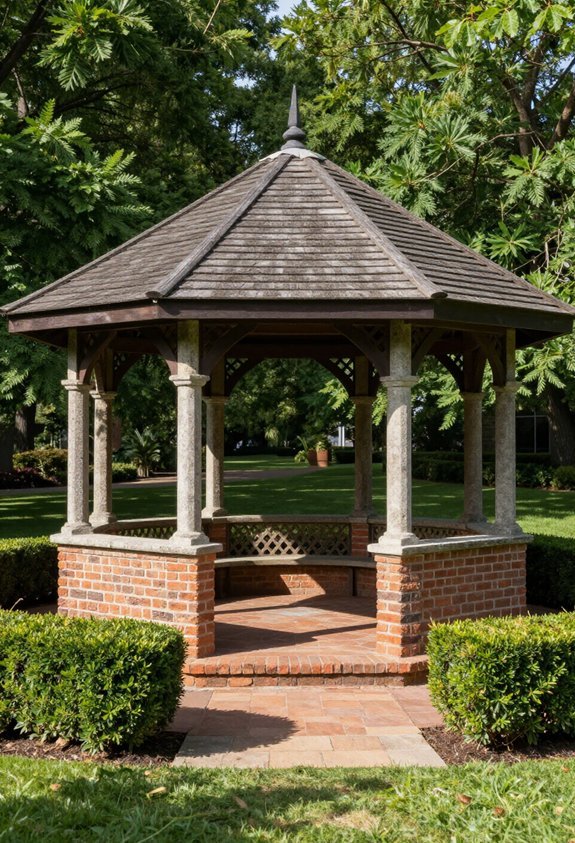
Establishing a sturdy foundation transforms a front yard gazebo from a temporary structure into a permanent outdoor feature that withstands years of weather exposure and use. Stone or brick bases provide superior durability compared to wood or concrete alone, resisting moisture damage, rot, and deterioration. Professionals recommend laying a concrete footer below the frost line, then building the base with mortared brick or stone, which distributes the gazebo’s weight evenly across the ground. This construction method prevents settling and shifting caused by freeze-thaw cycles. Stone bases also offer aesthetic flexibility, complementing various architectural styles through color and pattern selection. Proper drainage around the foundation prevents water accumulation, extending the structure’s lifespan considerably. Regular maintenance, including mortar inspection and repointing when necessary, guarantees the base remains structurally sound for decades.
DIY Gazebo: Assembly, Budget, and Installation Basics
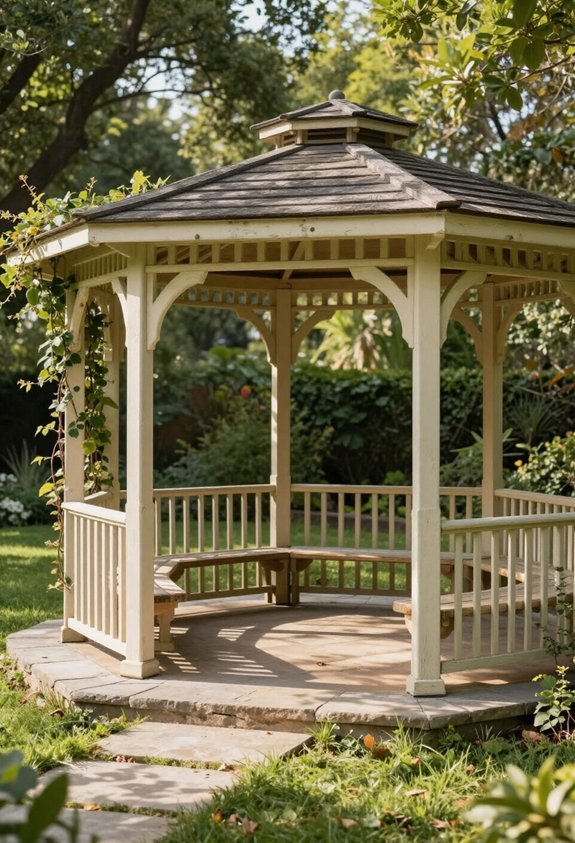
Building a gazebo from a kit or from scratch offers homeowners a cost-effective alternative to hiring professional contractors, though success depends on careful planning, realistic budgeting, and understanding the assembly process from start to finish. Most DIY gazebo kits range from $500 to $3,000, depending on size and materials, and typically include pre-cut components, hardware, and assembly instructions. Homeowners should allocate additional funds for a concrete foundation, which prevents settling and rot while extending the structure’s lifespan. Installation generally requires two to four people and takes one to three days, depending on complexity. Reading instructions thoroughly before beginning, organizing all components, and using proper tools—including a level, drill, and measuring tape—ensures accurate assembly and structural integrity throughout the project.
Frequently Asked Questions
How Much Does a Quality Front Yard Gazebo Typically Cost to Purchase and Install?
Quality front yard gazebos typically cost between $3,000 and $15,000 installed, depending on size, materials, and complexity. Basic models start around $1,500, while high-end custom structures exceed $20,000 with professional installation included.
What Is the Best Location in My Yard for Optimal Gazebo Placement and Sun Exposure?
Ideal gazebo placement typically requires a location receiving afternoon shade while maintaining morning sunlight exposure. Northeast or northwest-facing positions work best, positioning the structure to block intense western sun while allowing gentle morning light penetration throughout the day.
Do I Need a Permit or Special Foundation Before Installing a Gazebo?
Permit requirements vary by location and gazebo size. Most jurisdictions require permits for permanent structures. A concrete foundation is typically necessary for stability and longevity, though some portable gazebos need minimal groundwork.
How Do I Maintain and Weatherproof My Gazebo Throughout Different Seasons?
One maintains a gazebo by regularly cleaning surfaces, inspecting structural integrity, applying protective sealant annually, and winterizing by removing cushions and covering vulnerable areas. Proper drainage prevents water damage year-round.
What Are the Best Plants or Vines for Climbing Around a Gazebo Structure?
Climbing ivy, clematis, and honeysuckle thrive around gazebo structures. Jasmine and climbing roses offer fragrant blooms. Wisteria provides dramatic purple flowers, while fast-growing trumpet vine creates dense coverage quickly.
Conclusion
A front yard gazebo transforms outdoor spaces into functional, attractive retreats by combining shelter with aesthetic appeal. Whether selecting classic wooden designs, modern metal frames, or unique hexagonal shapes, homeowners can customize their gazebo to match their property’s style and meet their specific needs. By incorporating durable materials, integrated lighting, and thoughtful design choices, a gazebo becomes a year-round destination for relaxation and gathering, considerably enhancing both usability and home value.