
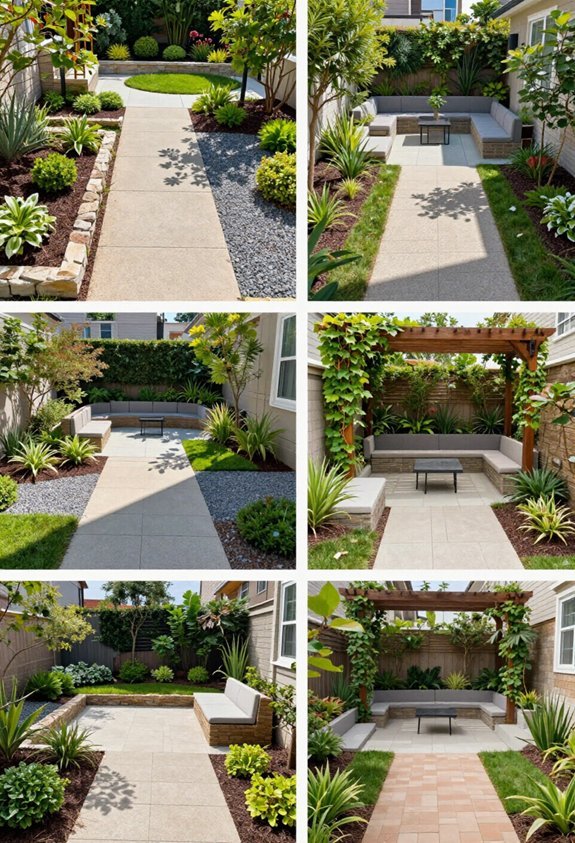
Side yards often remain underutilized spaces, yet they offer significant potential for improving both functionality and aesthetics around a home. By implementing strategic enhancements such as pathways, storage solutions, and lighting fixtures, homeowners can transform these narrow areas into purposeful zones that serve multiple needs. Understanding which improvements work best for specific yard conditions and layouts requires examining practical options that balance utility with visual appeal.
Build a Side Yard Pathway to Connect Front and Back
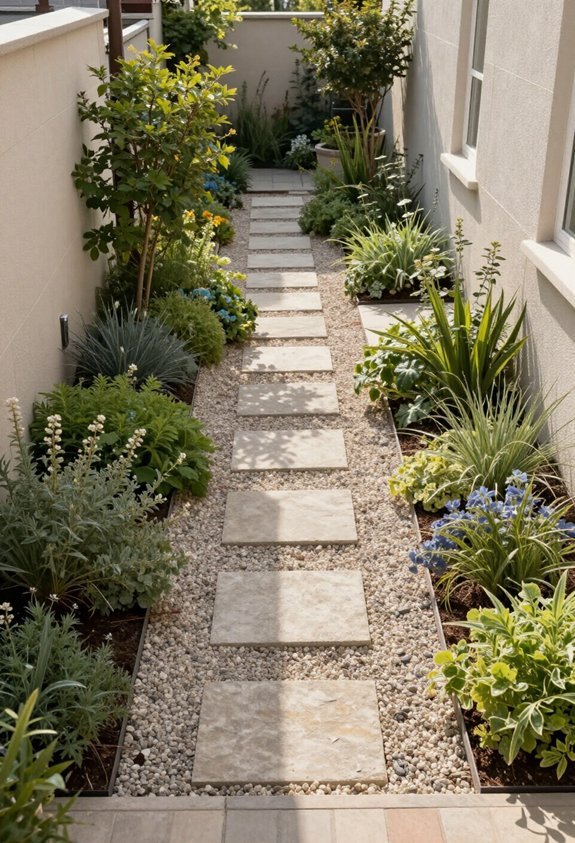
Creating a functional pathway through a side yard serves as a practical solution for connecting the front and back areas of a property, while simultaneously transforming an often-underutilized space into an attractive and purposeful feature. Homeowners can construct pathways using various materials, including pavers, gravel, or stepping stones, each offering different aesthetic and maintenance considerations. The pathway width should accommodate comfortable foot traffic, typically ranging from two to three feet wide, ensuring easy passage for multiple people. Strategic placement of lighting along the route enhances safety and usability during evening hours. Adding borders with plants or edging materials defines the pathway’s boundaries clearly. Proper drainage prevents water accumulation, protecting the pathway’s structural integrity over time.
Also read: 20+ SIDE YARD PATHWAY IDEAS That Look Clean & Easy!
Install a Side Yard Gate for Easy Access Control
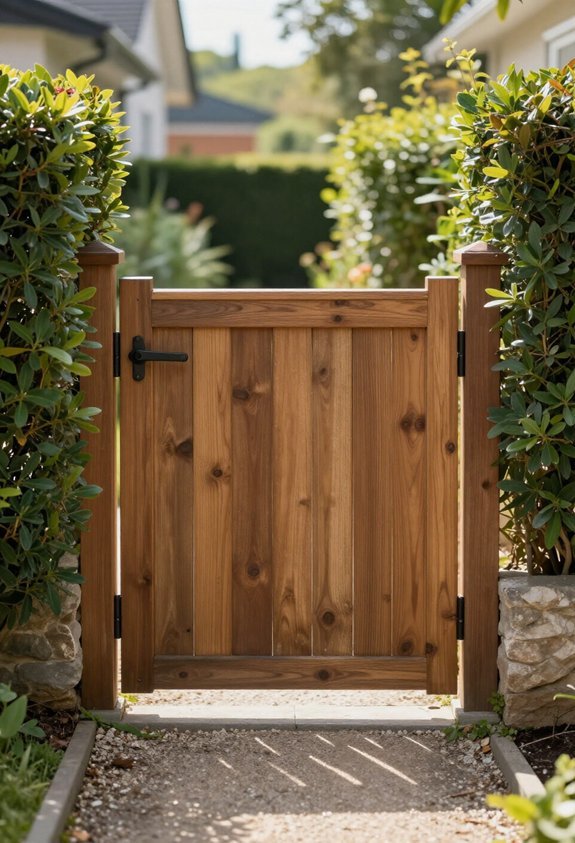
While a well-constructed pathway provides convenient passage through the side yard, controlling who can access that route becomes equally important for property security and privacy. Installing a side yard gate serves as an effective barrier that homeowners can open or close as needed, restricting entry to authorized individuals only. Gates come in various materials including wood, vinyl, and metal, each offering different levels of durability and aesthetic appeal. Homeowners should consider the gate’s height, locking mechanism, and overall design to guarantee it complements their property while providing adequate security. A properly installed gate with a reliable latch or lock system prevents unwanted access from neighbors, intruders, or animals, greatly enhancing property protection and giving residents greater control over their outdoor spaces.
Create a Mudroom Entry Area With Boot Scraper
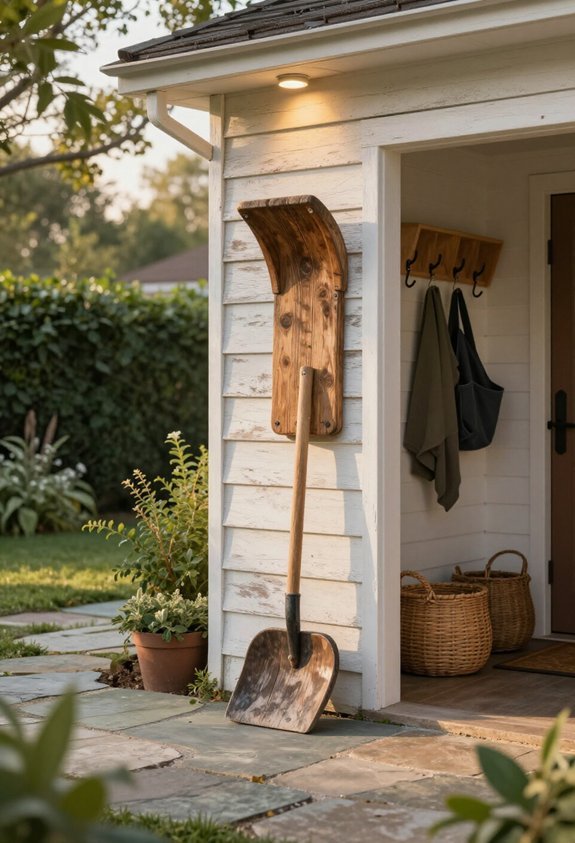
Because mud and dirt naturally accumulate when people shift between outdoor and indoor spaces, establishing a dedicated mudroom entry area in the side yard provides a practical solution for containing mess before it reaches the main home. Installing a boot scraper near the entry point allows visitors and family members to remove caked-on soil from footwear efficiently. Positioning the scraper at ground level, typically mounted to a wall or embedded in the walkway, guarantees easy accessibility for all users. Adding a designated boot tray or absorbent mat beside the scraper captures residual moisture and particles. This layered approach creates a functional conversion zone that protects interior flooring while maintaining an organized entryway. Constructing or purchasing a quality boot scraper represents a cost-effective investment in home maintenance and cleanliness.
Design a Garden Storage Shed for Tools
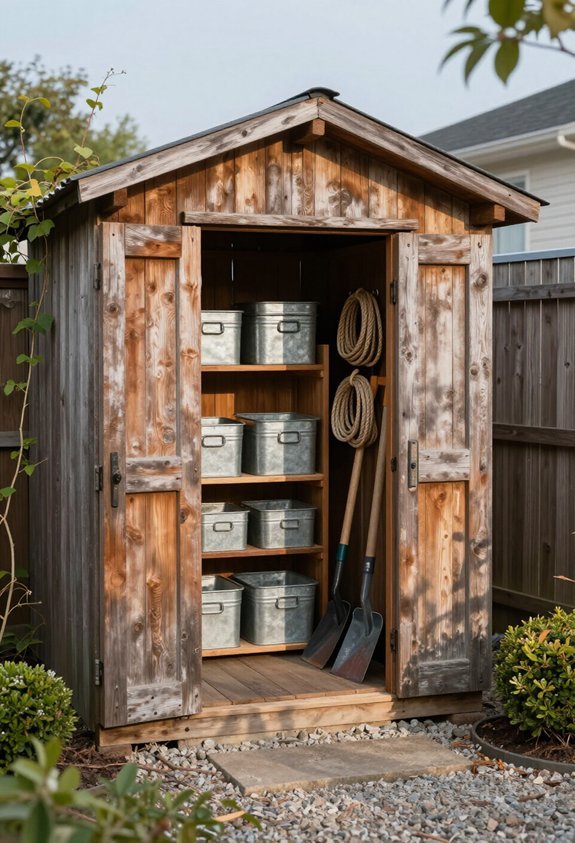
A dedicated garden storage shed transforms the side yard into an organized hub for tool management, protecting equipment from weather damage while keeping frequently used items easily accessible. Choosing an appropriate location requires selecting a spot with good drainage and adequate sunlight to prevent moisture accumulation and rust formation. The shed’s size should match the quantity of tools and equipment requiring storage, with options ranging from compact four-by-six-foot structures to larger eight-by-ten-foot designs. Installing shelving units, wall-mounted pegboards, and labeled bins maximizes interior space efficiency and enables quick tool identification. Proper ventilation prevents humidity buildup, while a sturdy workbench provides a convenient surface for tool maintenance and repairs. Adding weatherproof locks guarantees security, protecting valuable equipment from theft and unauthorized access.
Create a Firewood Storage Rack Against the House
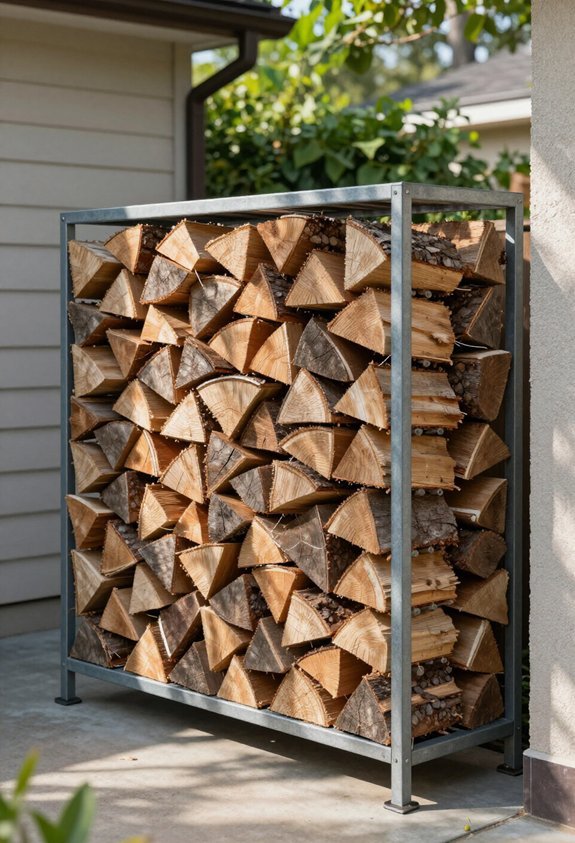
Beyond the tool storage shed that organizes garden equipment, the side yard can serve another practical purpose by accommodating firewood storage, which requires a dedicated structure designed to keep logs dry, properly aired, and easily accessible for heating or recreational use. A firewood rack positioned against the house should feature a sturdy frame constructed from pressure-treated wood or metal, allowing adequate space between the ground and stored logs to promote air circulation and prevent moisture accumulation. The rack’s design should incorporate a slanted roof or cover to shield wood from rain while permitting ventilation, preventing rot and mold development. This strategic placement transforms underutilized side yard space into functional storage that protects firewood quality throughout seasons while maintaining convenient access near home entrances.
Set Up a Bike Storage Solution That Saves Space
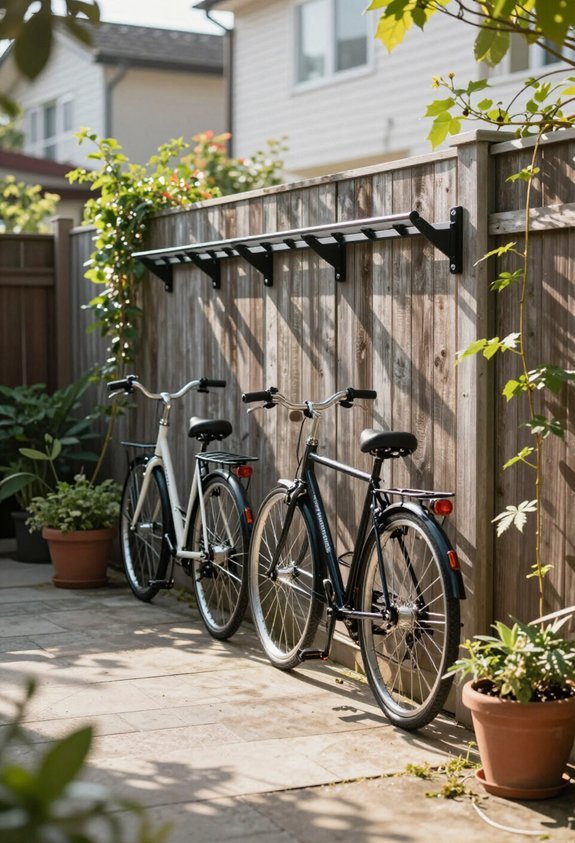
Many homeowners find that bicycles quickly clutter side yards and entryways, creating both safety hazards and wasted space, which is why implementing a dedicated bike storage solution transforms this underutilized area into an organized, functional zone that protects bicycles from weather damage while keeping them easily accessible. Wall-mounted racks represent an efficient option, securing bikes vertically against the house or fence and requiring minimal floor space. Alternatively, freestanding bike stands accommodate multiple bicycles in compact footprints. For enhanced protection, consider installing a weatherproof storage box or shed specifically designed for bikes, which shields them from rain, snow, and UV exposure while deterring theft. Whichever solution homeowners select, proper bike storage prevents rust, extends equipment lifespan, and reclaims valuable side yard space for other purposes like gardening or entertaining.
Build a Quick-Access Trash and Recycling Station
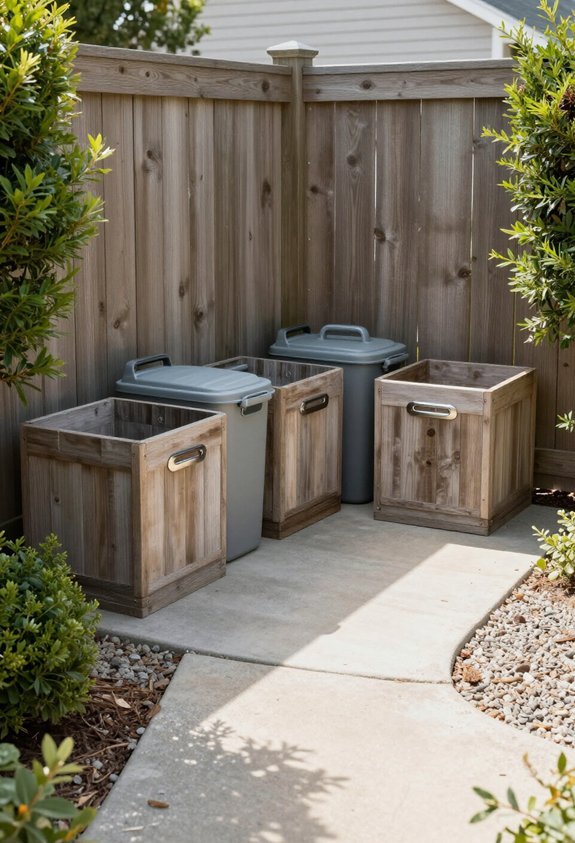
Positioning trash and recycling bins in the side yard creates a convenient collection point that keeps waste management out of sight while remaining easily accessible for both household members and collection day pickups, thereby streamlining the disposal process and maintaining a cleaner appearance in primary outdoor living areas. To implement this effectively, homeowners should select a level, well-drained location protected from direct sunlight to prevent odors and deterioration. Installing a three-bin system allows for separation of trash, recycling, and compost, promoting environmental responsibility. Adding a weatherproof enclosure or screening with lattice panels provides concealment while ensuring adequate ventilation. Positioning bins near the curb or alley facilitates collection truck access. Installing a gravel or concrete pad beneath the bins prevents mud accumulation and simplifies cleaning, creating an organized, functional waste management station.
Install Outdoor Shelving for Garden Supplies
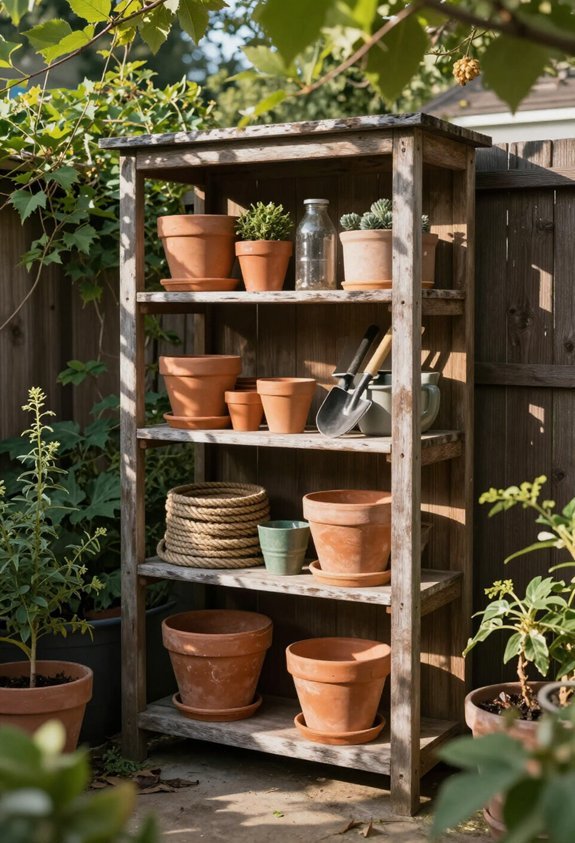
Installing outdoor shelving in a side yard provides dedicated storage space for garden tools, potted plants, seeds, fertilizers, and other supplies, keeping these items organized and within easy reach while protecting them from ground moisture and damage. When selecting shelving, homeowners should choose weather-resistant materials like metal, treated wood, or plastic that withstand rain and temperature changes. Mounting shelves securely to the side of the house or fence guarantees stability and prevents tipping. Organizing supplies by category—grouping hand tools together, stacking pots, and arranging fertilizers separately—makes finding items efficient. Adding hooks to shelves increases storage capacity for hanging tools, hoses, or bags. Proper shelving transforms a neglected side yard into a functional storage zone that streamlines garden maintenance tasks and improves overall yard organization.
Create a Compost Bin Area Hidden by Fencing
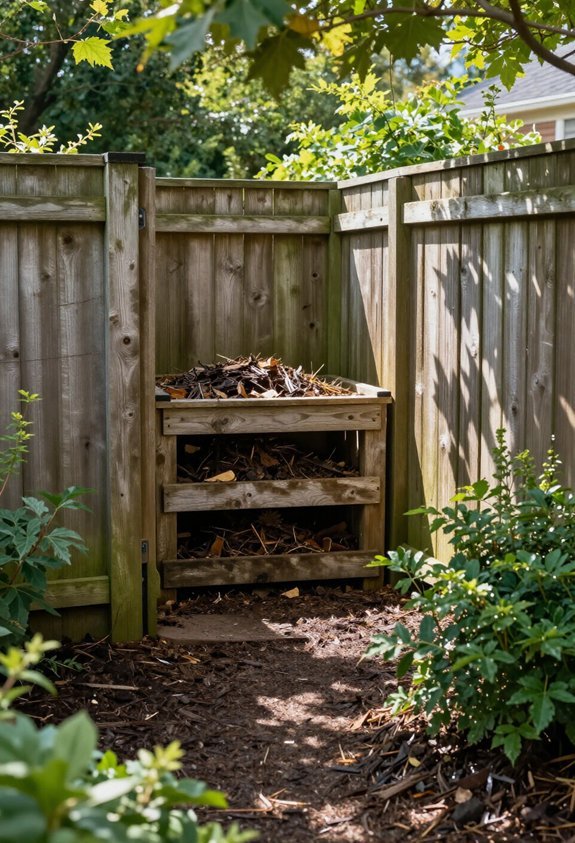
A side yard compost bin offers homeowners an efficient way to recycle kitchen scraps and yard waste while keeping the unsightly bin concealed from view through strategic fence placement or screening. Positioning the bin behind existing fencing or installing a dedicated fence enclosure creates a hidden composting station that remains accessible yet visually separate from neighboring properties. Homeowners should select a location receiving partial sunlight and good drainage, as these conditions accelerate decomposition. Installing a simple wooden or vinyl fence around the bin, or planting dense shrubs nearby, effectively masks the composting area from view. Adding a hinged access gate allows convenient material addition and finished compost removal without exposing the bin to passersby. This practical solution transforms wasted organic matter into nutrient-rich soil amendment while maintaining yard aesthetics.
Plant a Narrow Garden Bed for Year-Round Color
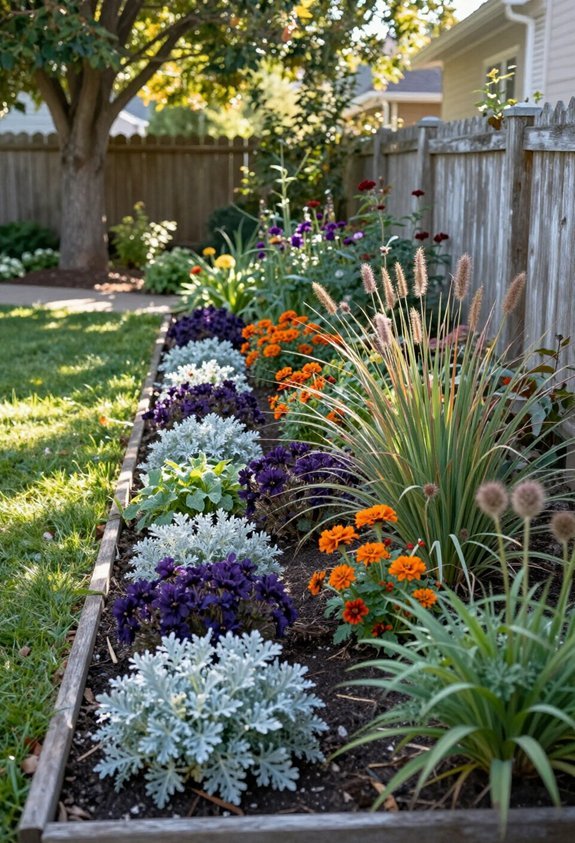
Narrow garden beds along the side yard create excellent opportunities for homeowners to display colorful plants throughout all four seasons, transforming an otherwise underutilized space into a vibrant landscape feature. Selecting appropriate plants for each season guarantees continuous visual interest, with spring bulbs, summer flowering perennials, fall foliage plants, and winter evergreens providing year-round appeal. Homeowners should prepare the soil by adding compost and guaranteeing proper drainage, which prevents waterlogging and promotes healthy root development. Spacing plants according to their mature sizes prevents overcrowding and allows adequate air circulation. Incorporating plants with varying heights and textures creates visual depth, while choosing native species reduces maintenance requirements. Regular watering, mulching, and seasonal pruning maintain the garden bed’s appearance and encourage sustained growth throughout the year.
Build a Vertical Garden Wall to Maximize Space
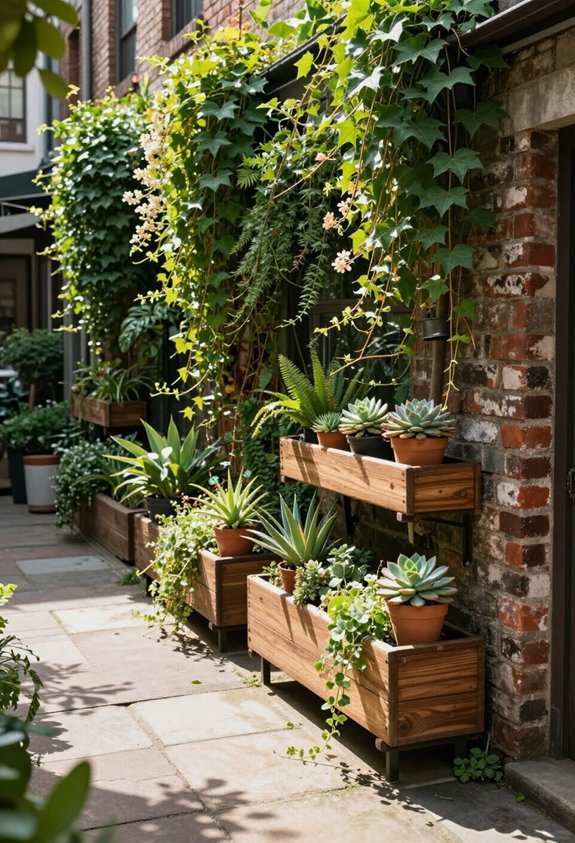
Vertical garden walls transform compact side yards into productive growing spaces by utilizing upward space that would otherwise remain empty, allowing homeowners to cultivate plants on trellises, wall-mounted planters, or living wall systems that maximize the area’s potential. These structures support climbing vegetables like beans and peas, trailing herbs, and decorative flowering plants that add visual interest while improving air circulation around the yard. Installation requires selecting a sunny wall location, choosing appropriate mounting hardware, and ensuring proper drainage to prevent water damage to the house. Gardeners should select plants suited to available sunlight and regularly water vertical systems since plants in elevated positions dry faster than traditional beds, making consistent moisture management essential for healthy growth and abundant harvests.
Grow a Small Herb Garden Near the Kitchen Door
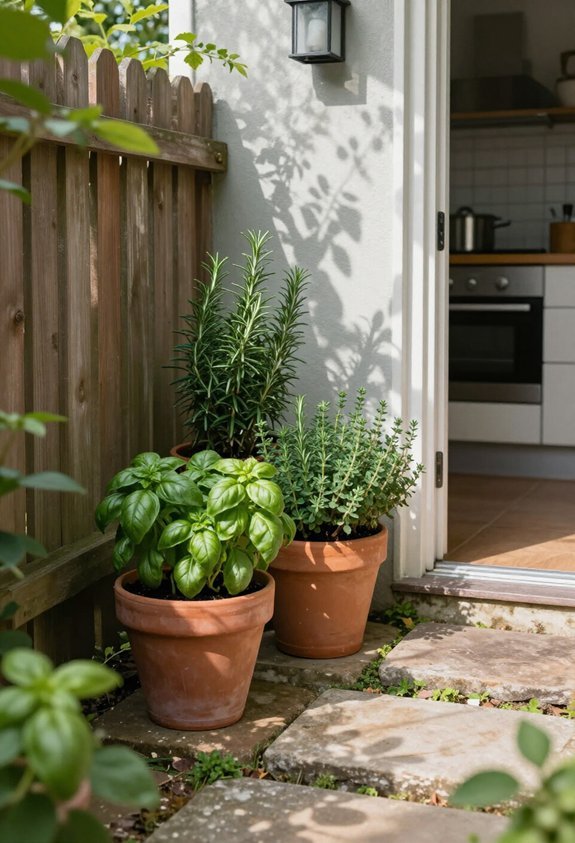
Positioning an herb garden just outside the kitchen door offers homeowners convenient access to fresh herbs for cooking while requiring only a small amount of space and minimal maintenance, making this practical solution ideal for side yards that receive adequate sunlight throughout the day. A simple raised bed or container garden measuring three to four feet wide provides sufficient growing area for popular culinary herbs such as basil, thyme, rosemary, and parsley. Gardeners should guarantee the location receives at least six hours of direct sunlight and has well-draining soil enriched with compost. Regular watering, typically once or twice weekly depending on weather conditions, keeps herbs healthy and productive. This arrangement streamlines meal preparation by eliminating trips to distant garden areas while encouraging homeowners to utilize fresh, homegrown ingredients in their daily cooking routines.
Build a Trellis Screen for Privacy and Climbing Vines
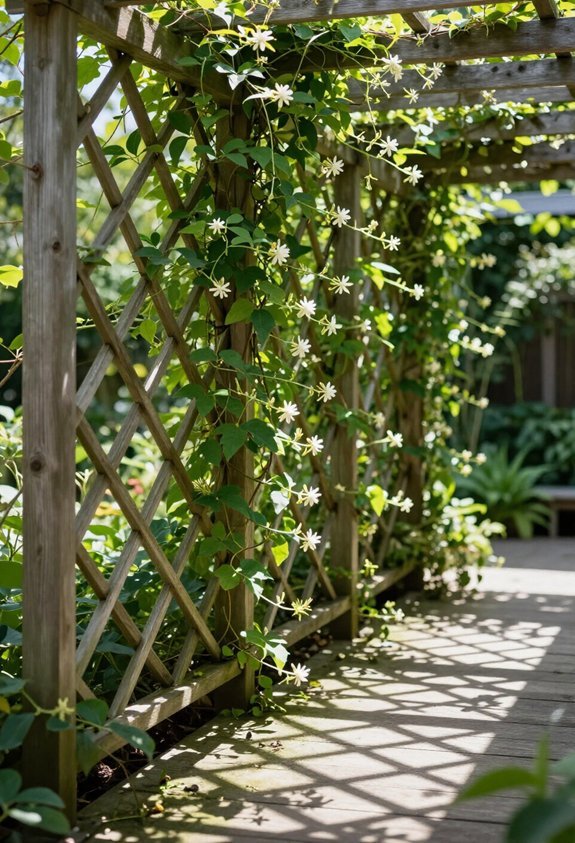
A trellis screen serves multiple practical purposes in side yard design by creating a visual barrier between properties while simultaneously supporting climbing vines that enhance the landscape’s aesthetic appeal and provide natural shade. Homeowners can construct a trellis using wood, metal, or vinyl materials, depending on their budget and desired durability. Installing the structure along the side yard’s perimeter establishes privacy while allowing air circulation, which prevents moisture buildup and maintains healthy plant growth. Suitable climbing plants include clematis, honeysuckle, or ivy, each offering distinct visual characteristics and growth rates. Proper installation requires securing the trellis firmly to withstand wind and the weight of mature vines. Regular maintenance, including pruning and training vines along the framework, guarantees superior appearance and structural integrity over time.
Carve Out a Cozy Seating Nook for Quiet Retreats
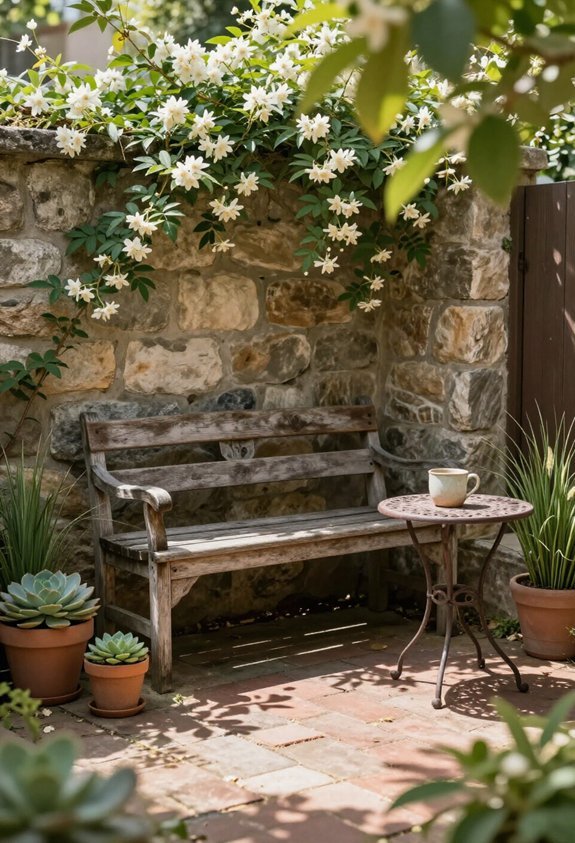
Transforming a side yard into a personal retreat space requires thoughtful planning and strategic placement of furnishings and natural elements that work together to create an intimate atmosphere separate from the main living areas. Selecting a sheltered corner protects the seating area from wind and unwanted views while maximizing privacy. Installing comfortable seating, such as a bench or chair with cushions, provides a functional focal point for relaxation. Adding overhead shade through a pergola or umbrella prevents excessive sun exposure during extended visits. Incorporating potted plants, flowering shrubs, or climbing vines softens hard edges and enhances the natural aesthetic. Proper lighting, including solar lanterns or string lights, extends usability into evening hours. This thoughtfully designed retreat becomes an accessible escape for reading, meditation, or quiet contemplation.
Hang a Narrow Bench Swing for Relaxation
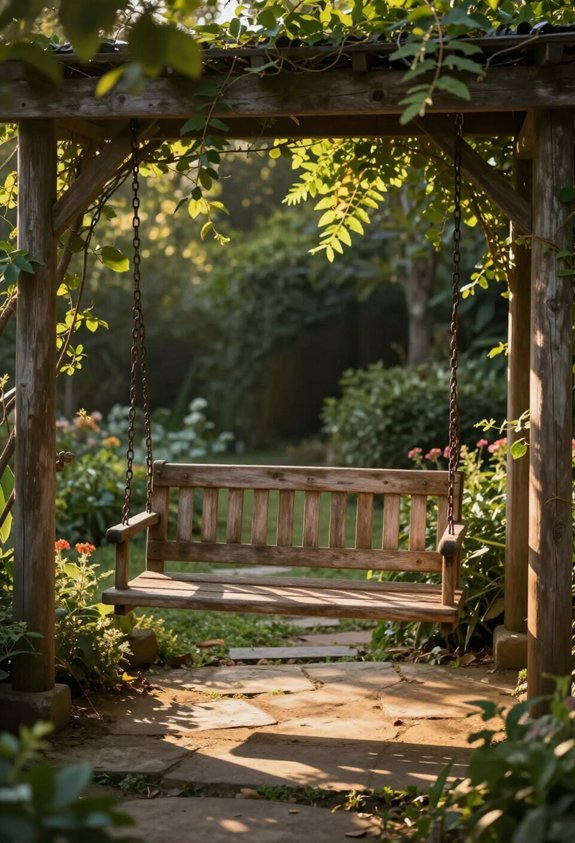
Installing a narrow bench swing in a side yard creates an inviting focal point that combines comfort with gentle movement, offering a peaceful spot for relaxation and leisurely afternoons. To successfully install a bench swing, one must first select a sturdy overhead structure, such as a pergola beam or reinforced tree branch, capable of supporting the combined weight of the swing and occupants. Heavy-duty chains or rope should be attached securely to the bench frame, then fastened to the overhead support using appropriate hardware rated for safety. The swing should hang approximately twelve to eighteen inches from the ground, allowing comfortable foot clearance. Regular maintenance, including checking hardware connections and inspecting chains for rust or wear, guarantees long-term durability and safety. This simple addition transforms underutilized side yard space into a functional retreat.
Add a Cedar Bench With Built-In Planters
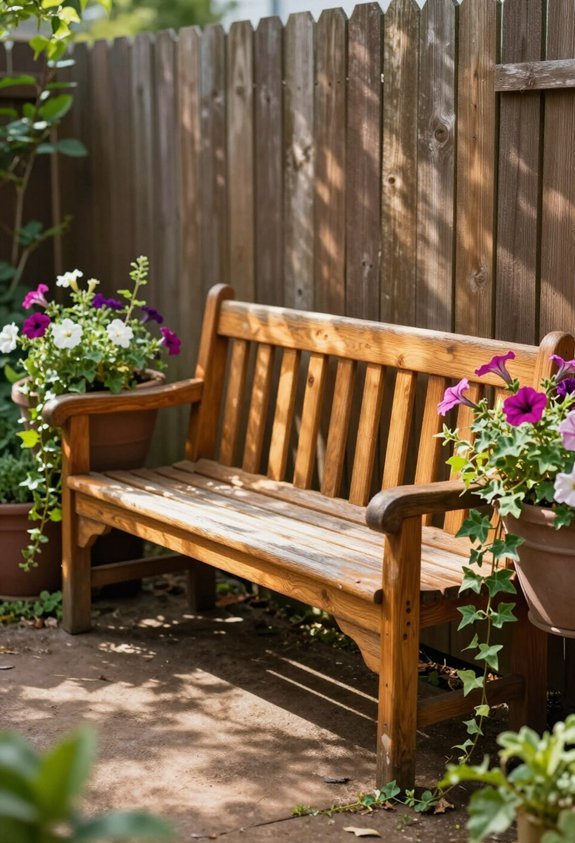
For those seeking both seating and planting opportunities in a compact space, cedar benches with integrated planters offer a practical solution that combines functionality with aesthetic appeal. Cedar wood naturally resists rot and decay, making it an ideal material for outdoor furniture exposed to moisture and weather conditions. The built-in planters positioned along the bench’s sides or back allow homeowners to cultivate flowers, herbs, or small vegetables while enjoying a comfortable seating area. This dual-purpose design maximizes limited square footage, eliminating the need for separate garden beds and seating arrangements. Cedar benches with planters require minimal maintenance beyond occasional staining or sealing to preserve the wood’s longevity. The arrangement creates visual interest while maintaining organized, efficient use of side yard space.
Set Up a Dog Run or Pet Play Area
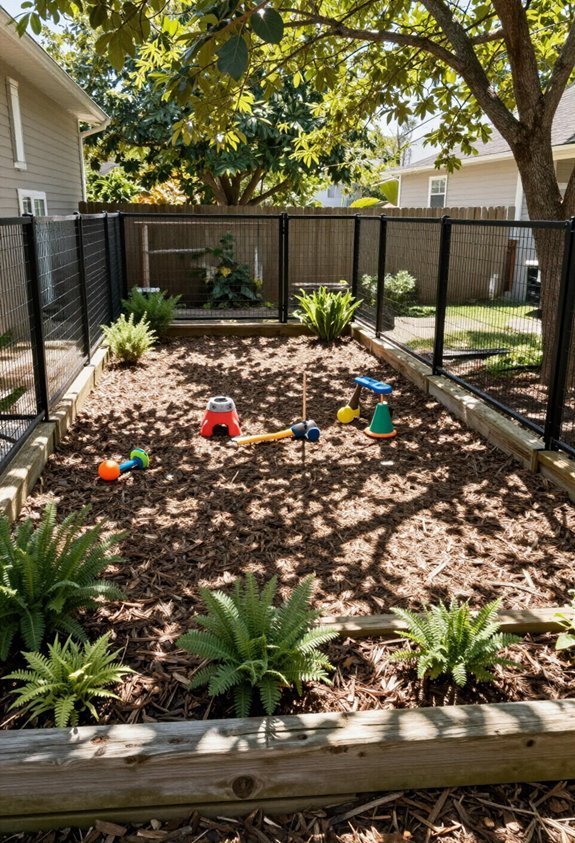
A dedicated dog run or pet play area transforms an underutilized side yard into a secure, engaging space where pets can exercise and play safely without constant supervision. Installing sturdy fencing, typically four to six feet high depending on breed size, creates a contained environment that prevents escape while allowing pets to roam freely. Adding ground cover such as mulch, gravel, or artificial turf improves drainage and comfort. Incorporating shade structures, like pergolas or trees, protects pets from excessive sun exposure during hot months. Water bowls and rest areas positioned throughout the space encourage hydration and recovery. Durable toys and climbing features provide mental stimulation and physical activity. This purposeful design maximizes the side yard’s functionality while prioritizing pet safety and well-being.
Establish a Pet Feeding Station Away From Main View
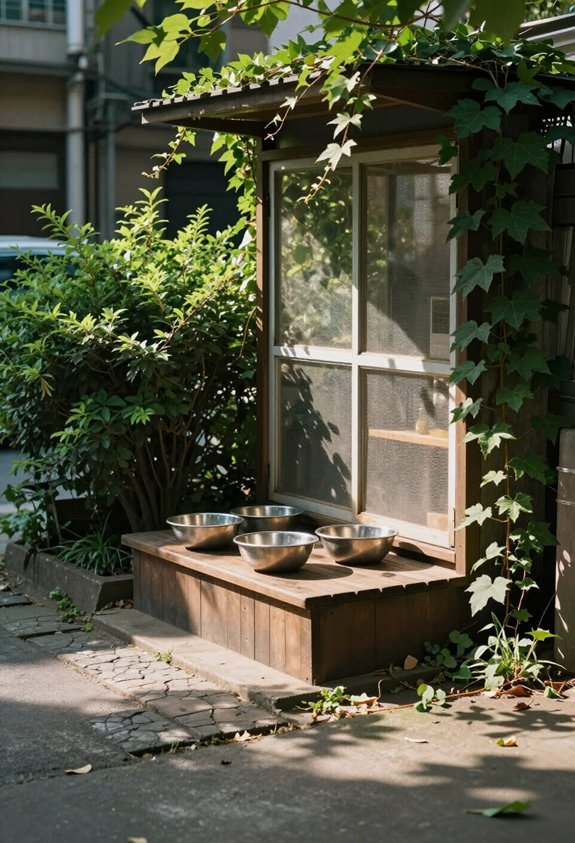
Positioning pet feeding stations in side yard areas away from the home’s main entrance and living spaces reduces visual clutter while maintaining convenient access for daily feeding routines. Homeowners should select a sheltered location that protects food and water bowls from weather elements, such as beneath an overhang or covered structure. Installing a designated feeding platform or mat defines the space and simplifies cleanup of spilled food and water. Placing the station near a water source, like an outdoor faucet, streamlines the refilling process. Enclosing the area with low fencing or landscaping creates a contained zone that discourages wildlife from accessing pet food while keeping animals within view. This strategic placement balances functionality with aesthetic considerations for the overall property.
Install a Rainwater Collection System for the Garden
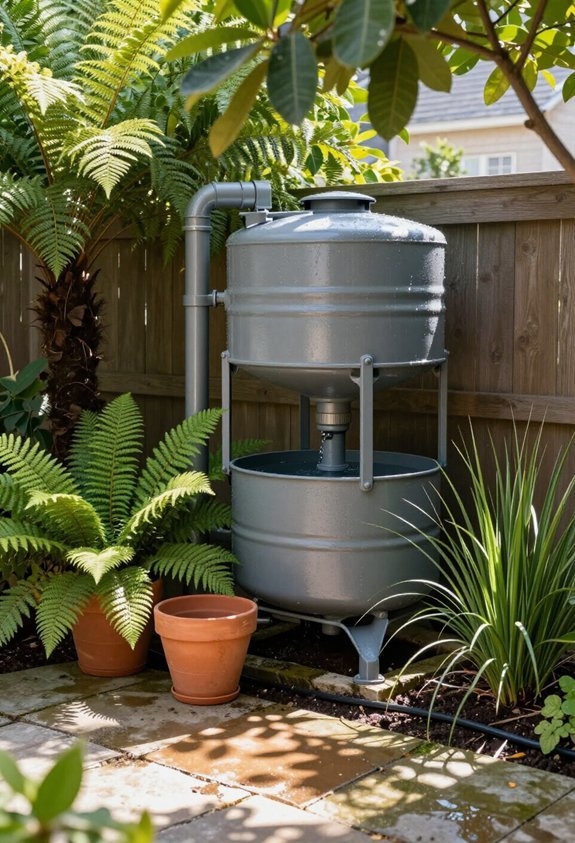
Because side yards often receive substantial rainfall runoff from roof gutters and sloped terrain, they present ideal locations for installing rainwater collection systems that capture and store water for garden irrigation. Homeowners can position rain barrels or cisterns beneath downspouts to gather runoff efficiently, reducing reliance on municipal water supplies while lowering utility costs. The collected water serves multiple purposes, including watering plants, filling bird baths, and cleaning outdoor surfaces. Installing a filtration system prevents debris from contaminating the stored water, ensuring its quality for garden use. Proper placement on level ground and regular maintenance, such as cleaning gutters and inspecting containers for leaks, keeps the system functioning effectively. This sustainable practice transforms side yards into resourceful spaces that benefit both landscapes and household budgets.
Add a Small Fountain for Ambiance
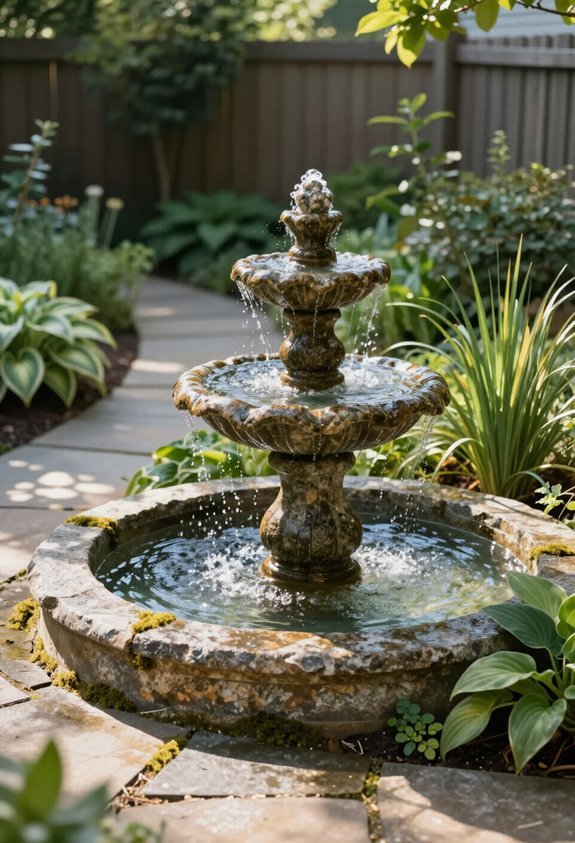
Small fountains can transform side yards into tranquil retreats by introducing the soothing sounds and visual appeal of moving water, creating an inviting atmosphere that encourages relaxation and enhances outdoor enjoyment. Homeowners can select from various styles, including tiered fountains, wall-mounted designs, or pedestal models, each offering distinct aesthetic qualities suited to different landscape themes. Installation requires a level surface, proximity to an electrical outlet, and access to a water source for maintenance. The gentle sound of cascading water masks neighborhood noise, while the movement attracts birds and butterflies, enriching the local ecosystem. Regular cleaning prevents algae buildup and guarantees peak performance. A small fountain serves as both a functional water feature and a focal point, effectively elevating the side yard’s visual interest and creating a peaceful outdoor sanctuary.
Hang a Clothesline or Drying Rack Setup
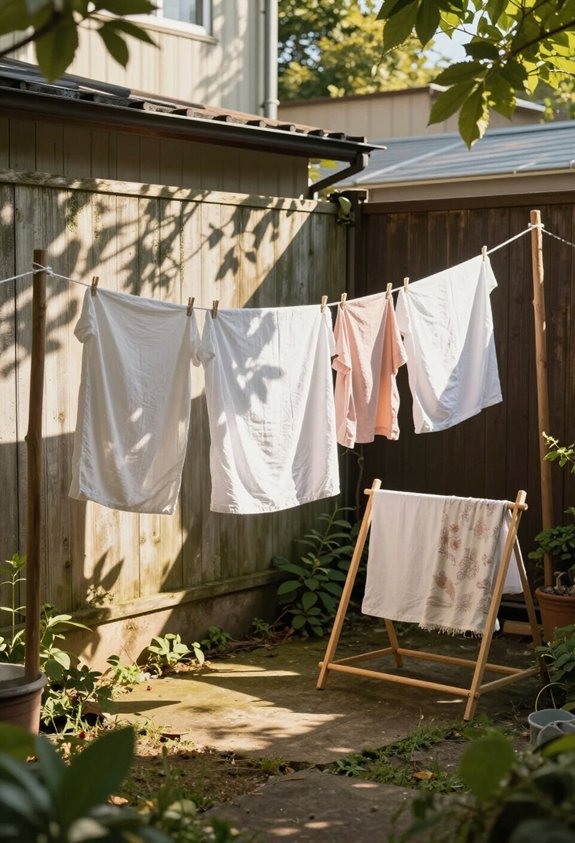
While a fountain brings water features and ambient sound to a side yard, a clothesline or drying rack setup offers a practical and functional use of the same space, combining utility with aesthetic appeal. Installing a clothesline between two posts or trees allows homeowners to air-dry clothes naturally, reducing energy costs and extending fabric lifespan. Alternatively, a freestanding drying rack provides flexibility and requires minimal installation, making it ideal for renters or those wanting adjustable positioning. Both options utilize otherwise unused side yard space efficiently. When selecting a setup, consider weather exposure, available square footage, and surrounding landscape. Positioning the clothesline or rack in a sunny, well-ventilated area accelerates drying while minimizing moisture-related issues. This practical addition transforms the side yard into a functional laundry zone.
Install Solar Path Lights for Evening Access
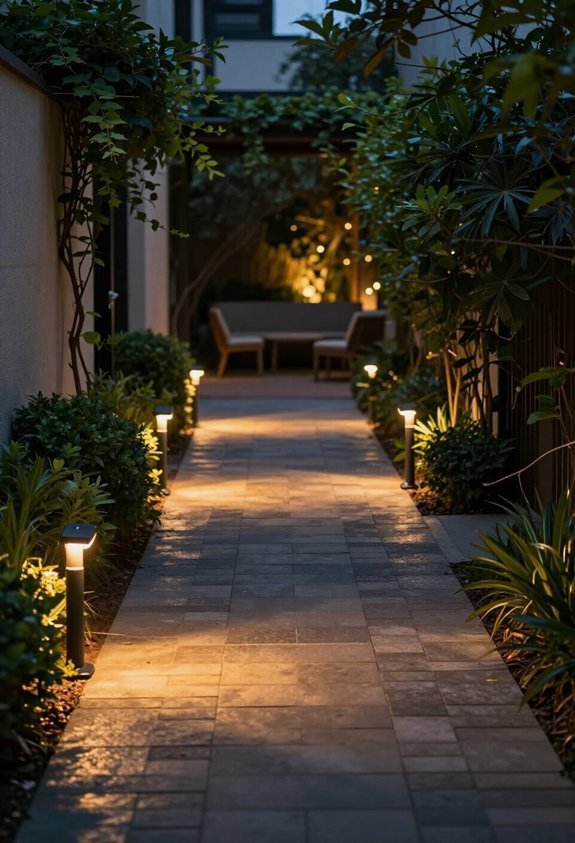
Solar path lights offer an excellent solution for illuminating side yards during evening hours, providing both safety and visual appeal without requiring electrical wiring or ongoing energy costs. These lights absorb sunlight throughout the day and automatically activate when darkness falls, making them energy-efficient and maintenance-free. Homeowners should space lights approximately three to four feet apart along pathways to guarantee adequate illumination for safe navigation. The lights come in various styles, including traditional stake designs, modern geometric shapes, and decorative finials that complement different outdoor aesthetics. Installation requires simply pushing the stakes into soil or securing them to surfaces, requiring no technical expertise. Solar path lights transform side yards into functional, well-lit spaces while reducing electricity consumption and enhancing nighttime visibility for both residents and visitors.
Lay Pavers or Gravel for Low-Maintenance Walkways
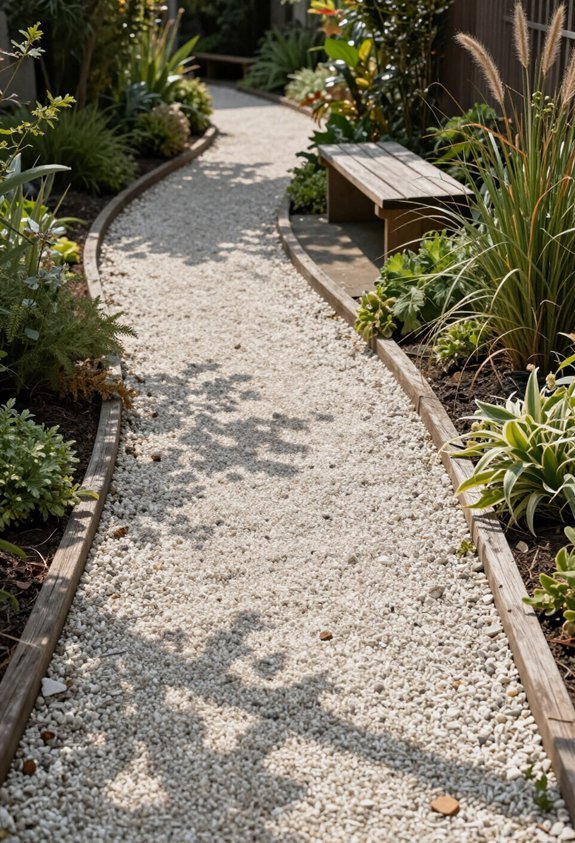
A practical foundation for side yard pathways can be established through the installation of pavers or gravel, both of which require minimal ongoing maintenance compared to other surfacing options while simultaneously improving accessibility and defining traffic patterns through the space. Pavers, available in stone, concrete, or brick varieties, create durable, long-lasting surfaces that withstand heavy foot traffic and weathering. Gravel offers a more economical alternative, providing adequate drainage while establishing clear walkway boundaries. Both options reduce weed growth when properly installed with landscape fabric underneath. Pavers demand occasional cleaning and joint maintenance, while gravel requires periodic raking and replenishment. Selecting between these materials depends on budget constraints, desired aesthetic appearance, and anticipated usage frequency. Either choice greatly enhances side yard functionality and usability.
Frequently Asked Questions
How Much Does It Cost to Professionally Landscape and Develop a Side Yard Space?
Professional side yard landscaping typically costs between $3,000 and $15,000, depending on project scope, materials chosen, regional labor rates, and design complexity. Hardscaping features and irrigation systems greatly impact final pricing.
What Are the Best Low-Maintenance Plants for Narrow Side Yard Garden Beds?
Ornamental grasses, boxwoods, and sedums thrive in narrow spaces with minimal care requirements. Hostas tolerate shade excellently, while coneflowers and black-eyed Susans prefer sunlight. These plants require infrequent watering and pruning once established.
How Can I Maximize a Side Yard That Receives Limited Sunlight Throughout the Day?
One should prioritize shade-tolerant plants like hostas, ferns, and hellebores. Installing reflective surfaces bounces available light. Lighter-colored hardscaping and mulch enhance visibility. Considering a seating area or pathway optimizes limited-light spaces functionally.
What Permits or HOA Approval Do I Need Before Building Side Yard Structures?
Property owners must check local building codes and zoning ordinances before constructing side yard structures. HOA approval requires reviewing community guidelines. Permits typically cover setback requirements, height restrictions, and structural specifications to guarantee compliance.
How Do I Prevent Water Drainage Problems When Adding Features to My Side Yard?
One should assess existing drainage patterns before construction. Installing French drains, permeable paving, and proper grading around new structures directs water away effectively. Positioning features on higher ground and adding gutters prevents pooling and erosion issues.
Conclusion
By implementing these side yard ideas, homeowners can transform an underutilized space into a functional and attractive area that serves multiple purposes. Whether adding pathways, storage solutions, lighting, or decorative elements, each enhancement contributes to improved accessibility and visual appeal. Strategic planning and thoughtful design choices allow side yards to become valuable extensions of the home, increasing overall property utility and aesthetic value while requiring minimal maintenance effort.