
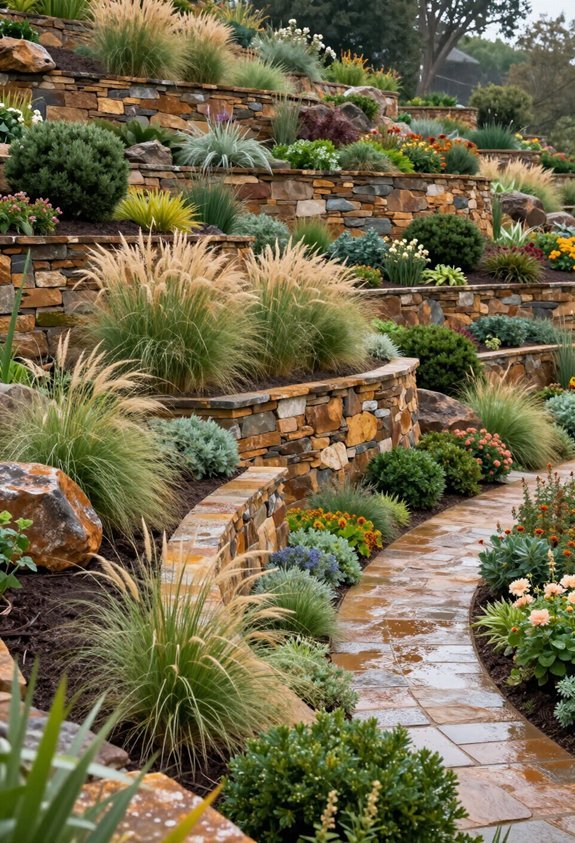
A sloped side yard presents both challenges and opportunities for property owners seeking to improve drainage, prevent soil erosion, and maximize usable outdoor space. Strategic landscaping solutions—from terraced gardens and retaining walls to French drains and native plantings—can transform an awkward hillside into a functional, attractive area. Understanding which techniques work best requires examining specific approaches.
Build Terraced Gardens to Create Flat Planting Zones
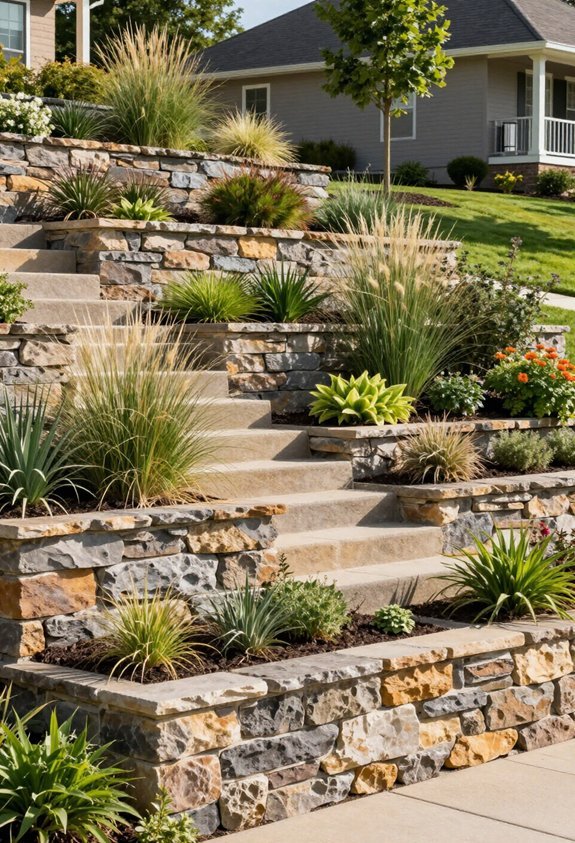
Transforming a sloped side yard into a functional garden space begins with constructing terraced gardens, which are leveled planting areas built into the hillside to create flat zones where plants can grow successfully. Terracing works by cutting horizontal steps into the slope, with each step supported by a retaining wall made from wood, stone, or composite materials. These walls prevent soil erosion while holding back earth on each level. The flat terraces that result provide ideal conditions for planting, as water distributes evenly across the surface rather than running downhill. This method maximizes usable garden space and allows homeowners to grow a wider variety of plants that require stable, level ground. Proper drainage through the terraces prevents waterlogging and maintains soil health throughout the growing season.
Also read: 24 SIDE YARD IDEAS That Make The Space Useful!
Install Retaining Walls to Prevent Soil Erosion
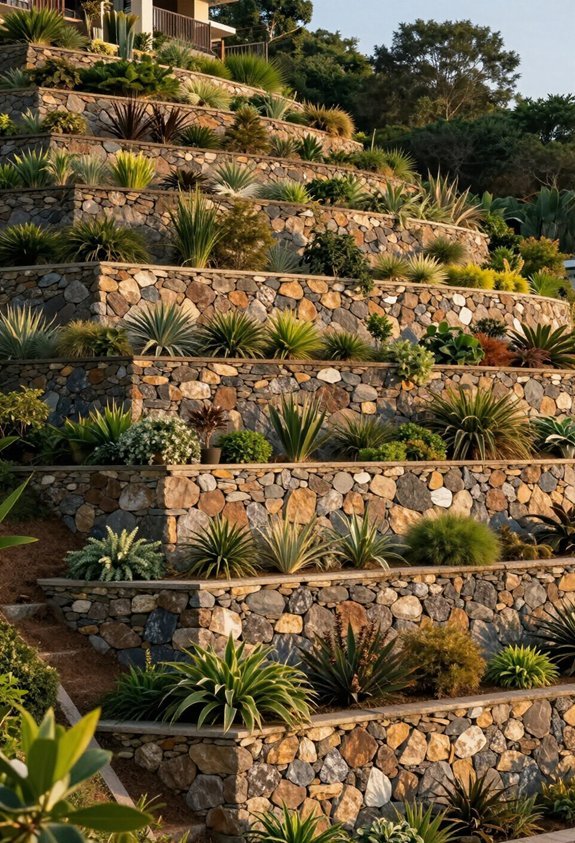
Retaining walls serve as the structural foundation for sloped landscaping projects, holding back soil and preventing erosion that can damage both the yard and surrounding areas. These walls are typically constructed from materials such as concrete, stone, or timber, each offering different durability and aesthetic qualities. The installation process involves excavating a level base, guaranteeing proper drainage behind the wall, and securing the structure firmly into the ground. Proper drainage is essential because water accumulation behind the wall can weaken its integrity and compromise stability. Retaining walls also create useful level platforms for planting, patios, or pathways on hillside properties. Professional installation guarantees the wall meets local building codes and withstands soil pressure over time.
Lay Ground Covers to Stabilize Soil and Cut Maintenance
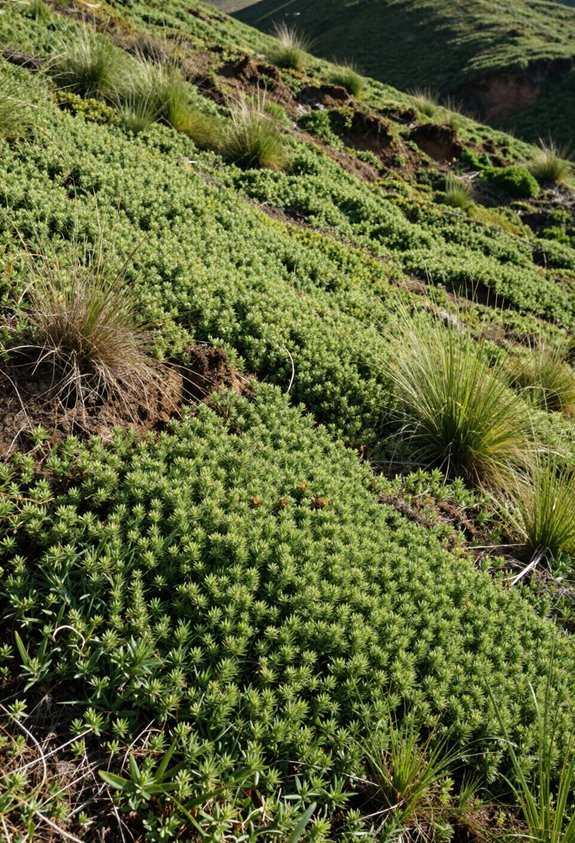
Ground covers offer an effective solution for stabilizing soil on sloped yards while simultaneously reducing the amount of maintenance required throughout the year, making them an ideal complement to retaining walls and other erosion-control measures. Popular options include creeping juniper, sedum, and vinca, which spread across the soil surface and hold it firmly in place. These plants prevent water runoff from washing away topsoil, thereby protecting the slope’s integrity. Ground covers also suppress weed growth by shading the soil, which eliminates the need for frequent weeding and herbicide application. Additionally, their root systems bind soil particles together, creating a protective network that resists erosion. Once established, ground covers require minimal watering and fertilizing, substantially lowering maintenance demands and costs for homeowners managing sloped landscapes.
Install French Drains to Redirect Water Away From Your Home
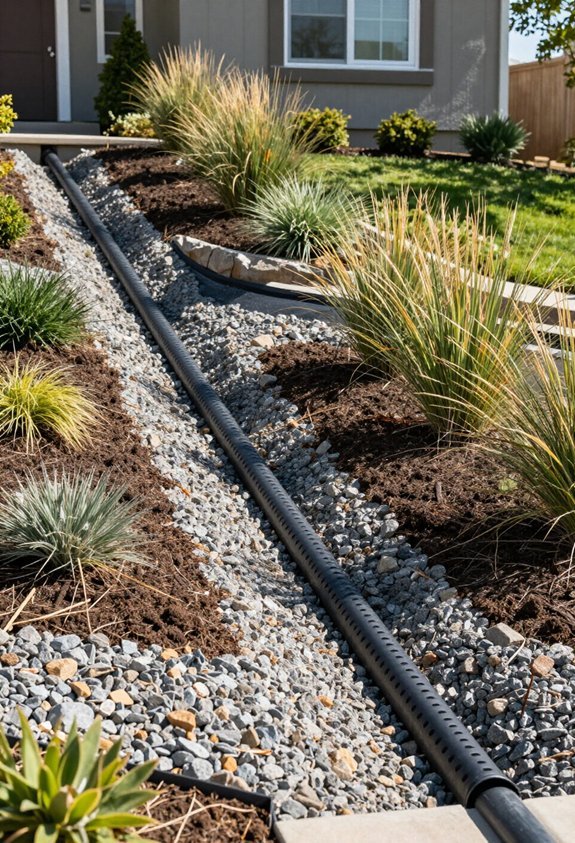
Proper water management plays a critical role in protecting sloped side yards from erosion and water damage, and French drains serve as one of the most effective methods for redirecting excess water away from a home’s foundation and landscaping features. A French drain consists of a perforated pipe installed in a gravel-filled trench, which allows water to filter through the soil layers and flow downhill or toward a designated drainage area. Homeowners should position the drain along the upper slope to intercept water before it reaches the foundation, ensuring the pipe slopes slightly downward for consistent water movement. Professional installation guarantees proper placement and effectiveness, though careful maintenance and periodic inspection prevent clogging and maintain peak drainage performance throughout the year.
Build Swales and Gravel Channels to Manage Runoff
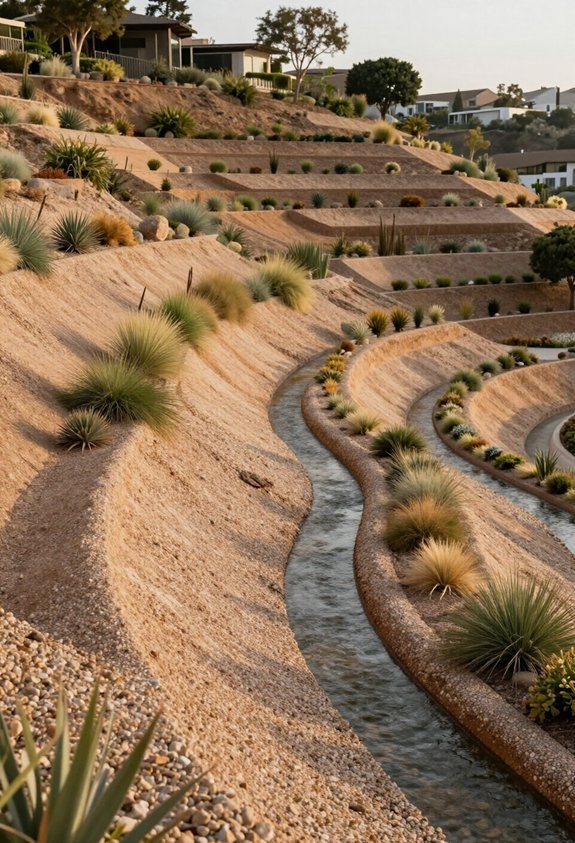
While French drains work beneath the surface to filter water downward through soil layers, swales and gravel channels function above ground to guide water movement across the landscape in visible, manageable pathways. Swales are shallow, vegetated ditches that redirect runoff away from structures and toward desired drainage areas, preventing erosion and pooling. Gravel channels serve a similar purpose, using permeable stones to slow water velocity while allowing infiltration into surrounding soil. Homeowners should position swales along contour lines parallel to the slope’s direction, ensuring water follows the designated route rather than flowing randomly downhill. Combining both methods creates an all-encompassing drainage system that protects foundations, prevents basement flooding, and maintains landscape stability while managing water naturally and cost-effectively.
Create a Rain Garden to Capture and Filter Stormwater
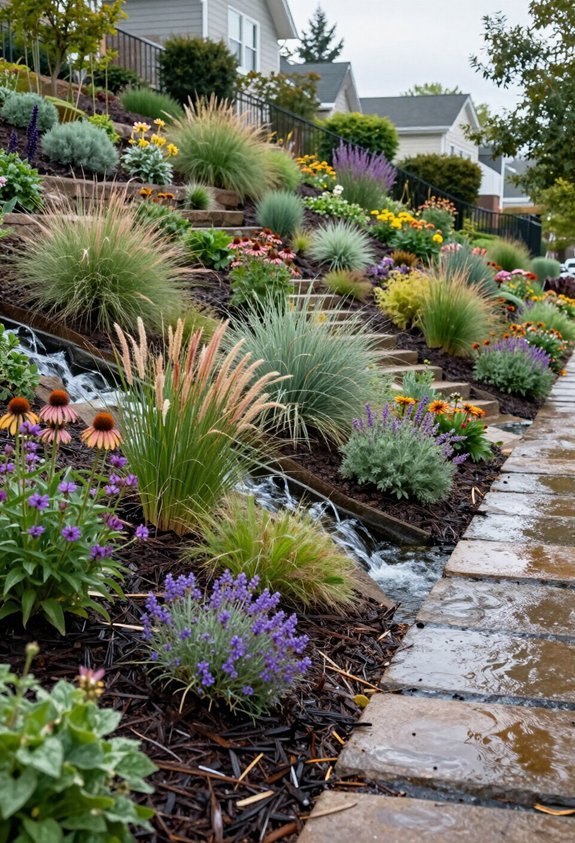
Rain gardens offer homeowners an effective strategy for capturing and filtering stormwater runoff directly where it falls on their sloped properties, transforming excess water from a drainage problem into a resource that infiltrates slowly into the soil rather than rushing downhill toward foundations or neighboring yards. These shallow, planted depressions are strategically positioned to collect runoff from roofs, driveways, and other hard surfaces. Native plants and specially selected vegetation within rain gardens absorb water while filtering out sediments and pollutants before they reach groundwater. The garden’s soil layers act as natural filters, removing debris and contaminants through biological processes. Rain gardens typically drain within 24 to 48 hours, preventing mosquito breeding while recharging underground water supplies and reducing erosion on sloped terrain.
Plant Shrubs and Small Trees to Anchor Slopes
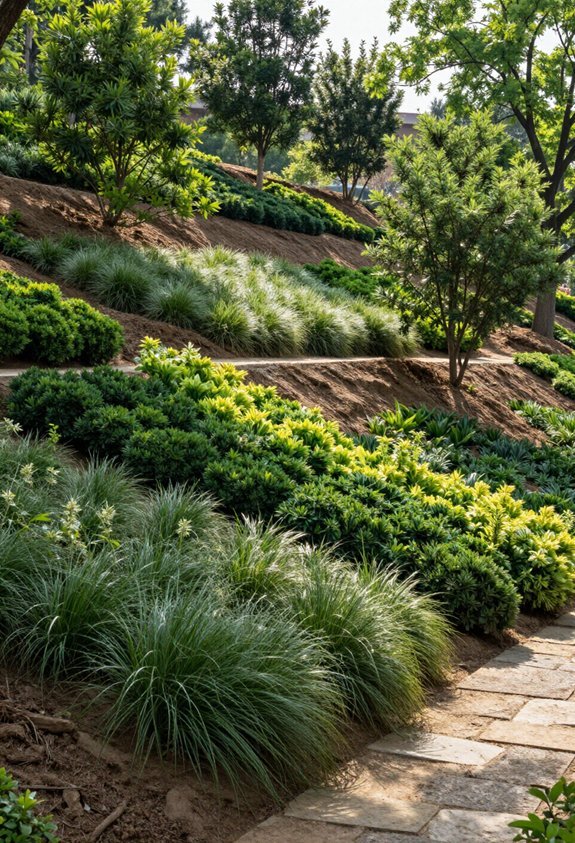
Strategically positioning shrubs and small trees across a sloped side yard serves as a fundamental erosion control method, as their extensive root systems work like underground anchors that bind soil particles together and prevent them from washing downhill during heavy rainfall or water runoff. Native species such as dogwood, serviceberry, and juniper prove particularly effective because they adapt well to local soil conditions and require minimal maintenance once established. Planting these vegetation strategically at varying heights creates multiple layers of protection, with deeper roots stabilizing lower soil layers while shallow roots secure surface material. Spacing plants appropriately allows water to filter through the slope gradually, reducing velocity and impact force. This layered approach transforms vulnerable slopes into stable, erosion-resistant landscapes while simultaneously enhancing visual appeal and supporting local wildlife habitats.
Design Tiered Beds With Native Plants for Layered Slopes
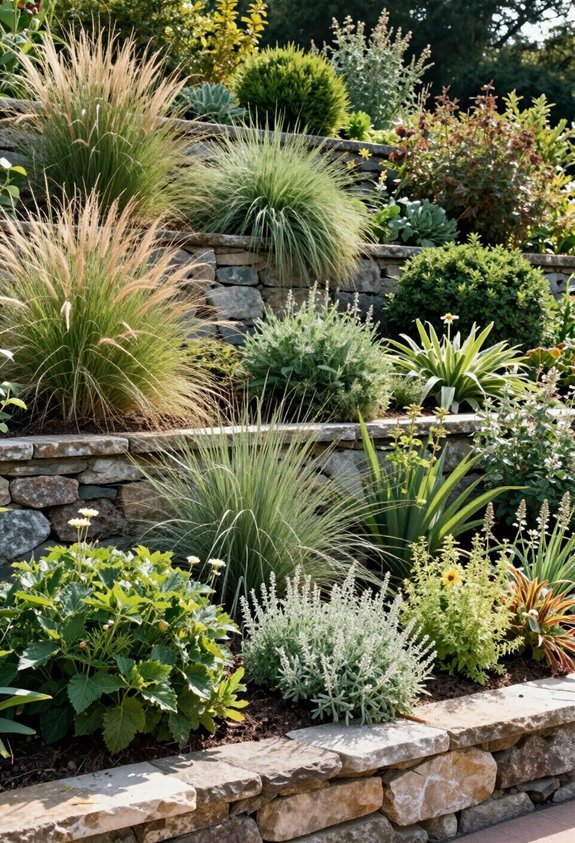
Building on the foundational erosion control that shrubs and trees provide, creating tiered beds across a sloped side yard takes slope management to the next level by organizing plants into distinct horizontal sections that follow the natural contours of the land. Native plants work particularly well in tiered arrangements because they are adapted to local soil conditions and require minimal maintenance once established. Each tier should be positioned at a slightly different elevation, creating natural steps that slow water runoff and prevent soil erosion. Gardeners should select native species appropriate for each tier’s specific sunlight and moisture levels, ensuring plants thrive in their designated zones. This layered approach transforms sloped yards into visually interesting landscapes while simultaneously solving drainage challenges and reducing ongoing maintenance demands.
Install Steps or a Pathway to Navigate Safely
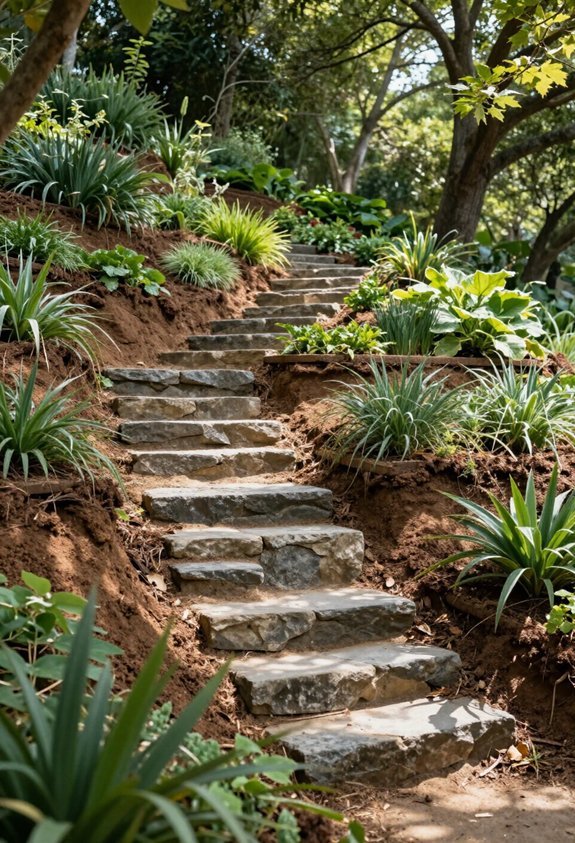
While tiered beds organize plants effectively across a slope, the terrain itself still presents a practical challenge that homeowners must address: safely traversing the uneven ground. Installing steps or pathways becomes essential for both functionality and safety on sloped yards. Concrete pavers, natural stone, or wooden steps can be strategically placed to create a secure route through the landscaping. Steps should include risers and treads that meet standard building codes, typically featuring a seven-inch riser height and eleven-inch tread depth for comfortable climbing. Pathways work well between planted areas, directing foot traffic while preventing soil erosion. Materials like mulch, gravel, or stepping stones offer flexible options depending on budget and aesthetic preferences. Proper drainage around steps prevents water accumulation and extends their lifespan.
Build a Raised Deck or Patio on the Slope
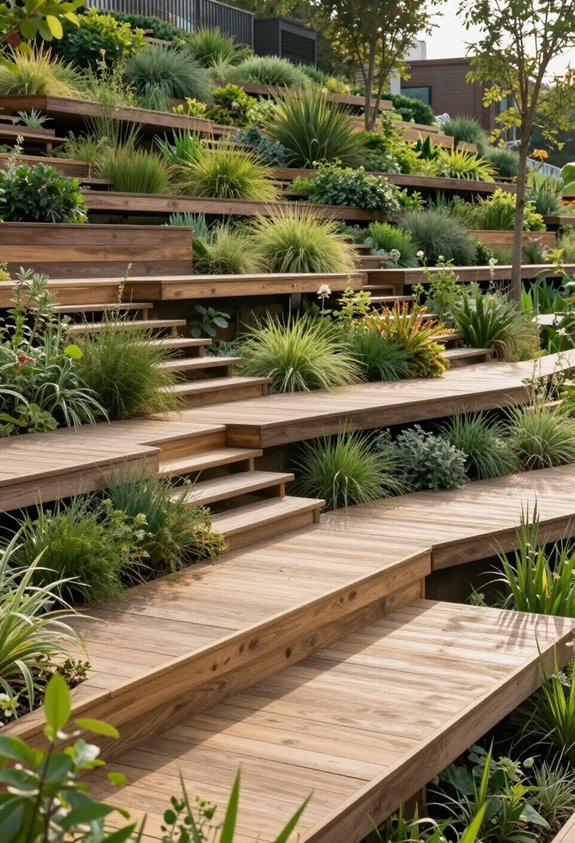
A raised deck or patio offers homeowners a more substantial solution than pathways alone, providing a level outdoor living space that sits above the sloped terrain and creates a functional area for relaxation and entertainment. Building a raised structure requires careful planning, including proper foundation support and drainage considerations to prevent water damage and erosion underneath the deck. Professional installation guarantees the platform remains stable and safe for years to come. Materials such as composite decking, wood, or composite pavers are popular choices that withstand outdoor elements. The raised design also maximizes usable yard space while minimizing grading work. Additionally, this approach eliminates safety hazards associated with uneven ground, making the side yard more accessible and enjoyable for all family members.
Use Landscape Fabric to Reinforce Slopes and Stop Erosion
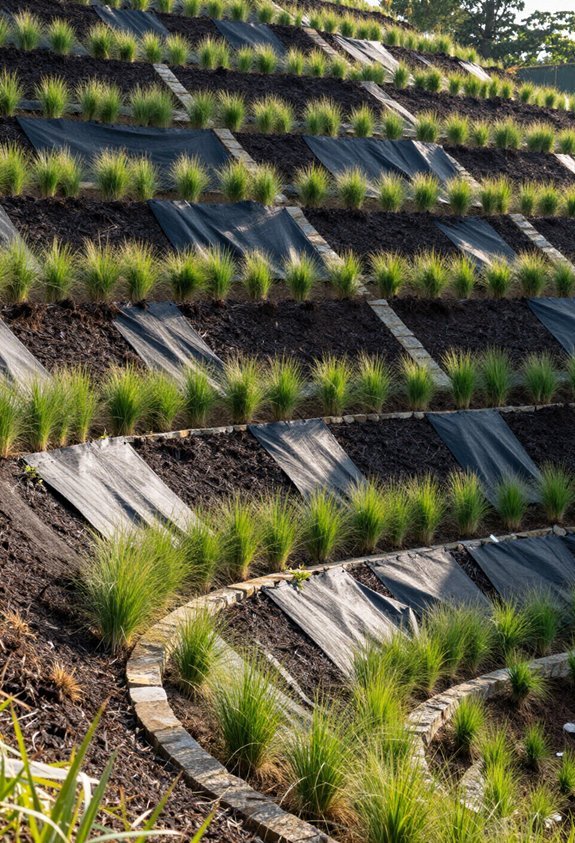
Landscape fabric serves as a practical and cost-effective method for stabilizing sloped terrain and preventing soil erosion, particularly in side yards where water runoff and gravity naturally work to dislodge soil and create bare patches. This permeable material allows water to drain while blocking soil particles from washing away during heavy rainfall. Installation involves unrolling the fabric across the slope, securing it with landscape pins or staples, then covering it with mulch, gravel, or decorative stones to anchor it further and improve aesthetics. The fabric creates a protective barrier that holds soil in place, reduces maintenance demands, and establishes a stable foundation for future plantings, making it an ideal preliminary step before adding vegetation to vulnerable slopes.
Incorporate Rock Gardens and Boulders Into Slope Design
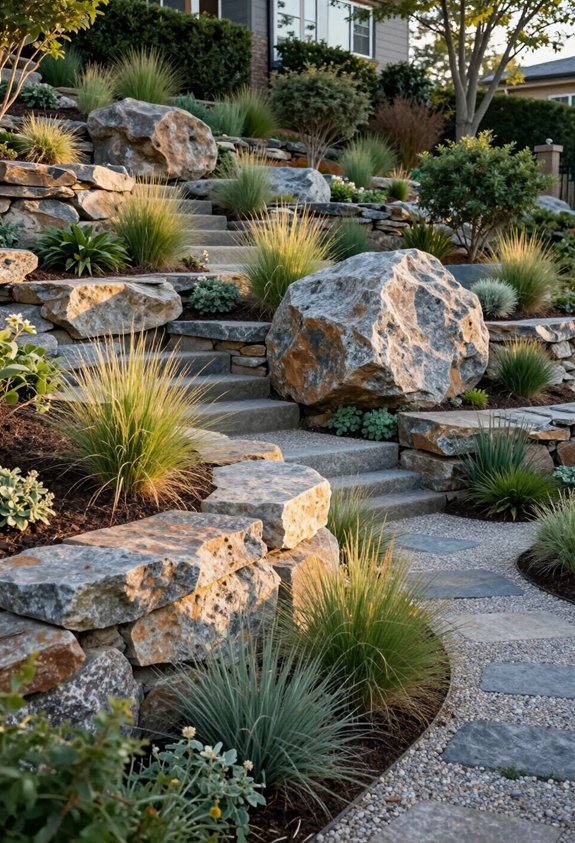
Once the landscape fabric has been installed and secured with mulch or gravel to prevent erosion, homeowners can build upon this stable foundation by incorporating rock gardens and boulders into their slope design. Large boulders serve as both functional anchors and visual focal points, preventing soil movement while creating natural terracing effects. Strategic placement of rocks at varying elevations helps redirect water runoff and reduces erosion risk. Rock gardens, filled with drought-resistant plants and decorative stones, require minimal maintenance while providing aesthetic appeal. Homeowners should select rocks that complement their landscape style and guarantee proper spacing between elements. This combination of boulders and rock gardens transforms slopes into attractive, low-maintenance features while simultaneously protecting the yard from further soil degradation.
Train Climbing Vines to Blend Hard Edges
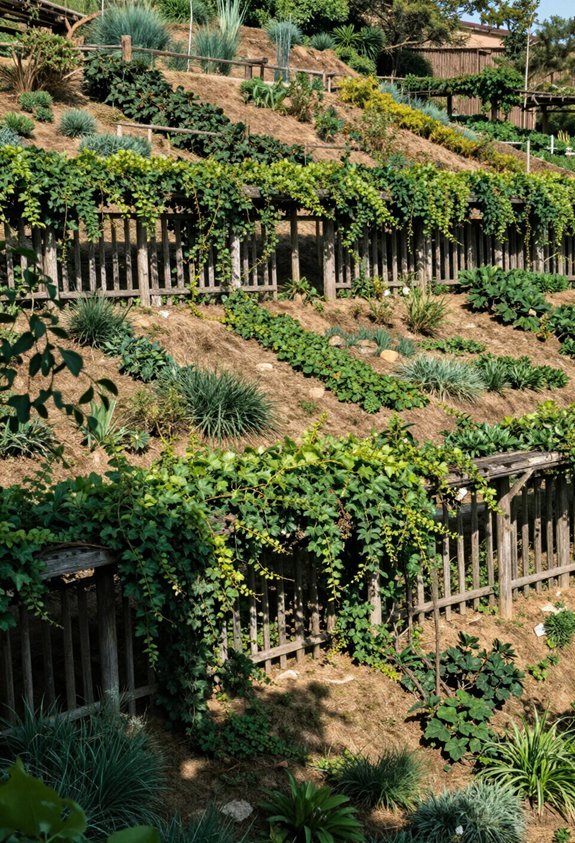
Climbing vines offer an effective solution for softening the visual impact of hard structural elements, such as retaining walls, edging, or terracing features that become necessary when managing sloped side yards. Vines like clematis, ivy, and honeysuckle grow vertically along these surfaces, creating natural coverage that masks harsh concrete or stone edges. Gardeners should install trellises or wire supports on walls before planting, ensuring vines have proper structures for climbing and attachment. Regular pruning maintains desired shapes and prevents overgrowth that could damage underlying structures. As vines mature, they transform rigid landscaping features into living green walls, improving aesthetic appeal while providing environmental benefits such as improved air quality and increased insulation for adjacent structures.
Install Gabions for Modern Slope Walls
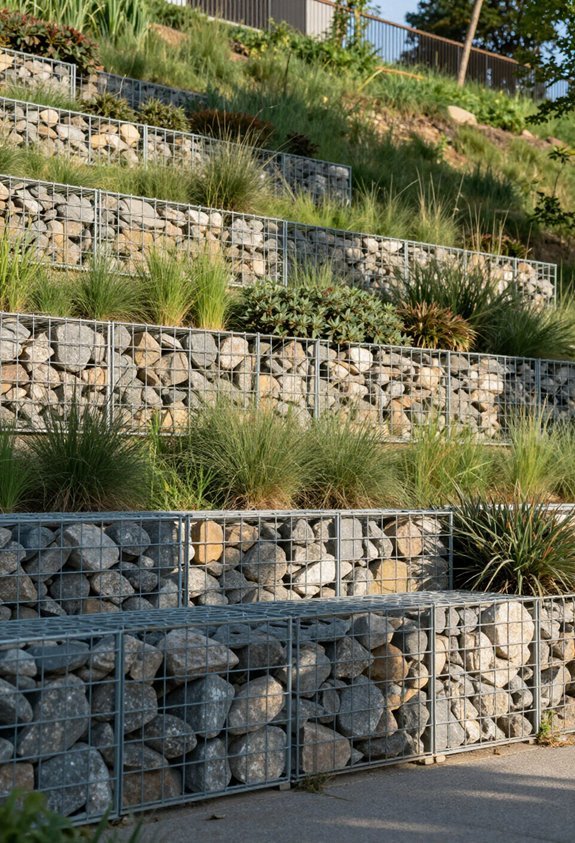
Gabions, which are wire cages filled with rocks or stones, provide a contemporary and functional alternative to traditional retaining walls on sloped side yards, offering both structural support and visual interest through their geometric design. These modular structures can be stacked and arranged to fit any slope configuration, making them highly adaptable to various yard dimensions. Installation requires positioning the cages along the slope’s contour, filling them with appropriate stone materials, and securing them together with wire connectors. The permeable nature of gabions allows water drainage through the gaps between stones, preventing water buildup and erosion behind the wall. This modern approach combines practicality with aesthetic appeal, as the exposed stone creates an industrial yet natural appearance that complements contemporary landscaping designs.
Build Wooden Sleeper Walls for a Rustic Finish
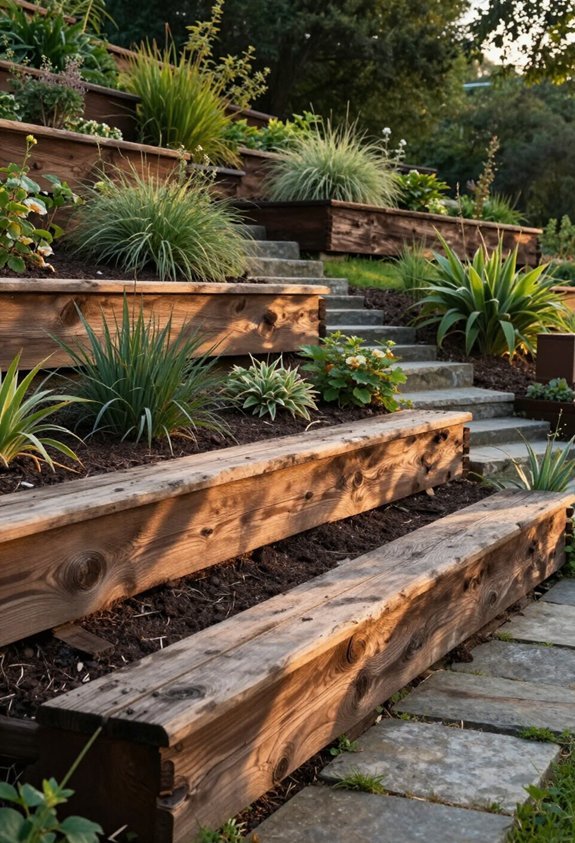
Wooden sleeper walls offer homeowners a rustic and natural alternative to modern retaining structures, creating a warm, organic aesthetic that complements traditional and cottage-style landscapes while providing effective slope stabilization. These walls are constructed using large wooden beams, typically railroad ties or landscape timbers, stacked horizontally and secured with metal pins or rebar driven vertically through them into the ground. The installation process requires careful leveling and compacting of the base soil to guarantee stability and prevent shifting over time. Wooden sleepers naturally age and weather, developing a distinctive patina that enhances their rustic appeal. Regular maintenance, including periodic inspections for rot and applying wood preservatives, extends their lifespan considerably and maintains structural integrity on sloped terrain.
Design Seating Zones Across Your Sloped Yard
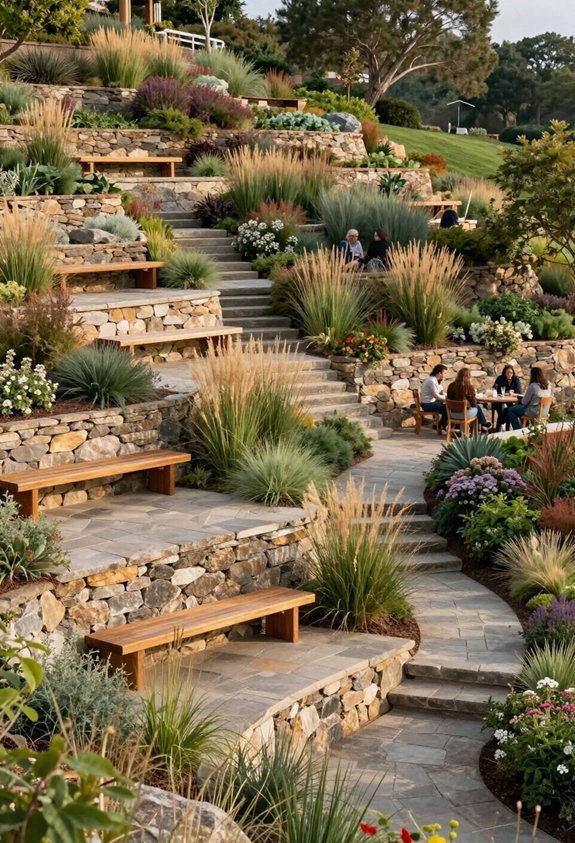
Creating functional seating areas on a sloped yard transforms the landscape into a series of usable outdoor rooms that maximize enjoyment and reduce wasted space, requiring strategic placement and thoughtful design to guarantee comfort and safety across varying elevations. Designers should identify naturally flat sections or create level platforms using retaining walls or terracing techniques, which provide stable foundations for seating arrangements. Positioning seating zones at different heights encourages movement throughout the yard while offering varied perspectives of the surrounding landscape. Incorporating stairs or stepping stones between levels guarantees safe navigation, while adding shade structures like pergolas or umbrellas enhances comfort during extended outdoor use. By thoughtfully distributing seating across the slope, property owners create multiple gathering spaces that accommodate various activities and group sizes while working harmoniously with the yard’s natural terrain.
Grade and Maintain Sloped Lawns to Prevent Washout
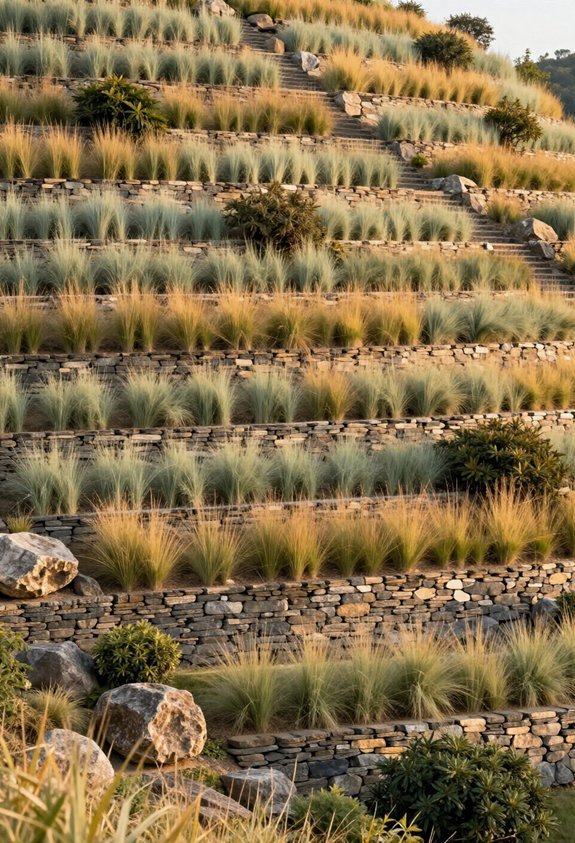
While seating zones provide comfortable gathering spaces across a sloped yard, the underlying landscape itself requires careful management to prevent soil erosion and water damage that can undermine both the aesthetic appeal and structural integrity of the property. Proper grading directs water away from foundations and prevents pooling in low areas, which weakens soil stability. Homeowners should maintain grass by mowing at appropriate heights, which strengthens root systems and improves water absorption. Installing erosion control measures, such as sod reinforcement or landscape fabric, protects vulnerable slopes during heavy rainfall. Regular maintenance includes removing debris from drainage areas and inspecting for signs of washout or bare patches. These preventative practices preserve lawn health while protecting the entire yard from water-related damage and costly repairs.
Convert Your Slope Into a Wildflower Meadow
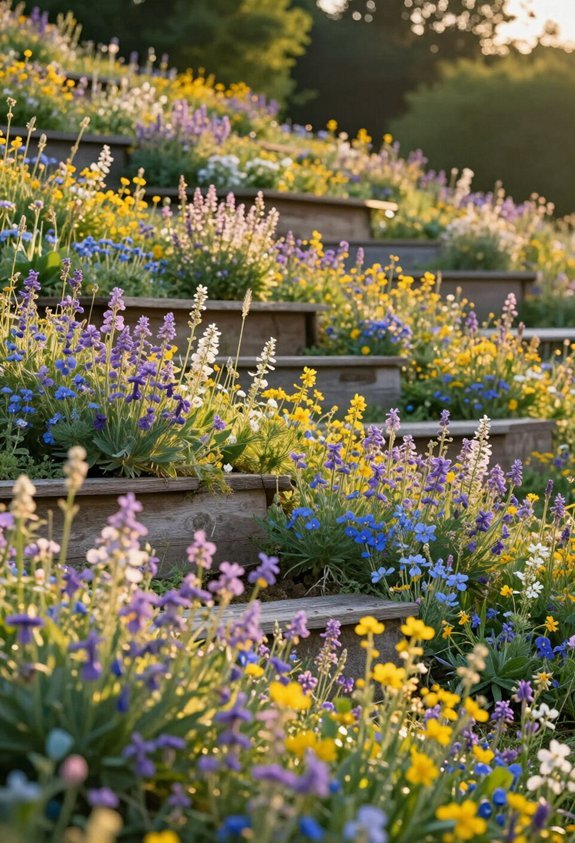
Transforming a sloped yard into a wildflower meadow offers an attractive alternative to traditional lawn maintenance while simultaneously addressing erosion concerns and reducing the time and effort required for upkeep. To establish a wildflower meadow, property owners should first clear existing vegetation and loosen the soil to a depth of several inches, which encourages seed penetration and root development. Selecting native wildflower species suited to the local climate, soil type, and sunlight conditions guarantees higher germination rates and better long-term survival. Spreading seeds across the prepared slope during the appropriate season, typically fall or early spring, allows natural stratification to occur. Minimal watering during establishment, combined with avoiding fertilizers that favor weeds, supports wildflower growth and creates a sustainable, low-maintenance landscape solution.
Install Landscape Lighting to Showcase Slopes at Night
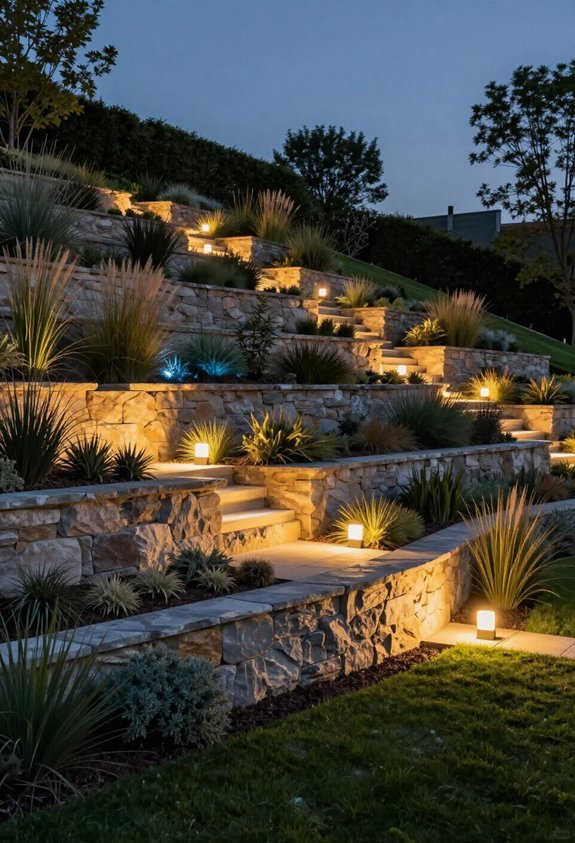
Strategic placement of landscape lighting across a sloped yard transforms the outdoor space into an attractive nighttime feature while improving safety and visibility along uneven terrain. Uplighting techniques, which position lights at ground level pointing upward, effectively highlight plants, trees, and architectural elements on the slope. Path lights installed along walkways and stairs prevent tripping hazards by illuminating potential obstacles. LED spotlights directed at focal points create visual interest and depth perception across the gradient surface. Professionals recommend spacing lights approximately 6 to 8 feet apart for consistent illumination without creating harsh shadows. Installing a timer system or smart controls allows homeowners to automate lighting schedules, reducing manual adjustments while enhancing evening ambiance and security throughout the landscaped slope.
Use Mulch and Gravel to Manage Drainage and Erosion
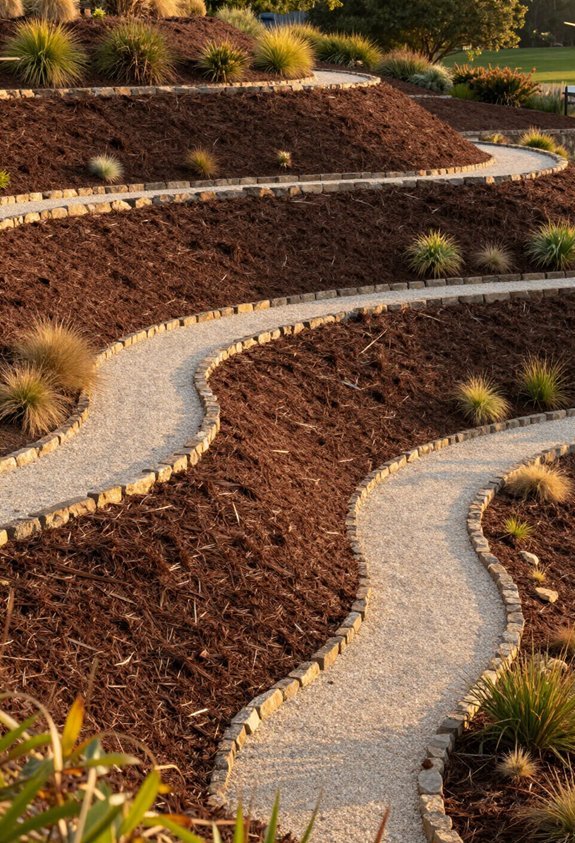
Applying mulch and gravel across a sloped yard serves multiple essential functions, including absorbing excess water that runs downhill, preventing soil erosion that loosens the ground and exposes plant roots, and creating a stable surface that reduces maintenance needs over time. Organic mulch, such as wood chips or bark, breaks down gradually while improving soil quality and retaining moisture for plant growth. Inorganic gravel, including river rock or pea gravel, provides permanent drainage solutions without decomposing, making it ideal for high-water areas. Homeowners should layer mulch two to four inches deep around plants and use gravel in concentrated flow zones where water naturally collects. Strategic placement of these materials directs water away from foundations while anchoring soil in place, effectively managing both drainage and erosion simultaneously.
Frequently Asked Questions
How Much Does It Typically Cost to Landscape a Sloped Side Yard?
Sloped side yard landscaping typically costs between $1,500 and $5,000, depending on the yard’s size, slope severity, chosen materials, and labor rates in one’s region. Complex designs with retaining walls cost more.
What’s the Best Time of Year to Start a Slope Landscaping Project?
Spring and fall present ideal conditions for slope landscaping projects. Spring offers growing season advantages, while fall provides cooler temperatures reducing plant stress. Winter should be avoided due to frozen ground and poor drainage conditions.
Can I Tackle Slope Landscaping Myself or Should I Hire Professionals?
DIY slope landscaping is feasible for minor projects involving simple plantings or mulching. However, complex endeavors requiring grading, drainage systems, or retaining walls typically demand professional expertise to guarantee proper execution and longevity.
How Long Does It Take for Newly Planted Slopes to Become Established?
Newly planted slopes typically require 2-3 years to become fully established. During this period, regular watering, mulching, and maintenance are essential. Root systems develop gradually, stabilizing soil and reducing erosion risk considerably.
What Plants Thrive Best on Steep Slopes With Poor Soil Conditions?
Drought-tolerant plants like sedums, ornamental grasses, and native shrubs excel on steep slopes with poor soil. These species require minimal nutrients, establish quickly, and prevent erosion through their shallow root systems and ground coverage.
Conclusion
Transforming a sloped side yard requires combining practical solutions with thoughtful design choices. By implementing terraced gardens, retaining walls, and proper drainage systems like French drains, homeowners create stable, functional outdoor spaces. Adding ground covers, mulch, and native plants prevents erosion while reducing maintenance demands. Strategic lighting and decorative elements enhance visual appeal. These integrated approaches work together systematically to convert challenging slopes into attractive, sustainable landscapes that protect homes and improve property value.